
Starting from a fully shaved head, you can expect visible stubble within a week, roughly half an inch of growth by the end of month one, and about an inch to an inch and a half by months two to three. From there, hair enters the awkward in-between phase, where it's too long to look intentionally short but too short to style with much control. Most people reach a genuinely style-able length, something you can part, slick, or work with product, somewhere between four and six months. Getting to shoulder length takes closer to two years. That's the honest version of the timeline, and the rest of this guide walks you through exactly what to expect and do at each stage.
Shaved Head Grow Out Timeline: Week by Week Guide

Marcus Vickers
17 Jun 2026
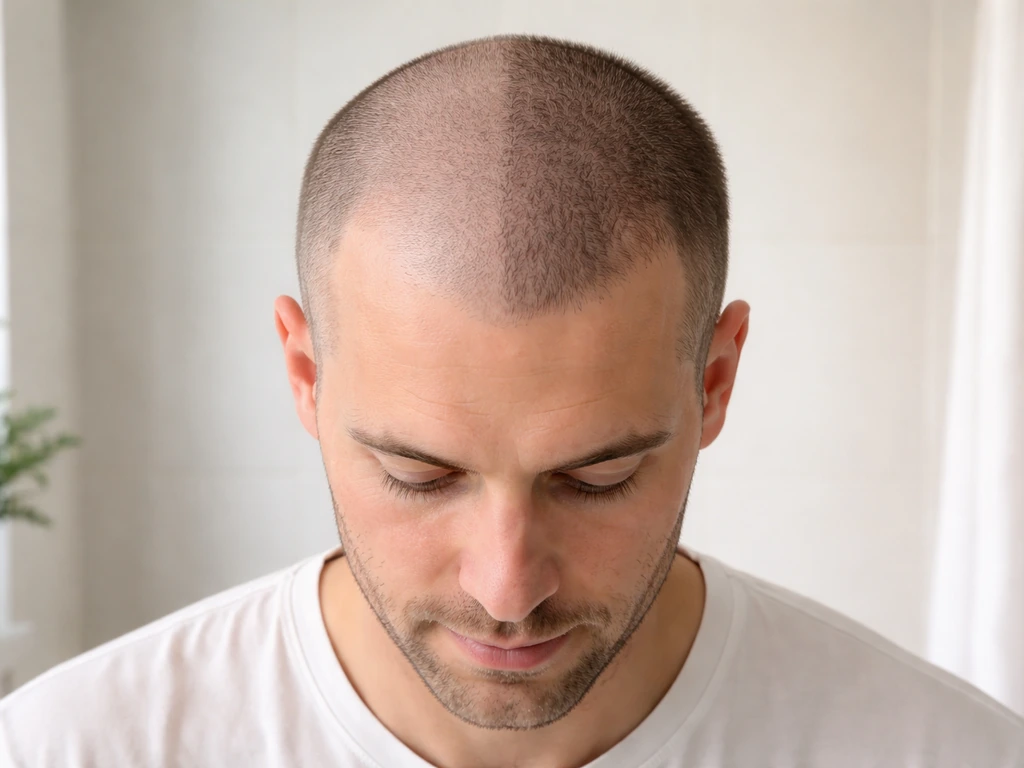
The realistic shaved head grow-out timeline, week by week and month by month
Hair grows at roughly 0.5 inches per month on average, which works out to about one eighth of an inch per week. Some people clock slightly faster growth, up to 0.67 inches per month, while others sit closer to 0.2 to 0.4 inches. Genetics is the biggest variable, but health, hormones, and seasonal shifts all play a role too. Here is what that looks like in real terms from day one.
| Timeline | Approximate Length | What It Looks Like |
|---|---|---|
| Day 1–3 | Skin-close / barely there | Smooth or very fine shadow depending on starting point |
| Week 1 | ~1/8 inch (3 mm) | Distinct stubble, sandpaper texture |
| Week 2–3 | ~1/4 inch (6 mm) | Short, dense stubble; shape of head very visible |
| Month 1 | ~1/2 inch (1.2 cm) | Comparable to a very short buzz or number 4 clipper length |
| Month 2 | ~1 inch (2.5 cm) | Starts to look like a crew cut; fringe barely forming |
| Month 3 | ~1.5 inches (3.8 cm) | Short crop territory; sides can look shaggy |
| Month 4–5 | ~2–2.5 inches (5–6 cm) | Classic awkward phase; needs styling or looks unkempt |
| Month 6 | ~3 inches (7.5 cm) | Short style is possible: textured crop, short fringe |
| Month 9–12 | ~4.5–6 inches (11–15 cm) | Bob-adjacent length on some; most have clear styling options |
| 18–24 months | ~9–12 inches (23–30 cm) | Approaching shoulder length for most people |
One thing worth noting: reaching 1 inch takes about two months, which feels slow when you are staring at your reflection every morning. That two-month window is actually the hardest part psychologically, because the change is real but subtle. After month three, progress starts to feel more obvious. If you are wondering should i grow out my pixie, the same patience and stage-by-stage styling tips apply as your length changes.
How your hair texture and starting length change everything
The growth rate itself is pretty similar across textures, but what you see in the mirror is not. Straight hair hangs at close to its actual measured length, so every half inch of growth shows up clearly. Wavy hair starts to reveal its pattern around the one-inch mark, which adds some visual interest earlier but also means the shape looks messier sooner. Curly and coily hair shrinks up as it dries, sometimes by an inch or two compared to the actual length, which makes growth look slower than it actually is. If you have tight coils, your hair might measure 1.5 inches but appear to sit at under an inch. You are still growing at the same rate, the curl is just pulling it upward.
Your starting length matters too. A skin shave is the longest road. A number one or two clipper cut shaved close means you start at roughly 3 to 6 mm, which still leaves you in the same general timeline above, just slightly ahead of day one. If you were working from a number four or longer buzz cut before growing it out, you are already a couple of weeks ahead of someone starting from a clean shave. That head start is real, even if it does not feel like much when you are looking at stubble.
Managing each regrowth milestone without losing your mind
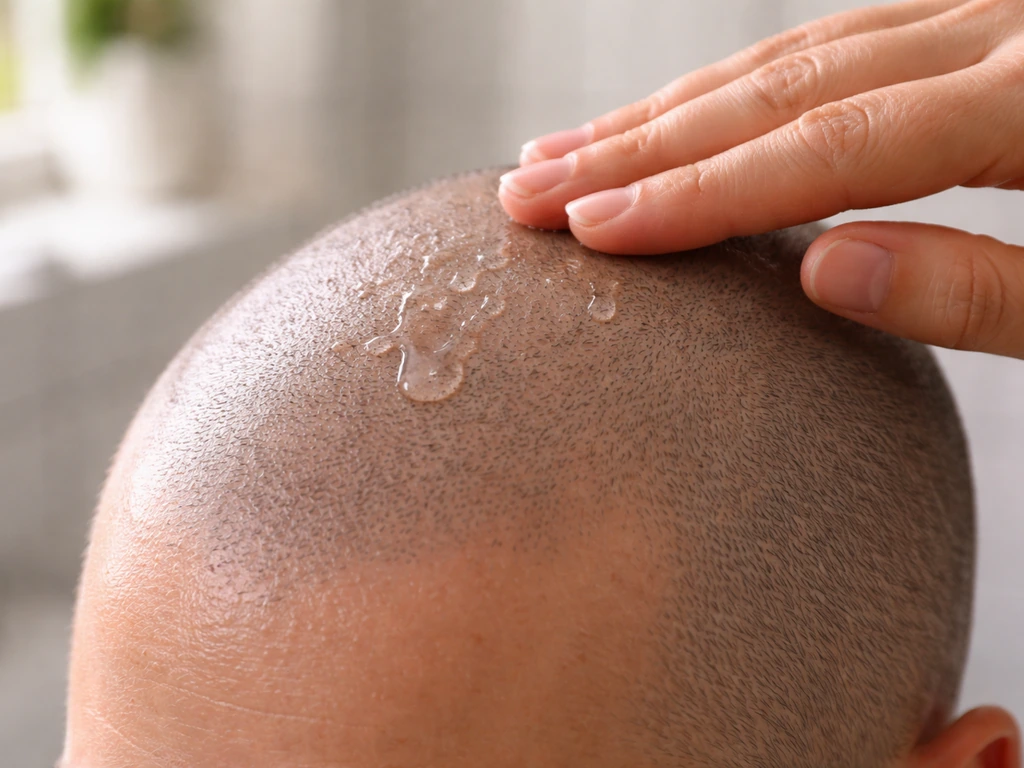
The stubble stage (weeks 1–3)
This stage is mostly about scalp care and patience. There is nothing to style yet. Focus on moisturizing your scalp, especially if you have been shaving it regularly and it is used to exposure. A light, non-comedogenic scalp oil or lotion helps with dryness and itching, which is common as stubble pushes through. If you were razor-shaving, expect some ingrown hair irritation around weeks one and two. A gentle exfoliating scrub once a week helps prevent that.
Short buzz territory (months 1–2)
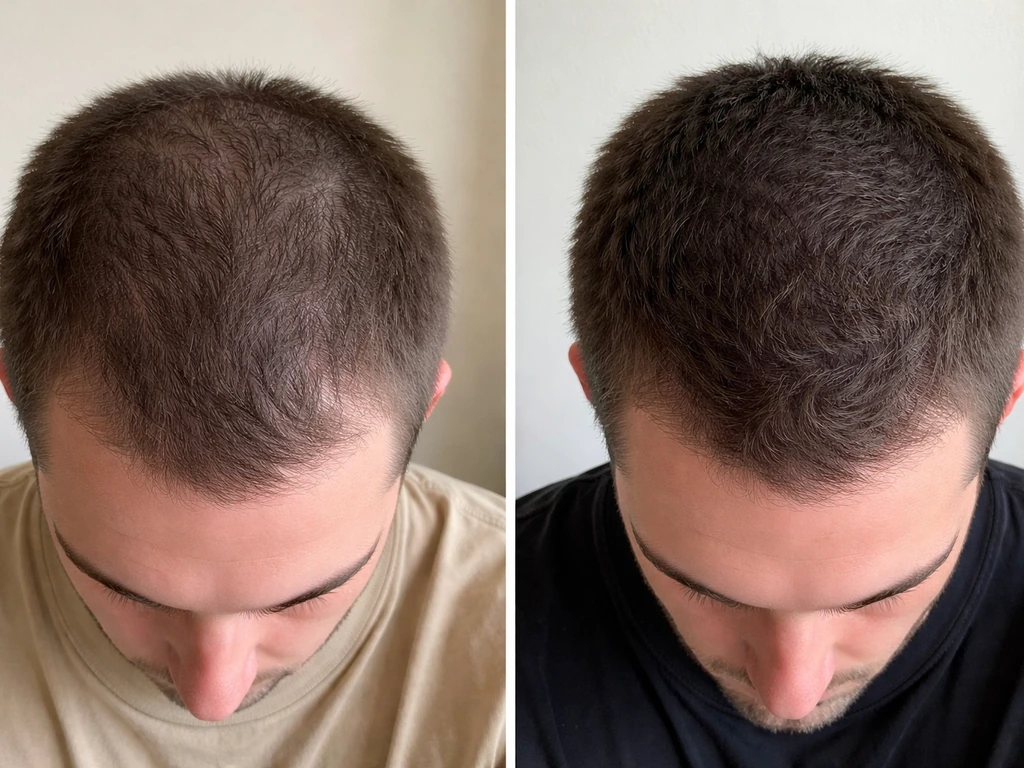
Once you hit the half-inch to one-inch range, your hair's natural growth direction becomes much more obvious. Cowlicks show up. Patches that grow faster or slower become visible. This is completely normal and it levels out as length increases. You can start washing your hair with a gentle shampoo at this point and applying a very light leave-in conditioner or moisturizer to the scalp and new growth. Nothing heavy, as product buildup at short lengths can feel suffocating on the scalp.
The awkward phase (months 3–5)
This is the stage most people give up and shave again, and it is also the stage worth pushing through. At 1.5 to 2.5 inches, hair is too long to look tidy without effort but too short to do much with. The top may be fluffing up while the sides and back are going in every direction. Accepting that this phase exists, rather than fighting it, is genuinely the most useful mindset shift. A small amount of matte clay or pomade in damp hair can give it direction without making it look wet or stiff. Hats and headbands are not giving up, they are tools.
Styling options at each stage
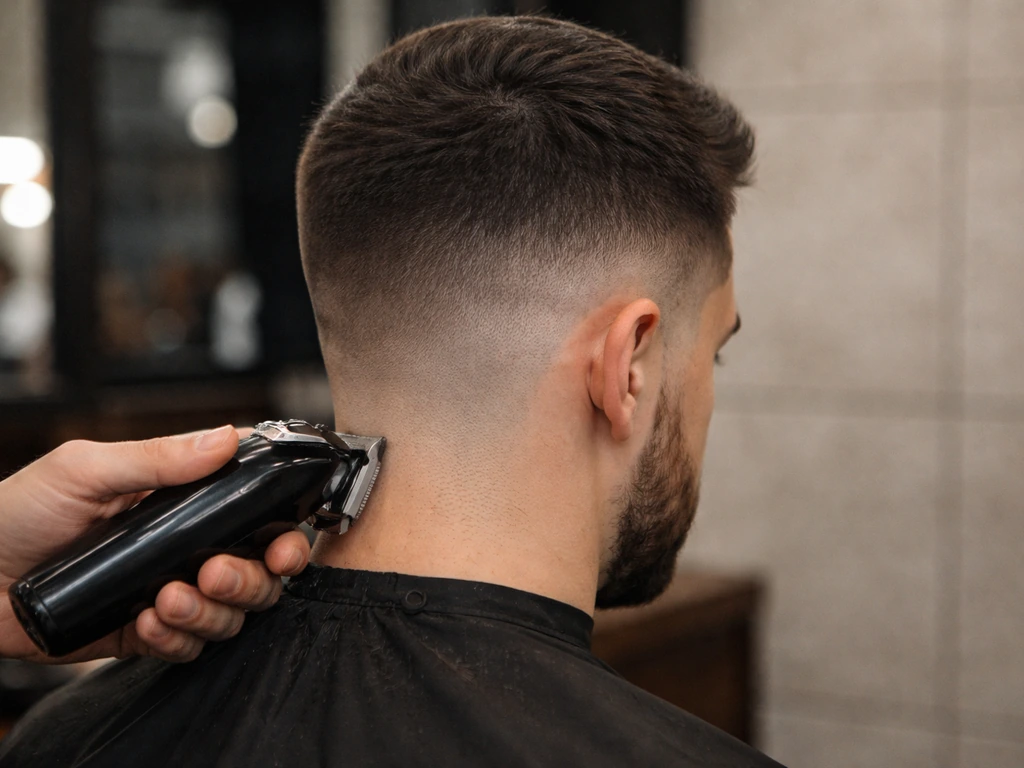
Buzz and crew cut length (months 1–2)
At this length, your main styling lever is blank" rel="noopener noreferrer">keeping the back and sides clean and faded. A quick trip to the barber every three to four weeks to tidy the neckline and blend the sides makes a huge difference in how polished the overall grow-out looks. You are not cutting length off the top, just maintaining the perimeter. For black hair specifically, your plan should include product and styling choices that work with your curl pattern as the pixie regrowth lengthens style with hold product. This also prevents the classic problem of the sides growing out in a boxy, unshaped rectangle while the top does its own thing.
Short crop and fringe forming (months 3–4)
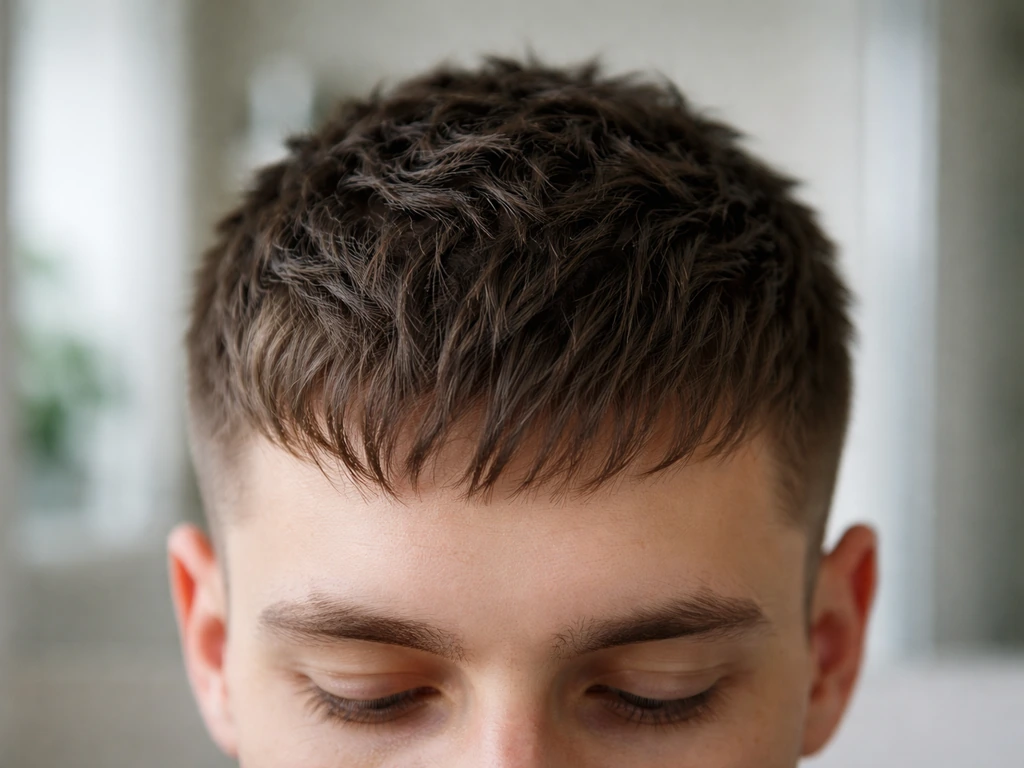
Once the top reaches 1.5 to 2 inches, you have options. A textured crop with a light product is achievable for straight and wavy hair. Curly and coily textures can start leaning into defined curl patterns with a curl cream or gel. If you want a fringe, the front of your hair may not be quite long enough yet, but you can start encouraging it forward rather than backward to train the direction. This is also when an undercut or disconnected fade can look genuinely great rather than accidental, keeping the top longer and the sides extremely short to create visual contrast. If you are wondering how this applies to a more dramatic start, see how to grow out a pixie cut thick hair for stage-by-stage tips.
Genuine styling territory (months 5–6 and beyond)
At two to three inches on top, you can achieve a proper short side part, a pushed-back look with hold product, or a defined textured style. If you are specifically working from a pixie cut, the overall approach is similar, and you can use the guidance in how to grow your hair out from a pixie cut to plan your in-between stages. Bangs or a fringe are real options once the front hits two inches or more. Layers can be requested at the salon to remove weight and give the style some shape without losing significant length. For those growing out an undercut, this is the stage where the underneath starts to catch up visually and blending becomes easier.
Longer styles (months 6–12+)
From the six-month mark onward, the styling options expand dramatically and this is where texture differences really show. Straight hair can sit in a clean bob or lob shape. Wavy hair starts to develop body and movement that looks intentional. Curly and coily hair, though visually shorter due to shrinkage, may actually have enough length for a twist-out, wash-and-go, or defined curl style with product. Growing out from a pixie follows a very similar path from this point, and the pixie grow-out stages apply almost directly once you reach this length.
When to trim and when to leave it alone
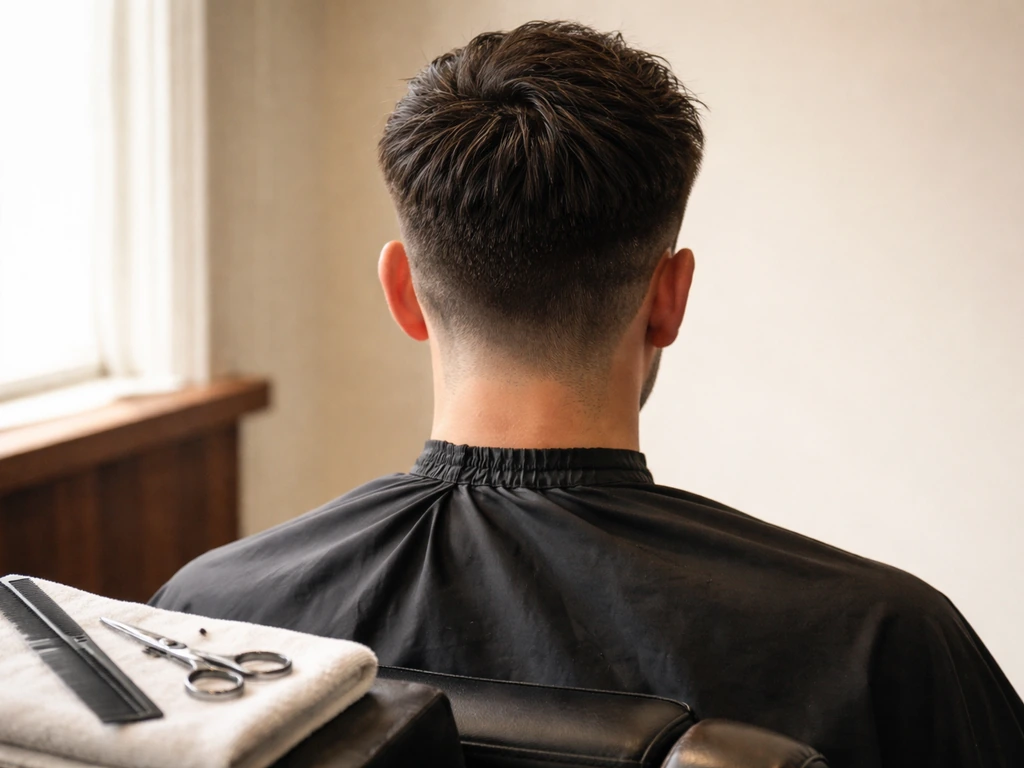
This is where a lot of people get confused. Trimming does not slow growth, because hair grows from the root, not the tip. But trimming too much, too often, removes the length you are working to accumulate. The goal during grow-out is strategic maintenance, not regular trims.
- Do get the neckline and sides tidied every three to four weeks during the early stages to avoid looking like the grow-out is just neglect
- Do ask for a shape-up rather than a length cut if you visit a barber or salon
- Do trim the back if it starts to grow into a mullet shape while the top is still catching up
- Do not trim the top during the first four to five months unless there is a specific uneven patch that needs fixing
- Do not let a stylist 'even it up' by cutting the top to match shorter sections, as that removes progress
- Do consider a single trim around month five or six to remove any dead ends and help the style sit better, especially if hair is damaged or was previously colored
The general rule: trim the perimeter, protect the length on top. If you are at the four-month mark and someone suggests a cut 'to help it grow,' skip that appointment.
What actually speeds up growth (and what does not)
Hair growth is primarily genetic. There is no supplement, serum, or technique that will move you from 0.5 inches a month to 1. A commonly cited hair growth rate is about 0.35 mm/day, which corresponds to about 1 cm per month (approximately 0.39 in/month). 5 inches a month consistently. That said, there are real things that can keep your growth at its personal maximum and avoid things that slow it down.
| What actually helps | What does not (or barely helps) |
|---|---|
| Eating enough protein and overall calories | Biotin supplements if you are not deficient |
| Managing stress (high cortisol disrupts hair growth cycles) | Scalp massage (minimal, if any, measurable effect on rate) |
| Treating scalp conditions like seborrheic dermatitis promptly | Exotic hair growth oils without clinical backing |
| Getting enough sleep | Frequent trims to 'stimulate growth' |
| Keeping the scalp clean and healthy | Collagen supplements in otherwise healthy people |
| Addressing any nutritional deficiencies with a doctor | Wearing hats (hats do not prevent growth) |
On biotin specifically: the evidence for biotin supplements helping hair growth is strongest in people who are actually biotin-deficient. If you eat a reasonably varied diet, you are probably not deficient, and taking extra biotin is unlikely to noticeably change your growth rate. Save the money. The bigger levers are sleep, nutrition, and scalp health.
Color, damage, and maintenance during the grow-out
If your hair was previously bleached, dyed, or chemically treated before the shave, the new growth coming in will be your natural color and texture. This creates a visible line of demarcation as it grows, which is the same two-tone challenge people manage during any color grow-out. The options are: embrace it and let it grow, use a demi-permanent or semi-permanent color to blend the new growth with the old, or keep the contrast intentional with something like a dark root toner.
For hair that is currently colored or gets colored during the grow-out, UV exposure is a real concern. Sun fades color faster and dries out the hair shaft. Using a leave-in conditioner or hair SPF product when you are spending time outside helps maintain color and keeps the strand healthier. This matters more as length increases, because longer hair carries more cumulative UV exposure. The Cleveland Clinic notes that UV rays weaken the hair's structure and fade color, so SPF-containing hair products or a physical barrier like a hat are worth using.
Heat damage is worth being deliberate about during grow-out too. Shorter hair sits closer to the scalp and the root, so excessive heat styling on already short lengths can cause real damage to new growth. If you are using a dryer or iron, use the lowest effective heat setting and a heat protectant. Bleached or chemically processed new growth is especially vulnerable because the cuticle is already compromised.
Common problems and how to fix them
Cowlicks and growth direction issues
Cowlicks are much more visible at short lengths because there is not enough weight to pull them down. They almost always become easier to manage as hair gets longer and heavier. In the meantime, blow-drying with a brush in the opposite direction of the cowlick and finishing with a light hold product while the hair is still warm can train it temporarily. Styling around a cowlick, rather than against it, works better than fighting it every morning.
Uneven patches
Uneven growth at short lengths is extremely common and usually resolves as length increases. Some follicles are in different stages of their growth cycle, which is why one patch seems to sprint ahead while another lags behind. If you are noticing significant patchiness that is not evening out after two to three months, that is worth mentioning to a dermatologist, as it can occasionally signal alopecia areata or a scalp condition.
Thinning at the crown
Growing out a shaved head can be alarming if the crown looks thin during the regrowth process. Often this is just the natural swirl pattern of growth around the crown becoming visible at short lengths, combined with the fact that hair at the crown grows slightly more slowly for many people. If thinning at the crown was present before shaving and seems more pronounced now, it may be worth speaking with a dermatologist, particularly if you are concerned about androgenetic alopecia. Products like minoxidil have clinical evidence behind them for that specific concern, but that conversation belongs with a doctor rather than a grow-out guide.
Scalp dryness, itching, and dandruff
A freshly shaved or very short scalp is exposed to more environmental stress than a scalp covered by longer hair. Dryness, flaking, and itching are all common during the grow-out. If you are seeing flaking, try a shampoo with zinc pyrithione, selenium sulfide, or ketoconazole, all of which the American Academy of Dermatology lists as effective for dandruff and seborrheic dermatitis. Washing two to three times a week is usually enough, and overwashing can actually make dryness worse. If symptoms are severe or persistent, a dermatologist can determine whether something else is going on.
Your next steps based on where you are right now
The most useful thing you can do is match your actions to your current stage rather than worrying about the whole timeline at once. If you want a clear buzz cut grow out timeline to follow, use the stage-by-stage milestones above to plan trims and styling. Here is a practical breakdown of what to focus on depending on where you are today.
| Where you are | What to do right now |
|---|---|
| Just shaved / week 1–2 | Moisturize the scalp daily, apply sunscreen if outdoors, and do nothing to the hair itself except let it grow |
| Stubble / weeks 3–4 | Start a gentle shampoo routine two to three times a week; resist the urge to shave again |
| Month 1–2 | Get a neckline cleanup at the barber but leave the top alone; experiment with a light product to see how your texture behaves |
| Month 2–3 | Keep back and sides clean every three to four weeks; start thinking about whether you want a fade, undercut, or even growth all over |
| Month 3–4 (awkward phase) | Use matte clay or light pomade for direction; lean on hats or headbands when you need a break from styling; do not cut the top |
| Month 4–5 | Consider a single shaping appointment, no length removed from the top, just shaping around the sides and neckline |
| Month 5–6 | You now have real styling options; decide on a direction (fringe, side part, textured crop) and ask a stylist to help shape toward it |
| Month 6+ | Full grow-out maintenance mode: trim only to remove damage, protect color from UV, and focus on texture-specific care for your hair type |
The shaved head grow-out is one of the longer hair transitions out there, but it is also one of the most predictable. You know exactly what is coming at each stage, and now you have a plan for handling it. The awkward months are real, but they are also finite. Most people who stick it out past month four are genuinely glad they did. If you are aiming for a pixie length instead of a full grow-out, the pixie grow out timeline can help you map out the awkward stages and what to do at each one.
FAQ
How often should I wash my scalp during a shaved head grow out?
Unless you are dealing with scalp symptoms, you generally do not need to wash more often just because the hair is short. Start with 2 to 3 washes per week, then adjust based on oiliness. If you’re using scalp oil, keep it light and only on the scalp, because product that sits on short hairs can transfer and make stubble feel sticky or irritated.
Does trimming during the shaved head grow-out make my hair grow faster?
If you trimmed the perimeter, you are not increasing growth speed, but you can still improve how the grow-out looks. A “maintenance” cut usually means cleaning the neckline and sides while leaving the top untouched. If a stylist suggests taking length from the top “to help it grow,” that’s a red flag, because it removes the very inches you are trying to accumulate.
What’s the best way to wear hats or helmets during the awkward grow-out stage?
If you wear hats, aim for clean, breathable hats and avoid trapping sweat against the new growth for long periods. Sweat and friction can worsen itching and ingrowns during the stubble phase. When you get home, rinse your scalp or wash if you tend to get flaking, and consider a light, non-comedogenic moisturizer rather than heavy oils.
What should I do when my hair looks messy but is still too short to style?
Treat the “in-between” phase like a styling reset, not a failure. Use a small amount of matte clay or cream on damp hair to give direction, and blow-dry in the direction you want the hair to fall when it is still warm. Overapplying product at short lengths is a common mistake, it can make hair clump and look even shorter.
How do I manage cowlicks or hair that sticks up during the grow-out?
Train with direction when the hair is slightly longer, not when it’s super short. For cowlicks, blow-dry with a brush opposite the cowlick, then finish with a light hold product once the hair is warm, that helps it stay in place for the day. Trying to press cowlicks down with heavy gels too early often backfires because it can feel crunchy or separate as it dries.
How can I accurately track the shaved head grow-out when hair shrinks (especially curly or coily)?
If your goal is to reach a specific length, measure from the scalp to the end of the longest strands on top (not the shortest side). Because shrinkage varies by texture, curly and coily hair may look shorter while still measuring similarly. If you track progress, take photos in the same lighting every couple of weeks to compare the overall look, not just the number.
When should I stop the grow-out plan and see a dermatologist for thinning?
If shedding or patchiness is new or worsening, do not assume it will resolve with time. It’s reasonable to watch the pattern for a short window, but if you notice distinct round patches, increasing thinning at the crown, scalp pain, or rapid change, a dermatologist should evaluate sooner. This is especially important if regrowth concerns existed before shaving.
How do I style my shaved head grow-out without causing heat damage?
Heat can be limited without abandoning styling. Use the lowest effective setting, apply heat protectant, and keep sessions short since short hair is closer to the scalp and gets more frequent heat contact during grow-out. If you are bleaching or have chemically treated hair, prioritize air-drying or low-heat methods because new growth can still be vulnerable.
My regrowth is a different color, what’s the easiest way to handle the two-tone line?
If you’re going from colored to natural or maintaining two tones, the simplest decision aid is whether you want contrast or blend. For a soft transition, use demi-permanent or semi-permanent color that matches the old shade and focus it on the ends to reduce harsh lines. For intentional contrast, a dark root toner works best when applied selectively so the regrowth line looks deliberate instead of patchy.
How can I prevent ingrowns and irritation during the first month of regrowth?
Over-exfoliating is a common mistake at this stage. For irritation and ingrowns, use a gentle exfoliating scrub about once weekly, and avoid daily scrubs or harsh acids on a raw-feeling scalp. If itching is more than mild or persists, switch to an anti-dandruff type shampoo routine and consider getting guidance based on your scalp pattern.