
Growing out an asymmetrical pixie cut takes roughly 12 to 18 months to reach a proper bob, and about 2 to 3 years to hit shoulder length, based on the average growth rate of about half an inch per month. If you are also working with a buzz cut or close-shaved section, the buzz cut grow-out timeline can feel different, so plan trims around how that section blends in.
How to Grow Out an Asymmetrical Pixie Cut Step by Step

Marcus Vickers
7 May 2026

The asymmetry is what makes this particular grow-out trickier than a standard pixie: one side is already longer, so the two sides hit awkward in-between lengths at completely different times. But you can absolutely get through it without starting over, as long as you have a clear picture of what each stage looks like, a trimming strategy that keeps the shape intentional, and a few everyday styling tricks to make the mismatch look deliberate rather than accidental.
StatPearls notes that hair growth occurs in phases, such as anagen, the active growth phase [each stage looks like](https://www. ncbi. nlm. nih.
gov/books/NBK499948/). If you are wondering should i grow out my pixie, the key is having a plan for trimming and styling so the mismatch looks intentional.
What makes asymmetrical pixies tricky to grow out
A standard pixie grow-out is already a test of patience. An asymmetrical pixie adds a layer of complexity because you are essentially growing out two different haircuts at the same time. The shorter side (often cropped close to the ear or even undercut) is weeks or months behind the longer side in terms of usable length. That means while the long side might already be tucking behind your ear and brushing your jaw, the short side is still sitting at temple length or shorter, and the contrast between the two can look unintentional if you are not actively managing it.
If you also have an undercut or close-shaved section at the back or side, that section behaves almost like a buzz cut grow-out within the larger style. If you are dealing with a close-shaved or buzz-like phase, it helps to review a shaved head grow out timeline to estimate when that section starts blending in. It takes several months just to blend in with the surrounding hair, and until it does, the shape can feel patchy or unbalanced.
Thick hair can make this even more pronounced because the volume difference between a thick long side and a still-short thick side is quite dramatic. For thick hair, use these same grow-out basics but be extra mindful with detangling, conditioning, and heat control to prevent breakage as the cut regrows how to grow out a pixie cut thick hair.
Natural texture, curl pattern, and hair health all affect how quickly each section catches up, so your timeline will be personal to you.
What to expect as it grows: a stage-by-stage timeline
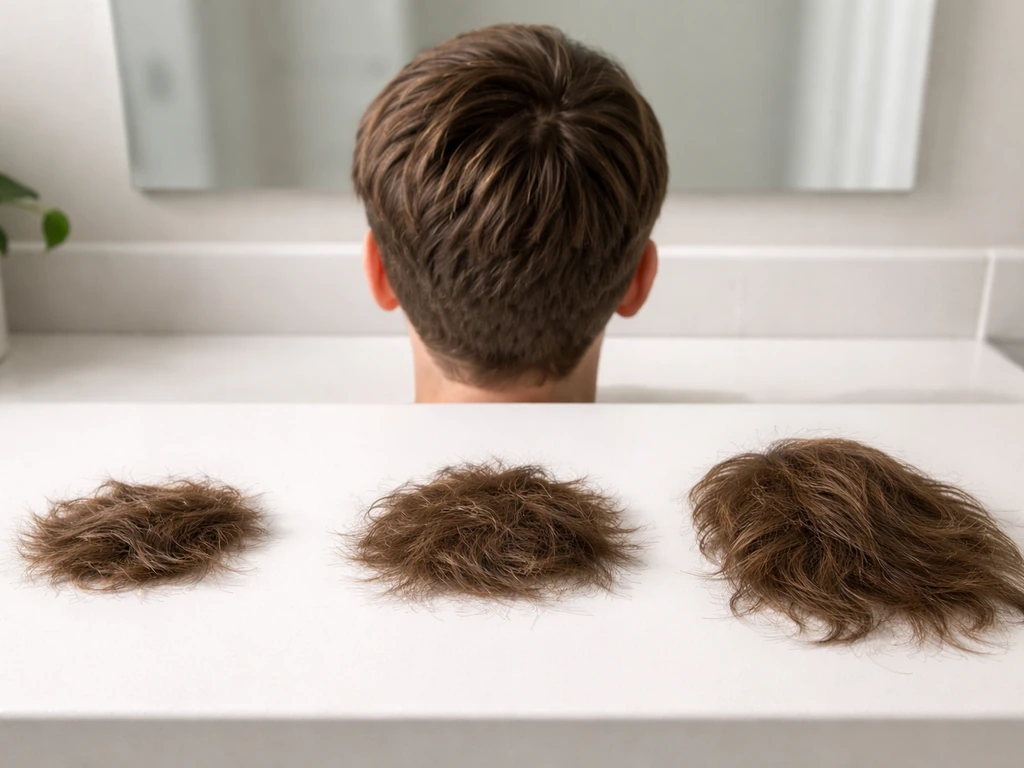
The half-inch-per-month rule is your best planning tool here, though genetics, health, hormones, and age all influence your actual rate. Use the stages below as a general map, not a strict schedule. This pixie grow out timeline can help you plan those salon visits and styling checkpoints so the transition feels less unpredictable.
| Stage | Approximate Timeframe | What's Happening | Main Challenge |
|---|---|---|---|
| Early grow-out | Months 1–2 | Short side adds 0.5–1 inch; long side gains the same but already has more length to work with | Shape looks undefined; asymmetry feels random rather than styled |
| Longer pixie | Months 2–4 | Long side reaching chin or jaw; short side at ear level or just past it | Short side pokes out awkwardly; undercut grows visibly mismatched |
| Pre-bob / shaggy phase | Months 4–8 | Long side at or past chin; short side catching up toward jaw | Both sides are mid-length but still uneven; styling becomes harder |
| Early bob territory | Months 8–12 | Short side approaching chin length; long side near jaw to shoulder | The gap between sides narrows but is still visible; layers start to blend |
| Even-ish bob | Months 12–18 | Sides are within 1–2 inches of each other; bob shape becomes achievable | Patience; ends may be uneven and need shaping cuts |
| Shoulder length | 2–3 years | Full length with more styling options | Maintaining health of older ends while new growth catches up |
Around months 2 to 4, you will likely hit the hardest phase. The long side is already brushing your jaw and looking like the beginning of a bob, while the short side still reads as a pixie. This is the stage where most people consider cutting it all short again. The honest advice: do not. You are past the worst of the short side by this point, and a few targeted shaping visits can make this stage look intentional.
How to keep the shape without restarting the cut
The goal during grow-out is not to let both sides race each other unmanaged. You want the short side to catch up to the long side gradually, while keeping the overall silhouette looking purposeful. That means strategic trims, not stops to the grow-out process.
Trim the long side, not the short side
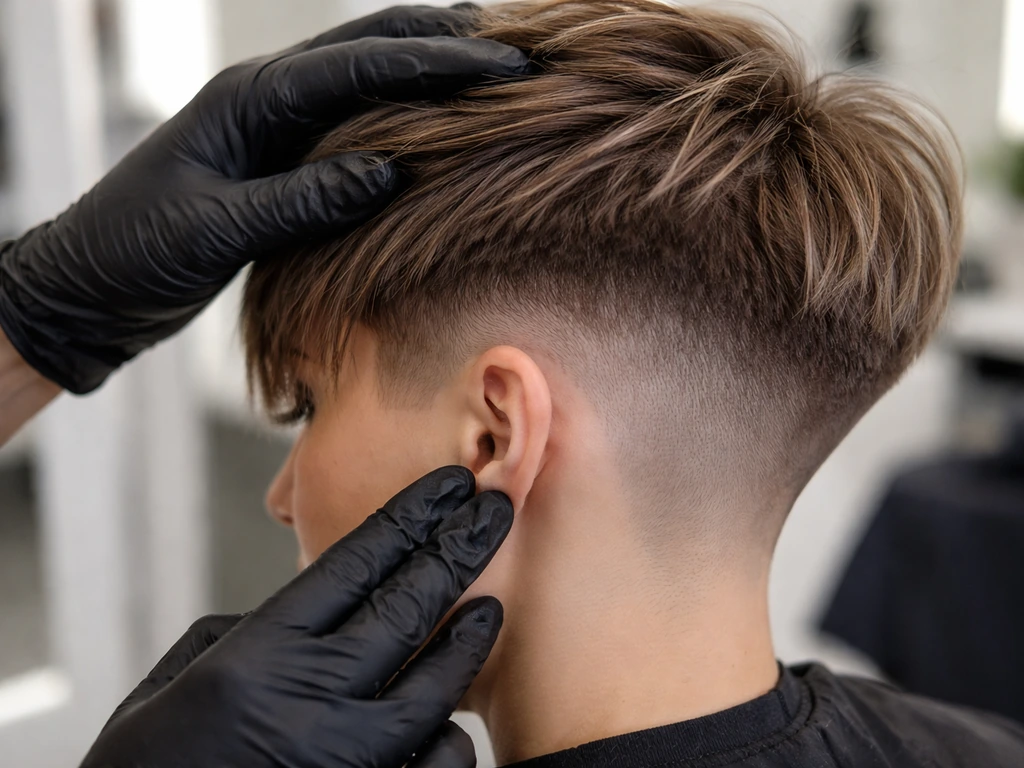
During the first several months, ask your stylist to dust the ends of the longer side (removing split ends and just a sliver of length) while leaving the short side completely alone to grow. This closes the gap incrementally without sacrificing the progress you have made on the longer side. Trimming every 4 to 6 weeks is a reasonable cadence for keeping the asymmetry looking controlled rather than overgrown. Once the short side reaches ear level or past, you can start shaping both sides more evenly.
Blending undercuts and close-shaved sections
If you have an undercut, the section needs blending every few visits so it does not grow out as a sharp demarcation line. Ask your stylist to gradually taper or blend the undercut into the surrounding hair rather than keeping the hard line as growth happens. This avoids the patchy, grown-out-undercut look and makes the whole shape look more cohesive during the transition.
Starting from an asymmetrical bob instead
If your starting point is more of an asymmetrical bob or a longer asymmetrical cut rather than a true pixie, you are already several months ahead. The same strategy applies: preserve the shorter side's growth completely, do minimal dusting on the longer side, and use shaping cuts to soften the line of the shorter side as it gains length. Your timeline to an even bob is realistically 6 to 12 months rather than 12 to 18.
Everyday styling when the two sides just will not match
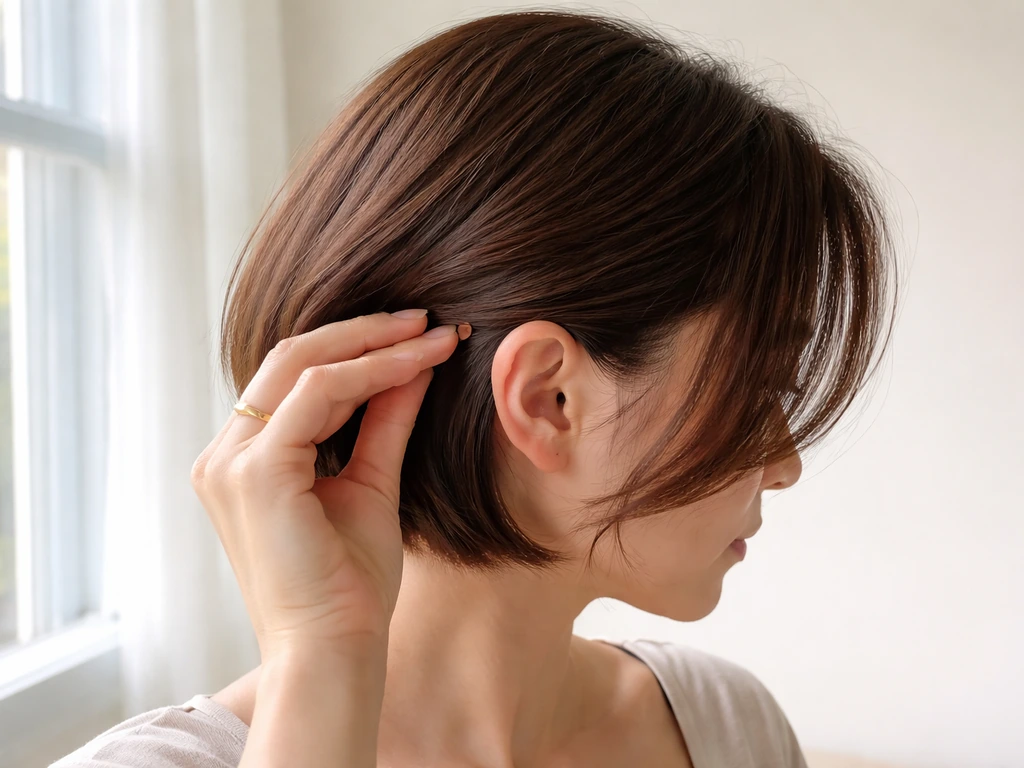
Styling is where you buy yourself the most grace during the awkward months. The short side is always going to be the problem area, but there are reliable ways to manage it.
- Tuck the short side behind your ear and secure with a small bobby pin or clip. This gives the illusion of a more even length and keeps the short side from sticking out at odd angles. The technique works best from about month 2 onward when there is enough length to stay in place.
- Blow-dry the short side away from your face with a nozzle attachment to smooth the cuticle flat and add direction. Directing airflow with a nozzle and using a fine-tooth comb to create a clean side part helps both sides look more intentional, especially during the poke-out phase.
- Change your part direction to redistribute weight. If the asymmetry is creating a visual imbalance, blow-drying your hair in a new part direction can visually even things out. Blow-dry in the new direction while hair is damp so the part sets.
- Use a light pomade or styling cream on the short side to keep it smooth and pushed in the direction you want, rather than letting it dry in whatever direction gravity takes it.
- On days when nothing cooperates, lean into it. A small clip, decorative pin, or headband across the shorter section can shift the look from 'growing out awkwardly' to 'intentional textured style.'
Texture sprays and light hold products are genuinely helpful during the shaggy pre-bob phase (months 4 to 8) when you have enough length to scrunch but not enough to fully style. A small amount of mousse or curl cream on damp hair, followed by air-drying, can make a choppy asymmetrical shape look more like a deliberate tousled style than a mistake.
Bangs, parts, and what to do when one side races ahead
One of the quieter frustrations in growing out an asymmetrical pixie is that even within each side, different sections grow at slightly different rates. The front fringe area, if you had any, tends to feel the most in-between because there is nowhere to tuck it and it falls in your face before it is long enough to style. If you had micro-length bangs, be prepared: it can take close to six months before they have grown enough to be parted, swept, or pinned back cleanly.
For the front sections, consider sweeping them to one side with a small amount of hold product or pinning them back temporarily. Changing your part from center to side (or vice versa) is one of the most effective free tools available during grow-out. A deep side part can redistribute the weight of the longer side and make the shorter side look like a deliberate undercut rather than a section that has not caught up yet. Blow-drying in the new direction while hair is damp sets the part so it holds through the day.
If the long side of your asymmetrical cut is genuinely growing faster than the short side (which is common if the short side was closely shaved and needs to push through the scalp-level phase first), the gap will feel dramatic around months 3 to 5. The best approach is to keep trimming micro-amounts from the long side every 4 to 6 weeks rather than letting it pull too far ahead. Your stylist can also point-cut or texturize the long side so it does not look blunt and heavy next to the still-growing short side.
Keeping your hair healthy while it regrows

Short hair in a grow-out phase is more delicate than it looks. The ends of the long side may be old and dry from previous cuts and coloring, while the short side is fresh but fragile. Breakage on either side will set back your timeline and make the shape look ragged, so it is worth taking hair care seriously even if you have never been a product person.
- Use a leave-in conditioner on damp hair, spraying from mid-strands to the ends and working it through with your hands. This reduces frizz, makes detangling easier, and protects the ends that have been through the most.
- Detangle with a wide-tooth comb rather than a regular brush, especially when hair is wet. Wet hair is significantly more prone to breakage, and a wide-tooth comb distributes tension more evenly. Let hair dry slightly before combing if you can.
- Apply a heat protectant every single time you blow-dry or use any hot tools. During grow-out, when the ends are often driest, heat without protection accelerates breakage and makes regrowth look dull and frizzy.
- Go easy on backcombing or teasing the short side to create volume. It feels helpful in the moment but causes breakage and tangles that are very hard to manage at short lengths.
- If you color your hair, be mindful of chemical overlap on the older sections. Box color applied repeatedly to the same ends causes cumulative damage. Ask your colorist about techniques that protect already-processed lengths while refreshing roots.
Signs that breakage is becoming a real problem include hair that looks frizzy even when freshly conditioned, ends that feel rough or see-through, and shedding that feels higher than usual. These are signals to pull back on heat, add a protein treatment, and give the ends a small trim even if you do not want to lose length.
When to see your stylist and how to know the worst is behind you
The grow-out phase does not mean avoiding the salon until you have a full head of hair. Strategic visits are actually what makes this process feel manageable rather than chaotic. A good rule of thumb is every 4 to 6 weeks during the first six months (when the shape changes fastest and needs the most active management), and every 6 to 8 weeks from month 6 onward as the two sides converge. Marie Claire also recommends baby trims every 6 to 8 weeks to help prevent split ends from progressing every 6 to 8 weeks from month 6 onward.
You will know you are past the worst phase when both sides are long enough to style in the same basic way, even if they are still not perfectly even. That usually happens somewhere between months 8 and 12 for most people growing out a true asymmetrical pixie. The short side will have enough length to tuck, sweep, or blow-dry into the overall shape, and the day-to-day styling stops feeling like damage control.
At that point, you have a choice. You can ask your stylist to cut a proper even bob (accepting a small amount of lost length from the long side to match the short side), or you can keep growing both sides out together toward a longer shape. Either is a valid direction. The even bob option gives you a clean, intentional result faster. Continuing to grow gives you more length eventually but requires another 6 to 12 months of patience and maintenance.
Your practical next-steps checklist
- Book a shaping appointment with your stylist in the next 4 to 6 weeks and specifically ask them to preserve the short side's growth while removing just split ends from the long side.
- Start using a leave-in conditioner and heat protectant as part of your regular routine if you are not already.
- Practice tucking the short side behind your ear and pinning it to see how it looks. If it stays in place, make it your default style for the awkward months.
- Experiment with a new part direction. Blow-dry in the new direction while damp and see whether it changes how balanced the cut looks on you.
- Track your progress with a monthly photo so you can actually see growth that is invisible day-to-day.
- If you have an undercut, ask your stylist to begin blending it gradually at each visit so it does not grow out as a hard line.
- Set a realistic milestone: aim for 'both sides past the ear' as your first goal, rather than focusing on full evenness too early.
Growing out an asymmetrical pixie is a longer project than growing out a standard pixie, simply because the two sides are starting from such different lengths. If you are wondering how to grow out a pixie step by step, the key is managing each side on its own timeline. But it is very manageable once you stop expecting both sides to move together and start treating them as two sections on slightly different schedules.
With some targeted trimming, consistent hair care, and a few styling strategies that make the mismatch look intentional, you can get to a wearable longer shape without ever going back to square one. If you are learning how to grow out a pixie cut black hair, keep your trims and styling consistent to support the transition from short to longer lengths.
FAQ
When should I stop being patient and start trimming the short side during the awkward months?
If your short side was shaved extremely close, keep it growing for at least one “blending window,” usually around weeks 8 to 16, before doing anything that removes length from the longer side aggressively. The goal is to wait until the short side reaches ear or temple level so blending trims can soften the line without causing an obvious dip.
Can I even things out faster by asking my stylist to thin the long side?
Yes, but do it strategically: ask for point-cutting or light texturizing on the longer side only, then keep the short side completely intact between appointments. If you lighten or thin the long side without adjusting the short side, you can create an even more noticeable imbalance.
How can I tell whether my next salon visit is actually necessary or if styling can cover it?
A safe approach is to do it as a “dry-run” style first, then decide on a trim. If a slick back or side part makes the short side look neat and the long side still looks healthy, you can often skip a salon visit that cycle and focus on styling and breakage control.
Does hair color change the way I should plan grow-out trims for an asymmetrical pixie?
If you have color, schedule trims and color touch-ups based on banding risk: the shorter side will reach exposed root stages sooner, and the longer side may start showing older dye ends. Consider waiting on full retouches until both sides are at a similar length around months 6 to 9, unless you need to cover new root growth for work or events.
What styling mistakes most often set back a pixie grow-out (especially on the short side)?
Heat can worsen the “ratty” look because short layers frizz faster and break more easily. Keep tools to low to medium heat, use a thermal protectant every time, and focus on blow-drying damp hair, not re-styling dry hair repeatedly.
What if the short side feels like it is stuck and not progressing on schedule?
If you notice the short side is still not catching up after about 4 to 5 months from your last cut, switch to a heavier styling strategy rather than more trimming. Ask your stylist for a taper blend on the undercut area and use a deeper side part to redistribute weight while you wait.
Does hair texture (straight vs wavy vs curly) change the grow-out timeline?
Wearable length differs by texture. Fine, straight hair often looks uneven sooner because it lies flat, while wavy or curly hair can “hide” gaps longer but may create bulk at the join. Adjust expectations: fine hair may need slightly more frequent mini trims (every 4 to 5 weeks), while textured hair can sometimes stretch to 6 weeks if breakage is controlled.
How should I use clips or pins without causing breakage or dents?
If you use clips, avoid tight snagging on the fragile fringe. Use smooth, non-metal clips if possible, change placement daily, and remove gently to prevent traction. For daily control, pin in short sessions after showering rather than sleeping with tightly secured sections.
Should I cut to an even bob at the end of the worst phase, or keep growing longer?
A hard choice point is around months 8 to 12 when both sides can be styled similarly. Choose an even bob if you are tired of daily mismatch styling and want a clean, low-maintenance shape. Choose to keep growing if you still want more length and can commit to another maintenance cycle.
How do I prevent the longer side from looking ragged even when it is growing?
Focus on the “ends care” problem: damaged ends on the longer side will keep splitting and make the hair look shorter than it is. Use a conditioner regularly, consider a protein-moisture balance (not frequent heavy protein), and keep trims small but consistent when you see roughness or see-through ends.