
A buzz cut grows out at roughly 1 cm (about half an inch) per month, which means that if you started with a #2 guard (6 mm), you'll have close to an inch of hair within about three months and enough length for most short styles within six to nine months. That's the honest answer upfront. The harder part isn't the math, though. It's the awkward middle weeks where your hair is too short to style and too long to look intentional. This guide walks you through every stage, month by month, so you know exactly what to expect and what to do at each one.
Buzz Cut Grow Out Timeline: Weeks to Months Guide

Marcus Vickers
16 Apr 2026

Buzz cut lengths and what you're actually starting from
Before mapping out the timeline, it helps to know your starting point. Clipper guard numbers translate directly to hair length, and that length affects how long every stage will take. Haircut guard charts also map #2 guards to about 1/4 inch (6 mm), which is commonly described as a short buzz length #2 is about 1/4 inch (6 mm). Here's a quick reference:
| Guard Number | Hair Length (mm) | Hair Length (inches) | Description |
|---|---|---|---|
| #0 | 1.5 mm | 1/16" | Essentially skin-level, nearly shaved |
| #1 | 3 mm | 1/8" | Very close, slight shadow on scalp |
| #2 | 6 mm | 1/4" | Classic short buzz, visible but very close |
| #3 | 9 mm | 3/8" | Short but textured, beginning of definition |
| #4 | 12 mm | 1/2" | Approaching a crew cut length |
| #6 | 18 mm | 3/4" | Short crop territory |
| #7 | 21 mm | 7/8" | Just under an inch, easy to style slightly |
| #8 | 25 mm | 1" | Short but workable with product |
The grow-out experience from a #0 or #1 is dramatically different from growing from a #4 or #6. If you were shaved close to skin, you're starting from zero and every stage of weirdness will hit you. If you were at a #4 or higher, you're already past the first few awkward weeks and your transition will be slightly smoother. Keep your starting number in mind as you read through the timeline below.
The full grow-out timeline, week by week and month by month
Hair grows at roughly 0.3 to 0.5 mm per day, which adds up to about 1 cm per month on average. Some people grow faster, some slower, and factors like age, health, and genetics play a role. But the 1 cm per month figure is a reliable working number for planning purposes. Here's what that looks like in practice:
Weeks 1 to 2 (0–6 mm from a #0 start)
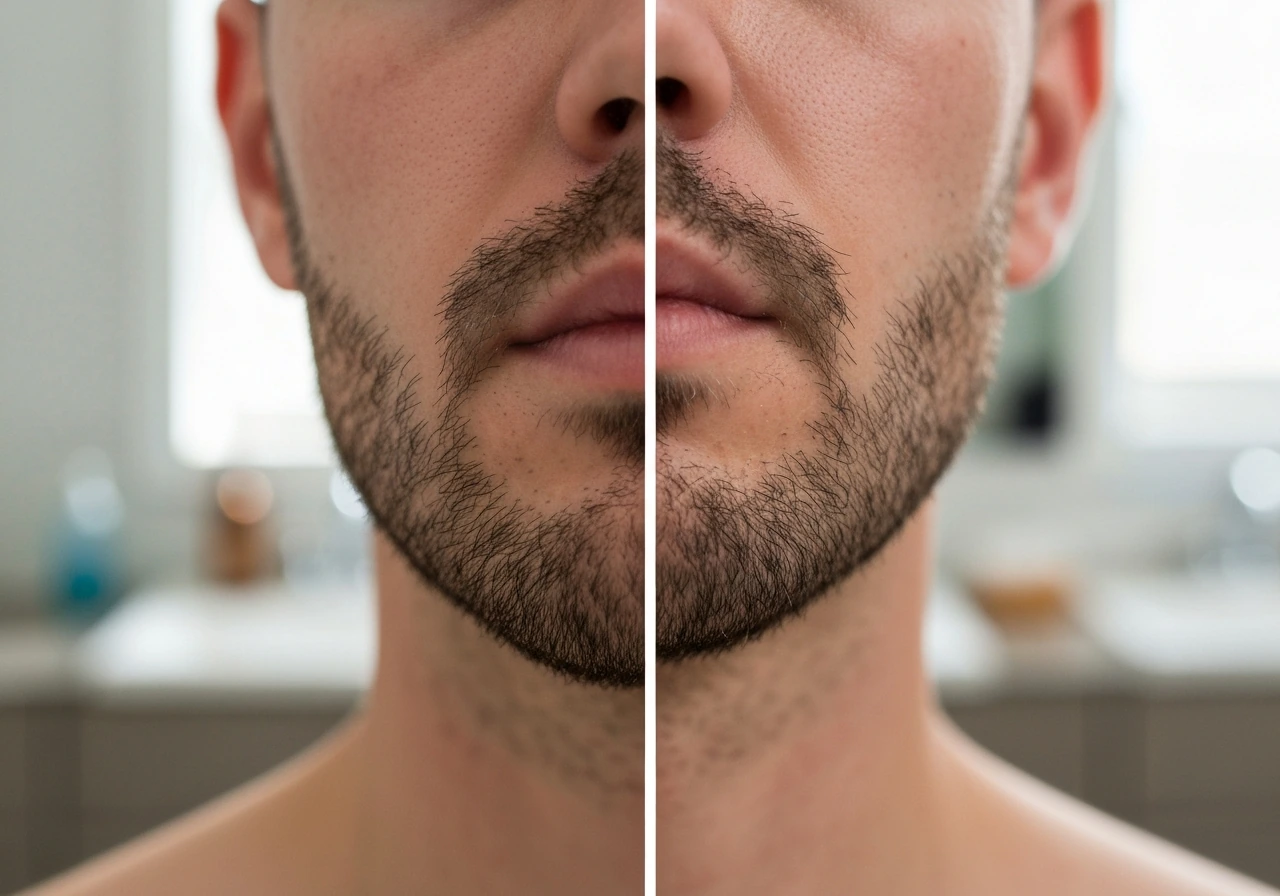
If you were shaved at a #0, you're dealing with pure stubble. It looks intentional at this stage if you keep the edges clean, but there's nothing to style. The goal here is just maintenance: keep the neckline tidy and the skin clean. If you started at a #2, you're already here and have a couple of millimeters of texture to work with. Either way, the first two weeks are mostly a waiting game.
Weeks 3 to 4 (roughly 6–12 mm, or 1/4" to 1/2")
This is where most people growing from a #0 or #1 first hit an awkward moment. You have enough growth to see the shape of your natural hair, including any cowlicks, uneven patches, or growth directions that the buzz was hiding. The hair on the sides and back tends to grow at different rates than the top, and some sections may look fluffier or more uneven than others. It still reads as intentional if you keep the neck and edges clean, but resist the urge to buzz it back down. You're just starting to build something.
Month 2 (roughly 1.5–2 cm, or about 3/4")
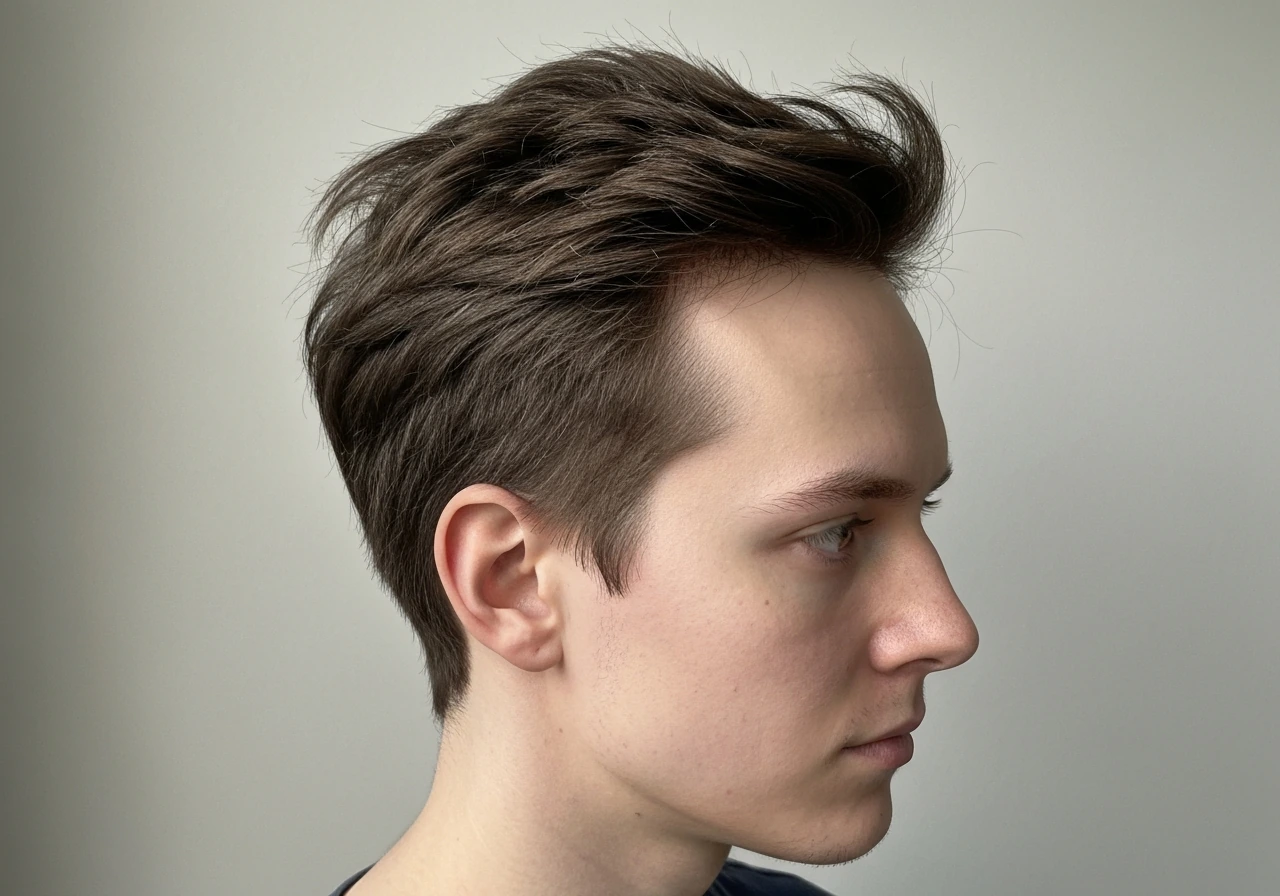
Here's the first true awkward stage for most people. The hair on top is long enough to show direction and texture but not long enough to lay flat or cooperate with product. Cowlicks and growth patterns become very obvious. The sides may start to puff out slightly. This phase feels like you've lost the clean look of the buzz without gaining anything useful yet. Staying consistent with edge cleanup is essential. A neck cleanup every two weeks makes a meaningful difference to how intentional the overall look feels.
Month 3 (roughly 2.5–3 cm, or just over 1")
By month three you're solidly in crew cut or short crop range. The top has enough length to brush forward, push back slightly, or begin forming a texture with a matte product. This is usually when people start to see what their hair naturally wants to do, and it's genuinely useful information. Some hair types are hitting a second awkward patch at this point where the sides are full but the top isn't long enough to contrast against them yet.
Months 4 to 6 (roughly 3–6 cm, or 1.5" to 2.5")
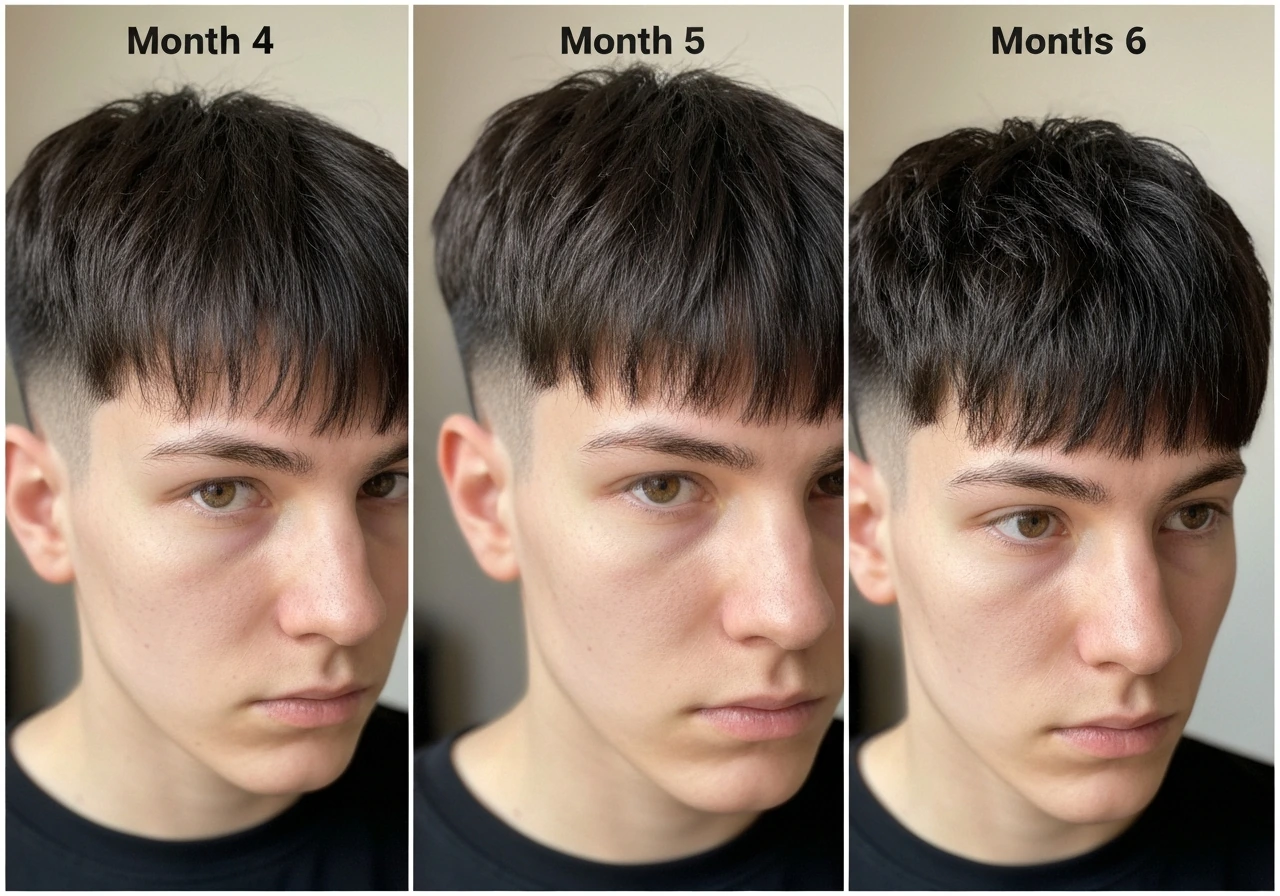
This stretch covers a lot of ground. By month four you can usually form a proper side part on most hair types. By month five you're in textured crop or short fringe territory. By month six, most people can achieve a proper short men's style or a short women's style with some layering. This is also the window where straight, wavy, and curly hair start diverging significantly in how they behave and what styling works.
Months 7 to 12 (roughly 6–12 cm, or 2.5" to 5")
By month seven you're looking at lengths that support a proper taper, an undercut fade, or a short bob for those targeting that style. Month nine brings most people to what would be considered a short-to-medium style range. By month 12, you're solidly in medium-length territory, with enough to tuck behind the ears and begin growing into longer styles if that's the goal.
The awkward stages and how to get through them without buzzing it back
There are two major awkward windows most people hit. The first is around weeks three to five, when you have enough growth to show imperfections but not enough to do anything about them. The second is around months two to three, when the sides and back are full but the top lacks the length to balance them. Both are survivable. Here's how to handle each specific problem:
- Cowlicks and springs: Hair near a cowlick can spring up or out when there isn't enough weight to hold it down. This usually resolves on its own by month two or three when the hair gets heavier. In the meantime, a small amount of matte paste pressed flat (not pulled) can tame a cowlick temporarily without making it worse.
- Sides puffing or flipping: This happens when hair near the sides or nape is cut against its natural growth direction and there's no weight to anchor it. Don't trim the sides short again. Instead, let them grow out a bit more so the weight of the hair itself starts cooperating. This is a classic case of where cutting back shorter makes the problem worse.
- Neck hair creating a messy collar line: This is one of the most common complaints and the fix is simple. A neckline cleanup every two weeks, either at a barbershop or carefully at home, keeps the silhouette sharp even when the rest is growing. Avoid going too high when you trim or you'll create a harder line that looks even more unnatural as it grows.
- Uneven patches or patchiness: Hair doesn't grow at exactly the same speed everywhere. Some areas may lag noticeably. If the difference is subtle, product and a brush can camouflage it. If it's significant or persistent, it's worth talking to a dermatologist, as nutritional factors or scalp health can play a role.
- The 'not a buzz, not a hairstyle' zone: This usually hits hardest around months one to two. The honest solution is accepting it as a phase and keeping everything clean and neat around the edges. A cap or hat is a completely valid strategy. Not all days have to be perfect hair days.
When and how to trim during the grow-out (without losing progress)
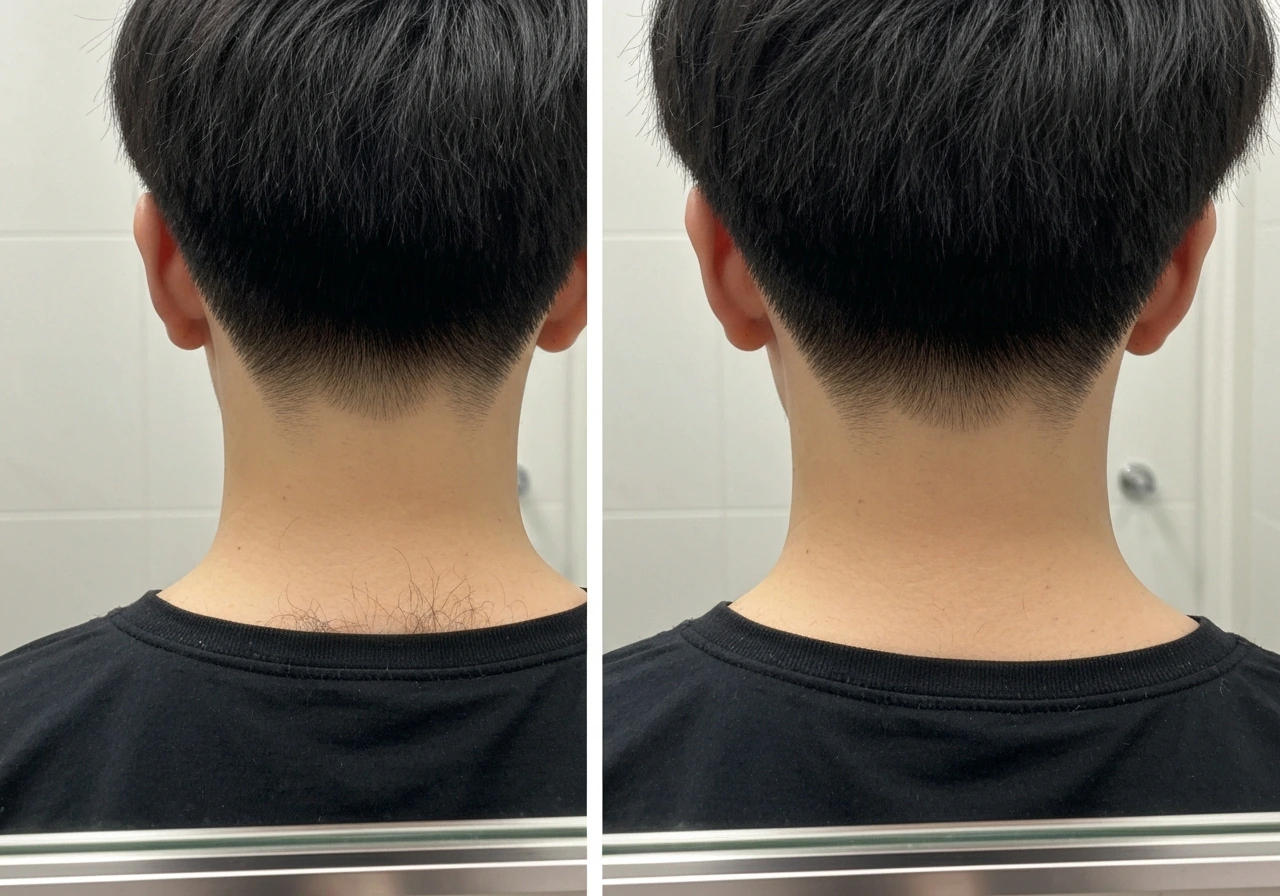
The biggest mistake people make during a grow-out is getting a full cut every time the shape starts to look off. Every cut during a grow-out should be targeted and minimal. The goal is to shape, not to shorten overall. Here's the framework:
- Neckline cleanup every 2 weeks: Keep the neckline defined without raising it. Avoid hard, sharp lines because they grow out unnaturally and look worse between visits than a softer, tapered neckline would.
- Side and ear area cleanup at month 2 or 3: If the sides are growing out unevenly or getting puffy, a very light taper cleanup (not a full clipper pass) from a barber can restore shape without losing top length.
- Shape trim at month 4 to 5: This is the point where a skilled barber can take a little length off the sides and refine the shape without touching the top much, which actually helps the top look longer by contrast. This is the 'grow-out haircut' approach, where you're getting cuts that serve the grow-out rather than fight it.
- Ask explicitly: When you go to a barber or stylist during a grow-out, say 'I'm growing this out, I just need the shape cleaned up without losing length.' Most professionals will understand exactly what you mean.
If you're also managing a more complex undercut or fade in your grow-out, the same logic applies. For comparison, the grow-out process from a fully shaved head follows a nearly identical pattern but with an even longer first stage before any styling is possible.
Styling at each length: what actually works
The styling options available to you change meaningfully every few weeks during the early grow-out. Here's a practical breakdown by approximate length:
Under 1 cm (first 3 to 4 weeks from a #0)
There's no real styling possible at this length. The best move is keeping the skin clean, the neckline sharp, and the scalp moisturized. A well-maintained close cut looks intentional. A neglected one doesn't.
1 to 2 cm (months 1 to 2)
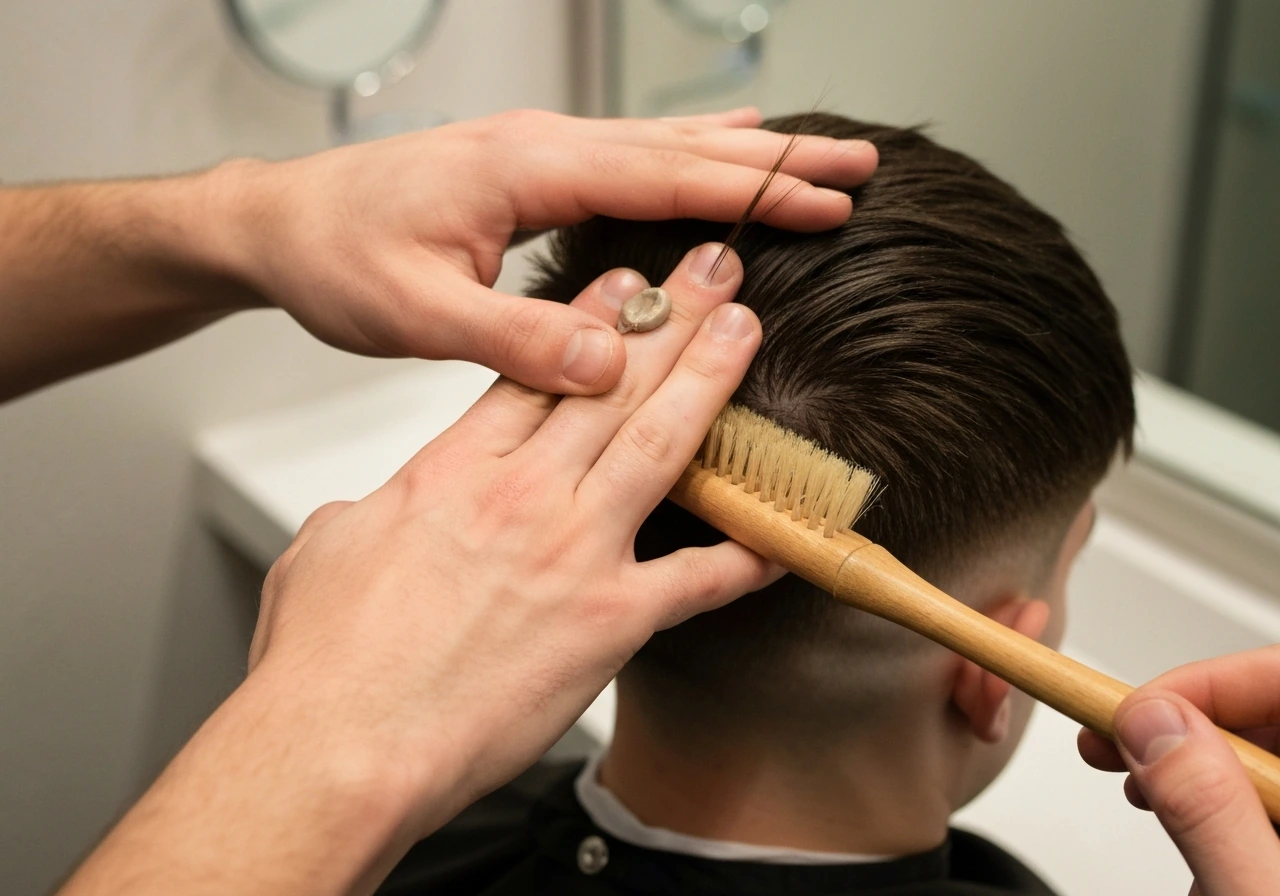
This is when light product starts to matter. A tiny amount of matte clay or pomade pressed between the palms and worked through the hair can tame flyaways and add a slight texture effect. Avoid shiny products at this length because they just make every imperfection more visible. A cap worn consistently while the hair is slightly damp can also train the hair to lay in a direction you prefer, which pays off as it gets longer.
2 to 3 cm (months 2 to 3)
The brush-forward and brush-back styles become available here. A soft-bristle brush in the morning with a light matte product can give you a pushed-forward textured look that works well at this length. The slick-back requires a bit more length and shine product to look intentional, but some people can pull it off at the top end of this range. This is also when a cap stop working as a training tool and starts being more of a hiding tool, so make the most of the brush techniques.
3 to 5 cm (months 3 to 5)
At this length you have real options. A side part becomes achievable on most hair types. You can push the hair back into a casual slick-back, work in a matte clay for a textured crop look, or use a light-hold cream to encourage any natural wave or curl that's returning. The textured crew cut aesthetic lands in this range, and matte products with medium hold are your best tool for it. Avoid heavy gels that create a wet look because they tend to emphasize patchiness rather than hide it.
5 cm and beyond (month 5 onward)
By this point you have enough hair to style genuinely. Wavy and curly hair types will start to show their natural pattern, which opens up diffusing and air-dry styling. Straight hair types can form a proper side part, comb-over, or pushed-back style with some hold. Heat styling becomes an option if you want to encourage a direction or add volume.
Color, texture, and regrowth: the extra layer of complexity
If your buzz cut was dyed, bleached, or chemically treated, the grow-out adds another variable: a visible line of demarcation between your natural regrowth and the treated hair. Natural root regrowth becomes noticeable to most people within about two to three weeks of their last color. At the 1 cm per month growth rate, you're looking at a fairly clear band of new growth visible to others by around week four to six, especially if the contrast between your natural color and the dye is high.
Most colorists recommend touching up roots every four to six weeks to maintain uniform color, but during a grow-out that means either accepting an ongoing color commitment or planning your transition intentionally. One option is asking your colorist for a blended or shadow root technique, which softens the line between natural and dyed hair so the grow-out looks more gradual. Another option is letting the dye grow out entirely and doing a big chop at a later stage, though on a buzz cut that option is already behind you.
For people growing out relaxed or chemically straightened hair, the line of demarcation is not just about color but about texture. Your natural texture will return at the root while the ends (if any remain after the buzz) still carry the treatment. At the buzz cut lengths we're discussing, most of that chemically treated hair will have grown out or been trimmed off within three to six months, which is actually one advantage of starting from such a short length. You're essentially doing a fresh start from the scalp up.
For curly and coily hair types, the grow-out from a buzz cut involves a distinct set of stages. The first few months often look like a tight, even texture that can actually be one of the most manageable phases. By months three to four, shrinkage becomes a factor: your hair may be growing but not appearing to get longer because of how much it coils.
Moisture-first styling (leave-in conditioner, light oil, or a curl cream) becomes important at this stage to define the curl pattern and prevent the hair from looking dry or undefined. If you're navigating this specific transition, growing out a buzz cut or pixie with Black hair involves some additional considerations around shrinkage, porosity, and protective styling that are worth reading into.
For fine or thin hair, the grow-out can look sparse during the first couple of months even when the growth is progressing normally. Lightweight volumizing products and avoiding heavy creams will help. For thick hair, the opposite problem shows up: the hair can become very dense and puffy between months two and four before it's long enough to lay down. A small amount of smoothing cream and consistent brushing are your best tools for managing that density.
For more on navigating a thick-hair grow-out specifically, growing out a pixie cut with thick hair covers a lot of the same tactics even if the starting style is slightly different. For thick hair, the same shrinky, puffy transition and smoothing techniques can apply even if you're not starting from a pixie cut, so you can use this as an adjacent option thick-hair grow-out specifically.
How long until you can get specific styles back
This is the question most people actually want answered, so here it is clearly:
| Target Style | Approximate Time from #0 Buzz | Approximate Time from #2–#3 Buzz | Notes |
|---|---|---|---|
| Clean stubble / very close cut look | 1–2 weeks | Already there | Just maintenance needed |
| Textured crew cut or short crop | 2–3 months | 1.5–2 months | Matte product needed for shape |
| Side part or brushed style | 3–4 months | 2.5–3 months | Works on most hair types |
| Short men's style or short women's cut | 4–6 months | 3–5 months | May need a shaping cut at this point |
| Short bob (chin length) | 9–12 months | 8–11 months | Significant patience required |
| Medium length (shoulder) | 18–24 months | 16–22 months | Long game commitment |
| Longer styles | 2+ years | 2+ years | Dependent heavily on individual growth rate |
These are honest estimates, not guarantees. Individual growth rates vary, and any significant trimming along the way will extend the timeline. But if you hit the averages, these milestones are realistic targets to plan around.
What this grow-out has in common with other short-cut transitions
Growing out a buzz cut shares a lot of DNA with other short-cut transitions. The awkward stages, the cowlick surprises, the side-versus-top imbalance: these are universal to almost any short-to-longer grow-out. If you've ever wondered whether the experience differs from growing out a short pixie, the honest answer is: not as much as you'd think. The pixie cut grow-out timeline follows almost identical month-by-month stages and hits most of the same problem points, just with a slightly different starting shape.
Where the buzz cut grow-out is unique is in the very early weeks. A pixie still has some directional length and fringe to work with from day one. A buzz cut starts with nothing. That first month is a test of patience more than anything else, and the people who make it through tend to be the ones who committed to a maintenance routine (clean neck, moisturized scalp, regular edge cleanup) and stopped checking the mirror every day expecting dramatic change.
If you're on the fence about whether the grow-out is the right call for you, deciding whether to grow out your pixie (or in this case, your buzz) can help you think through the commitment before you're already three months deep. And if you're starting from a side-heavy or asymmetrical short cut rather than a uniform buzz, growing out an asymmetrical pixie cut covers the specific balancing challenges that come with uneven starting lengths.
For those who want the complete end-to-end picture of what growing from a short cut to a longer style looks like, the full guide to growing out a pixie cut is the most comprehensive resource on this site for stage-by-stage tactics. The principles translate almost perfectly to a buzz cut grow-out, especially from month three onward when the lengths become roughly equivalent.
The most useful framing for this whole process is this: every stage you survive without buzzing it back is a stage you don't have to repeat. The awkward weeks feel endless when you're in them and completely forgettable once you're past them. Keep the edges clean, use product with intention, and give your hair a genuine chance to show you what it can do. It will.
If you want a deeper dive into the practical styling and emotional reality of going from very short to something longer, this guide on how to grow your hair out from a short cut walks through the mindset and the mechanics in detail, and a lot of it applies directly to anyone navigating a buzz cut grow-out right now.
FAQ
Should I keep my buzz cut lineups and neckline clean during the grow-out, and how often?
Yes, edge control matters more than overall length. A practical schedule is a light neckline/sideburn tidy every 10 to 14 days, then taper into monthly touch-ups once you hit the first styling-capable phase (around the crew cut or short crop window). This reduces the “intentional stubble” look slipping into “neglected” as the sides fill in.
How do I avoid the urge to buzz it back down when it looks uneven around weeks 3 to 5?
Use a “no-shortening unless targeted” rule. If you must change something, only trim the edges that are overgrown or straying, keeping the bulk untouched. Take photos from the same angle every 2 weeks so you can trust the timeline instead of reacting to short-term cowlick misbehavior.
Does the 1 cm per month average still hold if I get regular trims during the grow-out?
Regular trims extend the timeline because your current length is being reduced, even if only slightly. A better way to think about it is “net length gain,” which is growth minus the amount trimmed. If you trim to maintain shape, expect milestone dates to slip by roughly the number of centimeters you routinely remove over the period.
What should I do if my hair grows in different directions and never lays the same way?
Work with growth direction early using a soft-bristle brush plus light matte product once you have enough length to grip (usually after the first awkward phases). Heat-free training with a cap can help, but if one side keeps sticking up, prioritize a consistent side part or forward texture instead of trying to force a single slick direction.
When is it safe to start using more product-heavy styles like slick-backs or comb-overs?
Start only when you can consistently pull the hair into the shape without it springing back immediately. If the hair is separating or looks patchy when smoothed, switch back to matte, medium hold or lighter creams until length catches up. Slick looks best once the sides and top lengths are closer, typically later than month three.
Will hair color demarcation fade on its own during the grow-out?
It often softens slightly, but the boundary usually becomes more noticeable as the regrowth band thickens. If you want a less obvious transition, ask for a shadow root or blended approach before you hit the thickest regrowth visibility window (commonly around weeks 4 to 6 for many people, depending on contrast and dye strength).
What’s different for curly or coily hair if shrinkage makes it seem like nothing is growing?
Shrinkage can mask length until the hair reaches a threshold where it stretches more easily. Focus on defining curls with moisture-first products, then gauge progress by how much the curls spring outward and how well the shape holds, not by straight-line length. Expect timeline perception to improve more clearly around months three to four.
How can fine or thin hair avoid looking sparse while growing from a buzz cut?
Choose lightweight volumizing products and avoid heavy creams that weigh hair down. Also, consider styling that adds root volume or mild texture rather than trying to lay hair flat. If you notice scalp showing more on one side, prioritize even edge cleanup so the imbalance reads as style rather than thinning.
How do thick hair and puffiness typically change the grow-out plan?
Thick hair often looks dense and bulky before it becomes long enough to sit naturally. Consistent brushing, a small amount of smoothing cream, and keeping edges tidy usually help more than adding extra product. If puffiness persists, consider minimal, shape-only trims to control volume without removing too much length.
Is it better to grow out a buzz cut without trimming at all, or to schedule trims?
For many people, scheduled micro-tidies beat going fully untouched because neckline and edges set the “intentional” perception. If you want the simplest approach, do minimal edge maintenance only, then allow the first more noticeable shape work once you reach the point where styling is reliably possible (around the crew cut or short crop stage).
How can I tell if my grow-out is off-track and needs adjustment?
If after the first month you still cannot see the sides and top approaching a balanced silhouette, it may be time for targeted shaping. A good rule is to adjust only when a specific area is clearly preventing you from achieving a realistic style option (for example, when the sides block a side part or top length), rather than trimming preemptively every time it looks awkward.