
Growing your hair out from a pixie cut takes roughly 6 to 18 months depending on how long you want to go, with most people hitting a genuinely wearable mid-length style somewhere around the 9–12 month mark. Hair grows about half an inch per month on average, so the math is pretty honest: there is an awkward phase, it will last a few months, and the best thing you can do is plan for it instead of fighting it. The good news is that with the right trim schedule, a few styling tricks, and some basic hair care habits, you can get through every stage without feeling like you need to chop it all off again.
How to Grow Your Hair Out From a Pixie Cut

Marcus Vickers
28 Apr 2026
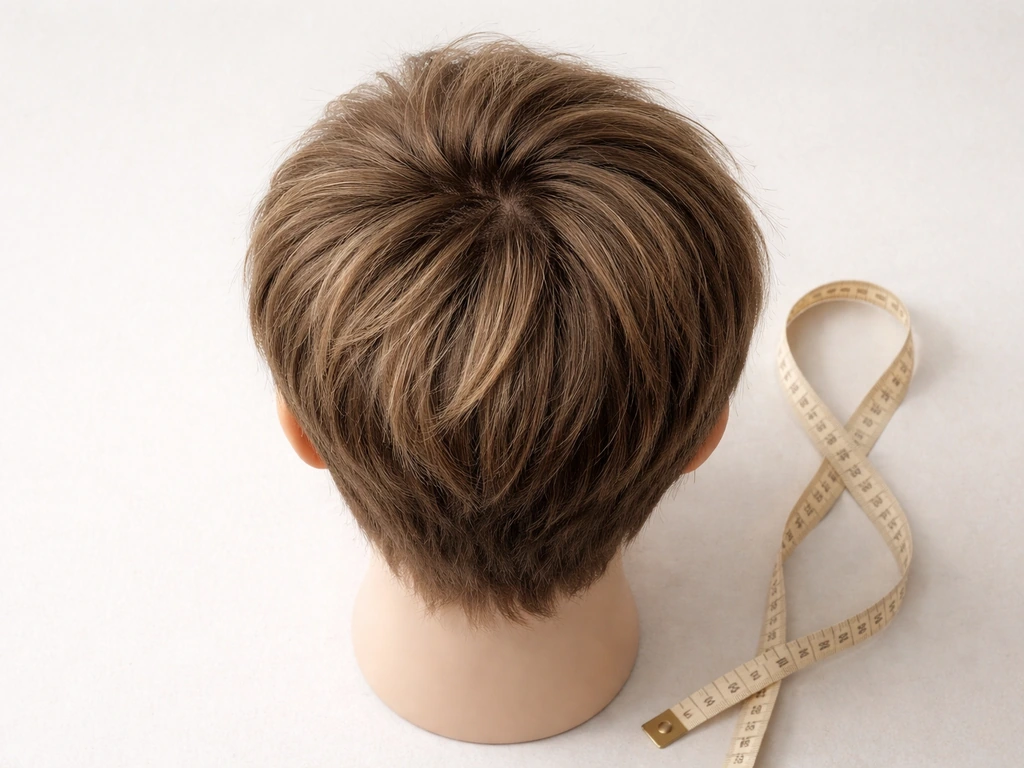
Realistic timeline: what to expect month by month
Hair grows at roughly 0.5 inches (about 1.25 cm) per month on average, though the range is wider than most people expect, anywhere from 0.2 to 0.7 inches per month depending on your genetics, age, hormones, and overall health. That means two people starting the exact same pixie on the same day can look completely different six months in. Keep that in mind if your progress feels slower than what you see online.
Here is a rough milestone map based on that average growth rate. Your actual experience may run a few weeks ahead or behind, and the top of your head will almost certainly grow at a different pace than the sides and back.
| Timeline | What's happening | Style milestone |
|---|---|---|
| Weeks 1–6 | Pixie starts to look grown out; sides and nape get fluffy | Still recognizable as a short cut |
| Weeks 6–12 | Back grows faster than top — the classic 'baby mullet' risk zone | Early awkward phase begins |
| Months 3–4 | Top starts to catch up; fringe/bangs hit the eyes or past them | Can start shaping into a cropped bob or textured style |
| Months 5–6 | Sides may puff out; hair sits around ears and jaw | Soft bob or wavy lob territory for some |
| Months 9–12 | Most people hit chin to shoulder length | Wearable mid-length styles accessible |
| 12–18+ months | Approaching collarbone and beyond | True long-hair territory for fine to medium hair |
The 6–8 week window is when most people want to quit. The back of the head is growing noticeably faster than the top, which creates that mullet-adjacent shape that feels unmanageable. This is completely normal and temporary. It is also exactly when a strategic trim (not a full cut) can save the whole process.
What to do right now: your maintenance and styling plan
The first decision you need to make is your trim schedule. If you just stop going to the salon entirely, the shape will fall apart fast and the grow-out will feel impossible. But if you go in and ask for a full clean-up every few weeks, you risk losing length you worked hard for. The answer is selective trimming, specific areas on a schedule, not all-over cuts.
For the next few months, aim for a salon check-in every 4–6 weeks. Tell your stylist you are growing out and ask them to focus on neckline cleanups and controlling the sides, not touching the top unless there is a genuine split end issue. This approach keeps things tidy without sacrificing the length you are building.
On a daily basis, your two best tools during the early grow-out are a good texturizing or dry texture spray and a strong-hold gel. A deep side part with gel smoothed over the top reduces that 'random sticking up everywhere' look that drives most people crazy at the two- to three-month mark. Work with the direction your hair wants to grow rather than fighting it, and use a texture spray to add grip when you need pieces to stay put.
Managing the awkward parts: sides, back, and top
The sides, back, and top do not grow at the same rate, and they do not reach the same wearable length at the same time. That is the core challenge of growing out a pixie, and it is worth addressing each zone separately.
The back and neckline
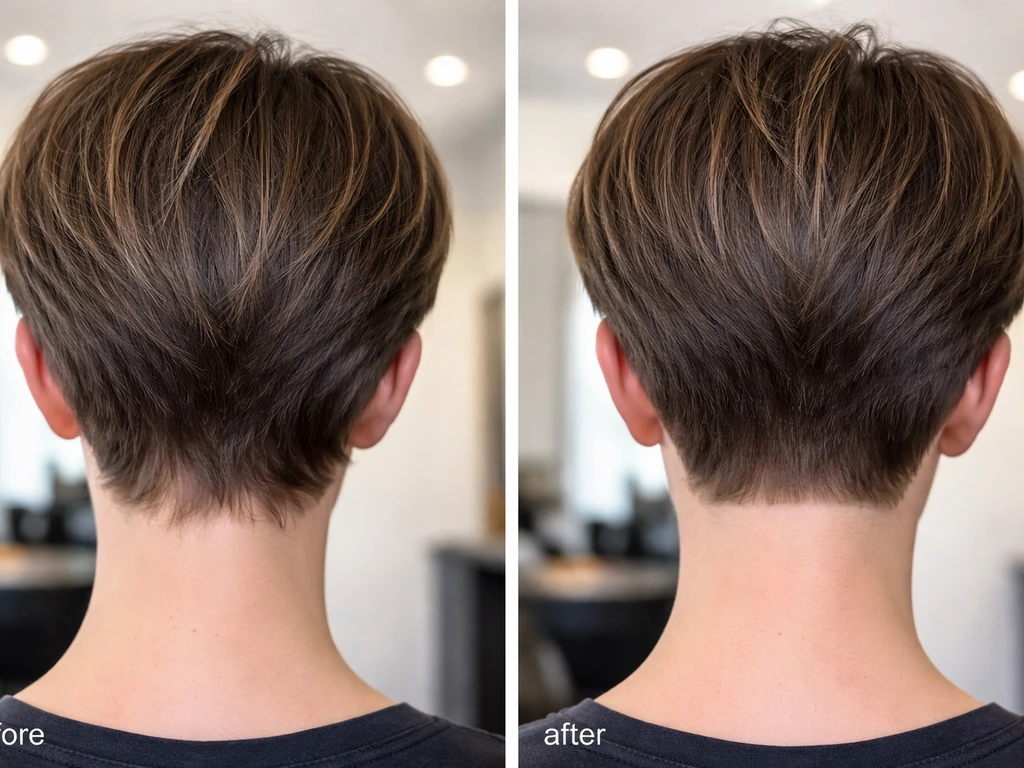
The nape area is usually the fastest grower and the first thing that starts to look shaggy. Get this cleaned up at every salon visit, a tidy neckline makes the entire grow-out look more intentional even when the rest is in between lengths. If you have an undercut as part of your pixie, you will need to decide early whether to let it grow in (which creates an obvious regrowth line) or keep the undercut trimmed while the top catches up.
The sides
Sides tend to puff out and curve before they get long enough to tuck behind the ear, which is the phase most people describe as looking 'round' or 'helmet-like.' Keeping the sides lightly trimmed and using a small amount of product to direct them downward rather than outward helps a lot. A deep side part during this phase is genuinely useful because it shifts the visual weight and breaks up that rounded silhouette.
The top
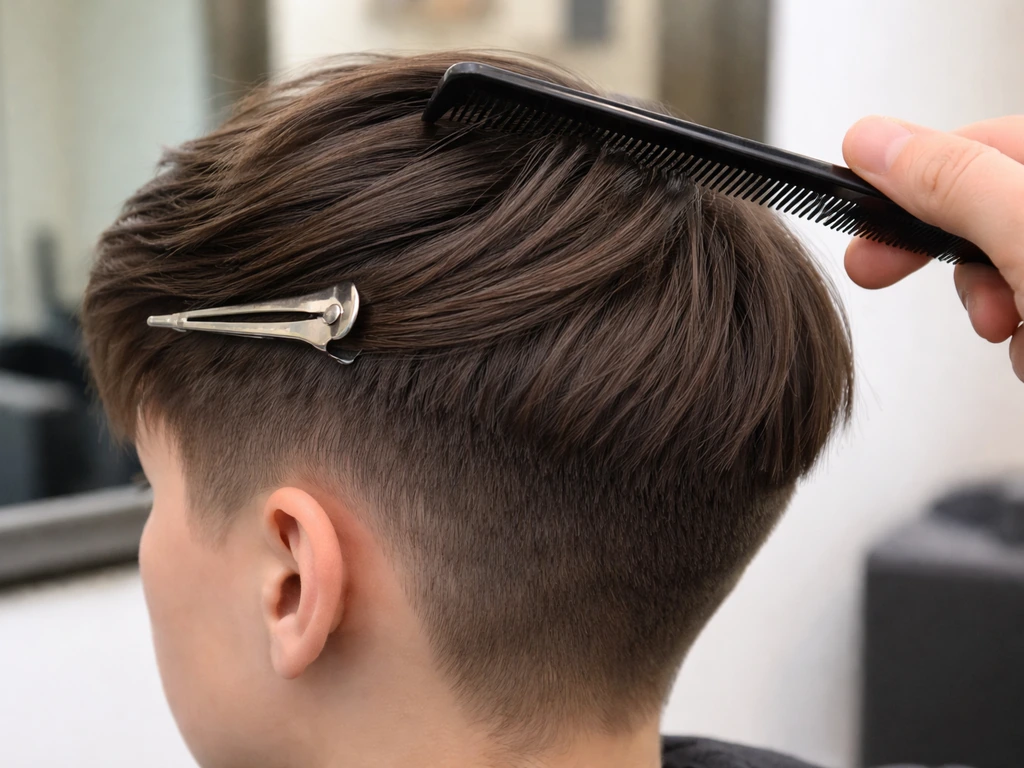
The top usually grows more slowly and is where your pixie was likely kept longest to begin with. Resist the urge to trim it for shape until it has enough length to actually do something with. Once the top reaches about 2–3 inches, you can start asking your stylist to add light texture or piece-y layers that make it look styled rather than grown out.
Bang and fringe strategies as everything grows in
Bangs and fringe are often the most frustrating part of a pixie grow-out because they hit your eyes before the rest of your hair is anywhere close to wearable. A few strategies make this phase a lot more livable.
If your pixie had blunt or heavy bangs, ask your stylist to soften them into a wispy fringe early in the grow-out process. Whispy, textured bangs move more naturally as they get longer and are much easier to sweep to the side or blend into the rest of your hair. Heavy blunt fringe just gets heavier and harder to manage as it grows.
Once bangs are past your brows, a side sweep with a little hold product is your best daily option. A fine-tooth comb and a dab of gel or pomade can train them to stay in a particular direction over time. Avoid constantly pushing them back off your face, that just creates frizz and teaches them to grow straight forward. Small clips or bobby pins at the temple are underrated for keeping fringe out of your eyes while it is in the awkward in-between stage.
If you are at the point where the fringe is just barely long enough to tuck behind the ear on one side, lean into an asymmetrical style intentionally. A deep part with one side swept back can look very deliberate and polished, even when you are just doing damage control.
Hair care habits that actually support growth
Growing hair faster is not really within your control, genetics set the pace. But keeping the hair you have in good enough condition that you are not losing length to breakage is completely within your control, and it makes a real difference. Keratin is a protein your body naturally produces, and hair is primarily made up of keratin as part of its structure blank" rel="noopener noreferrer">good enough condition that you are not losing length to breakage. If you are wondering how to grow out a pixie without losing length to breakage, focus on gentle maintenance and protecting your ends between salon visits.
- Deep condition once a week: short hair dries out faster than people expect because it has not had time to build up natural oils along the shaft. A weekly conditioning mask keeps it from getting brittle at the ends.
- Sleep on a satin or silk pillowcase: cotton creates friction that causes mechanical breakage overnight. Satin surfaces reduce that friction significantly, which means less frizz and fewer split ends to deal with.
- Go easy on heat: the grow-out phase is exactly when heat damage is most costly because you cannot just cut off a fried inch without losing ground you earned. If you do use heat tools, use a heat protectant every single time.
- Minimize chemical processes during the worst of the awkward phase: coloring, bleaching, or perming already-stressed regrowth adds to breakage risk.
- Eat enough protein and stay hydrated: hair is made of keratin (a protein), and deficiencies in protein, iron, or certain vitamins can slow growth noticeably.
- Address split ends promptly: leaving them alone does not save length — splits travel up the shaft and force a bigger cut later.
One thing that does not get mentioned enough: scalp health matters. A healthy scalp environment supports healthy follicles, which supports consistent growth. A gentle scalp massage a few times a week while shampooing increases circulation and just feels good during a frustrating process.
Trim or not trim: how to adjust shape without losing progress
The biggest fear during a pixie grow-out is getting talked into a cut that takes you backwards. That fear is valid, but avoiding the salon entirely is not the answer either. Unmanaged regrowth loses its shape fast and makes the awkward phase last longer than it needs to.
The rule worth following: trim selectively, not uniformly. During the grow-out, a good stylist should be cleaning up the neckline, softening any sections that are getting too wide or round, and possibly dusting the ends to remove damage, not giving you an even all-over trim. If your stylist's first instinct is to neaten everything up at the same length, that is the conversation to have before they touch your hair.
Scheduling check-ins every 4–6 weeks gives you enough time to see real growth between appointments while keeping the cut from looking shapeless. Around months 3–4, a stylist can often start shaping what you have into an intentional short style, a cropped textured bob, a piece-y shag, or something with face-framing layers, that bridges the gap between pixie and longer length without requiring you to start over.
The goal is to always be wearing a style, not just waiting out a grow-out. Every few months there should be a new shape you can identify, early pixie, then textured short cut, then cropped bob, then soft bob, then lob. Each stage is a real hairstyle, not just a holding pattern.
If your pixie was colored: protecting color and handling regrowth
Color-treated pixies come with an extra layer of complexity during grow-out because you are managing two different textures and potentially two or more shades at once. The strategy you choose depends on how different your natural color is from the color on your ends.
If the contrast between your roots and your dyed ends is subtle, you can often just maintain your color with toning treatments and let it grow in gradually. If the contrast is stark, say, bleached blonde ends growing out from a dark natural base, you have a few options: grow it out cold turkey and lean into a two-tone look intentionally, have a colorist blend the line with a balayage or shadow root technique, or commit to regular root touch-ups until the length is manageable.
To keep existing color from fading faster than it needs to, wash color-treated hair less frequently (every 2–3 days rather than daily), use a sulfate-free shampoo, and add a UV-protecting leave-in or spray to your routine. UV radiation literally oxidizes and breaks down color molecules in the hair shaft, which is why hair often looks faded after a summer, a small habit like wearing a hat or using a UV-protective product adds up over a 12-month grow-out.
Also keep in mind that chemical-treated hair is more prone to breakage, so the conditioning and low-heat habits mentioned above matter even more if your pixie was bleached or heavily processed. A training workbook on hair and skin care emphasizes using conditioning and protective practices to help support the hair during fragile grow-out periods conditioning and low-heat habits. The goal is to keep the colored ends healthy enough that you are not forced to cut them off before they reach a wearable length.
Styles that actually work during the in-between stages
One of the most useful mindset shifts during a grow-out is treating each stage as a real style rather than an incomplete one. There are genuinely good looks available at every phase between a pixie and a shoulder-length cut, you just need to know what to ask for and how to work with what you have.
- Months 1–2: Keep the pixie shape intentional with a neckline cleanup and use texture spray for a slightly undone, modern finish.
- Months 2–4: A deep side part with gel or pomade creates a sleek, deliberate look that works well when the back is longer than the top.
- Months 3–5: Ask for piece-y side bangs or face-framing layers that help the front grow in gracefully without looking unkempt.
- Months 4–7: A stacked bob shape at the back can balance out the top while it catches up, and gives you a defined silhouette.
- Months 6–9: Soft waves or light curl from a curling wand adds volume and texture that makes mid-length hair look intentional.
- Months 9–12: You are in lob territory — blunt ends, curtain bangs, or a shag cut are all on the table.
If you have thick hair, the volume during the grow-out can feel unmanageable, but it also gives you more styling options earlier. If you have thick hair, you can still hit an intentional, wearable stage faster by pairing the right trim schedule with heat-smart styling and a product plan. If you have fine hair, the grow-out can look flat, but strategic layers and a good volumizing product make a real difference. Growing out a pixie from natural or coily hair involves its own timing and texture considerations, the shrinkage factor means length appears more slowly, but the texture itself can carry styles beautifully through every phase.
Your next steps starting today
The most important thing you can do right now is book a grow-out consultation with a stylist who has experience managing transitions, not just maintaining short cuts. Go in with photos of the styles you want to land at, be clear that you are growing it out, and ask specifically about a selective trim strategy rather than a shape-up. That single appointment can set the tone for the next 12 months.
- Book a consultation (not a full cut) with a stylist in the next 2 weeks. Bring reference photos of your goal length.
- Start a deep conditioning treatment once a week, beginning this week.
- Switch to a satin or silk pillowcase to reduce overnight breakage.
- Buy a texture spray and a strong-hold gel — these are your daily tools for the next 3–4 months.
- Set a calendar reminder for a neckline cleanup appointment every 5 weeks.
- If your hair is colored, pick up a sulfate-free shampoo and a UV-protective leave-in product.
- Take a photo of your hair today. You will want the comparison in six months.
Growing out a pixie is a long game, and the people who make it through without going back to short hair are almost always the ones who had a plan rather than just hoping it would sort itself out. If you want extra guidance for the specific side-to-side mismatch, see how to grow out an asymmetrical pixie cut for a plan that matches that uneven regrowth. If you are still deciding, you might be wondering, should i grow out my pixie, and the answer usually comes down to your timeline and styling support. If you also want the best strategies for black hair specifically, this guide covers what to do during each awkward stage of growing out a pixie cut how to grow out a pixie cut black hair. You are going to have a few weeks where it looks genuinely rough, that is not a sign you made the wrong choice, it is just the process. Work with your hair at each stage, be selective about what gets trimmed, keep the ends healthy, and the length will come. To make that process easier, knowing a buzz cut grow-out timeline can help you plan trims and style goals month by month. If you are starting from a shaved head instead of a buzz cut, a shaved head grow out timeline can help you set realistic expectations for each stage.
FAQ
How do I know if I should trim, or just wait, during my pixie grow-out?
A good rule is to ask for “dusting only” or “selective thinning” if you need shape, not an all-over even trim. In practice, that means your stylist focuses on problem areas (nape, sides, split-prone ends) while leaving the top length alone until it is long enough to style.
Will frequent trimming ruin my color-treated pixie grow-out?
If you color your ends, treat your schedule like you are protecting the weakest link, the dyed portion. Usually that means avoiding extra trims solely for “shape” and instead trimming only where you see true damage, while using sulfate-free washing, cooler water, and a UV-protective leave-in or spray daily in sunny months.
What should I do if the top and sides grow at totally different speeds and I feel stuck?
Yes, especially around months 1 to 4 when the sides and top feel uneven. Instead of choosing a single length goal, switch to a “section goal,” for example, get the nape under control and train the sides down, then start shaping the top only when it reaches a workable length.
How can I tell if my hair is not growing, or if I am losing length to breakage?
Watch for actual breakage signs, short broken hairs at the hairline, roughness when you stretch a strand, and lots of flyaways that do not grow, these point to breakage rather than slow growth. If it is breakage, focus on reducing heat, using conditioner every wash, detangling gently, and consider a small strategic dusting to stop the damage from traveling upward.
Can I wear protective styles while growing out a pixie cut without damaging my hair?
Protective styles can help, but only if they do not pull. In this grow-out stage, try low-tension options like loose clips, soft headbands, or a gentle half-up with no tight elastics. Avoid tight slick styles that press hair against the scalp or create sharp creases.
How should the timeline and expectations change if I have coily or tightly curled hair?
Coily and textured hair often shrinks when it is wet or set, so your “inches gained” may not look dramatic. Use consistent stretch methods when evaluating progress, for example blow-dry on low with minimal heat or a single styling routine, and communicate your progress expectations to your stylist using photos.
What is the best way to manage bangs that keep falling into my eyes during the awkward stage?
If you have bangs, stop trying to force them into full hairstyles too early. Instead, use consistent training (one direction, small clips at the temple, and a light hold) and only ask for the next shape once they are past the brow and can naturally blend into the sides.
How do I fix the “round” or “helmet-like” phase without cutting the top too short?
If your sides feel too wide and bulky, reduce volume at the right places, not everywhere. Ask for point-cut texture or subtle layering along the sides to control shape while keeping enough length to tuck later, you can also use a deep side part with product to visually narrow the silhouette.
Should I blend my roots now or wait until later if my pixie was dyed with strong contrast?
A balayage or shadow root can buy you time visually, but root touch-ups are still often needed if the contrast is extreme. The practical decision is based on how noticeable you want the regrowth line to be, if you want it subtle, plan for color work around when the roots and dyed ends start to separate more.
What styling approach helps me keep length while still looking polished?
If you do not want to lose length, avoid high-frequency heat styling and focus on hold and grip instead. Many people get good results using gel plus a texturizing or dry texture spray for separation, and letting hair air-dry to reduce repeat heat cycles.
When is a good time to re-evaluate whether I should keep growing out my pixie?
If you are ready to decide between “grow it out” and “start over,” pick a threshold you can measure. For example, decide that you will reassess once the top reaches about 2 to 3 inches and the bangs are past the brow, if you still hate it, that is when a targeted stylist strategy will give you the best return.