
Growing out a black hair pixie cut takes roughly 12 to 18 months to reach a stable, versatile length like a full bob or short afro you can actually style easily every day. If you are tracking your shaved head grow out timeline, keep in mind that the earliest months set the pace for later styling options. Hair grows about half an inch per month on average, so the math is straightforward, but black hair adds layers to the process: shrinkage, texture differences between old and new growth, the risk of matting as short coils come in, and the reality that the awkward phase hits harder when you have natural curl or a chemical history to manage. The good news is that every single stage is navigable with the right plan, and you do not have to chop it all off just because it looks weird for a few months.
How to Grow Out a Pixie Cut Black Hair: Timeline & Care

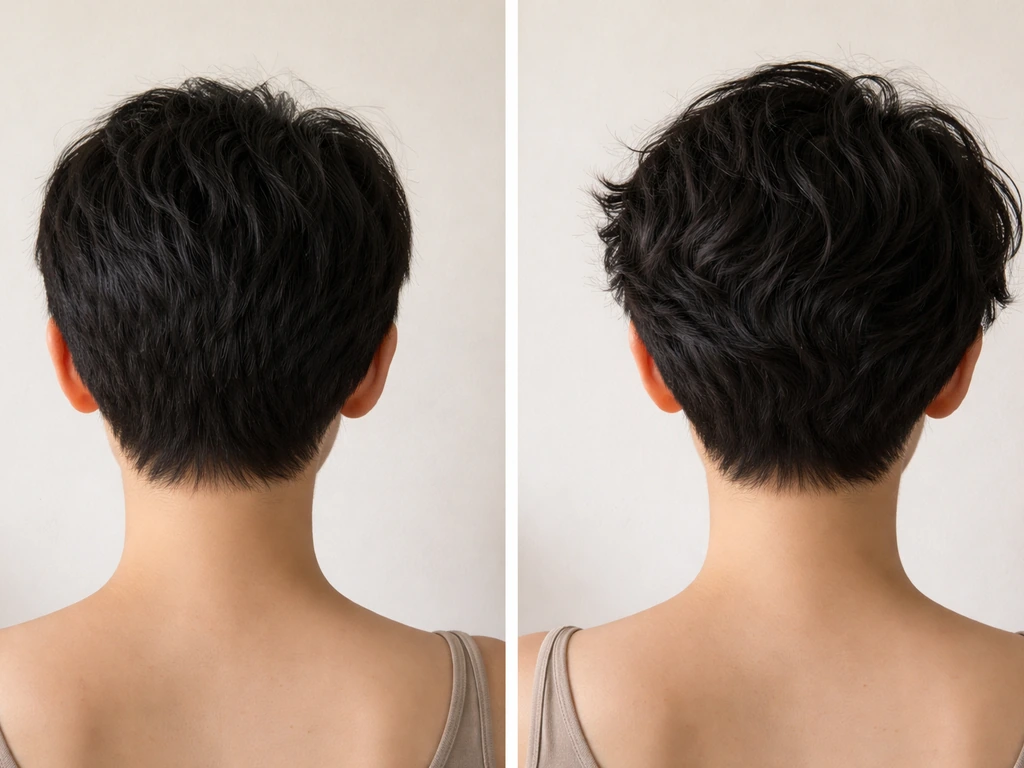
What to realistically expect, month by month
At about half an inch of growth per month, here is what the journey actually looks like from a pixie starting point. If you want a clearer idea of how long each awkward stage lasts, check the pixie grow out timeline for a month-by-month breakdown pixie starting point. Keep in mind that shrinkage can make natural black hair appear to grow more slowly than it actually is, so your actual growth may be on track even when your mirror is telling you otherwise.
| Time from start | Approximate growth | What you will notice |
|---|---|---|
| 1 month | ~0.5 in / 1.25 cm | Slight puffiness at the crown, edges softening, nape starts to look less sharp |
| 2 months | ~1 in / 2.5 cm | Sides and temples look uneven; back may feel fluffy or wiry; fringe starts to reach eyes |
| 3 months | ~1.5 in / 3.8 cm | The true awkward phase—crown puffs up, temples stick out, no section looks intentional |
| 4–5 months | ~2–2.5 in / 5–6 cm | Sides can be tucked behind ears; protective styles like mini twists become possible |
| 6 months | ~3 in / 7.5 cm | A rough TWA (teeny weeny afro) for naturals; transitioning hair starts showing two textures clearly |
| 9 months | ~4.5 in / 11 cm | Short bob territory for straighter hair; coily hair may still appear shorter due to shrinkage |
| 12 months | ~6 in / 15 cm | Full short bob, longer TWA, or ear-length natural styles become stable options |
| 15–18 months | ~7.5–9 in / 19–23 cm | Enough length for wash-and-go styling, braid-outs, flexi rod sets, and basic protective updos |
If your hair is relaxed, texlaxed, or bleached, your grown-out length may appear longer in inches but the ends will behave differently from new growth, which creates its own set of challenges covered below. The timeline above assumes healthy hair coming in at a normal rate. Stress, nutritional gaps, or scalp issues can slow things down, but for most people, the half-inch-per-month estimate is a reliable planning tool.
To trim or not to trim: picking your grow-out strategy
This is the question everyone gets stuck on, and honestly, there is no single right answer. If you are wondering, "should I grow out my pixie," the right answer depends on your patience level for the awkward stages and how much shaping you want along the way. There are two main approaches, and which one works depends on how much the shape matters to you versus how much raw length you want to accumulate.
The micro-trim approach
Scheduling a light shape-up every 4 to 6 weeks means you are not cutting length off the top or the overall longest sections. You are asking your stylist to clean up the perimeter, manage the underlayers so they do not poke out weirdly, and remove any split ends before they travel up the shaft. This approach keeps your grow-out looking intentional rather than accidental. The downside is that if you have a stylist who has a heavy hand, you can end up back at square one. Be very specific about what you want (more on that in the trim section below).
The no-trim approach
Some people skip trims entirely for the first 6 months and just style through the awkward stages. This accumulates maximum length but can mean split ends, uneven layers, and sections that look noticeably different from each other. For natural black hair with good moisture practices, this is more manageable than it sounds, because coily textures hide unevenness better than straight hair. If you go this route, you still need to address the underlayers at some point, especially if your pixie had an undercut or a tapered nape.
Dealing with underlayers and undercuts
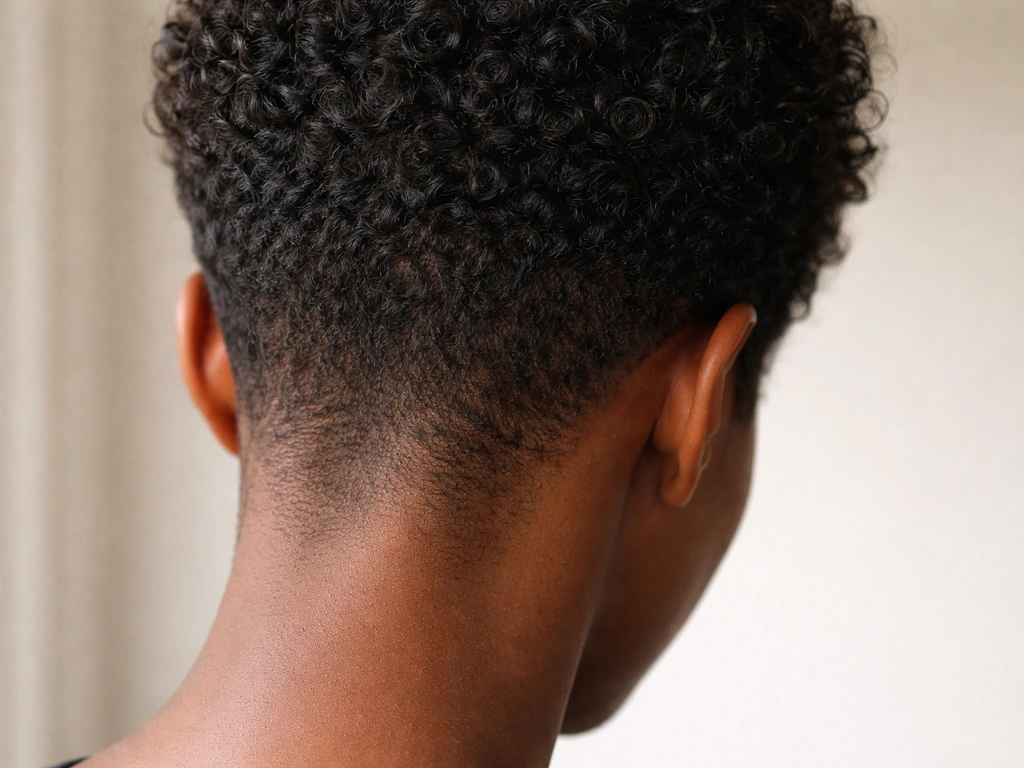
The undercut or tapered section at the nape and sides is the biggest challenge in a pixie grow-out for black hair. That hair is shorter than everything above it and will look noticeably thinner or more tightly coiled as it comes in, creating a two-toned or patchy effect at the back. The most practical fix is to let the underlayers grow for at least 3 to 4 months before asking a stylist to blend them in. Trying to blend too early usually means cutting the top down to meet the bottom, which defeats the purpose. In the meantime, headbands, scarves, and styles that sweep the crown forward can buy you time while the back catches up.
Styling through every awkward stage
Every section of a grown-out pixie has its own personality, and they rarely cooperate at the same time. Here is how to handle each problem area as the months go by.
The fringe and front
The front section usually grows fastest and becomes an issue first. Around month two, it starts to fall awkwardly, either forward into your eyes or to one side. For natural hair, a coil-out or twist-out on just the front can define the texture and keep it looking deliberate. For transitioning or relaxed hair, a small pin curl set at night and release in the morning keeps the fringe shaped without heat. If the fringe is driving you crazy, a statement headband or a soft scarf folded and tied at the hairline is genuinely stylish and not a cop-out.
Temples and sides
The sides are usually the most awkward zone between months two and five. They grow outward before they grow down, so you get that wide, triangular puff at the temples. For coily and kinky textures, embrace it and work with a rounded shape rather than fighting it. A light edge control or gel at the temples can smooth and define the perimeter so it looks more intentional. By month four to five, the sides are long enough to tuck behind the ear on most hair types, and that single move alone takes you from awkward to actually cute.
Crown and top
The crown tends to puff up unevenly, especially if the original pixie had layering. Shorter layers underneath will lift the longer ones and create an unintentional mohawk look. During this phase, twist-outs, finger coil sets, or even a simple braid-out can give the crown enough texture and definition to make the unevenness look like volume rather than chaos. A silk wrap at night on relaxed hair, or a pineapple-style gathering on natural hair, keeps the crown from compressing flat and then springing up weirdly in the morning.
The back and nape
As mentioned, this is the trickiest area if you had a tapered or undercut pixie. The nape hair is often a tighter curl pattern or grows more slowly than the crown, so it can mat or tangle if neglected. Keep this area moisturized and detangled consistently, even when it is very short. Wearing a satin scarf or bonnet at night protects the nape from rubbing against pillowcases, which is a common cause of matting and breakage in this exact spot.
Moisture, detangling, and protective care during regrowth
This is where the grow-out can go sideways if you do not have a routine in place. Short black hair coming in has less length to retain moisture, which means it can dry out and tangle quickly. The basics: wash every one to three weeks depending on your scalp needs, apply a leave-in conditioner after every wash, seal with an oil or butter, and detangle with care every single time.
How to detangle without causing breakage
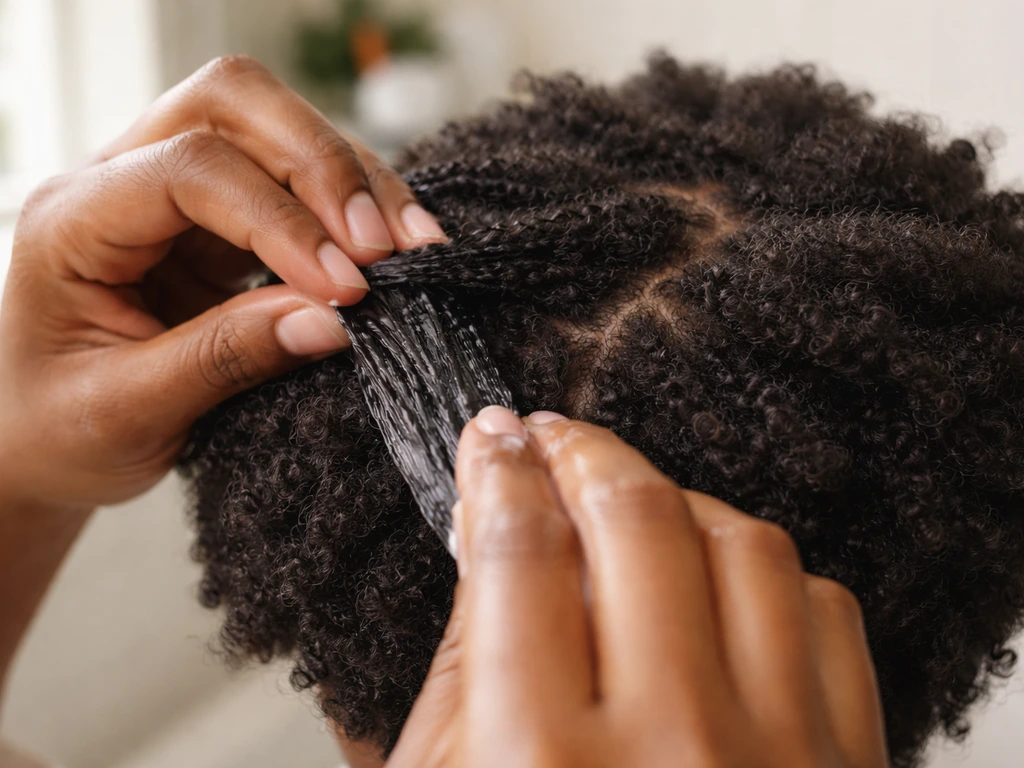
Never drag a comb straight through short, coily, or tightly textured regrowth. Start by finger-detangling first, working section by section with a leave-in conditioner or detangling spray for slip. Once the major knots are out, use a wide-tooth comb starting from the ends and working upward toward the roots. This sounds slow, and it is at first, but it dramatically reduces the breakage that sets your growth back. A good wash day routine includes applying your detangling product before shampooing and doing the bulk of your detangling under running water or with conditioner in the hair, when it has the most slip.
Sleep setup
A satin bonnet or a satin-lined pillow case is non-negotiable during this phase. Cotton pillowcases create friction that causes coily short hair to mat and break, especially at the nape and crown. Wash your bonnet as often as you wash your hair, because it collects product residue, oils, and sweat that can irritate your scalp and transfer back to your hair. A clean bonnet is part of your hair care routine, not an afterthought.
Protective styles during regrowth
Once you have enough length (usually around months four to six), mini twists, flat twists, and small cornrows become viable. If you are wondering how long it takes to reach a workable length again, see the buzz cut grow out timeline guide for a month-by-month expectation. These give your hair a break from daily manipulation, protect the ends, and can double as cute styles on their own. Just be careful not to make them too tight, especially at the temples and edges, because repeated tension in those areas can cause traction alopecia. Keep them in for one to two weeks maximum, then take them down, moisturize, detangle, and re-do if needed.
Managing shrinkage, texture changes, and matting risk
Shrinkage is one of the most demoralizing parts of growing out natural black hair, because you can have three inches of actual length that looks like one inch on the head. The hair is not growing slowly; it is just curling back on itself. A few things help visually and practically.
Heatless stretching methods work well during the grow-out phase and do not compromise the hair's integrity. Bantu knots, twist-outs, braid-outs, flexi rods, and perm rods all create elongation that reveals more of your actual length. Banding is another option: you loop small hair ties down sections of hair before bed and release in the morning for a stretched, stretched look without any heat. Heatless stretching for transitioning hair can also include African threading or banding, curlformers, and other sectioned no-heat methods to create an elongated look without heat. These methods can last a few days, which means less daily manipulation and less breakage overall.
Matting is a real risk between months two and four, when the hair is long enough to tangle with itself but too short to easily work through. The nape is especially prone. The solution is not to avoid touching it but to detangle consistently (at minimum weekly) and keep it moisturized so the strands do not bond together. If you notice a section that feels consistently matted or knotted, do not force a comb through it. Saturate it with conditioner, finger-detangle patiently, and use a detangling spray to give yourself maximum slip before using any tool.
Your chemical history matters: relaxers, color, and natural transitions
How you manage the grow-out depends heavily on whether your hair is fully natural, transitioning from a relaxer, or has color or bleach in it. Each situation requires a slightly different approach.
Fully natural hair
If your hair is already natural and you are just growing out the cut itself, you have the most straightforward path. Your main concerns are moisture, shrinkage management, and detangling. The texture coming in will match the rest of your hair, so you will not have a line of demarcation to deal with. Focus on consistency in your wash day routine and lean into heatless styling methods as your length grows.
Transitioning from a relaxer
If you had a relaxer and are growing it out alongside your pixie length, you have a dual challenge: managing the grow-out of the cut and the transition from relaxed to natural texture simultaneously. To help your asymmetrical pixie, focus on shaping the perimeter and blending layers so the sides start matching as they lengthen grow-out of the cut. The line of demarcation where new natural growth meets relaxed ends is fragile and prone to breakage, especially when the hair is short and being manipulated daily. Handle this area with extra care. Keep the line of demarcation well-moisturized and avoid any tension or tight styling on that section. Many people in this situation find that doing a final big chop at the six to nine month mark, once there is enough natural length to work with, makes the transition cleaner. That is a personal decision, but it is worth knowing the option exists.
Color, bleach, or dye
If your pixie was colored or bleached, the chemical processing has made those sections more porous and fragile. Overlapping new bleach or relaxer onto previously processed hair increases the risk of breakage significantly. As you grow out the pixie, the goal is to minimize the overlap zone and keep the processed ends as healthy as possible while you wait for them to grow out. Deep condition more frequently, at least every two weeks, use a protein treatment monthly if the hair feels limp or stretchy, and hold off on any additional chemical services until you have at least three to four inches of new growth that is not being processed. If you are coloring your roots to match, ask your colorist to do a precise root application only, not a full-length process.
If you are maintaining a relaxer while growing out the cut
Some people want to keep their relaxer and just grow the cut longer, which is a totally valid choice. In this case, stretch your relaxer touch-ups to every 12 to 16 weeks instead of every 8 to track how your hair handles the new growth. Use a neutralizing shampoo properly and follow up with a reconstructing conditioner after each touch-up. The pixie grow-out process for relaxed hair is faster in terms of styling options because the hair lies flatter and shows length more easily, but you still need to protect the ends and keep the line of demarcation moisturized.
When to see a professional, and exactly what to ask for
Going to a barber or stylist during a grow-out is not about cutting it shorter. It is about shaping the perimeter, managing problem areas, and keeping the whole thing looking intentional. If you are specifically wondering how to grow your hair out from a pixie cut, focus first on trimming or micro-trims, moisture, and protecting the nape during the awkward months shaping the perimeter. The 4 to 6 week schedule is a good baseline for check-ins, but you can go longer between visits if the shape is holding up and you are comfortable styling it yourself. Scheduling clean ups every 4, 6 weeks is an effective way to keep the pixie grow-out looking intentional without cutting off everything each time blank" rel="noopener noreferrer">clean ups every 4–6 weeks.
The key is being very specific with your stylist or barber. Vague requests like "just a little trim" can result in losing the progress you have worked for. Instead, walk in with clear language:
- "I am growing this out. Please do not take any length off the top or the longest sections."
- "I just need the nape and sides cleaned up, no blending into the top."
- "Can you remove the split ends from the perimeter only?"
- "I want the underlayer blended, but please keep as much length as possible above the ear."
- "Can you shape the crown without shortening it? I just need the edges cleaned up."
If your stylist is not hearing you or keeps suggesting you cut it shorter to "fix" the shape, find someone who has experience with grow-outs specifically. A barber who does natural hair is often a better choice during the early months because they are skilled at working with the perimeter and undercuts without touching the top length. As the hair gets longer, a stylist who specializes in natural black hair textures will be better equipped to help you shape the growth into something you can work with every day.
Around the six to nine month mark is usually when a professional shaping session pays off the most. By then you have enough growth to actually do something with, and a skilled cut can blend the underlayers into the longer top sections so everything starts moving in the same direction. This is the visit where the grow-out starts feeling like a real hairstyle rather than just waiting.
A simple daily and weekly routine to keep you on track
Consistency is what makes the difference between a grow-out that feels manageable and one that feels like a constant battle. If your goal is how to grow out a pixie cut with thick hair, staying consistent is what will help you get past the awkward stages how to grow out a pixie cut thick hair. This routine covers the basics without being overwhelming.
| Frequency | What to do |
|---|---|
| Every night | Put on a satin bonnet or use a satin pillowcase; lightly mist hair if it feels dry |
| Every morning | Refresh with a small amount of leave-in conditioner or water mist; define any coils or edges with your fingers |
| Every week | Finger-detangle all sections; apply moisture if needed; check the nape and temples for any matting |
| Every 1–3 weeks (wash day) | Shampoo scalp gently; apply deep conditioner with heat for 15–20 minutes; finger-detangle then wide-tooth comb under conditioner; rinse, apply leave-in, seal with oil or butter |
| Every 4–6 weeks | Check in with barber or stylist for perimeter cleanup if needed; no length removed from top |
| Monthly | Assess the stretch and elasticity of your hair; add a protein treatment if strands feel weak or stretchy |
Growing out a black hair pixie cut is genuinely one of the more involved hair transitions you can do, but it is also one of the most rewarding because you are building the foundation of a healthy length rather than starting from damage. The awkward phase is real, it lasts a few months, and there is no way to skip it entirely. But with a clear trim strategy, a solid moisture routine, and some styling tricks for each problem area, you can move through every stage looking like you meant to do exactly this. The people who make it to the other side are usually the ones who committed to a routine and stopped comparing their month-three hair to someone else's month-twelve photos.
FAQ
How often should I detangle my hair during a pixie grow-out, and what if my hair starts tangling immediately after washing?
Detangle after every wash (or at least every other wash) and plan to refresh the hair with a light leave-in or detangling spray on the next 1 to 3 days if you notice early tangling. If tangles show up right away, it usually means the hair is not getting enough slip during wash day or it is drying too fast between sessions, so add more conditioner slip during detangling and consider a thicker leave-in or a light gel to help hold moisture.
What products should I use at the nape so it does not mat, especially when the hair is very short?
Use a leave-in conditioner consistently on the nape, then seal it lightly (a small amount of oil or butter) and cover at night with a clean satin bonnet. If matting starts even with bonnet use, the hair may be getting “dry and sticky,” so increase lubrication during detangling and do a weekly targeted detangle at the nape only, rather than waiting for a full wash day.
When should I start doing protective styles again, like mini twists or cornrows, during the grow-out?
Start around the point where you can clearly grip the ends without having to pull hard, typically months four to six for most people. If you can only make a style by stretching the roots tight, that is a sign it is too early, and the better option is heatless stretching or loose crown-forward styles until the sides and nape have enough length to sit comfortably.
Is it okay to trim more frequently than every 4 to 6 weeks, or will it slow my progress?
Micro-trims are different from shape cuts. You can do tiny end snips or perimeter cleanup more often if your goal is split-end control, but avoid cutting across the longest sections or repeatedly removing length from the top while the underlayers are still catching up. A good rule is to keep trims perimeter-focused until you can blend the underlayers at the six to nine month mark.
How do I handle uneven growth when the undercut or tapered area looks much thinner than the crown?
Wait before blending. Let the shorter nape and sides grow for at least 3 to 4 months so a stylist can integrate them without forcing the top to meet the bottom. In the meantime, rely on styles that visually reduce contrast, like sweeping the crown forward or using headbands and soft scarves to create one cohesive silhouette.
Can I use heat while growing out a pixie cut, and what is the safest approach?
If you do heat, keep it occasional and targeted, like low-heat blow-dry on the front or edges, never all-over high heat on short, newly regrowing coils. Always apply heat protectant, keep the setting low, and prioritize heatless methods otherwise, because the ends are easier to over-dry during grow-outs when there is less length to retain moisture.
What should I do if the front grows into my face around month two and I cannot keep it styled?
Use a no-heat shape method for stability, like twist-outs or a small pin curl set at night, and pair it with a practical boundary tool such as a statement headband or a soft scarf tied at the hairline. If you keep re-combing the fringe to force it to behave, you will likely cause breakage, so refresh with a spritz of water-based leave-in instead.
How do I know whether my shrinkage is “normal” or a sign of breakage?
Shrinkage is expected, but breakage often shows up as shorter, thinnier pieces, more frizz at the ends, and uneven density in spots. If your hair feels rougher and tangles harder in the same areas week to week, reduce manipulation, increase moisture and slip during detangling, and avoid extra processing until the ends stabilize.
I have color or bleach, when is it safe to get more color or touch-ups during the grow-out?
Avoid overlapping chemicals until you have several inches of new growth that is not being processed. If you are matching roots, ask for precise root-only application so previously processed lengths are not re-treated. Also, if your hair feels stretchy or limp after styling, prioritize a protein-capable routine before any additional color service.
Should I do a big chop at some point when transitioning from relaxed to natural textures, or can I just wait?
A big chop is optional, and timing depends on whether the line of demarcation is causing frequent breakage. If the transition area is fragile and you are repeatedly manipulating it, a cleaner chop around six to nine months can reduce ongoing stress on the demarcation. If your hair stays strong and you can manage the difference with careful shaping, you can continue blending without chopping, just be consistent with moisture and tension-free styling.
How often should I wash during the grow-out if my scalp gets oily but my ends dry out?
Wash frequency depends on your scalp, but ends need protection. A common approach is washing every 1 to 3 weeks based on oiliness, then increasing conditioning and sealing on the lengths after each wash. If you feel oil buildup quickly at the roots, try scalp-focused cleansing (massage the scalp, let product run downward gently) and keep the nape and sides moisturized afterward.
What should I tell my stylist so they do not accidentally cut off the progress during a grow-out visit?
Be specific about goals and boundaries: ask for perimeter cleanup and underlayer management without reducing the overall longest sections, and mention how you want the undercut or tapered area blended later. If they repeatedly suggest cutting the top shorter to “fix” the shape early, request someone experienced with grow-outs or ask for a plan that includes when the blending visit should happen.