
Growing out a 2 block haircut takes roughly 4 to 8 months to reach a length where the two zones fully blend, depending on how short your sides were cut and how long you want the top to go. The good news: this is one of the more manageable haircuts to grow out because the top is already long, so you're mostly waiting on the sides and nape to catch up. With the right trim schedule, a few styling tricks, and some patience through the awkward 4-to-6-week window, you can look intentional at every stage instead of just messy.
How to Grow a 2 Block Haircut: Week-by-Week Guide

Marcus Vickers
8 Jun 2026
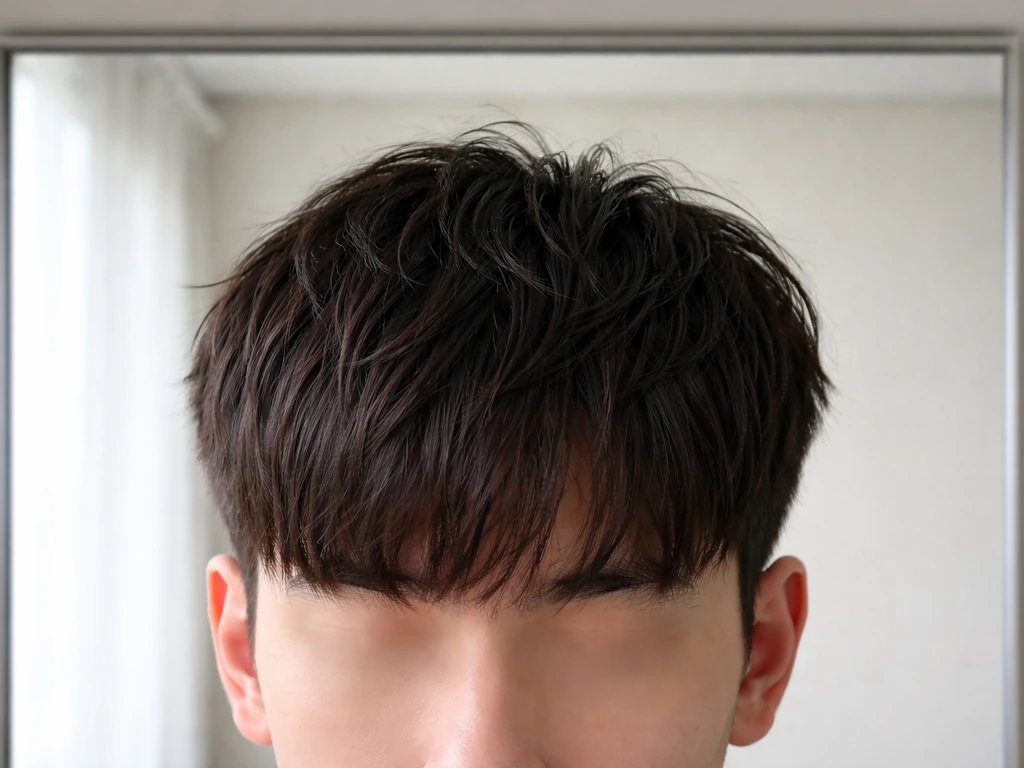
What you're actually growing out
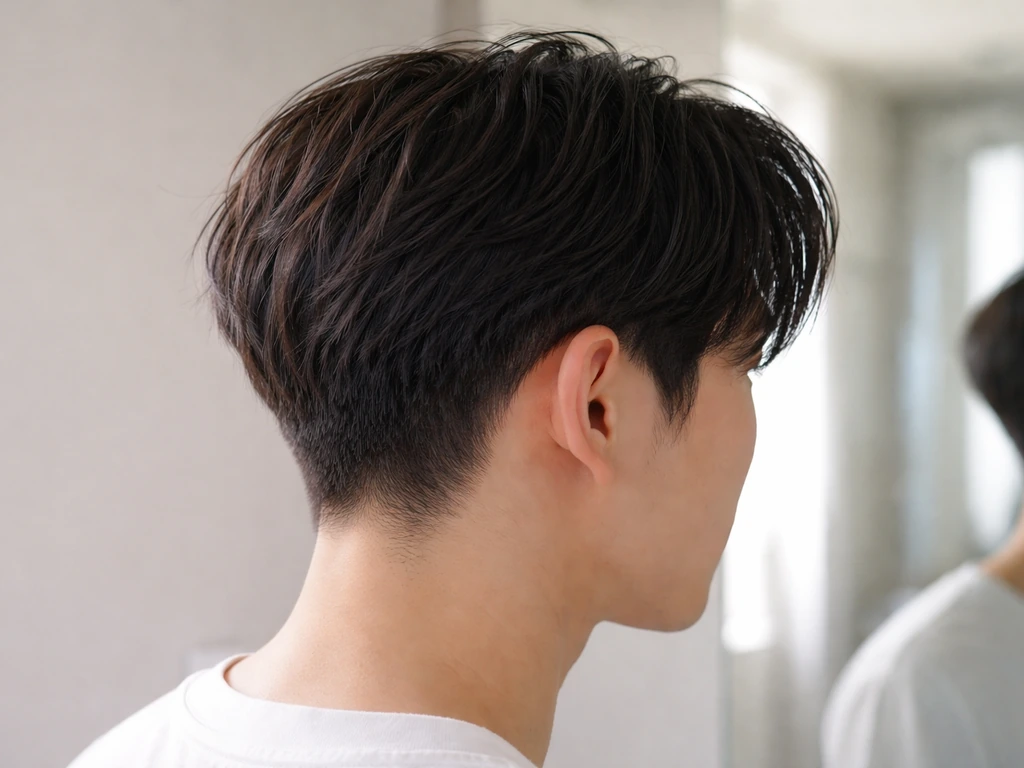
The 2 block haircut (also called the Korean two-block or K-pop cut) is built around two distinct length zones. The lower block covers the sides and back, typically clippered short between a #2 and #4 guard (roughly 6mm to 13mm). The upper block is the top and crown, usually left significantly longer at anywhere from 3.5 to 6 inches. The nape is often tapered or squared short, and the fringe falls forward or to the side rather than being swept back like a Western undercut.
When you grow this out, you're managing three separate zones that grow at different rates and create different visual problems. The sides will hit a limbo length where they're too long to look intentional but too short to lay flat or blend with the top. The nape can get scraggly and uneven. The fringe, which was probably one of the reasons you got the cut in the first place, can actually grow out quite gracefully into curtain bangs or a longer textured front if you handle it right. Knowing which zone is causing your frustration at any given moment makes the whole process a lot less stressful.
What you'll need before you start
You don't need much, but the right tools and products make a real difference during the grow-out. Here's what to have on hand:
- A blow dryer with a concentrator nozzle (for directing airflow precisely on shorter sides) and optionally a diffuser attachment for managing cowlicks
- A vent brush or round brush for shaping the top during blow-drying
- Sea salt spray or texturizing mist (apply to damp hair before blow-drying for grip and volume)
- Matte clay as your main finishing product (it gives structure without the shine or stiffness of pomade or gel, which both work against a natural textured look)
- A fine-tooth comb or tail comb for creating parts and managing the fringe zone
- A barber you trust, or at minimum the vocabulary to explain what you want (more on that below)
On the salon side, the most important thing is being upfront with your barber that you are growing out, not maintaining the cut. Many barbers default to tidying the sides back to their original guard length at every visit. You need to tell them specifically: "I'm growing out the sides and nape, please only clean up the outline without taking length off the sides." If you want a reference point, ask for a taper-blend rather than a clipper-over-comb, and request the transition be softened rather than sharpened.
A realistic week-by-week grow-out timeline
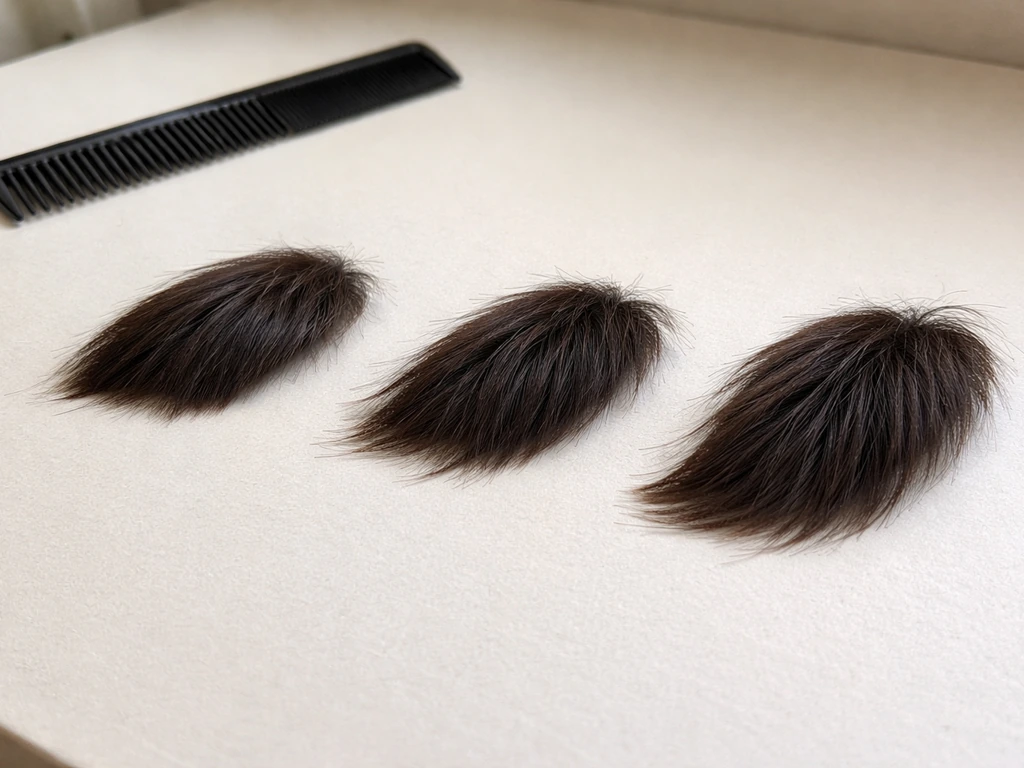
Hair grows about half an inch (1.25 cm) per month on average. That's the baseline to set your expectations. If your sides were cut to a #2 guard (about 6mm), they'll hit roughly 19mm by month two and about 32mm by month four. Here's how that plays out in real life: If you want a week-by-week plan for your exact length goals, use the two-block timeline above as your guide week-by-week grow-out timeline.
| Timeframe | What's happening | What it looks like |
|---|---|---|
| Weeks 1–3 | Sides and nape are still clearly short; top is holding its length well | Cut still reads as intentional; easiest phase to style |
| Weeks 4–6 | Sides start looking fluffy or shapeless; nape has visible regrowth; the disconnect between blocks becomes noticeable | The awkward phase — sides look grown out but not long enough to blend |
| Weeks 7–10 | Sides approaching 1 inch; starting to lay flatter and show more natural movement | Gap between blocks narrows; easier to slick back or part to one side |
| Months 3–4 | Sides reaching 1.5 inches and beginning to blend with the top; nape gets heavier | Shape starts looking more like a medium-length cut than a two-block |
| Months 5–6 | Sides and top approaching a unified length; fringe is noticeably longer | Can wear as a full medium-length style; two-block transition is mostly complete |
| Months 6–8+ | Full length integration depending on target style | If you want a longer style like a wolf cut or curtain-bang look, this is when it comes together |
If you started with skin-level sides (a #0 or #1 fade rather than a #2 to #4 guard), add about 3 to 4 extra weeks to each phase above. The shorter the starting point, the longer the awkward phase.
Managing the awkward phase: sides, nape, and fringe
The sides
Weeks 4 to 6 are the hardest. The sides are long enough to look unkempt but short enough to stick out rather than fall naturally. The fix isn't to cut them back down, that just restarts the clock. Instead, use your blow dryer with a concentrator nozzle to direct the sides downward and slightly back while they're damp. Matte clay applied sparingly will keep them from poofing out. If your sides are naturally thick or coarse, a tiny amount of clay worked through with your fingers (not a comb) gives you the most control.
The nape
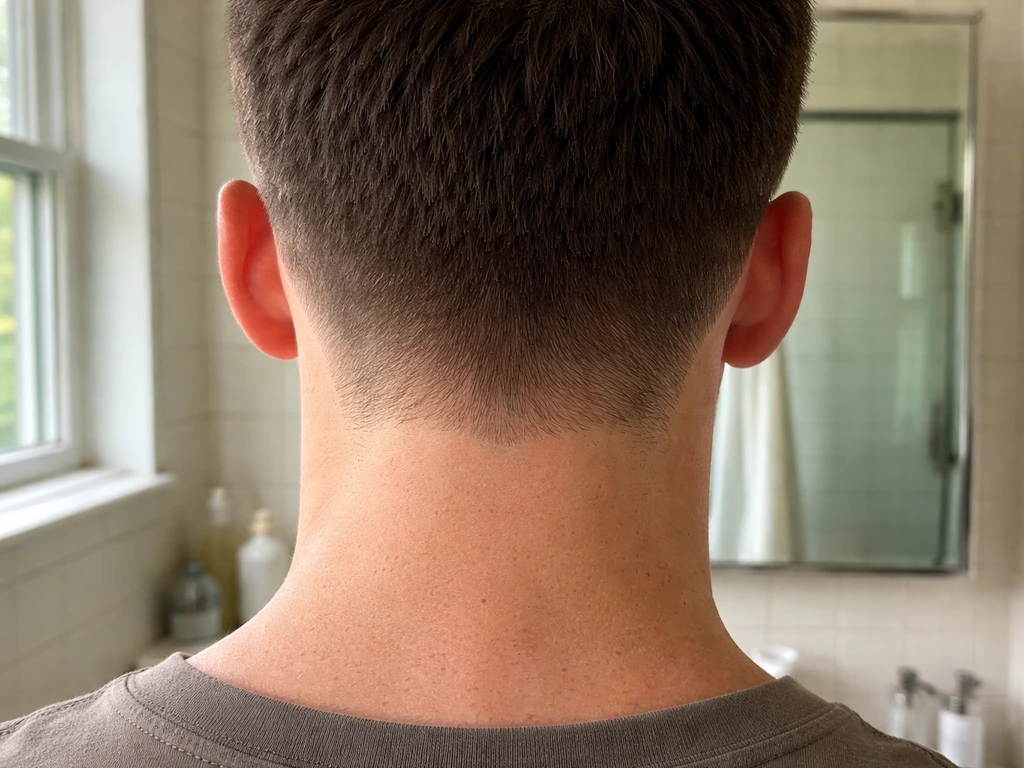
The nape is where most people get tempted to ask for a cleanup that ends up being way more than they planned. A small neckline cleanup (just the very base of the neck) is fine and won't set your growth back. But tell your barber explicitly: "Just clean the neck outline, don't touch the nape length above that line." As the nape grows, it may start to curl or flip, especially if you have any wave in your hair. This is actually useful later, you can work that texture into the overall style.
The fringe
The fringe zone is often the most pleasant part of this grow-out because it was already long. As it grows past its original length, it naturally moves into curtain-bang territory, especially if you blow-dry it with a slight outward curve to each side. HairRisk also discusses the “bang perm” or fringe perm approach as a way to help curtain bangs fall correctly during the grow-out. If you want to encourage that shape, use sea salt spray on damp fringe hair and scrunch gently while blow-drying with a diffuser or your fingers. If the fringe starts falling into your eyes, a light matte clay is enough to push it to one side without making it look stiff or greasy. Avoid gel and shiny pomade here, they make a textured fringe look flat and overdone.
Styling strategies for every phase
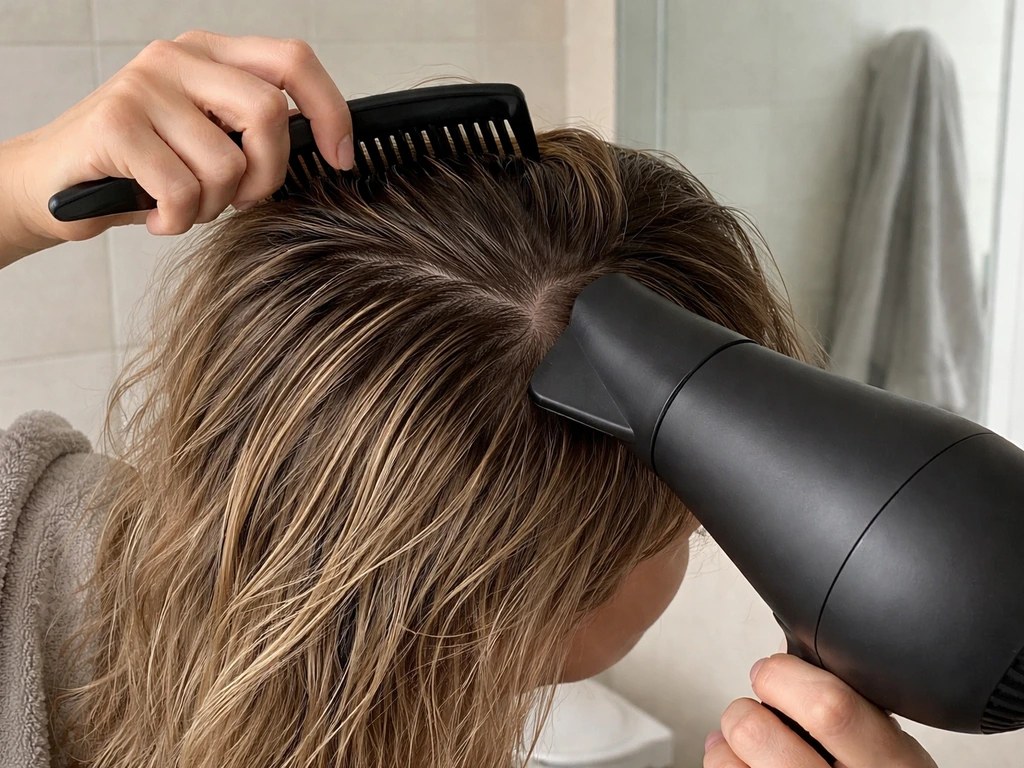
The biggest styling upgrade you can make during grow-out is committing to a blow-dry routine. It takes 5 minutes and makes grow-out hair look 10 times more intentional than air-drying and hoping for the best.
- Start with damp (not soaking wet) hair. Towel dry to about 70% dry before you touch the dryer.
- Apply sea salt spray or texturizing mist through the hair, focusing on roots and midshaft. This gives you grip and volume before you shape anything.
- For the top: use a vent brush or round brush and blow-dry against the natural growth direction first to create volume at the root, then smooth back in the direction you want.
- For the sides: point the concentrator nozzle downward and pull the hair flat against the head while drying. This is especially important in weeks 4 through 8 when sides are at their most unpredictable.
- Finish with a small amount of matte clay (pea-sized to start, add more if needed). Work it between your palms until barely visible, then run through hair and refine with fingertips.
- If you're wearing the top back or to one side, now is when you set the part with a comb or your fingers while the hair is still slightly warm from the dryer.
For slick-back or parted styles during months 2 to 4: the sides being slightly longer actually helps here because there's more to work with. A side part with the top swept over the growing-out sides can look genuinely polished and hides the transition zone well. A center part works once the sides reach about 1.5 inches, when they can start to fall naturally without being pushed flat. If you're curious how this translates to other textured cuts like a wolf cut or a mod cut, the blow-dry logic is very similar, volume at the root, direction through the body, light finish. If you're trying to grow out a mod cut, keep your blow-dry routine consistent so the volume and direction through the hair do the work for you. If you're wondering how that looks for a wolf cut specifically, the same idea applies: focus on shaping the transition between the shorter sides and the longer top as it grows.
Trim schedule: when to tidy up and when to leave it alone
This is where people make the biggest mistake: they go in for a "tiny tidy" and come out with sides that are back to square one. Here's a trim schedule that actually supports the grow-out instead of fighting it.
| Phase | Recommended action | What to tell your barber |
|---|---|---|
| Weeks 1–3 | No trim needed unless outline is messy | Skip this visit entirely if the cut still looks clean |
| Weeks 4–6 | Neckline cleanup only if needed; do not touch side length | "Just clean the neckline outline. No length off the sides." |
| Weeks 7–10 | Optional: ask for a soft blend or taper on the sides only if the transition looks harsh, not a full tidy | "Soften the transition between sides and top without removing side length." |
| Months 3–4 | Light trim on the top only if it's getting unruly; sides still growing | "Trim the top for shape only. Keep all the side length." |
| Months 5–6+ | Shape the overall cut toward your target style (medium length, curtain bangs, etc.) | Describe the target style; ask for texturizing if needed, not blunt removal |
A general rule: visit the barber every 4 to 6 weeks during grow-out, but for outline and shape work only, not length removal. Every 3 to 4 weeks is fine if you need the neckline cleaned up and the outline kept sharp. If you're nervous the barber will take too much off, say upfront: "I'm growing this out. Please don't use clippers on the sides above the neckline today."
Common problems and how to fix them
Cowlicks at the nape or temples
Cowlicks often show up at the nape and along the sides near the temples during two-block grow-out, exactly where you have the least hair length to work with. The key is working with damp hair, not dry. When hair is wet enough to be pliable, blow-dry the cowlick section by directing heat at the roots while pulling the hair in the opposite direction of its natural growth pattern. A diffuser attachment with your fingers doing the shaping gives you the most control. Once you've reset the direction with heat, let it cool before touching it, that's what holds the shape.
Too much bulk on the sides
If your hair is thick and the sides are getting bulky rather than lying flat around months 2 to 3, ask your barber to point-cut or texturize the sides to remove bulk without removing length. This is not the same as a clipper pass, it should be done with scissors and only removes internal weight, not the perimeter. Don't let them talk you into "just a slight cleanup" with clippers. That's usually a guard pass in disguise.
Uneven growth between sides
It's common for one side to grow faster or sit differently than the other. If one side hits that flat, cooperative stage earlier, lean into it with your part direction, put the part on the side that's cooperating and sweep the slower side underneath. By the time both sides are past 1.5 inches, the difference is rarely noticeable in a styled look.
The transition zone looks disconnected or harsh
If the line between your short sides and longer top starts looking like a harsh shelf rather than a grow-out in progress, you have two options. First, try blow-drying the top hair outward and slightly downward over the sides, this drapes the longer hair over the transition and visually softens it. Second, if it's genuinely unflattering and you've hit around 2 to 3 weeks into the awkward phase, ask a barber to re-blend the transition with scissors rather than clippers. The goal is to soften the line without going back to a fresh two-block.
When to reset or get a barber involved
Sometimes growing out just isn't working, and that's okay. Here are the signs that a more significant barber visit makes sense rather than pushing through:
- The sides were cut with a very high disconnect or skin fade, and after 6 to 8 weeks the line is still visually jarring no matter how you style it — a barber can blend this properly without resetting to zero
- You've developed a patch of noticeably slower growth on one side that's creating a visibly asymmetrical silhouette
- The nape has grown into a shape that curls or flips in a direction that no amount of blow-drying corrects, and it's affecting the whole look from behind
- You realize your target style has changed — for example, you want to go from a two-block into something more like a bowl cut or a blunt-front look, which would benefit from a deliberate shape reset rather than a passive grow-out
- You're four months in and still fighting the same styling battle every day with no improvement — at that point, a consultation with a barber to assess whether the original cut's geometry is working against your natural growth pattern is worth the conversation
A reset doesn't always mean going short again. A skilled barber can reshape the grow-out by adjusting the transition, removing bulk without removing length, and pointing you toward a target style that works with where your hair actually is right now. Think of it as a navigation correction, not a failure. If you've been managing a similar process with something like a bowl cut grow-out or an edgar cut grow-out, the reset logic is similar, sometimes you need one deliberate barber session to get the shape onto the right track before the passive grow-out takes over again. If you are also trying to grow out a bowl cut, you can apply the same idea of managing separate zones while you wait out the awkward in-between stage a bowl cut grow-out. If you're also working on an edgar cut grow-out, the same patience and controlled trimming timeline will help you get to a clean, blended length.
The most important thing is not to panic-cut. The 4-to-6-week awkward window feels permanent when you're in it, but it genuinely isn't. If you’re wondering how a blunt cut grow out compares to this two-block timeline, the main idea is still to avoid panic-cuts and manage the awkward transition with styling how does a blunt cut grow out. Most people who push through it report that by month 3, the grow-out suddenly starts cooperating. Give it that time before you make any big decisions.
FAQ
If I want the fastest grow-out, should I keep the top short or let it stay long?
Let the top stay as long as your original cut, avoid asking the barber to “balance” length. The grow-out works because the top already has enough length to help disguise the transition while the sides catch up.
What if my barber keeps taking length off the sides, even after I ask not to?
Bring a clear guard reference (for example “no clippers on the sides above the neckline”) and ask for a scissors-only outline cleanup. If you notice even a small guard pass, reschedule for a re-blend before the awkward stage extends, usually around weeks 4 to 6.
How do I handle the “sides stick out” phase if I hate using a blow dryer?
Use damp reshaping instead of air-drying, even if you skip heat. Shampoo after the awkward week starts, apply a small amount of matte clay, and use your hands to push the sides downward and slightly back, then let them set as they dry.
Should I use oil, serum, or leave-in conditioner on the fringe during grow-out?
Prefer a light leave-in or conditioning cream only if your fringe feels dry or tangly. Too much weight makes the curtain-bang shape fall flat, especially months 2 to 4 when you need movement.
Can I use gel on the sides to keep them down?
Avoid gel for the grow-out sides, it often makes the transition zone look stiff and highlights uneven texture. Matte clay, applied sparingly with fingers, gives control without the shiny, “helmet” look.
What haircut request should I make when the nape starts curling or flipping?
Ask for a neckline outline cleanup only, then let the curl integrate. If your nape curl becomes patchy, request targeted scissor point-cutting for texture, not clippers above the neckline.
How do I pick between a side part and a center part during the grow-out?
If your sides are still short and resisting lying flat, start with a side part and sweep the top over the transition. Switch to a center part closer to when the sides reach about 1.5 inches, so the hair can fall naturally without constant pressure.
My hair grows unevenly, one side sits lower than the other. What should I do?
Create your part on the cooperating side first, then sweep the slower side underneath. This uses the natural difference to your advantage, and once both sides are past about 1.5 inches the styling gap usually becomes minor.
Is it better to wait out the shelf-like transition, or fix it with a barber sooner?
If the harsh line appears about 2 to 3 weeks into the awkward stage and looks unflattering, a scissors re-blend is your best move. If you can cover it with blow-drying drape outward and slightly downward, you can wait and avoid another appointment.
How often should I trim if I’m only doing outline and shape maintenance?
For growth support, plan for a barber check every 4 to 6 weeks for perimeter work. If you specifically need the neckline cleaned to prevent an uneven look, you can go every 3 to 4 weeks, but keep length removal off the sides.
What should I ask for if my sides get bulky, not just long?
Ask for internal texturizing using scissors, point-cutting, or bulk removal. The goal is reducing weight inside the sides without using clipper guard passes that change the perimeter and reset your timeline.
Do cowlicks always fix themselves as the hair gets longer?
They usually improve as length increases, but during the early months cowlicks form where you have the least length. Reset the direction on damp hair with a diffuser or your fingers shaping, then let the section cool so it holds.