
Growing out a mod cut takes roughly 12 to 18 months to reach a truly versatile longer length, but you can make it look intentional and wearable at every stage along the way. If you want the full guide, including what to ask your stylist for at the start, jump to our step-by-step breakdown of how to grow a mod haircut. The key is understanding what your specific version of the cut will do as it grows, committing to a small maintenance plan so the shape stays manageable, and having a few styling moves ready for the weeks when it just looks... in between. You don't have to shave it off and start over. You just have to know what's coming.
How to Grow Out a Mod Cut: Step-by-Step Timeline

Marcus Vickers
3 May 2026

Figure out which mod cut you're starting from

Not all mod cuts grow out the same way, so before you do anything else, identify exactly what you have right now. The classic mod cut features a rounded, medium-length silhouette with heavier fringe or bangs that fall near or just above the eyes. But there are real variations, and each one has a different awkward phase.
- Blunt fringe mod (heavy, straight-across bangs with a one-length or slightly rounded body): The fringe is your biggest management challenge. It'll hit an awkward not-quite-long-enough phase around months 3 to 5.
- Layered or textured mod (body of the cut has movement or point-cut ends, sometimes with a rounder silhouette): The layers create uneven growth zones, so some sections will look longer than others for a while.
- Mod with an undercut or shaved section: The undercut will grow back visible fuzz within 4 to 6 weeks, and you'll need to decide early whether to maintain it or let it blend in.
- Blunt one-length mod (clean-lined, no layers, often with fringe): Closest to a blunt bob structure. The ends will likely flip or flare as they hit collar length, especially if you have any natural cowlicks.
Set your expectations honestly. Hair grows about half an inch per month on average. If your mod cut sits at chin length or shorter, getting to shoulder length alone takes around 6 to 12 months. A full fringe growing out to where it blends into the rest of the hair can take 6 to 12 months on its own. That's not meant to discourage you. It just means the plan needs to stretch across real time, not weeks.
Week-by-week growth timeline
Here's what to actually expect at each stage. I'm using 'weeks' early on and shifting to 'months' once the changes slow down, because the early weeks are when the most noticeable shifts happen.
Weeks 1 to 4: Everything still looks like the cut

Honestly, not much changes visually in the first month. Your cut still reads as a mod cut. The fringe might start to feel slightly heavy or sit lower on your forehead. This is your conditioning and hair-health phase. Focus on keeping hair strong rather than growing it out aggressively. Damaged ends break off and reset your progress, so now is the time to start a weekly deep conditioning routine.
Weeks 5 to 8: The shape starts to look 'off'
By week 7 or 8, the original precision of the cut starts to soften, and not always in a flattering way. The fringe is longer but not long enough to tuck behind the ear or style differently. The body of the cut may look a bit shapeless. This is when most people get the urge to go back for a full trim. Don't. Instead, see a stylist for a micro-trim if needed (more on that below) or lean into styling to bridge the gap.
Months 2 to 4: The awkward middle arrives

This is the phase that sends people back to the salon. The fringe is hitting your nose or upper lip, which is genuinely annoying. The body of the cut is growing out unevenly if you had layers. Cowlicks near the neckline or crown start making shorter hairs stick up or flip outward. If you had a blunt cut, the ends will likely start to curl or flick out at the collar or jaw line because there's not enough weight to hold them down yet. Blow-drying with a round brush aimed downward is your best friend here.
Months 4 to 6: The weight builds
Around month 4 or 5, the hair starts to gain enough length and weight that the worst of the flipping usually settles. The fringe, if you're growing it out, is now long enough to part to the side or push back. The body of the cut starts to look like a grown-out bob or a lob (long bob) rather than a failed mod cut. This is when accessory styling really earns its keep.
Months 6 to 12: Shoulder length and beyond
If your starting point was at or above the chin, you'll hit shoulder length somewhere in this window. Once hair reaches the shoulder, it usually settles and behaves much better. The fringe has likely merged with the rest of the hair by now. You're into genuinely flexible styling territory: ponytails, half-ups, braids, and more. A light trim to even out any lingering unevenness around month 8 or 9 makes a big difference in how polished it looks.
Daily styling routines for the awkward stages
The goal during the awkward phase isn't to make your hair look like a finished style. It's to make it look deliberate. There's a difference between hair that looks like it's being grown out intentionally and hair that looks forgotten. Here's how to stay on the right side of that line.
The blow-dry is your most powerful tool
A round brush and a blow-dryer can correct a lot of the flipping and popping that happens when a mod cut grows out. Aim the dryer downward as you blow-dry sections, keeping the brush underneath to pull ends in the direction you want them to go. For root volume without end chaos, flip your head upside down for the first 60 seconds of drying to set the roots, then stand upright and smooth the ends down. This technique works especially well for blunt or one-length mod cuts where the ends are the main problem.
Products that actually help
- Lightweight flexible-hold cream or serum: Apply to damp ends before drying to reduce frizz and encourage ends to lie flat. Avoid anything with strong hold or crunch, which makes grown-out cuts look stiff.
- Texturizing spray: A soft mist adds separation and movement to awkward in-between lengths without weighing hair down.
- Strong-hold hairspray: Use it as a finisher, not a foundation. A light hit over styled hair keeps things in place without stiffness.
- Gel at the roots (for bangs only): Apply a small amount of firm gel to damp fringe, then blow-dry with a small round brush in the direction you want it to lie. This trains the fringe over time.
Accessories as styling tools
Claw clips, bobby pins, and barrettes aren't just cute. They're functional during a grow-out. A claw clip at the back of the head holds hair out of your face when it's too short to tie but too long to ignore. Bobby pins can tuck awkward fringe sections back neatly. Thin headbands push growing fringe off the face entirely. These aren't concessions. They're how you look put-together at month 3.
Your maintenance plan: trims, washing, and smoothing
Washing and conditioning
Wash frequency depends on your hair type, but the grow-out phase is a good time to wash slightly less often if your scalp allows it. Over-washing can strip moisture from the ends at the exact time when you need them to stay healthy. Use a moisturizing conditioner every wash and add a deep conditioning treatment or hair mask once a week, especially from month one. Healthy ends don't split, and split ends that travel up the strand will cost you length you've worked to grow.
Detangling gently
Use a wide-tooth comb or a detangling brush on damp hair, starting from the ends and working up toward the roots. Never yank through knots from root to tip. During the awkward stages, the nape and crown area often have shorter pieces that tangle with longer ones. Be patient with those sections specifically, and consider applying a small amount of leave-in conditioner to that area after washing.
Micro-trims: the grow-out secret
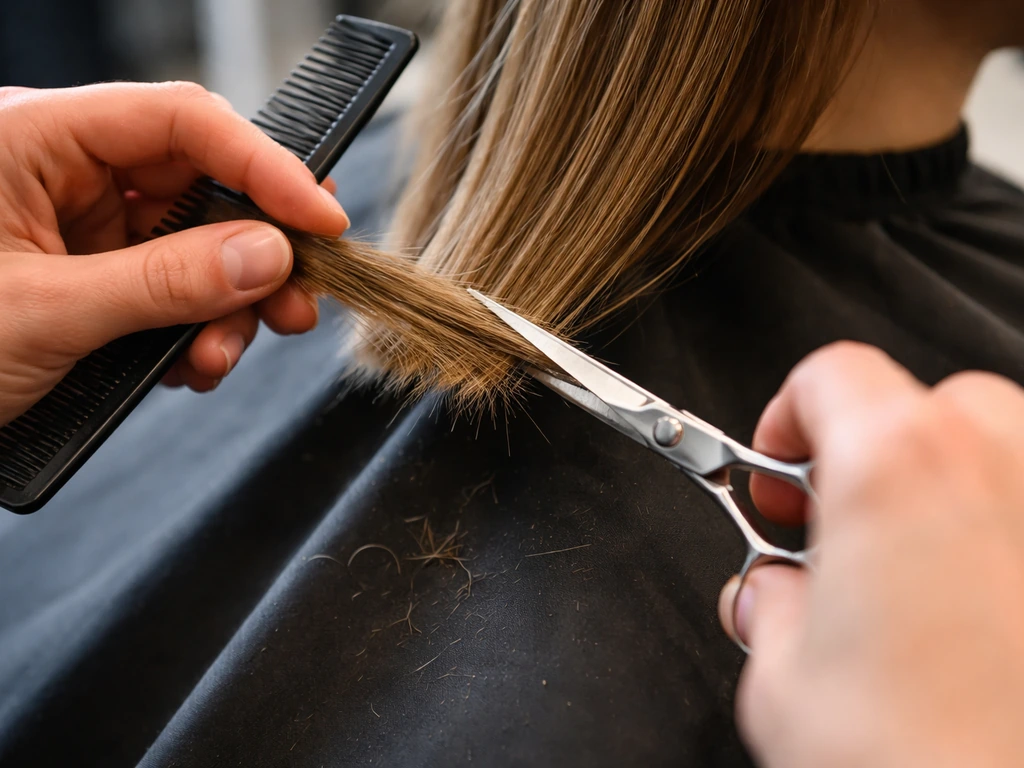
A micro-trim is not a setback. It's removing just enough length to get rid of split ends and keep the shape wearable, without resetting your growth progress. Aim for a trim every 8 to 12 weeks rather than the standard 6-week interval, and be specific with your stylist: ask them to take off no more than a quarter inch (or half an inch maximum) to clean up the ends. The goal of trimming while growing out is to prevent split ends from traveling up the shaft and to keep the shape from looking completely shapeless. It is not to reshape the cut back to its original length.
Managing color if you have it
If your mod cut was colored, the grow-out process will create a visible root line. For permanent or demi-permanent color, plan touch-ups every 4 to 8 weeks depending on how much contrast there is between your natural color and the dye. A toner or gloss treatment every 4 to 6 weeks can refresh the color between full dye sessions and reduce brassiness without the damage of a full color application. As your hair grows longer, you can also talk to your colorist about transitioning into a technique like balayage or a shadow root that makes the grow-out line look intentional rather than neglected.
Managing the fringe as it grows
If you started with a heavy blunt fringe, this section is specifically for you, because the fringe phase is genuinely the hardest part of growing out a mod cut. A full fringe can take 6 to 12 months to grow out fully to a length where it blends with the rest of the hair. That's not a typo. Plan for it.
Month 1 to 2 of fringe growth
The fringe hits your brow or just past it. Keep it clean-edged with a light trim if it's getting in your eyes, but only trim the fringe, not the body of the cut. Section the fringe off from the rest of the hair before styling so you can work on it precisely. Blow-dry it downward with a small round brush to keep it flat and controlled.
Month 2 to 5: the nose-bridge phase
The fringe is now hitting between your brows and your upper lip, which is the most awkward length of all. Apply a small amount of firm gel to the fringe roots while damp, mist with water if needed, and blow-dry in the direction you want it to go. More tension from the brush as you dry makes the fringe more responsive to direction. For side parting: use the blow-dryer aimed in the direction of the part, brush the fringe across, and secure with a bobby pin or clip until fully dry. This technique gradually trains the fringe to fall to one side.
Month 5 onward: blending the fringe in
Once the fringe reaches past the nose, it's long enough to part to the side and sweep back, or to wear pushed back off the face with a headband or clip. At this point, you can ask a stylist to soften the fringe line so it starts to blend with the side sections rather than sitting as a distinct panel. A strong-hold finishing spray helps keep it in place once it's been trained to one side.
Adjusting for your hair type
| Hair Type | Main Challenge During Grow-Out | Best Styling Approach |
|---|---|---|
| Straight | Ends flip and flick out at collar/jaw length; cowlicks at the nape become obvious | Blow-dry with round brush aimed downward; use flexible-hold serum on ends; avoid heavy products that flatten root volume |
| Wavy | Waves become uneven as layers grow out unevenly; fringe can wave outward unpredictably | Encourage waves with a curl-defining cream on damp hair; scrunch rather than brush; a diffuser reduces frizz without disrupting the wave pattern |
| Curly/Coily | Shrinkage makes growth less visible; uneven curl pattern when shorter pieces are mixed with longer ones | Keep ends moisturized with leave-in conditioner; finger-coil or use a denman brush to define curls through awkward stages; protective styles like twist-outs hide the transition beautifully |
For thick hair of any texture, the mod cut grows out with more bulk, which can feel heavy during the in-between phase. A stylist can remove interior weight (without shortening the length) at a micro-trim appointment to make the shape feel lighter while keeping progress. For fine hair, volume is the priority: avoid heavy creams at the roots, use a volumizing mousse on damp hair before drying, and lean on root-lifting techniques like the upside-down blow-dry.
When to adjust the shape versus when to hold firm
There are two scenarios where you should actually adjust the cut, rather than just maintain it: when the shape has become genuinely unwearable (not just awkward, but truly unmanageable) and when uneven growth between sections is creating a shape that's longer in some places by an inch or more. In the first case, a stylist can reshape the cut into a wearable transitional style, like softening the blunt line into a slight A-line or adding a small amount of texture to the ends, without losing significant length. In the second case, a light trim to even out the perimeter makes it look intentional rather than overgrown.
What you should not do is start over by cutting back to the original mod cut shape because you hit a bad week. Bad weeks happen at months 2, 3, and 4 almost universally. If you cut back every time you hit an awkward phase, you stay in that phase permanently. The test is: is this genuinely unmanageable, or is it just not what I'm used to? Most of the time it's the second one, and that's survivable with the right styling routine.
If you've been growing out a mod cut with an undercut element, the undercut section deserves its own decision point. If you have a two-block haircut, the underlayer growth and blending plan matters just as much as the top length. You can maintain it with a trim every 4 to 6 weeks to keep it tidy while the top grows. Or you can let it grow in completely, which means 6 to 12 months of a visible fuzz line between the shorter and longer sections. Neither is wrong. But if you're letting it grow in, styling the longer top sections down over the growing undercut section helps camouflage the transition while it catches up. This is similar to what happens when growing out a two-block or wolf cut, where undercut sections create their own timeline. If you are specifically trying to grow out a wolf cut, the same timelines and styling strategies for the fringe and awkward middle will help it transition smoothly.
The bottom line is this: growing out a mod cut is a long game, but it's not a mysterious one. You know roughly when each phase hits, you know what your hair will do at each stage, and you have specific tools to manage it. The only thing that actually stops people from succeeding is cutting back early out of frustration. The only thing that actually stops people from succeeding is cutting back early out of frustration grow out. Stay the course, keep the ends healthy, use your accessories, and let the fringe train gradually to one side. You'll get there.
FAQ
Can I use heat styling tools while growing out a mod cut, or will it slow the process?
You can, but treat heat as a controlled finish, not the entire styling method. Use a heat protectant every time, keep tools on moderate settings, and prioritize blow-drying with downward tension. If you notice frizz increases or ends feel rough during months 2 to 4, reduce flat ironing and lean more on clips, light gel for the fringe, and regular deep conditioning to protect length.
How do I keep my fringe off my face when it keeps slipping into my eyes?
Use a two-step approach: train the direction with blow-drying (or damp gel plus brush), then secure while it sets. For example, after drying, pin just the fringe area with bobby pins or a small barrette, then remove in the evening once it has enough memory to fall naturally. If you only pin without training, it often reverts once hair dries and moves.
Should I wash less or more during the awkward stages to prevent tangling?
Usually wash slightly less if your scalp allows it, because over-washing can dry the ends right when you need them to stay flexible and non-frizzy. On wash days, detangle in sections using conditioner as slip, and focus on nape and crown where shorter hairs tangle with longer ones. If you sweat heavily or get product buildup, increase wash frequency, but still keep conditioner and a weekly mask consistent.
What’s the safest way to detangle when I start getting matting at the nape?
Work from the ends upward, stop at knots rather than pulling through, and switch to a wide-tooth comb or a detangling brush only on damp hair with conditioner. If matting forms, gently loosen with finger separation first, then comb slowly. Avoid brushing dry, because you can create breakage that looks like “it’s not growing” even when it is.
Do micro-trims count as “starting over,” and how do I explain what I want to my stylist?
Micro-trims are not reset cuts, they’re shape-protection. When you book, ask for a cleanup focused on split ends and perimeter only, and request no more than a quarter inch removed (half an inch maximum if the ends truly need it). Tell them you want the current grow-out shape preserved, not re-cut to the original mod length or silhouette.
My hair is growing unevenly, one side is longer by more than an inch. What should I do?
First, confirm it is truly uneven growth (not just different styling pattern or cowlick behavior). If the sides are visibly different for several weeks, ask for an evenness trim at the perimeter rather than shortening everything. Another tactic is to adjust daily styling (part direction and blow-dry tension) to make the longer side lay correctly while the shorter side catches up, then revisit with your stylist once it stabilizes.
If I colored my hair, how can I reduce the “root line” during the grow-out without damaging my ends?
Plan touch-ups based on contrast, and use lower-damage options between color sessions. A toner or gloss can refresh tone without reapplying full color, and as length increases, ask about blending methods like a shadow root or balayage so the transition looks intentional. Also, keep conditioner and mask routines consistent, because dryness makes the root line visually sharper and the ends more prone to breakage.
Will an undercut element mess up the timeline, and can I make the transition less noticeable?
Yes, undercut or two-block variations create their own shorter-to-longer timeline (often a visible fuzzy line for months). To camouflage it, style the longer top sections down or over the growing underlayer, and consider keeping the undercut tidy with small trims every 4 to 6 weeks if you want less contrast. If you prefer a fully let-it-go grow-out, accept the line and focus on controlling the top with clips and blow-drying.
What should I do if my mod cut feels “unmanageable” but I don’t want to cut it shorter again?
Treat “unmanageable” as a styling problem first: use the biggest tools you already have, blow-dry direction, round brush control, and reliable hold (light gel or finishing spray for the fringe). If it becomes unwearable because of sharp flips, persistent tangling, or severe unevenness, then book a stylist for a transitional adjustment or evenness trim. The goal is to fix behavior, not re-create the original shape.