
A blunt cut grows out slowly and visibly, adding roughly 1 cm of new length per month. Because it was cut perfectly straight across with no layers to soften the edge, every millimeter of growth shows up as a heavier, denser bottom line before it eventually starts to move more naturally. The good news is that the shape doesn't fall apart overnight, and with the right styling moves and an occasional micro-trim, you can stay comfortable the whole way through without restarting.
How Does a Blunt Cut Grow Out: Timeline and Fixes

Marcus Vickers
16 Jun 2026
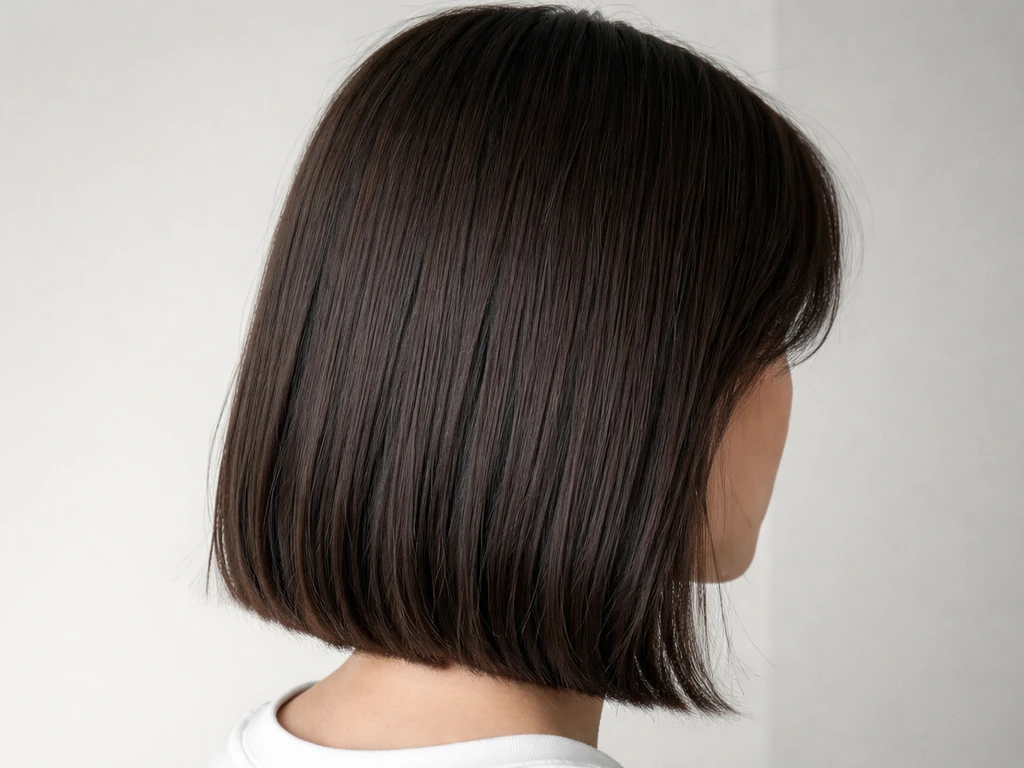
What actually makes a blunt cut different (and why it matters for growing it out)
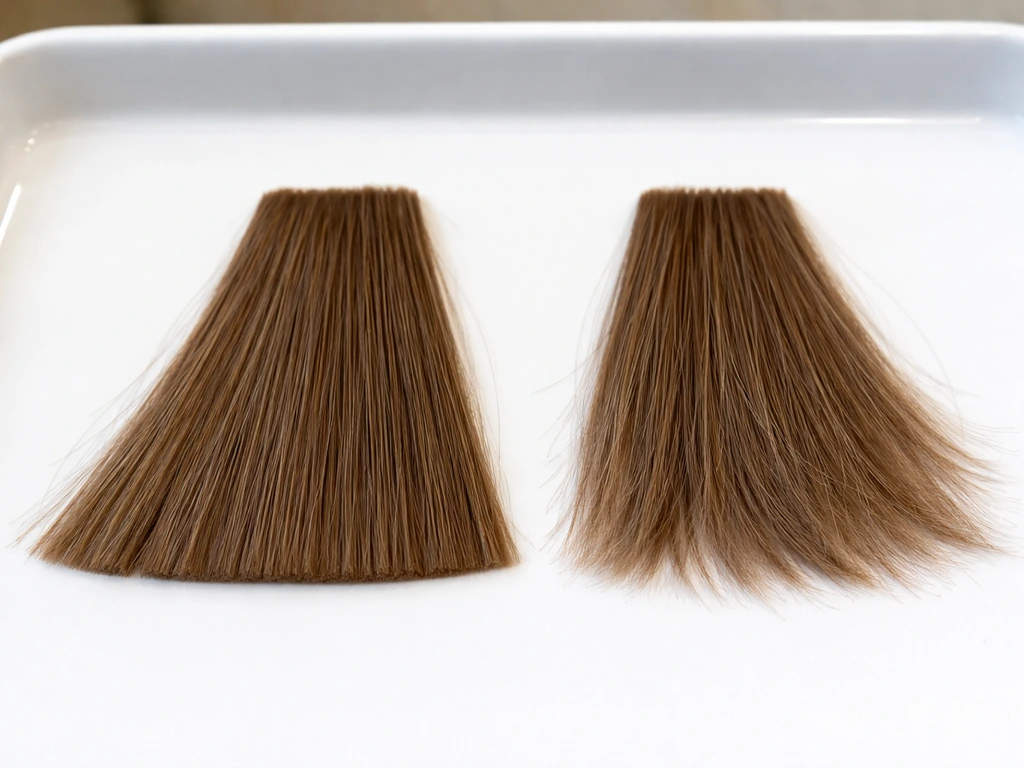
A blunt cut means every strand at the perimeter is cut to the exact same length, straight across, with no graduation. There are no layers angled through the ends to diffuse the bottom edge, which is what creates that sharp, clean weight line you see in classic bobs, lobs, and blunt fringe. The technical term is a one-length or solid structure, and the weight sits entirely at the perimeter rather than being distributed through the interior of the hair.
For grow-out purposes, that structure matters a lot. This same structure is why a 2 block haircut can feel especially tricky to grow out in the first few months, since the ends hold weight differently than the rest of the shape blunt cut. Because all that weight sits at the ends, the cut can actually look thicker and heavier as it grows, not thinner.
There's nothing inside the shape to move, so any change in length shows up immediately at the bottom line. If you also have an undercut or any internal layers that were added for volume, those sections will grow at different rates than the blunt perimeter and start creating visible mismatches within a few months. Worth keeping that in mind as you plan.
A realistic grow-out timeline, month by month
Hair grows at roughly 0.35 mm per day, which works out to about 1 cm (just under half an inch) per month, or around 6 inches per year. Individual growth rates vary, sitting anywhere from 0.5 to 1.7 cm per month depending on genetics, health, and hair thickness, but 1 cm is a reliable working average to plan around. Here's what to expect at each stage:
| Stage | Time from cut | What you'll see |
|---|---|---|
| Fresh blunt | 0–4 weeks | Clean, sharp edge; cut looks its most intentional and polished |
| Early grow-out | 1–2 months | Ends start to feel slightly thicker or denser; the weight line is still obvious but less precise |
| Awkward phase begins | 2–4 months | Bottom edge looks heavier; hair may start flipping or curling at the ends; shape feels 'in between' |
| The flip zone | 3–5 months | The most challenging stretch; ends can flip out or under depending on your texture and hair type |
| Shape softens | 5–7 months | Gravity starts winning; weight line begins to diffuse; hair moves more naturally |
| Transition complete | 8–12+ months | Blunt edge is barely visible; you're effectively in a new length category and can reshape as you like |
These windows shift depending on where you're starting from. A chin-length blunt bob gets to collarbone length in roughly 6 months. A blunt lob at the collarbone reaches mid-back territory in a year. The awkward phase is almost always the 2–5 month window, so knowing it's coming makes it much easier to push through.
How the shape actually changes as your hair gets longer
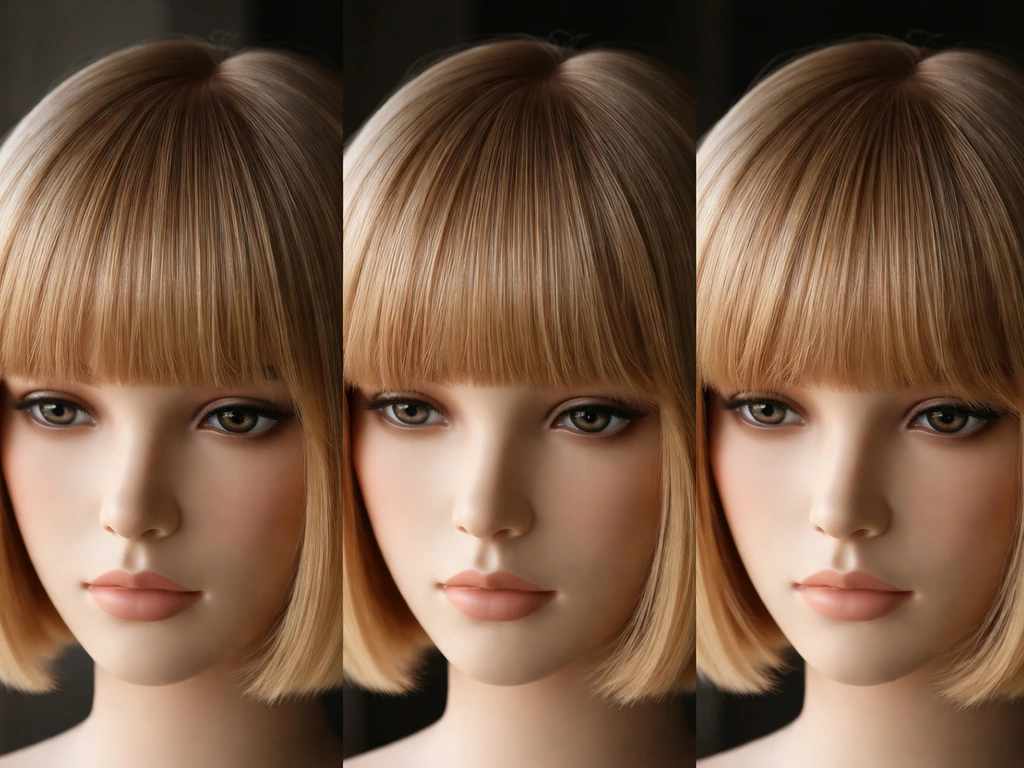
The ends get heavier before they get better
In the first couple of months, the blunt edge doesn't disappear, it amplifies. Because all the weight is stacked at the perimeter, new growth essentially adds more mass to an already dense edge. If your hair is straight or fine, this can make the bottom of your hair look almost wig-like: thick, flat, and solid. If your hair is wavy or textured, that weight line can actually start dragging the ends down more than it did right after the cut, which temporarily changes your wave pattern.
The flip: why it happens and when it stops
The flip is the most talked-about complaint during blunt grow-out, and it usually kicks in somewhere between months 2 and 5. What's happening is that as the hair lengthens, the ends hit a length where they're no longer anchored enough to hang straight but they're also too heavy to curl properly. They sort of hover in an awkward in-between curl, usually flicking outward at the bottom.
Who What Wear notes that during the awkward grown-out bob stage hair may “rebound in every possible direction,” and it also quotes a hairstylist recommending specific tools and technique to help control end flicks hover in an awkward in-between curl, usually flicking outward at the bottom. This is especially common around shoulder length, where the hair hits your shoulder and bounces back.
It can also happen inward (an under-curl) depending on how your hair is cut and what texture you have. The flip usually resolves once the hair is long enough to be weighted down by its own length, typically by month 5 or 6.
Cowlicks and sections behaving differently
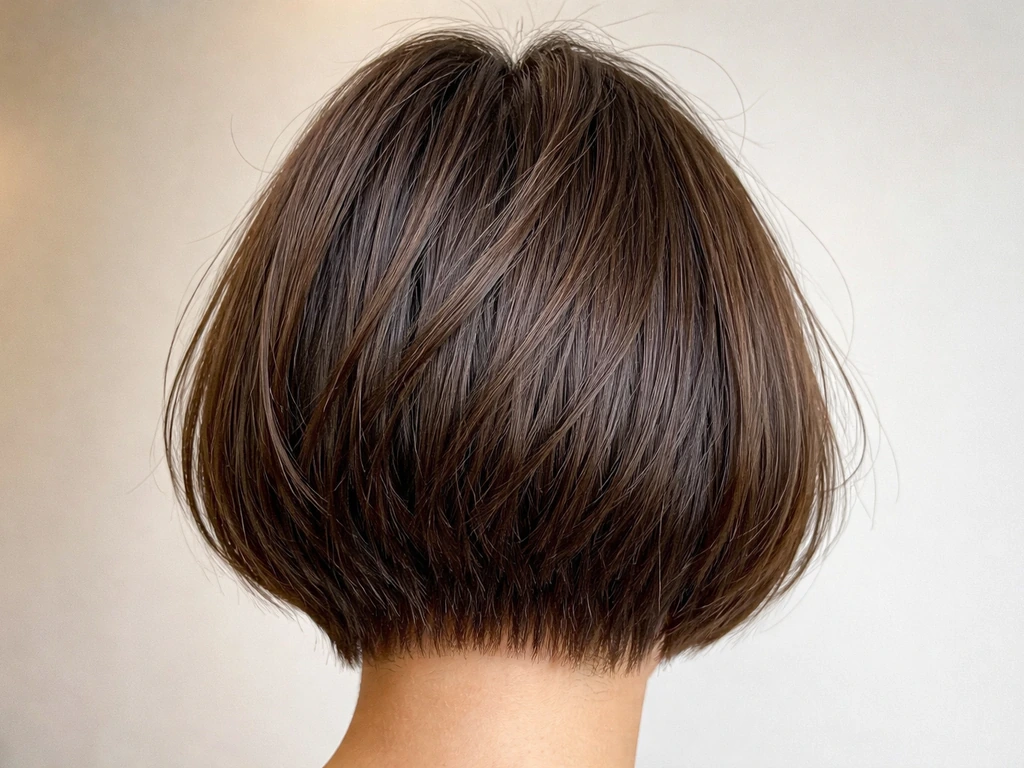
If you have cowlicks at the nape, the crown, or along the hairline, they become more visible as the blunt line grows past the point where it was originally cutting through them. The clean edge of a fresh blunt cut can actually mask cowlick direction because the weight holds everything flat. As that length increases, sections start following their natural growth pattern again, which can make certain spots look uneven even though the actual ends are still the same length. This is especially noticeable at the nape and around the ears.
Common problems and why they happen
- Bulk at the bottom: The weight line that made the blunt cut look sleek now makes your ends look heavy and blunt in a less intentional way. This is the number one frustration, especially for fine or straight hair.
- The flip or bounce: Ends flip or curl out (or under) once they hit shoulder length. This is a structural issue caused by the shoulder contact point and the lack of any layering to direct the ends.
- Uneven feel: Even though your ends are technically the same length, shedding (about 100 hairs per day is normal), breakage, and cowlicks can make the perimeter feel jagged or inconsistent.
- Undercut or internal layers catching up: If you had an undercut or any interior layers with your blunt cut, those sections grow at the same rate as everything else, but they hit different visible lengths at different times. This creates patchy bulk and random volume in places you don't want it.
- The 'stuck' length: Around the 3–4 month mark, the hair often feels like it's not growing because it looks about the same length each week. It is growing, it's just not growing out of the awkward zone yet.
How to style your way through the in-between stage
Blow-drying strategically
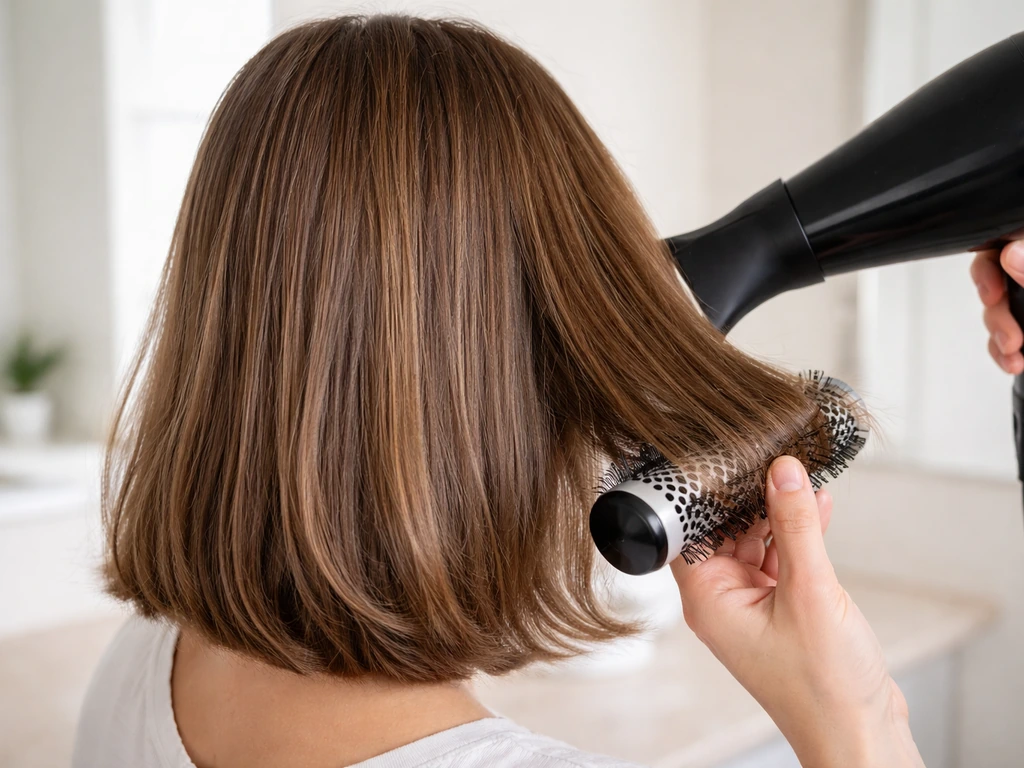
A round brush and a blow-dryer are your most useful tools during a blunt grow-out, but technique matters. To fight the flip, curl the ends slightly under as you dry rather than letting them air-dry into whatever direction they want. If you started with a mod cut, the perimeter-heavy look can create a similar awkward in-between stage, so the same flip-fighting styling approach applies fight the flip.
For cowlicks, work from the root with real tension and heat, using your thumb underneath the hair to guide the direction from the follicle, not just the surface. This actually trains the direction of the hair more effectively than trying to smooth it at the ends. If you skip heat and just air-dry, your blunt ends will almost always find their own shape, which at this stage means bulk or flip.
Flat iron for sleekness or a curl wand to commit to the wave
If your ends are flipping, you have two real options: flatten them completely with a flat iron or lean into the movement by adding a deliberate wave or curl with a wand. Trying to fight a half-hearted flip with nothing is what makes hair look messy. Going fully sleek or fully wavy both look intentional. Going in-between looks like the hair won.
Part changes, clips, and updos
Shifting your part even half an inch changes where the weight of the blunt line falls, which can immediately make the shape feel less boxy or heavy. A center part tends to emphasize the blunt edge symmetrically, while a deep side part breaks the line up visually. Clips, claw clips, and half-up styles are also your friend during months 3–5. They're not a styling cop-out, they're a practical way to keep the awkward mid-length portion looking intentional while the rest of the length catches up. Low buns and half-up looks work especially well when the ends are in the flip zone, since you're literally removing the problem area from view.
The trimming question: micro-trims vs. starting over
This is where a lot of people get derailed: they go in for a 'little trim' to clean things up and come out having reset the whole process. Following the right micro-trim and styling steps is one of the best ways to manage the awkward months when you're growing out a bowl cut. The key is distinguishing between micro-dusting (targeting just the split and frayed ends with small vertical snips, removing virtually no length) and a full perimeter trim (which re-establishes the sharp blunt line and adds weeks back onto your grow-out timeline).
Micro-dusting every 4–6 weeks keeps the ends healthy and prevents the kind of split-end fraying that makes the weight line look ragged without actually pulling back your length. This is the move if you're committed to growing. A full trim of half an inch or more makes sense only if the ends are genuinely compromised, damaged, or so visibly uneven that no styling is helping. Ask your stylist specifically to use vertical/point-cutting technique rather than cutting straight across, which softens the blunt line slightly and helps the grow-out look less boxy without removing length. The goal is to maintain, not reset.
Colored or chemically treated hair: the extra layer of complexity
If your blunt cut was done on colored or chemically treated hair, the grow-out comes with a visible line of demarcation where your natural regrowth meets the treated ends. On a blunt cut, this line is particularly sharp because there's no layering to blur it. Depending on how different your natural color and texture are from the treated portions, this can look intentional (like a two-tone effect) or it can look like an obvious and distracting root.
The honest advice: decide early whether you're going to maintain the color as you grow or let it fade. Maintaining means regular gloss treatments or root touch-ups to soften the line; letting it go means being prepared for 3–6 months of visible demarcation before the lengths are long enough to blend or cut away.
Chemically treated hair also tends to be drier at the ends than at the roots, which affects behavior during grow-out. Dry ends are more prone to the flip, more likely to look frizzy or split, and more susceptible to breakage. A moisturizing routine, leave-in conditioner, and regular protein treatments matter more here than with untreated hair. You may also notice that your natural regrowth behaves differently from your treated hair, especially if your natural texture is wavier than your relaxed or colored ends. Plan for the fact that the two sections will style differently during the transition period.
Managing bangs and fringe during the same grow-out
Blunt cuts often come with blunt fringe, and growing both out at the same time is genuinely the harder version of this process. Blunt bangs grow out in their own awkward stages: they first reach the eyebrows, then the nose, then the lips, and blank" rel="noopener noreferrer">it typically takes 6–9 months for them to be long enough to blend fully into the rest of your hair at chin length. If you're specifically aiming to grow a two block haircut through the awkward in-between stage, focus on how the perimeter length changes and plan micro-trims to avoid resetting your timeline. Wavy or curly hair has to factor in shrinkage on top of that.
During the early stages, while bangs are still forehead-length, sweeping them to the side with a bit of product or a clip is the most practical approach. This isn't giving up, it's managing. Once they reach nose or lip length, ask your stylist to start using point-cutting to blend the fringe into the sides rather than keeping the blunt front edge. That blending step makes the transition from 'grown-out bang' to 'face-framing layer' look intentional instead of accidental. Resist the urge to cut them back to their original length because you're frustrated, since that resets the bang timeline even while your lengths keep growing, which creates the mismatch that makes the whole thing harder.
If you have asymmetry in your cut, either from an intentional asymmetric blunt cut or from wearing your bangs to one side for so long they've grown unevenly, the approach is the same: let the stylist point-cut and blend rather than trying to even things up with straight cuts. Straight cuts at this stage just introduce new blunt lines that need to be grown out all over again.
What makes a blunt grow-out different from other haircuts
Compared to growing out a cut that already has internal layers, like a wolf cut or a layered bob, a blunt grow-out is actually more predictable but more stubborn. The shape doesn't collapse in unpredictable ways because there's nothing complex about the structure. But it also doesn't soften on its own the way a layered cut does as it gains length. You have to either style it into softness or trim it into a slightly less blunt shape.
Growing out a bowl cut shares some of the same bulk issues at the perimeter, while cuts like the wolf cut or mod cut have their own layer-management challenges that a pure blunt grow-out mostly avoids. If you have a mod cut, you can handle the same “awkward perimeter” phase with deliberate styling and only micro-trims so the shape grows out smoothly.
The most useful things to do right now
- Figure out what month you're in. Count back from your last cut and match where you are to the timeline above. That tells you whether you're still in the heavy phase (months 2–4) or approaching the softening phase (months 5–7).
- Pick a styling strategy for the flip. Either commit to under-curling with a round brush every morning, go sleek with a flat iron, or lean into waves with a wand. Doing nothing produces the worst result.
- Book a micro-dusting appointment, not a trim. Tell your stylist specifically that you want to preserve length and ask for vertical point-cutting rather than a straight-across cut.
- If you have bangs, start sweeping them to the side now and ask your stylist at the next appointment to begin blending them into your sides.
- If your hair is colored or treated, decide whether you're maintaining the color or transitioning, and plan your root management accordingly before the demarcation line becomes distracting.
- Change your part. It takes 10 seconds and immediately makes your shape look less boxy. This is the most underused trick in a blunt grow-out.
FAQ
Can I speed up how does a blunt cut grow out by cutting it slightly angled or not as straight across at home?
Avoid DIY re-cutting. A blunt cut’s “one-length” structure is what creates the heavy bottom line, and angled or uneven snips usually create new blunt borders you then have to grow out. If you want to change shape, ask for point-cutting or vertical micro-dusting at the next salon visit instead of trying to reshape the perimeter yourself.
How do I tell the difference between micro-dusting versus accidentally resetting the blunt grow-out?
Micro-dusting removes only split, frayed tips with tiny vertical snips, so the overall bottom edge should not look newly “crisp” or like it was just cut. If the stylist takes a noticeable amount from the entire perimeter (even “just a little”), the line will look freshly blunt again and you effectively restart weeks of growth.
What if my blunt cut looks thicker right after getting it, then suddenly thinner later, is that normal?
It can be normal. Early on, new growth adds weight to an already dense perimeter, so the cut can look heavier and more filled-in. As the ends lengthen past the flip zone and start hanging more naturally, the same hair can look less bulky, even though the amount of hair grew steadily the whole time.
Will a blunt cut grow out differently if I have fine, high-porosity hair versus thick, low-porosity hair?
Yes. Fine or high-porosity ends tend to feel softer and can frizz more easily, which makes the bottom line look less “smooth” as it grows. Thick, low-porosity hair often holds shape and weight longer, so the flip and boxy perimeter can last a bit more predictably, but it may also resist blending without heat or targeted styling.
How often should I wash and condition to reduce the flip and bulk during grow-out?
Wash frequency depends on how quickly your scalp gets oily, but the key is consistency with conditioning on the lengths. Use a leave-in conditioner or light moisture treatment every wash and avoid letting ends air-dry fully uncontrolled, because uncontrolled drying often locks in the mid-length in-between shape that causes the flip.
Do I need a heat protectant if I’m using a blow-dryer and flat iron for blunt grow-out?
If you’re blow-drying or flat-ironing, you should use a heat protectant every time. During months 2 to 5, heat is often necessary to guide the end direction, and without protection you can get faster dryness and breakage, which makes the blunt line look ragged sooner.
What’s the best way to handle cowlicks at the nape and around the ears while growing out?
Don’t only smooth the surface at the ends. Work from the root with real tension and heat, guiding the direction from where the hair starts at the follicle. This helps cowlicks stop “reasserting” themselves as length increases, especially when the blunt edge no longer masks direction.
If I dye or bleach my hair, how can I prevent the demarcation line from looking worse as it grows?
Decide early whether you’ll maintain color or let it fade, then plan touch-ups accordingly. If you maintain, gloss treatments or targeted root coverage can soften the contrast sooner. If you let it fade, expect visible separation for several months, and rely on strategic parting and styling to keep the line from becoming the visual focus.
When is it okay to transition from “fighting the flip” to a more natural, effortless style?
Typically once your ends pass through the months 5 to 6 range and start weighing down more consistently, you can reduce how much you re-shape during drying. At that point, you can shift to a lighter curl pattern or minimal guidance so the shape looks intentional rather than forced.
Should I use a center part or side part if my blunt cut is growing out and I have visible unevenness?
Choose the part that visually breaks up the blunt perimeter’s symmetry. A center part often emphasizes the straight, even edge, while a deep side part can make the transition look less boxy. If unevenness is tied to cowlicks near the ears or nape, you may get the biggest improvement by correcting the root direction with blow-dry technique rather than changing parts alone.