
Layers almost never grow out perfectly evenly, and that's completely normal. Hair grows at roughly the same rate across your scalp (about 1 cm per month), but the way layers were originally cut, your hair's texture, how much it shrinks when dry, and the natural differences in density across your head all combine to make some sections look longer or shorter than others as they grow. That doesn't mean your hair is broken or that you need to cut everything off and start over. Most of what looks "uneven" during a grow-out is a predictable, manageable transition phase.
Do Layers Grow Out Evenly? What to Expect and Fix

Marcus Vickers
4 Jun 2026
What "growing out evenly" actually means
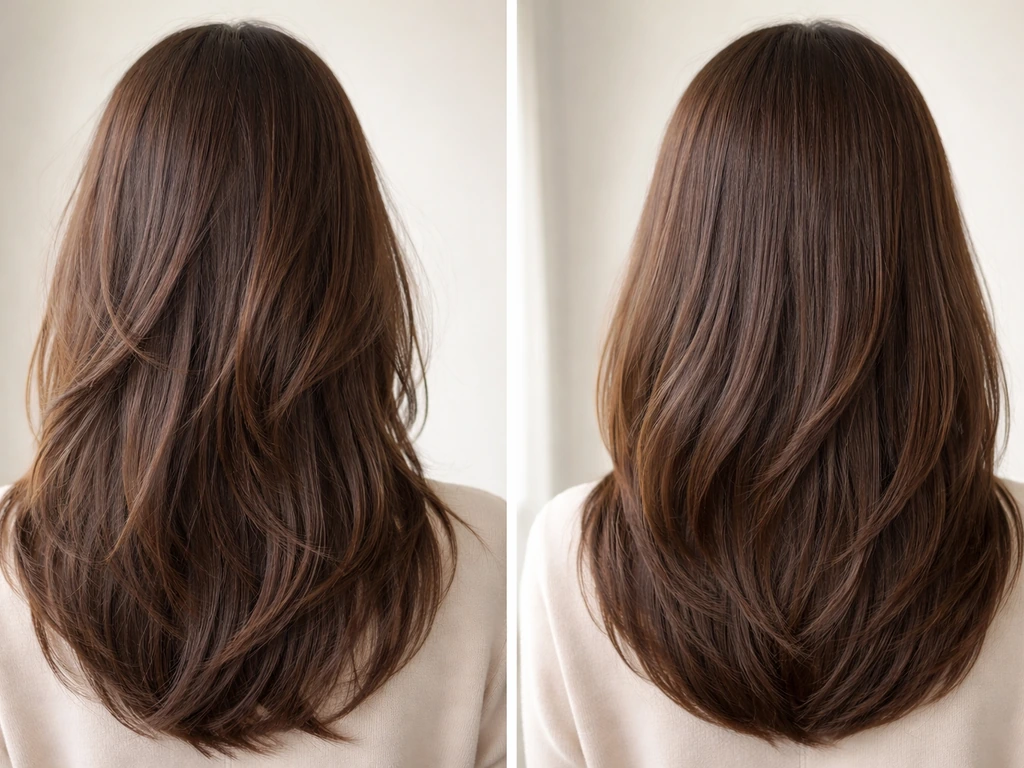
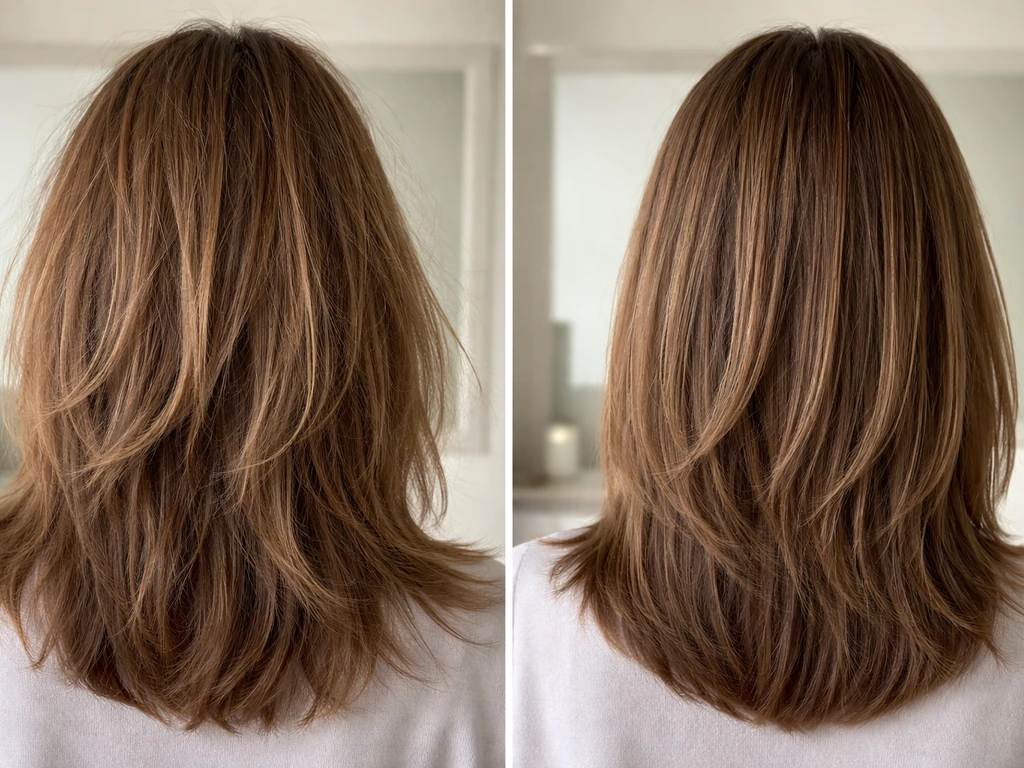
When people say they want their layers to grow out evenly, they usually mean one of two different things, and it's worth separating them. The first is length uniformity: all of your hair reaching the same length at the same time, like one solid perimeter line with no shorter pieces sitting above it. The second is shape and balance: front and back landing in a way that looks intentional rather than patchy, and the weight distribution feeling consistent from side to side.
True length uniformity across a layered cut is almost impossible without cutting, because layers are designed to sit at different lengths. As they grow, they move toward each other, but the sequence in which they catch up depends on where they started. What you're really managing during a grow-out is how the shape reads at each stage, not whether every strand is identical in length. That framing matters because it changes what "success" actually looks like, and it stops you from panicking every time you notice a difference between sections.
Why layers often grow at different rates
Hair growth rate itself is pretty consistent across your scalp, hovering around 0.3 to 0.4 mm per day. So the raw biology isn't usually the problem. The reasons layers look like they're growing unevenly come from several other factors, and most of them have nothing to do with your follicles being lazy.
How the original cut creates the unevenness
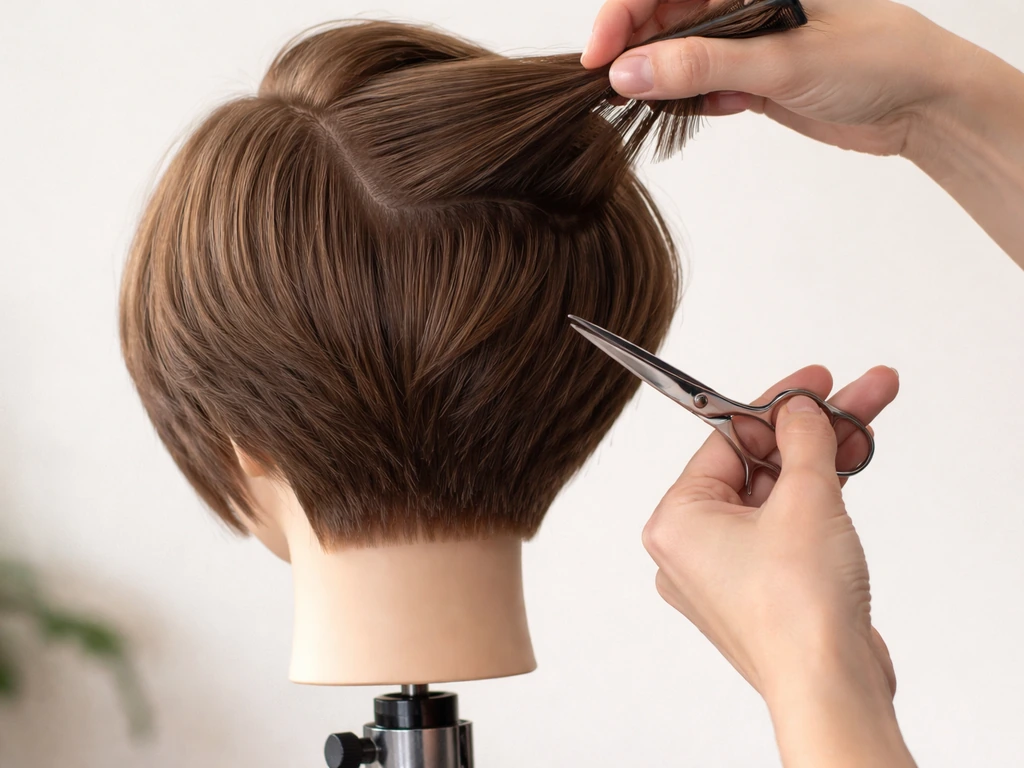
Where a stylist places each layer section, how much elevation they use, and whether they over-direct the hair toward one side while cutting all affect the final weight distribution. Even skilled stylists can introduce subtle imbalances: if one side of your head is being stretched or moved differently than the other while the guide is being followed, the two sides can land at slightly different lengths even though they look consistent in the chair. That small discrepancy gets more obvious over time as your hair grows, not less, because the proportions shift.
Stacked layers at the back, heavy graduation around the nape, or disconnected layers (common in undercut-style cuts) all create sections that take dramatically longer to catch up to the rest. If you're growing out an undercut, expect anywhere from 3 to 6 months of awkward transition depending on how high the undercut was taken.
Texture, curl pattern, and shrinkage
This one trips people up constantly, especially if you have wavy or curly hair. Curly and coily hair can shrink dramatically when it dries, with some type 4 textures losing up to 50% of their wet length. That means a section that looks several inches shorter than the rest when dry might actually be the same length wet. If you're assessing your layers while your hair is damp on one side and dry on the other, or freshly washed versus a few days old, you're not comparing like with like. Always check your grow-out progress in the same conditions, ideally air-dried or styled the same way each time.
Hair density also plays a role. Thicker sections carry more weight and tend to pull length down, which can make them appear longer at the perimeter while the sides look shorter. Fine hair does the opposite: without much weight, lighter sections can puff up or spring back and look shorter than they are.
Is it actually uneven, or just a transition phase?
This is the real question, and honestly, the answer determines everything about what you should do next. Here's how to tell the difference between normal grow-out behavior and something that actually needs correcting. Understanding do layers grow out evenly helps you tell which differences are normal and which might need adjusting grow-out behavior.
| What you're seeing | Likely cause | What it means |
|---|---|---|
| Front layers shorter than the back perimeter | Normal layering sequence growing out | Wait it out; this is expected |
| One side noticeably longer than the other | Cutting imbalance or over-direction during original cut | May need a corrective blending trim |
| Layers look patchy or choppy in the middle of the length | Weight distribution changing as length increases | Styling can mask it; blending trim helps |
| Sections look very different wet vs. dry | Shrinkage or texture difference | Check in consistent conditions before deciding |
| Undercut section sitting visibly shorter than top | Disconnected layers growing at different speeds | Normal; needs time and staging, not restart |
| The overall shape feels lopsided or off-balance | True asymmetry from the original cut | Worth a professional blending appointment |
A good general rule: if the unevenness is consistent (the same sections are always longer or shorter, both sides are different lengths), it's likely a real imbalance worth addressing. If it shifts depending on how you styled it or what day it is, you're probably just in a transition phase. Give yourself at least 6 to 8 weeks of consistent styling before deciding the unevenness is a structural problem rather than a phase.
At-home fixes: trimming, blending, and managing bulk
There's a real limit to what you should attempt at home, and knowing that limit saves you from making things worse. That said, a few targeted moves can genuinely help during a grow-out without requiring a full salon appointment. For example, if you are dealing with how to grow out flyaways, you may need gentle styling and moisture to help shorter pieces lay flatter while the rest catches up. If you want to grow out layers fast, the key is managing the transition phase with consistent styling and low-risk perimeter trims during a grow-out.
Trimming the perimeter
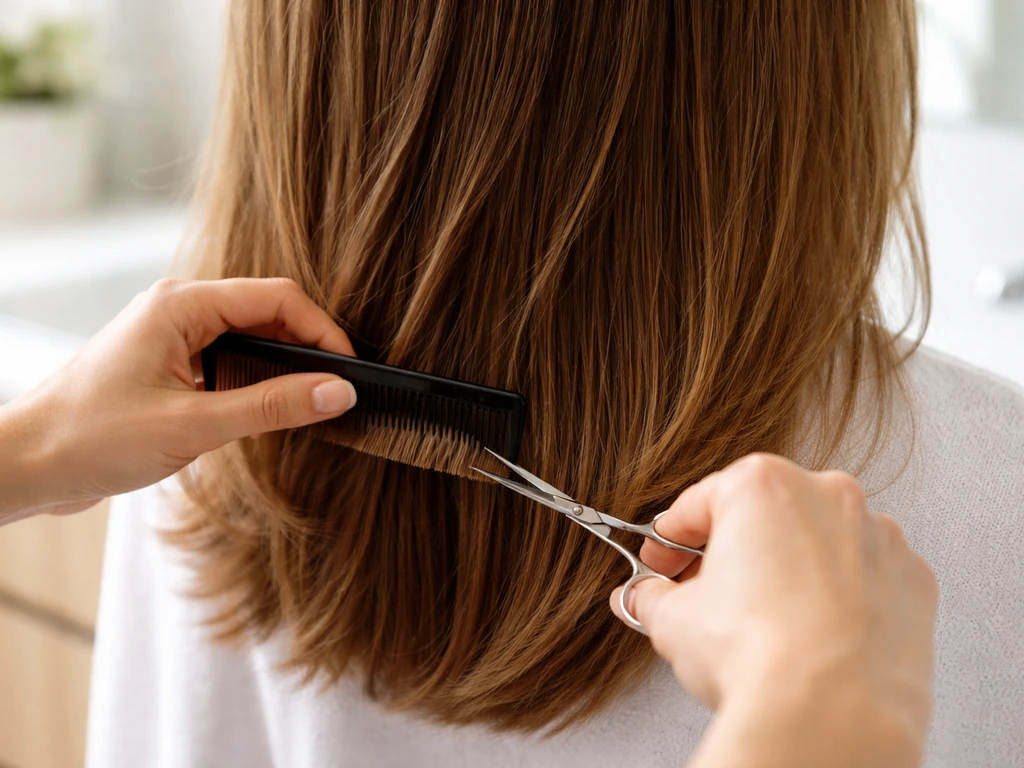
The most useful at-home strategy for growing out layers evenly is keeping the bottom perimeter trim and consistent. This doesn't mean shortening your overall length aggressively. It means blank" rel="noopener noreferrer">every 8 to 12 weeks, taking just enough off the ends to clean up any scraggly bits and keep the bottom line looking intentional while your upper layers grow down toward it. Think of it as giving your longer sections a stable landing point. This is low-risk: you're trimming horizontally across the perimeter, taking no more than a quarter inch, and not touching the layers above.
What not to attempt at home
Blending interior layers at home, which means trying to soften the transition between shorter sections and longer ones, is genuinely risky. Micro-trims (removing just 1/8 to 1/4 inch from specific sections) sound straightforward but are extremely hard to execute accurately without professional tools and mirror angles. If you point-cut or feather into your layers without a clear guide, you can create new unevenness that's harder to fix than what you started with. Resist the urge to grab scissors when you're frustrated mid-grow-out.
Managing bulk and weight
If certain sections feel heavy or poofy while others lie flat, the weight distribution is off as layers converge. A lightweight texturizing spray or serum applied to the bulkier sections can compress and settle them without removing any length. Avoid heavy pomades or oils on areas that already feel weighed down differently from the rest: they make the contrast between sections more obvious, not less. If you’re dealing with flyaways, a few small styling tweaks can help, but the key is managing them while your layers finish their grow-out.
Styling strategies to fake evenness while you wait
This is where you actually get through the awkward phase with your sanity intact. The right styling approach can make layers in transition look completely intentional, and most of these require nothing more than what you already have.
- Change your part: a deep side part redistributes where layers fall and can hide length differences between sections that are obvious with a center part. If you've been wearing a center part your whole grow-out, try shifting it two inches to one side.
- Use a round brush blow-dry to roll shorter layers under and blend them into longer sections visually. You're not changing their length, just curving them toward the same plane as the longer hair around them.
- Braids and half-up styles are your best friends during weeks 6 to 12 of a grow-out, when hair is too long for the original style and too short to wear down comfortably. A loose half-up or low twisted bun pulls attention away from where layers are landing at different lengths.
- For curly and wavy hair, applying a curl cream or gel evenly from root to tip while soaking wet and then not touching it until fully dry creates a more uniform curl pattern, which visually disguises length differences between sections.
- If you're growing out undercut layers, keep the top sections styled with a bit of volume (lifted at the root) so the eye reads overall shape rather than the specific shorter sections underneath.
- Bangs or front buffer pieces, if you have them, can act as a visual frame that draws attention to your face rather than to the mid-length where most layer transitions are obvious.
One thing worth noting: always check your results in the same drying or styling conditions each time. A lot of grow-out frustration comes from comparing your hair freshly washed one week and two-day old the next. The reference point needs to be consistent to actually gauge progress.
When to see a pro (and what to ask for)
Book a professional appointment when: the imbalance is clearly structural (one side is consistently longer than the other), you're hitting the 10 to 12 week mark and styling isn't masking the unevenness anymore, or you're growing out a particularly disconnected cut like a heavily stacked bob or a high undercut where the sections are genuinely far apart in length.
The way you phrase it in the appointment matters, because the wrong language will get you a shorter haircut rather than a blending trim. Avoid saying "it's uneven, can you fix it?" without more context, because the default fix is often to cut everything to the shortest section. Instead, try these phrases:
- "I'm growing my layers out and I want to keep as much length as possible. Can you blend the shorter sections into the longer ones without shortening the perimeter?"
- "I need the layers connected rather than equalized in length, so the shape reads as one without losing overall length."
- "Can you soften the weight line where the shorter layer sits so it's less visible, without cutting the length below it?"
- "I want a blending trim, not a shape-up. I'm trying to grow this out, not reset the cut."
A good stylist will understand immediately what you're asking for. If they push back or immediately reach for scissors at the perimeter, it's worth clarifying before they start: you want the shape managed, not shortened. The goal is connecting the layers so they transition smoothly as your hair continues to grow, not making every section the same length today.
If you're also navigating curly hair specifically during this process, the blending approach looks different, since curl texture means interior layers need to be evaluated in their natural state rather than stretched. Curly hair also has its own grow-out timeline and tricks for keeping layers looking even as they lengthen. That's a slightly different conversation to have with your stylist, and it's worth understanding the grow-out dynamics for curly layers as a separate topic. Similarly, if you're trying to get back to one solid length without cutting, the strategy of trimming the perimeter every 8 to 12 weeks and letting the upper layers descend gradually is the most reliable path, just one that requires patience and a clear timeline.
FAQ
How long should I wait before deciding my layers truly aren’t growing out evenly?
Plan on at least 6 to 8 weeks of consistent styling before concluding it is structural. If the unevenness stays in the same spots across the same wash day conditions, it is more likely from cut/weight placement, not normal transition.
What if the difference looks worse after I straighten or after my hair air-dries?
That is a key clue it is shrinkage or styling-dependent, not breakage. Measure your progress in one consistent method (air-dried or styled the same way), and avoid judging based on one super-straight or super-dry day.
Can breakage make layers look like they are not growing out evenly?
Yes, but it usually shows up as visible short pieces and frizzy, rough texture rather than a consistent “shorter section” pattern at the same locations. If the shorter areas feel thinner or see more breakage, prioritize conditioning and consider a trim for damaged ends rather than trying micro-blends.
How should I check length differences more accurately at home?
Use the same parting and the same hair state each time, then compare at the perimeter in good light. If you can, take a photo from the same angle before and after drying, because different angles can exaggerate “short” vs “long” by how the hair stacks.
If one side is always longer, does that automatically mean I need a cut?
Not automatically. First, try matching styling direction and tension, since uneven guiding during drying or brushing can change how the perimeter falls. If the imbalance persists across consistent styling for 2 months, that is when a targeted correction appointment is worth it.
Is it ever okay to trim layers above the bottom perimeter while growing out?
Generally no if your goal is even length. The lower trim acts like a stable landing line; trimming above it too soon tends to create new step differences. Keep any home trimming limited to the bottom perimeter interval and amount.
What should I do if the perimeter looks jagged but the interior layers still seem fine?
That often means the ends are catching up unevenly because of wear, dryness, or tangling. A small bottom-perimeter clean-up every 8 to 12 weeks (no more than about a quarter inch) can fix the look without disturbing the internal layer progression.
Can styling products make layers look more uneven than they are?
Yes. Heavy oils, pomades, or overly saturating products can weight one region more than others, emphasizing contrast instead of blending the transition. If one section is already flat or heavy, use lighter application there and keep products consistent across visits.
What is the lowest-risk at-home change when layers look poofy on one side?
Focus on compressing and settling the heavier-feeling side (for example, a lightweight texturizing spray or serum applied to the bulkier area). Avoid cutting or point-cutting, and apply sparingly so you do not create a new, sharper difference.
Should I tell my stylist a specific goal word-for-word?
Ask for shape management, smooth transition, and connecting layers as they grow, rather than “fixing unevenness” alone. If you want to preserve overall length, specify that you want a perimeter cleanup or transition correction, not shortening everything to the shortest section.
When is it better to book a professional sooner instead of waiting 6 to 8 weeks?
Book earlier if the cut is clearly disconnected (especially with undercut-style or heavily stacked areas), or if one side is consistently longer from the start even when styling conditions match. Another time to go sooner is if you are at the 10 to 12 week mark and your styling is no longer masking the difference.
How does curly or coily shrinkage affect whether layers are “even”?
For curl patterns that shrink dramatically, dry-state length comparisons can be misleading. Evaluate in the same product and dryness level each time (ideally air-dried with consistent styling), because sections that look far apart when dry may be closer together wet.
Can I use a “low tension” drying method to reduce unevenness temporarily?
Often, yes. Rough drying, aggressive towel rubbing, or changing how you clip or comb your hair can shift where layers sit. For the most comparable results, use the same towel technique (patting), same detangling order, and similar clip placement during drying.