
Growing out layers means waiting for your shorter top layers to catch up in length to the longer layers underneath. That's really the whole process. The frustrating part is that hair only grows about half an inch per month on average, so if your shortest layers are 3 inches shorter than your ends, you're looking at roughly six months before things start to blend on their own. But there's a lot you can do in the meantime to look good, avoid breakage, and speed things along without restarting the whole cut.
How to Grow Out Layers: Step-by-Step Timeline and Tips

Marcus Vickers
6 Apr 2026
What "growing out layers" actually means
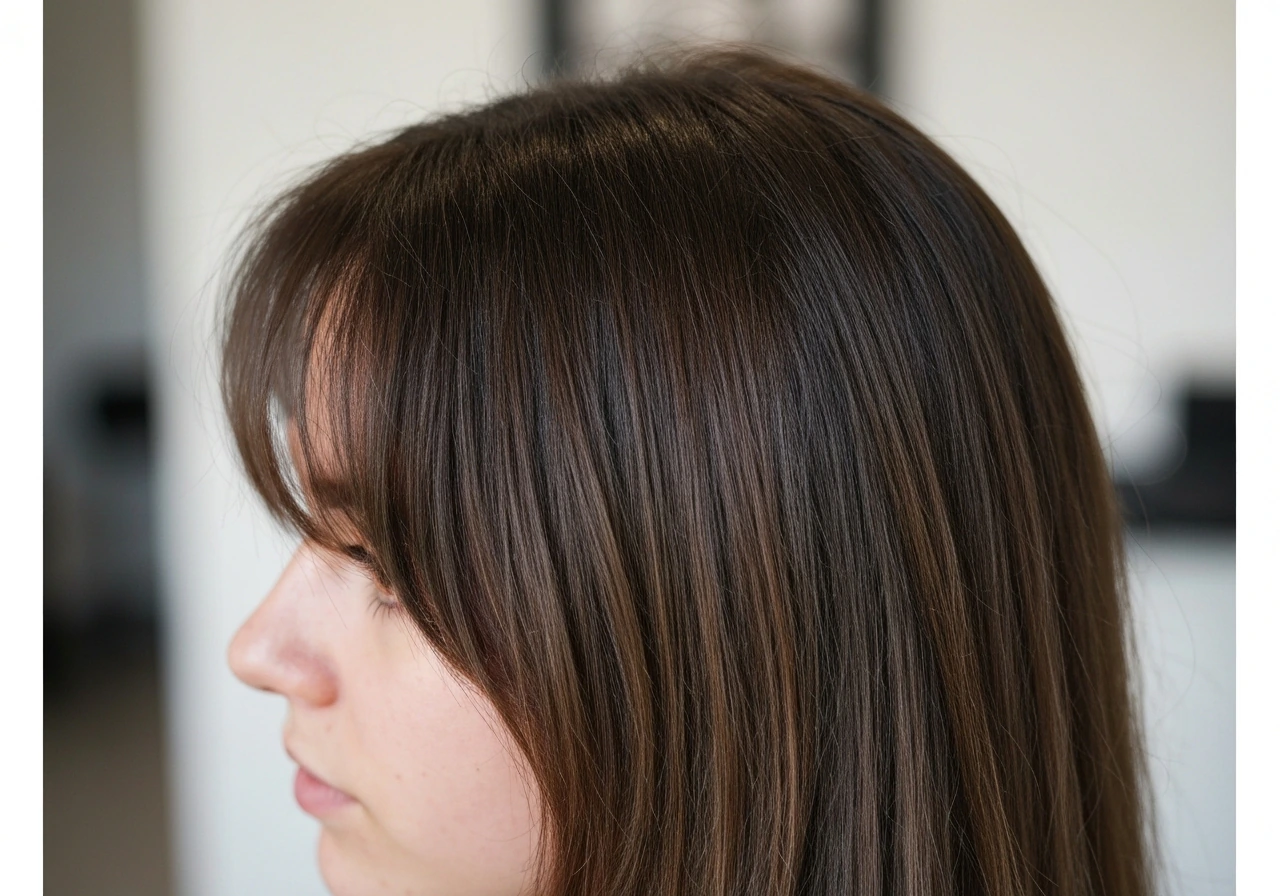
Layers are created by cutting upper sections of hair shorter than the sections below them. That length difference is what creates movement, volume, and that feathered look. When you decide to grow them out, you're not growing new hair in some special way. You're just letting every layer gain length at the same rate, about half an inch to one centimeter per month, until the gap between the shortest and longest sections shrinks enough that the cut looks like one continuous length.
A question worth understanding early: do layers grow out on their own, or do you always need a stylist to fix them? The honest answer is they do blend over time with no intervention, but whether they blend in a way you'll be happy with depends on how extreme the layering was and what you do in the meantime. Heavy or short layers can go through a seriously awkward middle phase before they settle.
Where you're starting from matters a lot
Not all layered hair grows out the same way, and the starting point changes the whole strategy. The three most common situations people are dealing with are: layers in medium or long hair that got too choppy, layers in a bob-length cut that have created bulk or unevenness, and layers in short hair (a pixie or a closely cropped cut) where even small length differences look dramatic.
Short layered hair is genuinely the hardest starting point. When your shortest crown layers are only an inch or two long, they have nowhere to fall. They stick up, they flip out at the ends, and they don't cooperate with any styling tool you own. This is the phase most people try to escape by going even shorter, which restarts the whole process. If this is where you are right now, know that this is the hardest four to eight weeks of the whole grow-out, and it does get easier.
Bad layers are their own category. Sometimes a cut goes wrong: the layers were cut at the wrong angle, the elevation was too high at the crown, or the hair was thinned too aggressively. These cuts can "explode" on top or fall completely flat in a way that has nothing to do with styling. If your layers looked wrong from day one, that's a different problem than layers that were fine initially but have grown out to an awkward point. Bad layers often need a specific correction cut rather than just time, and we'll get to that.
People growing out layers in curly hair face a separate set of challenges because curl shrinkage makes the length differences look even more extreme. If that's you, there's specific guidance on how to grow out layers in curly hair that addresses the shrinkage factor, but the core principles here still apply.
The realistic growth timeline
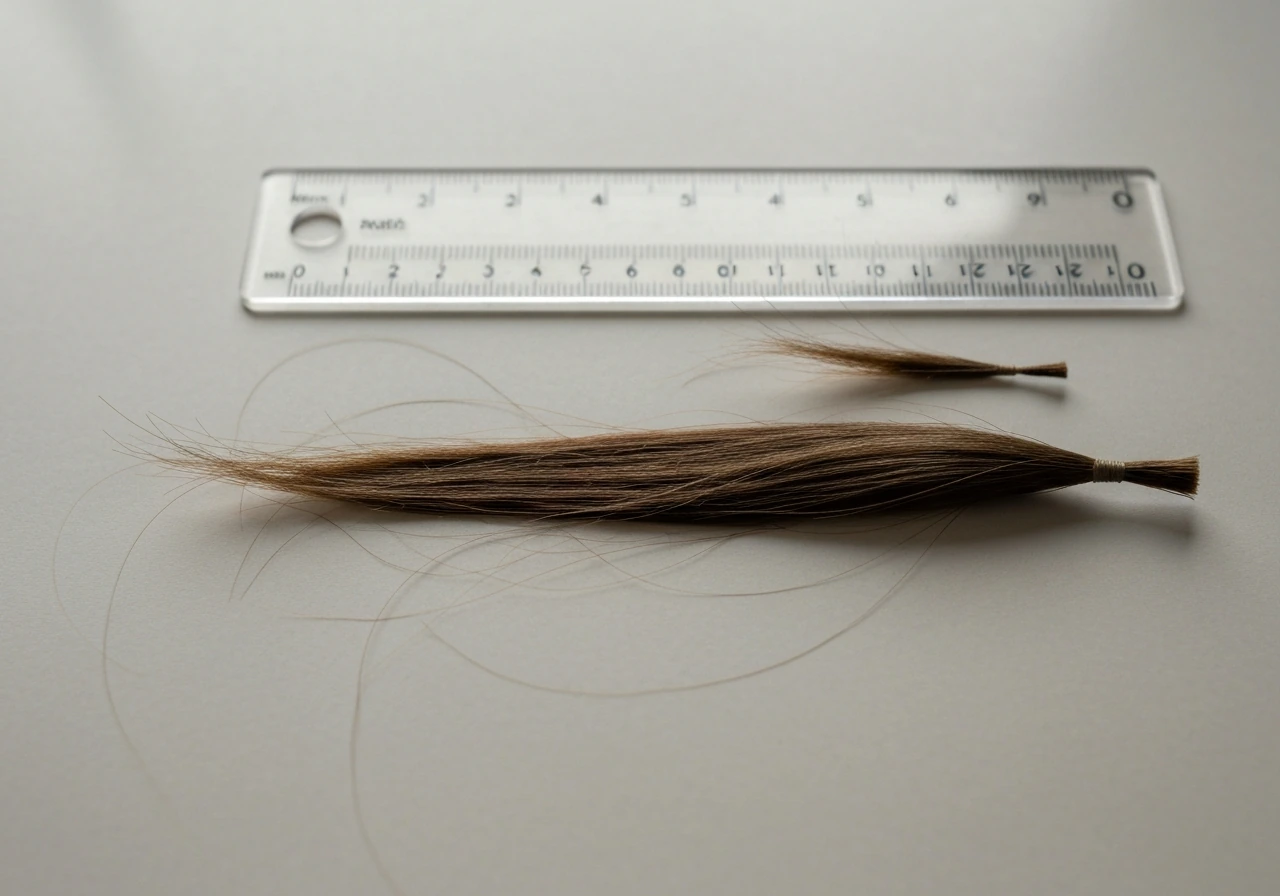
Planning around real numbers makes the whole process less stressful. Hair grows about 0.5 inches per month, though the range is 0.2 to 0.7 inches depending on genetics, health, and age. Use half an inch as your working estimate.
| Time from today | Approximate growth | What you'll notice |
|---|---|---|
| 4 weeks | ~0.5 inches | Shortest layers have softened slightly; crown layers may still stick up |
| 8 weeks | ~1 inch | Top layers start to have enough weight to lie flatter; most awkward phase begins to ease |
| 3 months | ~1.5 inches | Visible blending starts; the cut looks less intentionally layered and more "grown out" |
| 4–5 months | ~2–2.5 inches | Major length gaps have closed noticeably; one-length look becomes achievable with a blend trim |
| 6 months | ~3 inches | Short layers that started at 2–3 inches long are now close to matching mid-lengths |
| 9–12 months | ~4.5–6 inches | Even aggressive layers from a short cut have largely grown into each other |
These numbers are averages. Your actual experience depends on your hair's natural growth rate, your overall health, and how much length you retain versus lose to breakage. Retention is actually where most people lose ground, and it's completely controllable.
One thing worth knowing: do layers grow out evenly for everyone? Not always. Hair doesn't always grow at the same rate all over your scalp, and different sections can behave differently as they lengthen. That's normal, not a sign something is wrong.
Haircare that actually protects your length
The fastest way to grow out layers is to stop losing length to breakage. Hair that snaps off at the ends or mid-shaft is not retaining the growth your scalp is producing. Here's where to focus your energy.
Washing and conditioning
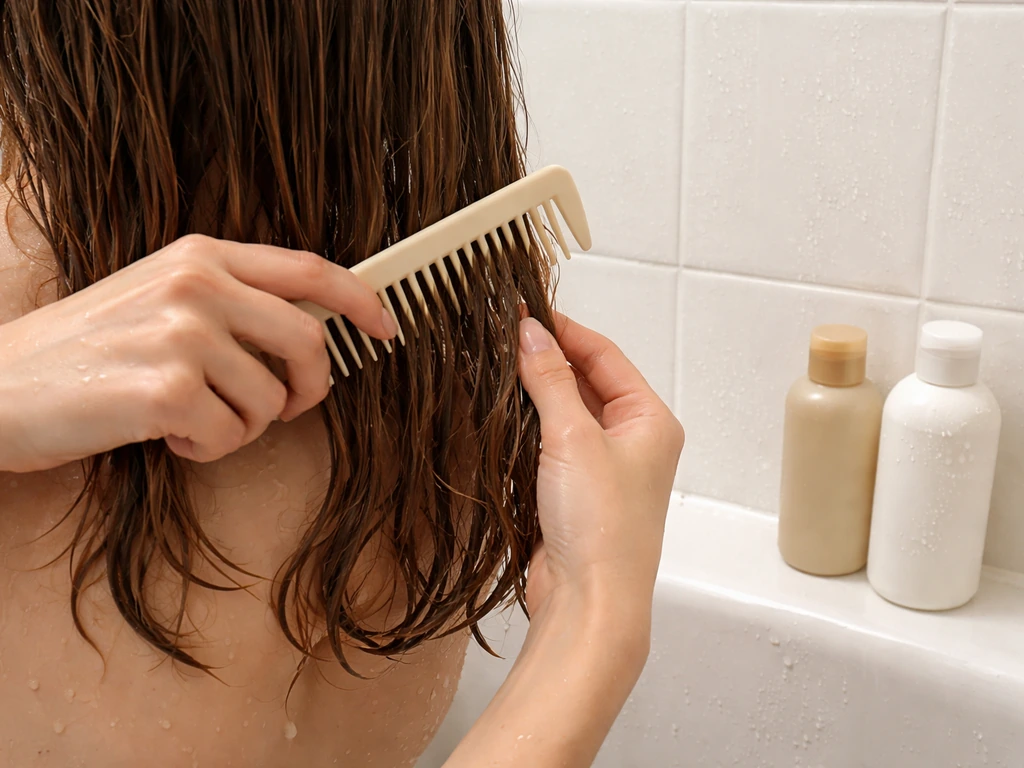
Wash frequency matters more than most people think. Washing daily strips natural oils and dries out the lengths, making them more prone to breakage. Two to three times per week is a reasonable target for most hair types. Two to three times per week is a reasonable target for most hair types, based on dermatologist guidance summarized by WebMD Two to three times per week is a reasonable target for most hair types.. Use a moisturizing or strengthening conditioner every single wash, and consider a deep conditioning treatment once a week, especially on the ends. The ends of your hair are the oldest and most fragile part, which is also where the longest layers live.
Detangling
Detangle when hair is wet and coated with conditioner, starting from the ends and working up to the roots. Never yank through dry tangles. A wide-tooth comb or a detangling brush causes far less mechanical breakage than a regular brush on knotted hair. During the grow-out phase, when layers are uneven and snag on each other more easily, this habit is especially important.
Heat and manipulation
Daily heat styling is a retention killer. If you're using a flat iron or curling iron every day, you're almost certainly causing breakage that's slowing your progress. Reduce heat styling to three times a week or less, always use a heat protectant, and keep temperatures at or below 350°F for fine or already-damaged hair. The American Academy of Dermatology also advises using low or medium heat on flat irons and limiting flat-iron use to no more often than every other day limit flat-iron use to no more often than every other day. Tighter hairstyles that pull on the hairline or repeatedly stress the same sections also cause breakage over time.
Trims during the grow-out
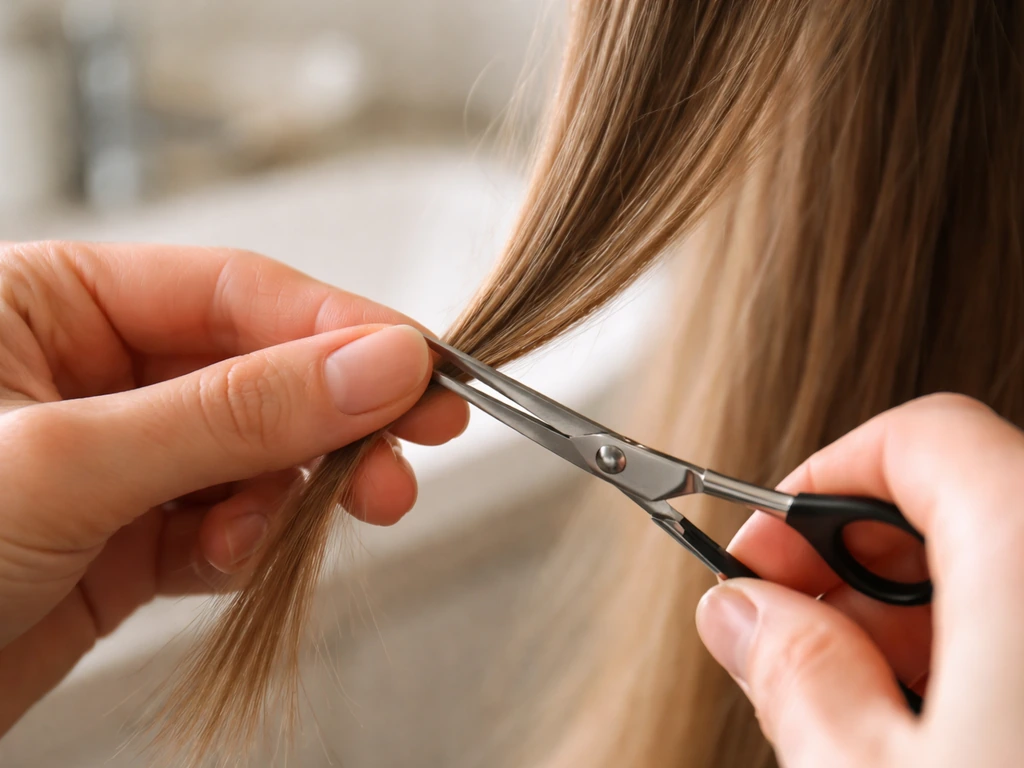
Trims do not make your hair grow faster, but they prevent split ends from traveling up the shaft and causing more damage. A micro-trim of about a quarter inch every 10 to 12 weeks is usually enough to keep ends healthy without sacrificing meaningful length progress. If your ends are visibly splitting or fraying, trim sooner. Skipping trims entirely and then needing to cut half an inch off damaged ends is a net loss.
The smart cutting plan: blending without losing progress
This is the part most people get wrong. You do not need to cut your hair short again to fix layers. But you also shouldn't avoid the salon entirely for a year. The goal is strategic trimming that shapes the grow-out without removing the length you've worked for.
There's detailed advice on how to grow out layers into one length without cutting if you want to avoid scissors entirely, but for most people, some strategic trimming actually gets you to a single-length look faster than going cold turkey. The key is being specific with your stylist about what you're doing.
Tell your stylist you are growing out your layers and you want to preserve as much length as possible. Ask for a "blending trim" not a reshape. The goal is to soften the transition between your longer sections and the shorter layers, not to create new layers. A good stylist will point-cut or slide-cut just the ends to remove bulk and encourage the layers to fall together rather than stick out.
Face-framing layers are their own issue. If your shortest layers are around your face and they've grown to chin or cheek length but look disconnected from the rest of your hair, a small trim at the front can help them blend in without touching the back length at all. This is often the one cut that makes the whole grow-out look intentional rather than accidental.
Avoid asking for a "dusting" or light trim from someone who doesn't understand what you're growing out. Without context, a stylist might refresh the shape of the layers rather than blending them, which is the opposite of what you need. Bring a reference photo of a longer, more even style you're aiming for.
Styling through the awkward stages
You don't have to look bad for six months while your hair catches up. The styling strategies change as your layers get longer, and having a plan for each stage makes a huge difference.
Weeks 1–4: The crown-control phase
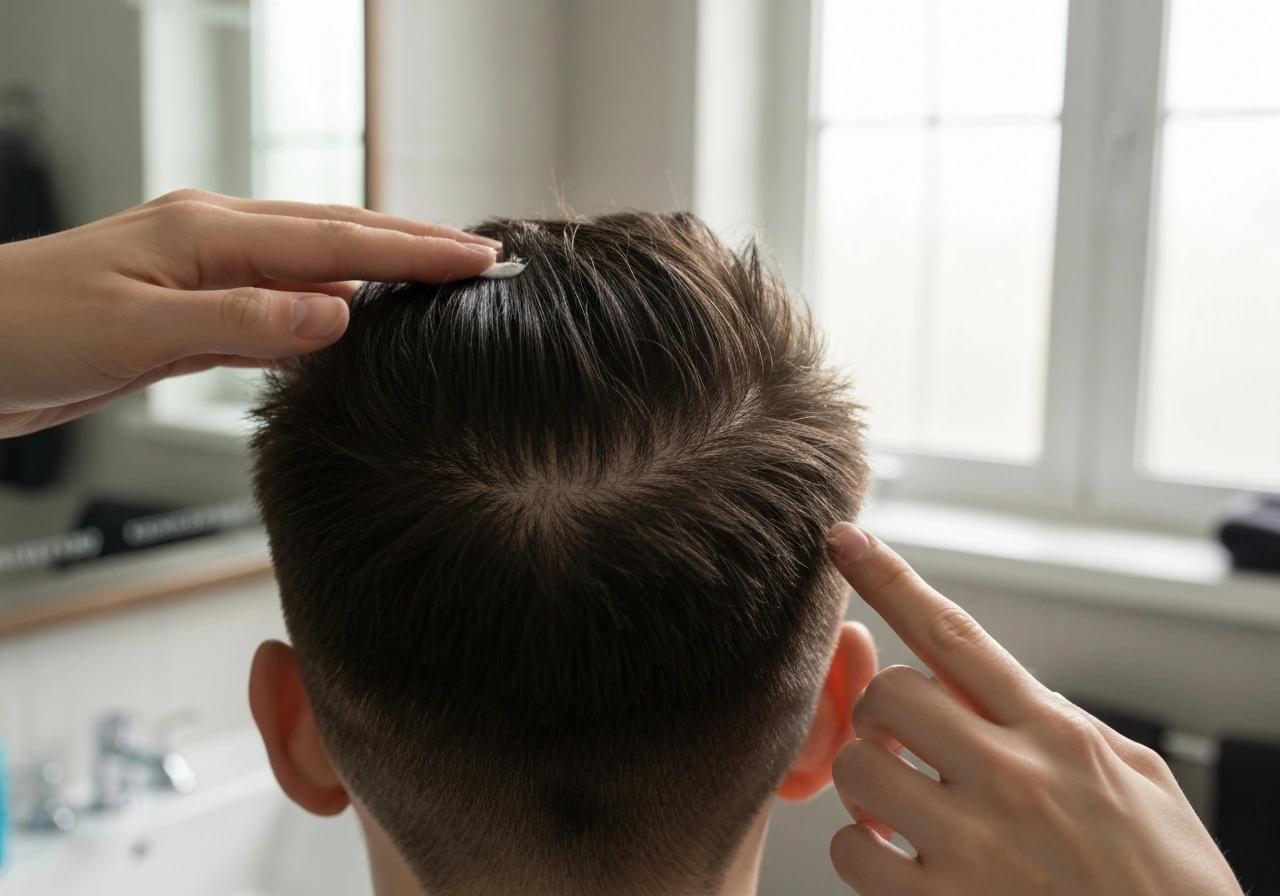
This is when short crown layers are the most unruly. They're too short to pull back, too long to be crisp, and they seem to have opinions about which direction they want to go. The best styling tools here are a light pomade or texturizing cream applied to damp hair and air-dried. This gives the short layers definition without encouraging them to puff up. Bobby pins in strategic spots can help on bad days. Headbands and stretchy bands work well to hold everything back without putting pressure on the scalp.
Weeks 4–8: Adding weight to the layers
Once your shorter layers have a little more length, they respond better to products. A small amount of leave-in conditioner or a lightweight oil smoothed over the surface can calm layers that are sticking out rather than lying down. Blow-drying with a round brush at this stage is useful: the brush helps train the layers to fall in the same direction as the longer sections underneath. Don't fight your natural texture here. Working with it is almost always easier than fighting it.
Months 2–4: The "almost there" phase
This is when updos, half-up styles, and braids become your best friends. As the layers get long enough to gather, they can be incorporated into ponytails and buns where the unevenness is hidden. Loose styles, like a low bun with a few pieces pulled out, actually look intentional at this length. This is also the phase where how to grow out flyaways becomes a real concern. Those short, wispy pieces around the hairline are often just baby layers that have grown to an awkward length, and they can be tamed with a very light hold gel or a bristle brush to smooth them down before styling.
Natural hair styling during grow-out
For natural hair, the grow-out phase often means managing different curl patterns at different lengths. Shorter layers may coil tightly while longer sections have more elongated curls. Wash-and-go styles can actually look beautiful at this stage because the different curl sizes read as texture rather than unevenness. Twist-outs and braid-outs are also excellent choices because they create a uniform wave pattern across all lengths. Protective styles like twists, braids, or bantu knots reduce manipulation and help retain length faster during this phase.
Fixing specific layer problems
Short layers that stick straight up
This happens most at the crown when layers were cut very short or at a high elevation. The fix is mostly product and patience. A small amount of pomade or a medium-hold cream applied directly to those layers and finger-combed flat, then dried in that position with a blow dryer on low heat, will help them lie down. Over the next six to eight weeks as they gain even a little length, they'll start to have enough weight to fall on their own.
Layers that look uneven at the ends
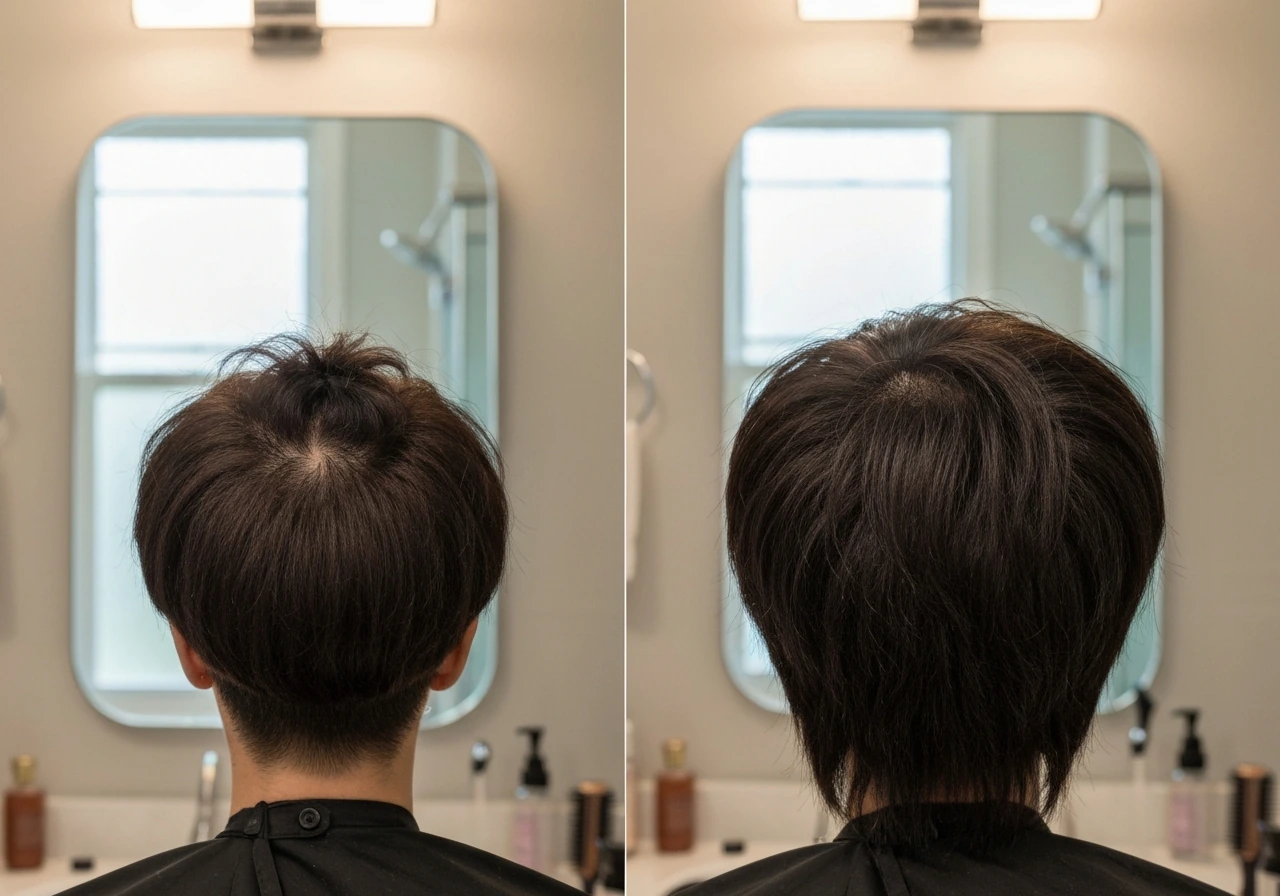
Uneven ends often look worse at certain lengths during grow-out. As layers hit the same length zone, they can bunch or create an odd stepped effect. This is normal and doesn't mean the original cut was bad. A single blending trim that point-cuts the perimeter, not a full reshape, usually fixes this quickly. If you're wondering whether the unevenness will resolve without any cutting, the answer is sometimes yes, particularly if it's subtle, but a blending trim resolves it faster and more reliably.
"Bad layers" that were wrong from day one
If your layers looked wrong immediately after the cut, the issue is likely the angle or elevation at which they were cut. High-elevation cuts create layers that mushroom or puff at the crown. Over-thinned layers create a scraggly, thin-ended look. The correction here is seeing a different stylist and explaining exactly what went wrong. A skilled stylist can often fix a bad layer cut by removing the problem sections specifically without taking length off the longer sections. This is a correction cut, not a reshape, and there is a difference. Be firm about that.
Flyaways that won't quit
Persistent flyaways during grow-out can feel like a separate problem from the layers themselves, but they're usually connected. Whether flyaways grow out and disappear on their own or stick around depends on whether they're broken hairs or just short regrowth. Broken hairs have a blunt or frayed tip. New growth has a tapered tip. Knowing which you're dealing with tells you whether to focus on reducing breakage or just wait for regrowth to get long enough to blend.
How to speed things up (within reason)
You cannot dramatically change how fast your hair grows. That rate is largely genetic and hormonal. But you can absolutely change how much of that growth you actually keep. If you want to know how to grow out layers fast, the honest answer is: fix the things that are causing breakage, be consistent with conditioning, reduce heat, and trim only as needed. That combination doesn't change your growth rate, but it means more of what grows actually stays.
- Sleep on a silk or satin pillowcase to reduce friction and breakage overnight
- Eat enough protein: hair is primarily protein and needs dietary support to grow
- Stay hydrated: dehydration shows up in hair as dryness and brittleness
- Scalp massage for 4–5 minutes a few times a week may increase blood flow to hair follicles
- Avoid tight elastics that snap or pull hair at the same point repeatedly
What to actually do this week
If you're starting this process today, here is what to focus on right now, not in three months.
- Assess your current layers: identify where your shortest layers are, roughly how many inches shorter they are than your longest sections, and whether they're sticking out, going flat, or just blending awkwardly.
- Calculate your realistic timeline: divide the length difference by 0.5 inches per month to get a rough estimate of how long full blending will take without a trim, or estimate 1–2 months less if you plan to do a blending cut.
- Start a protective routine this week: cut your heat styling to three or fewer times a week, deep condition at least once, and switch to a wide-tooth comb if you haven't already.
- Book a consultation (not a full cut) with a stylist you trust and explain you are growing out layers and want to discuss a blending strategy, not a restyle.
- Pick one styling method appropriate to your current phase (pomade and air-dry for early growth, half-up styles for mid-growth) and use it consistently rather than trying a new approach every day.
Growing out layers is genuinely one of the more patience-demanding hair transitions, but it's also one of the most manageable once you have a real plan. The awkward weeks are temporary. Your hair is growing right now, even if you can't feel it. The goal is to do everything possible to make sure what grows actually stays on your head.
FAQ
How do I tell how long my “shortest layer gap” will take to blend, if my measurements aren’t exact?
Measure two points on dry hair: the shortest layer length from root to the end (or closest reference like the crown), and the longest layer length. If you cannot measure accurately, use the visual gap between shortest and longest ends and estimate conservatively at 0.5 inches per month (0.2 to 0.7 as a range). If you’re unsure, plan for the longer end of the range so you do not book unnecessary rescue cuts too early.
Should I stop getting any trims at all while growing out layers?
Not necessarily. You generally want “health trims” that remove only damaged ends (about a quarter inch every 10 to 12 weeks as a baseline) so splits do not creep upward. If you see fraying, split ends that catch on fabric, or roughness at the ends, trim sooner even if it interrupts your timeline slightly.
Can I use a hair growth supplement to make layers catch up faster?
Supplements may help if you have a deficiency, but they usually do not create a dramatic growth-rate change. The higher-impact lever during a grow-out is retention, meaning less breakage through conditioning, gentle detangling, and reduced heat. If you try supplements, give them time and do not treat them as a substitute for trimming damaged ends.
What if my layers are uneven only after styling, not when my hair is air-dried?
That usually points to styling mismatch rather than true length mismatch. Re-test on freshly washed, detangled hair with no product buildup, then air-dry or blow-dry with a similar direction every time. If the “unevenness” disappears consistently when you air-dry, focus on training the direction (brush technique, light smoothing products) instead of scheduling a corrective cut.
How often should I wash if I’m trying to retain length but my hair gets oily fast?
If daily washing is required for scalp comfort, adjust the routine instead of fully skipping cleansing. Use conditioner focused on lengths every wash, consider a less stripping shampoo, and rinse thoroughly so product does not weigh hair down and make tangles worse. For dry ends, keep deep conditioning to about once weekly and add a leave-in on the mid-lengths and ends after every wash.
Is blow-drying required to grow out layers, or can I just air-dry?
You can air-dry, but blow-drying can be a retention and styling advantage if you are preventing tangles and encouraging the layers to fall together. If you blow-dry, use low heat and smooth in the direction you want the layers to lay, then avoid heavy brushing afterward. If you air-dry, detangle well first and use a light leave-in to reduce snagging while hair dries.
What’s the safest way to use heat during a grow-out if I can’t avoid styling?
Keep heat to three times per week or less, always use a heat protectant, and lower the temperature for fine or previously damaged hair (often around 350°F or less). Also avoid repeatedly passing over the same section, which creates localized damage that later shows up as uneven ends and more breakage.
When is it worth seeing a stylist during a grow-out, instead of waiting it out?
Go sooner if the layers looked wrong immediately after the cut (mushrooming crown, extremely thin or scraggly ends, or poor shape that cannot be styled flatter). It is also worth a blending-trim appointment if you have persistent “stepping” or one section consistently won’t blend after you change styling direction for several washes. If the problem is purely awkward length, wait until you are in the blend phase, usually a few months.
What should I specifically ask for if I want a blending trim, not another layer cut?
Ask for a blending trim that softens the transition and removes only bulk at the perimeter, with the goal of encouraging layers to fall together. Emphasize “no new layering,” “preserve current longest length,” and “point-cut or slide-cut just the ends.” If possible, bring a reference of the more even length you want, and show where you do and do not want changes.
If my shortest layers feel too short to tuck or style, what should I do to avoid making them worse?
Avoid re-cutting shorter to “fix” the problem, that restarts the timeline. Use low-friction styling: light pomade or cream on damp hair, finger-comb flat, and air-dry, then use bobby pins strategically on crown pieces. If you wear headbands or clips, choose options that hold without pulling hard on the hairline, because tension increases breakage.
How can I tell whether my “flyaways” are broken hairs or just baby regrowth?
Broken hairs usually feel rough, look frayed at the ends, and create a blunt, uneven texture, especially around the places you heat-style or snag. New regrowth typically looks like shorter strands with tapered tips and grows into the blend over time. If it is mostly broken, focus on retention (conditioning, detangling gently, fewer heat passes). If it is regrowth, use light hold at the surface (not heavy products that cause buildup).