
You can grow out layered hair into one length without cutting, but it takes time and some strategy. Hair grows roughly half an inch per month, so the gap between your shortest layers and your longest length determines how long you're waiting. If your shortest layers are two inches shorter than your ends, you're looking at about four months minimum before they naturally catch up. The good news: with the right styling and a solid care routine, those months don't have to feel awkward or hopeless.
How to Grow Out Layers Into One Length Without Cutting

Marcus Vickers
24 Apr 2026
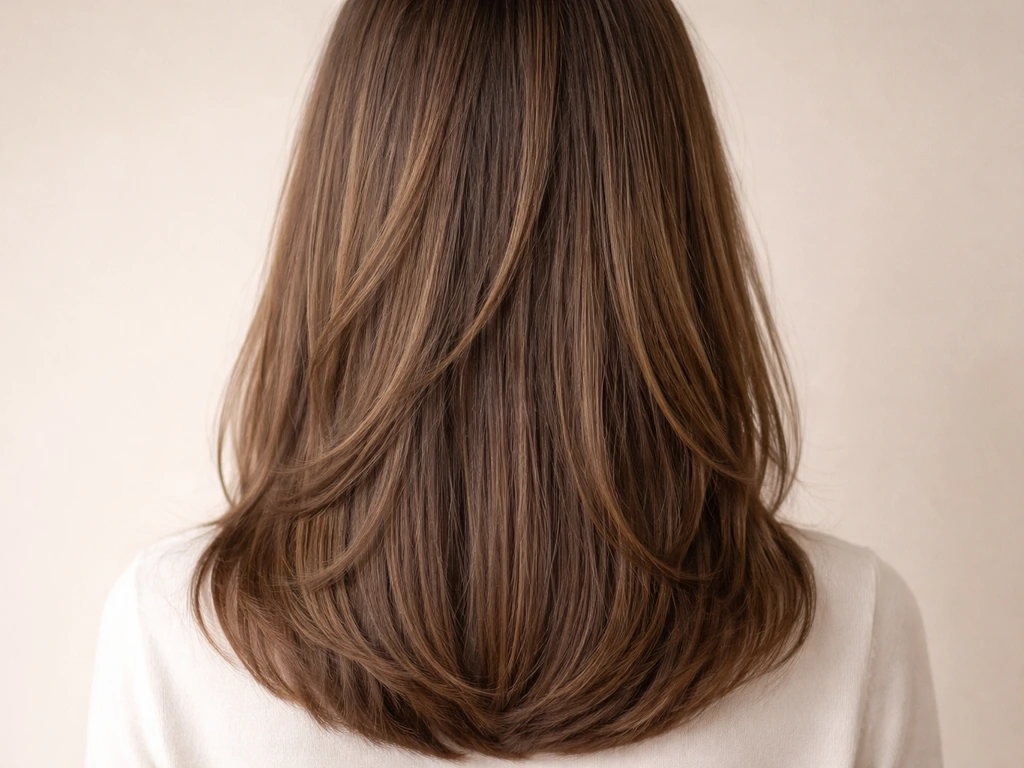
What 'one length' really means when you have layers
When people say they want one length, they usually mean all the hair falls to roughly the same point when it hangs naturally. But it's worth being realistic about what that looks like in practice. Even truly 'one length' cuts have some variation, because the hair around your face sits differently than the hair at the back, and the crown area grows at a slightly different rate than the nape. What you're actually aiming for is a look where no shorter pieces visibly interrupt the line of your hair, and nothing is noticeably chunked or stepped.
Layers come in different forms, and knowing which kind you have changes the timeline. Face-framing layers typically start around your cheekbones or chin, so they have less ground to cover. Crown layers cut into the top section can be the trickiest because they're highly visible and often the first to look grown-out in a weird way. Long layers that just add movement to the ends are the easiest to grow into one length, since the length difference is usually only an inch or two. And if you've got bangs in the mix, those are their own separate challenge entirely.
Why layers look uneven while they grow (and what affects timing)
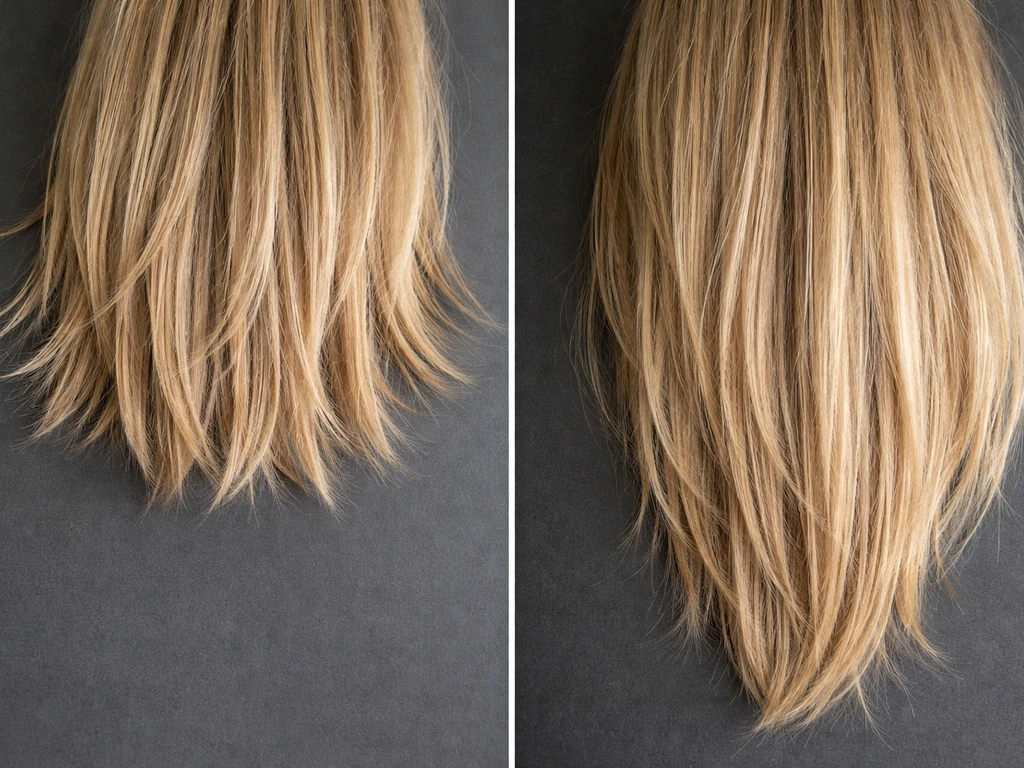
Layers don't grow out evenly because each section was cut to a different length on purpose. As hair grows, the shorter pieces get longer, but they still have to travel the full distance to match your longest length. During that process, you get visible steps or 'shelves' in the hair, especially when it's down and straight. This is the awkward phase almost everyone hits, usually around the two-to-four month mark.
Several things affect how fast or slow this process feels. Hair texture plays a big role: curly and coily hair shrinks up, so layers blend more visually even before the lengths actually match. For curly hair, the same one-length goal often looks easier once you know how to grow out layers in curly hair without losing your curl shape grow out layered hair. Straight, fine hair shows every millimeter of unevenness, so it tends to look the most obviously layered during the grow-out. Color-treated hair is another factor, because highlights or balayage can make the shorter pieces look even more distinct as they grow. If your hair is color-treated, the grow-out can actually look worse before it looks better, because the color contrast emphasizes the step between layers.
Overall hair health also matters more than people expect. Breakage is the sneaky enemy of the one-length goal. If your ends are splitting and snapping off at the mid-shaft, the shorter sections never actually get the chance to blend in, because the longer pieces keep getting shorter from the bottom up. This is why a solid care routine isn't just about comfort, it's actually part of the strategy. If you also want to speed things up, you can pair your breakage prevention with a plan for how to grow out layers fast.
Growth timeline: how long it takes for layers to blend naturally
At about half an inch per month, the math is pretty straightforward once you know your layer depth. The tricky part is that most people don't know exactly how many inches their shortest layer is from their longest length. A rough way to measure: pull a short layer taut and hold it next to your longest length. The gap between your fingers is roughly how many months you're looking at.
| Layer gap (shortest to longest) | Approximate grow-out time | What it feels like |
|---|---|---|
| 1 inch | ~2 months | Barely noticeable, nearly there |
| 2 inches | ~4 months | The awkward middle phase begins |
| 3 inches | ~6 months | Visible steps, requires active styling |
| 4 inches | ~8 months | Long haul, consistency is everything |
| 5+ inches (heavy layering or bangs) | 10–12+ months | Patience and a styling plan are non-negotiable |
Bangs are in a category of their own. A full fringe can take six to twelve months to fully grow out to chin length or beyond, depending on how short they were cut. If you're growing out bangs at the same time as layers, account for both timelines separately, because they'll hit awkward phases at different points.
One thing to keep in mind: this timeline assumes no trimming at all. If you do occasional dusting (removing just the dead ends without taking any real length), it doesn't significantly set back the grow-out but it does help prevent the breakage that would otherwise slow things down. Skipping trims entirely is fine, but only if your ends stay healthy. If they're splitting badly, you're often losing more length to breakage than a tiny trim would cost you.
No-cut styling to hide layers while they catch up
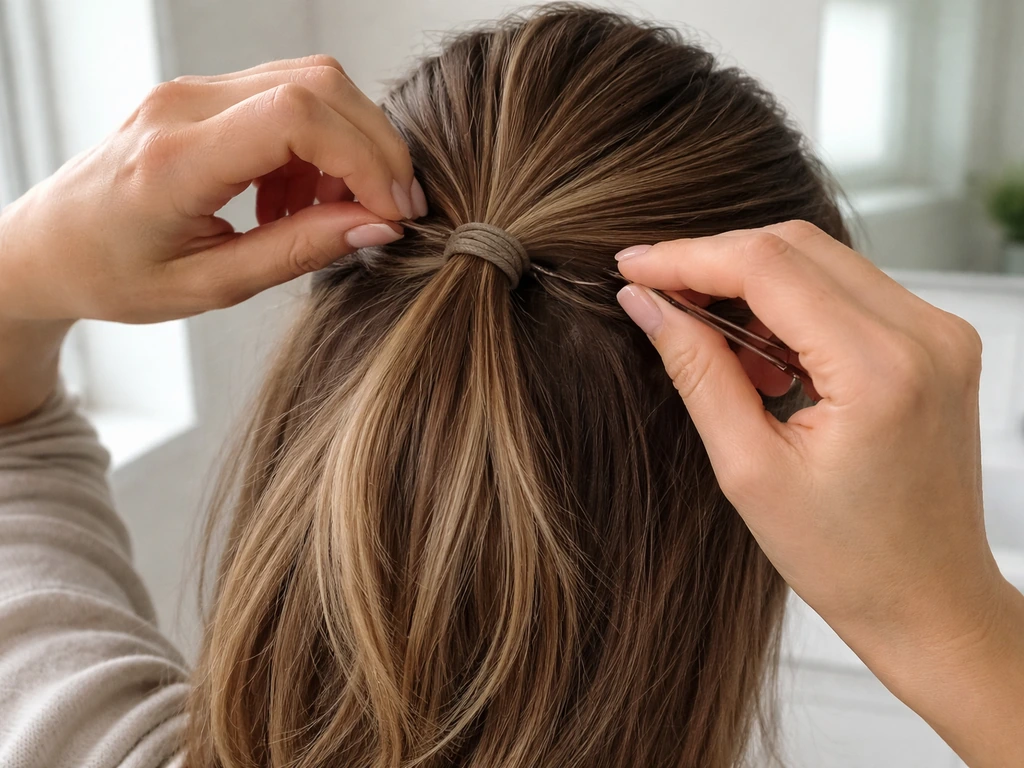
This is where you can actually do something today, right now, without waiting. The goal of these techniques is to visually blend the different lengths so the steps and gaps aren't obvious. You can also use no-cut styling to make growing out layers feel more seamless while they blend no-cut styling while you grow out layers out. Some of these work better for certain hair types, so pick what fits your texture and length.
Ponytails and half-up styles
A ponytail is the simplest layer-hider out there. When all the hair is pulled back, the variation in length disappears. The catch is that any pieces too short to reach the ponytail will fall out around your face or at the nape. You can work with this by using bobby pins to tuck those pieces back, or leaning into it and letting them frame your face intentionally. A half-up, half-down style is especially useful in the mid-grow-out phase because it contains the crown and top layers (often the shortest) while letting the longer lengths show.
Braids and twists
Braids are genuinely useful here, not just decorative. A loose braid blends different lengths because the weaving action incorporates shorter pieces into the braid body. A French braid or Dutch braid works especially well for hiding crown layers, since you're gathering hair from all over the head as you go. For straight or wavy hair, a low braid at the nape is a great everyday option that makes the lengths look intentionally blended.
Smoothing and texture techniques
For straight and wavy hair, blow-drying with a round brush and pulling the hair downward gives you the most uniform look because it stretches everything to its maximum length and creates a smooth curtain effect. A flat iron can do the same thing, but be careful about heat damage, especially on already-layered ends that may be fragile. A lightweight smoothing serum applied before heat helps. For curly and coily hair, defining your curl pattern with a good leave-in and gel actually helps blend layers more than fighting them: the curl clumps together and the eye reads texture rather than length difference. Diffusing instead of air-drying also gives more consistent curl pattern, which makes varied lengths look like intentional layering rather than grow-out chaos.
Accessories as tools
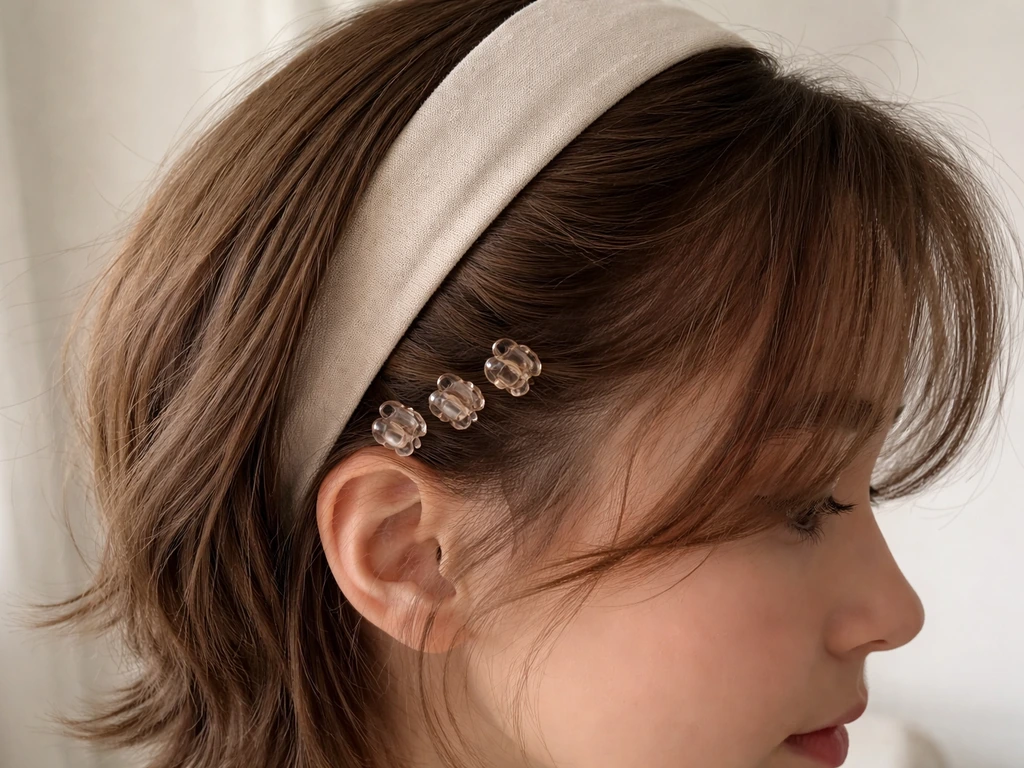
Headbands, clips, and scarves can camouflage the most problematic grow-out zones. A wide headband pushes back face-framing pieces that aren't long enough to blend yet. Claw clips at the crown contain top layers while the rest falls naturally. A silk scarf tied at the nape or used as a headband can make the whole grow-out look intentional and styled, rather than in-progress.
Care routines that prevent breakage and keep regrowth consistent
Growing out layers to one length is partly a patience game, but it's also a hair health game. If breakage is snapping off your longer pieces faster than they grow, you'll never close the gap. Here's what actually moves the needle.
- Moisturize consistently. Dry hair breaks. Whether you use a leave-in conditioner, a hair oil, or a deep conditioning mask weekly, keeping moisture in the strand is the single biggest thing you can do to prevent mechanical breakage.
- Don't skip protein entirely, but don't overdo it either. A monthly protein treatment helps reinforce weak sections, especially if your hair is color-treated or heat-styled often. Too much protein makes hair brittle, so listen to how your hair feels: if it snaps easily and feels straw-like, it needs moisture first.
- Detangle gently, starting from the ends. Ripping a brush through layered hair that's tangling at different lengths is a breakage machine. Use a wide-tooth comb or your fingers, work from the bottom up, and detangle when the hair has some slip (conditioner in the shower or a leave-in after washing).
- Sleep on a satin or silk pillowcase. Cotton creates friction that snaps off fine hair and roughens up the cuticle overnight. This is especially relevant for layers that are already fragile at the ends.
- Reduce heat styling where you can. Every time you use high heat, you're risking damage to the ends, which are always the oldest and most fragile part of the strand. When you do use heat, use a protectant and keep the temperature appropriate for your texture.
- Wash less often if your hair tolerates it. Over-washing strips moisture and leaves the ends dry and prone to splitting. Every two to three days (or less) is fine for most hair types. Co-washing between wash days is useful for curly and coily textures.
Troubleshooting stubborn issues: crown layering, face-framing, and bangs
Crown layers
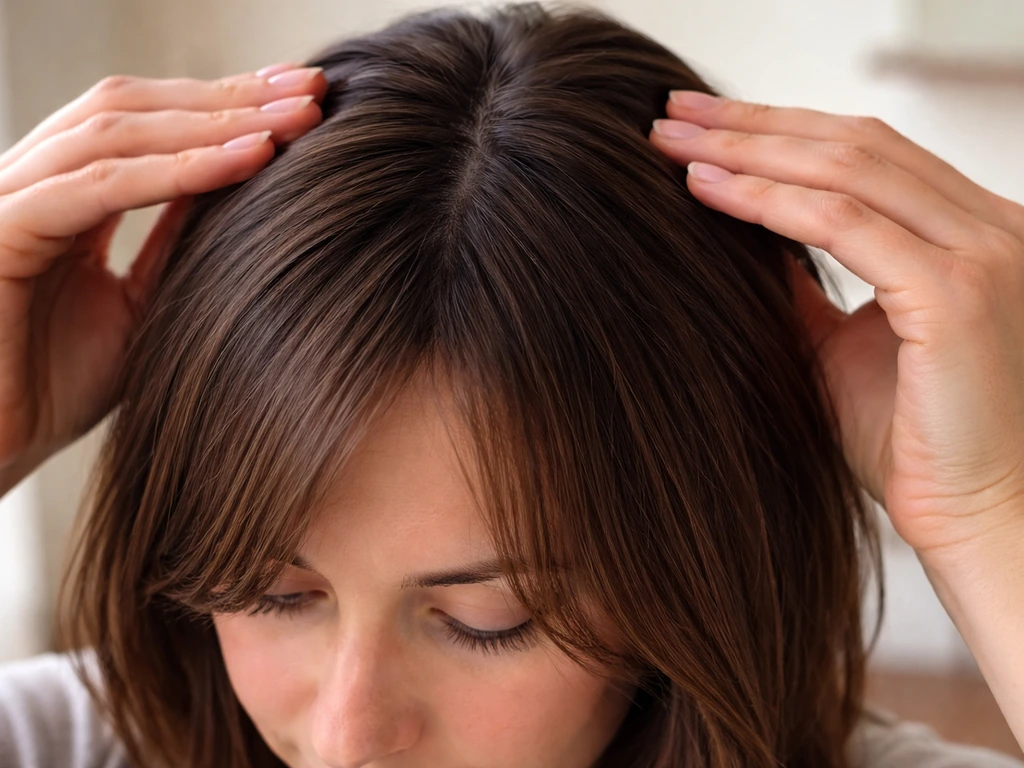
Crown layers are often the most frustrating part of growing out to one length. They sit at the top of your head, they're short enough to stick up or flip out in weird directions, and they're visible from every angle. During the awkward phase (roughly months two through five, depending on how short they were), they'll often look like a halo of shorter hair sitting on top of your longer lengths. The best approach is to use a round brush and blow-dry those top layers flat and downward every day, or lean into texture and volume so the crown blends into a fuller overall look rather than sticking out. Keeping the crown slightly damp and smoothing it with a light gel before it dries can also help lay it flat.
Face-framing layers
Face-framing pieces that are too short to tuck behind your ear are the main culprit for that scraggly, growing-out look. If you are wondering whether flyaways can ever smooth out as your layers grow, the answer is yes, most do settle as the shorter pieces catch up grown-out look. Until they reach ear length, they tend to fall forward awkwardly or poke out from a ponytail. If you still have lots of loose, flyaway hairs, you can pair this with simple steps for how to grow out flyaways as your layers catch up. Bobby pins and small clips are your best tools here: pin them back intentionally at the temple in a way that looks styled rather than shoved aside. Once they hit your jaw or below, they'll start to blend naturally into the rest of your hair when worn down.
Bangs and undercuts
Bangs are their own multi-month project within the larger grow-out. In the early phase (months one to three), a center part or side part with the bangs swept to the side and secured with a pin or clip is the cleanest option. Between months three and six, most bangs hit that truly terrible in-between length where they're too long to style as bangs and too short to blend into the rest of the hair. This is when accessories earn their keep: a headband, a clip pulling them back, or braiding them into a French braid to incorporate them into the main body of hair all help. If you're also growing out an undercut at the same time, the nape and side sections will be in a different phase than your top layers, which adds complexity. The nape section tends to grow faster and often blends in first, while the sides can take longer depending on how high the undercut was.
When you might need a tiny correction (and how to do it without restarting)
The 'no cutting' promise is really about not cutting short again, not about never touching scissors. There's a meaningful difference between a full reshape that resets your progress and a small correction that actually helps the grow-out go better.
Here are the scenarios where a minor trim is worth it, not a setback. If your ends are visibly splitting and the damage is traveling up the shaft, a small trim removes the damaged portion and stops breakage from taking more length than the trim itself would. This is called dusting, and a good stylist will take off just a millimeter or two from the ends without affecting the overall length goal. If one section is dramatically shorter than the others and creating a mullet-like effect that no styling trick can fix, a very small point-cut into the longer sections (not removing length, just softening the line) can help them blend while the short section catches up. And if face-framing pieces are at a length that's genuinely unwearable for your lifestyle, trimming them just enough to get them behind your ear or to a point where they'll stay clipped back is a practical call, not a failure.
What you want to avoid is a 'clean up' appointment where the stylist takes length off to make everything even, because that brings your longest pieces back down closer to your shortest ones and resets the whole process. If you go to a stylist, be very specific: tell them you are growing out layers to one length and you want no length removed from the longest sections. Bring a photo if it helps communicate the goal.
The honest truth about growing out layers into one length without cutting is that it works, it just requires you to make peace with the in-between. The styling tricks make the process livable, the care routine makes it faster, and understanding the timeline makes it feel less random. Your hair is growing about half an inch every month whether you do anything or not. Dermatology.org notes that scalp hair growth can be used as a reference at about 0.5 mm per day, aligning with the roughly half-inch per month estimate blank" rel="noopener noreferrer">about half an inch every month. With a little attention, those months add up to exactly what you're after.
FAQ
If my layers are already really even, will they blend into one length faster without cutting?
Often yes. When the shortest and longest pieces are closer than about an inch, the “awkward shelf” phase is shorter because there is less distance to travel. Still, crown and face-framing areas can lag visually, so plan to focus styling there even if the rest of the hair looks close.
How can I tell whether my “shortest layer” measurement is accurate before I start?
Use a dry, detangled day without product buildup. Pull the shortest piece taut from the same section it naturally falls from, then compare it to your longest section held in the same direction. If you measure with different curl shrinkage states (for example, stretched versus scrunched), your months estimate can be off by a few weeks.
Will styling alone make layers disappear, or do they still need to physically catch up?
Styling can hide the step, but it does not remove the length difference. The only way to truly get one consistent hang point is for the shorter pieces to grow out. That is why the goal is “no visible interruption,” not “no change needed,” during the in-between months.
What should I do if the shorter layers keep flipping outward or sticking up even after blow-drying or gel?
Try reducing root lift and switching where you’re applying tension. For stubborn crown layers, blow-dry top sections with the direction of pull toward the back of the head, then smooth with a small amount of gel on the top layer only (not the mid-lengths). If you glob product everywhere, you can create a stiffer, more noticeable line.
Is it okay to use heat during the grow-out, or will it make the layers worse?
Heat is fine if you protect and control it. Use a heat protectant and keep temperatures lower than you think you need, especially on previously damaged ends. The risk is not “heat once,” it is repeat exposure while ends are already fragile, which leads to more breakage and delays the catch-up.
How often should I wash and style during the awkward stage to prevent visible steps?
Aim for a consistent routine, especially around the crown and face-framing sections, since oil and dryness can change how pieces clump and separate. If you see more step visibility between washes, add a lightweight leave-in or serum only on mid-lengths to ends, and use pins or a half-up hold after washing while hair is still set.
Can I grow out layers faster if I change my part or hairstyle?
Changing your part can reduce how obvious the transition is, but it will not change growth rate. The fastest “appearance” wins usually come from relocating the short pieces into styles that distribute them, like half-up containment or low braids, rather than repeatedly flipping them into a prominent view.
What’s the difference between a dusting trim and a grow-out reset, and when should I choose dusting?
Dusting removes only damaged, splitting ends, typically a tiny amount, so it protects the overall length you are trying to keep. A reset happens when a stylist trims to even things out, which removes more from your longest pieces than the shortest ones, shrinking the gap and forcing the timeline to restart.
Do bangs always need to grow for 6 to 12 months, or can I shorten the timeline?
It depends on how high the fringe was cut and how you wear it. You cannot change growth speed, but you can reduce the “bangs phase” by pinning or clipping them into a side sweep early and incorporating them into braids once they are long enough to stay integrated. If bangs are extremely short, plan for more months before they can blend without visible separation.
If I’m growing out an undercut at the same time, how do I avoid making the top layers look uneven?
Treat it as two separate timelines. When the undercut nape catches up first, it can make crown layers look even shorter by comparison. Use hairstyles that anchor the top (half-up, crown clips, or a controlled blow-dry direction) during the period when the nape is already blending but the crown is still lagging.
What if my ends are healthy now, but I’m worried they will split as I wait months?
Prevent breakage proactively. Focus on gentle detangling, minimizing friction at night (silk scarf or pillowcase), and avoiding aggressive brushing when hair is dry. If you notice tangling starts to increase, address that quickly because tangles often lead to localized breakage that can steal the exact length you need for layers to catch up.
Are there signs that I should stop trying to reach “one length” and adjust the goal?
If your shortest areas repeatedly look separated even when the hair is healthy, you may have a layer depth that is simply too aggressive to hide with your hair texture and routine. In that case, a realistic goal is “minimal visible step” instead of true one-point hang, and you can ask for a softening approach that does not remove length from the longest sections.