
Yes, layers absolutely grow out. Every strand on your head grows at roughly the same rate (about 1 cm per month, or around 6 inches per year), so the shorter pieces in your layered cut will keep getting longer right alongside everything else. The catch is that "growing out" doesn't always look clean or feel smooth while it's happening. You might sit at month four and think nothing has changed, when in reality those shorter layers have gained almost 4 cm and are just doing something awkward at their current length. That's not your hair failing you. That's just the process.
Do Layers Grow Out? What to Expect and What to Do

Marcus Vickers
19 Apr 2026

Yes, layers really do grow out on their own
Layers are not a permanent feature of your hair. They're just sections that were cut to different lengths at a specific point in time. Because scalp hair grows at a consistent rate of about 0.35 mm per day across the whole head, those shorter pieces will always be catching up to the longer ones. There's no special biology happening with a layered cut that locks the shape in forever.
Where it gets confusing is that hair doesn't grow in a way that makes the overall silhouette look progressively more "one length" week by week. Shorter pieces pass through multiple awkward in-between lengths before they actually blend. Face-framing layers, bangs, and heavily textured ends tend to make the grow-out more visible than, say, long blended layers in fine hair. But the underlying truth is the same: wait long enough, and those layers will be gone.
What the grow-out actually looks like, month by month
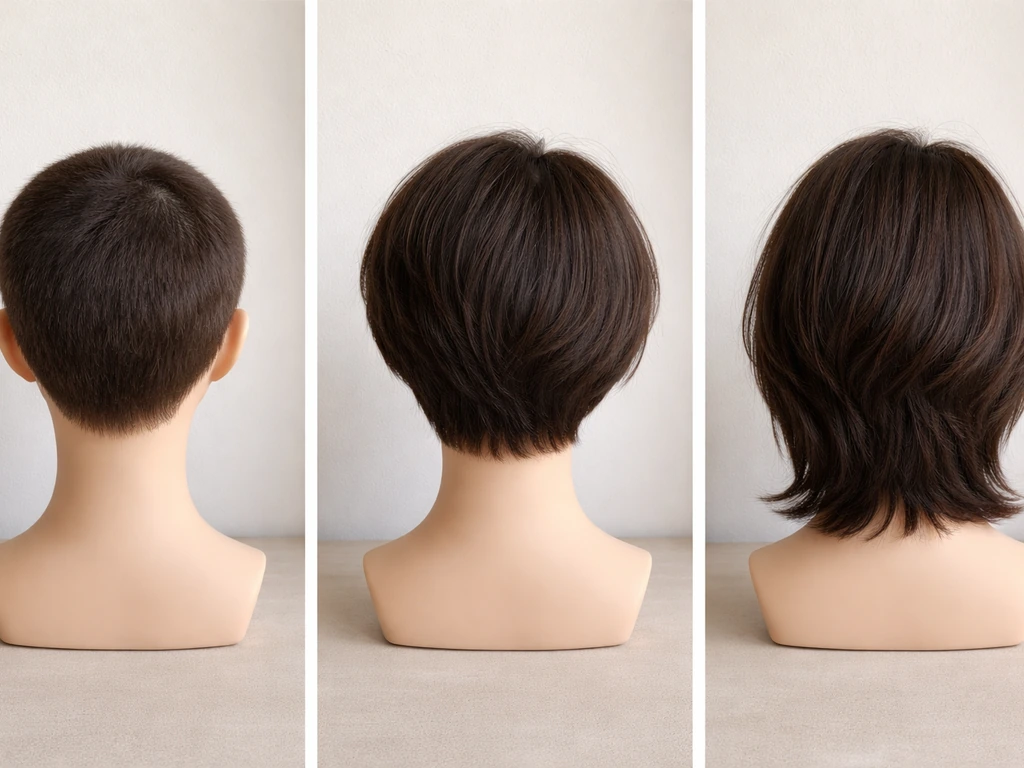
The grow-out timeline varies a lot depending on where your layers start. A pixie or buzz cut with very short layers has a different journey than a bob with face-framing pieces, or long hair with heavy internal layers. That said, there's a pretty predictable pattern of stages most people go through.
| Month Range | What's Happening | What It Feels Like |
|---|---|---|
| Months 1–2 | Shorter layers gain 1–2 cm; shape is still mostly intact | The cut still looks intentional but starts to feel slightly overgrown |
| Months 3–4 | Layers hit an in-between length; bulk can appear in the wrong places | The most common "stuck" phase; hair looks neither layered nor blended |
| Months 5–6 | Face-framing pieces reach chin or collar length; internal layers start to merge | Things begin to look more connected; easier to style in one direction |
| Months 7–9 | Most blended layers are now only 2–4 cm apart in length | Hair feels heavier and more uniform; the layered look is fading |
| Months 10–12 | Significant length gained overall; short layers may now fully blend depending on starting point | One-length or lightly layered appearance for many people |
| 12+ months | Deep undercuts, very short bangs, or heavy internal layers may still be growing in | Patience pays off here; targeted trims can accelerate the blended look |
If you're growing out something with a dramatic undercut or very short cropped layers, expect to be in active transition for 12 to 18 months before things feel truly blended. For lighter layering in longer hair, 6 to 9 months is often enough to feel the difference. And if you're curious about how evenly this all happens, the short answer is: mostly yes, but not perfectly, which is worth understanding before you expect a clean result.
If your question is specifically about curly hair, this is where you can connect the general timeline to how to grow out layers in curly hair. Even so, layers do not always grow out perfectly even, which is why the blend-out can look uneven for a while grow out evenly.
Why it sometimes feels like your layers aren't growing out at all
This is the frustrating part. Even though your layers are technically growing, there are several reasons the grow-out can feel invisible or like it's getting worse before it gets better.
- Bulk piling up at mid-lengths: As short layers grow into the mid-shaft zone, they can add width rather than length, making hair look puffier and less smooth. This is especially common with thick or wavy hair.
- Face-framing pieces lagging visually: Shorter pieces around the face are always the most visible and the slowest to "disappear" visually, even if they're growing at the same rate as the rest.
- Shrinkage from curl or wave: Curly and wavy hair can shrink anywhere from 20% to 50% of its actual length when dry. So even if those layers have grown 3 cm, they may sit at the same visual position they did two months ago.
- Heat damage or breakage: Damaged ends break off at roughly the same rate they grow, which is a real scenario where layers genuinely can feel stuck. If the ends are fragile, they're not actually retaining the length you're growing.
- Color or bleach history: Chemically processed hair is more porous and weaker at the ends, meaning the shorter lightened pieces may break before they reach your target length.
- Uneven growth zones: Growth rate can vary slightly around the hairline, temples, and nape, meaning a layer that started near your face might genuinely be slower to catch up.
If you're dealing with an undercut that's growing in, that's its own category entirely. The very short pieces near the nape or sides of an undercut take a long time to reach a blendable length, and until they do, the contrast in texture and volume can make the whole back feel messy rather than intentional.
Should you cut it or let it ride
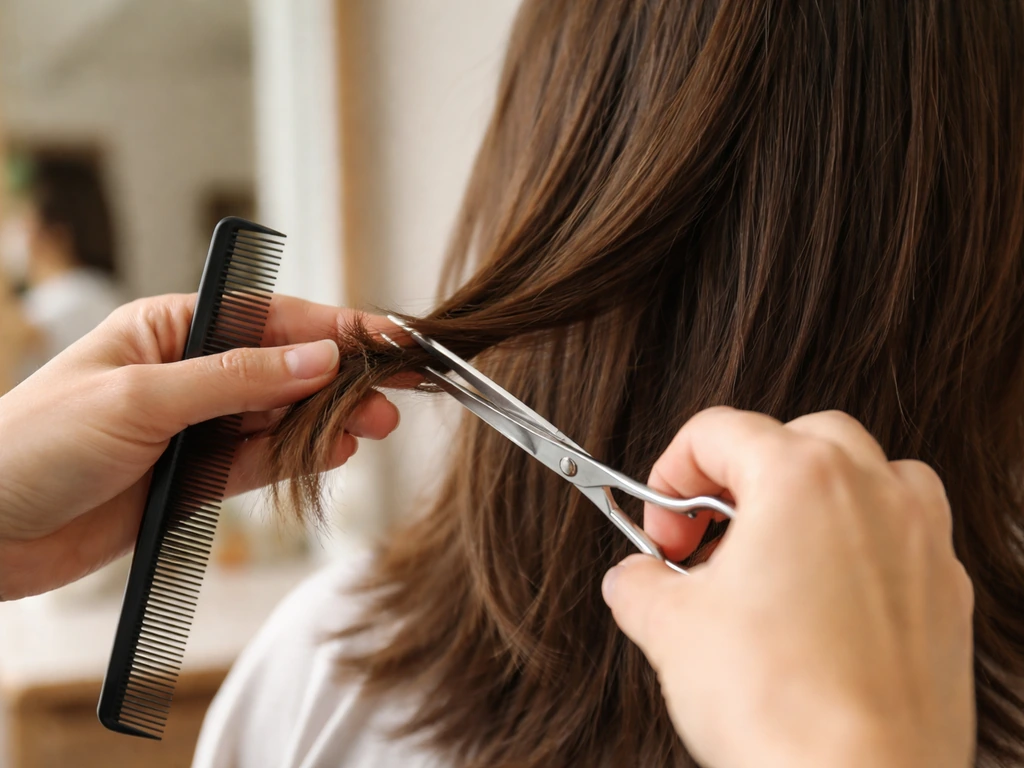
This is the question everyone sits with during the awkward phase. The honest answer is that you don't have to choose between cutting everything off and doing nothing. There's a middle path that most people overlook: a targeted blending trim rather than a full cut.
A blending trim is exactly what it sounds like. You (or a stylist) removes a small amount from the longer sections to close the gap between the shortest layers and the rest of the hair, without cutting the shorter pieces at all. Done right, this can make the grow-out look 6 months more advanced than it is, and it doesn't set you back. What you want to avoid is the reflex of cutting your whole length back down to match the shortest pieces. That restarts the clock and doesn't actually solve anything.
Trimming the longer sections every 2 to 3 months as needed, while leaving the shorter layers to grow freely, is often the fastest practical route to a blended, one-length (or lightly layered) result. If you want the quickest way to grow out layers fast, focus on keeping the silhouette blended while your shorter pieces catch up. If you're determined to avoid any cutting at all, that's completely valid too. Growing out layers into one length without cutting is possible. It just takes longer and requires more styling strategy in the in-between months.
Styling tricks that make layers look blended right now
The good news is that a lot of what makes layers look "unfinished" during the grow-out is actually fixable with how you style on a given day. You don't have to walk around looking like you're mid-transition the whole time.
Blow-dry technique
A round brush blow-dry pulls all your layers in one direction and smooths the ends so different lengths are less visible. If you're not a round brush person, even directing heat downward with a paddle brush (rather than scrunching or air-drying randomly) will make layers fall more cohesively. The goal is to get all the pieces pointing the same way, which visually minimizes the length difference between them.
Braid, half-up, and ponytail methods
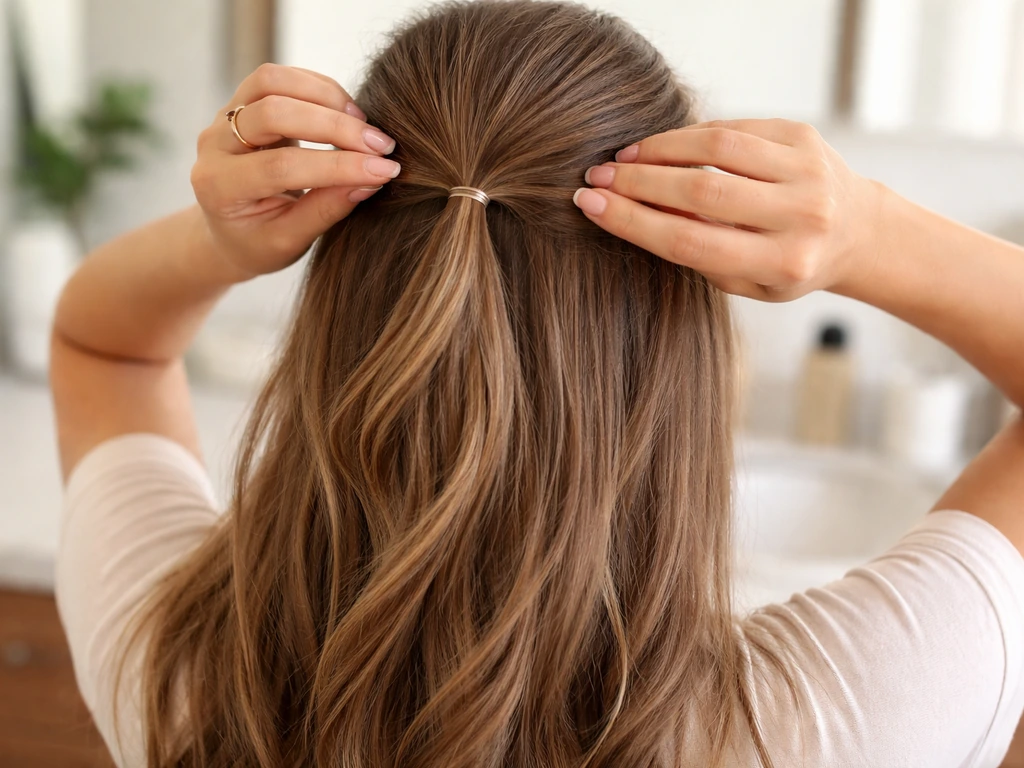
Pulling hair up or back is genuinely one of the most useful tools during a grow-out. A loose half-up style tucks away the face-framing layers that are usually the most awkward pieces. A low ponytail or braid pulls everything into alignment and removes the visual chaos of lengths sitting at different places on your face and shoulders. Accessories like wide headbands, clips, and scarves can anchor shorter pieces without making the style look like you're hiding something.
Products for blending and control
- Smoothing serum or cream: applied to damp hair before drying, it helps all layers fall flat and reduces the frizz that makes length differences pop.
- Light hold pomade or balm: good for taming specific shorter pieces around the face or nape without weighing down the rest.
- Texturizing spray: counterintuitive, but adding soft waves or texture throughout the hair can actually blend layers better than trying to keep everything straight. Waves break up the hard line between lengths.
- Microfiber towel or T-shirt drying: reduces frizz on wavy and curly hair, which in turn reduces the apparent shrinkage that makes layers look shorter than they are.
Managing bangs and face-framing pieces specifically
Bangs and face-framing layers are often the pieces that define how "in transition" someone looks. If you're growing out bangs, the 7 to 10 cm range (roughly ear to chin level) is the hardest stretch. Side-sweeping them or pinning them back during this phase is more comfortable than fighting them every day. Once they hit the chin, they start to behave as part of the overall style rather than as their own distinct element.
When to call in a professional
Most layer grow-outs can be managed at home with the right styling approach and an occasional blending trim. But there are specific situations where seeing a stylist for a targeted corrective session is genuinely worth it, not to reset the cut, but to make the grow-out more manageable.
- Strong undercut regrowth: If you had a shaved or very closely clipped undercut, the growing-in sections can look disconnected and wiry. A stylist can point-cut or soften those edges to help the new growth blend into the rest of your length more naturally.
- Noticeably uneven growth: If one side is clearly longer than the other, or if a section around your hairline has stopped retaining length, a professional can assess whether it's a structural issue (how the original cut was done) or a breakage issue requiring a different approach.
- Heat damage or chemical damage at the ends: If your ends are crispy, splitting, or breaking, no amount of styling will fix the grow-out appearance. A damage-focused trim that removes the weakest ends, combined with a protein treatment plan, lets the healthier new growth actually show up.
- Color issues affecting visible regrowth: If you have bleached or highlighted layers, the contrast between new growth and processed ends can make the grow-out look unfinished in a way that styling can't fully mask. A colorist can use shadow root, gloss, or blending techniques to buy you more time between appointments without stripping more of your hair.
The goal when you go to a professional in this situation isn't to undo the grow-out progress you've made. It's to make the next 3 to 6 months look intentional rather than accidental. Be clear with your stylist that you're growing out and not open to a fresh cut, and ask specifically for blending or damage repair work. A good stylist will work with where your hair is, not where it was.
The bottom line on growing out layers
Layers will grow out. That's the simple answer. At roughly 1 cm per month, your hair is always making progress, even when it doesn't look like it. The process can take anywhere from 6 months (for lighter layers in longer hair) to 18 months or more (for strong undercuts or very short cropped layers), and there will be awkward phases in between that are real but survivable.
What you do during those months matters less than you think in terms of the final outcome, but it matters a lot in terms of how you feel day to day. Using the right styling techniques, doing targeted blending trims rather than full cuts, protecting your ends from damage, and knowing when to get professional help for specific issues will make the transition feel a lot less like waiting and a lot more like actively getting somewhere.
These same routine changes can also help control flyaways so your grow-out looks smoother as the shorter pieces catch up. With the right routine, flyaways can calm down as your layers do their grow-out, so the transition can feel smoother over time do flyaways grow out. Your hair is growing. The American Academy of Dermatology notes that it is normal to [lose about 50 to 100 hairs per day](https://www.
aad. org/public/diseases/hair-loss/causes/fall-out), so shedding can seem alarming even when hair is still growing. House of Aemlie notes that loose curls often show about 10, 20% shrinkage, while coily curls can show around 30, 50% shrinkage, which helps explain why grow-out layers can look stuck even as they’re lengthening 10–20% shrinkage, while coily curls can show around 30–50% shrinkage.
Work with it.
FAQ
Why does my hair look like nothing is growing out after a month or two?
Not necessarily. A layered cut can look the same for a few weeks if your layers are small, your hair naturally lays flat, or your ends are still well-trained. What changes first is the amount of length on the shortest pieces, but that often only becomes obvious when you part your hair differently or after a wash, once the new growth is no longer weighed down by styling.
Do I have to cut the shortest layers to make layers grow out faster?
It will blend eventually, but the fastest visible improvement usually comes from matching the silhouette, not waiting for perfect uniform length. If you trim only the longer sections every 2 to 3 months, you close the gap while letting the shorter layers continue catching up, which reduces the “wrong length” look without resetting the cut.
Is the grow-out timeline the same for curly hair as for straight hair?
Curly and wavy hair often shows grow-out more slowly because shrinkage hides length and then releases it in uneven ways when it dries or curls differently. In practice, the key is focusing on how the shape behaves at your usual curl pattern (for example, after your normal products and drying method), not just measuring from the top when the hair is wet.
How can I tell if my layers are growing out versus the ends breaking?
Yes, damage can make the grow-out look worse even when the hair is technically lengthening. If your ends are breaking, you lose the length that the shortest layers are trying to gain, so the gap stays obvious. Watch for fraying, excessive tangling, and shorter-than-expected strands at the tips.
Can I grow out layers without blow-drying, and what should I do instead?
You can, but you should switch your goal from “perfect blend” to “controlled blend.” Using a downward-directed blow-dry or smoothing with a paddle brush helps layers fall in a consistent direction. If you air-dry, try consistent parting and avoid repeatedly scrunching and flipping, since that can re-highlight length differences.
Why do my face-framing layers look awkward before the back of my hair does?
Expect more visible awkwardness if the shorter pieces are around the face or if your cut includes heavy internal layers, because those areas define the silhouette first. Layers tucked into the back can look smoother for longer, while face-framing pieces show the transition as they reach different contact points around the jaw and cheeks.
What should I expect when growing out an undercut with layers?
Undercuts and very short cropped layers have a longer “contrast” phase because the smallest pieces take longer to reach the blendable length, and texture differences can amplify it. The practical fix is usually patience plus targeted blending work, sometimes focused on reducing volume or reshaping the line rather than cutting everything to the shortest length.
How do I handle bangs during the awkward grow-out stage?
If you have bangs, there is usually a toughest window where they are long enough to be noticeable but not long enough to behave as one piece (often around ear-to-chin length). The most workable options during that window are pinning, side-sweeping, or using a clip to merge them into the rest of your style until they reach a calmer length.
Can one side of my layered haircut grow out unevenly, and what causes that?
Not always, but it can happen from uneven trimming history or different porosity around the hairline. If one side grows slower due to breakage or heat exposure, the blend can lag on that side. A targeted corrective session can focus on damage repair and balancing the silhouette without re-cutting everything.
How do I know whether I need a blending trim or I should wait it out?
Do a quick check before you decide you need a full haircut: compare the shortest layers across several days (after washing and after your usual styling), and look for whether the shortest pieces are actually longer or just sitting differently. If length increased but the shape feels off, a blending trim focused on the longer sections is often enough; if ends are breaking, prioritize end protection and wait for a more stable length.