
Lowlights are one of the smartest tools for growing out gray hair because they work with your regrowth instead of against it. If you want a calm, graceful result, focus on blending, timing, and low-maintenance upkeep as your gray grows in grow out gray hair. Instead of fighting the incoming silver, you use strategically placed darker strands to blur the line between your dyed lengths and your natural roots, giving the whole thing a softer, more dimensional look while the gray inches its way down. Done right, this approach can stretch your appointments, save you money compared to constant root touch-ups, and make the grow-out phase look intentional rather than neglected.
How to Grow Out Gray Hair With Lowlights: Step by Step

Marcus Vickers
16 Jun 2026
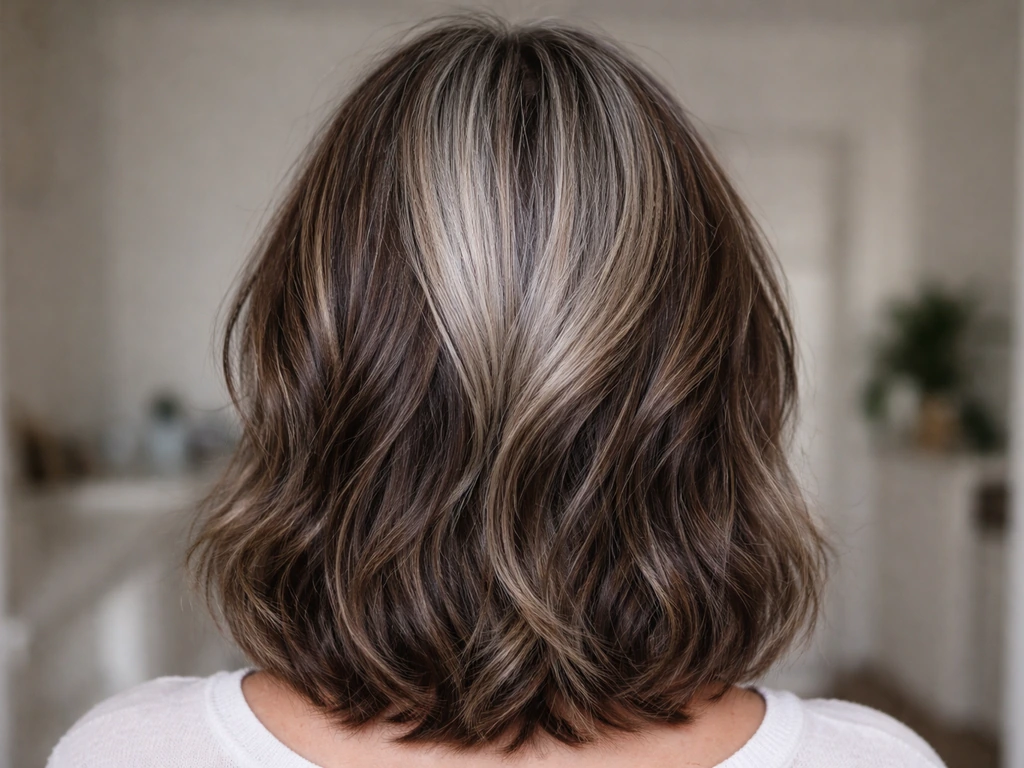
How lowlights actually help with gray regrowth
The problem with growing out colored hair to gray is contrast. When your darker dyed color sits below a bright band of silver roots, the line is hard and obvious. Lowlights break up that contrast by adding depth and variation throughout the lengths and mid-shaft so your eye doesn't lock onto the root demarcation line. Rather than one flat dark color ending abruptly where the gray begins, you have a blend of tones that makes the transition look gradual and natural.
Most lowlight work for gray blending uses demi-permanent color rather than permanent dye. Demi-permanent uses a low-volume developer that coats the hair surface without fully lifting it, which means the color settles in but the underlying gray can still show through softly over time. It's gentler on hair than bleach-based highlights, and because it fades gradually over about 4 to 6 weeks (or roughly 15 to 25 wash cycles), the regrowth line stays soft rather than sharp. That's exactly what you want during a grow-out.
This strategy tends to work best when your gray is under about 40% and your base color is a level 5 or darker (think medium brown to black). If you're already more than half gray, lowlights alone may not create enough contrast to read as intentional dimension, and you might want to combine them with a silver toner or shift your approach toward fully embracing the gray. That's a separate conversation, but it's worth knowing where lowlights shine most.
Choosing the right lowlight shade and where to place them
Picking your shade
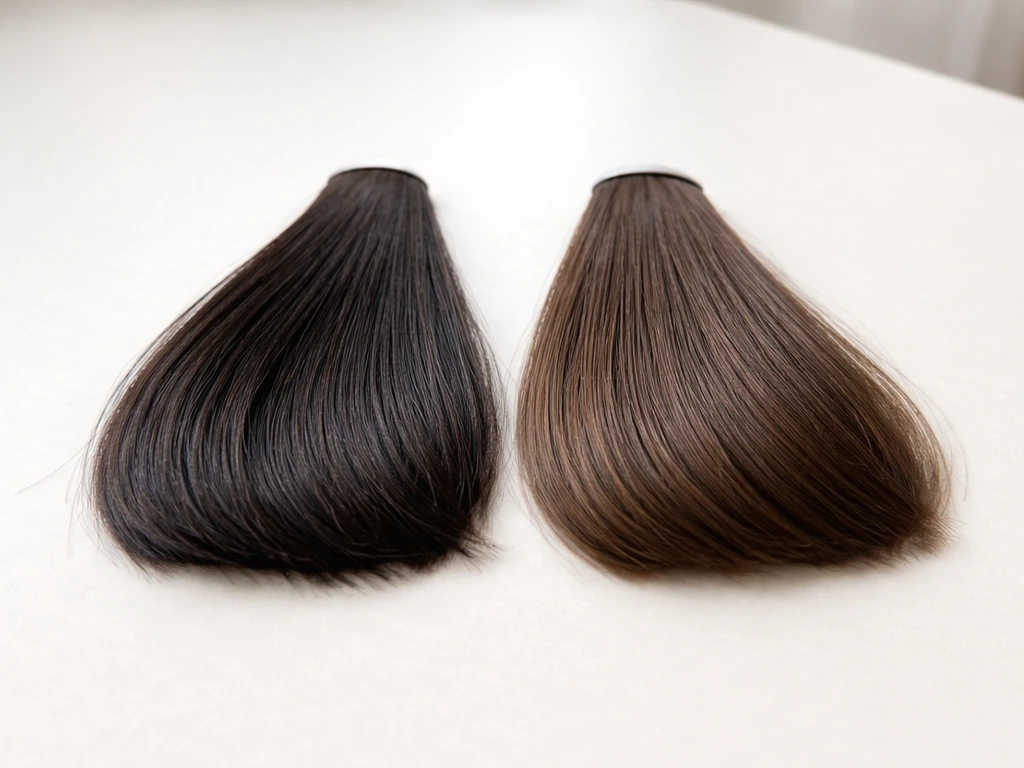
The number one mistake people make with gray-blending lowlights is going too dark. If your natural base is a medium brown and you add espresso lowlights, you've just created a new contrast problem. The rule that most colorists follow is to stay within 2 to 3 shades of your base color. So if you're a level 6 (dark blonde to light brown), your lowlights should land around a level 4 or 5 at the darkest. Close-to-base shades add dimension without shouting.
Tone matters too. Cool, ashy tones tend to read closer to gray, so they create a more seamless bridge between your silver roots and your colored lengths. Warm tones like copper or caramel can look gorgeous but create more contrast against cool gray, which can actually make the grow-out line more visible over time. That said, if your base is naturally warm and you go cool, it can look disconnected. Ask your colorist to mix a tone that harmonizes with both your natural gray and your existing color, not just one or the other.
Root smudge, shadow root, and placement strategies
Placement is where the real magic happens. For a grow-out, the most effective techniques include root smudging and shadow roots. A root smudge applies demi-permanent color at the root area and blends it softly downward, removing the hard line where new growth meets old color. A shadow root is similar but more intentional: the colorist darkens the first 1 to 2 centimeters at the root and blends the color down 3 to 5 centimeters so there's a gradual melt rather than an abrupt shift. Both of these techniques are specifically designed to make regrowth look like part of the plan.
For the mid-lengths and ends, scattered lowlights through the body of the hair add depth and prevent your color from looking flat. Keeping lowlights away from the immediate face frame (or at least keeping them subtle around the face) lets any lighter gray near your hairline look soft and dimensional rather than washed out. If you have a bob, bangs, or a shorter cut with layers, ask your colorist to focus the deeper lowlights toward the interior and back sections so the face-framing area stays lighter and more flattering.
If you're growing out an undercut or have very short sides, the approach is different. Short sections don't have enough length to foil, so a root smudge or soft shadow root is usually the way to go on those areas. As those sections grow in, you can add foil lowlights gradually. For pixie or buzz-cut stages, the focus is really on tone: a glossing service in a shade close to your natural color can add enough dimension to keep things looking intentional while the length catches up.
Scheduling appointments while you grow out your gray
Growing out gray with lowlights doesn't mean you can ignore the salon entirely, but you can space visits out more than you would with traditional root touch-ups. If you want the full playbook on how to grow out gray curly hair, focus on placement, timing, and keeping your texture working for you Growing out gray with lowlights doesn't mean you can ignore the salon entirely. A standard root touch-up schedule runs every 6 to 8 weeks. Wella Professionals recommends booking blank" rel="noopener noreferrer">grey root touch-up visits every about 6, 8 weeks, depending on how fast your hair grows. With lowlights and a shadow root strategy, many people can stretch that to every 8 to 12 weeks depending on how fast their hair grows and how much contrast they're comfortable with. The goal isn't to hide every gray hair; it's to make the grow-out look soft enough that a few extra weeks don't matter. If you want the full picture for what to expect and how to manage each phase, review these tips for how to grow out gray hair.
Between salon visits, a gloss or glaze service can be a useful top-up. A gloss deposits a small amount of pigment at the cuticle, refreshes tone, and adds shine without the commitment of a full color appointment. Most glosses last about 2 to 4 weeks. This is a great option if your lowlights are fading and you have a few more weeks before your next full appointment. Many salons offer express gloss services at a lower price point than a full color visit.
For between-appointment maintenance at home, temporary root touch-up powders can press pigment into the root area and visually buy you another week or two. These work best along the part line and hairline where gray contrast is most visible. They wash out easily, so there's no commitment risk. Keep them in your routine toolkit during the grow-out, not as a permanent solution, but as a low-effort way to feel put-together on days when the roots are bugging you.
| Service | How long it lasts | Best used for | Approximate frequency |
|---|---|---|---|
| Full lowlight service | 6–12 weeks | Main blending and dimension | Every 8–12 weeks |
| Root smudge / shadow root | 6–8 weeks | Softening regrowth line | Every 6–10 weeks |
| Gloss / glaze | 2–4 weeks | Tone refresh between visits | As needed between appointments |
| Temporary root powder | 1 wash | Quick fix on visible parts/hairline | Whenever needed between appointments |
How to cut your hair during the grow-out
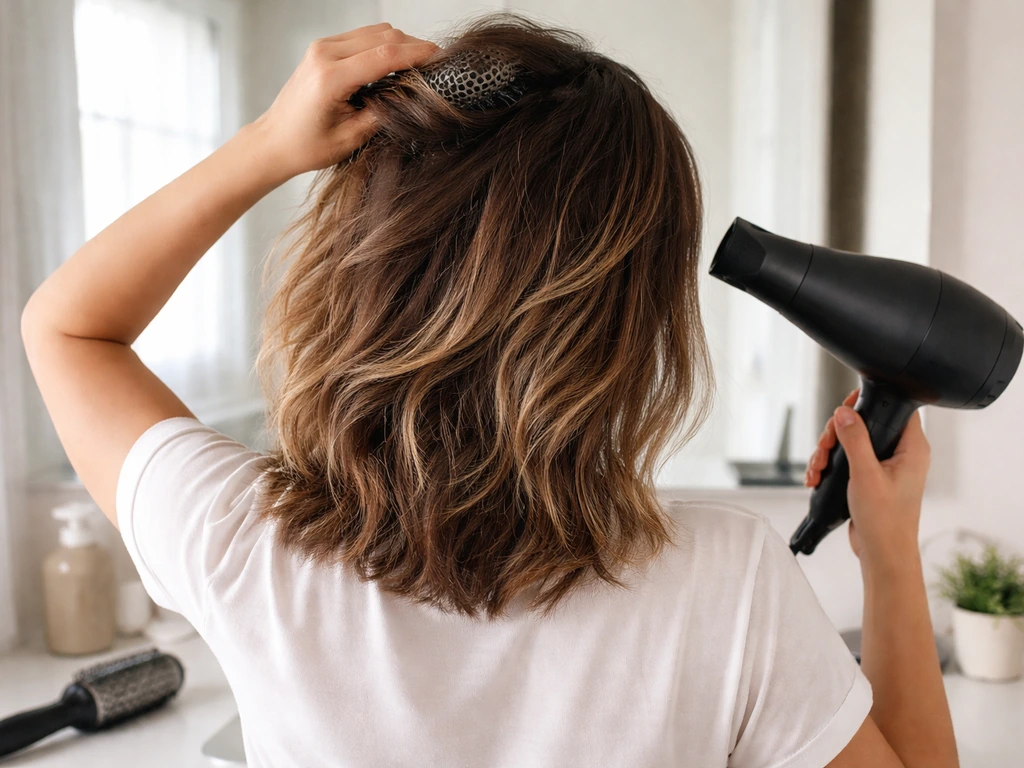
Trimming is not optional during a gray grow-out. Regular cuts do two important things: they remove the most heavily processed ends first (the oldest color that looks most different from your new natural gray), and they keep the shape clean enough that the whole process looks deliberate. Aim for a trim every 8 to 10 weeks. You don't need to take off a lot, even a half inch keeps the ends from looking scraggly and helps the overall shape remain flattering while the new growth develops.
Layers are your best friend during a color transition. They break up the visible line between your gray roots and your colored lengths by creating movement and variation rather than a flat horizontal demarcation. If you're growing out from a blunt bob or a one-length cut, ask your stylist to add soft, face-framing layers gradually. These give texture to work with when styling and make the two-tone effect look like dimension rather than neglect.
If you have an undercut that you're growing out alongside the gray transition, that's a layered challenge but completely manageable. The undercut sections will grow at the same rate as the rest of your hair (roughly half an inch per month), and the key is keeping the outline tidy while letting the interior fill in. A tapered blend at the nape and sides tends to look cleaner at each growth stage than a hard line, so discuss that with your stylist as you grow the undercut out.
Styling through the awkward phases
There will be an awkward phase. Usually it hits hardest around months 3 to 6, when you have enough new gray growth to be obvious but not enough to dominate. This is also when your lowlights may be fading, which can cause the color to look a little muddy or inconsistent. The good news is there are reliable styling tricks that make this phase much easier to live through.
Part manipulation
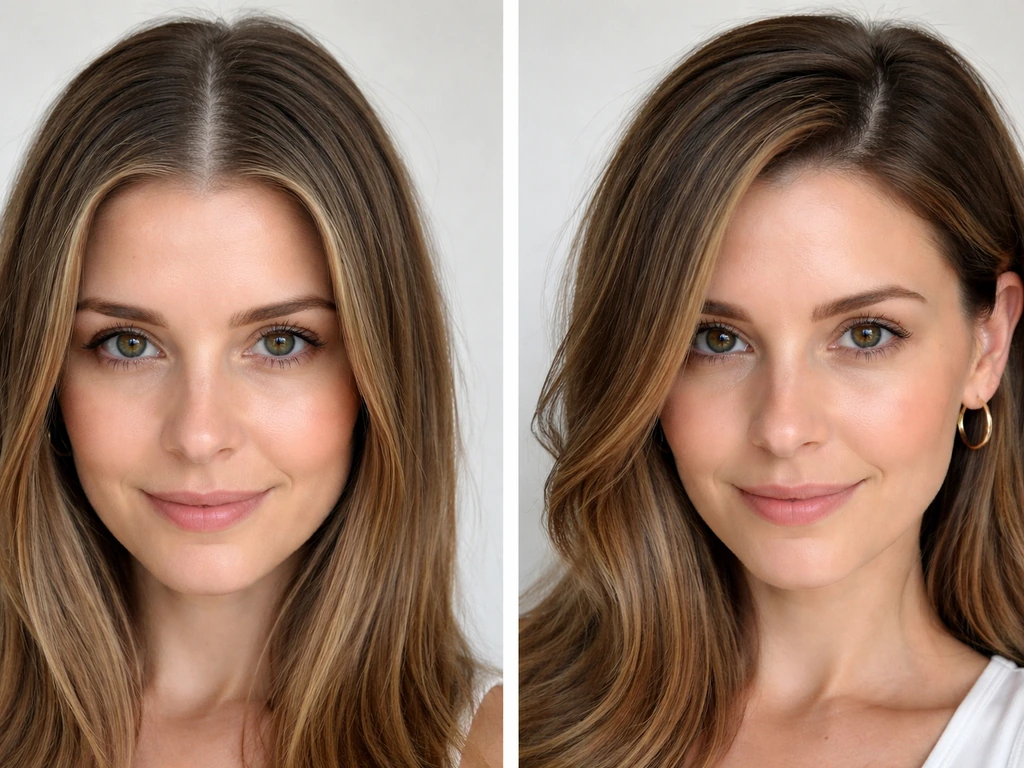
Changing your part is one of the simplest and most effective ways to manage visible root contrast. If you normally wear a center part, shifting to a deep side part moves the gray-growth line into a less obvious position and breaks up the visual symmetry that makes demarcation lines pop. Switching parts regularly also prevents the hair from splitting in a way that emphasizes the two-tone effect. Try a zigzag part or a loosely swept side part for the most natural look.
Texture and volume
Flat, smooth styles show every millimeter of root contrast. Texture hides it. Whether you use a diffuser, a sea salt spray, or a curling wand, adding movement to the hair breaks up the demarcation line naturally. If your hair is naturally curly or wavy, working with your texture rather than straightening it will make the grow-out phase significantly easier and the regrowth less visible. For straight hair, even loose waves created with a large-barrel iron can soften the transition zone considerably.
Gloss and conditioning treatments
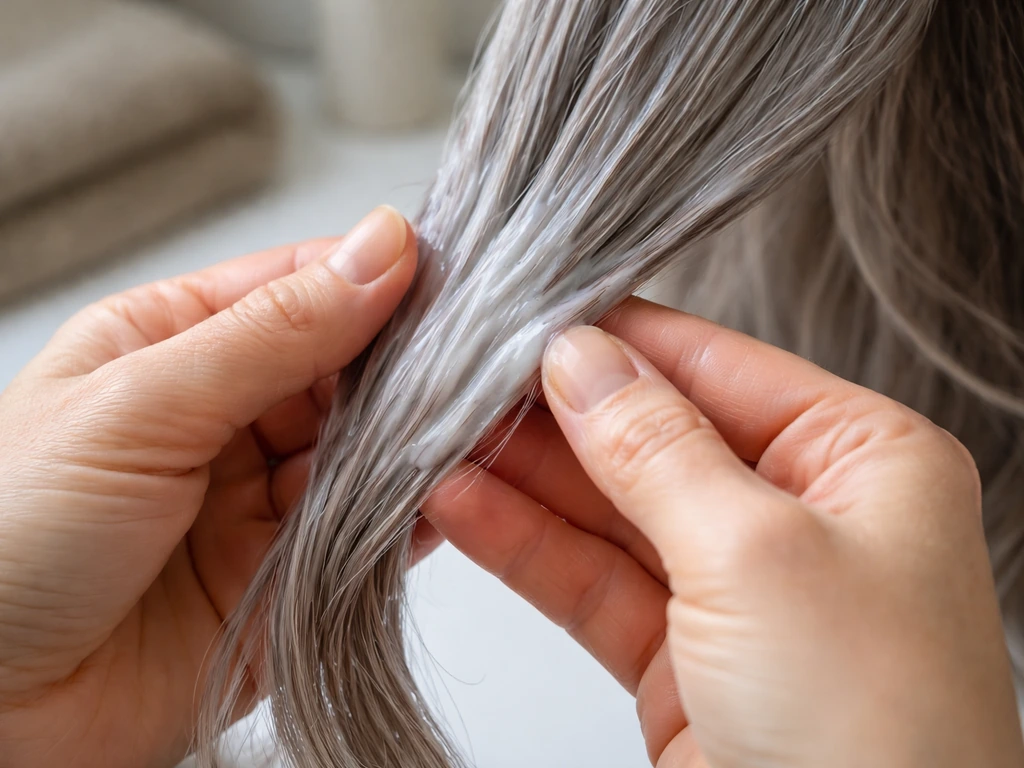
Gray hair tends to be coarser and more porous than pigmented hair, which means it can look dry or wiry as it grows in. Using a weekly deep conditioning treatment or a purple-toned conditioner (to neutralize any yellow in your grays) keeps the new growth looking healthy rather than frazzled. A glossing treatment at home or in-salon also temporarily smooths the cuticle, which makes both the gray and the lowlighted sections look more cohesive and intentional.
Heat styling considerations
Demi-permanent lowlights are gentler than bleach-based color, but they still affect the hair's protein structure over time. During a grow-out, you're dealing with hair at multiple stages of processing (old permanent color at the ends, newer demi-permanent lowlights in the mid-shaft, and virgin gray at the roots), which means different sections have different needs. Use a heat protectant every single time you use a hot tool, and try to lean on heatless styling options like braids, buns, or roller sets a few days a week. It genuinely makes a difference to the condition of your ends by the time you're ready to cut them off.
What this costs and what to realistically expect over time
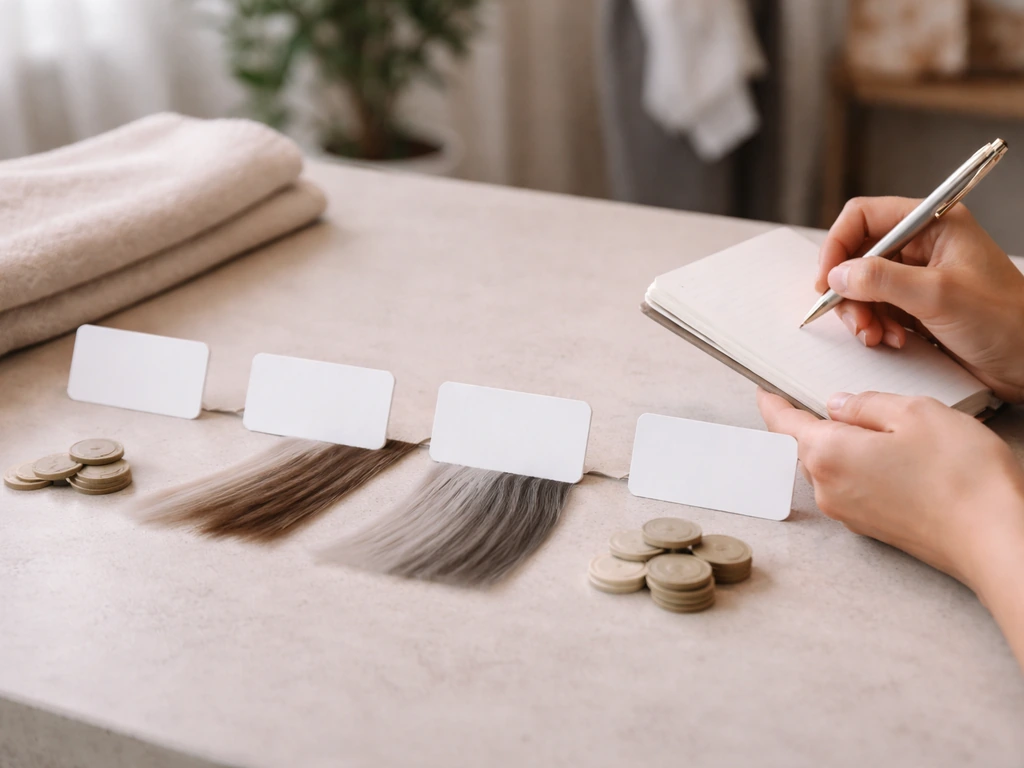
Cost is a real consideration. A full foil lowlight service typically starts around $125 to $150 at mid-range salons, and can run $190 to $360 or more at higher-end salons depending on your hair length, density, and the complexity of the service. If you're adding a shadow root, gloss, or multiple shades, expect to add incremental cost per service. Compared to touching up permanent root color every 4 to 6 weeks, a lowlight-based approach can actually cost less overall because you're visiting less frequently, even if each individual appointment is more expensive.
Set a realistic timeline for yourself. Growing out gray hair fully can take 1 to 3 years depending on your starting length. If you want the grow-out to look graceful the entire time, focus on softening the root line with the right placement, not just the color gray hair fully can take 1 to 3 years. The lowlight strategy buys you time and softens the process, but it doesn't shorten the biology. Over that time, you'll likely go through several phases: first, the root shadow stage where the lowlights are doing the heavy lifting; then a mid-stage where the gray is more dominant and the lowlights may start to look like they're sitting against a mostly silver background; and finally the end stage where you're close enough to your natural gray that you can step away from color entirely or transition to something like a silver toner or gloss.
The lowlights will become less effective as your gray percentage increases. Once you're past about 40 to 50% gray, the darker lowlight strands start to look more like intentional highlights against a silver base rather than a blending strategy, which is a different aesthetic (though not necessarily a bad one). This is typically the point where people either lean into a fully gray look or shift to using a cool-toned gloss to unify the silver rather than adding more depth. Knowing this inflection point exists helps you plan your appointments and budget accordingly rather than feeling surprised when the strategy naturally evolves.
If you're also navigating related questions like growing out dyed gray hair back to your natural color, or trying to figure out the best overall hair color choice for making gray regrowth less obvious, both of those situations involve overlapping decisions about tone, timing, and commitment level. If you’re specifically trying to grow out dyed gray hair, ask for a lowlight plan that includes root smudging or a shadow root to soften the regrowth line growing out dyed gray hair. The lowlight approach described here fits within all of those scenarios, but the specifics shift depending on what you're starting with and where you want to end up.
Your next steps right now
If you're ready to start, here's the simplest version of a plan you can take into your next salon appointment.
- Book a consultation with a colorist who has experience with gray blending specifically, not just general color work. Show them photos of the dimensional, soft grow-outs you like.
- Ask for a shadow root or root smudge combined with scattered demi-permanent lowlights through the mid-lengths. Request shades within 2 to 3 levels of your base, in a cool or neutral tone if your gray runs ashy.
- Plan for a trim at the same appointment or within the next 2 to 3 weeks to start removing the oldest processed ends.
- Schedule your next appointment at 8 to 10 weeks out rather than the usual 4 to 6 week root touch-up window.
- Pick up a temporary root powder and a purple or blue conditioner to use at home between visits.
- Embrace texture in your day-to-day styling. The more movement your hair has, the better the blend will look at every stage.
The grow-out is a process, not an event. Lowlights make it a process that looks good the whole way through rather than something to white-knuckle until it's over. Start with one good appointment and adjust as you go.
FAQ
Can I use lowlights to grow out gray even if I’ve already been dyeing my hair for years?
Yes, as long as your goal is blended regrowth and not a dramatic color change. Ask for a “root shadow” or “root smudge” placed where your current roots meet your dyed lengths, and make sure the lowlights are done with demi-permanent color so the gray can still show through softly as it grows.
What should I do if my lowlights start fading and my gray looks uneven between appointments?
If the lowlights fade and your grow-out looks patchy, switch to a unifying top-up rather than adding more contrast. A gloss or glaze in a tone that matches your gray can smooth uneven areas for a few weeks while you wait for your next root service.
Root smudge or shadow root, which one is better for a smoother gray grow-out?
Choose based on how “sharp” your current demarcation is. If you have a clear line, request a shadow root (darker at the root, blended a short distance down). If your regrowth line is already soft or you want the least noticeable change, ask for a root smudge with a more gradual blend.
How do I prevent the biggest mistake people make, lowlights that end up too dark?
Avoid going darker than your natural base by more than about 2 to 3 levels. Even if the lowlights look beautiful in the chair, overly dark pieces can create a new banding effect later. If you are unsure, ask your colorist for a swatch plan (or at least level ranges) before the service starts.
Will cool or warm lowlights work better if my gray is coming in but my dyed hair is warm-toned?
Yes, but the outcome depends on your existing color undertone. Cool-gray often blends best with ashy or neutral lowlights, while warm dyed hair can look disconnected if you add only cool tones. Ask for a mixed tone that harmonizes with both your gray and your current dye so the transition does not look like two separate colors.
Do I need to change how I wash or style to keep the grow-out looking blended?
You usually cannot expect long-lasting results if you wash immediately with harsh or very hot water. To keep the transition softer, use cool to lukewarm water, and protect your hair from frequent high-heat styling. If your hair is porous, consider a weekly conditioner plus a toner-safe routine to avoid pulling the color in odd ways.
How should the plan change if I have an undercut or a pixie/buzz-cut stage?
If you have very short sides, the look is less about “foil dimension” and more about tidy tone at the root. Ask for a soft shadow root or gloss in a near-base shade for those areas first, then add foil lowlights only once there is enough length for them to show naturally.
Are root touch-up powders a good option during the awkward grow-out phase, and how should I use them?
Yes, but temporary root powders are best for visual correction at the part and hairline. Apply lightly, avoid saturating the scalp area, and plan to wash it out at the end of the day since buildup can make roots look more textured than natural regrowth.
What happens if I keep growing out and my gray percentage becomes higher, do lowlights stop working?
Often, yes. If your gray is around or above the 40 to 50% mark, lowlights can start to read more like intentional contrast than blending. At that point, many people shift toward either a cool-toned unifying gloss/toner or embracing the silver, rather than continuing to add darker depth.
Is trimming really necessary during a gray grow-out with lowlights, or can I wait until later?
Yes, and it can be a smart strategy if your ends look significantly different from your natural color. Regular trims remove the oldest, most altered ends first, and they keep the overall shape clean so the two-tone effect looks intentional instead of neglected.
Why does my grow-out look obvious when my hair is straight, and what styles help most?
Texture is not just a styling preference, it is a camouflage tool. If you currently wear your hair flat, try a diffuser, loose waves, or a style that adds movement right over the transition zone (the first few centimeters). This reduces the visibility of the exact regrowth line.