
Growing out gray curly hair is absolutely doable, and it looks far better than most people expect when you have a clear plan. If you also started with dyed gray, the same goal applies: focus on steady growth while managing the color line so the transition looks intentional clear plan.
How to Grow Out Gray Curly Hair: A Step-by-Step Guide

Marcus Vickers
18 Jun 2026
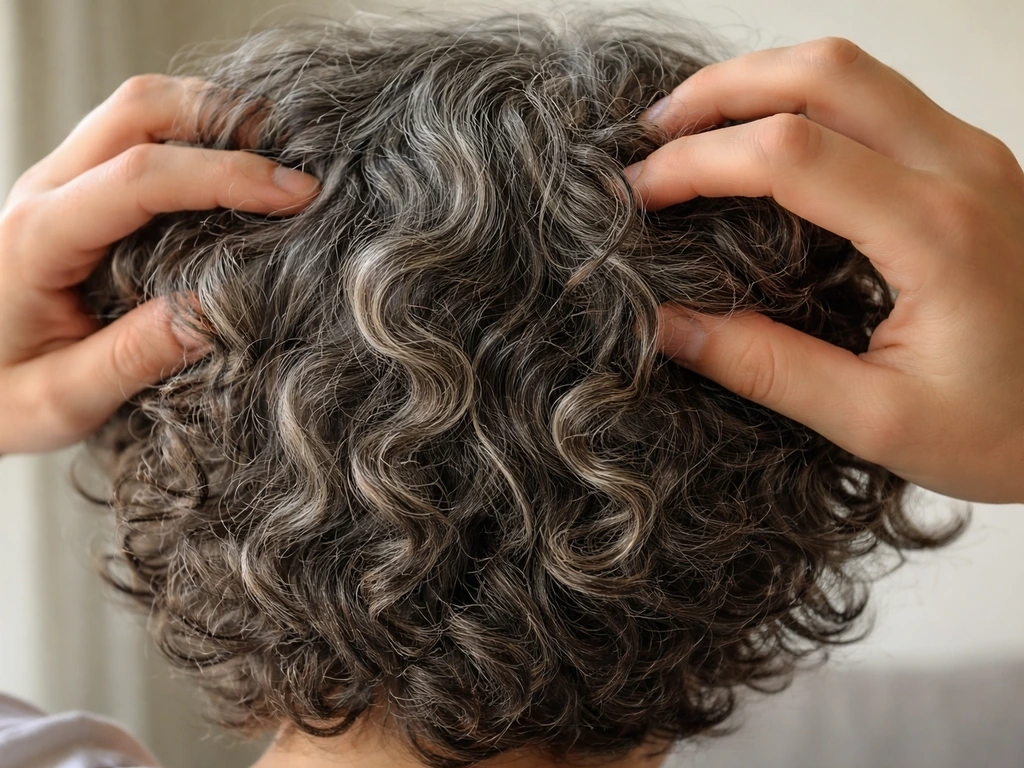
The basic formula: keep your curls moisturized and shaped, lean into a realistic trimming schedule that controls breakage without sacrificing length, and decide early how you want to handle the color line (embrace it, blend it, or cover it). Hair grows roughly half an inch per month, so a short cut to shoulder length takes about a year to 18 months. The awkward phases are real, but they're manageable with the right styling approach at each stage.
Why gray shows up differently in curly hair
Gray hair isn't just a color change. When your hair follicles lose their melanocyte cells, the pigment that used to be deposited into each strand disappears, and that absence changes the physical and chemical properties of the fiber itself. Research confirms that gray hair tends to have higher moisture uptake, a rougher cuticle surface, and reduced luster compared to pigmented hair. For curly hair specifically, this matters a lot because curl definition relies on the cuticle lying relatively smooth and the strand retaining enough internal moisture to stay flexible.
What this translates to in real life: your gray sections may feel coarser, drier, or even slightly wiry compared to your still-pigmented strands. Your curl pattern may shift too. Some people find their gray hair coils more tightly than their pigmented hair; others find it goes looser or develops more frizz at the same point in the curl. Neither is wrong, it's just your hair's new texture responding to the fiber-level changes that come with reduced melanin. Once you understand that you're managing two slightly different hair types at once, the whole grow-out process starts to make more sense.
There's also the porosity puzzle. Gray hair can resist absorbing color products (behaving like low-porosity hair in terms of pigment uptake) while simultaneously having a more open, roughened cuticle that loses moisture faster. This is why generic curl routines sometimes fail once significant gray appears. You may need to rethink your products and technique even if your curl routine has worked for years.
Build a routine that supports growth and protects your curl pattern
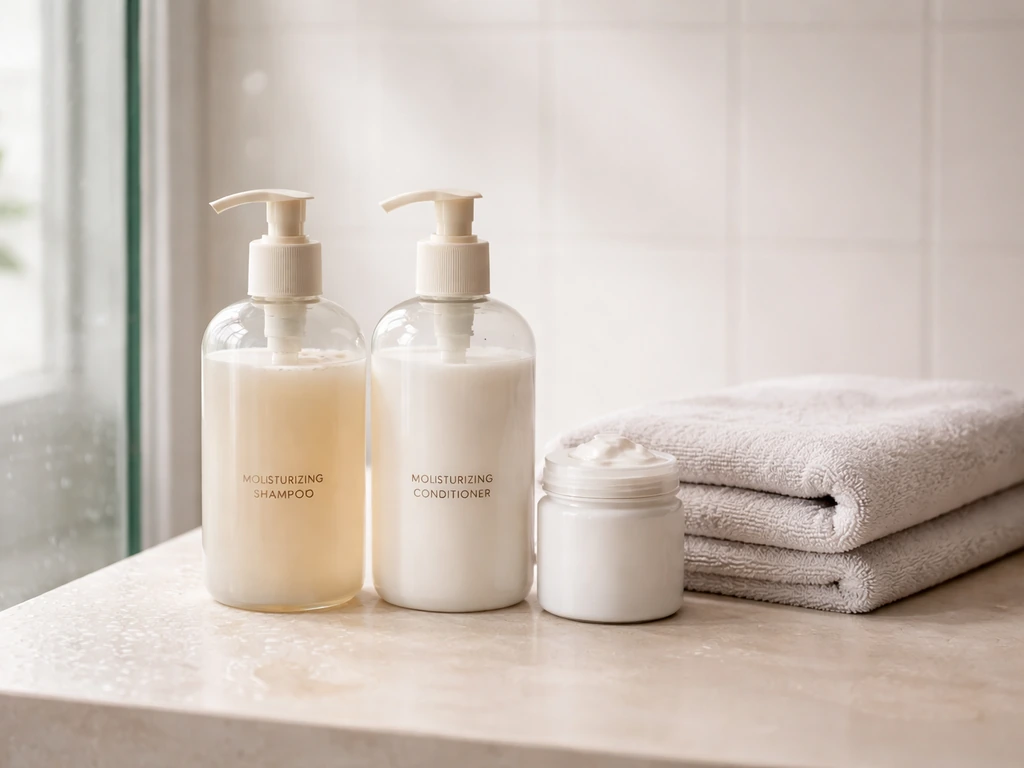
The foundation of a successful grow-out is a consistent routine that keeps your scalp healthy, your strands moisturized, and your curl definition intact while new length comes in. If you want a simple starting point for how to grow out gray hair, focus first on moisture, gentle washing, and a consistent routine as your gray comes in. Think of it as two jobs at once: supporting healthy regrowth from the scalp, and protecting the length you already have.
Washing and conditioning
The American Academy of Dermatology recommends washing curly hair no more than necessary, with at least every two to three weeks as a general floor for scalp health. Washing too often strips the natural oils that gray curly hair already struggles to retain. A gentle sulfate-free shampoo focused on the scalp (not dragged through the lengths) keeps buildup under control without over-drying your strands.
Follow with a moisturizing conditioner applied from mid-length to ends, letting it sit for a few minutes before rinsing. If your scalp is prone to flaking or irritation (which can increase as hair grays and sebum production shifts), a medicated or scalp-focused shampoo used just at the roots, with conditioner on lengths, gives you the best of both.
Moisture, protein, and why gray hair needs both
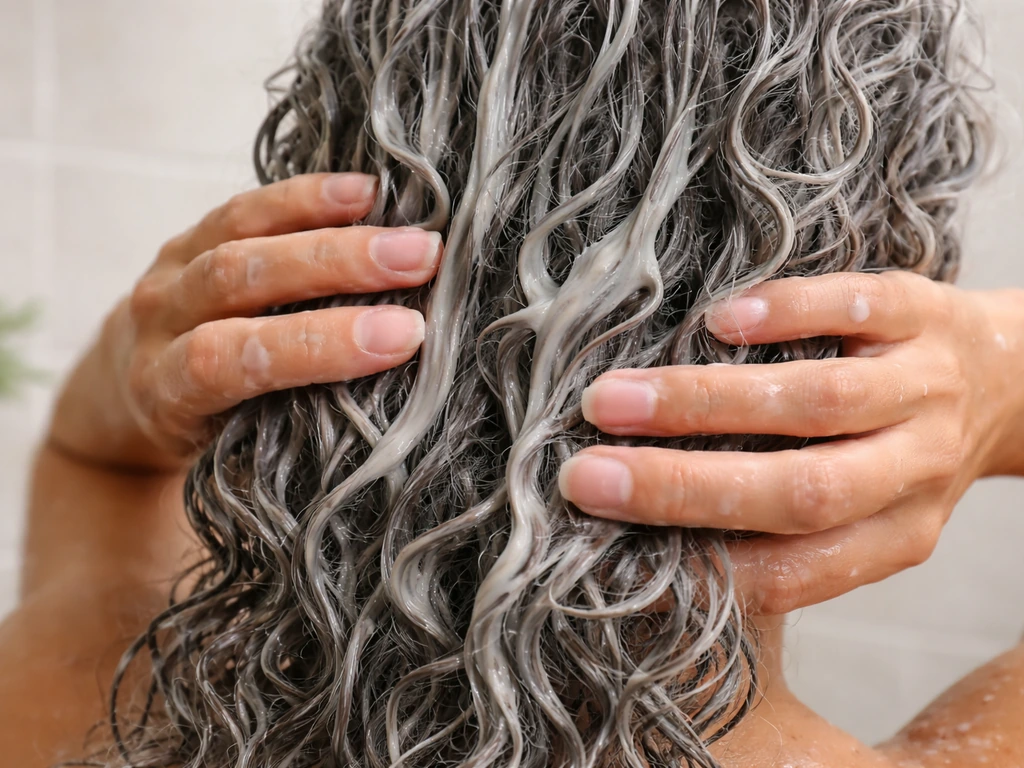
Healthy curls need a balance of protein for structural strength and moisture for flexibility. Gray curly hair tends to run dry and porous, which means it loses moisture quickly and can become brittle. A weekly deep conditioner or conditioning mask is not optional here, it's your primary defense against the dryness and roughness that gray fibers are prone to. Leave-in conditioner applied on wash day helps maintain that moisture between washes.
The AAD notes leave-ins should be fully rinsed out with shampoo and water roughly once a week to prevent buildup. Light protein treatments (once a month or so) can help if your gray sections feel limp or gummy when wet, but go gently: too much protein on already-dry hair makes frizz worse.
Detangling without breakage
Detangle on wet hair with a generous amount of conditioner or a slip product in place. A wide-tooth comb is the standard recommendation for curly hair, and it works well for most curl types, though some tighter or denser curl patterns need finger detangling first to remove large knots before a comb touches the hair. Work from ends up to roots in small sections. Breakage during detangling is one of the sneaky reasons grow-outs stall, so never rush this step.
Stage-by-stage: what to expect as you grow out gray curly hair
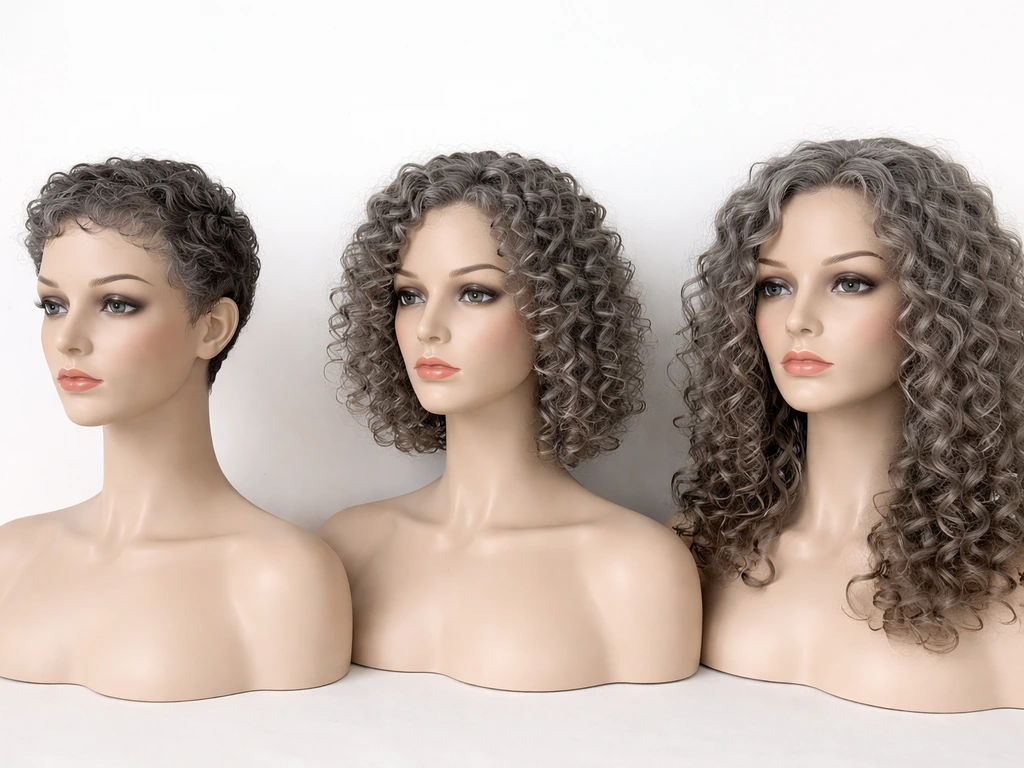
Hair grows about half an inch per month on average, though this slows slightly with age. Here's an honest breakdown of what each phase looks and feels like for curly hair specifically.
| Stage | Approximate length | What's happening | Main challenge |
|---|---|---|---|
| Stage 1: Fresh regrowth | 0–1 inch of gray at roots | Gray roots emerging against colored or darker lengths | Visible demarcation line; short gray curls behave differently than longer colored sections |
| Stage 2: Short awkward zone | 1–3 inches of growth | Gray length is too short to form a full curl, but long enough to puff, frizz, or wave unpredictably | Shrinkage makes gray section look even shorter; volume near the scalp can look uneven |
| Stage 3: Mid-length transition | 3–6 inches | Gray curls starting to form more fully; two distinct textures visible if color is still on the ends | Managing the visual contrast between gray regrowth and remaining dye; curl patterns may look mismatched |
| Stage 4: Integration | 6+ inches | Gray has grown long enough to see its full curl pattern; blend with remaining color length or cut off colored ends | Deciding when to do a final trim to remove color; maintaining moisture across a longer length |
If you're starting from a pixie cut or very short hair, you'll hit the most challenging phase around months three through six, when your gray curls are long enough to be obvious but short enough to be hard to style. This is the phase that makes people want to cut back short. Don't. This is exactly when the grow-out is working.
If you're growing out from a bob or longer cut, your awkward phase is mostly about managing the color line and uneven curl clustering rather than length. If you want to manage the awkward in-between phases with less stress, a simple styling routine and a moisture-first approach can make the transition feel more graceful grow out gray curly hair.
Styling through the awkward phases
The goal of styling during a grow-out isn't perfection; it's manageability and intention. Hair that looks deliberately styled, even if it's in a simple style, reads completely differently than hair that looks like you gave up.
Short phase (0–3 inches of gray growth)
At this stage, your main tools are shape and moisture. Curl-defining cream or a light gel applied to damp hair helps the short gray sections form a consistent texture instead of frizzing out in every direction. If you still have color or length, focusing product through the longer sections while smoothing the roots with a light hold product keeps the whole head looking cohesive. Pixie and very short cuts benefit from a curl-activating cream applied daily with water (the spritz-and-scrunch method). Headbands, soft scarves, and wide fabric headbands are genuinely useful here, not as a style crutch but as intentional styling elements that define a shape while the roots grow in.
Mid-length phase (3–6 inches)
Shrinkage becomes a real issue in this phase. Curly hair can shrink to 40–75% of its actual length, which means three inches of gray growth may look like one inch at the scalp. This is normal and not a sign the grow-out is failing. Stretched wash-and-go styles (banding, pineappling overnight, or diffusing with a slight stretch) help reveal your actual length while keeping curl definition. Twist-outs and braid-outs work well here too, especially for coarser gray sections that resist definition in a standard wash-and-go.
If you have undercut sections or layers from a previous cut growing in, this is where they become visible as shorter sections within a longer overall style. The fix is usually targeted styling: use more product in the shorter sections to encourage them to cluster with nearby longer curls, and avoid styles that pull the hair back tight, which exposes the length difference.
Longer phase (6+ inches)
At this stage you have enough length to work with. Wash-and-go, twist-outs, updos, and buns all become viable. Your main styling challenge shifts to managing the visual contrast between gray roots/new growth and any remaining colored sections, and evening out the curl pattern if your gray hair has a noticeably different texture than your remaining pigmented strands. Diffusing on low heat rather than air-drying can help blend two different curl patterns into a more unified look.
What to do about color while you're growing out
This is genuinely a personal decision, and all three options below are legitimate. If you are wondering what dye shade to choose to grow out gray with the smoothest transition, the best hair colour to grow out grey is usually a softly blended option rather than a harsh root line. The choice mostly comes down to how visible the line between gray and non-gray is, how much maintenance you want, and what your hair can handle right now.
Option 1: Embrace the gray fully
This is the simplest path and puts the least stress on your hair. You stop all color treatments, focus everything on health and moisture, and let the grow-out happen naturally. The main challenge is the visible demarcation line between gray regrowth and your existing color, which can look stark depending on how different the two shades are. For curly hair specifically, the line is actually less obvious than on straight hair because the curl clustering breaks up the contrast, so this option is often more viable for curly-haired people than they initially think. The timeline to full gray depends on your starting length: roughly 12–18 months for most people to see significant integration.
Option 2: Blend the line strategically
Blending options include highlights, lowlights, balayage, toning, or a shadow root technique that gradually blends your natural gray root into the colored lengths without a hard line. For curly hair, balayage and strategically placed highlights tend to work best because the color is applied in a way that respects the curl's natural variation rather than creating a uniform band.
A shadow root service, where a colorist softens and blends the root zone downward, is particularly effective for closing the visual gap between gray regrowth and darker lengths. A ‘shadow root’ technique blends the natural root into colored lengths by applying root color only initially, then blending downward to remove harsh demarcation lines a shadow root service, where a colorist softens and blends the root zone downward.
If you're curious about how blending with lowlights specifically works as a grow-out strategy, that's covered in depth as a separate approach for gray regrowth. Lowlights can add dimension and soften the contrast between new gray regrowth and your existing color as the line blends lowlights as a grow-out strategy.
The tradeoff with blending is ongoing maintenance appointments every eight to twelve weeks and the need for products that protect color-treated hair (which can add to dryness on already-dry gray sections).
Option 3: Continue covering roots
If you're not ready to go gray yet and are growing out a dyed shade back toward your natural gray, covering roots with a semi-permanent or permanent color is a holding strategy while you decide. Be aware that gray hair can resist absorbing color because it lacks the melanin base that helps dye anchor. A professional colorist familiar with gray coverage can adjust developer strength and formulation. Always patch-test before any color application, as the FDA recommends, especially if you haven't colored hair recently or are trying a new formula. The AAD also notes that many color treatments can make hair drier and more brittle, which adds to the moisture challenges gray curly hair already faces.
Realistic timelines and trimming strategy
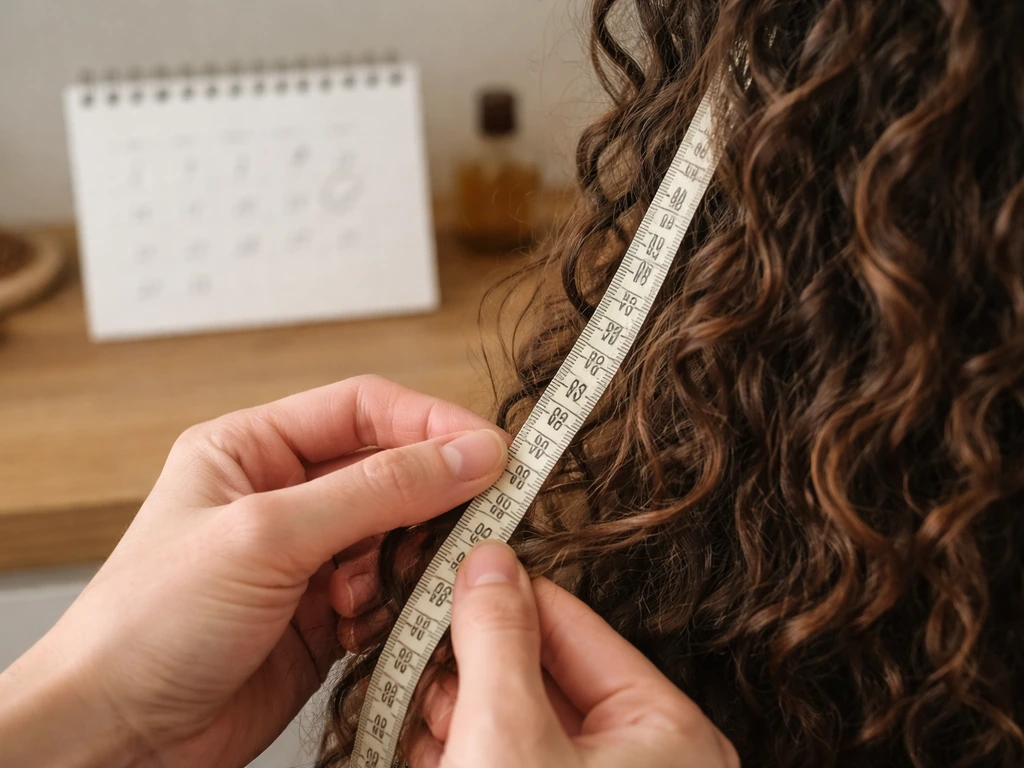
At roughly half an inch of growth per month, here's what to realistically plan for:
- 3 months: about 1.5 inches of new growth (short regrowth visible but not yet curl-forming for most)
- 6 months: about 3 inches (curl pattern beginning to establish in gray sections; shrinkage still major)
- 12 months: about 6 inches (real length to work with; color line becomes manageable or cuttable)
- 18–24 months: enough length to complete most grow-out goals, especially from short starting points
Trimming does not make your hair grow faster. Hair grows from the follicle, not the ends, so cutting has no effect on the growth rate. What trimming does is prevent split ends from traveling up the shaft and snapping off, which would make the hair appear not to grow. For curly hair, small trims every 10 to 14 weeks work well because curl patterns disguise minor length changes while keeping the shape from going chaotic.
If your ends are very damaged or you have uneven layers from a previous cut, more frequent small trims (sometimes called dusting) every six to eight weeks can remove just a millimeter or two without sacrificing meaningful length. The key is communicating clearly with your stylist: you're growing out, so you want the absolute minimum removed while controlling splits and shape.
Troubleshooting common gray curly hair problems
Dryness and that metallic or wiry feeling
This is the most common complaint and it's directly tied to the fiber-level changes in gray hair. The cuticle is rougher, moisture escapes faster, and without melanin to help buffer the hair's internal chemistry, the strand can feel course or almost metallic. The fix is consistent, deep moisture: weekly conditioning masks, a leave-in conditioner every wash day, and sealing with a light oil or butter after styling.
If you want your grow-out to look polished, start by building a routine around deep moisture and gentle handling from wash day onward. Glycerin-based products are excellent humectants for gray hair in moderate humidity environments. Avoid heavy silicones without regular clarifying washes, as they build up on the already-rough cuticle and add to dullness.
Uneven curl regrowth and pattern mismatches
If your gray hair grows in a noticeably different curl pattern than your pigmented hair, you're not imagining it. The texture shifts are real and happen because the fiber's mechanical properties change with pigmentation loss. The practical workaround is product-based: applying a stronger-hold gel or curl cream specifically to the gray sections can coax them into a pattern that's closer to your remaining curl pattern. Diffusing on low heat also helps blend two curl patterns more than air-drying. Over time, as the gray becomes the majority of your hair, you'll adjust your routine to your new curl type rather than trying to match the old one.
Scalp changes during the gray transition
Sebum production often shifts as hair grays, and some people notice increased dryness at the scalp, increased flaking, or in some cases more oiliness than before. If flaking increases, a gentle medicated shampoo used at the scalp once every week or two (with conditioner still applied to lengths) is usually enough to manage it without over-stripping. Scalp massages during washing improve circulation and can help keep the scalp environment healthy without any special products. If scalp symptoms are significant or persistent, a dermatologist can rule out seborrheic dermatitis or other conditions that sometimes emerge or worsen during the gray transition.
Porosity confusion (gray hair absorbs products unpredictably)
Gray hair can behave inconsistently with products because it has aspects of both low and high porosity. It may resist absorbing deep conditioner at first (low-porosity behavior) but then dry out quickly after (high-porosity behavior). Applying conditioner to hair that's been lightly warmed (from a warm water rinse or a heat cap during deep conditioning) helps open the cuticle enough to let moisture in. Rinsing with cooler water afterward helps seal the cuticle to reduce rapid moisture loss. This two-step temperature approach is a practical fix many people find genuinely helpful for stubborn gray sections.
Your next steps starting today
Start with the routine: swap to a moisturizing, sulfate-free shampoo and add a weekly deep conditioner if you haven't already. Commit to your trimming schedule (mark the next date on your calendar now) and decide your color approach so you're not making it up fresh every time you see your roots in the mirror. If you're in the early awkward phase, pick one go-to style for wash days that works with your current length rather than fighting it.
Gray curly hair that's well-moisturized and intentionally styled looks genuinely beautiful at every stage of the grow-out. If you're transitioning from dyed curls, use the same gray-focused strategy to plan your grow-out timeline and manage the color line as it appears how to grow out colored hair to gray. The goal isn't to get through it as fast as possible; it's to feel good in your hair while it happens.
FAQ
Can I trim the color line (or have a stylist shape it) without ruining my grow-out?
Yes, but do it with a plan. For gray curly hair, start the color line work when the new growth is long enough to avoid harsh, thin “root-only” coverage, and ask your stylist to use a formula that matches your undertone rather than just the visible shade. If you are trying to blend, request a shadow-root style (softened root zone) so you are not locked into constant all-over touchups as the gray expands.
What should I change in my routine if my gray curls shrink more and get frizzy faster than my colored hair?
Treat gray sections as a separate texture and adjust during the week. If your curls are shrinking more, frizzing sooner, or feeling rough after the same routine, add a leave-in plus a light gel on damp hair specifically on the gray areas, then reduce product on the still-pigmented parts if they feel coated or heavy. This targeted approach prevents you from over-conditioning the whole head when only certain zones need help.
Does trimming help my hair grow faster, or does it only prevent breakage?
Not exactly, but you can reduce breakage so growth is more visible. Use detangling slip and sectioning every wash, avoid combing dry, and consider “dusting” only the damaged ends (a minimal amount) rather than longer aggressive trims. If you notice split ends creeping upward, it usually means your ends need more protection, not that your hair growth rate decreased.
Will toner or purple shampoo work the same way on gray curly hair, and how do I prevent uneven color?
You can, but avoid copying a straight-hair toning routine. Gray curly hair often grabs toner unevenly because curl clumping changes where pigment lands, and dry or porous strands can over-deposit color. If you tone, do it on small sections, use a conditioner-based application method, and rinse thoroughly while curls are still defined so the result looks consistent across the pattern.
Is patch testing still necessary if I used dye products before?
Patch testing matters more as you transition because gray hair can respond differently to chemicals. If you have not colored recently or you are using a new dye line, test behind the ear or on a small hidden section per product instructions, then wait the full recommended window before deciding on a full application. Also, avoid doing DIY coverage and a strong protein treatment in the same week, since both can increase stiffness and breakage risk on already-dry gray sections.
What can I do if my gray transition causes more flaking or scalp irritation?
If your scalp feels drier with flaking, prioritize scalp-targeted care before adding more heavy conditioners. Use a gentle sulfate-free cleanser on the roots, and if flaking increases, use a medicated shampoo at the scalp on a controlled schedule (for example, once weekly or every other week), while keeping conditioner on mid-length to ends only. If itching, thick scales, or persistent redness show up, consider a dermatologist visit to rule out seborrheic dermatitis.
Why does deep conditioning sometimes help one week but my gray hair dries out quickly the next?
Yes, that two-step temperature approach is often helpful. Warm water or a brief warm-water rinse during deep conditioning can improve moisture penetration, then rinse with cooler water at the end to reduce rapid moisture loss. Skip hot tools during the same window if you can, because heat can worsen dryness for gray fibers even when the cuticle looks “closed.”
How should I use oils or butters on gray curly hair without making it look dull or heavy?
Use it as a styling scaffold, not an all-purpose fix. After moisturizing, apply leave-in to damp hair, then use gel to help curls set and reduce frizz, and finish with a small amount of light oil or butter only where you need sealing (usually ends and the outer layers). Too much oil on gray hair can make it look dull or weigh down curls, especially on low-porosity-leaning sections.
What’s the best way to manage the months when my gray is too short to style but too noticeable to ignore?
If you have very short gray growth, protect it with consistent shape control. Try a spritz-and-scrunch routine, use a curl-activating cream daily on damp hair, and choose protective styling that does not pull at the roots (soft headbands, scarves, and loose up-dos). Avoid tight hairstyles that expose uneven short layers, since they increase visible contrast and can create traction breakage.
How do I talk to my stylist so my cut supports the grow-out instead of resetting my progress?
Keep your stylist communication specific: ask for “minimum removal for split ends, preserving shape for growth.” Bring photos of what you want your silhouette to look like at the end of the awkward stage, and mention that you are managing mixed texture (gray and colored). This helps your stylist avoid over-layering or taking too much weight from one side, which can make curl clumping look more uneven.