
The best hair colour for growing out grey is one that narrows the contrast between your natural regrowth and your existing dye, so the grow-out line becomes almost invisible. In practice, that usually means choosing a shade one to two levels lighter or ashier than your current base, or switching to a technique like balayage, highlights, or a shadow root that builds in a gradual fade rather than a hard edge. You do not need to keep touching up roots every four weeks forever, the whole point is to pick a strategy that buys you more time between appointments while your grey comes in on its own terms.
Best Hair Colour to Grow Out Grey Without Harsh Lines

Marcus Vickers
30 May 2026
What 'best hair colour to grow out grey' actually means
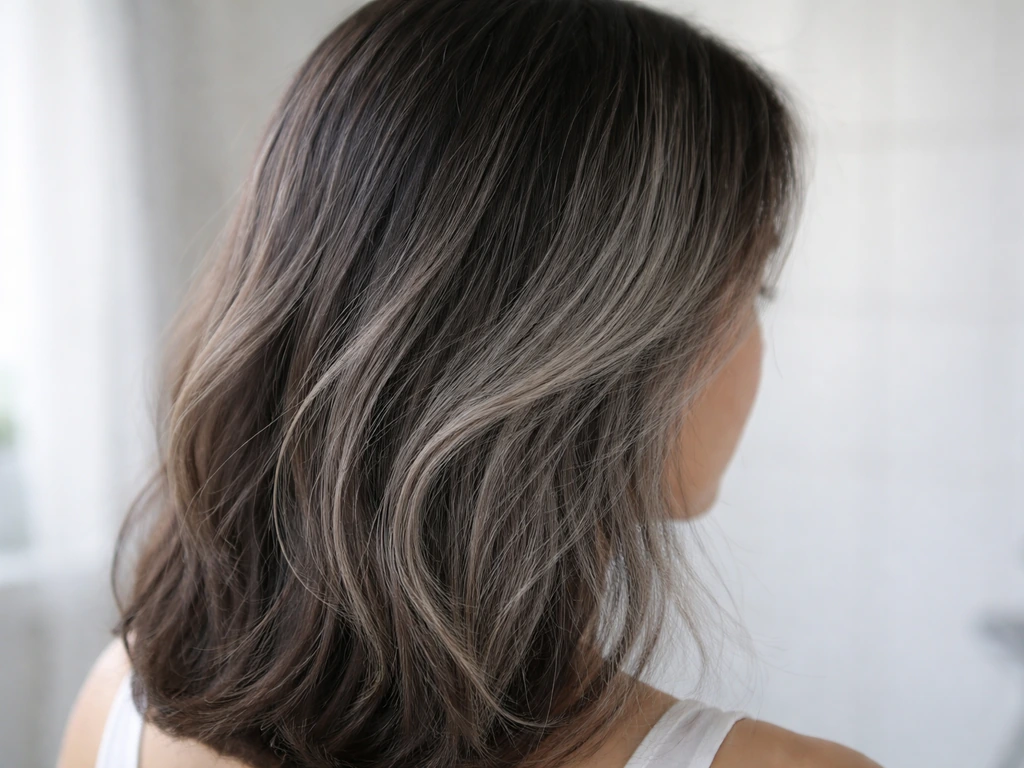
There are two different goals that people mean when they search this. The first is natural regrowth: you want to stop dyeing entirely and let your grey come in, but you need a bridge colour that makes the transition less jarring. This includes using a cool, grey-friendly plan so you can grow out your colored hair to gray with softer, less noticeable regrowth lines grow out colored hair to gray. The second is ongoing dye coverage: you still want to colour your hair, but you want a shade and technique that makes the regrowth line as soft as possible so you are not sprinting back to the salon every month. Both are valid. The approach you pick depends on which camp you are in.
If you are going fully grey eventually, you want a colour that gradually lightens or desaturates toward your incoming grey so the contrast shrinks over time. If you plan to keep colouring long-term but want low-maintenance roots, you want a shade that blends with grey rather than fighting it. Either way, the core principle is the same: reduce the difference in depth and tone between your roots and the rest of your hair.
Choosing a low-maintenance shade
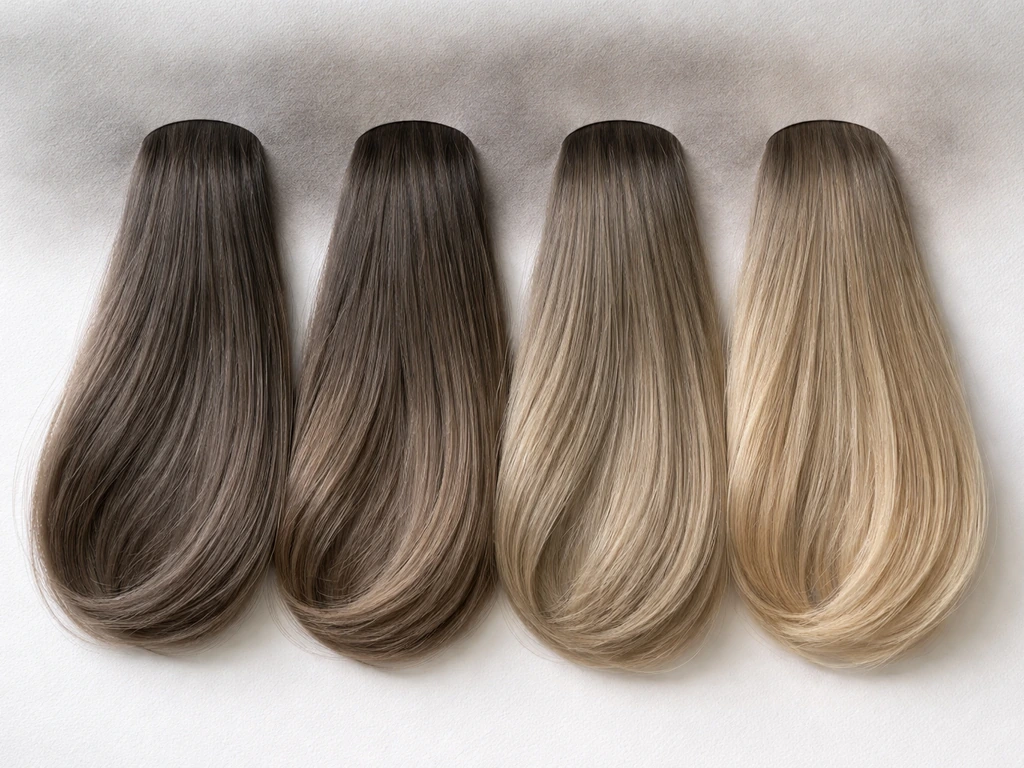
The shades that blend most naturally with grey regrowth tend to be cooler, lighter, or both. Ash brown, mushroom brown, ash blonde, and beige blonde all sit close enough to grey on the colour wheel that a few centimetres of root growth does not scream at you in the mirror. L'Oréal and Wella both flag ash and mushroom tones specifically as grey-friendly because grey patches stand out far less against a cool base than against a warm one. If you have always gone warm (think golden blonde, chestnut, or auburn), this is probably the biggest single change you can make.
Beyond choosing a cooler shade for your base, technique matters as much as the specific colour. Here are the main options and how they stack up for grey grow-out:
| Technique | How it helps grey grow-out | Maintenance window | Best for |
|---|---|---|---|
| Balayage / melted balayage | No harsh regrowth line; grey melts from root rather than creating a demarcation | 12+ weeks | Most hair types, especially those transitioning to full grey |
| Highlights + lowlights mix | Breaks up the regrowth zone visually so it reads as dimension, not stripe | 8–12 weeks | Anyone with patchy or uneven grey distribution |
| Shadow root / root melt | Darkens the first 1–2 cm intentionally, blends downward 3–5 cm with demi-permanent; designed to last 8–12 weeks | 8–12 weeks | People who want dimension without a full highlight service |
| Semi-permanent / gloss | Deposits tone without commitment; refreshes colour and softens grey contrast; lasts up to four weeks | 4 weeks | Under ~40% grey; between permanent colour appointments |
| Root touch-up (permanent) | Full coverage; most uniform result but shortest grace period before regrowth shows | 4–6 weeks | People who want maximum coverage and don't mind regular upkeep |
If you want the lowest possible maintenance, balayage or a highlights-plus-lowlights combination is the closest thing to a 'set it and forget it' colour strategy. Because the colour is placed away from the root rather than painted on from the root down, there is no clean line where dye stops and grey begins. The grey quite literally melts into the lightened sections, and the whole thing looks intentional rather than grown-out.
Matching your strategy to your starting point
If your hair is virgin (never dyed, or fully grown out)
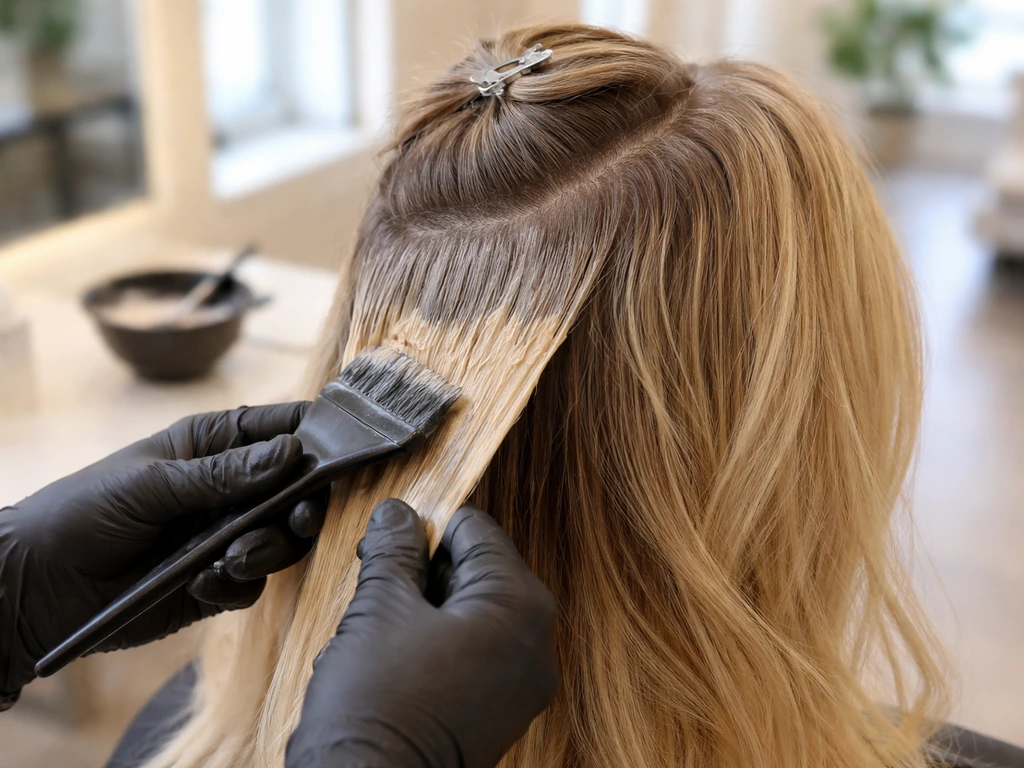
Virgin hair is actually the easiest starting point. You have no existing dye to worry about, so you can jump straight into a technique that blends your natural grey with your natural base. A few well-placed highlights or a gloss in an ash tone can immediately soften the visual contrast without committing to anything drastic. If you are under 40% grey, a semi-permanent colour in an ashy shade close to your natural depth will soften the mix considerably without the hard commitment of permanent dye.
If your hair is previously dyed (especially with permanent colour)
This is where most people are, and it is the trickier scenario. You have a line somewhere on your shaft where dye ends and regrowth begins. The goal is to break that line up. A shadow root using demi-permanent colour in a shade one to two levels darker than your highlights blends the root zone downward, softening the edge. Alternatively, your colourist can use targeted foils or 'greyblending' placement to disguise the friar-tuck-tonsure effect that full-coverage root touch-ups create over time. As your hair grows and gets trimmed, the old permanent dye gradually exits from the ends, and you end up with a much more natural-looking result. For a full step-by-step guide on how to grow out dyed gray hair with minimal contrast and fewer salon visits, use the tips in our dedicated guide how to grow out dyed gray hair? exactly how to grow out dyed gray hair.
If your hair is very dark
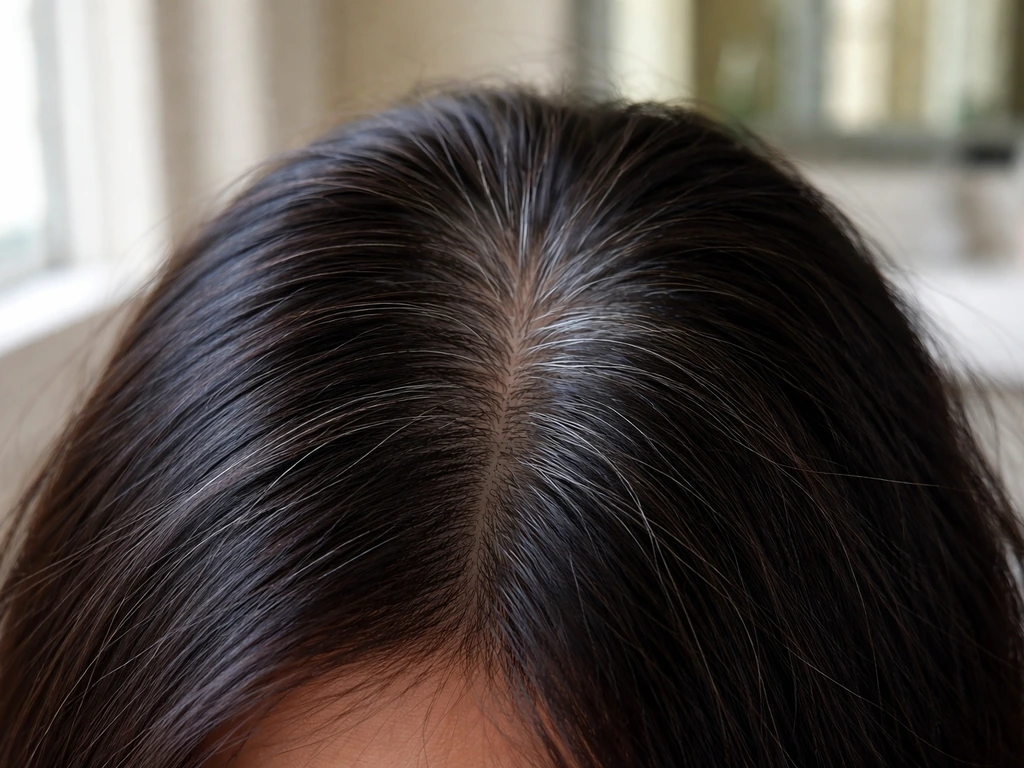
Dark hair creates the highest contrast with grey regrowth, which is why it tends to look the most stark. Going straight to a heavy highlight service might create too much brassiness if there is a lot of warm pigment in your hair. A better route is usually to soften the base first with a semi-permanent shade in a cool dark tone (dark ash brown, for example), then introduce a few highlights around the face and parting to start creating dimension. Avoid warm tones like caramel and gold at this stage, they will clash with the grey rather than harmonise with it.
If your hair is already light or previously highlighted
If you are already blonde or heavily highlighted, you actually have a head start. The light tones are already closer to grey, so the grow-out gap is narrower. The main risk here is brassiness: existing lightened hair can pull warm or yellow, and grey next to brassy blonde looks muddy. Keep the tone cool with a gloss or toning treatment every few weeks, and consider adding a few darker lowlights to give depth so the grey reads as part of a multi-tonal look rather than a contrast stripe. Marie Claire notes that hair glosses and glazes can last about “up to four weeks,” with the timing varying by how often you wash and with the suggestion to follow product directions a gloss or toning treatment every few weeks.
Warm vs cool undertones: how to choose your exact shade
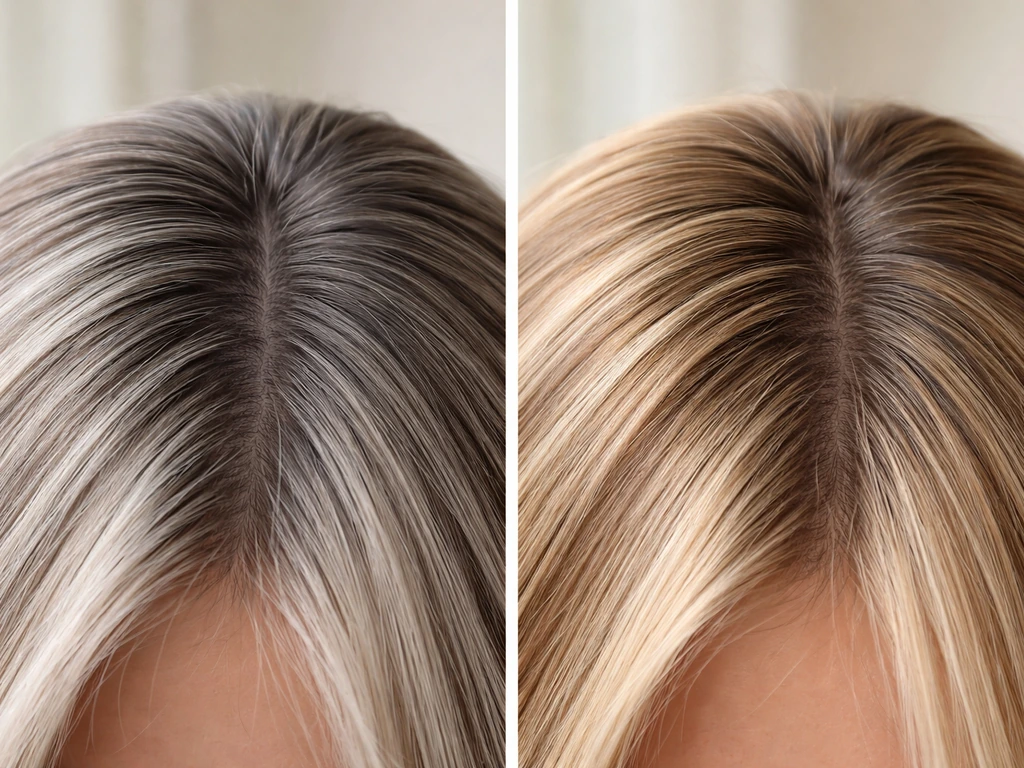
Undertone matching is the step most people skip, and it is usually why a 'grey-blending' colour still looks off. As a general rule, if your skin has cool undertones (pink, rosy, or blue-veined wrists), ash and cool-toned shades will look most harmonious on you and will blend most naturally with grey. If your skin runs warm or olive, a pure ash shade can look flat or greenish, you may want a slightly warmer version of an ashy tone, like a warm mushroom or a soft wheat blonde, rather than a stark platinum or blue-toned ash. The point is not to go dramatically warm (that clashes with grey), but to find a tone that is cool enough to blend grey without draining colour from your face.
When to dye, how often, and how to avoid harsh lines
Timing depends entirely on your technique. If you are doing root touch-ups with permanent colour, you are looking at every four to six weeks before regrowth becomes noticeable. That is a lot of appointments and a lot of chemical processing over time. If you switch to a shadow root with demi-permanent, you buy yourself eight to twelve weeks between visits. Balayage and highlights push that out further, often to twelve weeks or more, because there is no crisp regrowth line to begin with.
To avoid harsh demarcation at home, do not apply fresh permanent dye directly over previously dyed lengths more than necessary. Demarcation happens when the colour at your roots is a visibly different depth or tone to the hair below, creating a band. Shadow root technique addresses this deliberately: you darken the root intentionally by one to two levels with a demi-permanent formula mixed with a low-volume developer (10 or 20 volume), then blend it downward three to five centimetres, so no hard line forms. Between salon visits, root touch-up sprays, powders, and colour-depositing conditioners can bridge the gap visually without adding more permanent colour to already-processed hair.
Styling through the awkward grow-out phase

Colour strategy only gets you so far. The way you cut and style your hair during the grow-out period has a huge impact on how obvious the transition is. This is exactly the kind of thing that trips people up, because the instinct is often to avoid the salon entirely, but strategic trims and style adjustments can make months feel far less painful.
Layers and texture
Layers break up the horizontal line that shows where your colour ends and your grey begins. A blunt cut, by contrast, puts that line on full display. Ask for soft, face-framing layers or textured ends the next time you are in. They scatter light differently and make colour transitions read as dimension rather than regrowth. If your hair is curly or wavy, the natural texture already does a lot of this work for you, letting it sit in its natural state rather than straightening it will make the colour variation look intentional. If you want a step-by-step plan for the awkward phase, see how to grow out gray curly hair for timing, products, and salon options curly or wavy.
Bangs and partings
Your parting is where grey regrowth is always most visible. Switching from a deep side part to a centre part (or vice versa) exposes fresh grey roots in a different place, and mixing it up periodically stops any one area from becoming a focal point of contrast. If you have bangs, grey at the hairline will show quickly. Soft, curtain-style bangs pushed to the side are more forgiving than a blunt fringe cut straight across the hairline, where regrowth is harder to disguise.
Length and growth stages
Hair grows roughly half an inch per month, so a full transition from root to end on shoulder-length hair takes one to two years. You do not have to white-knuckle that whole period with a visible two-tone look. Getting a trim every eight to ten weeks removes the oldest, most-processed ends and shortens the distance between your grey roots and the colour below. If you are growing out a pixie or short cut, this transition actually works in your favour for grey grow-out, you have much less dyed length to work through. Longer styles give you more to manage, but also more styling options to hide the line with pinned styles, braids, and up-dos.
Keeping greys from looking stripey or dull
Grey hair is naturally more porous than pigmented hair, which means it picks up environmental dullness, minerals from hard water, and product residue faster. The easiest tools to manage this without committing to permanent colour are toners, glosses, and root-shading products.
- Gloss treatments can be applied to any stage of grey grow-out—virgin, previously coloured, or pre-lightened—and typically last around four weeks. They add shine, deposit tone, and soften the look of grey patches integrating with coloured hair. Using one every few weeks between appointments keeps everything looking fresh.
- Toning glosses used at home can be applied weekly to maintain shine and refresh tone, which is particularly useful if your grey is going brassy or yellowing between salon visits.
- Purple or silver/blue-tinted shampoo neutralises yellow and warm tones in grey and lightened hair. Use it no more than once a week—overdoing it causes dullness and dryness. Always follow with a deep conditioner.
- Root-shading sprays, powders, and colour-depositing conditioners are great for cosmetic coverage between dye appointments. They wash out, add no chemical load to hair, and can be matched to your dye shade or to a neutral grey to blend both sides of the grow-out zone.
- A clarifying shampoo wash before using a colour-depositing conditioner helps the product absorb more evenly, avoiding patchy tone buildup.
Troubleshooting the most common problems
Brassy grey or warm-looking roots
If your grey roots are coming in with a yellow or warm cast instead of a clean silver, the most likely culprits are hard water mineral deposits, product buildup, or exposure to UV and heat. A clarifying wash followed by a purple or blue toning shampoo (once a week, not more) will neutralise the warmth. If it persists, a cool-toned gloss or toning treatment applied every three to four weeks will keep it in check.
Mismatch between cool grey roots and warm dye
This is one of the most common reasons a grow-out looks uncomfortable rather than deliberate. If your existing dye has golden, red, or warm-brown tones and your grey roots are coming in cool and silver, the two tones simply do not sit together naturally. The fix is to shift your dye shade in a cooler direction over the next couple of applications, gradually neutralising the warmth in your mid-lengths and ends rather than making a sudden change, which can look jarring in the other direction.
Patchy roots or uneven grow-out
Grey does not usually come in evenly, it tends to cluster at the temples, the parting, and the front hairline first. This uneven distribution can make root touch-ups look patchy even when applied carefully. A highlights-and-lowlights approach handles this much better than a single-process root touch-up, because the woven foil placement works with the patchy grey distribution rather than against it. If you are DIY-ing, a colour-depositing conditioner in a neutral grey or ash shade can blend patchy areas by depositing a thin veil of tone over everything without the commitment of dye.
Damage from frequent root touch-ups
If you have been doing permanent root touch-ups every four to six weeks for years, the cumulative processing can lead to breakage, dryness, and uneven porosity, which ironically makes colour results even patchier over time. This is one of the strongest practical arguments for switching to a lower-maintenance technique. A shadow root with demi-permanent colour processed with 10 to 20 volume developer is significantly gentler than permanent colour with 30 or 40 volume, and it buys you twice the time between appointments. Pair it with a weekly bond-building or deep conditioning treatment to start restoring integrity to the hair shaft while the grow-out progresses.
What to ask for at the salon vs what you can DIY
Some parts of this process genuinely benefit from a professional, and others are easy enough to manage at home. Knowing which is which saves you money and prevents mistakes.
| Task | Salon or DIY? | Notes |
|---|---|---|
| Balayage or full highlight service | Salon | Placement and blending technique matter a lot; hard to replicate at home |
| Shadow root / root melt | Salon for first application; DIY possible for maintenance | Learn the technique from your colourist before attempting solo |
| Semi-permanent colour refresh | DIY-friendly | Lower risk than permanent; easier to correct if tone is slightly off |
| Toning gloss | DIY-friendly | Many at-home glosses work well; follow instructions precisely |
| Purple/silver shampoo | DIY | Easy; just do not overuse |
| Root touch-up spray or powder | DIY | Purely cosmetic; washes out |
| Colour-depositing conditioner | DIY | Clarify first for even results |
| Major colour correction (e.g., removing years of warm dye) | Salon | Risk of damage if done incorrectly at home |
When you do go to the salon, be specific about what you want. Rather than asking for 'grey blending,' describe the result: you want less visible regrowth, you want the tone to shift cooler, and you want to extend the time between appointments. Ask your colourist about a shadow root, balayage, or a highlights-and-lowlights combination based on your starting point. If you are heading toward full grey, say that too, it changes the approach significantly, and a good colourist will map out a phased plan rather than doing a single-process that keeps you locked into permanent colour indefinitely.
If you are curious about the full journey, from managing colour transitions all the way through to embracing your natural grey, the related topics of growing out grey hair gracefully, using lowlights to ease the transition, and handling specific textures like curly grey hair are all worth exploring depending on where you are in the process. The core principle throughout is the same: the grow-out period is manageable, it just takes the right plan for your specific starting point. For a smooth result, use strategies and salon techniques tailored to how to grow out grey roots gracefully grow-out period.
FAQ
How do I choose a grey-growout shade if my grey is starting to look patchy or spotty? (temples, hairline, part)
If you go “too close” to your natural grey in one appointment, the result can look ashy at the roots but warmer or darker underneath (the opposite of what you want). A safer option is a staged shift: choose an ash or mushroom base that is 1 level lighter than your current regrowth, then re-tone/gloss lightly at your next visit to keep the blend trending cooler without locking in a dramatic color change.
What should I do if I missed an appointment and my roots have grown out more than expected?
For most people, you should avoid mixing full permanent root color with new permanent dye over already-processed mid-lengths and ends. Permanent color can create a darker band near the root that becomes more obvious as it grows out. Instead, ask for demi-permanent for a shadow root, or use a root-shading product or color-depositing conditioner between appointments to keep the transition soft.
Can I use toners or glosses to bridge the grow-out instead of re-dyeing my roots?
Yes, and it often helps even when you are not using a strong dye plan. If your ends are warmer than your new ash base, a neutralizing gloss can bring them closer in tone, which makes the regrowth line less visible. The key is to use a color-depositing toner/gloss rather than a full-process dye, so you do not keep adding permanent pigment to already-faded ends.
How often should I tone or gloss during a grey grow-out?
If you are trying to keep a low-maintenance schedule, aim for “less frequent, lighter interventions.” For balayage or highlights, tone only as needed (often every 6 to 10 weeks for many people). For shadow roots with demi-permanent, many schedules land around 8 to 12 weeks. Always base timing on how warm your blonde gets or how clearly the regrowth line appears in your lighting.
My grey looks yellow and my highlights look warm, but I already chose an ash shade. Why?
Brassiness is commonly driven by oxidation plus minerals, especially if your water is hard or you use heat frequently. Before blaming your dye choice, do a clarifying wash to remove buildup, then use a purple or blue toning shampoo once weekly and consider a cool-toned gloss every 3 to 4 weeks. If the warmth persists even after buildup is cleared, you may need a slightly more neutral or ash-leaning formula.
What if my skin undertone is warm or olive, but I want the best hair colour to grow out grey?
On most clients, the best blend comes from balancing both depth and undertone. You want the roots to be cooler enough to “agree” with grey, but not so blue that it makes skin look sallow. If you have warm or olive undertones, choose a warm-mushroom or soft wheat that is still muted, then let your grey do the brightening. A good colorist will confirm undertone with a small test section first.
Will layers make the grey transition easier, or can they make it look worse?
Yes, and it can backfire if the layers are cut too short or too blunt while your grow-out is in progress. Short, choppy layers can make the contrast look “chunky” because every movement exposes a different depth. Instead, ask for soft, face-framing layers or textured ends, keep length transitions gradual, and avoid drastic cutting right before a big color change.
How can I reduce the visibility of my regrowth line if I have an obvious part (or bangs)?
If you part your hair in the same place daily, that area becomes the most visible “fresh grey zone.” Switching between a center and a slightly offset part, and sometimes using volume at the roots, helps the regrowth read as a blended style instead of a line. For bangs, curtain-style placement is usually more forgiving than straight-across blunt fringes during grow-out.
I have dark hair. Is there a way to go grey-growout friendly without making everything look high-contrast?
Dark bases can look stark because grey has no pigment to camouflage the contrast. A practical workaround is to soften the base first with a cool dark ash tone, then add a few strategic face and part highlights (or lowlights, if needed) so the grey sits inside a multi-tonal map rather than against one uniform dark. Avoid going straight to heavy platinum highlights if your hair tends to pull warm.
I’m blonde already. What is the biggest mistake when growing out grey from a light base?
Not always. If your hair is already heavily lightened or naturally very light, you might still get a muddy effect if the lighter hair is too warm while the grey is too cool. Use a cool gloss/toner to control yellowing, then consider adding subtle darker lowlights to create depth so the grey reads as part of the overall spectrum. If your grey is sparse, avoid over-toning the entire head, and focus on the areas that will show most as regrowth emerges.
When I’m ready to stop dyeing completely, what is the best way to avoid an abrupt grow-out phase?
If your goal is full transition to natural grey, focus on “desaturating” rather than just changing brightness. Over time, you want a gradual move toward a cooler, less saturated tone that lets grey blend in as it grows. Many people do best with a phased plan (shadow root or low-maintenance blend first, then reducing dye coverage later) rather than attempting a sudden full cessation with no bridge tone.