
Growing out grey roots gracefully is absolutely doable, and you don't have to white-knuckle your way through months of a harsh two-tone look to get there. The key is knowing what's coming, deciding early whether you want to fully embrace the grow-out or soften it with light blending, and then having a styling and maintenance plan for each stage. If you're wondering how to grow out grey hair gracefully, this guide's approach to choosing your blend level and planning each stage is the same foundation you should build on. This guide walks you through all of it, month by month, so you can make confident decisions instead of panicking every time you catch yourself in a mirror.
How to Grow Out Grey Roots Gracefully: Step-by-Step

Marcus Vickers
24 Mar 2026

What to expect month by month during the grow-out
Hair grows at roughly 0. Human hair growth is commonly estimated at about 1 cm per month on average, though individual growth varies by factors like age and sex blank" rel="noopener noreferrer">Hair grows at roughly 0.. 5 inch (about 1.25 cm) per month on average, though the actual range is wider than most people expect, anywhere from 0.6 cm to over 3 cm per month depending on genetics, health, and age. That average, though, is a useful planning number. Here's what that means in practice for the best hair colour to grow out grey.
| Timeline | Approximate Root Length | What You're Dealing With |
|---|---|---|
| Month 1 | ~0.5 inch (1.25 cm) | Visible demarcation line, especially on dark or heavily dyed hair. Looks like classic 'root show.' |
| Month 2 | ~1 inch (2.5 cm) | The contrast is at its most obvious. This is usually the hardest month emotionally. |
| Month 3 | ~1.5 inches (3.8 cm) | Roots are long enough to part differently and style around. Blending gets easier. |
| Month 4–5 | ~2–2.5 inches (5–6 cm) | You can do a significant chop if you want to speed things up, or start enjoying the silver 'panel' effect. |
| Month 6+ | ~3 inches (7.5 cm) | For shorter styles, you may be mostly transitioned. For longer hair, you're in the blending-out phase. |
The hardest part isn't actually the early months, it's months two through four when the contrast is sharpest and the grey isn't long enough yet to look intentional. This is also the phase where most people give up and dye again. Don't. Knowing this phase is coming, and that it has a defined end, is half the battle.
Choosing your approach: fully grow out or blend as you go
Before you do anything else, decide which camp you're in. Both approaches work, and there's no wrong answer, but they require different strategies.
Full grow-out (cold turkey)
This means stopping color entirely and letting your natural grey come in on its own. It's the most low-maintenance approach long-term, and if your grey is striking, salt-and-pepper, or bright silver, it's often the most rewarding. The trade-off is that the contrast phase is more visible and lasts longer the darker your previous color was. If you have shorter hair, this is usually the faster and more painless option, since regular trims remove the colored ends much quicker.
Blending as you go (transitional approach)
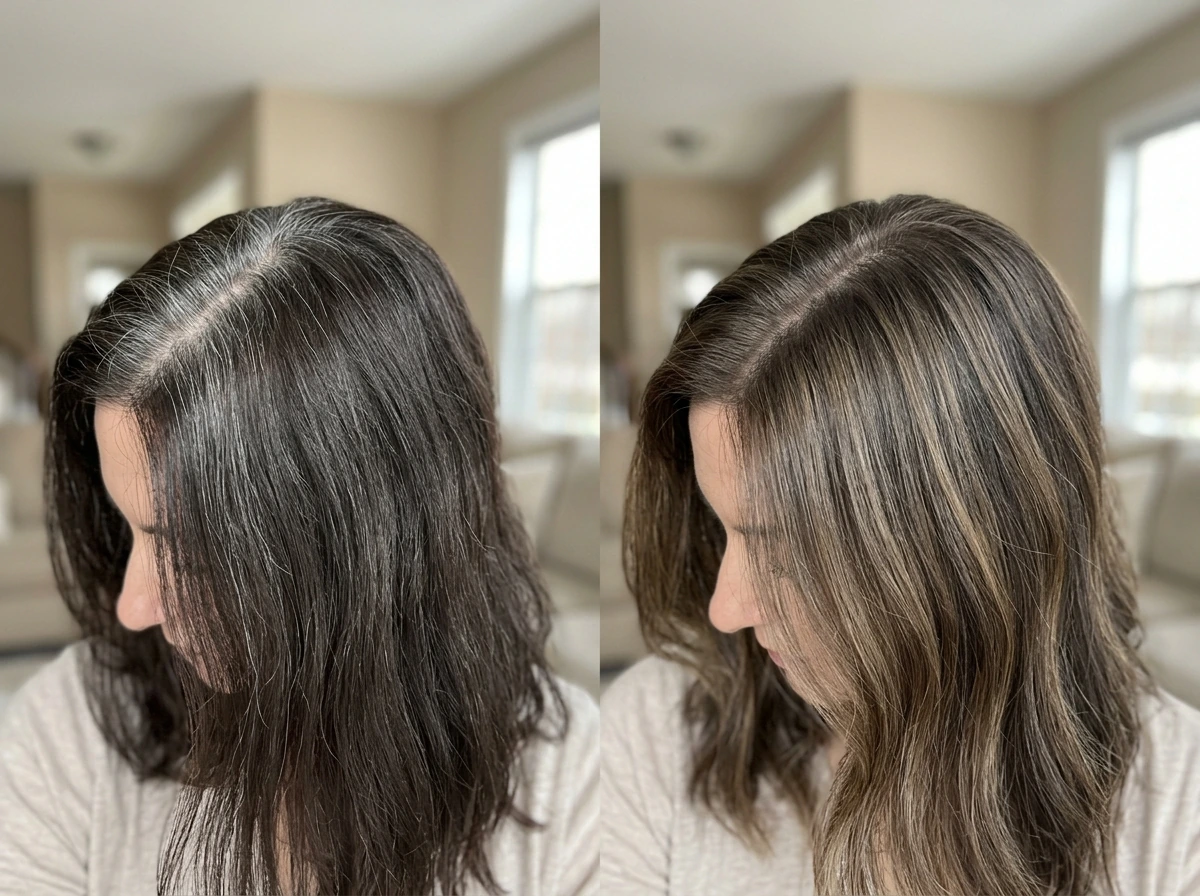
This means using color techniques to soften the line between your grey roots and your existing color while you grow out. You're not re-coloring for coverage; you're using techniques like highlights, lowlights, root shadows, or glosses to blur the boundary so the transition looks more deliberate. This is ideal if you have longer hair, very dark ends, or strong contrast between your grey and your dyed shade. It takes more upkeep than going cold turkey, but it lets you stay in control of how you look during every stage.
If you're unsure which to choose, a good rule of thumb: the more contrast between your grey roots and your colored lengths, and the longer your hair, the more you'll benefit from some blending during the transition. If your hair is short or your grey is already a significant percentage of your natural color, going cold turkey is usually simpler and faster.
Styling and parting tricks that make roots look intentional
The biggest visual problem with growing out grey roots is a sharp, obvious demarcation line. A few simple adjustments to how you style your hair can make a dramatic difference, especially in the first three months.
Change your part
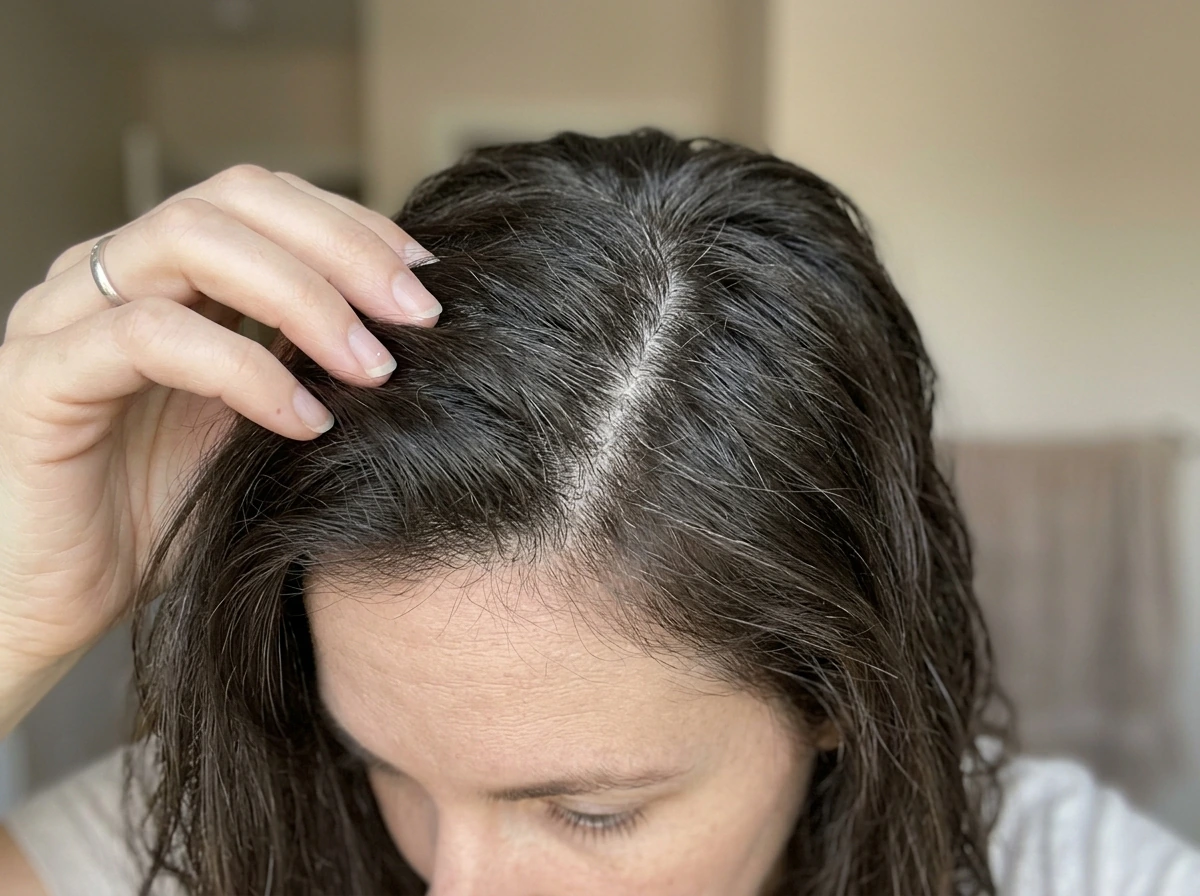
If you've worn a consistent part for years, switching sides immediately disrupts the line where root contrast is most visible. A center part, a deep side part, or a zigzag part all scatter the regrowth line so it doesn't read as a hard edge. Even a slight shift of half an inch can make roots look softer.
Use updos and braids strategically
In the early months, ponytails, buns, and loose braids are your best friends. They push the most visible root area (the hairline and crown) upward or back, where it blends into the volume of the style. Loose, undone versions of these styles actually hide roots better than tight, slicked-back ones, because the texture breaks up the contrast line. If you have bangs that are growing out simultaneously, side-swept styling helps camouflage root regrowth near the forehead.
Embrace texture and waves
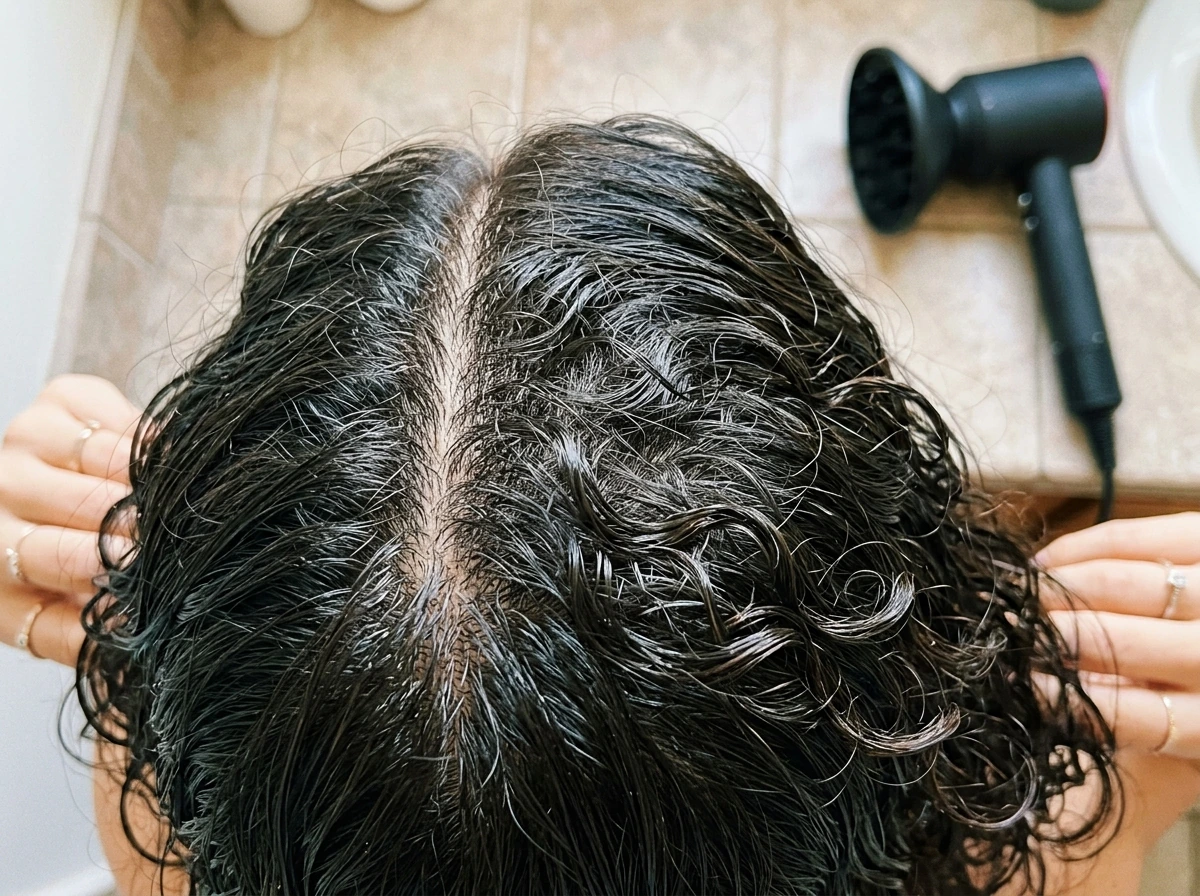
Sleek, straight styles make the demarcation line look sharper. Adding waves, curls, or texture (even with a diffuser or a loose braid-out on damp hair) breaks up the visual line between your grey roots and colored lengths so the transition looks more gradual and organic. This works for all hair types, not just naturally wavy or curly hair.
Don't overlook root powder or cover-up products
For days when you just need the root line to disappear, temporary root cover-up powders or sprays are legitimate tools. They wash out with your next shampoo and can tide you over between styling sessions or important events. They're not a long-term strategy, but for the months when your roots are at peak awkwardness, they give you breathing room.
Color techniques to soften the transition (without committing to full coverage)
If you're taking the blending approach, you have several options depending on how subtle you want to go. These aren't about hiding your grey, they're about making the transition look like a deliberate choice rather than a grow-out accident.
Root shadow or root tap
A root shadow applies a slightly darker, blended tone at the root area so the line between grey and colored hair is blurred rather than sharp. A root tap is a smaller, more localized version of the same technique. Both are done with a demi-permanent color (no full lift), so they're gentler on hair and fade gradually rather than growing out with a hard line. These work especially well if your grey roots are coming in against a lighter dyed base, like a blonde or light brown.
Highlights and lowlights
Adding highlights or lowlights through your lengths, rather than at the roots, brings the color of your ends closer to the natural mix coming in at the top. If your natural grey is salt-and-pepper or silver, adding some lighter pieces through darker ends creates a more cohesive blend. Lowlights in the opposite direction (darker strands added if your ends are lighter) can also bring more depth and dimension so the two-tone contrast is less jarring, which is a great way to help with how to grow out gray hair with lowlights. If you want a smoother transition, use the same lowlight approach alongside the rest of your grow-out plan how to grow out gray hair with lowlights. This is one of the most effective strategies for longer hair.
Gloss or toner
A hair gloss or toner won't change your root line, but it can unify tone across both your grey and your colored lengths, making the whole look more intentional. Glosses typically last around 28 shampoos (roughly 6 to 7 weeks if you wash four times a week), so a refresh every 4 to 6 weeks keeps things looking polished. At-home glosses exist and work reasonably well for this purpose if salon visits aren't practical every month.
When to visit the salon during a grow-out
If you're doing any active blending, a general booking cadence of every 6 to 8 weeks makes sense for keeping the transition looking intentional rather than neglected. If you're going cold turkey, your salon visits shift entirely to trims and treatments, which you'll want every 8 to 12 weeks depending on how fast you're trying to move colored ends out.
Your maintenance routine during regrowth
Growing out grey roots isn't just a color decision, it's also a hair health project. Grey hair behaves differently than pigmented hair, and if your lengths are still colored or previously processed, you're dealing with two different textures and porosity levels on the same strand.
Deep condition consistently

Grey hair naturally produces less sebum than pigmented hair, which makes it drier and more prone to a wiry or stiff texture. At the same time, your colored lengths are likely more porous from processing. Weekly deep conditioning is the single most effective routine step you can take during this transition. It won't make grey hair behave exactly like pigmented hair, but it will significantly reduce the stiffness, frizz, and dullness that make grey roots look coarse rather than polished.
Use purple or blue shampoo strategically
If your grey is coming in warm (yellowish or brassy) or you have blonde or lightened lengths, purple shampoo helps neutralize unwanted warm tones. Use it one to two times per week, leaving it on for one to three minutes depending on how stubborn the brassiness is (start with one minute if your hair is fine or porous to avoid over-toning). Don't use it every wash, it's drying and can leave grey hair looking ashy or dull if overdone.
Trim consistently, even if you're growing length
Regular trims every 8 to 10 weeks remove the most-processed, most-damaged ends and keep the grow-out looking intentional rather than ragged. If you're growing out both length and color simultaneously, tiny trims (0.25 to 0.5 inch) remove splits without sacrificing length progress. For shorter styles like pixies or bobs, more frequent trims of every 6 to 8 weeks will help shape the transition and move colored ends out faster.
Avoid excessive heat during the transition
Grey hair has reduced cuticle protection, which means it loses moisture faster and is more vulnerable to heat damage than it was when it was pigmented. If you're using heat tools, use a protectant every single time and keep temperatures at or below 375°F (190°C). Air drying or diffusing is genuinely better for grey hair during this transition, not just aesthetically, but for long-term texture and health.
Managing the most common grow-out headaches
Strong contrast between grey roots and dark or colored ends
This is the most common complaint, especially for people who've been coloring dark brown or black hair. The fastest fix is to add warm and cool tones through the ends (highlights or lowlights, depending on your base) to break up the stark difference. If you'd rather not touch color at all, leaning into texture, updos, and consistent part-switching gets you further than you'd expect. The contrast does fade visually as more grey grows in, even if the actual color difference stays the same, because your eye adjusts to reading it as a gradient.
Brassiness in grey or lightened sections
Yellow or warm tones in grey hair are a real issue, especially in harder water or with sun exposure. Purple shampoo on a regular one-to-two times per week schedule handles most of this. A toning gloss at the salon every 4 to 6 weeks handles the rest, and also adds shine that makes grey look polished rather than dull.
Wiry or different texture at the roots
Grey hair is naturally drier and sometimes coarser because it lacks the pigment-related sebum production of your previous hair. This isn't permanent damage, it's just how grey hair is. Weekly deep conditioning and a leave-in conditioner or hair oil on the roots (not just the ends) make a significant difference. A smoothing cream or light pomade can also tame the wiry flyaway effect without weighing hair down.
Uneven regrowth or patchy grey
Almost no one greying in has perfectly even regrowth. Some areas come in faster, some patches are denser silver while others are still mostly dark. This actually works in your favor during a grow-out because it naturally creates dimension rather than a flat block of color. If the patchiness bothers you, a few strategically placed highlights or lowlights in the uneven sections blend things out without requiring a full color service.
Porosity mismatch between roots and ends
Your natural grey roots and your previously processed ends likely absorb moisture, color, and product differently. The ends are usually more porous from chemical or heat treatment, which means they dry out faster and may grab toner or gloss differently than your roots do. Using a pre-treatment or bond builder before any color service during the transition helps even this out. For daily care, apply richer products to your ends and lighter products (or the same product in smaller amounts) at the roots.
Stage-by-stage milestones to keep you going
It helps to know what 'done' looks like at each stage so you're not measuring yourself against a finished result the whole time. Here's a realistic breakdown of when things start to look cohesive again.
- Month 1 to 2: This is the hardest visual stage, but it's also the shortest in retrospect. Focus on styling strategies (part changes, texture, updos) and don't make permanent decisions about quitting the grow-out during this window.
- Month 3: Roots are long enough that blending techniques start to have real impact. If you've added highlights or a gloss, this is when you'll feel the strategy working. The root line becomes easier to style around.
- Month 4 to 5: For shorter hair, you may be approaching the finish line. The grey is long enough to be unmistakably intentional, not just 'forgotten roots.' For longer hair, this is when the grow-out starts looking like a deliberate ombré or balayage effect rather than an accident.
- Month 6: Most people at this stage feel a shift in how others perceive the look. It reads as a style choice rather than neglect, and confidence typically follows naturally. Grey hair that's been properly cared for looks genuinely beautiful at this length.
- Month 8 to 12: For longer styles, the bulk of colored hair is now in the lower half or ends. A trim or two at this point can remove much of the remaining dyed length and leave you with a mostly or fully natural result, depending on your starting length.
The most important thing to remember is that there is no universal finish line, only the point where your hair looks like you meant to do it this way. For some people that's month three with a great blending strategy. For others it's month twelve after a significant trim. Both are valid. Your pace, your hair, your call. If you're growing out grey while also navigating length changes from a previous cut, the same patience and stage-by-stage thinking applies across the board, and the styling strategies here work just as well alongside a pixie or bob grow-out as they do with longer hair.
Once you're fully through the transition, the maintenance shifts from managing contrast to simply caring for natural grey hair: regular toning to keep warmth in check, deep conditioning to manage the naturally drier texture, and trims to keep things sharp. That's a much easier routine than what you've been navigating during the grow-out, and it's worth every awkward month to get there.
FAQ
What should I do if my grey grows in patchy and one area looks darker than the others?
If your regrowth starts showing a much darker band than the rest of your roots, treat it like a “local problem” instead of restarting the whole process. For blending, ask for a root tap or root shadow only on that zone, and keep the rest untouched. For cold turkey, shift your part and use waves or a loose braid-out to blur the band until it naturally evens out with length.
How can I tell whether my sharp root line is caused by color contrast or just by how I’m styling my hair?
It usually depends on what created the grey line. If you see a crisp boundary that is color-based, you need blending tools (demi-permanent root shadow/tap, highlights or lowlights placed through the ends). If the line is mostly from contrast and styling, you can often fix it with part changes, texture, and moving the bulk of hair up into styles. A quick rule, if the boundary looks the same when your hair is damp and textured, it is more likely a true color contrast.
How do I adjust toning if my grey starts looking too ashy, dull, or oddly tinted after purple shampoo?
Purple shampoo works best when warmth is the issue (yellow, brassy tones). If your grey is turning violet or dull, scale back to once per week or switch to a lighter formula, and always follow with conditioner. If you are seeing greenish or olive casts, stop using purple for now and switch to a neutralizing clarifying routine before any toning again.
Can I combine bond builders or pre-treatments with root shadow or gloss services, and what’s the safest way to schedule them?
Yes, but approach it strategically. After a bond builder or pre-treatment, schedule demi-permanent root shadow or root tap rather than full lift. Keep glossing separate from heavy root coverage, because too many overlapping deposit-only services can build up and make roots look flat or smudgy. If you wash frequently, ask your stylist for a product plan that fades evenly.
What are the most common scheduling mistakes people make when choosing cold turkey versus blending?
For cold turkey, the biggest mistake is under-planning trims. Even if you are not re-coloring, you still want regular small trims to remove the most damaged ends so the grey looks intentional instead of ragged. For blending, the common miss is extending appointments too far, which can make the root technique fade into an uneven stripe rather than a smooth gradient.
How do I handle a grow-out if my hair is short, like a pixie or a bob?
If you have very short hair (pixie or bob), the quickest path to “graceful” is usually contrast management through texture and frequent shaping. Avoid relying on part switching alone when the regrowth is essentially the whole haircut. Ask for short, frequent trims (every 6 to 8 weeks) and consider a gloss/toner refresh that unifies tone without trying to create a new root line.
Is it okay to dye again mid-grow-out, and how do I avoid making the contrast worse?
If you dye your hair during the transition to “fix” the grow-out, pick a deposit-based option or keep changes targeted, otherwise you can accidentally widen the contrast again. Before any service, decide your end goal (fully embrace vs soften), then tell your stylist you want an even fade plan for the demarcation zone, not just coverage. Always confirm how it will look at 4 to 6 weeks, not only right after coloring.
What’s the best way to dry or style when my grey roots feel wiry and my ends feel different after heat?
Heat can make the roots look coarser and the ends feel different, so you want consistency. Use a protectant every time, keep temperatures moderate, and prioritize air-drying or diffusing. If you must blow-dry, focus on smoothing at the ends and avoid blasting the root area, since grey hair loses moisture faster and can feel wiry at the crown.
Where do root lines usually show most during grow-out, and how do I hide them in updos or with bangs?
If you’re wearing your hair up and noticing a noticeable line near the nape or crown, adjust where the hairline falls rather than only switching the part. Higher buns, loose top knots, and slightly undone styles help hide root visibility at the places you lift most. If bangs are involved, use a side-swept or tucked style so the regrowth near the forehead is broken up by movement.