
Growing out gray hair is doable, and it doesn't have to look rough the whole time. The most practical plan is this: decide early whether you're going cold turkey (full natural regrowth) or doing a gradual blend, pick the right camouflage techniques for the awkward middle months, and Growing out gray hair is doable, and it doesn't have to look rough the whole time.
How to Grow Out Gray Hair: A Step-by-Step Guide

Marcus Vickers
24 Mar 2026

The most practical plan is this: decide early whether you're going cold turkey (full natural regrowth) or doing a gradual blend, pick the right camouflage techniques for the awkward middle months, and build a simple care routine that handles the texture changes gray hair often brings. That's really it. The rest is patience and a few smart styling tricks, and you should also build a simple care routine that handles the texture changes gray hair often brings.
that handles the texture changes gray hair often brings. That's really it. The rest is patience and a few smart styling tricks, and you should also build a simple care routine that handles the texture changes gray hair often brings.
Reality check: what 'growing out gray' actually means
When people search for how to grow out gray hair, they usually mean one of two things: either they've been dyeing their hair and want to stop, letting their natural silver or white regrowth take over, or they have some gray already and want to understand how to manage it as it spreads. Both situations have the same core challenge: contrast. Your new growth doesn't match your existing color, and that line between the two gets more visible by the week.
Hair grows roughly half an inch per month on average. That's about six inches a year. So if you're starting from a full dye job and want to reach your shoulders with mostly natural gray, you're realistically looking at a 12 to 24 month process depending on how long your hair is and how much of the old color you're keeping. Colorists generally estimate a blended transition takes 6 to 12 months, while a full grow-out to a completely natural head of gray can take closer to 2 years. Those aren't scary numbers, just honest ones.
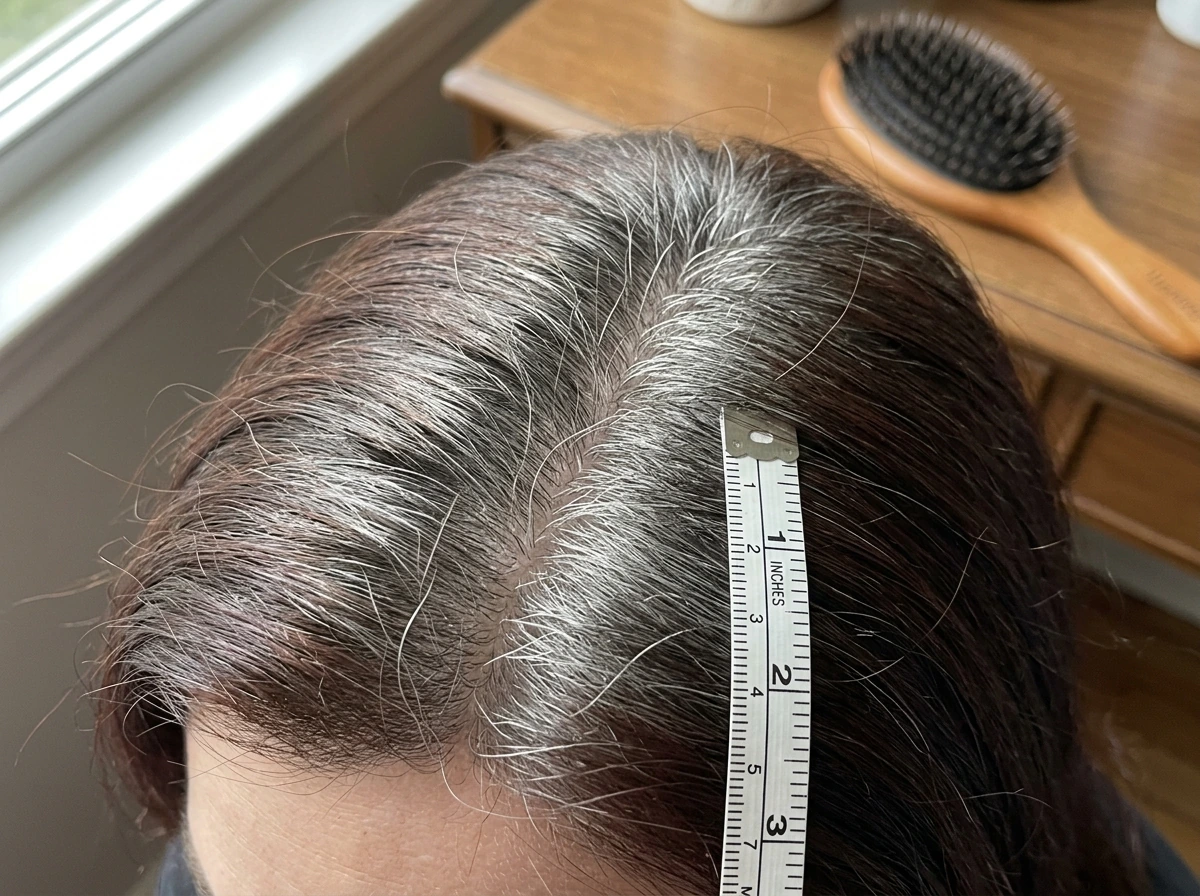
AARP describes the early regrowth phase well: it can look like someone spray-painted your hairline. That's the most visible stage, roughly months 1 through 3, when you have an inch or two of silver root above whatever color you were maintaining. After that, the growth starts to feel less shocking because the contrast line moves further down the shaft and you have more gray to work with overall. Knowing this in advance makes a huge difference, because most people who give up do it in those first few months.
A rough stage-by-stage timeline
| Stage | Approximate Timeframe | What You'll See | Main Challenge |
|---|---|---|---|
| Early roots | Months 1–3 | 0.5–1.5 inches of silver/gray at the root | High contrast, very visible demarcation line |
| The awkward middle | Months 3–8 | 2–4 inches of gray above old color | Uneven blending, possible patchiness |
| Committed transition | Months 8–14 | Gray past the ears or mid-length | Managing two very different textures on the same head |
| Final stretch | Months 14–24+ | Gray dominates, old color only at the ends | Just waiting it out or trimming off the last dyed section |
These stages shift depending on your starting length. If you're already wearing a short cut, you could have a mostly gray head in 6 to 9 months. If you have long hair you're not willing to cut, the full transition can genuinely take 2 years. Neither is wrong, just different.
Prep your plan: blend vs. commit
Before you put down the dye, it really helps to make one foundational decision: are you blending gradually, or are you going fully natural right now? Both are valid, but they need different strategies. Going gradual means you'll use some techniques (toner, root shadow, balayage) to soften the transition line while the gray grows in. Going cold turkey means you stop all color today and use styling and camouflage products to get through the awkward months without permanent dye touching your hair again.
The right choice usually comes down to two things: how dark your current dyed hair is, and how much visible contrast you can tolerate day to day. If you have very dark brown or black dye and silver roots, that contrast is stark and hard to ignore at shorter lengths. A gradual blend is usually more comfortable for that starting point. If you're already lighter, a natural grow-out is much easier to live with from the start.
- Dark hair with silver roots: gradual blend with demi-permanent toner or balayage around the demarcation line is usually the more comfortable route
- Medium brown or lighter: natural grow-out is workable, especially with good styling and temporary cover-up products for bad days
- Short hair (pixie, buzz, or short bob): cold turkey is the fastest option since you'll cycle through the color within months
- Long hair you're keeping: gradual blend saves you from a year-plus of very obvious two-tone hair
It's also worth asking yourself whether you're done with color for good or just taking a break. If you might go back to coloring in a year, a gradual approach with low-commitment products protects your hair from extra processing. If you're fully done, cold turkey plus strategic trims is often the cleanest path.
The best ways to grow out gray hair
There's no single best method that works for everyone, but there are a few solid strategies that cover most situations. Here's how each one actually works in practice.
Natural regrowth (cold turkey)
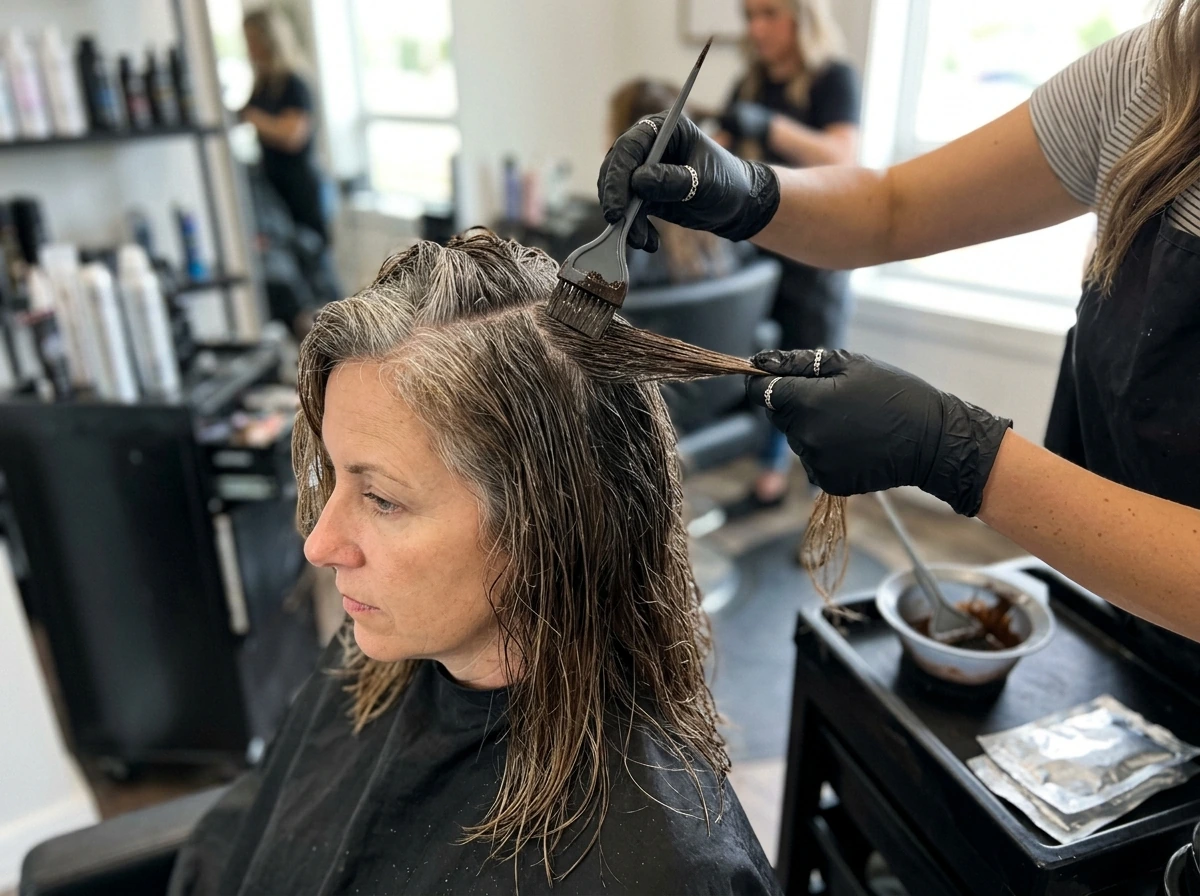
This is exactly what it sounds like: you stop coloring and let your natural gray grow in without any chemical assistance. The upside is zero processing damage going forward, and you're done with the root touch-up cycle permanently. The downside is that the contrast line between your old color and new growth is very visible, especially in the first 3 to 6 months. Temporary root concealers like spray-on touch-up products give you some day-to-day flexibility without adding permanent dye. They wash out, they don't damage anything, and they buy you breathing room on days when the roots feel too obvious.
Gradual transition with demi-permanent color
Demi-permanent color sits on the hair shaft rather than deeply penetrating it, which means it fades out instead of growing out with a hard line. Wella's research describes demi-permanent as ideal for creating a root shadow and blending gray naturally, with some products offering up to about 70% gray coverage while still letting roots grow through gradually without a stark demarcation. This is a great middle-ground option: you're not committing to permanent color, you're softening the contrast, and the grow-out looks intentional rather than neglected.
Root smudge or root shadow technique
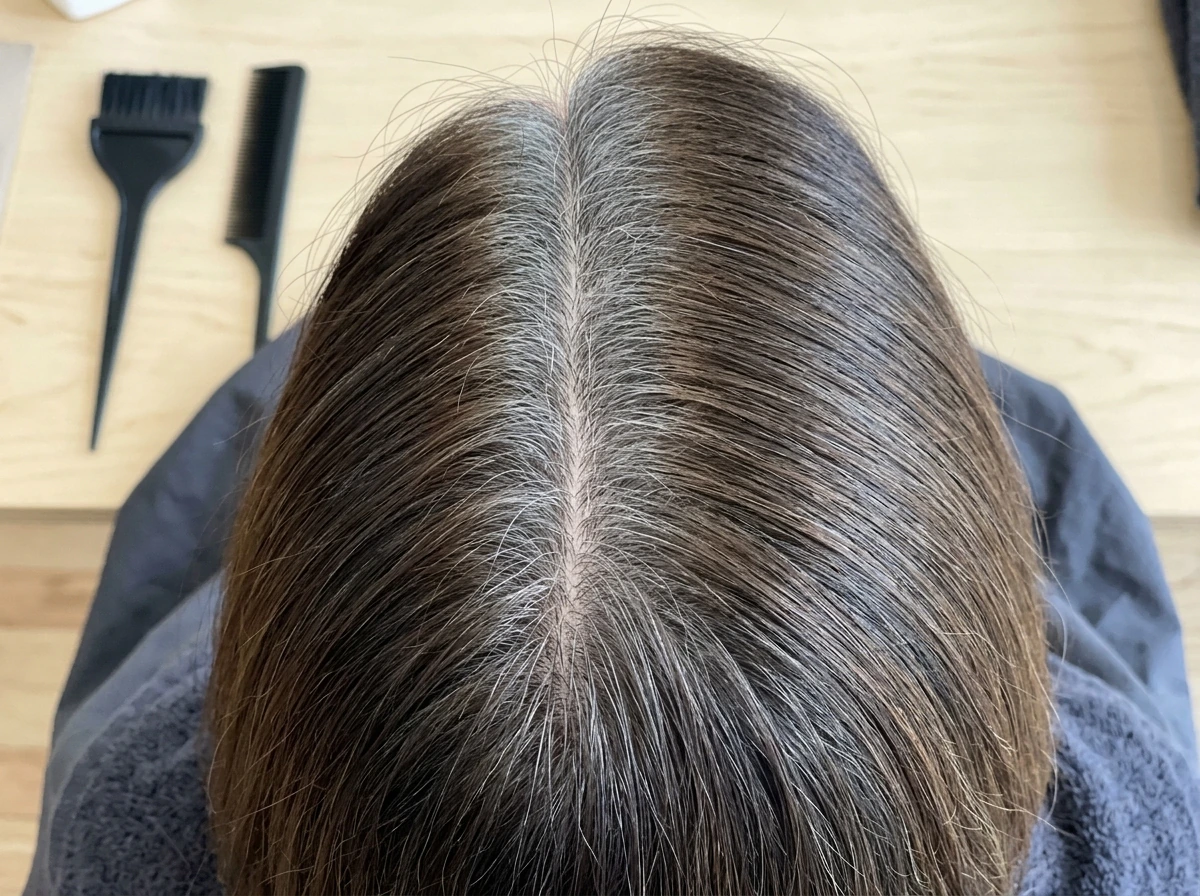
A root smudge is a salon technique where color is applied specifically to soften the line between your natural roots and your dyed lengths. Instead of a hard edge, you get a blended, gradient-style transition. L'Oréal Paris describes it as creating a seamless grow-out by targeting the demarcation area rather than re-covering the entire head. This is a lower-commitment appointment than a full color, it uses less product, and it keeps your gray looking purposeful while it grows. This is worth asking your colorist about specifically if you're in the gradual-transition camp.
Strategic balayage around the demarcation line
Balayage is typically used to lighten, but it's also used in gray transitions to break up the demarcation line by painting lighter sections through the older dye. This makes the contrast between gray roots and darker lengths look softer and more blended. Clairol Pro's colorist guidance specifically recommends balayage around the line of demarcation as a transition technique. The result is a more grown-out, natural look that reads as intentional rather than halfway-done.
Strategic cuts to speed it up
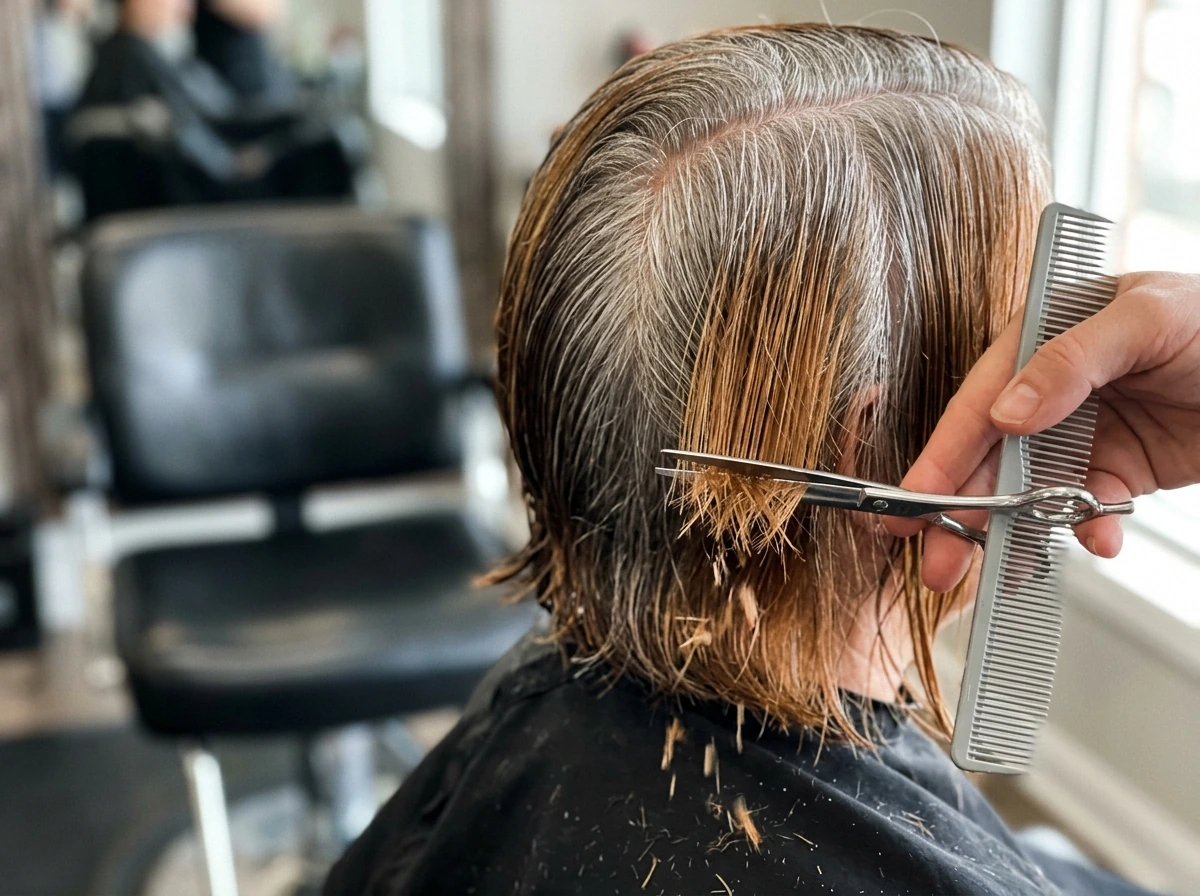
If you want to get through the grow-out faster, regular trims that remove the oldest dyed ends are the most efficient tool you have. Cutting off an inch or two every few months while the gray grows from the top means you're shortening the overall timeline. If you're open to it, going shorter at the start of the process is the single fastest way to get to a fully gray head. A pixie or short bob at the beginning means the transition can be complete in under a year for most people.
How to blend gray with dark hair
The contrast between silver or white roots and dark brown or black dye is the hardest part of growing out gray hair for most people. It's not subtle. The good news is that you don't have to just endure it, and you also don't have to go back to covering everything permanently. If you want a more controlled look while you grow it out, lowlights can be a smart option for blending your gray into the rest of your color. There are specific techniques for managing that contrast as you grow.
The demarcation line is the real enemy here. It's the visible border between your natural gray roots and the dyed section, and it becomes more obvious the longer it gets. The goal of blending techniques is to break up that hard line so there's no clear boundary, just a gradual shift from gray at the roots to your previous color at the ends.
Root shadows and root smudging work by placing a slightly softer, less saturated color right at that border zone, blurring the edge. A demi-permanent color melt takes it further, blending color from the root zone downward so the transition feels like a natural fade rather than a two-tone stripe. These are both salon-level techniques but they're not dramatic appointments: they take less time than a full color and require no or minimal developer strength, which means less damage.
For day-to-day management, a few styling approaches make a real difference. Parting your hair differently every few days prevents the demarcation line from settling into one very obvious spot. Loose waves and texture break up the contrast more than sleek, straight styles, which tend to emphasize the line. Wearing your hair up in a high ponytail or bun is a surprisingly effective strategy that AARP's experts specifically recommend: it hides the mid-length contrast and draws attention to the root, which in a grow-out situation is actually the most interesting part.
Care and styling during the awkward phase
Gray hair often has a different texture than dyed hair, and it's also usually sitting on top of hair that still has color product in it. That combination can feel dry, coarse, or frizzy in ways your hair didn't before. It's not your imagination. Gray strands often have a slightly different cuticle structure and can be more porous, which means they absorb and lose moisture differently.
Building a care routine for transition hair
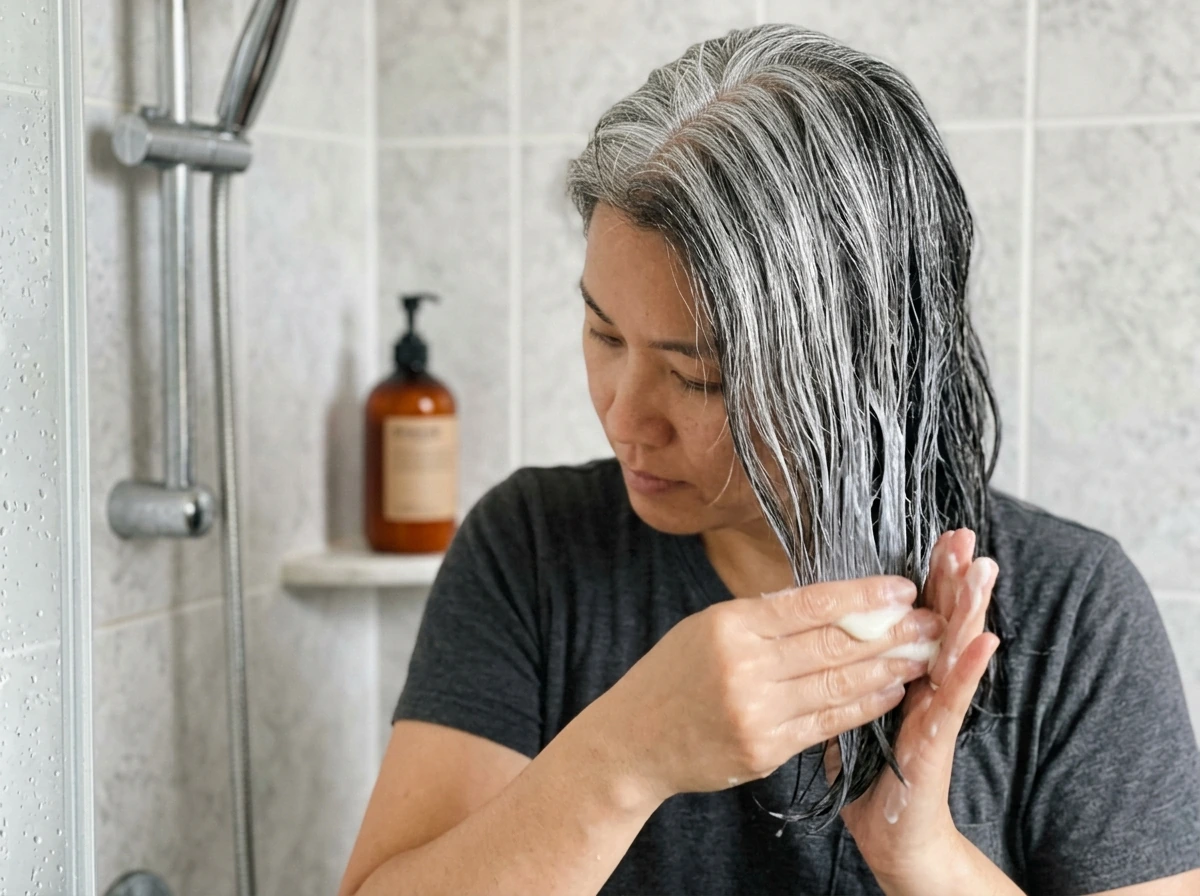
The core of a grow-out care routine is keeping both sections of your hair hydrated without making the scalp greasy or causing buildup. A gentle sulfate-free or low-sulfate shampoo protects your remaining color from premature fading while also being kinder to the gray sections. A clarifying shampoo once every one to two weeks keeps product buildup from dulling the gray or weighing down the roots. Olaplex's pro guidance suggests using their clarifying shampoo on that 1 to 2 week interval and balancing it with a conditioner or moisture mask based on how your hair is actually feeling.
For conditioning, the dyed ends almost always need more attention than the gray roots. A deep conditioning mask or bond repair treatment at the ends once or twice a week helps address the dryness and brittleness that comes from prior chemical processing. Toni and Guy's StrengthPlex guidance suggests using a bond repair mask one to two times a week for most hair, with up to three times weekly reserved for severely damaged or very fine hair. Using it too often doesn't give more benefit and can start to feel heavy.
Styling tips by growth stage
- Months 1–3 (0.5–1.5 inches of root): use temporary root concealer spray for photos or events, vary your part line daily, lean into texture with waves or curls to break up the contrast line
- Months 3–6 (1.5–3 inches of root): this is when a root smudge appointment helps most; try high buns and braids to showcase the gray while hiding the mid-lengths
- Months 6–12 (3–6 inches of gray): add a toning shampoo to your routine to keep the gray bright and cool; loose waves look great at this stage and disguise the two-texture issue
- Months 12–24 (finishing the grow-out): trim off dyed ends as they get long enough to cut; embrace the gray as the dominant story now, dyed ends are just a footnote
Heat styling is fine, but gray hair tends to be drier so a good heat protectant matters more than it might have before. Air drying when you can gives gray and transitioning hair a break from extra stress. If you're someone whose gray is coming in curly or wavier than your dyed sections (this happens, gray hair can have a different pattern), lean into the texture rather than trying to fight it flat.
Products and options: what actually helps
You don't need to overhaul your entire product routine, but a few targeted swaps make a real difference during the grow-out phase.
Toning shampoo (silver or purple)
Once you have a few inches of gray showing, a silver or purple toning shampoo keeps it looking bright and cool-toned rather than yellowy or brassy. The standard guidance is to use it one to two times per week, not every wash. Using it more often than that can dull the color or leave a purple cast that's hard to remove. Swap it in for your regular shampoo on those days, and use your normal gentle shampoo the rest of the time.
Demi-permanent toner vs. embracing silver naturally
If your gray is coming in more yellow or warm-toned, a professional demi-permanent toner applied by your colorist is more powerful than a toning shampoo. It deposits a cool tone directly on the hair shaft and fades out gradually, so it won't leave an obvious grow-out line. This is a low-commitment option: you're not covering your gray, you're just adjusting its tone to look more polished while it grows. If your gray is naturally a cool silver or white, you might not need this step at all.
Temporary root cover-up
Products like spray-on root concealers are a legitimate tool during the grow-out, not a cheat. They wash out fully, they don't damage your hair, and they let you manage high-contrast days without committing to a permanent dye appointment. Products like Rita Hazan Root Concealer Touch Up Spray are designed exactly for this scenario. Use them for events, photos, or just days when the demarcation line is bothering you.
When to see a professional
You don't need to go to a salon every few weeks during a grow-out, but there are specific moments where a professional appointment is worth it. If you're doing a gradual blend, a colorist consultation at the start helps you map out the technique (root shadow, balayage, demi-permanent melt) that suits your starting point. After that, appointments every 3 to 4 months for blending maintenance are usually enough. If you're going cold turkey, you may only need salon visits for trims and occasional toning. The key questions to ask a colorist: can they soften the demarcation line without re-covering the gray, and what's the least-commitment approach for your specific contrast situation.
Common setbacks and how to fix them
Patchiness and uneven growth
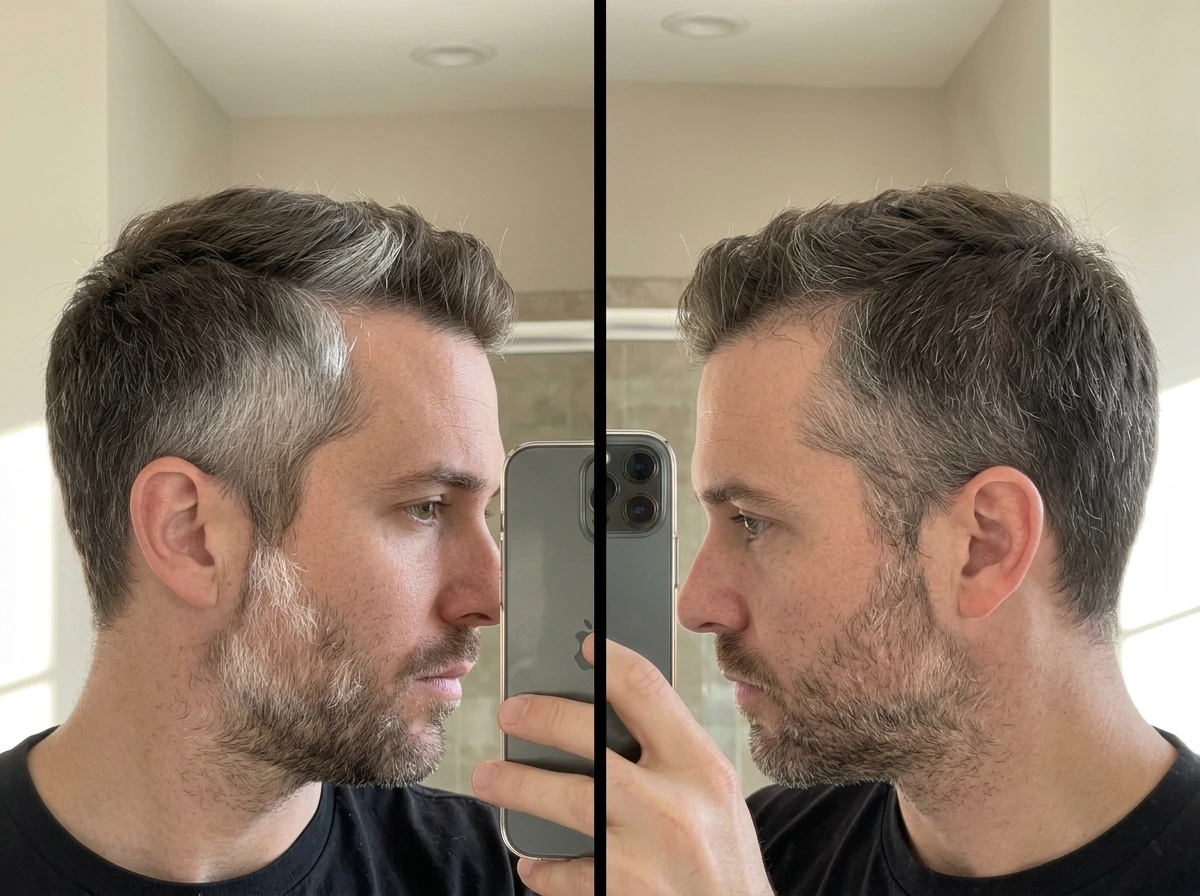
Gray doesn't always grow in evenly. You might have a solid silver patch at one temple, scattered grays through the crown, and very little gray at the nape. This is normal and it evens out over time as more of the hair cycles through. In the meantime, a root smudge or balayage technique that works around your specific growth pattern helps a lot. If the patchiness is very uneven, mention it specifically at your colorist appointment so they can address those areas with more intentional placement rather than a uniform approach.
Dryness and texture changes
Gray hair tends to be drier and can feel coarser, which combined with previously processed ends can make the mid-grow-out phase feel rough or frizzy. The fix is more moisture at the ends and a bond repair treatment if your lengths feel brittle or are breaking. A bond-focused treatment (like those in Redken's Acidic Bonding Concentrate line) used around once a week for the most damaged sections helps address breakage without over-loading the hair. Keep scalp treatments gentle: if your scalp is reacting to new products with persistent itching, flaking, or redness, that can be contact dermatitis rather than just dryness, and it's worth checking with a dermatologist rather than just adding more product.
The contrast line getting worse before it gets better
This one is almost universal. Around months 2 to 5, the grow-out often looks worse than it did at the very start, because now there's enough regrowth to be clearly visible but not enough to look intentional. This is the phase where most people give up and go back to coloring.
The practical fix is a combination of styling (texture, varied parts, updos) and, if you want it, a low-commitment blending appointment, so you can grow out grey roots gracefully using lowlights. Grow out grey roots gracefully using lowlights and a low-commitment blending appointment. This is especially useful if you’re growing out colored hair to gray grow out colored hair to gray.
But honestly, knowing this phase is coming and having a plan for it in advance is the most powerful thing you can do. It passes. how to grow out gray curly hair If you have curly hair in particular, the same blend versus commit choices apply, but you may need extra moisture and hold to keep curls looking consistent during the transition how to grow out gray curly hair.
Scalp irritation from switching products
When you stop coloring, you may start using different products, and some scalps don't like the change. Cleveland Clinic and the National Eczema Association both flag that hair product ingredients including dyes, preservatives, and fragrances can trigger irritant or allergic reactions that look like dryness but are actually inflammation. If your scalp is itching, flaking, or producing redness that gets worse rather than better after a few weeks of product changes, don't keep layering on moisturizing scalp treatments and hoping it resolves. See a dermatologist. Most transition-phase scalp dryness is mild and resolves with a gentler product routine, but it's worth knowing the difference.
Your next steps, starting today
Here's a clear starting plan based on where you are right now. Pick the option that matches your situation and go from there.
- Decide today: gradual blend or cold turkey. If you have dark dyed hair and high contrast, gradual is easier. If your hair is lighter or short, cold turkey is fast and clean.
- Book a consultation with a colorist if you're going gradual. Ask specifically about root shadow, demi-permanent color melt, or balayage around the demarcation line for your starting color.
- Stock up on two products: a gentle sulfate-free shampoo for daily use, and a silver or purple toning shampoo to rotate in once or twice a week once you have visible gray showing.
- Get a bond repair mask or deep conditioner for the ends. Start using it once or twice a week now, especially if your current lengths have been chemically processed.
- Get a temporary root concealer spray for events and high-contrast days. It's not a compromise, it's just a practical tool.
- Set a trim schedule. Even if you're keeping length, a trim every 8 to 10 weeks removes the most damaged ends and helps the grow-out look neat and intentional.
- Mark your calendar for a 6-month check-in. Reassess how the grow-out is going, whether you need a blending appointment, and how your hair and scalp are responding.
If you're also navigating specific scenarios like growing out colored hair back to gray, managing curly gray regrowth, or figuring out the best base color to ease a transition, those deserve their own dedicated guidance because the strategy shifts meaningfully. But the foundation above applies to all of them: set realistic expectations for the timeline, pick your blend vs. commit path, and build a simple care routine that handles both sections of your hair without over-complicating it. You don't need to have it all figured out on day one. You just need a starting point.
FAQ
How long does it take before gray hair stops looking “worse than the start” and starts looking intentional?
Most people hit the most obvious awkward contrast window around months 2 to 5. If you want a practical milestone, aim for month 6, when there is enough gray length to style around, and the demarcation line is easier to break up with texture, varied parts, or an updo.
Should I stop coloring all at once, or switch gradually to grow out gray hair more comfortably?
Choose gradually if your current dyed hair is very dark (brown or black) and the line with silver roots is hard to tolerate. If your dye is lighter or you can handle contrast, cold turkey is often simpler. A good decision rule is this, if you would feel tempted to touch up every few weeks, gradual is usually less stressful.
What’s the best way to handle the transition if I’m wearing my hair in the same part every day?
If you part your hair the same way consistently, the demarcation line tends to “train” into one visible spot. Rotate your part (for example, slightly off-center) every few days, and use loose waves or a quick curl to keep the border moving rather than staying fixed.
Do I need to trim while growing out gray hair, or can I just wait it out?
Trimming is optional, but if you want to speed up the look of an all-gray head, cutting off about an inch or two every few months helps remove the oldest dyed ends. If you are trying to keep length, you can do micro-trims (just the ends) to reduce breakage without losing overall length.
Can toning shampoo make my gray look purple or dull, and how do I avoid that?
Yes, if you overuse it. The common fix is using toning shampoo only once or twice per week (not every wash), then washing the rest of the time with a gentle shampoo. If you notice a persistent purple cast, reduce frequency first, and use a clarifying shampoo once every one to two weeks.
Will root concealers eventually damage my hair or make the grow-out worse?
They should not damage hair because they wash out. The tradeoff is cosmetic, they can make the root area look uneven if you apply too sparingly. If you use one, aim for an even, light layer and focus on the visible boundary rather than trying to “paint” the entire root area.
What if my gray grows in patchy, like only one temple or the crown?
Patchy growth is common and usually evens out over time. In the meantime, tell your colorist exactly where the gray is strongest, so blending (like smudging or targeted placement) matches your pattern instead of creating a uniform look that highlights uneven areas.
My scalp gets itchy or red after switching products, is that just dry skin during the transition?
It might not be. If itching, redness, or flaking worsens and does not improve after a couple of weeks of changing products, it can be contact dermatitis or another irritation reaction. Stop adding new scalp treatments repeatedly and get a dermatologist’s input, especially if symptoms persist.
Do I really need clarifying shampoo during the gray grow-out, or will it strip my gray?
Use it for buildup control, not for frequent daily washing. Clarifying once every one to two weeks helps prevent dullness and root heaviness from accumulated products. Pair it with conditioner or a mask afterward, focusing moisture on the ends.
How do I manage heat styling if gray hair feels drier or frizzier?
Gray hair often tolerates heat less comfortably, so prioritize a good heat protectant and keep heat settings moderate. When possible, use air drying or partial air drying, then style with low heat to reduce dryness that can exaggerate the contrast line.