
Growing out grey hair gracefully is completely doable, but it takes a realistic plan, not just willpower. Whether you're starting from natural hair that's been steadily silvering, or you're trying to transition away from dye toward your natural grey, the core process is the same: manage the contrast, keep your ends healthy, and make intentional styling choices at every stage. Here's exactly how to do that.
How to Grow Out Grey Hair Gracefully: Step-by-Step

Marcus Vickers
8 Apr 2026

First, figure out your starting point
Before you do anything else, you need to know which grow-out scenario you're actually in. There are two very different starting points, and they require different strategies.
If your hair is currently in its natural state and you're simply letting grey grow in without interfering, congratulations, you have the easier path. Your roots are lightening gradually, so the contrast between root and length is softer. There's no chemical-to-natural color shift to deal with. You're mostly managing length and texture, not a hard demarcation line.
If you've been dyeing your hair and want to transition to grey, you're dealing with a more complex situation. Previously processed lengths and new natural roots often behave very differently in tone and sometimes texture, which is what creates that sharp "stripe" or regrowth line people dread. growing out colored hair to gray requires a specific plan to soften that line rather than just waiting it out. More on that in its own section below.
Either way, before you book a color appointment or pick up scissors, wait. Specifically, wait about 9 to 12 weeks of regrowth before making any major decisions. That gives you roughly 4 to 6 cm of new root growth, enough to actually see how your regrowth line behaves, how much grey versus pigment you have, and what kind of blending approach will work best for your specific hair.
A realistic timeline: what to expect and when
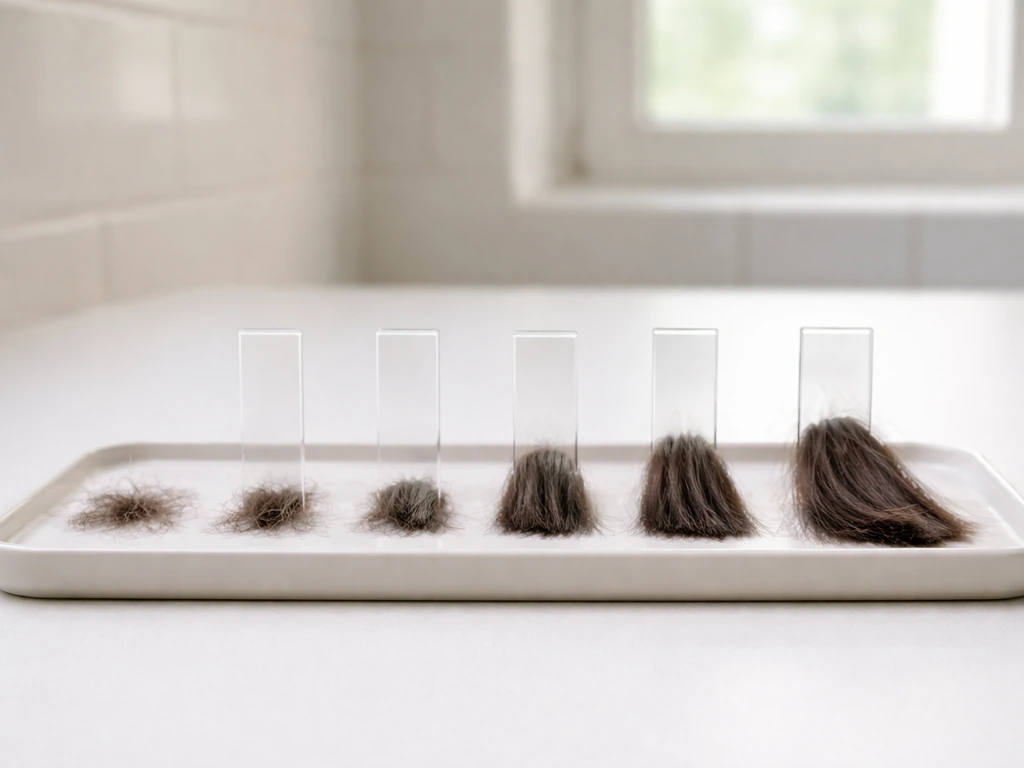
Hair grows about half an inch (1.25 cm) per month on average. That number is your planning backbone for everything that follows. It means visible regrowth appears within a few weeks, the contrast phase hits hardest around months 2 through 6, and a full transition to grey, depending on your starting length, takes roughly 12 to 18 months for shorter styles, and potentially 2 to 3 years for longer hair.
| Stage | Timeframe | What it looks like | What to focus on |
|---|---|---|---|
| Early regrowth | Months 1–3 | Grey roots visible, 1–4 cm of regrowth | Let regrowth develop; resist the urge to re-dye immediately |
| Contrast peak | Months 3–6 | Hard line between roots and dyed lengths most visible | Blending, toning, strategic cuts |
| Mid-transition | Months 6–12 | Grey length increasing, dyed ends shrinking | Shape maintenance, moisture-focused care, glossing |
| Late transition | Months 12–18+ | Mostly grey with remaining dyed tips | Final trims to remove last dyed ends, tone management |
| Full grey | 18 months+ (for medium/long hair) | Natural grey throughout | Ongoing care routine, shine and hydration maintenance |
These timelines assume you're growing from a medium-length cut. If you're starting from a pixie or short crop, you could realistically reach fully grey hair in under a year. If you have hair past your shoulders, plan for the longer end of that range, and be honest with yourself about that before you start.
How to survive the awkward in-between
The middle stages are where most people give up and re-dye. Don't. This phase is manageable, it just requires some active decisions rather than passive waiting.
Trims: keep them strategic, not reactive
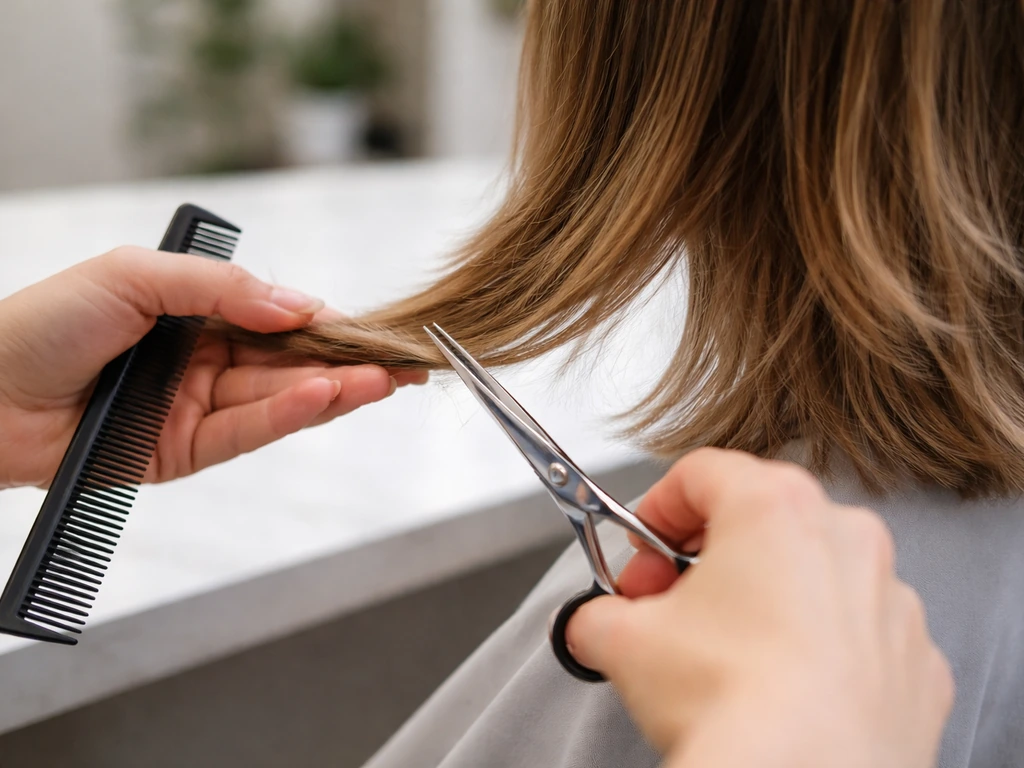
Regular trims are your best friend during a grow-out, but only if they're intentional. Trimming every 4 to 6 weeks keeps your shape looking deliberate and removes split ends that make the contrast between roots and lengths look even messier. But don't just go in asking for a "trim", tell your stylist you're growing out your grey and you want the shape maintained without losing length progress. A good stylist will work with you on this.
If you have layers, keep them. Layers actually help break up the visual line between your grey roots and colored ends, because the lengths don't all hit one level at once. If you're trying to grow out grey roots gracefully, a layered cut is one of the most effective tools you have.
Blending techniques to soften the line
A hard demarcation line between your grey regrowth and your dyed lengths is the biggest visual challenge of the grow-out. The goal isn't to hide it, it's to soften it so the transition looks intentional. Techniques like balayage, babylights, or a smudge root done by a colorist can feather that line so it fades rather than cuts sharply across your head. These aren't about adding color back in aggressively, they're about breaking up the edge.
If you want to go even lower-commitment, using lowlights to grow out gray hair is a classic approach that works particularly well for people with darker base colors. Lowlights add dimension and depth that naturally blends the regrowth line without lifting or lightening.
Styling strategies that make grey look intentional
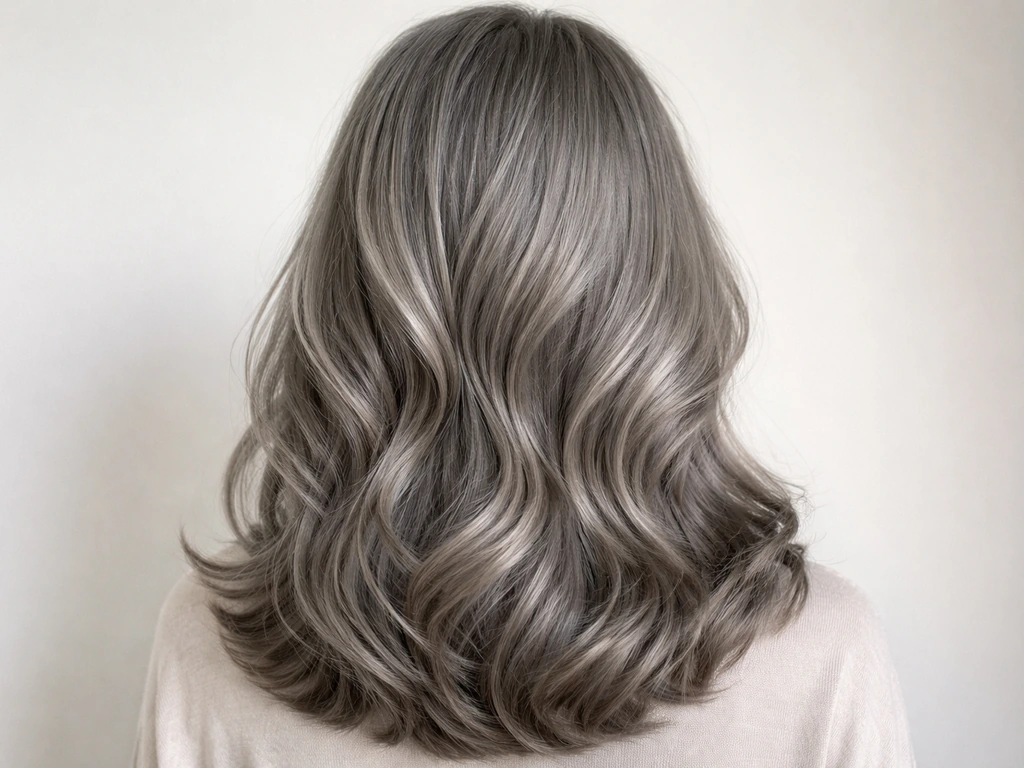
Grey hair doesn't look neglected because it's grey, it looks neglected when it's dull, frizzy, or shapeless. The fix is styling with intention at every length.
At shorter lengths, lean into structure. A clean, defined cut, even a simple rounded bob or a textured crop, makes grey look editorial rather than accidental. At medium lengths, soft waves and lived-in texture work beautifully with silver tones because they add movement and draw the eye to dimension rather than the regrowth line. At longer lengths, the weight of the hair helps grey lie flat and smooth, but you'll want to focus on shine and moisture (more on that in the care section below).
Toning is a non-negotiable styling step for most grey hair. Grey and white strands are porous and pick up yellow and brassy tones from heat, hard water, and UV exposure faster than pigmented hair does. A violet or blue-toned toning gloss used once every 2 to 4 weeks counters that brassiness and makes grey look genuinely luminous rather than yellowed. This isn't a full color treatment, it's maintenance, and it takes 10 minutes at home.
If you have curly or wavy grey hair, the approach shifts slightly. Curl definition products and moisture-first styling matter even more because growing out gray curly hair brings the added challenge of managing texture changes that come with the transition, not just color contrast. Focus on hydration and definition, and avoid anything that strips moisture.
The dyed-to-grey transition: reducing contrast and patchiness
If you've been coloring your hair and want to transition to grey, the first and most important rule is: don't try to speed this up by bleaching your lengths to match your roots. Bleaching processed hair to get it to a grey-adjacent tone almost always results in uneven, patchy results and significant damage. The better path is to work with a colorist who understands grey transitions specifically.
Your colorist's job during this phase is to bring your colored ends closer to your natural grey tone gradually, either by lifting and toning in sections, or by letting the color fade and then using glosses to soften the transition. The choice depends on how dark your current color is and how much grey you have. Darker bases require more steps. Lighter or highlighted bases often need very little intervention.
One strategy that works really well here is choosing a color approach that grows out more gracefully from the start, for example, opting for a balayage or highlights rather than solid all-over color, so the regrowth line is diffused rather than harsh. Finding the best hair color to grow out grey is genuinely worth thinking through before your next appointment, because the right shade selection now saves you months of awkward regrowth later.
Keep in mind that repeated dyeing during your grow-out, even with good intentions, slows the process and adds ongoing damage. Every time permanent or demi-permanent dye is applied, it lifts the hair's protective protein structure to allow pigment to penetrate, which compounds dryness and roughness over time. Stretching the time between color appointments and using a gloss or toner instead of a full color service is almost always a better call during a transition.
If you've previously dyed your hair grey (as in, colored it artificially silver or platinum) and now want to grow out your natural grey or transition to something else, that's a slightly different situation, growing out dyed grey hair has its own set of considerations around fading, brassiness, and timing that are worth understanding before you start.
The care routine your grey hair actually needs
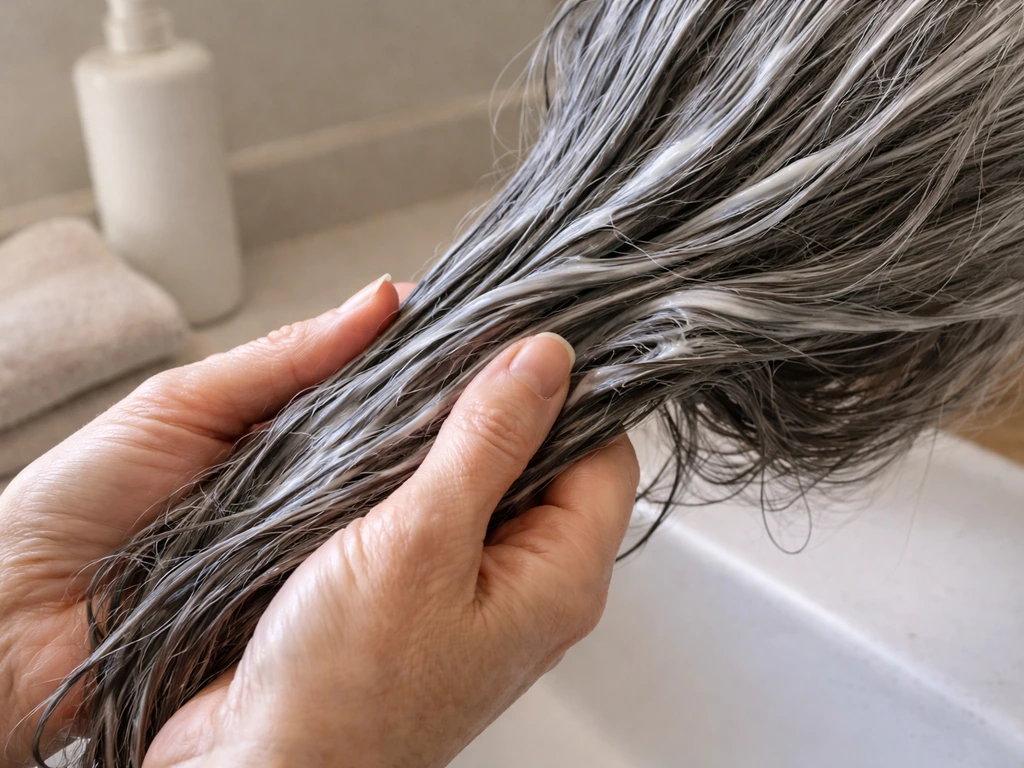
Grey and white hair is structurally different from pigmented hair. Without melanin, the hair fiber is more porous, tends to absorb and lose moisture more easily, and often feels coarser or drier even when it's technically healthy. The American Academy of Dermatology explains that when hair follicles stop making melanin, gray or white hair develops, and reduced melanin production is a key driver of this change Without melanin, the hair fiber is more porous, tends to absorb and lose moisture more easily, and often feels coarser or drier. This means your old product routine probably needs an update.
Start with your shampoo. Sulfate-heavy formulas strip moisture from an already-vulnerable hair fiber. Switch to a sulfate-free, gentle cleanser, ideally one that includes ceramides and hydrating actives to support moisture balance and keep your scalp comfortable during the transition. Wash frequency matters too: if you can stretch to every other day or every two days, your grey will look shinier and less dry.
Conditioning is non-negotiable. Grey hair needs more moisture than you think, and a standard rinse-out conditioner is the floor, not the ceiling. Add a weekly deep conditioning mask, and if your hair is particularly wiry or coarse, layer products: apply a milky leave-in first for lightweight moisture and slip, then follow with a heavier cream to seal it in. The American Academy of Dermatology also recommends using leave-in conditioner after shampoo as part of a routine, following the product directions for the best results. This two-step layering approach is a pro technique that makes a real difference for the texture of grey and white strands.
Heat protection is mandatory. Grey hair is more vulnerable to heat damage because its protective cuticle layer is already compromised by age-related changes and (if you've been coloring) by previous chemical processing. Use a heat protection spray every single time you use a dryer or iron, and consider keeping your tool temperature at or below 350°F (175°C).
UV protection matters too. Sun exposure causes oxidative stress at the follicle level and accelerates the yellowing of grey and white strands at the surface. A hair-specific UV shield spray (or simply wearing a hat when you're out for extended periods) is a small habit with a big payoff for keeping grey looking cool-toned and bright.
- Switch to a sulfate-free shampoo with ceramides and hydrating actives
- Deep condition once a week with a moisture-rich mask
- Layer a milky leave-in under a heavier cream if your grey is coarse or wiry
- Use a toning gloss every 2 to 4 weeks to prevent brassiness
- Apply heat protection every time before using hot tools
- Add a UV-protective hair spray or wear a hat during prolonged sun exposure
When you feel stuck or tempted to quit
There will be a point, usually somewhere around months 3 to 6, where you look in the mirror and seriously consider just dyeing it all back. That moment is normal, and it doesn't mean you're failing. It means you're in the hardest part of the process.
Here's what actually helps when you hit that wall. First, take a photo of where you are today and compare it to where you were a month ago. Progress is hard to see day-to-day, but it shows up clearly in side-by-side photos. Second, book a toning gloss appointment instead of a color appointment. A gloss takes 15 minutes, costs a fraction of full color, and can transform how intentional your grey looks without setting your progress back.
Third, change something about your cut or style rather than your color. A new shape or a different styling approach can make the same hair you've been frustrated with look completely different. If you've been wearing your hair the same way for months, even a small change, a new part, a different texture approach, or a cleaner trim, can reset how you feel about the whole process.
It also helps to look at where you're actually headed. What growing out gray hair actually looks like from start to finish, including what the end result can be when managed well, is genuinely motivating when you're stuck in the middle stages. Seeing the full arc reminds you that the awkward phase is temporary and the result is worth it.
The most important thing to remember is that graceful doesn't mean perfect. It means intentional. Grey hair that's moisturized, toned, shaped, and styled, even mid-transition, reads as a deliberate, confident choice. That's the actual goal here. Not waiting until it's done to look good, but making it look good at every stage along the way.
FAQ
How often should I tone my grey hair while growing it out?
Aim for toning often enough to stop brassiness from building, but not so frequently you strip moisture. If your hair turns yellow quickly (hard water, sun, frequent heat), schedule a toner or violet gloss closer to every 2 weeks, otherwise every 3 to 4 weeks is usually enough. Also, always condition after toning, since many toners are clarifying to some degree.
Can I use temporary dye or glosses if I hate the awkward stage?
Yes, but do it strategically. If you dye your hair again during the grow-out, choose gloss or root-smudge style services over permanent color, and tell your colorist you want regrowth to stay blended, not covered. Keep the root area intact and avoid bleaching processed lengths to “catch up,” because that typically creates patchiness and extra dryness.
When should I trim during the grey grow-out, and will it slow my progress?
You do not have to wait until your hair is fully grey to cut, but timing matters. If you trim during the hardest months (around 3 to 6), ask for shape and split-end removal, not a length reset, and keep it consistent every 4 to 6 weeks. If your regrowth line is still sharply visible, a trim that adds a bit more graduation or movement can make the transition look softer without sacrificing progress.
My grey looks flat and dull, how do I fix that without starting over?
If your grey looks dull or uneven, the most common cause is buildup and dryness rather than “wrong color.” Clarify once before a toning session (use a gentle clarifier, not an aggressive chelating routine every week), then tone on clean hair and follow with a deep mask. If the dullness persists even after conditioning and toning, you may need a cut or styling change, since grey can look flat when it lacks movement.
What if my grey keeps turning yellow even though I tone it?
Water hardness affects yellowing, so treat it like a variable. If you have hard water, consider using a chelating step occasionally (not every wash), plus a UV shield on sunny days and heat protectant on any hot-tool days. Even with good toner habits, hard-water exposure can require slightly more frequent toning to maintain a cool tone.
How should my routine change if I have curly or wavy grey hair?
For curls and waves, “growing out grey” often changes your curl pattern, so focus on definition and moisture rather than just color. Use a leave-in and a curl cream or gel that supports hold without stripping, then refresh with water plus a small amount of conditioner between washes. Avoid heavy clarifying shampoos during the transition, since dry curls exaggerate the contrast between roots and lengths.
Will transitioning to grey affect my scalp, and what should I do if it gets dry or itchy?
If your scalp is getting itchy or dry during the transition, it is often the cleanser or over-washing, not the grey itself. Switch to a gentle sulfate-free shampoo, reduce wash frequency if you can, and add a calming scalp product if needed. Pay attention to how your scalp reacts right after toning sessions, since some toners can be drying.
What color approach helps the regrowth line look softer without constant re-dyeing?
If you want to keep the regrowth line minimal while reducing maintenance, choose blending-forward color choices when you do tint or gloss. Request lowlights or soft root smudging that feather the edge, instead of a solid reconnect at the demarcation line. Also, ask your colorist to match tone depth (lightness and warmth) more than matching exact shade, because grey and dyed hair age differently.
Should I cut my hair shorter to grow out grey faster?
Yes, and it can be a smart decision if your goal is a clean look while you transition. A shorter style can reach an overall “mostly grey” stage faster, and defined shapes can make the transition feel intentional. If you are planning a shorter cut, align the haircut timing with your planned regrowth window (around when you first see the line stabilize), so you do not cut away too much before the blend strategy is clear.
How do I avoid making the wrong decision in the early stages of grey grow-out?
If your grey is already coming in naturally, the main “mistake” is reacting too early to the contrast. Do not book major color decisions until you have enough new root growth to judge the real pattern, typically after 9 to 12 weeks. Then, base your next step on what your regrowth line actually looks like, not on how it looks in one bad lighting day.