
Your curls are already in your follicles. A buzz cut doesn't erase them. What it does do is strip away every bit of length that lets a curl form, so for the first few months of regrowth you'll see something that looks nothing like the texture you're expecting. The path from a buzz cut to defined curly hair takes roughly 6 to 18 months depending on your curl type and target length, but the work you do in those early weeks, starting right now, directly affects how healthy and defined those curls look when they finally have enough length to behave. If you want a clear month-by-month plan, follow the steps for growing out a buzz cut in order.
How to Grow Curly Hair From a Buzz Cut: Month-by-Month Guide

Marcus Vickers
18 Jun 2026
Reality check: will you actually get curls back?
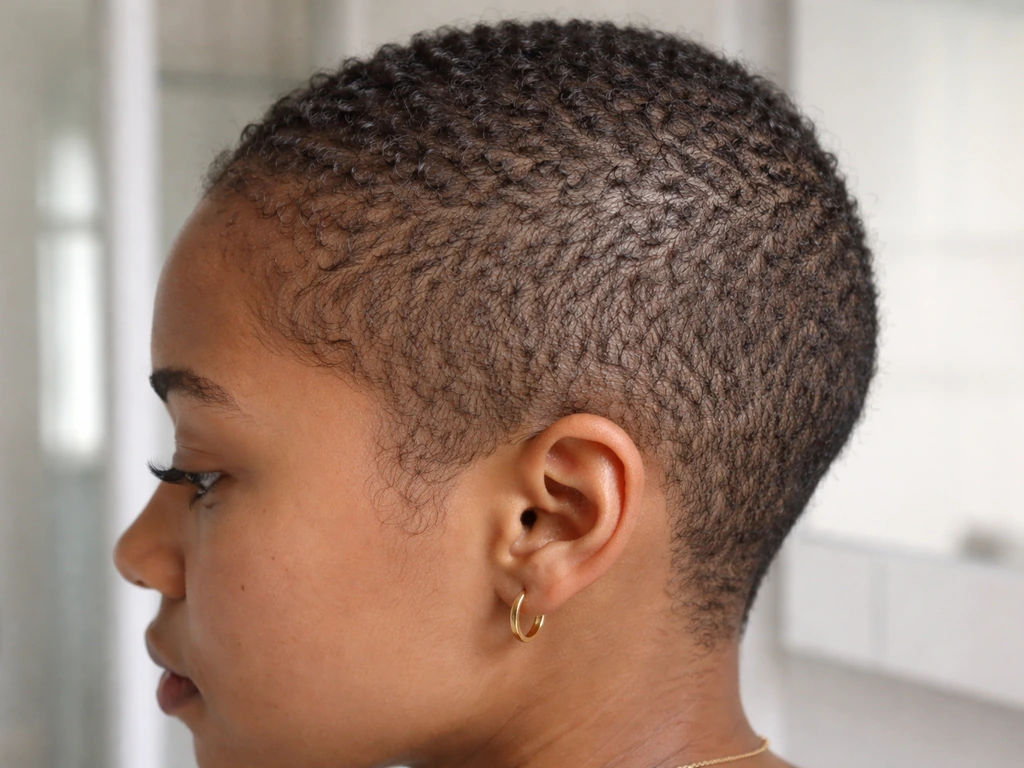
If you had curly hair before the buzz cut, yes, it's coming back. Your curl pattern is coded in the shape of your hair follicles, which is determined by genetics. No haircut changes that. What the buzz cut does change is the weight and length that let curls form, which is why very short regrowth often looks wavy, frizzy, or almost straight before it develops into recognizable curls.
If you're buzzing for the first time and hoping to discover curls you never knew you had, that's possible too, but it's a different situation. Some people genuinely do regrow with a different texture after years of buzzing, usually because hormonal shifts (puberty, age, pregnancy, or other changes) altered their follicle behavior over that same period. The buzz cut didn't cause the change; it just meant new growth was starting from scratch when the change happened.
Be honest with yourself about which camp you're in. If your hair was straight at shoulder length before the buzz, don't plan around tight coils. If it was wavy or curly, expect to see that pattern return once you have an inch or more of growth.
One more thing worth saying early: curl pattern doesn't fully reveal itself until hair has enough weight to pull down and form a spiral or wave. Really short regrowth (under half an inch) almost always looks tighter and coarser than it really is, and slightly longer regrowth (1 to 2 inches) can look poofy or undefined before curls start to clump. Both of those phases are normal. They are not signs that your curls are gone.
Month-by-month timeline: what your hair is actually doing
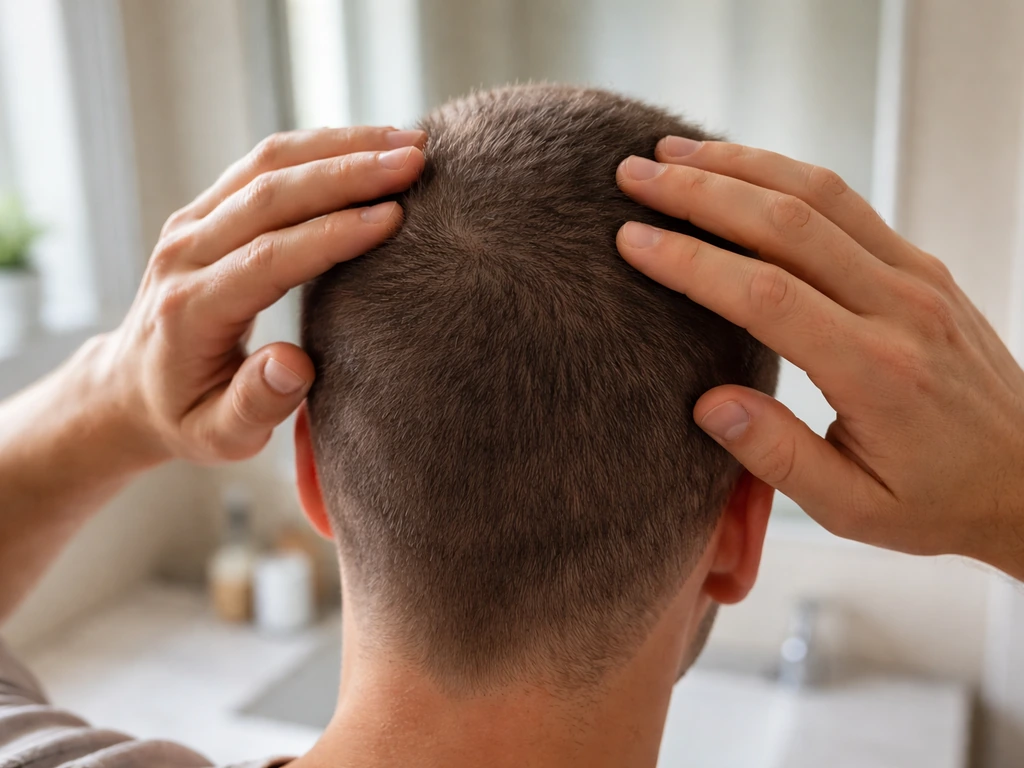
Hair grows roughly half an inch per month on average, though your personal rate can range from about 0.5 to nearly 0.7 inches depending on genetics, age, and overall health. Use that half-inch benchmark to set expectations. Here's what each phase typically looks and feels like during a curly grow-out.
| Stage | Approx. Length | What You'll See | What To Focus On |
|---|---|---|---|
| Months 0–1 | 0–0.5 inch | Stubble; little to no curl visible; scalp may itch as hair pushes through | Scalp health: gentle cleansing, light moisturizer, no product overload |
| Months 1–2 | 0.5–1 inch | Texture starts appearing; may look kinky or coarse; no defined curl yet | Start leave-in conditioner; finger coiling individual strands to train curl direction |
| Months 2–4 | 1–2 inches | Curl clumps forming but still poofy; 'dandelion' or halo phase; sides and back look rounder | Gel or cream to define clumps; consider a taper or fade on sides; scrunch don't rub |
| Months 4–6 | 2–3 inches | Curls start to drop and elongate under their own weight; pattern becomes clearer | Introduce plopping and diffusing; protein/moisture balance check; style while soaking wet |
| Months 6–12 | 3–6 inches | Defined curl pattern visible; shrinkage is real now; different zones may still be uneven | Full curly routine: co-wash or sulfate-free shampoo, deep condition, gel or cream over leave-in |
| Months 12–18+ | 6+ inches | Curl 'drops' into its final shape; shrinkage may make hair look shorter than it is | Maintain moisture, trim splits, and enjoy the pattern you've been growing toward |
The hardest stretch is months 2 through 4. The hair is long enough to stick out in all directions but not long enough to form defined curl clumps. This is the phase where most people give up and reach for the clippers again. Don't. This phase ends.
Build your curly routine from day one
You don't wait until you have 'enough hair' to start a curly routine. The habits you build in the first month are the ones that carry you through the whole grow-out. If you want to grow out curly hair from short, focus on starting those routines right away so the pattern can form as your length increases curly routine. Here's how to set them up.
Cleansing
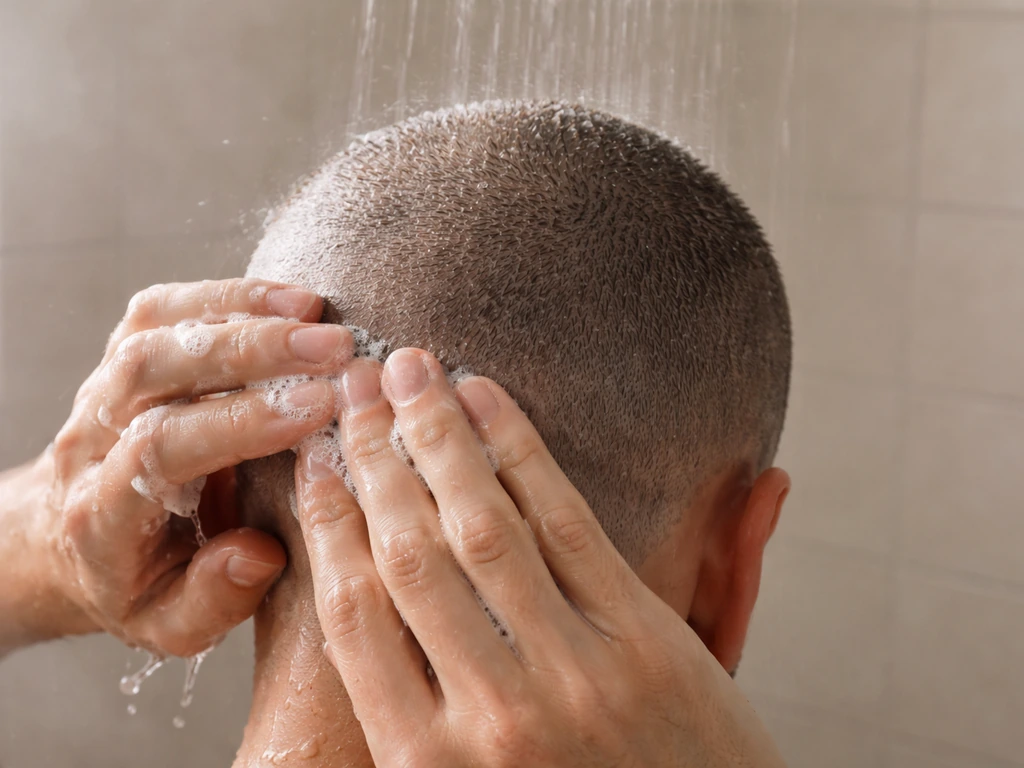
In the early buzz-cut regrowth stage, your scalp is doing the heavy lifting. If you want more specific guidance, check out how to grow your hair out from a buzz cut for a step-by-step plan. It's producing oils, shedding dead skin, and sometimes itching as new hair pushes through.
Wash with a moisturizing or sulfate-free shampoo every 2 to 3 days in the first month if your scalp is oily or sweaty, and then stretch that to every 3 to 7 days as your hair gets longer. The American Academy of Dermatology recommends washing curly hair at least every 2 to 3 weeks at minimum, but during early regrowth, more frequent gentle cleansing usually feels better because scalp buildup is more noticeable at short lengths.
Avoid harsh clarifying shampoos as your everyday wash. Save those for a monthly reset when product buildup is making your curls look stringy or limp.
Conditioning
Start conditioning from month one even if it feels like there's barely any hair to condition. A rinse-out conditioner applied after shampooing, left on for a few minutes, and rinsed out with cool water will start training your hair to retain moisture from the earliest stages. As your hair grows past an inch, add a leave-in conditioner to damp hair after every wash.
The AAD notes leave-in conditioner is beneficial for managing curls, though they recommend washing it out fully with your regular shampoo after about a week to prevent buildup. At short lengths, use a very small amount of leave-in: think a dime to a nickel's worth. Too much product on short hair just makes it look greasy and weighs down what little curl is forming.
Protein and moisture balance
Most curly hair needs both protein and moisture, not just one. The balance depends on your hair's porosity (how well it absorbs and holds moisture) and how much damage it's accumulated. A quick at-home check: take a wet strand and gently stretch it. If it snaps immediately with no give, you need more moisture. If it stretches way out and doesn't spring back, you might need more protein. During regrowth from a buzz cut, most people lean moisture-deficient first, but if you've been using heavy products or your hair feels gummy, a clarifying shampoo and a protein-strengthening treatment can reset things.
How to style at every stage of regrowth
0–1 inch: just keep it clean and moisturized
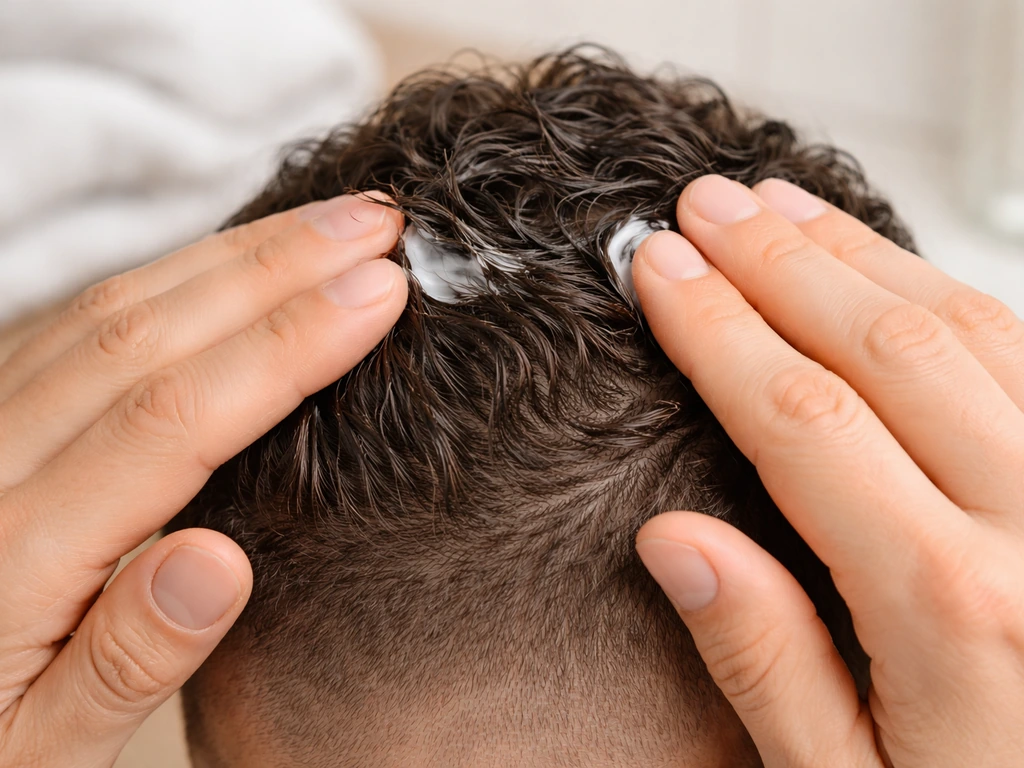
There's almost nothing to style at this length, and that's fine. Your job here is scalp health and habit-building. Use a light curl cream or leave-in conditioner patted into damp hair to keep the skin from getting dry and flaky. Resist the urge to use heavy gels or oils at this stage; they'll just sit on the scalp.
1–2 inches: finger coiling and light hold
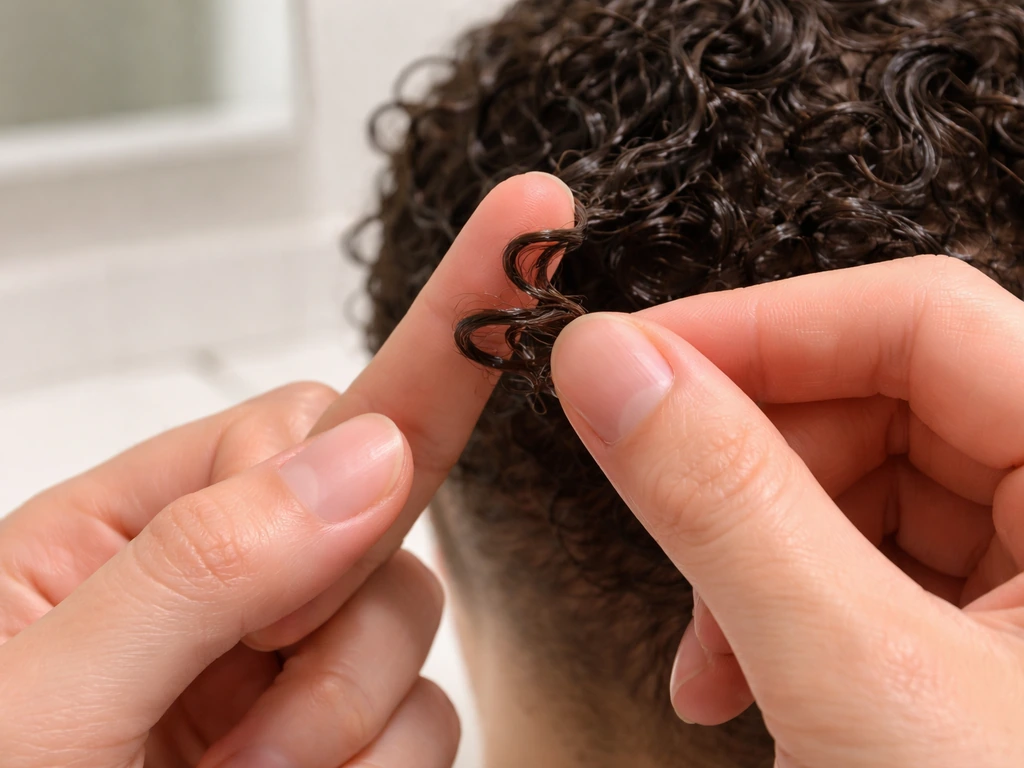
This is when you can start actively encouraging curl formation. Finger coiling means taking small sections of damp hair and twirling them around your finger in the direction you want the curl to go, then releasing gently. It won't look defined immediately, but it trains the hair to dry in a curl shape and helps you figure out your natural curl direction. Use a light hold gel or a curl cream applied to soaking-wet hair before you coil. If finger coiling isn't giving you results, check your product: too little hold and curls fall apart while drying; too heavy and the curl gets weighed down. A medium-hold gel (not a strong freeze-style one) works well at this length.
2–3 inches: scrunching, plopping, and diffusing
Once you have 2-plus inches of hair, scrunching becomes your main styling move. Apply leave-in conditioner to soaking-wet hair, then add a curl cream or gel on top, and scrunch upward toward the scalp. This encourages curl clumps to form. From here you can either air-dry or diffuse. Plopping (wrapping your wet styled hair in a microfiber towel or cotton T-shirt for 10 to 20 minutes) helps set the shape before drying without disrupting the clumps. When diffusing, use low heat and low airflow, cup sections of hair into the diffuser basket, and hold each section until it's about 80% dry before moving on. Avoid touching or scrunching while the hair is wet and drying; that's what causes frizz.
3 inches and beyond: the full routine kicks in
By the time you have 3 or more inches, you can run a full curly-girl-inspired routine: sulfate-free or co-wash cleanse, rinse-out conditioner with detangling while wet, leave-in applied in sections, curl cream or gel raked or prayed through, plop, then diffuse or air-dry. At this length you'll also start to see shrinkage for the first time. Your hair may look shorter wet than dry, or shorter dry than you expected. That's your curl pattern doing its job. Embrace it.
Fixing the most common regrowth problems
Itching and dry scalp
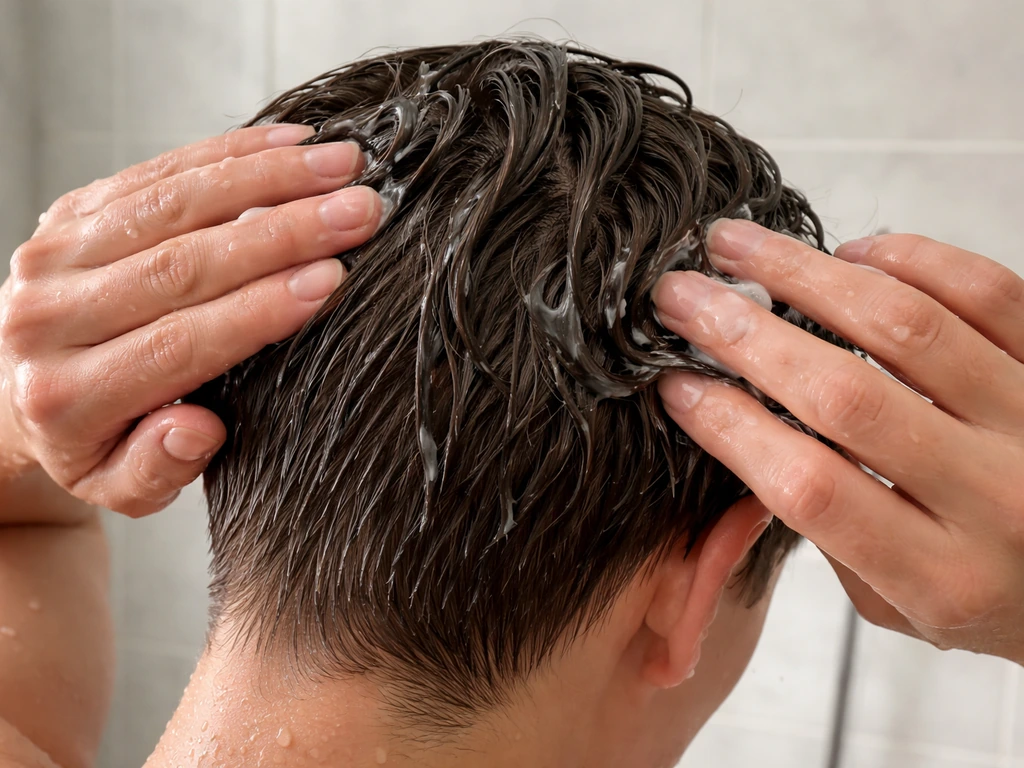
Itching in the first month is almost always mechanical: new hair pushing through the skin. It usually settles down by weeks 3 to 4. To manage it, keep your scalp clean and use a lightweight scalp oil (jojoba or tea tree diluted in a carrier oil) if skin feels tight. Don't over-scratch; it can cause irritation that slows things down. If itching persists past month 2 or comes with flaking, look at your shampoo ingredients since some sulfates and fragrances irritate the scalp during regrowth.
Frizz and dryness
Frizz at the regrowth stage is mostly a moisture issue. Your hair is short and porous, especially at the cut ends, and loses water fast. The fix is layering products on soaking-wet hair (not damp, wet), sealing with a gel or cream that has some hold, and not touching the hair while it dries. If frizz persists even with good product application, check whether you're applying to wet-enough hair or whether your leave-in has silicones that are blocking moisture absorption over time. A monthly clarifying wash clears any silicone buildup.
Uneven curl pattern across the head
It's extremely common to have different curl patterns in different zones, tighter at the back, looser at the temples, wavier on top. This doesn't mean something is wrong. Your follicles are genuinely different in different areas. Style each section according to its own texture: more product and more coiling on looser sections, lighter product on tighter sections that clump on their own. As length increases and the hair gets heavier, patterns often even out somewhat, but not always completely, and that's fine.
Curls dropping or going limp as hair gets longer
This is the phase where people panic. Hair that was forming tight little coils at 2 inches starts to look loose and undefined at 3 or 4 inches. What's happening is that the weight of the longer hair is pulling the curl down, and the curl hasn't yet adapted to that weight.
As your curls lengthen, focus on techniques that encourage them to hang, like using enough moisture and light hold so they can form defined clumps that grow down. The fix is usually a protein treatment (to give the hair more structure), applying gel or cream to smaller sections so curl clumps are better defined, and sometimes accepting that your curl pattern is genuinely looser than it appeared at shorter lengths.
Curl pattern is affected by the weight and length of your hair, so what you see at 2 inches is not always your final pattern.
Stringy or gummy hair
Stringy curls that don't clump usually mean either too much product buildup or too much moisture and not enough protein. Do a clarifying wash first to reset. If the hair still feels gummy and stretchy, add a protein treatment. If it looks stringy but feels fine, the issue is probably application technique: try applying products to smaller sections and scrunch more aggressively.
Managing the shape while it all grows out
The sides and back grow at the same rate as the top, which creates the dreaded 'dandelion' or round poofy silhouette around month 2 to 4. The standard advice from barbers is to keep the sides and back shorter while letting the top build length. A taper fade or low fade on the sides every 4 to 6 weeks maintains a clean shape without sacrificing the top length you're building. You're not cutting off progress; you're making the growth on top look intentional rather than accidental.
The hairline (especially around the temples and nape) is another area that can look messy during transition. A quick clean-up of the hairline edges every few weeks keeps the grow-out looking groomed. You don't need to go back to a full buzz to do this. Ask your barber specifically to shape the hairline and taper the sides while leaving the top untouched.
If you're in a professional environment where the awkward phase feels uncomfortable, textured hats, headwraps, or beanies can buy you time through the poofy months without damaging your progress. Just make sure whatever you're wearing isn't too tight, since constant friction at the hairline can cause breakage in fragile new growth.
When to trim, what to skip, and how to read your curl pattern
Trimming during a grow-out sounds counterintuitive, but strategic trims help. You don't need to trim the top at all for the first 6 months unless you have split ends or extreme damage. What you should trim: the nape, the hairline, and the sides if you're doing a fade approach. A dusting (removing just the very tips, under a quarter inch) on the top once every 3 to 4 months after the 6-month mark prevents splits from traveling up the shaft and ruining curl clumps.
What to avoid: trimming while dry if you have curly hair. Curly hair should be trimmed while stretched or when the curl pattern is visible (wet or diffused) so you can see what you're actually cutting. Cutting completely dry and undetangled often results in an uneven shape that looks fine immediately but off once curls spring back up.
You won't really know your true curl pattern until you have at least 3 inches of growth, and even then it may shift as length increases. Don't lock yourself into a routine built around what your hair does at 1 inch. Be willing to adjust product weight, hold level, and technique every couple of months as the curl pattern reveals itself. The grow-out from a buzz cut to recognizable curly hair is a moving target, and your routine should move with it.
If you're also navigating related transitions, like growing out one specific texture zone or managing different growth rates across the head, the experience of growing out curly hair from short lengths more broadly shares a lot with this process. If you're wondering how to grow out curly hair men, the same patience and routine-building steps can help you get through the awkward stages. The core principles are the same: moisture, minimal manipulation, strategic shaping, and patience with the in-between.
FAQ
Can I use hair oil or pomade during the buzz-cut grow-out if my scalp is itchy or dry?
Yes, but do it with a clear goal. If your plan is to grow full curls, avoid using heavy oils or thick pomades on the scalp, because they can trap debris and make short regrowth look greasy, which you may misread as poor curl formation. For the itchy early phase, stick to lightweight scalp options (if you use them at all) and keep styling products on the hair, not the skin.
How should I handle detangling when the hair is too short to style?
At this stage, detangling can turn into breakage if you rush it. Only detangle when the hair is thoroughly wet with conditioner (or a slip-rich leave-in), and use fingers or a wide-tooth comb. If the hair is under 2 inches, focus on detangling at the point of contact (gently separating tangles), rather than combing through the whole head.
My hair looks curly when wet but turns frizzy and loose after it dries, what should I change?
Use the “hold and clump” test. If you apply product to soaking-wet hair and curls do not start grouping after drying, increase hold slightly or reduce product amount so curls are not weighed down. If curls clump but fall apart in hours, you likely need more hold or you are touching the hair while it dries. A medium-hold gel applied to smaller sections usually corrects both issues.
How often should I use protein during the grow-out, and how do I know I’m overdoing it?
A protein treatment can help, but choose frequency carefully. If you recently did a lot of clarifying or your hair feels gummy, you can try a targeted protein step once, then reassess. If your hair becomes stiff, rough, or brittle, pause protein and emphasize moisture only for a few washes.
Is it ever okay to trim the top before 6 months, and how do I avoid messing up my curl shape?
Yes, but timing matters. Trimming the nape and hairline while the hair is short is usually low-risk, but trim sparingly and only when the hair is wet or stretched so you can see real length and avoid cutting unevenly. If you cut dry and curly, the hair can look orderly immediately and then balloon unevenly as it returns to its natural spring.
Can I use a hair dryer or diffuser on short regrowth to speed things up?
If you use heat, keep it rare and controlled. For shorter regrowth, high heat and frequent passes can make curls look temporarily smoother and then drier and frizzier later. When you do diffuse, use low heat and low airflow, and stop once the hair is about 80 percent dry to prevent over-drying.
What if my curls don’t match across my head, like tighter at the back and looser on top?
Different growth rates are normal. The most practical fix is to style zone by zone once you have product control (typically around the time you can section the hair). Use lighter product on tighter zones and more coil-building technique on looser zones. As length increases, weight usually reduces the mismatch, but it might not fully disappear.
How do I troubleshoot stringy curls that never really clump?
Stringiness can also come from applying product when hair is not wet enough, even if your products are the right ones. Make sure your base is soaking wet before applying leave-in and then add your cream or gel, scrunch upward, and do not separate curls while they are drying. If it still looks stringy, do a clarifying reset first, then re-check your application size of sections.
How can I reduce breakage and frizz if I have to wear hats or headwraps during the awkward phase?
You do not need to stop any routine, you need to adjust friction and timing. Switching to microfiber or a soft cotton T-shirt for drying, plopping for 10 to 20 minutes once you have enough length to wrap, and avoiding constant rubbing at the hairline can reduce breakage. Also, if you wear hats, keep them loose and limit how long you keep the same hat on without cleaning sweat buildup.
Does it mean my curl pattern changed if my hair looks wavier or looser at 3 to 4 inches than at 2 inches?
Not necessarily, your curl pattern can still be adapting to length and weight. If you see loose waves at 2 to 4 inches, the curl may tighten later once the hair grows longer and forms more defined clumps. Make adjustments gradually, prioritize moisture and light hold, and then re-evaluate after your hair reaches at least about 3 inches, since that’s when the pattern becomes more reliable.