
Growing out a buzz cut takes patience, but it does not have to look like a mess for months on end. The honest answer is that scalp hair grows roughly half an inch per month (about 1.25 cm), which means getting from a fresh buzz to workable styling length takes somewhere between four and twelve months depending on where you want to end up. What makes the process feel brutal is not the speed of growth but the lack of a plan for each stage. This guide gives you that plan, from the first week of stubble all the way to the point where you can actually do something intentional with your hair.
How to Grow Out a Buzz Cut: Even, Natural Regrowth

Marcus Vickers
4 Apr 2026
What to expect: the timeline and stages
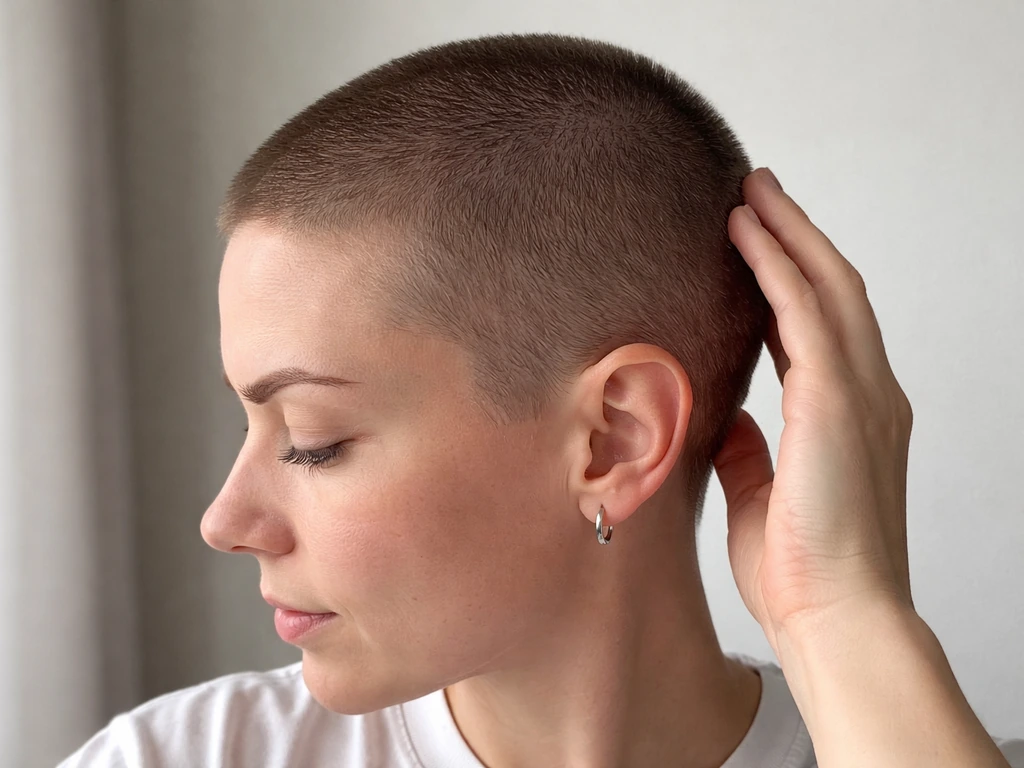
Every buzz cut grow-out goes through roughly the same five stages, and knowing what comes next makes each one easier to survive. The timeline below assumes average growth of about 0.5 inches per month, which is the figure the American Academy of Dermatology consistently cites. Some people grow a little faster (up to about 0.7 in/month), some a little slower, and genetics plus age play the biggest role in that variation.
| Stage | Approx. Length | Timeframe | What It Looks Like |
|---|---|---|---|
| 1 – Stubble | 1/16" – 1/4" (1–6 mm) | Weeks 1–3 | Sandpaper texture, scalp still very visible |
| 2 – Short crop | 1/4" – 1/2" (6–12 mm) | Weeks 3–8 | Hair lays flat, patchy areas most visible |
| 3 – Awkward short | 1/2" – 1" (12–25 mm) | Months 2–4 | Enough length to move but not enough to style well |
| 4 – Transition length | 1" – 2" (25–50 mm) | Months 4–7 | Can start shaping; sides and top look different |
| 5 – Workable length | 2"+ (50+ mm) | Months 7–12+ | Actual styling options open up |
Stage 3 is where most people give up and shave it back off. The hair is long enough to look unkempt but too short to tuck behind your ear or slick back convincingly. This is the phase every tip in this article is aimed at helping you push through. One thing worth noting: if your growth seems stalled in the first couple of months, that delay can actually be real.
High physical or emotional stress can push more follicles into a resting phase (called telogen effluvium), temporarily slowing visible regrowth by two to three months. Major illness, surgery, or a significant stressful period are common triggers. If that applies to you, the slowdown is temporary and growth does resume once the trigger is resolved.
How to make a buzz cut grow faster (what actually works)

There is no shortcut that adds two extra inches overnight, but there are real, evidence-backed factors that determine whether you hit the slower or faster end of that 0.5–1.7 cm monthly range. Focusing on these gives your hair the best possible environment to grow at its natural maximum.
- Protein intake: Hair is almost entirely keratin, a protein. Low protein diets are a documented trigger for slower growth and increased shedding. Getting enough complete protein daily is one of the most direct things you can control.
- Iron levels: Iron deficiency is one of the most common and correctable causes of sluggish growth and shedding, particularly for women. If you suspect this, a simple blood panel (CBC, serum ferritin, and iron saturation) can tell you where you stand, and correcting a deficiency often results in noticeable improvement in regrowth.
- Scalp circulation: Scalp massage, even just a few minutes a day while washing, encourages blood flow to follicles. It costs nothing and has real support in the research.
- Sleep and stress management: Chronic stress literally shifts follicles into a resting phase. Prioritizing sleep and stress reduction is not just wellness advice; it directly affects the growth cycle.
- Hydration and overall health: Follicles respond to general health. Dehydration, crash diets, and nutrient deficits all slow things down.
- Avoid heat damage: At this short length, heat is less of an issue, but as you move into stage 3 and 4, keeping heat tool use moderate protects the strands you do have.
One thing you cannot hack your way around: genetics. Your follicle density, growth rate ceiling, and regrowth pattern are largely inherited. If the men in your family have a slower growth rate or a specific regrowth pattern, yours will likely follow. Accept what you cannot change and optimize what you can.
Growing it out evenly: fixing patches and uneven regrowth
Uneven regrowth is one of the most frustrating parts of the early stages, and it catches almost everyone off guard. Some areas of the scalp simply have faster-cycling follicles than others. The crown tends to grow fastest, the hairline and temples slowest. Add any existing thinning areas or cowlicks into the mix and the patchiness can look dramatic at the half-inch length.
The most effective strategy for keeping things looking even during stages 1 and 2 is to keep everything the same length with regular, light maintenance trims. If you let the fast-growing areas run ahead, the difference becomes even more pronounced. Visiting a barber every two to four weeks and asking for a light tidy-up with a longer guard than your original buzz (gradually stepping up in size) keeps the overall shape cohesive.
To track whether patches are filling in over time, take monthly photos in the same spot with the same lighting and hold a small object like a coin or a ruler next to the area so you can see the actual size reference consistently. It sounds overly precise, but it genuinely helps you see progress that is hard to notice day to day.
If you have a persistently patchy area that does not seem to be catching up after three or four months, it is worth ruling out a scalp health issue. Seborrheic dermatitis, a very common condition, can slow or disrupt growth in affected patches. The American Academy of Dermatology notes that seborrheic dermatitis treatment may include blank" rel="noopener noreferrer">FDA-approved topical ketoconazole for people ages 12 and older with a healthy immune system. A dermatologist can confirm the diagnosis, and treatment is usually straightforward (blank" rel="noopener noreferrer">a ketoconazole-based shampoo used twice weekly is a standard first-line approach). Do not let a treatable scalp condition silently sabotage your grow-out.
Male vs. female styling transitions: what to do at each length
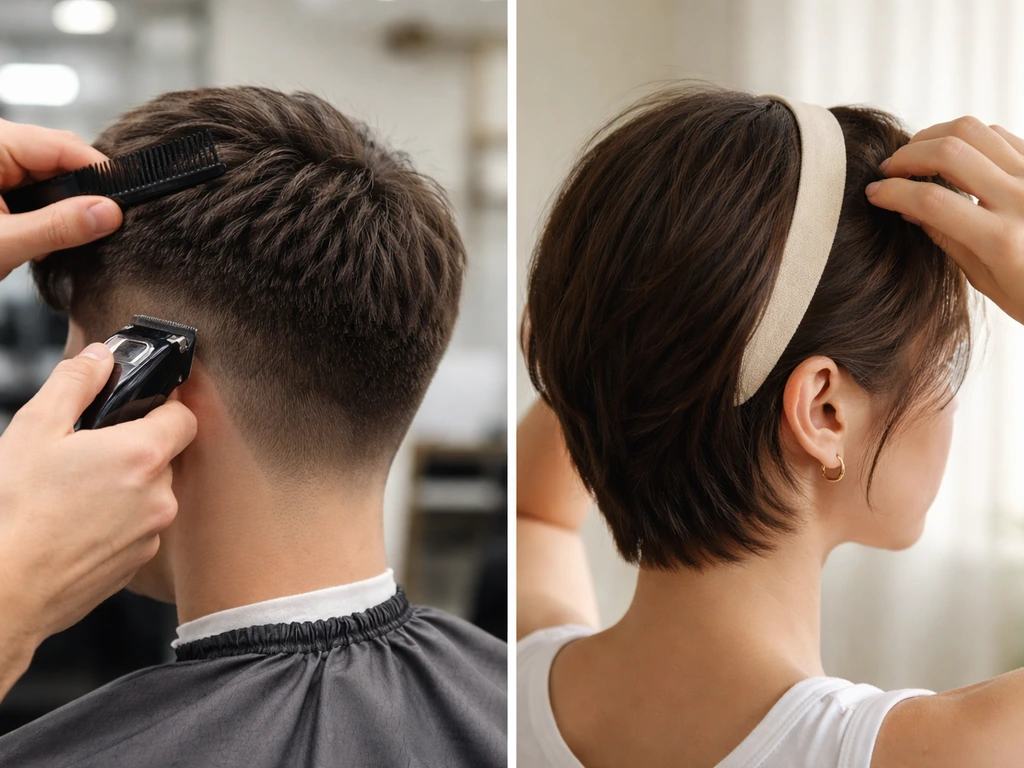
The basic biology of growth is the same regardless of gender, but the styling options and social pressures at each stage differ enough to address separately. For anyone growing out curly or coily hair specifically, the texture adds its own layer of complexity that growing curly hair from a buzz cut covers in more detail.
For men
Men typically face the awkward phase most visibly around the two to four month mark, when the hair is too long to look like a maintained buzz but too short for any classic men's style. The best moves at each stage:
- Stage 1–2 (under 1/2"): Keep the buzz maintained with a progressively longer guard. Start at your original length, then bump up one guard size every two to three weeks. A #2 (6mm) growing into a #3 (9mm) into a #4 (12mm) is a clean, intentional-looking progression. Always fade or blend the sides to avoid a hard line.
- Stage 3 (1/2" to 1"): This is the hardest stretch. A textured crop or French crop works well here because a barber can disconnect the top from the sides and create a style that looks deliberate. Keeping the sides short with a skin fade buys you weeks of looking intentional even as the top grows out.
- Stage 4 (1" to 2"): A side part, textured quiff, or slick-back becomes possible. This is when a proper stylist visit matters most, as scissor work to shape the top makes a significant difference. Ask for scissor-over-comb blending rather than clipper-only cuts.
- Stage 5 (2"+): You are out of the awkward phase. Classic men's cuts like the ivy league, medium-length textured styles, or even the beginning of a longer undercut are all viable.
For women

Women growing out a buzz cut often feel the social pressure most acutely in stages 2 and 3. Accessories become your best friend here. Headbands, scarves, and simple clips can make a 1-inch length look intentional. At stage 3, a pixie-style shaping from a stylist (taking length off the sides while leaving the top to grow) can carry you through several more weeks without looking shapeless.
By stage 4, a textured pixie or shaggy lob starts to become achievable, and from there the grow-out blends into a more conventional progression. Color is also a powerful tool: a single-process color or even a toner can add visual dimension and make short, growing-out hair look far more styled than the plain regrowth color alone.
Maintenance while growing: trims, shaping, and blending
One of the most common mistakes people make when growing out a buzz cut is avoiding the barber entirely. The logic makes sense on the surface (every cut removes length), but it leads to a scraggly, unintentional look that makes the process feel much longer. The goal of maintenance trims is not to cut length but to shape the silhouette. Asking your barber to clean up the perimeter, tighten the neckline, and blend the sides while leaving the top untouched is a completely legitimate request, and any good barber has done it a hundred times.
For men keeping a line-up or sharp hairline, maintaining those edges every two to three weeks makes a large difference in how the overall growth looks. Even at two months of regrowth, a clean, fresh edge-up around the temples and neck signals intention and grooming. The same principle applies to undercut blending: if you had an undercut, ask your barber to keep blending the undercut line upward as the top grows, rather than letting a hard shelf appear. Learning how to grow your hair out from a buzz cut with a strategy for each maintenance visit makes the whole timeline feel much more manageable.
Scissor-over-comb work (rather than pure clipper cuts) becomes especially useful from stage 3 onward. It gives more control over texture and graduation, and it blends the different growing zones of the head more naturally than clipper guards alone. If your barber defaults to clippers only, specifically ask whether they can incorporate scissor work for softening.
Products and scalp care for better texture and less awkwardness
At the stubble and short-crop stages, most of the "styling" is actually scalp and skin care. A clean, healthy scalp grows hair more efficiently and looks much better when the hair itself is still very short.
- Wash frequency: Shampoo two to three times a week. Daily washing can strip the scalp of natural oils, which can cause dryness and flakiness that shows up clearly on short hair. If you work out daily, rinse with water and condition lightly on off-shampoo days.
- Scalp moisturizer or light oil: A few drops of jojoba or argan oil massaged into the scalp after washing reduces dryness and supports follicle health. At short lengths this also adds a slight sheen that makes the hair look more groomed.
- Lightweight styling products for stages 3 and 4: Once you have half an inch or more, a small amount of matte clay, pomade, or styling cream can texturize and control the hair without weighing it down. Avoid heavy waxes at this length since they can clump and accentuate any unevenness.
- SPF for the scalp: This one gets ignored constantly. At buzz-cut length your scalp is exposed to sun, and sunburn on the scalp is painful and can temporarily stress the follicles. A light spray SPF or wearing a hat outdoors protects the investment you are making.
- Scalp exfoliation: A gentle scalp scrub once a week removes product buildup and dead skin that can clog follicles. This is especially useful if you live in a humid climate or use heavy products.
If you have naturally curly or coily hair, the product routine at stage 3 and beyond changes significantly. Heavy oils and leave-in conditioners become more important to manage texture, and the way the curl pattern re-emerges can make the awkward phase look more interesting rather than messy if you work with it. For men with curly hair specifically, growing out curly hair as a man offers targeted advice for managing that specific texture through the transition. And if your curls tend to grow out and wide rather than down, knowing how to make curly hair grow down instead of out can save you from the triangle silhouette that catches many curly-haired people off guard at stage 3 and 4.
When to stop managing the buzz and start making real haircut choices
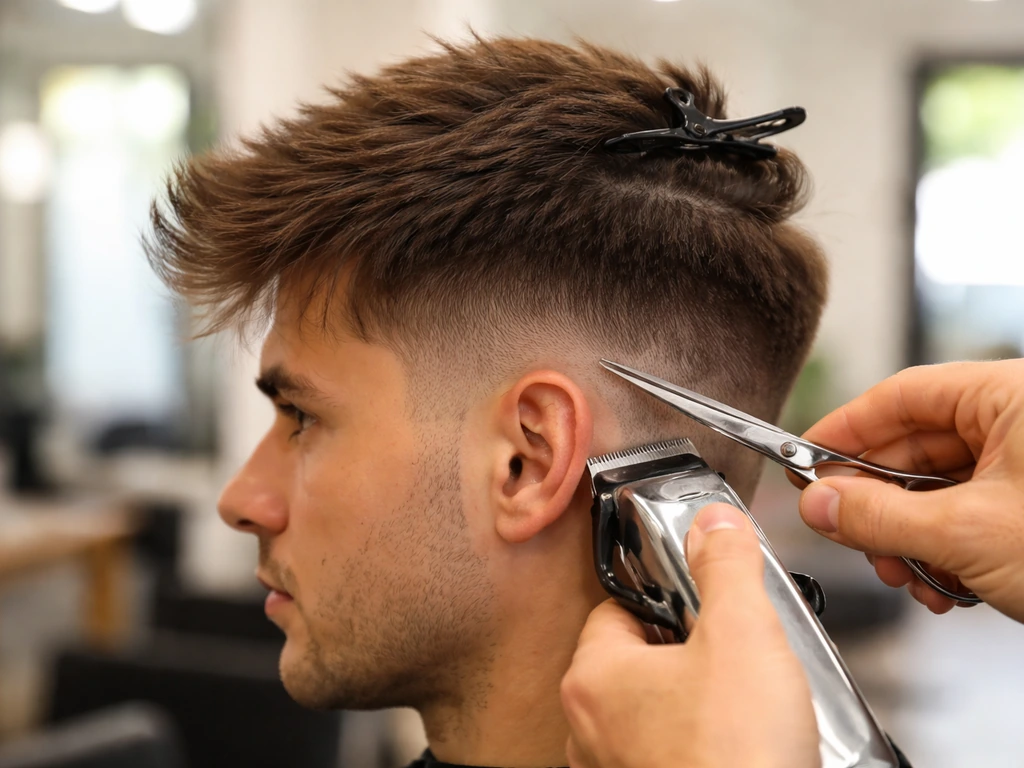
The transition from "maintaining a growing buzz" to "getting a real haircut" happens around the four to five month mark for most people, when the hair is at or past an inch on top. This is the moment to shift your mindset from survival mode to design mode. Instead of asking your barber to just clean things up, come in with a reference photo and a clear conversation about where you want to end up.
A few lengths that work well as targets and transition points:
| Target Length | Style Examples | Est. Time from Buzz | Notes |
|---|---|---|---|
| 1–1.5" on top | Textured crop, French crop, pixie | 3–4 months | Needs a good fade/taper on sides to look intentional |
| 2–3" on top | Side part, quiff, shaggy pixie, lob beginning | 5–7 months | First point where styling truly opens up for most people |
| 4–6" on top | Medium men's cuts, lob, short bob | 8–12 months | Fully out of the buzz-cut grow-out phase |
| 6"+ on top | Long layers, bun, ponytail, mid-length | 12–18 months | Goal length for those wanting longer hair |
If you are growing from short curly or natural hair after shaving, the timeline can feel different because the curl pattern changes how length is perceived. What looks like two inches of length when stretched may only sit at one inch once it springs back. Growing curly hair after shaving your head addresses those specific challenges, including how to handle the awkward puff stage. For anyone targeting longer curly lengths, growing curly hair past the shoulders is worth bookmarking now even if you are still in early stages, because the habits you build in month one genuinely affect how your hair behaves at month twelve.
At every length, the most important thing is to work with a stylist or barber who understands the grow-out process and is not just trying to sell you a restyle. Tell them explicitly: "I am growing this out. I want to keep as much length as possible while keeping it looking intentional." That framing changes the entire consultation. If you have straight or wavy hair and are wondering how general short-to-long regrowth principles apply, growing out curly hair from short lengths shares many overlapping strategies around managing shape and texture during the awkward phase that translate across hair types.
The grow-out is a long game, but every stage has a move. Stubble gets a clean fade. Short crop gets a guard step-up. The awkward phase gets a textured crop or pixie shaping. Transition length gets scissor work and a style conversation. Once you know what to do at each stage, the process stops feeling like waiting and starts feeling like a progression you are actually steering.
FAQ
What if my buzz cut grow-out seems to stall even though it’s only been a couple months?
Use the “one trigger, one response” rule. If you had major stress or illness in the last 6 to 12 weeks and you notice regrowth feels slower, avoid changing five things at once (new supplements, new products, new haircut frequency). Focus on scalp health and keep trims consistent, then reassess after about 3 months, since telogen effluvium can delay visible growth even when follicles are restarting.
How often should I get trimmed while growing out a buzz cut so it stays even?
If you want to look even while you wait, aim for a haircut schedule that prevents fast zones from getting too far ahead. A practical approach is a small maintenance visit every 2 to 4 weeks early on, but tell your barber to keep the top length untouched and only tidy the perimeter and blend the sides, so you shape the silhouette without resetting progress.
What scalp care should I focus on during the stubble and short-crop phases?
Lightly moisturizing the scalp can help comfort and keep shedding patterns from looking more severe, but avoid heavy, oily buildup at the very short stages. If you’re prone to flaking, consider alternating a medicated anti-dandruff shampoo (for example, ketoconazole-based if a clinician recommends it) with a gentle shampoo so you don’t accidentally worsen residue or irritation.
How do I know whether patchiness is “normal uneven growth” versus a scalp problem?
For a persistently patchy spot, do not rely on waiting longer without checking the cause. If there is no improvement after 3 to 4 months, especially if patches are smooth, itchy, scaly, or inflamed, book a dermatology visit to rule out conditions beyond typical uneven growth (like seborrheic dermatitis) and to check whether other factors are involved.
What’s the best way to track progress when the changes are too subtle to notice daily?
Plan your “photos before you style” workflow. Take monthly photos at the same angles (front, both temples, crown), with consistent lighting, and include a fixed reference like a coin held the same distance from the scalp. Then compare how the area of coverage changes, not just how the hair looks from day to day.
How should I handle an undercut or sharp hairline while growing out a buzz cut?
If you had an undercut or hard line, ask for a “gradual lift” plan, meaning the barber should blend the undercut upward as length returns rather than letting a sharp shelf form. At shorter lengths, you can also request a slightly softer neckline cleanup every 2 to 3 weeks to keep the regrowth looking intentional.
What can I do when the hair is too short to style but looks messy?
At around stage 3, your hair may look too short to style, but you can still create shape with product amount and technique. Use a small amount of matte product or styling cream, then do a directional set (push forward or slightly to the side) so the hair lies the way you want while it gains length, rather than trying to “hold” it like longer hair.
Can hair color make the awkward grow-out phase look better, and what should I watch for?
Yes, but treat color as a camouflage tool, not a shortcut for growth. If you do color, keep it consistent (for example, one-process plus a toner if appropriate) so the regrowth doesn’t create a blotchy contrast as new hair emerges. If your scalp is sensitive, prioritize patch tests and avoid aggressive procedures during the early awkward stage.
Do cowlicks and uneven growth mean I’ll always look patchy while growing out?
If you have straight or wavy hair, cowlicks and crown growth can still create unevenness, even if your hair is fine. The useful lever is cut planning: request scissor work or blended graduation starting at stage 3 so different zones don’t grow out at the same height visually.
What should I tell my barber so they help, rather than accidentally make my grow-out longer?
A barber or stylist can help more than you expect if you give constraints. Bring a target length reference photo and explicitly say you want to maximize top length while only shaping the perimeter and blending as regrowth catches up. This prevents “reset haircuts” where the top gets shortened to create immediate style.