
Growing out short curly hair is absolutely doable, but it comes with a specific set of challenges that straight-hair advice just doesn't cover: shrinkage that hides your progress, tangles that show up the moment your curls get any length, and awkward phases where your hair seems to grow outward before it grows down. If you want curly hair to grow down instead of out, focus on reducing shrinkage and minimizing breakage with a curl-friendly routine and smart trims awkward phases where your hair seems to grow outward before it grows down. The good news is that with the right routine and a trim strategy that actually makes sense for curly hair, you can get through every stage without reverting to a short cut out of frustration.
How to Grow Out Curly Hair From Short Without Breakage

Marcus Vickers
22 Apr 2026
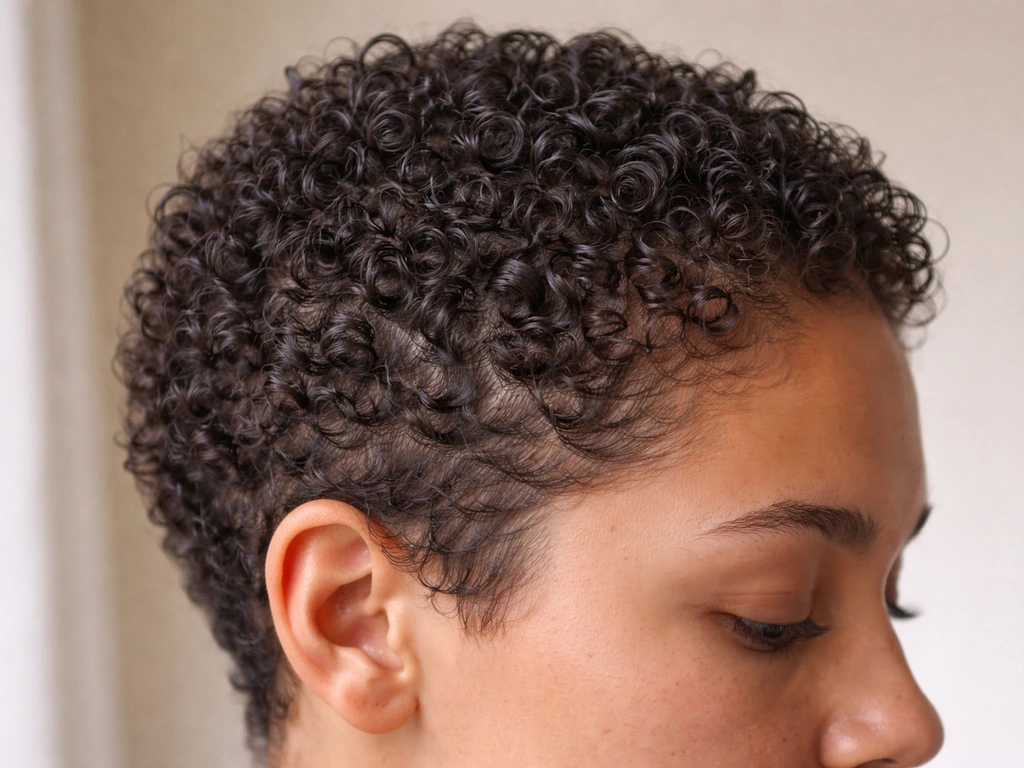
How long this is actually going to take
Let's be honest about the timeline first, because unrealistic expectations are what drive most people back to the salon for a cut they didn't want. Scalp hair grows roughly 1 cm per month on average, with some clinical sources citing around half an inch (about 1.27 cm) per month. There's real individual variation too: the reported range runs anywhere from 0.6 cm to over 3 cm per month depending on genetics, age, health, and scalp condition. You won't know exactly where you fall until you start tracking it.
Here's a rough stage-by-stage look at what to expect growing from buzz or pixie length into longer curly hair:
| Timeframe | Approximate Grown Length | What Your Curls Are Doing |
|---|---|---|
| Months 1-3 | 1-4 cm of new growth | Just starting to show curl pattern; may look fluffy or uneven |
| Months 3-6 | 3-7 cm of growth | The classic awkward phase: sticks out, won't lay flat, shrinks significantly |
| Months 6-12 | 6-12 cm of growth | Enough length to start styling with more options; shrinkage still noticeable |
| Months 12-18 | 12-18 cm of growth | Shoulder-skimming length possible for loose curl types; tight coils still shorter due to shrinkage |
| Months 18-24+ | 18-25+ cm of growth | Meaningful length for most curl types; tighter patterns may still feel 'stuck' due to shrinkage |
Shrinkage means your hair's dry, curled length is always shorter than its actual grown length. A tight coil pattern can shrink 50 to 75 percent or more, so 12 months of growth might look like only 4 or 5 cm of visible length when dry. That's not stalled growth; that's physics. Keep this in mind so you don't panic and cut it all off again.
Trim smart, don't skip trims entirely
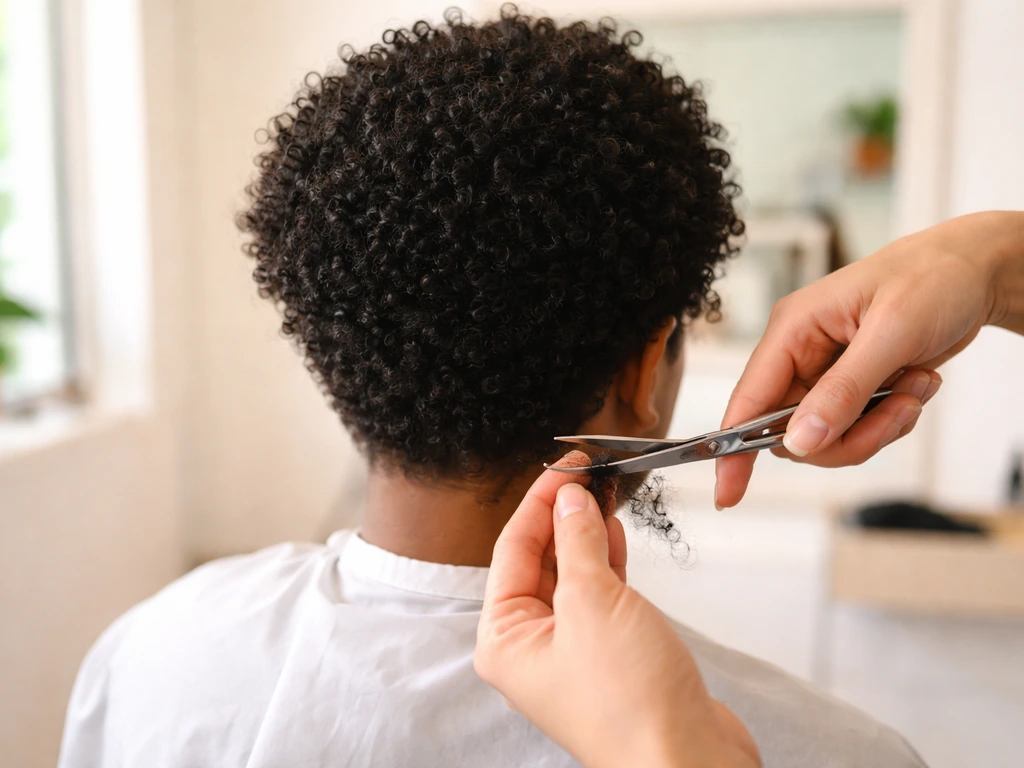
The most common advice you'll hear is 'don't get any trims if you want to grow your hair.' That's wrong for curly hair, and following it leads to split ends that travel up the hair shaft and cause breakage. Breakage is what actually stalls your visible progress, because you lose length from the ends faster than you grow it from the scalp.
The better approach: get a small dusting trim every 10 to 12 weeks, removing just 0.5 to 1 cm of the ends. This is enough to remove splits without sacrificing meaningful length. If your ends are already damaged from color, heat, or a previous chemical service, you may need a slightly more significant trim at the start to get to a healthier base, even if it feels like it delays things. It doesn't. Healthy ends retain length far better than damaged ones.
Ask your stylist specifically for a 'curl-aware' or 'DevaCut-style' dry cut if possible. Devacurl describes its DevaCut as a personalized dry haircut designed to suit your curl pattern, helping preserve and enhance your natural curl shape. This means trimming each curl individually in its dry, natural state rather than cutting straight across a wet stretched strand. Wet cuts on curly hair are notoriously hard to predict because the curl contracts as it dries, and you can end up with unexpected unevenness. If a dry cut isn't available, be clear that you want to preserve as much length as possible and only remove the visibly damaged or split ends.
Your daily and weekly curl routine while growing out
Short curly hair in the grow-out phase needs more moisture than it does manipulation. Every time you handle the hair without enough slip or hydration, you're creating friction, and friction at short lengths creates breakage right where you can least afford it. Here's a routine that actually works for growing curls:
Washing
Co-wash (conditioner-only washing) or use a low-sulfate, curl-friendly shampoo two to three times a week at most. Overwashing strips the scalp and hair of natural oils that act as built-in moisture. If you exercise daily and feel like you need to rinse more often, rinse with water only and then apply a small amount of conditioner to the ends, not a full shampoo wash.
Conditioning and detangling
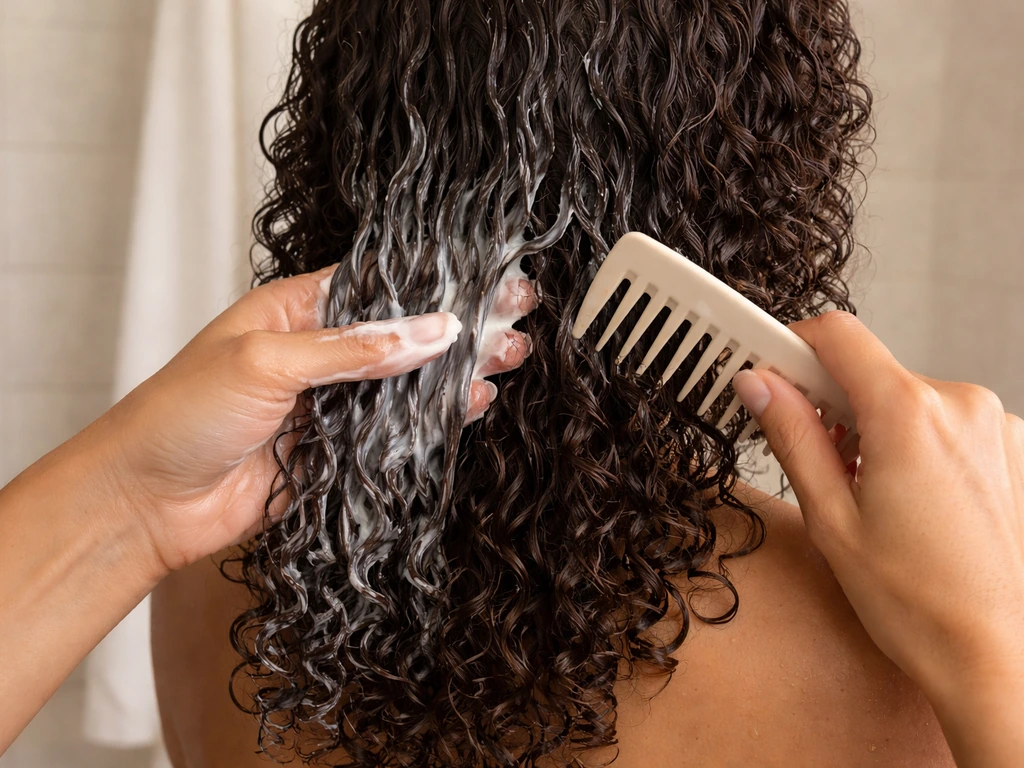
Apply conditioner generously every wash, and detangle only while the conditioner is in and the hair is wet. Start at the ends and work toward the roots using a wide-tooth comb or your fingers. Never detangle dry curly hair during the grow-out phase, especially when it's in that fluffy, in-between stage. That's when it's most prone to breakage. If your hair is very short (under 5 cm), fingers are usually enough for now.
Deep conditioning
Use a deep conditioning treatment or hair mask once a week. This is especially important if your hair has any history of coloring, relaxing, keratin treatments, or heat damage. Look for ingredients like shea butter, glycerin, aloe vera, or panthenol. Leave it on for at least 20 to 30 minutes, or use a heat cap to help the product penetrate.
Moisture sealing
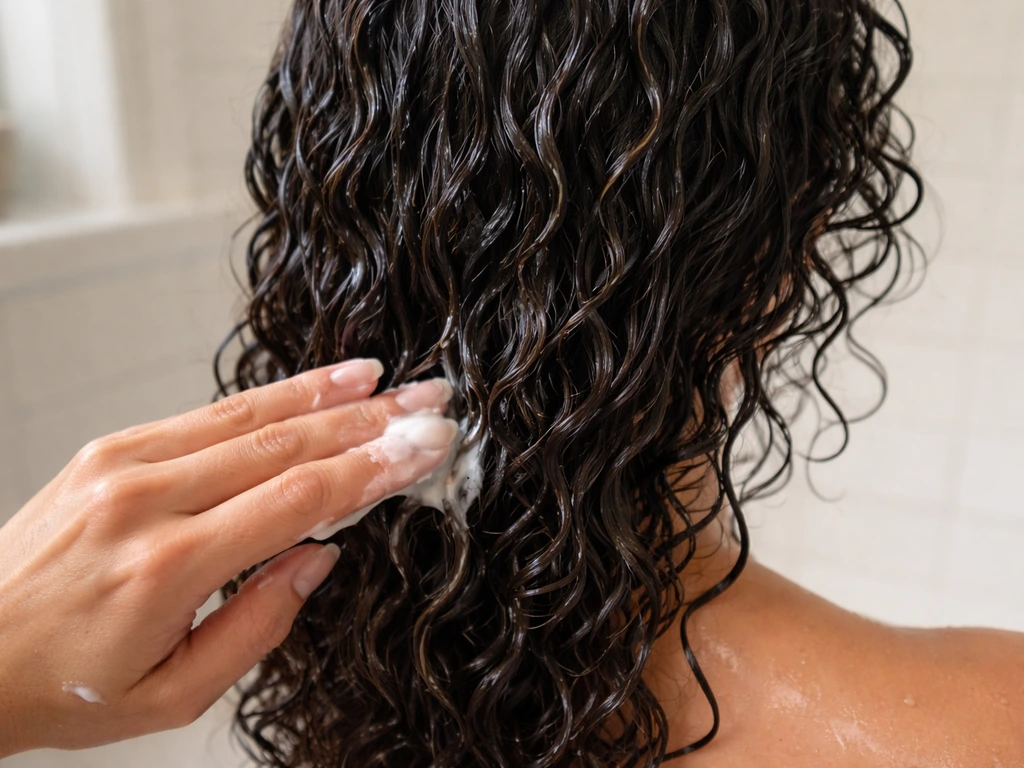
Apply a leave-in conditioner while your hair is still dripping wet, then layer a cream or gel on top to seal that moisture in. This LOC or LCO method (Leave-in, Oil, Cream or Leave-in, Cream, Oil) is particularly effective for type 3 and 4 curl patterns that tend to lose moisture fast. Even for looser curl types, a lightweight leave-in plus a curl cream will dramatically reduce frizz and tangles as your hair grows.
Protecting at night
Sleep on a satin or silk pillowcase, or use a satin bonnet. Cotton pillowcases create friction that causes breakage and pulls out moisture overnight. At short lengths, a bonnet is easier and gives better coverage. This one habit alone can meaningfully slow down the breakage that makes the grow-out feel like it's going nowhere.
What to do with your hair at each stage
Each growth stage has its own styling challenge. Here's what actually works at each phase so you're not fighting your hair every morning.
Very short (1-3 cm, buzz to early pixie regrowth)
At this length there isn't much to do, and that's okay. A lightweight curl-defining cream or curl activator applied to damp hair will encourage the curl pattern to form and prevent that dry, frizzy look. Let it air dry and don't touch it while it's drying. Head wraps, wide headbands, or a printed scarf tied at the nape of the neck can add a finished look while your hair is in this early stage.
The awkward in-between (3-7 cm)
This is where most people give up, and it's the stage that requires the most creative styling. If you are starting from a buzz cut, the next step is to match your trim schedule and day-to-day routine to how hair grows in at very short lengths. Your curls are long enough to have a mind of their own but too short to be managed easily. The go-to moves here are: finger coiling the front sections to define them, using a headband or wide clip to keep sides down, and embracing a wash-and-go with a strong-hold gel to keep the shape intact as it dries. For men growing out curly hair from a buzz cut or short fade, this is typically the hardest phase, and a similar approach applies. This guide focuses on the same steps and styling fixes for how to grow out curly hair men, stage by stage growing out curly hair.
Getting some real length (7-12 cm)
Now you have enough curl to work with. Pineappling at night (loosely gathering hair on top of your head in a very loose scrunchie) starts to protect your curl pattern. You can begin doing low-manipulation styles like a fluffy puff, a loose twist-out, or braid-out to stretch the curls slightly and show more length. If you have loose waves or type 2 curls, you may be at or near bob length at this point.
Approaching the shoulder (12 cm and beyond)
You have real options now. Twist-outs, braid-outs, wash-and-gos, and even some updos come into play. The key styling focus here shifts from 'getting through the day' to building a real curl routine: refreshing second-day curls with a water and conditioner spray, protective styles like flat twists or cornrows for low-manipulation weeks, and learning how much product your curl pattern actually needs at this weight. The hair is heavier than it was short, and product amounts change.
Shrinkage, bangs, and uneven growth
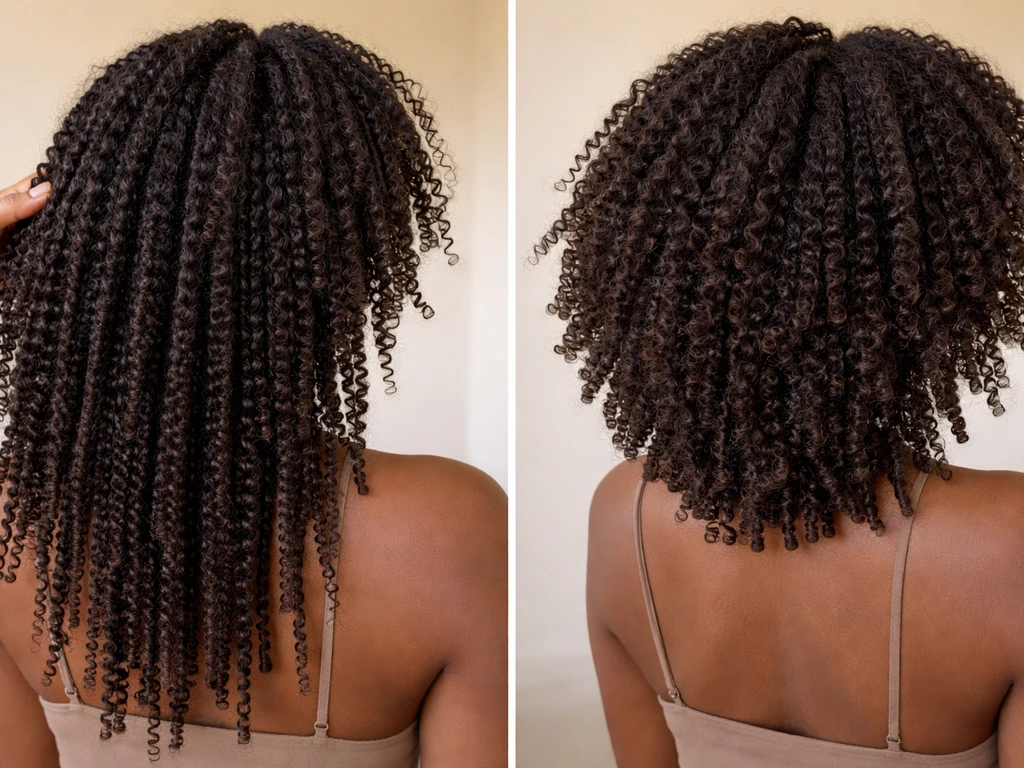
Shrinkage is the gap between your hair's stretched length and its dry, curled length. For tight coil patterns (type 4), shrinkage can be more than 50 percent. This is normal and not a problem with your routine. It just means that what looks like two inches of hair in a dry wash-and-go might actually be four or five inches stretched. The best way to track real growth is to stretch a single strand gently and measure it every month, rather than eyeballing it curled.
If shrinkage bothers you at certain stages, you can temporarily elongate your curls with a banding method (loosely tying small sections of damp hair at intervals with scrunchies), a diffuser on a low heat setting, or a twist-out that stretches the curl before it sets. These aren't permanent changes to your curl pattern; they just buy you some visible length on days when you need it.
Bangs are a specific grow-out challenge because they're shorter than the rest of your hair and tend to curl differently due to their position around the face. The most practical strategy: pin them back or to the side while they grow to the point where they blend with the rest of your hair. Flat twisting them back or incorporating them into a simple clip style works well. Avoid cutting them again even if they annoy you; once they're blended with the rest of your length, you'll appreciate having them.
Uneven growth is also common, especially if you're growing out an undercut or a cut with layers at very different lengths. The nape, sides, and top all grow at roughly the same rate but may look wildly different because of where the previous cut left them. A curl-aware stylist can sometimes blend these areas with strategic dusting trims so the shape stays cohesive while everything catches up. If the unevenness is extreme, a very light shape-up every 8 to 10 weeks helps more than ignoring it.
Damage, breakage, and dealing with color or chemical history
Damage is the biggest real obstacle to growing out curly hair. Curly hair is structurally more porous and fragile than straight hair, and past chemical treatments make that worse. If you've had a relaxer, perm, keratin treatment, or heavy bleaching, the hair that's already grown out carries that damage until it's cut off. You can't repair the actual protein bonds, but you can manage the fragility so the hair doesn't break before it can grow out.
For chemically processed hair, protein treatments every three to four weeks can temporarily reinforce the hair shaft and reduce breakage. Look for products with hydrolyzed keratin or wheat protein. Be careful not to overdo protein though; too much makes hair brittle and worsens breakage. Alternate protein treatments with deep moisture treatments and pay attention to how your hair feels: if it's stiff or snapping easily, you've overdone protein and need more moisture.
If you're in a color transition (for example, growing out bleached or dyed sections while your natural color comes in), you're dealing with two completely different textures in the same strand. The line of demarcation where processed hair meets natural regrowth is the weakest point and the most likely to break. Handle this area with extra care: apply a strengthening treatment specifically to the mid-lengths, avoid any tension or tight styling at that point in the strand, and plan on more frequent small trims to remove the most damaged portions over time as your natural hair grows in.
Heat damage is another form of chemical-level trauma. If you've straightened your curls repeatedly in the past, some sections may have lost their curl pattern semi-permanently. Those sections may grow in looking looser or wavier than the rest. The only solution is to grow them out and trim them off gradually; there is no product that restores the curl's original protein structure once heat has altered it significantly. As you grow, you'll start to see your true curl pattern returning in the new growth, which is often the most motivating part of the process.
Your starting point right now
If you're reading this at the very beginning of your grow-out, here's what to do this week: switch to a sulfate-free or low-poo cleanser, get a quality leave-in conditioner and curl cream, and order a satin bonnet or pillowcase if you don't have one. Those three things address moisture loss and breakage immediately, which is where visible progress is won or lost.
Then book a small dusting trim if your ends are already split or damaged, tell the stylist your goal explicitly (growing out, preserve length), and ask for a curl-aware approach. After that, your job is mostly patience and consistency with your routine.
If you're specifically growing out after a full shave or buzz cut, the early regrowth phase has its own nuances worth digging into. And if you're growing out curly hair past the shoulder, the routine shifts again once you hit that length because the ends become the oldest and most fragile part of the hair. If you want a step-by-step plan for the early buzz-cut regrowth phase, see how to grow curly hair from a buzz cut for specific do and don'ts. If you're wondering how to grow curly hair past shoulders, focus on protecting fragile ends while keeping your routine consistent as your curls get heavier. The core principles here apply at every stage, but knowing what's coming next makes the in-between months a lot easier to sit through.
FAQ
How can I tell if my hair is actually growing or if I’m losing length to breakage?
Track one stretched strand from root to tip monthly (gently stretching, no pulling), and also check the ends for new split points. If your stretched measurements stay flat while the ends keep fraying, that points to breakage. If the strand length increases but the dry length looks unchanged, that’s likely shrinkage, not stalled growth.
Should I measure my hair in the dry state or stretched state?
Use stretched measurements for growth tracking and keep dry-length notes for styling expectations. Dry length will vary day to day based on humidity, gel hold, and how well curls clump, while stretched length is more consistent for seeing real progress over time.
Is it better to get a trim right away when I start the grow-out, or wait until I see more damage?
If you already have visible splits, don’t wait. Split ends can travel upward and increase breakage later. A small dusting right at the start (about the same 0.5 to 1 cm approach) helps you start the timeline from a healthier set of ends.
How do I detangle curly hair when it’s really short and tangles form fast?
Detangle only when hair is fully wet and coated with conditioner. Work from ends upward in tiny sections, using fingers first if it’s under about 5 cm. If you hit a knot that won’t release, stop and reapply more conditioner, because forcing it when short increases snapping.
What if my hair feels stiff after protein treatments, or it suddenly breaks more?
If hair feels crunchy, stiff, or looks brittle, you likely overdid protein. Pause protein, switch to more moisture-focused deep conditioning for a few weeks, and reduce the frequency of treatments to avoid repeating the cycle.
Can I use leave-in conditioner and still avoid buildup during the grow-out?
Yes. Use a small amount first, focusing on mid-lengths and ends, and rinse thoroughly at washes. If your hair feels coated, you can clarify occasionally, but avoid doing it right before deep conditioning, since clarifiers can strip oils and make the next wash feel drier.
How often should I wash when I’m growing out short curly hair?
Base it on your scalp, not your curl length. Two to three shampoo or low-poo washes per week is a common range, and if you exercise daily you can rinse with water and add conditioner to the ends instead of doing a full wash each time.
What’s the safest way to refresh curls on day two when my hair is too short for big styles?
Mist with water until damp, then add a small amount of conditioner or leave-in to reintroduce slip. Avoid reworking dry tangles, instead scrunch or smooth gently with your hands to re-form clumps, and limit brushing until it’s wet again.
How do I handle an undercut or very uneven cut without making it look worse?
Treat the uneven areas as separate “zones.” Keep the longest area moisturized and defined, while the shorter zone should be managed with protective, low-manipulation styling (like clips or flat twists) until lengths converge. A curl-aware stylist can blend with strategic dusting trims without cutting straight across curls.
My bangs curl differently and keep poking me, should I just cut them again?
Try pinning and blending first. Because bangs are shorter, they curl and shrink differently, so repeated trims can create an even worse mismatch. Use a flat twist back or clip style until they reach the point where they naturally merge with the rest of your length.
Does a diffuser help reduce shrinkage, or does it increase damage for short curly hair?
A diffuser can temporarily elongate curls if you use low heat and you don’t over-dry. Keep sessions shorter, use heat protectant if you use products that require it, and stop once hair is mostly dry. Overusing high heat can make the ends more fragile, which undermines the grow-out goal.
What should I do if my curl pattern has changed after heat, relaxer, or bleaching?
Expect the new growth to gradually reveal your real pattern, but the old damaged portions may never revert. Focus on reducing friction and managing fragility, and avoid styling that puts tension on the weakest junction where processed hair meets new growth, since that area is usually the first to break.