
Growing out curly hair as a man is completely doable, but it requires a plan. Hair grows roughly 1 cm per month on average, though the real range is anywhere from 0.6 cm to over 3 cm depending on your genetics, health, and habits. The catch with curly hair is shrinkage: your actual length and your visible length are two different things, and that gap is what makes the grow-out feel painfully slow. If you know what to expect at each stage, set up a basic routine that protects your hair, and style with purpose through the awkward phases, you will get there without losing your mind or your confidence.
How to Grow Out Curly Hair for Men: A Step-by-Step Guide

Marcus Vickers
9 Apr 2026
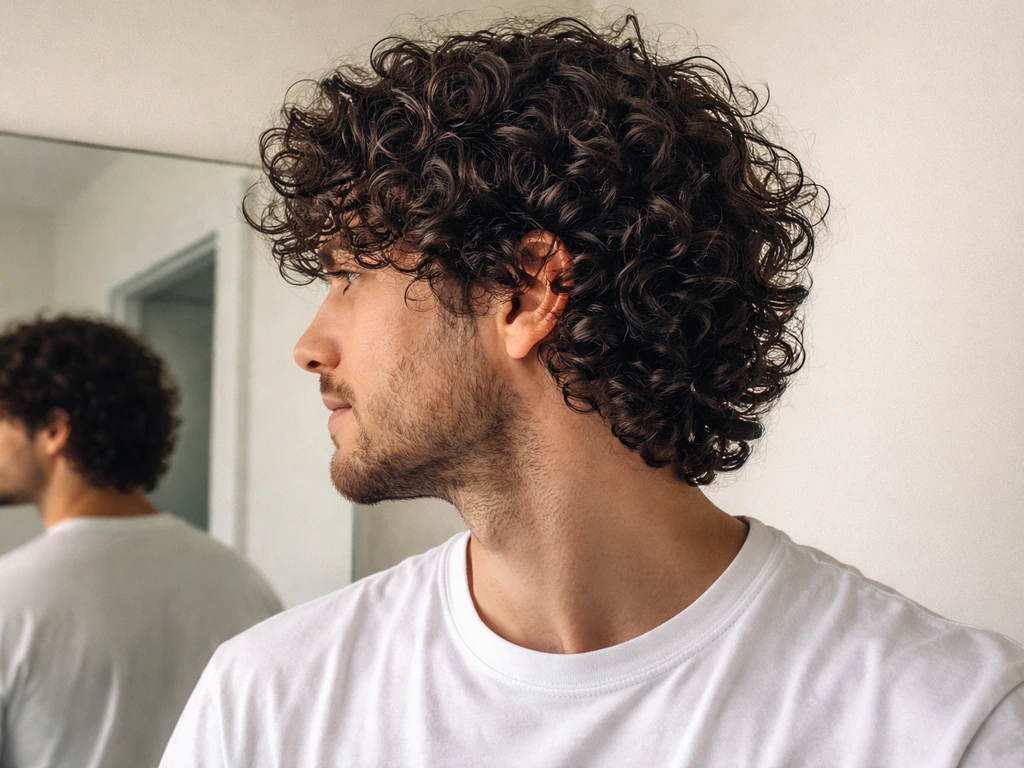
Set a realistic goal and pick a length plan before you do anything else
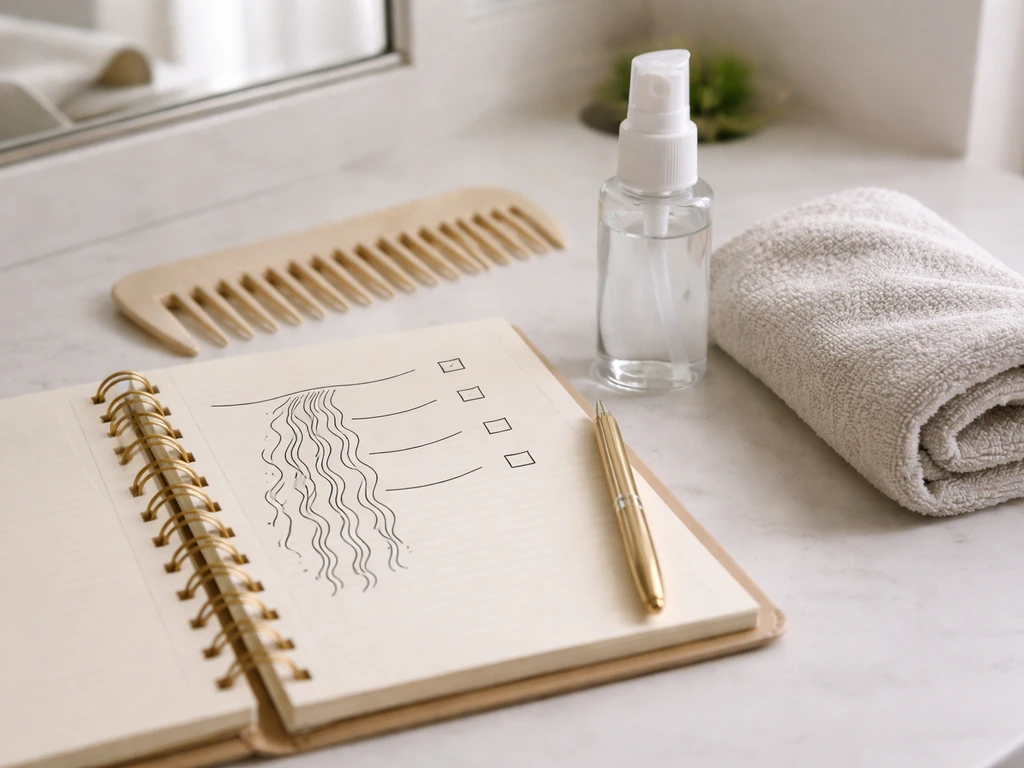
Before you stop cutting, decide what you are actually growing toward. This matters more than it sounds. A man growing curls to his shoulders needs a fundamentally different timeline and patience level than someone going from a fade to a medium afro or a curly top. Get specific: do you want a defined curl length, a freeform longer look, or something in between? Save reference photos, not of someone else's curl type, but of styles that match your own curl pattern. That makes every awkward month feel purposeful instead of random.
Once you have a target, map it against reality. At 1 cm of growth per month, going from a short cut to shoulder-length curls (which might sit at 20 to 25 cm stretched) takes roughly 18 to 24 months of actual growing before shrinkage is factored in. Tight curls can shrink 50 percent or more, so you may need 30 cm of stretched length to see 15 cm of visible length. That is a two-year project minimum. Loose waves shrink far less, so six to twelve months might give you a noticeably longer look. Knowing this upfront means you stop expecting fast results and start working the process.
If you are starting from a very short style, the early stages come with their own specific challenges. The transition from a buzz cut, for example, has a completely different texture and growth arc than growing from a longer short cut, and growing out a buzz cut deserves its own attention because the first few months look and behave like a completely different hair type than what you will eventually have.
Build a routine that actually supports hair growth and scalp health
Hair growth comes from the follicle, so scalp health matters. Keep your scalp clean enough that buildup does not block follicles, but not so stripped of oil that your scalp overproduces sebum to compensate. For most men with curly hair, washing two to three times per week with a sulfate-free or gentle cleanser hits the right balance. Washing too frequently increases your curl's vulnerability to breakage and frizz, while under-washing leads to product buildup and scalp irritation. Find the frequency that keeps your scalp comfortable without drying out your strands.
Conditioning is non-negotiable. Conditioning agents smooth the hair cuticle, which directly reduces breakage and improves manageability. This is not optional styling advice: it is the difference between hair that survives the grow-out and hair that snaps off at the ends before you ever reach your goal length. Use a rinse-out conditioner every wash day and consider a weekly deep conditioning treatment, especially once your hair reaches medium length and the ends start to age.
A few other habits that actually move the needle: sleeping on a silk or satin pillowcase reduces friction that can cause overnight breakage and frizz, which cotton and linen are known to cause. Keeping your body hydrated and your protein intake reasonable supports hair structure from the inside. You will see advice about scalp massage everywhere, and while it feels good, the honest reality is that the research behind it is limited and inconclusive, so treat it as a pleasant ritual rather than a growth shortcut.
What to expect at each stage: short to medium to long
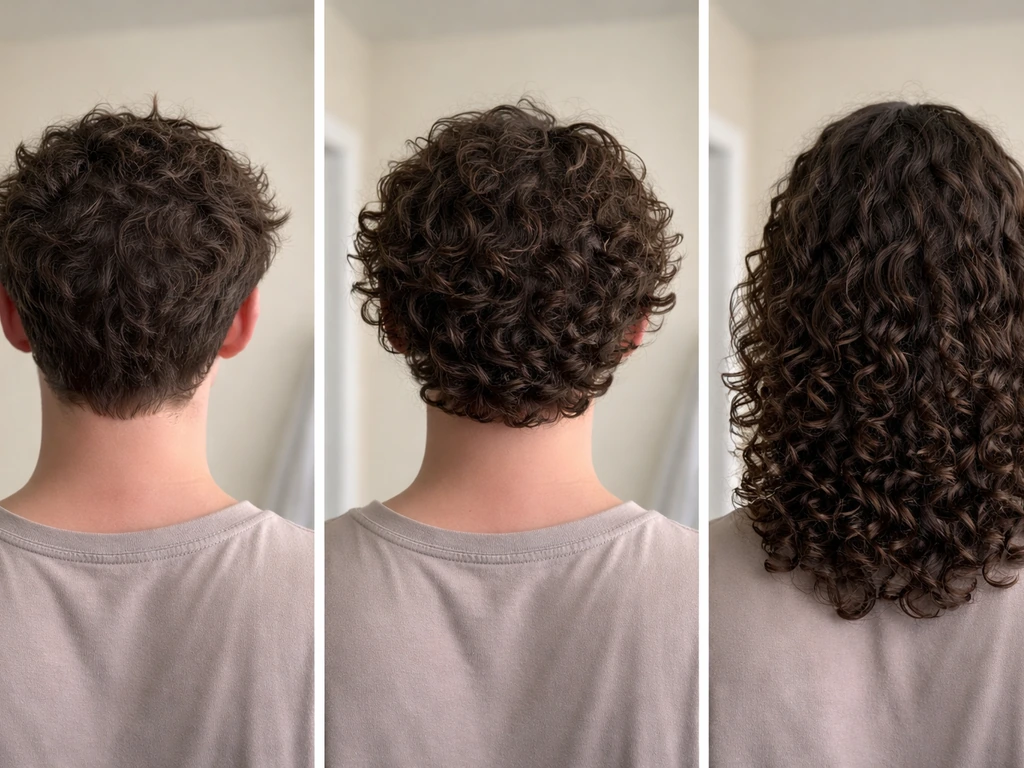
The grow-out has three rough stages, and each one has its own personality. Understanding them ahead of time is what keeps you from panic-cutting at the worst moment.
Stage 1: The rough start (months 1 to 4)
This is the stage most men give up in, and it is also the one where the least is actually happening visually. Hair is growing but curl pattern is just starting to emerge. If you recently had a fade or undercut, you will have a disconnected look where the sides and back are shorter and the top is doing its own thing. The curls may look patchy, coiled in strange directions, or just flat-out messy. This is normal. Your job right now is to protect what is growing, not to make it look perfect. Keep it moisturized, do not manipulate it constantly, and let it do its thing.
Stage 2: The awkward middle (months 4 to 10)
This is the real test. You have enough length that your curls are asserting themselves, but not enough to fall into a defined shape. Shrinkage is most frustrating here because you can feel how much length you have when your hair is wet, then watch it seemingly disappear when it dries. Volume can feel uncontrolled. If you have an undercut growing in, the line between the shorter and longer sections becomes obvious. For men navigating how to grow out curly hair from short lengths specifically, this middle zone is where the most styling creativity is required to get through without cutting it all off.
Stage 3: Finding shape (months 10 and beyond)
Once you have enough length that curls have weight, things start to fall into place. Shrinkage is still there, but you have more stretched length to work with, so visible length increases more noticeably. Curls begin to clump together, which creates definition rather than frizz. This is also the stage where length maintenance becomes important: ends that have been on your head for a year need care. Getting through to this point is worth it.
Managing the most annoying parts: shrinkage, bulk, and shape
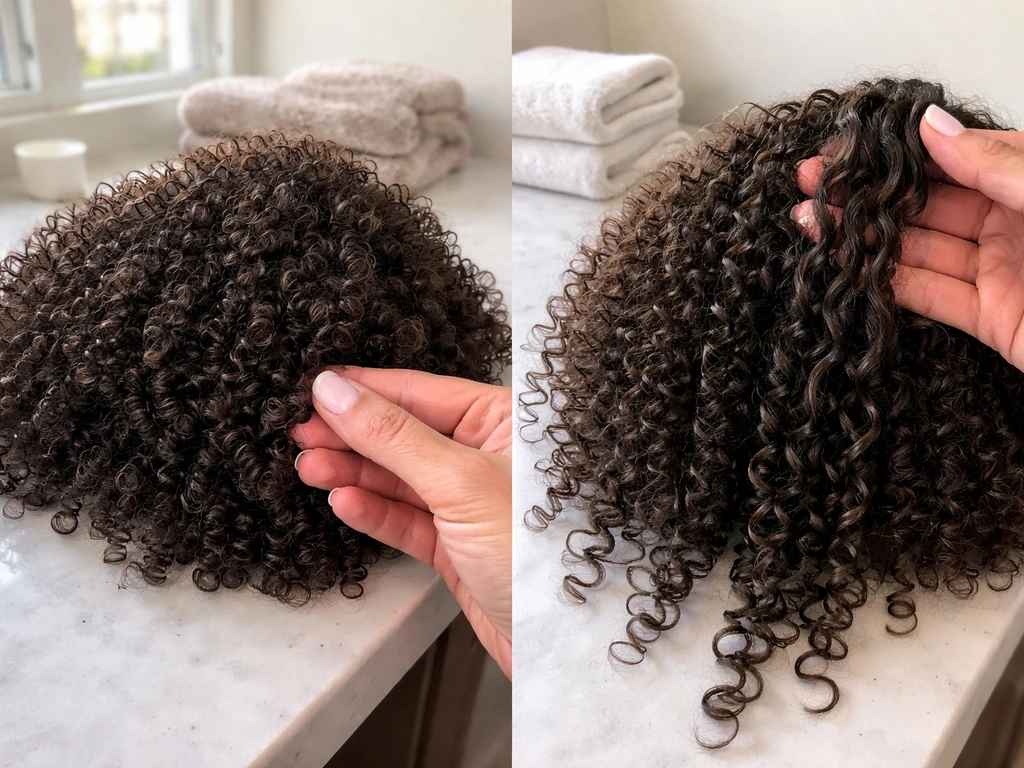
Shrinkage is not a problem you can permanently solve, but you can work with it. It happens because as curly hair dries, the hydrogen bonds in the hair shaft reform and pull the strand back into its natural curl pattern. The tighter your curl type, the more dramatic the contraction. High humidity makes this worse by causing the hair shaft to swell. Rather than fighting shrinkage, build your expectations and your styling around it: stretched length is your actual measurement, and visible length is your public reality.
To visually manage shrinkage without heat, try applying your styling products while hair is soaking wet and then gently stretching sections as they dry, either with your hands or by using a soft microfiber towel diffuse-and-pull method. This encourages a slightly elongated curl pattern without permanently altering the texture. Making curly hair grow down instead of out is something a lot of men want during this phase, and elongation techniques plus proper product weight are the most effective tools for that.
Bulk is a separate issue. When curly hair gains volume before it gains length, you can look like a triangle. A good shape-up from a curl-specialist barber can reduce the perimeter without removing length from the top, creating a rounder, more proportional silhouette. This is not the same as cutting your hair short again: it is sculpting what you have. If you have layers from a previous cut, they will also behave differently as they grow out, creating uneven volume sections. This resolves itself over time, but targeted product application (more on that below) helps in the meantime.
How to style curly hair at every length during the grow-out
Styling curly hair well during the grow-out is not about using the most products. It is about applying the right products at the right time with the right technique. The core method stays consistent across all lengths, but the specific products and techniques shift as your hair gets longer.
The wash-day process that works at any length
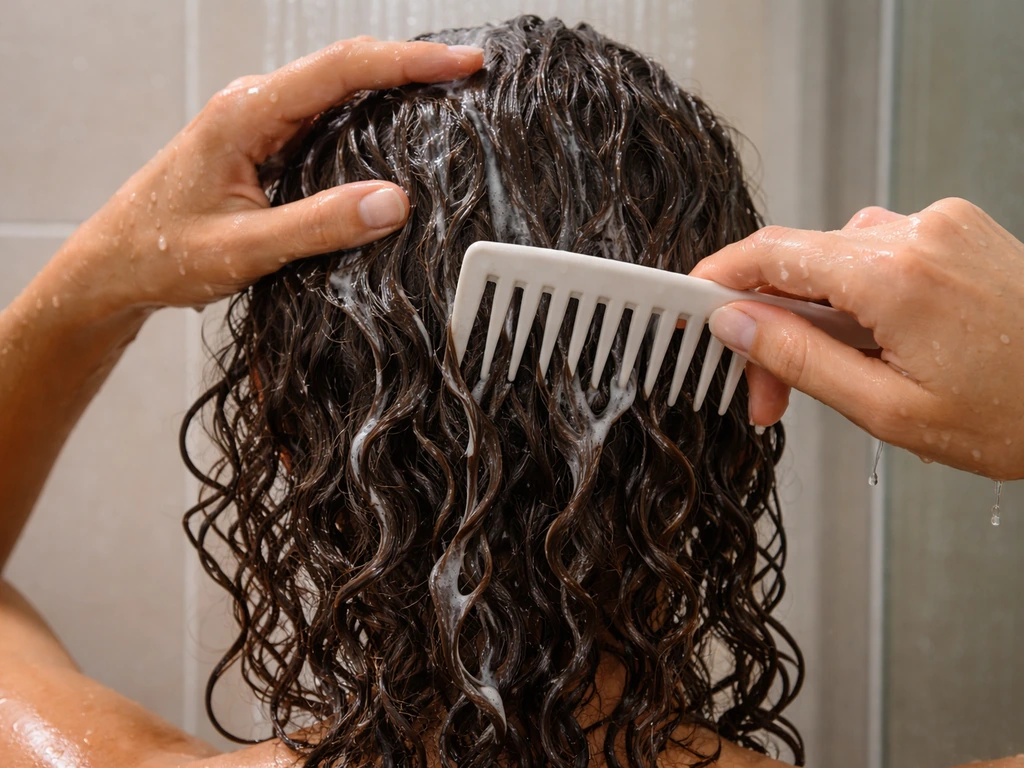
- Start with soaking wet hair. Curly hair needs water before anything else.
- Apply your rinse-out conditioner and detangle in the shower using a wide-tooth comb or your fingers, working from the ends up to the roots. Detangling on wet hair with a moisturizing product is the single most effective way to prevent breakage.
- Rinse the conditioner out (or leave a small amount in if your hair is very dry), then apply a leave-in conditioner to soaking wet hair.
- Layer a curl cream or gel on top while your hair is still dripping. This is the step that locks in definition.
- Scrunch upward toward your scalp to encourage curl clumping. Do not rub or pull.
- Dry with a microfiber towel or a cotton t-shirt using a scrunching motion. Standard terrycloth towels create too much friction and cause frizz.
- Either air dry or use a diffuser on low heat. Once your hair is fully dry, scrunch out any crunch from the gel to reveal soft, defined curls.
Products and techniques by length
| Length Stage | Core Products | Key Technique |
|---|---|---|
| Short (under 3 cm visible) | Light leave-in, curl cream | Scrunch and let dry; avoid touching |
| Medium (3 to 8 cm visible) | Leave-in, curl cream, light gel | Scrunch with gel, diffuse for definition |
| Medium-long (8 to 15 cm visible) | Leave-in, curl cream, strong-hold gel | Section and scrunch, diffuse or air dry |
| Long (over 15 cm visible) | Rich leave-in, heavy curl cream, gel | Rake and scrunch, diffuse upside down for volume |
Between wash days, a spray bottle of water mixed with a small amount of leave-in conditioner is your best friend. Lightly mist and scrunch to refresh curl shape without over-wetting or adding heavy product. Avoid dry-brushing or picking out curls when dry: this causes frizz and can snap strands.
When to trim and how to protect your timeline
Trimming does not make your hair grow faster. That is a myth. But trimming does prevent split ends from traveling up the hair shaft and causing breakage that actually shortens your hair over time. For men with curly hair, a small dusting (removing just 0.5 to 1 cm from the ends) every 10 to 12 weeks is a reasonable schedule if your ends are healthy. If you are heat styling or your ends feel rough and tangly, moving closer to every 8 weeks makes sense. If your ends still feel clean and your curls are defining well at the tips, you can stretch it to 14 or 16 weeks.
The key is finding a barber or stylist who cuts curly hair dry and understands that your goal is length retention, not a style reset. Be explicit: say you want a dusting, not a shape-up. Show them a photo of where you are trying to get. A bad trim with the wrong barber can cost you two months of growth in one appointment.
Here is a realistic timeline to give you something to measure against:
| Month | Approximate Growth Added | What to Expect Visually |
|---|---|---|
| Month 1 to 2 | 1 to 2 cm stretched | Texture emerging, no real shape yet |
| Month 3 to 4 | 3 to 4 cm stretched | Curl pattern visible, awkward stage begins |
| Month 6 | ~6 cm stretched | Volume before length, shrinkage most noticeable |
| Month 9 to 10 | ~9 to 10 cm stretched | Curls start clumping, shape becomes manageable |
| Month 12 | ~12 cm stretched | Defined length, visible growth, styling easier |
| Month 18 to 24 | ~18 to 24 cm stretched | Approaching medium to long length depending on curl type |
Common problems and what to actually do about them
Breakage
If you are seeing a lot of short broken pieces rather than shed hairs with a white bulb at the root, breakage is your issue. The most common causes are detangling dry hair, skipping conditioner, using a fine-tooth comb, sleeping on a rough pillowcase, or over-manipulating hair between wash days. Fix the detangling process first: always detangle on wet, conditioned hair with a wide-tooth comb starting at the ends. Add a weekly protein treatment if your hair feels mushy or stretches too much before snapping. If you recently went through a big health change, stress period, or dietary shift, some extra shedding can be temporary and not true breakage.
Uneven growth and lopsided curl patterns
Curly hair does not always grow evenly, and different sections of your head can have different curl types. The nape often has a tighter pattern than the crown. The sides might grow faster than the top. This is normal and it evens out over time, but a barber who understands curls can help you balance the perimeter shape so the unevenness is less obvious during the transition. Men growing out from curly hair from a buzz cut especially notice this because every millimeter of growth is visible and the pattern differences are stark at short lengths.
Frizz
Frizz is almost always a moisture issue. When the hair shaft is dry, it seeks moisture from the air and swells unevenly, which is what frizz looks like under a microscope. The fix is layering moisture into your hair before it dries, not after. Applying products to dripping wet hair seals in that moisture before the air can interfere. Humidity makes this harder, but a strong-hold gel that forms a cast over your curls while they dry creates a barrier against humidity-triggered frizz. Once fully dry, scrunch the cast out gently.
Tangles
Longer curly hair tangles. That is just the reality. Curls interlock with each other, and the longer they get, the more complex the tangles become. Consistent conditioning and detangling on every wash day prevents the kind of massive tangles that require aggressive combing and cause breakage. Protective styles like a loose bun or pineapple at night also reduce the overnight tangling that happens when curls rub against each other and a rough pillowcase. If tangles are becoming a major issue, <a data-article-id="3FC5A163-2391–47D7-8500-7E75D8BD4157">growing curly hair past the shoulders requires ramping up your moisture routine significantly because the ends are the oldest and driest part of your hair.
My curls look completely different than they used to
This is one of the most common and confusing things that happens during a grow-out, especially if you shaved or cut very short. Many men find that their curl pattern after regrowing is tighter, looser, or less defined than they remember. This can happen because of age, hormonal shifts, changes in how you care for your hair, or simply because you have never actually let your curls reach a certain length before.
If you are regrowing after completely shaving, the early regrowth phase is a genuinely different experience, and understanding how curly hair grows back after shaving your head can help set expectations for what is temporary versus what your actual new curl pattern looks like. Give it six months of consistent care before drawing conclusions.
Growing from a very short style or undercut
If you are dealing with a disconnected undercut growing in, or coming from a very cropped style, you have a few extra months of the hardest part of the transition. The length disparity between the sides and top creates the most visually challenging period of the whole grow-out. Keeping the sides and back cleaned up at the barber (not shorter, just tidy) while the top catches up is a legitimate strategy. Alternatively, committing to growing everything out at the same pace avoids creating a new disconnection line. Growing your hair out from a buzz cut specifically addresses how to handle that transition with grace, and the same principles apply whether your curls are tight coils or loose waves.
The honest version of what this takes
Growing out curly hair is a long game, and most men who succeed at it are not the ones with the best products or the perfect routine on day one. They are the ones who stopped giving up at month three. The awkward phase is real, the shrinkage is frustrating, and there will be weeks where you genuinely cannot tell if anything is happening. It is. Keep your scalp healthy, condition consistently, detangle gently, trim only when needed, and protect your ends. That is the whole thing. The rest is patience.
FAQ
How long will it really take me to get noticeable length if I have tight curls?
Use stretched length as your measurement. For many tight-curl men, you need roughly 30 cm of stretched growth to see about 15 cm of visible length, so plan on at least two years for shoulder-level visible curls. If you track growth by photos taken the same way (wet, same lighting, same day of week), you will spot progress even when it feels stalled.
Should I stop trimming completely while I grow out my curly hair men style?
You should not stop trimming entirely. The article’s “dusting” idea matters because split ends travel upward and increase breakage, which steals length faster than normal shedding. A good rule of thumb is to only remove the minimum, when ends look rough, tangly, or fray, and bring your barber photos of the exact stage you are aiming for, not a generic haircut photo.
What should I do when my curls look patchy or uneven for months?
Expect patchiness early on, especially after a fade or undercut, because curl pattern emergence is not uniform across sections. Focus on moisture and low manipulation in the first stage (protective styling, gentle scrunching, refresh with mist and leave-in). If a specific patch keeps breaking or staying limp compared to the rest, treat it as a breakage or product buildup issue rather than “hair not growing.”
How do I refresh my curls between washes without ruining the shape?
Mist with plain water plus a small amount of leave-in, then scrunch while the hair is damp. Avoid picking or combing when dry, and do not soak the whole head if your roots get greasy quickly. If your hair is getting crunchy or flaky, you may be overapplying product on refresh days, reduce the amount and cleanse on schedule instead.
Why does my hair feel softer but still not grow longer, could it be breakage?
Yes, “soft” can still mean damage, especially if the hair is stretching too much before snapping. If you see short broken pieces rather than hairs with a white bulb at the root, that points to breakage. In that case, prioritize conditioning and gentler detangling on wet, conditioned hair, and consider a weekly protein treatment only if your hair feels mushy or overly stretch-prone.
Should I use a protein conditioner and how often?
Protein is most helpful when hair shows signs of weakness, like mushiness, excessive stretching, or frequent snapping at the ends. Start conservatively (for example, once a week) and watch whether your curls feel stiff, brittle, or harder to detangle. If that happens, scale back and rely more on conditioning until your hair returns to a balanced feel.
What’s the best way to detangle curly hair during the grow-out?
Detangle on soaking wet, conditioned hair with a wide-tooth comb, start at the ends, and work upward in sections. If tangles are severe, finger-detangle first to reduce pulling stress, then use the comb with minimal force. Detangling dry, or using a fine-tooth comb, is one of the most common reasons grow-outs stall due to mechanical breakage.
My frizz gets worse in humid weather, what should I change?
Layer products while hair is still dripping wet, then use a strong-hold gel to form a cast as it dries. Once fully dry, scrunch out the cast gently. If you skip the gel or apply too late when the hair starts to dry, humidity can trigger uneven swelling and more frizz, even if your routine otherwise seems correct.
Can I make my hair look longer without permanent straightening or heat?
Yes, elongation techniques can create a longer visual look without changing your long-term texture. Apply styling to wet hair, then gently stretch sections as they dry using your hands or a microfiber towel method. The effect is temporary and curl-comeback returns after washing, so consistency across wash days matters more than any one session.
Why are the sides and top growing at different speeds during my grow-out?
Curl type and density can vary by region, and the sides or nape can appear tighter or grow differently than the crown. It evens out for many people, but in the meantime you can reduce the “disconnected” look by asking a curly-experienced barber to tidy the perimeter without shortening the top too much. If you’re prone to strong undercut lines, more frequent minimal tidying can be better than waiting for everything to catch up at once.
Is it normal that my curl pattern changed after regrowing from a buzz cut or shave?
Often yes. Early regrowth can feel tighter, looser, or less defined because you are seeing new hair at a different length and stage of development, and care routines may not have matched the needs of those early curls. Give it around six months of consistent care before judging the final curl pattern, and avoid comparing your early regrowth to your older, fully matured hair.
What should I tell my barber so I do not lose months of growth?
Ask for a dusting, not a shape-up, and specify that your goal is length retention during the grow-out. Show photos that match where you are today and where you want to end up, and ask them to cut dry if they specialize in curly hair, since dry cutting helps preserve curl geometry. If they propose a haircut that resets shape or removes significant length, get a second opinion.
How can I prevent tangles as my hair gets longer than shoulder level?
Ramping up moisture at the ends is key because they are the oldest and driest. Keep conditioning consistent, detangle every wash day gently, and consider a loose bun or pineapple at night to reduce end-to-end friction. If tangles require aggressive combing to fix, that’s a sign your routine needs more slip and less manipulation.