
After shaving your head, curly hair almost always comes back, but it can take a few inches of length before those curls fully show up again. The first few weeks of regrowth look and feel nothing like the hair you had before the shave, and that catches a lot of people off guard. What you're working with right now is essentially a fresh start: the follicle is completely unchanged by the razor, so your curl pattern is still there, it just needs length, moisture, and the right routine to express itself. Here's exactly what to do from day one to get those curls back (or keep things smooth if that's your goal) without losing your mind during the awkward stages. To grow curly hair from a buzz cut, focus on moisture, leave-in conditioning, and styling that encourages curl clumping as your length increases how to grow curly hair from a buzz cut.
How to Grow Curly Hair After Shaving Head: Step-by-Step

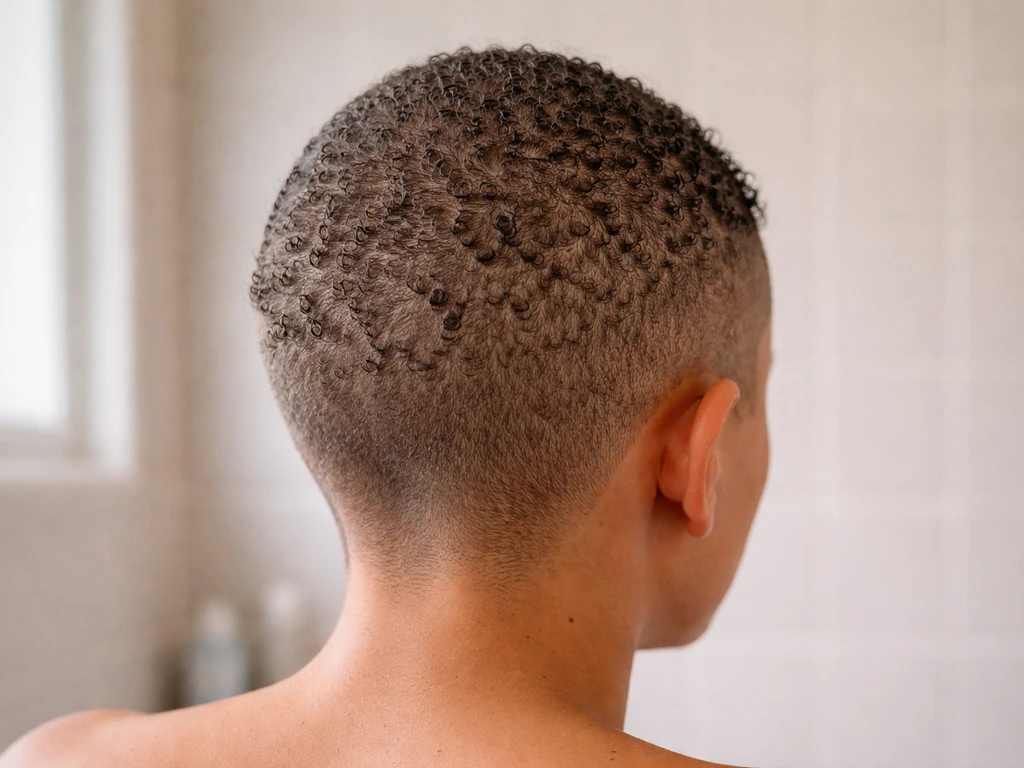
What actually changes after you shave, and what doesn't
The most important thing to understand upfront: shaving does not change your follicle, your curl pattern, your hair color, or your growth rate. The Mayo Clinic and Cleveland Clinic are both clear on this, the razor only touches the hair shaft, not the root. Any perception that regrowth feels thicker or coarser is just the blunt, freshly cut end coming through, rather than the naturally tapered tip your hair normally has. That stubbly, prickly feeling in the first week or two is a side effect of the cut edge, not a change in what your hair actually is.
That said, your curls might not show up immediately, and that's completely normal. If you're wondering how to grow out a buzz cut step by step, focus on length first, then switch to leave-in, curl cream, and gentle styling as the texture shows up. Curl pattern depends heavily on length and weight. Very short regrowth (under half an inch) often lies flat or looks wavy at best, because there isn't enough hair length to form a curl. If you want to know the fastest way to go from short regrowth to visible curls, focus on length milestones and a leave-in plus scrunch routine. As you get past one to two inches, the texture starts showing up more clearly. For some people with looser wave patterns, you might not see a recognizable curl until you're at three inches or more. If your hair looked straight during the first month of regrowth, that doesn't mean your curls are gone, they're just waiting for enough length to bend.
The first few days: caring for your scalp and fresh stubble
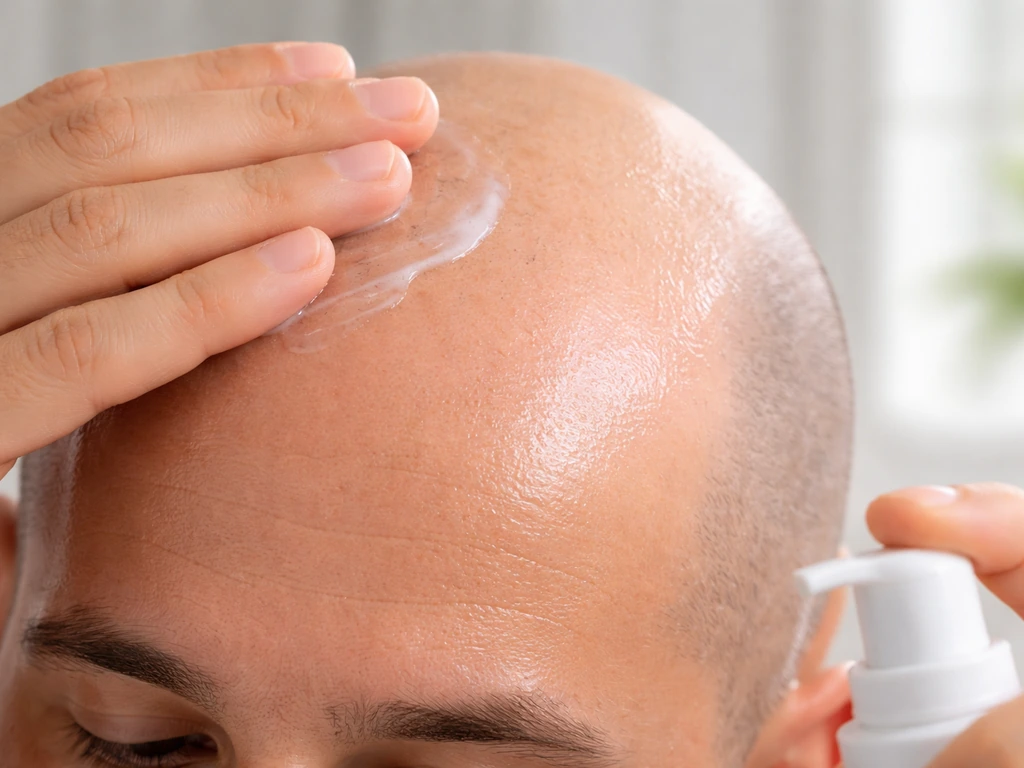
Right after a head shave, your scalp is more exposed and vulnerable than it's been in a while. The biggest priorities in days one through seven are avoiding irritation, protecting from sun exposure, and not making the skin angry before the follicles even get going.
Sun protection is non-negotiable. Your scalp just lost its natural cover, and bare scalp skin can burn quickly. Apply a water-resistant, broad-spectrum SPF 30 or higher sunscreen any time you're outside, and reapply after sweating or swimming. This isn't a hair care step, it's a basic skin step that most people skip and regret.
Razor bumps and folliculitis (inflamed or infected hair follicles) are common after shaving a large area like the scalp, especially if you used multiple passes or shaved against the grain. These show up as red, itchy bumps around the follicle openings. Clinically, this is called pseudofolliculitis, hairs that get trapped or re-enter the skin after being cut. To calm mild inflammation, a thin layer of over-the-counter 1% hydrocortisone cream can help with burning and itching. For more persistent bumps, look for a gentle cleanser with salicylic acid or glycolic acid, which help keep follicle openings clear and reduce ingrowns. Don't pick or scrub aggressively, that makes inflammation worse and risks scarring.
Keep the scalp clean but not stripped. Rinse daily with lukewarm water in the first few days, and avoid leaving shampoo residue behind, rinsing thoroughly matters more than which product you use at this point. Cleveland Clinic describes dry scalp as skin that is losing too much water and notes that shampoo left behind after showering can irritate the scalp and require medicated treatment if it persists avoid leaving shampoo residue behind. If the skin feels dry and tight after washing, that's a sign you need a lightweight, fragrance-free moisturizer applied right after patting dry.
Building a shampoo and moisture routine that supports curl formation
Moisture is the foundation of curl definition. Dry hair doesn't curl, it frizzes, lies flat, or breaks. Getting your wash routine right early sets the stage for everything that follows.
Once you have at least a week of stubble growth, start building a routine around minimal stripping and maximum hydration. For most people with curly or coily texture, washing with a sulfate-free shampoo (sometimes called "low-poo") once a week is a good starting frequency. Sulfate-free formulas clean effectively without pulling out the natural oils that curls depend on. If your scalp tends toward dryness, you can also experiment with co-washing, cleansing with a silicone-free conditioner only, on the days between shampoo washes. Co-washing works especially well for coarser or coilier textures that get dry fast.
Conditioning every wash is essential, even at the buzz cut stage when it might feel unnecessary. Apply a rinse-out conditioner after shampooing, leave it on for two to three minutes, and rinse with cool water to help close the cuticle. At the short-hair stage (one to two inches), add a leave-in conditioner right after the shower while hair is still damp. The AAD recommends taking a small amount of leave-in, rubbing it between your palms, and working it evenly through the hair, even on short regrowth, this helps with manageability and reduces the rough handling that causes breakage.
If you're aiming for straighter regrowth rather than curls, the moisture routine stays the same, hydrated hair is just healthier hair regardless of pattern. The difference comes in how you dry and style, which is covered in the next section.
Styling at each stage: training curls and preventing flat lay
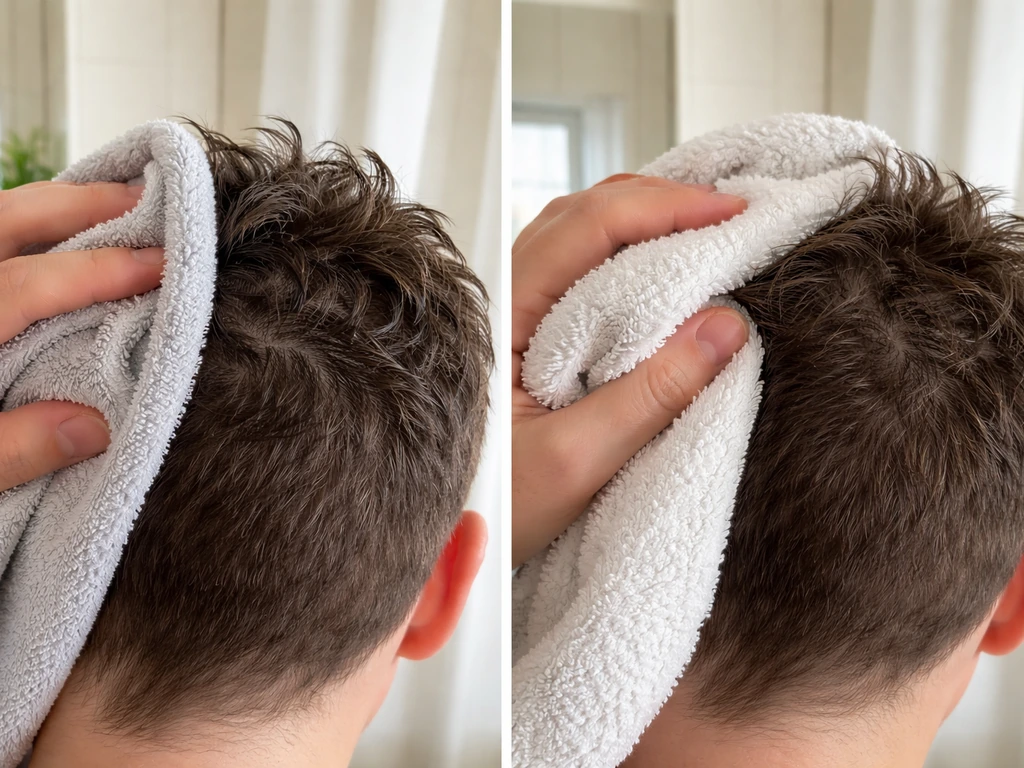
Styling short regrowth for curls is mostly about what you don't do. Rubbing your head with a terry cloth towel disturbs the curl clumps before they can form. Instead, use a microfiber towel or an old cotton T-shirt to gently press (not rub) the moisture out. At the early stubble stage, this is all you really need to do.
Buzz cut to half an inch
At this length there isn't much to style. Apply your leave-in conditioner after washing and let it air dry. You might see a slight wave or texture, but don't stress if it looks flat, that's expected. Focus on scalp health here, not curl definition.
Half an inch to one and a half inches
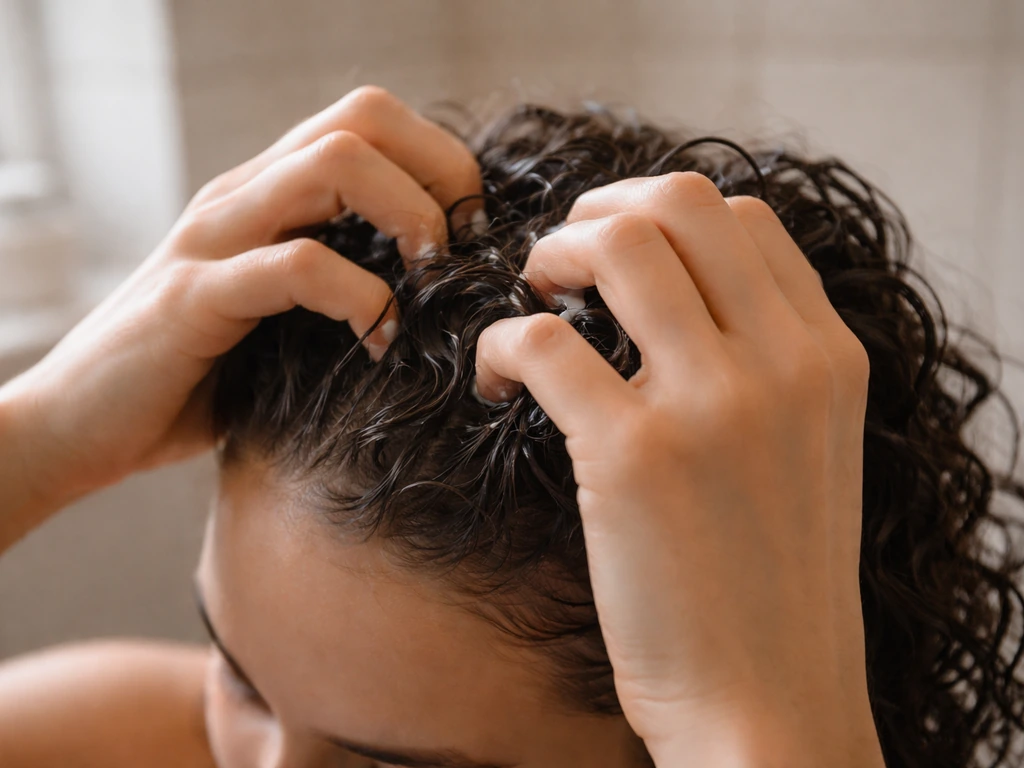
This is when texture starts showing up and also when the styling routine matters more. After your leave-in, scrunch in a small amount of curl cream or light mousse to encourage clumping. Then try "plopping", laying a microfiber towel or T-shirt flat, flipping your hair down onto it, and wrapping the towel around your head for 10 to 20 minutes before air drying. Plopping keeps the curl shape intact while it dries without disturbing it. At this length it works even with short hair and is worth doing every wash day.
One and a half to three inches
This is the awkward middle phase where hair is long enough to get messy but short enough that styles are limited. Curl definition becomes much more visible here. If you want to encourage curls, scrunch product in upward motions and avoid combing through dry hair. For more control, a diffuser attachment on your blow dryer is a big help, use low heat and low airflow, and cup sections of hair in the diffuser basket without moving it around too much. Disturbing wet hair with too much airflow is the main cause of frizz, so the technique here is more patience than heat.
If you're aiming for a flatter, straighter look during this stage, apply a smoothing leave-in or lightweight serum after washing, then blow dry with a soft brush on low heat, directing the airflow downward along the hair shaft. Always use a heat protectant before any direct heat styling, even at short lengths.
Three inches and beyond
By three inches, most people with a natural curl pattern will see their actual texture coming through clearly. This is also when the grow-out experience starts to look more like what you're used to managing. Continue the scrunch-and-plop-or-diffuse method for curls, and introduce a stronger hold product like a curl gel if you want definition that lasts through humidity. If you want a step-by-step plan for growing out curly hair in particular, the key is sticking with moisture-first wash days and curl-friendly drying habits grow out curly hair men out. If you're growing curly hair past the shoulders eventually, the goal now is building healthy habits, the length is just time and consistency. For those whose goal is straighter hair, this is the stage where a keratin-based smoothing treatment might be worth exploring if your curl is strong and you genuinely prefer less texture.
How long each stage actually takes
Average scalp hair grows about 0.35 mm per day, which works out to roughly half an inch per month and around six inches in a year. A PubMed phototrichogram study using videomicroscopy reports average scalp hair growth rates of about 0.35±0.03 mm/day in men and 0.38±0.03 mm/day in women videomicroscopy phototrichogram study. That said, it varies by person, ethnicity, health, and stress levels, so use these as guides, not guarantees.
| Stage | Approximate Length | Timeline from Shave | What It Looks Like |
|---|---|---|---|
| Fresh stubble | Under 2 mm | Days 1–7 | Barely visible, rough to the touch, skin still dominant |
| Short stubble | 2–6 mm (about 1/4 inch) | Weeks 1–3 | Visible texture, prickly feel, some wave possible in coarse hair |
| Buzz cut / crop | 6–12 mm (1/4 to 1/2 inch) | Weeks 3–8 | Hair shape visible, flat on curly types, curl not yet formed |
| Short growth | 1.5–3 cm (1/2 to 1 inch) | Months 2–3 | Texture visible, wavy/curly starts appearing, awkward puffiness |
| TWA / short style | 3–5 cm (1–2 inches) | Months 3–5 | Recognizable curl pattern, styles start to work, can use products |
| Short to medium | 5–8 cm (2–3 inches) | Months 5–8 | Full curl or wave visible, can plop/diffuse, most styles accessible |
| Medium length | 8–15 cm (3–6 inches) | Months 8–18 | Curl weight changes shape, gravity pulls curls down rather than out |
The jump from stubble to an inch of growth is the longest-feeling stretch because the visual change is slow. After the first inch, each additional centimeter is more noticeable and styling gets easier. If you're also growing out an undercut or dealing with uneven sections from a previous cut, those areas may lag behind by a few weeks, that's normal, and patience is the only real fix.
Common problems during grow-out and how to fix them
Itchiness and scalp irritation
The itchy phase usually hits around days three through ten, when the blunt-cut ends of stubble poke against the scalp as they grow. This is a mechanical thing, not a medical one. Keep the scalp clean, moisturized, and avoid scratching with fingernails. A lightweight, fragrance-free scalp moisturizer or aloe vera gel applied after washing can ease the itch significantly. If you also have dry scalp (tight, flaky skin), make sure you're rinsing shampoo out completely, residue left on the scalp is a common cause of ongoing dryness and irritation.
Razor bumps and ingrown hairs
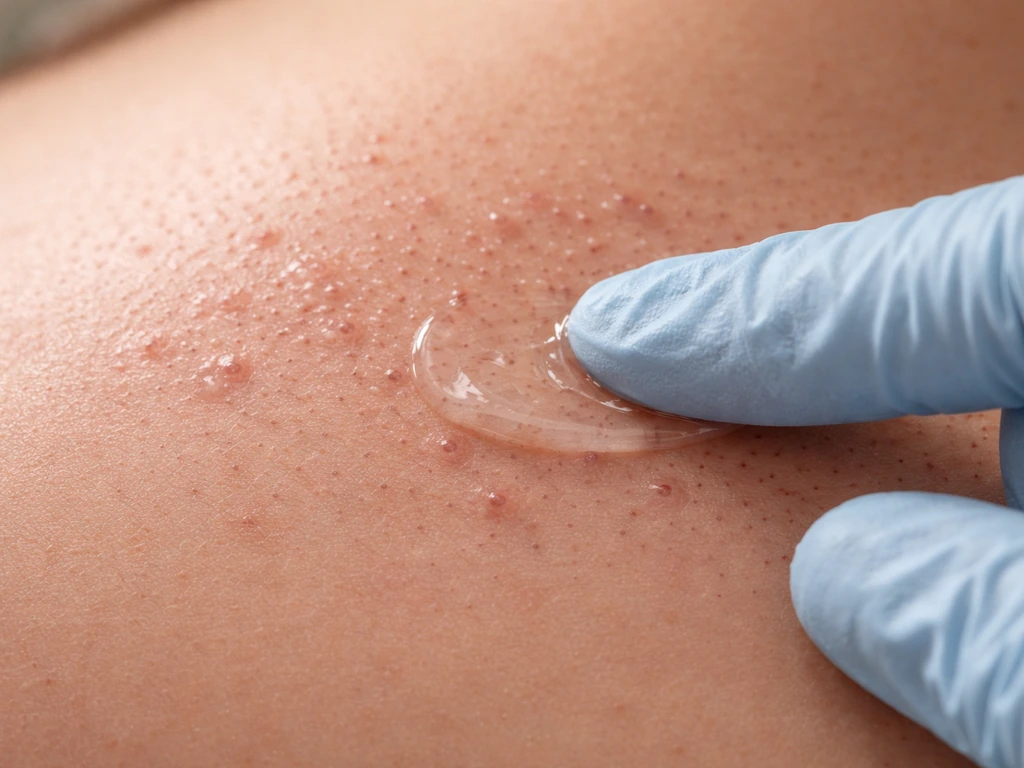
If you see red bumps clustered around follicles, especially where the hair is coarser or tighter-coiled, that's likely pseudofolliculitis. The AAD and Canadian Dermatology Association both recommend exfoliating with glycolic or salicylic acid products to keep pores clear and prevent hairs from curling back into the skin. For inflammation that's already there, 1% hydrocortisone applied thinly can calm it down. Avoid shaving again over bumped areas until they clear. Do not squeeze or pick, this leads to post-inflammatory hyperpigmentation, especially on deeper skin tones.
Breakage during the short-to-medium transition
Breakage usually means the hair isn't getting enough moisture or is being handled too roughly while dry. Short curly hair is actually more prone to tangling than it looks because each coil can hook onto adjacent ones. Detangle only when wet, apply leave-in conditioner, then work through with your fingers first, followed by a wide-tooth comb or a curly-specific brush if needed. Never drag a comb through dry short curls. If breakage persists even with a solid moisture routine, that's worth flagging with a dermatologist, since it can signal a nutrient deficiency or scalp issue that's worth ruling out.
Uneven growth and patchy density
It's common for different parts of the scalp to grow at slightly different rates, especially around the crown, edges, and nape. This can make the hair look patchy or uneven for the first few months. In most cases this evens out by the three to four month mark. If a specific area consistently grows slower or shows thinner density, and it's been more than six months, that's worth a dermatologist visit to rule out alopecia or another underlying cause.
Hair that won't curl or curls differently than expected
If your hair is longer than two inches and still not curling the way you expect, moisture is almost always the culprit. Dry hair doesn't curl, it puffs or lies flat. If your curls are puffy or lying flat, it usually means you need to increase hydration so the hair can form its curl pattern and grow downward instead of out. Revisit your routine: are you using a leave-in every wash day? Are you scrunching products in while the hair is still soaking wet? Are you disturbing it while it dries? Those three things fix most "my curls won't come back" problems. If the hair is moisturized and handled well but still looks different than pre-shave, give it more time, curl pattern can genuinely take several months to fully re-establish as length increases.
When your hair won't stay curly: managing frizz, humidity, and styling habits
Frizz is the number one enemy of defined curls, and humidity is its best friend. At shorter lengths, frizz can be managed almost entirely through technique. The core rule: don't touch wet curls. Apply all your products (leave-in, curl cream, gel) while the hair is drenched, scrunch gently to encourage clumping, then leave it completely alone until it's fully dry. Any touching, flipping, or separating while it's damp creates frizz by disrupting the curl structure.
If you're diffusing, keep the heat and airflow setting on low. High heat doesn't speed up drying as much as it speeds up frizz. Cup sections of hair in the diffuser basket and hold it still rather than moving it around the head. The goal is to dry the curl in the shape it already made, not to sculpt it with the dryer.
For humidity control, a gel or cream with light hold applied over your other products acts as a barrier. Once the hair is fully dry, you can scrunch out any crunchiness from the gel with your palms to get a soft finish without losing the hold underneath. This technique, sometimes called "scrunching out the crunch", is one of the most effective ways to get defined curls that also survive a humid day.
Protective habits matter too, especially at night. Sleeping on a satin or silk pillowcase (or covering your hair with a satin bonnet or scarf) reduces friction that breaks up curl clumps overnight. At very short lengths this matters less, but from two inches onward it makes a noticeable difference in how your style looks the next morning.
If you're intentionally trying to keep regrowth straighter and flatter, the protective habits are similar, satin pillowcase, avoid high heat, keep hair moisturized, but your styling direction changes. Blow dry in a downward direction with a smoothing brush, use a smoothing serum rather than a curl-enhancing cream, and avoid scrunching. For a more lasting result, a professional keratin or smoothing treatment is an option once you have at least three inches of length to work with. Just know that as the hair grows and you get farther from the shave, the natural texture will keep asserting itself at the roots, so any smoothing approach requires ongoing maintenance.
The grow-out journey from a shaved head to curly hair (or any length goal) is genuinely slow, and the in-between stages are awkward by nature. But if you understand what's happening at each stage, take care of your scalp early, and build a consistent moisture routine, you're not fighting the process, you're working with it. If you want the fastest way to grow your hair out from a buzz cut, focus on protecting your scalp, keeping it moisturized, and using a curl-friendly routine as your length increases how to grow your hair out from a buzz cut. Your follicles haven't changed. The hair is coming back. It just needs time and the right conditions to show you what it's actually capable of.
FAQ
Why does my regrowth feel thicker or prickly, and does that mean my curls changed?
It can look different because the new ends are blunt and the hair is short, not because your follicle changed. A practical check: take a photo in the same lighting every 2 weeks, and watch for whether the texture is starting as a slight bend at around 1 to 2 inches and becoming more curl-shaped after 2 to 3 inches. If it still looks straight past 3 inches even with good hydration and minimal touching while drying, re-evaluate product type and drying technique before assuming your curls are gone.
Can I use exfoliating acids or acne products while I am growing curls back after shaving?
Yes, but with a caveat. If you used anti-itch or anti-acne products, stop any harsh exfoliants or active ingredients until irritation calms, because the skin is more sensitive during stubble regrowth. For most people, focus on gentle cleansing, leave-in/ultra-light moisturization, and use sun protection first, then add salicylic or glycolic products only if you have clear ingrown-bump patterns and your scalp is not burning.
What is the best styling routine when my hair is still too short to define curls?
At very short length, use styling to encourage shape, not to “comb” curls into place. The simplest plan is leave-in on soaking wet hair, then scrunch a small amount of curl cream or light mousse, and air dry untouched. If you must add gel, apply it only at the damp stage and don’t separate strands while drying, otherwise you will lose clumping.
How should I detangle if my short curls tangle or break easily after a head shave?
Do not aggressively detangle dry short curls. When hair is still stubble to about 1 inch, detangle only after shower, with leave-in on board, and use fingers first. If tangles are stubborn, use a wide-tooth comb or curly brush on soaking wet hair, then re-scrunch and let it dry undisturbed.
When is it safe to dye or bleach my hair again after shaving my head?
Bleaching, dye, and chemical smoothing are usually not ideal this early, mainly because uneven new growth and shorter hair make application harder to control. If you do color, consider waiting until you have at least a few inches of consistent length so coverage is even and you can better monitor irritation on a freshly exposed scalp.
At what length should curls start showing up again after shaving, and when should I worry?
Watch for delayed curl reappearance that tracks with length rather than texture. A common pattern is minimal visible curl under half an inch, more texture around 1 to 2 inches, and clearer curl definition around 2 to 3 inches for many curl types. If you are at 3 inches or more and curls are still not coming back, increase hydration consistency and confirm you are applying products while hair is fully wet and not touching until dry.
Can I grow curly hair and still keep it straighter during the early months?
Yes, but pick the goal you want and stick with it. If you want curls, keep your drying technique curl-friendly (no towel rubbing, scrunch on wet hair, air dry or low-heat diffusion). If you want straighter regrowth, you will generally need more direct downward drying and smoothing products, but keep in mind the natural texture at the roots will return without ongoing heat and/or maintenance.
When do razor bumps or folliculitis after a shave mean I should see a dermatologist?
If you are getting persistent redness, pus, increasing pain, or scarring, or if bumps are not improving after you stop shaving over the area, switch from home care to a dermatologist visit. Also get checked sooner if you notice patchy thinning, scaling that does not resolve, or hair loss that continues beyond the normal grow-out timeline.
My hair is frizzy, not curly, what is the quickest adjustment?
If your curls look “frizzy” rather than clumped, the fix is usually technique, not more product. Make sure products go on while hair is drenched, scrunch gently to form clumps, then stop touching until completely dry. For humidity control, add a light-hold barrier product on top (often gel over cream) and then scrunch out crunch once dry for softness without losing hold.
Do I really need a satin bonnet or pillowcase at the start of regrowth?
You can use a satin pillowcase or bonnet as soon as your hair has enough length to rub against fabric, but the payoff becomes obvious around the 2-inch mark and up. If your hair is extremely short, focus more on drying technique (do not rub while wet) and sun/skin protection, since friction and shape disruption are smaller at that stage.