
You can absolutely grow out relaxed hair without doing a big chop. If you are wondering how to grow relaxer out of hair without cutting, focus on gradual trimming, protective styling, and a moisture-focused routine to keep the transition manageable. It takes longer and requires more intentional care, but thousands of people do it every year by combining gradual trimming, protective styling, and a moisture-focused routine that keeps both textures manageable while the relaxed ends slowly get cut away over time. The process typically runs 12 to 24 months depending on your current hair length, how much new growth you already have, and how often you trim.
How to Grow Out Relaxed Hair Without a Big Chop

Marcus Vickers
16 Jun 2026
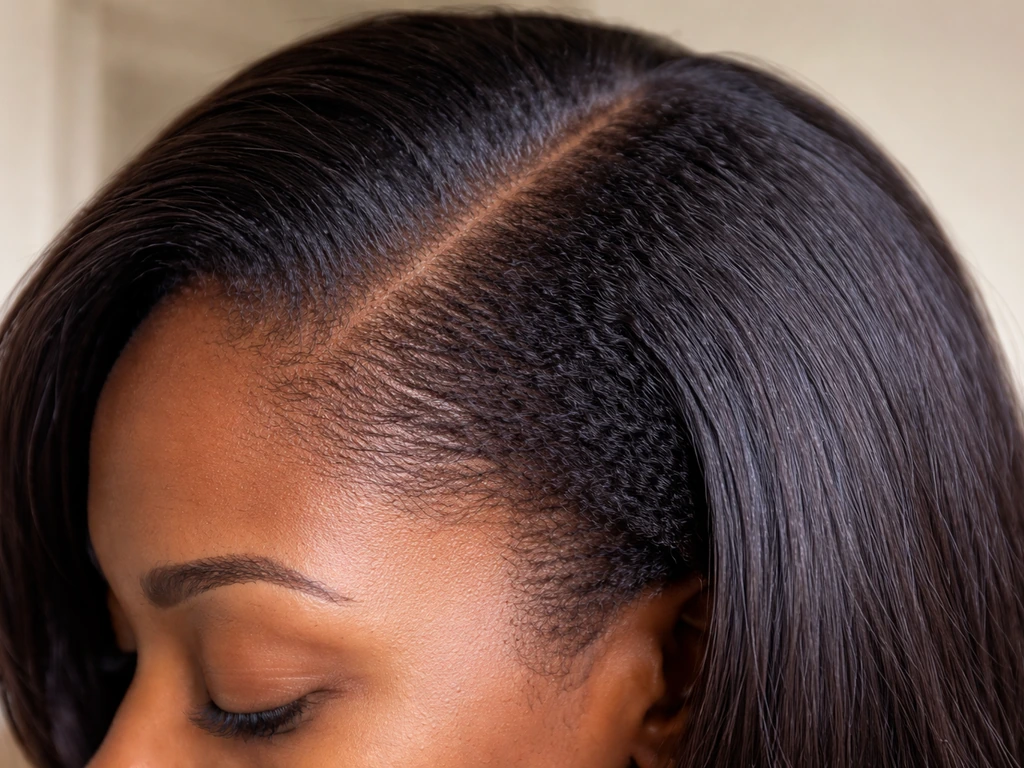
What relaxed hair regrowth actually looks like (and why the big chop feels tempting)
Once you stop relaxing, your natural hair grows in from the scalp with its original curl or coil pattern. That new growth sits right on top of the chemically straightened hair below it, and where those two textures meet is called the line of demarcation. This is the most fragile point on your entire strand. The natural hair is coiling and pulling in one direction while the relaxed hair hangs straight, and that physical tension makes the line of demarcation extremely prone to snapping if you're not careful.
Visually, the transition looks like a root section that is puffier, coarser, or curlier than the rest of the shaft, which can seem almost impossible to style smoothly. This is exactly why the big chop gets recommended so often: cutting off everything below the line of demarcation eliminates the breakage risk and gives you a fresh start with one uniform texture. But 'necessary' and 'the only option' are two very different things. If you're willing to be patient and consistent, you can grow the two textures out together. To grow out a perm in black hair, focus on consistent protective styling and a trim schedule that gradually removes the relaxed ends without letting breakage creep up.
Your grow-out timeline based on where you are right now
blank" rel="noopener noreferrer">Hair grows roughly 1 cm per month on average, though it can range from about 0.6 cm to over 3 cm depending on the individual. That means if you want 6 inches of natural hair before you trim off the last of the relaxed ends, you're looking at roughly 15 to 18 months of growth minimum. CDC/ATSDR (via Harkey 1993) reports that average scalp hair grows at about 1 cm per month, with reported ranges of roughly 0.6 to 3.36 cm/month depending on body region and individual factors blank" rel="noopener noreferrer">roughly 15 to 18 months of growth minimum. Use that math to build a realistic plan based on your current situation.
| Your starting point | Estimated transition length | What that looks like |
|---|---|---|
| Short relaxed hair (2–4 inches) | 12–18 months | You'll have mostly natural hair relatively quickly but the awkward phase is intense early on |
| Medium relaxed hair (4–8 inches) | 18–24 months | Longer protective styling window, more time to blend, more patience required |
| Long relaxed hair (8+ inches) | 24–36 months | Most styling flexibility but the longest timeline before all relaxed ends are gone |
| Already have 2+ inches of new growth | Subtract 2–3 months from above | You're ahead of the curve; start your routine now and track from here |
Pick a rough end goal (say, shoulder length with fully natural texture) and count backward from there. That gives you something concrete to measure progress against rather than just hoping things work out month to month.
Your four main strategies to avoid a big chop
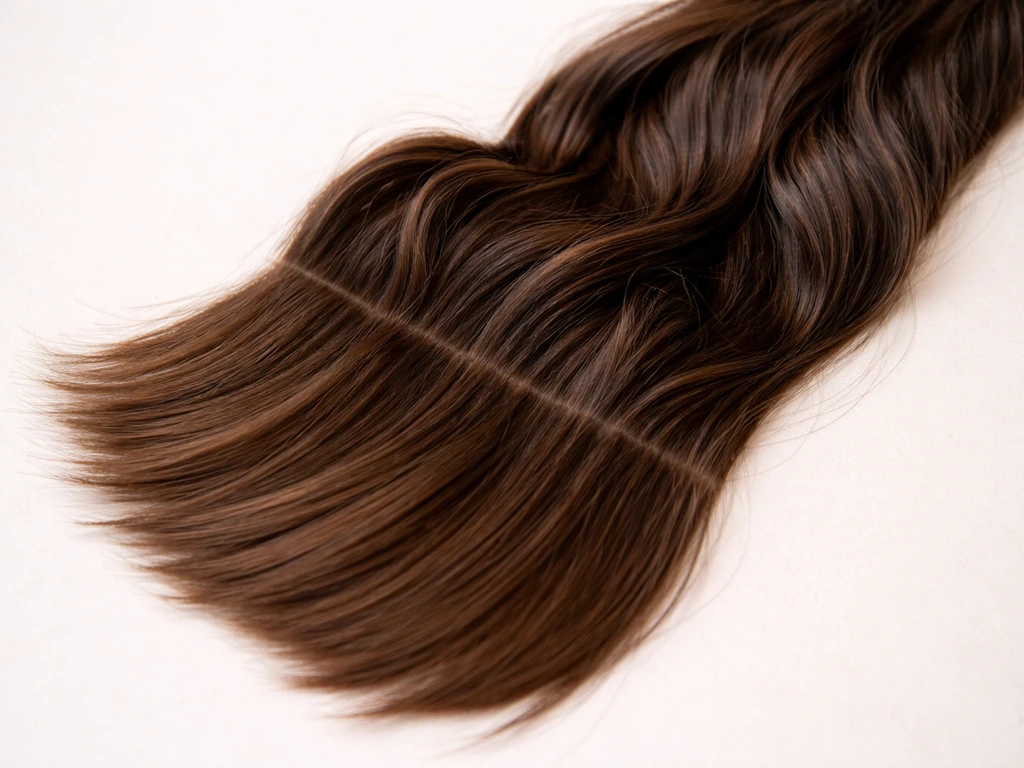
There isn't one right method here. Most people end up combining two or three of these, and which combination works best depends on your current length, your styling tolerance, and honestly how much time you have each week for hair care.
Gradual trimming (the most common approach)
Every 6 to 8 weeks, you trim a small amount off the ends. The goal is to slowly remove relaxed hair over time so that by month 18 to 24, you're mostly or entirely working with natural growth. This approach preserves length in the short term and gives your hair time to grow while the old ends are being phased out. The key is to actually commit to the schedule. Skipping trims lets the relaxed ends get more damaged and increases the risk of breakage creeping up toward the line of demarcation.
Micro-trims (for those who want to preserve as much length as possible)
A micro-trim removes just 1/4 inch or less at a time, done every 4 to 6 weeks. This is the slowest method and works best if your ends are in decent shape and your protective styling game is strong. It's also a good approach if you're starting with medium to long hair and want to keep as much length as possible during the transition. The tradeoff is that you're managing two textures for longer.
Protective blending (styling your way through the two-texture phase)
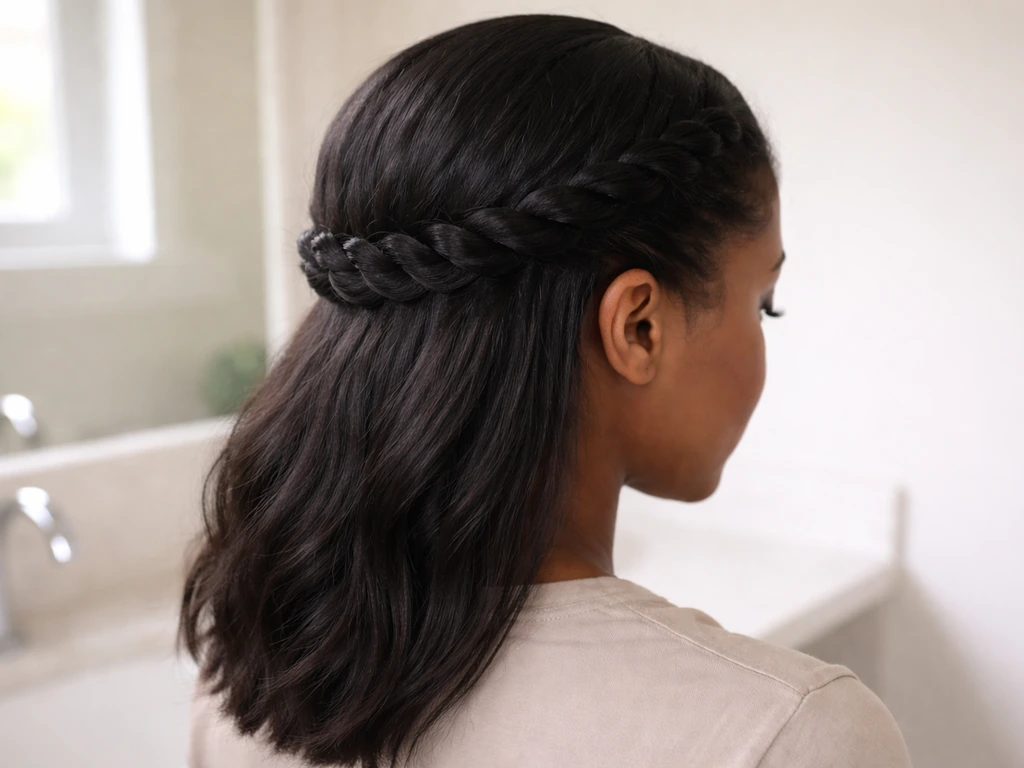
This isn't really a cutting strategy, it's a styling strategy. The idea is to use styles like buns, twists, braids, and slicked updos to keep the two textures coexisting without fighting each other. You're not trying to make the hair look uniform, you're hiding the transition under styles that work with both textures at once. This works best combined with either gradual trims or micro-trims rather than as a standalone plan. If you want a smoother transition, use protective blending alongside a clear grow-out plan for how to grow out a perm.
The blunt end cut (a middle ground)
If your hair is very long and the relaxed ends are heavily damaged, a blunt cut that removes 2 to 3 inches all at once can reset your situation without a full big chop. This isn't the big chop, it's a strategic trim that cleans up the worst of the damage so the rest of the grow-out can go more smoothly. Think of it as a reset, not a surrender.
Protective styles that carry you through the awkward phases
Protective styling is where the no-big-chop approach lives or dies. When your hair is in a protective style, it's not being manipulated, stretched, or stressed daily, which dramatically reduces the breakage that happens at the line of demarcation. The goal is to keep the ends tucked away and the new growth low-tension.
Slick styles and flat methods
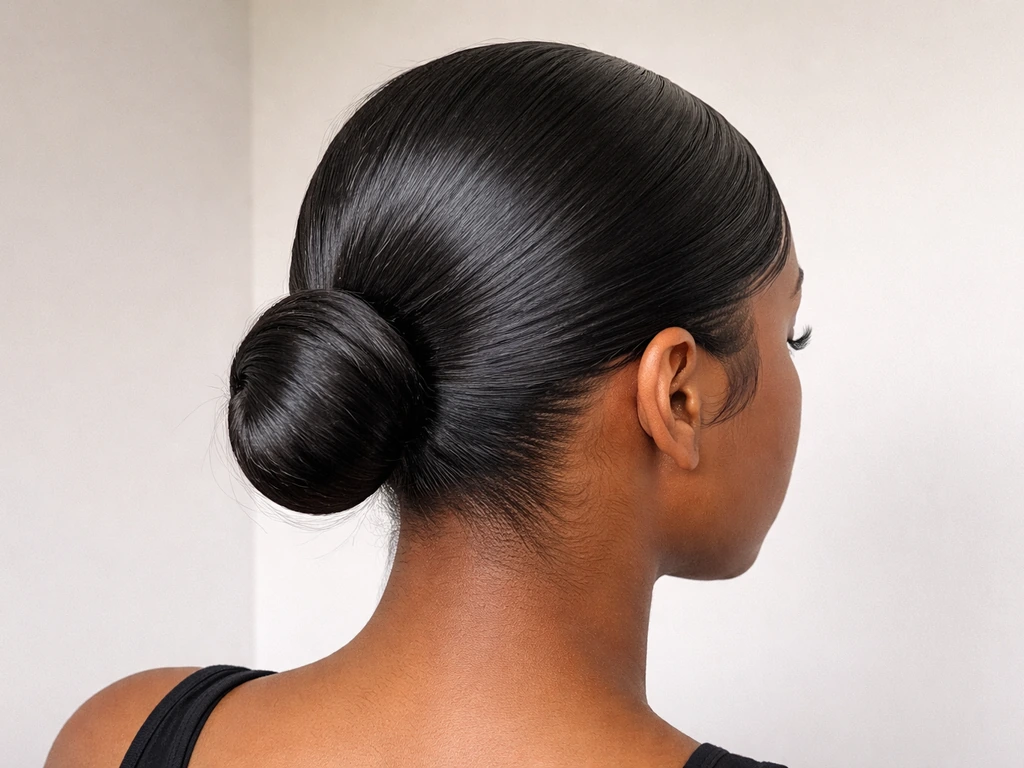
Sleek buns, laid edges, and slicked ponytails let you blend the two textures visually by smoothing everything back. A light-hold gel or edge control on the roots creates a uniform look even when the actual texture varies along the shaft. This works especially well in the first 3 to 6 months when the new growth is less than 2 inches and blending is harder.
Buns and updos
A high or low bun tucks the relaxed ends completely out of sight and keeps daily manipulation minimal. Pineapple buns, top knots, and low chignons all work. Just make sure the bun isn't too tight, because tension at the hairline and nape is one of the most common sources of breakage during a grow-out. A loose, secure style is always better than a tight, polished one.
Twists, braids, and bantu knots
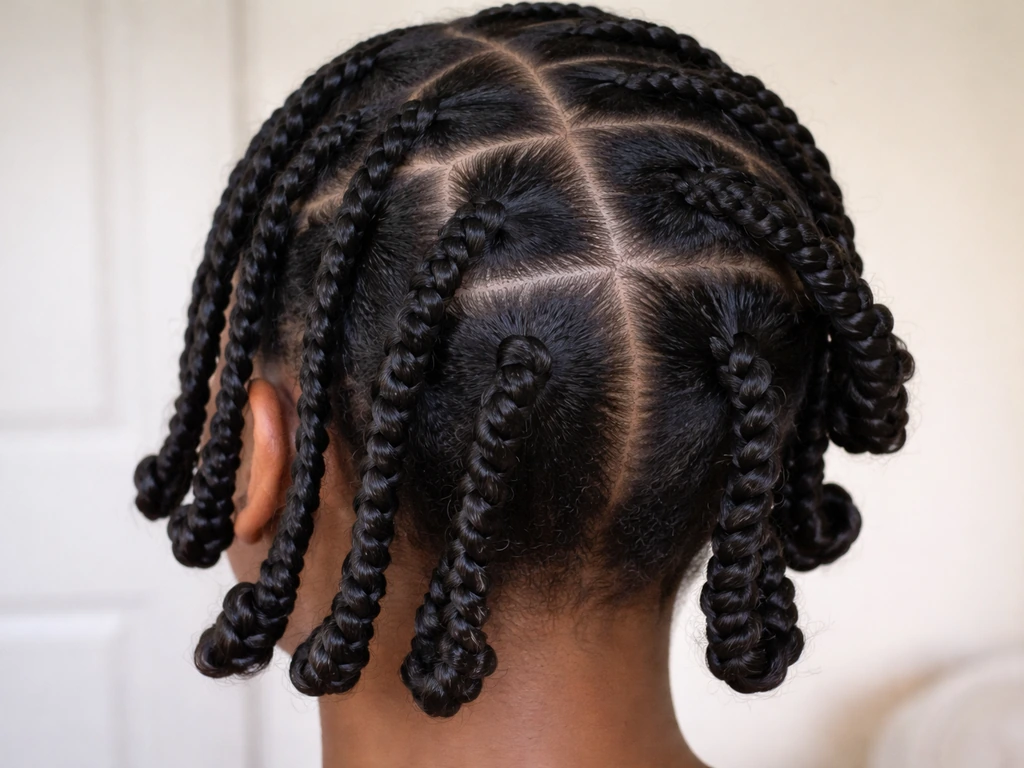
Two-strand twists, flat twists, and small braids are excellent for transitions because they work with both textures simultaneously without requiring them to match. They also stretch the natural hair gently, which reduces shrinkage and makes the length difference between the textures less jarring. Bantu knots on damp hair can create a uniform curl pattern across the whole head, which is great for disguising the transition line.
Wigs and closures
A wig or closure unit worn over braids or twists is one of the most effective protective strategies available. Your hair is completely tucked away, experiencing zero daily stress, while you still get to look exactly how you want. Many people who successfully grew out relaxed hair without a big chop relied heavily on wigs for 6 to 12 months of the transition. Just make sure the wig cap or braid base isn't too tight, and give your scalp regular breaks to breathe.
Managing the line of demarcation and the texture shift
The line of demarcation is your biggest breakage risk throughout this process. Research confirms that relaxed hair is structurally different from natural hair at a biochemical level, with changes in the amino acids that give hair its strength. That means the relaxed portion is genuinely more fragile than the natural portion, and the point where they meet is the most vulnerable spot.
Practically speaking, this means your detangling technique matters enormously. Always start at the ends and work upward toward the roots, never the other way around. Use your fingers first, then a wide-tooth comb if needed, and always work on wet or damp hair with slip (a conditioner, detangling spray, or oil). When you reach the line of demarcation, slow down, go section by section, and never force knots or tangles. That junction is where most of the avoidable breakage happens.
Banding is another useful technique at this stage. After washing, you gently place a hair band (without metal clasps) every inch or two down the length of a section while it dries. This stretches the hair in a low-tension way and reduces the coil-versus-straight tug-of-war at the line of demarcation as the hair dries. Some people use the retwist-and-band method: twist each section loosely, then band it at intervals before air-drying.
Moisture, protein, and your routine during the transition
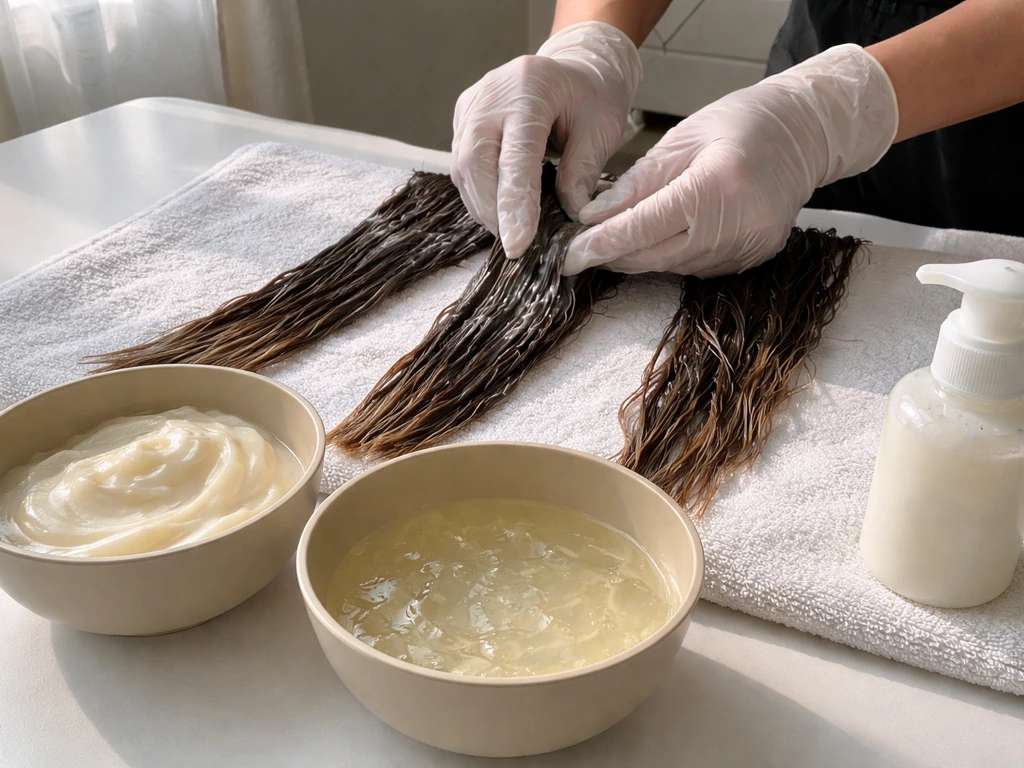
Relaxed hair and newly natural hair have different needs, and you're managing both at once. Relaxed hair tends to be more porous and drier because the chemical process disrupted the cuticle structure. Your new growth, depending on your natural texture, may absorb and lose moisture differently. The overlap means your routine needs to prioritize moisture above almost everything else, with periodic protein treatments to support structural integrity at the line of demarcation.
Moisture routine
- Wash every 1 to 2 weeks with a sulfate-free or gentle moisturizing shampoo to avoid stripping already fragile strands
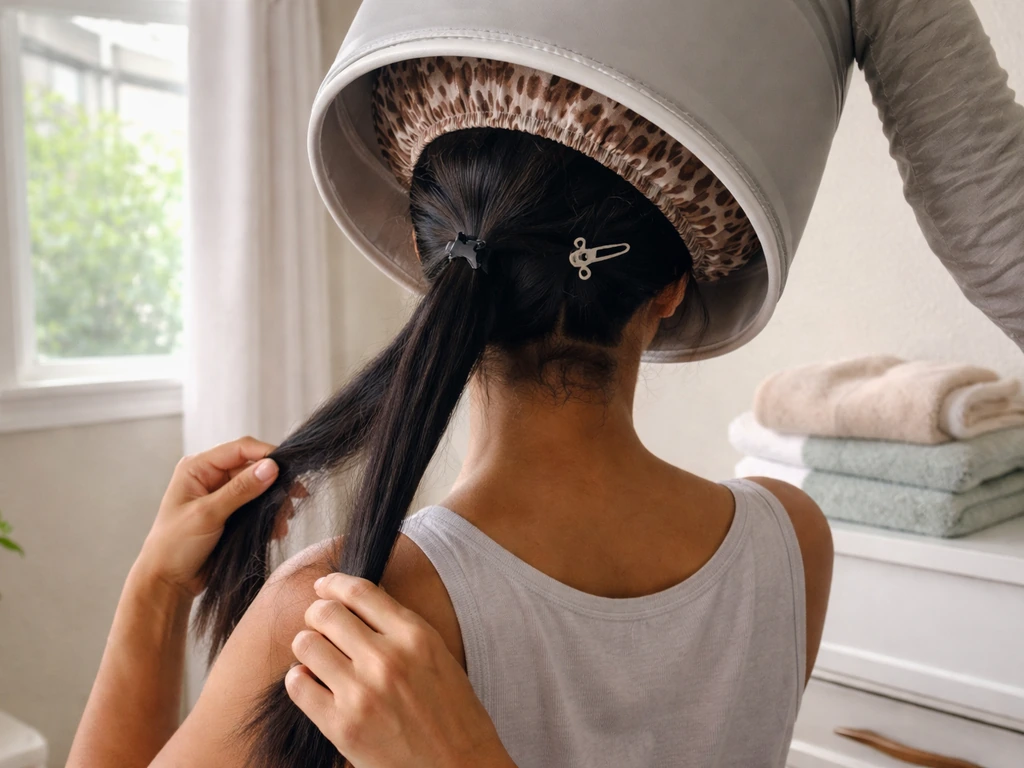
- Deep condition every wash day, no exceptions, with a moisturizing conditioner left on for at least 20 to 30 minutes under a heat cap
- Use the LOC or LCO method (liquid, oil, cream or liquid, cream, oil) to seal moisture in after washing
- Clarify once a month to remove product buildup that blocks moisture from reaching the cortex, then follow immediately with a deep conditioner
- Sleep on a satin or silk pillowcase or use a satin bonnet every night to reduce friction and moisture loss
Protein treatments
Protein helps reinforce the line of demarcation and reduces breakage in relaxed ends. Use a light protein treatment (like a protein-infused conditioner) every 4 to 6 weeks, and a stronger reconstructor treatment every 8 to 12 weeks if your ends feel mushy, stretch too much when wet, or break easily. The caveat: too much protein makes hair stiff and brittle, so always follow a protein treatment with a moisturizing deep conditioner. Watch how your hair responds and adjust the frequency from there.
Heat and chemical use
If you used heat regularly with your relaxer, you need to scale back significantly during the transition. Flat irons and blow dryers applied to the line of demarcation add structural stress to an already vulnerable point and can cause heat damage that looks deceptively similar to relaxer damage. If you do use heat, keep the temperature below 350°F, always use a heat protectant, and limit it to once every 2 to 3 weeks at most. Air drying or diffusing on low heat is a much better default. And stop any further relaxer applications entirely. Doing a touch-up midway through a grow-out just resets the clock and creates a new line of demarcation further up the shaft.
When to trim, how much to take off, and what to leave alone
Trimming during a grow-out feels counterintuitive but it's what makes the no-big-chop approach actually work. If you never trim, the relaxed ends accumulate damage, break unevenly, and start creeping up the shaft toward the line of demarcation. You end up losing more length to breakage than you would have from scheduled trims.
| Trim type | How often | How much to remove | When to use it |
|---|---|---|---|
| Micro-trim | Every 4–6 weeks | 1/4 inch or less | Ends are in decent shape, you're in protective styles most of the time |
| Gradual trim | Every 6–8 weeks | 1/2 to 1 inch | Standard grow-out maintenance for most people |
| Reset trim | As needed (not on a schedule) | 2–3 inches | Ends are severely damaged, split, or breaking visibly |
| Full dusting | Every 8–10 weeks | Just the visible split ends, less than 1/4 inch | Maintenance between scheduled trims to keep ends clean |
What not to do: don't trim based on how your hair looks in a style when it's pulled back. Assess your ends when your hair is stretched or blown out so you can actually see the condition of the relaxed portion. And don't trim when your hair is dry and tangled. Always assess on clean, conditioned, stretched hair so you're not cutting off more than necessary.
Staying confident through the awkward stage (and actually finishing the grow-out)
Months 3 through 9 are typically the hardest. You have enough new growth to notice the texture difference but not enough to do much with it, and the relaxed ends may be showing visible fatigue. This is when most people either big chop impulsively or quietly relax their hair again. Neither is a failure, but if you want to push through, the strategy is to stop expecting your hair to look 'done' during this period and start working with styles that look intentional even mid-transition.
Wigs, twist-outs, braid-outs, and slick styles are your best friends in these months. If you're dealing with layers or undercut growth that's creating uneven texture zones across the head, treat each section as its own situation. Flat twists or cornrows can blend uneven lengths without making the unevenness obvious. The same principle applies to bang-like regrowth at the front: a headband, scarf, or pinned fringe can buy you weeks or months while the front catches up.
Month by month, set yourself small, trackable checkpoints rather than staring at the end goal. Measure your new growth once a month (finger-width sections from scalp to line of demarcation work well for a quick visual check). Take a photo every 4 weeks in the same lighting. Progress looks invisible week to week but becomes very clear in a 3-month comparison photo.
This is also closely related to a broader grow-out-relaxer journey, and many people navigating this process find it helpful to read about the full relaxer grow-out timeline to understand what each stage should feel like and what's normal. If you want a clearer idea of what to expect month by month, focus on the full relaxer grow-out timeline and adjust your plan as your hair changes.
If you are specifically trying to grow out a texturizer, the same two-texture rules apply, but you may need to tweak your timeline and trim schedule based on how quickly the treated ends are loosening and shedding. If you want a clear, step-by-step guide on how to grow out a perm in black hair, following that timeline makes it easier to plan trims and protective styles relaxer grow-out timeline.
If you want a clear roadmap, this is a great place to start learning how to grow out relaxer step by step without losing progress the full relaxer grow-out timeline.
Finally, your routine is the thing that determines whether you make it to your goal with healthy hair or not. The styling choices matter, the trimming schedule matters, but the weekly moisture routine is what actually keeps the strands from breaking before they can grow long enough to be trimmed off intentionally. Lock in a consistent wash day, commit to your deep conditioning, and treat every trim as a deliberate step forward rather than a setback. This process is slow by design, and that's exactly what makes it work. If you want to know how to grow a perm for guys without a big chop, the same no-big-chop strategies like gradual trims, protective styling, and moisture-focused care apply.
Your first-week action plan
- Take a baseline photo and measure your new growth from scalp to line of demarcation so you have a starting point
- Do a clarifying wash followed by a long moisturizing deep condition to reset your hair's baseline
- Assess your ends honestly: are they in decent shape (micro-trim schedule works) or damaged (consider a reset trim of 1 to 2 inches now)
- Choose your primary protective style for the next 6 to 8 weeks and gather what you need for it
- Set a calendar reminder for your next trim date (6 weeks from now if you're doing gradual trims, 8 weeks for micro-trims)
- Start a monthly photo log now so you can see progress clearly when the day-to-day feels discouraging
FAQ
Do I have to stop using all heat to grow out relaxed hair without a big chop?
Not forever, but you should drastically reduce it. Plan for mostly air-drying or low-heat diffusing, and if you do use heat, keep it away from the line of demarcation, use a heat protectant every time, and limit straightening or blow-drying to about once every 2 to 3 weeks.
How can I tell whether I’m trimming enough if my ends look “fine” in a bun or ponytail?
Assess on clean, conditioned, stretched hair (not dry and not in a pulled-back style), and check the ends when they are fully visible and separated. If you can’t clearly see the relaxed portion, don’t decide from a style, because hidden shedding or uneven breakage often shows up later.
What if I accidentally relax a touch-up while I’m trying to grow out the relaxer without cutting?
Expect it to create a new line of demarcation and reset your timeline. After a touch-up, treat the grow-out schedule as starting from the new demarcation point, and increase vigilance with protective styling and trimming so the added weaker segment is phased out safely.
Can I do a “mini big chop” to remove the worst damage without starting over?
Yes, a reset trim (about 2 to 3 inches) can remove the most damaged ends while keeping the grow-out plan intact. The key is to still follow the gradual trimming schedule afterward, otherwise the next damaged section will creep upward and break at the junction.
How often should I detangle during the transition, and is there a risk of over-detangling?
Wash day is usually enough for most people, detangle every time you wash, and only add extra detangling if you notice tangles forming. When detangling, prioritize slip and detangle from ends to roots, but stop forcing knots at the line of demarcation, because repeated tugging is a common cause of breakage.
Should I use protein and moisture on the same day?
Usually no. If you do a protein treatment, plan a moisturizing deep conditioner immediately after (or as directed by the product instructions), then focus on moisture in the following weeks. If your hair feels hard, overly stiff, or snaps more easily, reduce how often protein is used.
What are the best protective styles when my natural growth is still short and my relaxed ends are long?
Choose styles that tuck ends away and reduce daily manipulation, like loose buns, low chignons, and wigs over braids or twists. Two-strand twists, flat twists, and cornrows can also help because they stretch the natural hair gently, lowering the look-and-feel gap between textures.
Is banding worth it, and how do I avoid making it too tight?
Banding helps reduce the coil-versus-straight tug during drying, especially early in the transition. Use soft, non-metal hair bands placed lightly, check the bands periodically, and avoid tight placement at the hairline or nape, where tension commonly triggers breakage.
My hair keeps breaking at the same spot near the demarcation. What should I change first?
Start with tension and friction. Loosen any tight styles, stop pulling during detangling, and avoid manipulating the area at the demarcation daily. Then review your trim schedule, because letting damaged relaxed ends linger too long can keep the breakage spot active.
Can I grow out relaxed hair without protective styling some days each week?
You can, but you must control manipulation. If you skip protective styles, be careful with how often you comb, how you handle shrinkage, and whether ends get rubbed or snagged. The no-big-chop approach relies on reducing stress to the vulnerable area, so “less often” is safer than “none.”
How do I track progress realistically month to month?
Measure new growth about once per month using a simple visual check (for example, a finger-width section from scalp to the line of demarcation). Take photos every 4 weeks in the same lighting, and compare 3-month intervals, because week-to-week changes can look minimal even when growth is happening.