
Growing out a perm is completely doable, and it does not have to be a miserable year of bad hair days. The honest answer is that your hair grows roughly half an inch per month, so a full perm grow-out takes anywhere from 12 to 18 months depending on how long your hair is and how much of the permed length you actually want to keep. But you can start making the transition look intentional and manageable right now, this week, with a few targeted changes to how you wash, condition, trim, and style your hair.
How to Grow Out a Perm Faster: Timeline, Tips, Best Way

Marcus Vickers
17 Apr 2026
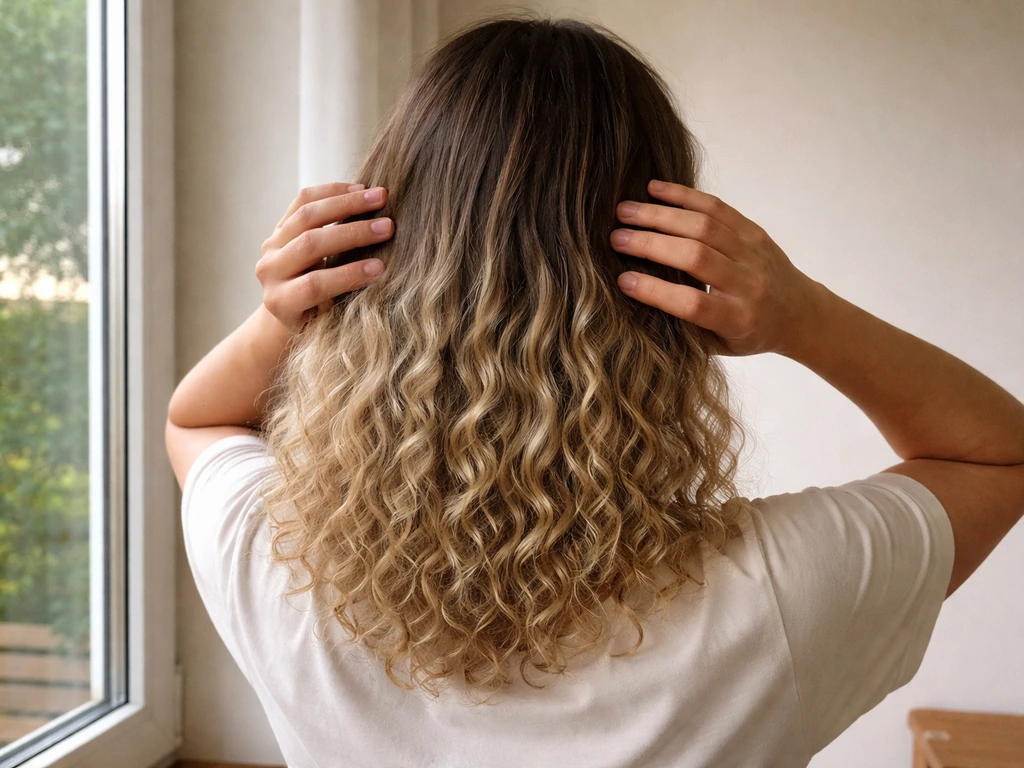
What growing out a perm actually looks like
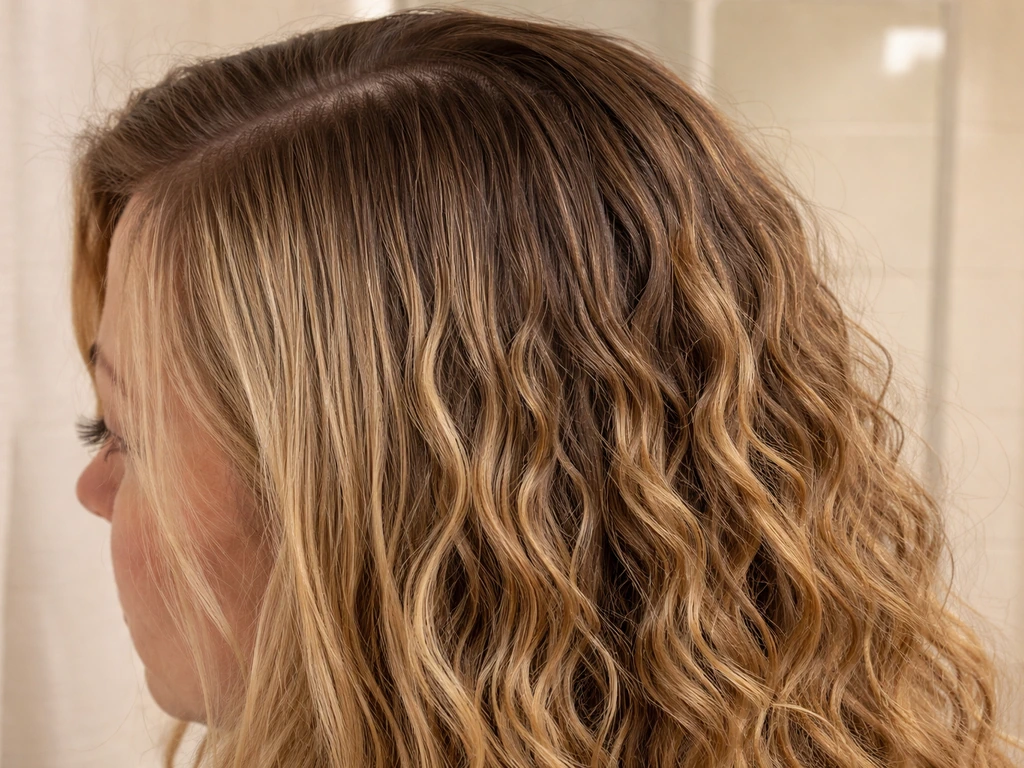
A perm works by using a chemical reducing agent (usually ammonium thioglycolate) to break the disulfide bonds in your hair's protein structure, reshaping the strand around a rod. A neutralizer then reforms those bonds in the new curly or wavy shape. The key thing to understand: that chemical change is permanent in the hair that was treated. New growth coming in from your scalp has untouched bonds, so it grows in with your natural texture, whether that is straight, slightly wavy, or loosely coily.
What you end up with is a line of demarcation: roots with your natural texture sitting on top of lengths that still hold the curl or wave pattern from the perm. In the early weeks that line is subtle. By months two or three it becomes obvious, especially if your natural texture is significantly different from the perm pattern. Straight or fine roots sitting on top of spiraled or wavy ends creates a visual break that can look like your hair is at war with itself. That is not damage, it is just chemistry, and knowing that makes it much easier to work with.
How to grow your perm out faster
You cannot make hair follicles produce more length than biology allows, but you can absolutely remove the obstacles that slow visible progress. Here is what actually moves the needle.
Protect your scalp and hair health first
Hair grows from the scalp, so scalp health is step one. Keep your scalp clean but not stripped. Washing every two to three days with a sulfate-free shampoo removes buildup without drying out the follicle environment. Dry, inflamed, or product-clogged scalps genuinely do slow the growth cycle. A five-minute scalp massage a few times a week increases circulation, and while no single study guarantees dramatic results, it costs nothing and keeps you tuned in to how your scalp is doing.
Nutrition and retention matter as much as products
Getting your half-inch per month requires enough protein, iron, and biotin in your diet. If you are already eating a reasonably balanced diet you probably do not need supplements, but if your hair has been shedding more than usual or growth feels stalled, it is worth checking in with a doctor about iron levels specifically, because low ferritin is one of the most common and underdiagnosed reasons hair growth slows. On the retention side: length stays on your head when you minimize breakage. That means less heat, gentler handling, and protective styles when possible. Every centimeter that breaks off is centimeter you already grew.
Realistic timeline expectations
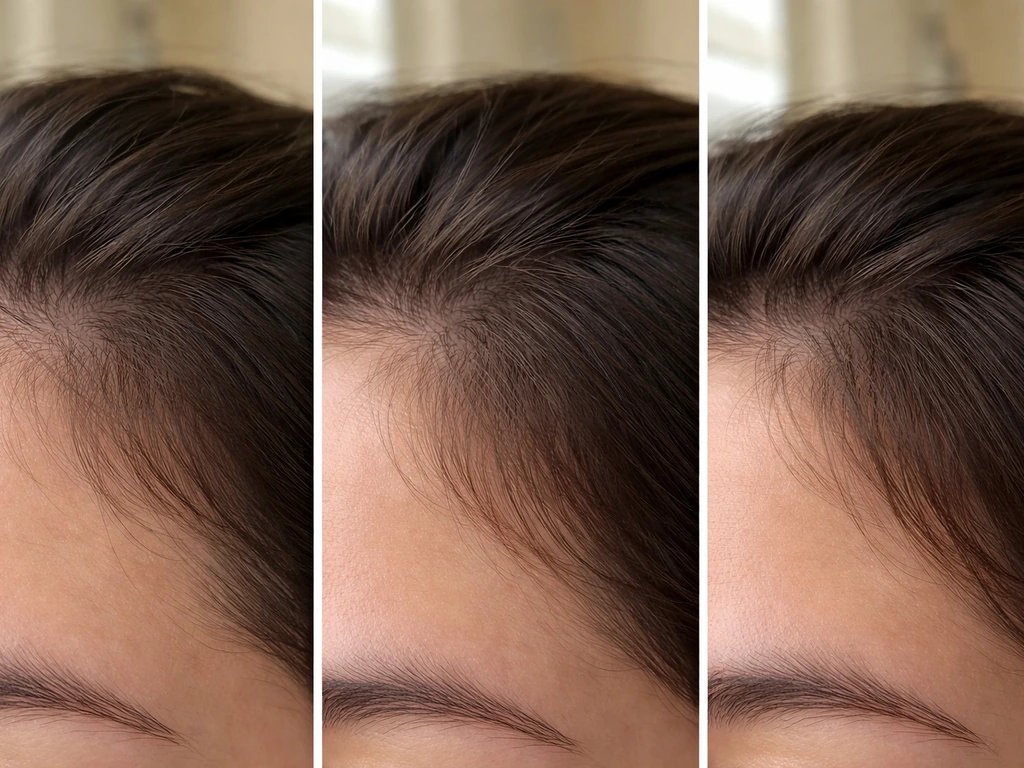
At the half-inch-per-month average, here is roughly what to expect in terms of new growth length. These numbers apply to everyone, regardless of hair type.
| Time After Perm | New Growth Length (approx.) | What You'll Notice |
|---|---|---|
| 4 weeks | ~0.5 inch | Slight root texture difference, barely visible |
| 8 weeks | ~1 inch | Visible line of demarcation at roots |
| 3 months | ~1.5 inches | Two textures clearly apparent, perm pattern may loosen |
| 6 months | ~3 inches | Significant root growth, ends noticeably more curled/wavy |
| 12 months | ~6 inches | Full grow-out achievable for short-to-medium hair |
| 18 months | ~9 inches | Full grow-out for longer starting lengths |
Hair care during perm regrowth
Permed hair is chemically processed hair, which means it is more porous and more prone to dryness than untreated strands. Your new growth has a different porosity level entirely. Managing two textures with two different moisture needs is the central challenge of this grow-out.
Washing and conditioning

Use a moisturizing, sulfate-free shampoo and focus it on the scalp. Let the rinse water carry a little cleanser down the lengths without scrubbing them, because the permed ends do not need aggressive washing. Follow with a hydrating conditioner every single wash, and use a deep conditioning treatment once a week. Ingredients to look for: shea butter, argan oil, glycerin, and hydrolyzed keratin. Protein treatments once a month (not more) help reinforce the weakened bonds in permed sections, but overdoing protein leaves hair stiff and more breakage-prone.
Detangling without breaking
Always detangle on wet, conditioned hair, never dry. Start at the ends and work upward in small sections. A wide-tooth comb or a flexible detangling brush works much better than a fine-tooth comb or a paddle brush on two-texture hair. The junction where your natural roots meet the permed lengths is the most fragile point on the strand, so be especially gentle there. Ripping through tangles at that line is the fastest way to create breakage exactly where you least want it.
Moisture and curl pattern control
The permed lengths will benefit from leave-in conditioner applied while hair is still damp. For wavy or loose curl perms, a lightweight curl cream or mousse helps control frizz without weighing the curl down. For tighter perm patterns, a heavier cream or oil-based leave-in keeps the curls defined and bouncy rather than frizzy and dry. Your new growth may not need as much product, so apply most of the leave-in from mid-length to ends rather than saturating the roots.
Trimming strategically (not starting over)
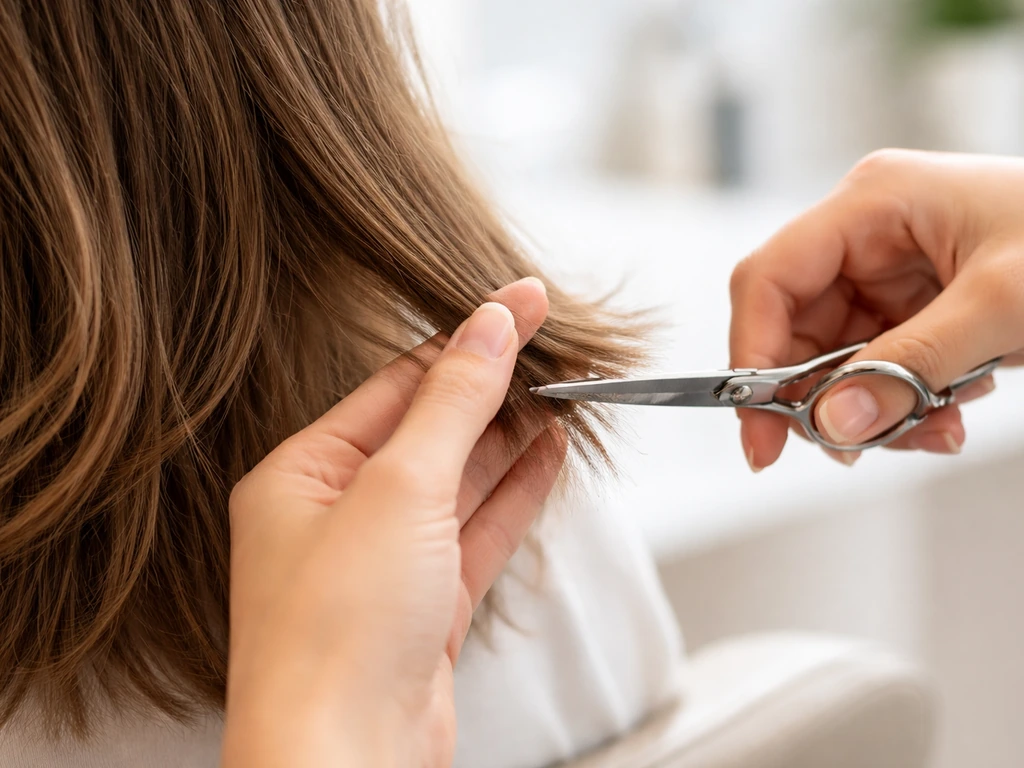
This is where a lot of people panic and either chop everything off or avoid scissors entirely for a year. Neither extreme serves you well. The smart approach is gradual trimming that removes the most visibly damaged or processed ends over several appointments, rather than one dramatic cut.
Every six to eight weeks, ask your stylist to take off a quarter to half an inch from the ends. This removes the oldest, most chemically stressed portion of the perm without sacrificing the new growth you have earned. If your ends are noticeably dry, splitting, or refusing to hold moisture, trim more. If they are in reasonable condition, trim less. The goal is to keep the overall shape looking intentional while steadily shortening the permed section from the bottom up.
If you had bangs or a fringe as part of your permed style, those tend to grow out fastest because they are the shortest section. Trim bangs separately from the rest of your hair every three to four weeks to keep them from reaching an in-between length that sits awkwardly on your forehead. For layered cuts, ask your stylist to blend the layers as they grow rather than removing them all at once, because layers actually help disguise the two-texture problem by breaking up the visual line.
Styling through the awkward in-between phase
The two-texture stage is the part everyone dreads, but it is genuinely manageable with the right approach. The goal is not to pretend the two textures are the same. It is to style in a way that makes the combination look deliberate.
Embracing and blending two textures
Diffusing your hair rather than blow-drying straight is one of the most effective tricks during the grow-out. A diffuser on low heat encourages your new growth to take on a soft wave or texture that blends better with the permed lengths below. The alternative, blow-drying roots completely smooth against wavy ends, tends to make the line of demarcation look sharper. Braids, twists, and buns are also your best friends here, because they unify both textures into one shape and take the guesswork out of styling on rushed mornings.
Managing undercuts and layers during the grow-out
If your perm was part of a cut that included an undercut, you now have a layered grow-out challenge on top of the texture transition. growing a perm for guys often involves exactly this scenario, where a faded or undercut nape needs to fill in at the same time the perm is being removed. The most practical approach is to let the undercut grow in without touching it until it reaches a length that can be blended into the sides, usually around three to four months of growth. Trying to fade it repeatedly while also growing it out just extends the process.
Frizz and humidity control
Permed hair absorbs humidity faster than untreated hair, which turns frizz from an occasional nuisance into a daily battle. Anti-humidity serums or lightweight oils applied over your styling products seal the cuticle and reduce moisture absorption from the air. Argan oil, camellia oil, and silicone-based serums all work for this purpose. Apply a small amount over damp styled hair before diffusing or air-drying, not after, because applying it to dry frizzy hair just weighs it down unevenly.
If you also have color-treated hair
Permed and color-treated hair at the same time is a common situation, and it means your ends are dealing with two forms of chemical processing simultaneously. Color-treated perm lengths are significantly more porous and more prone to snapping. Prioritize moisture above everything else, reduce heat styling to the absolute minimum, and consider asking your colorist to add a bond-building treatment (like Olaplex or a similar product) at your next color appointment. If your perm is growing out alongside natural regrowth of a different color, the two-texture line and the two-color line may sit in the same place, which can actually work in your favor visually by blending both transitions together.
Stage-by-stage: what to expect month by month
Weeks 1 to 4
You probably cannot see much difference yet. Start your new care routine now anyway: sulfate-free shampoo, weekly deep conditioning, and no heat if you can avoid it. This is also the time to decide whether you want to grow the perm out completely or transition to a shorter natural style. Both are valid, but the answer changes how aggressively you trim going forward.
Months 1 to 3
You have about half an inch to one and a half inches of new growth. The line of demarcation is visible. This is the hardest psychological stage because you can see the difference clearly but you do not have enough length to work with. Focus on protective styles (buns, braids, loose updos) and resist the urge to straighten the entire head repeatedly to make it look uniform, because that just damages the new growth and makes things worse. Get your first small trim at the eight-week mark.
Months 3 to 6
With one and a half to three inches of new growth, you are starting to have enough root length to style on its own. This is when diffusing, wash-and-go techniques, and braid-outs become useful tools. The perm pattern in your ends may also be loosening naturally from washing, drying, and the weight of longer lengths, which helps blend the two textures a little more. Continue trimming every six to eight weeks.
Months 6 to 12
Three to six inches of new growth means you have real styling options. If you started with short or medium hair, you may be close to a full grow-out by month 12. Longer starting lengths still have permed ends at this stage, but the ratio of natural to permed is shifting in your favor. Keep up the deep conditioning, keep trimming, and lean into styles that showcase the new growth rather than trying to hide the transition.
Month 12 and beyond
For short hair that started at chin length or shorter, you are likely fully or mostly grown out by now. For longer hair, the last stretch is about patience and continued care. The styling options available to you at this point are much wider, and the daily management challenge has gotten significantly easier. This is also when a lot of people do their final trim to remove the last of the permed ends and fully embrace their natural texture.
Mistakes that slow you down (and when to get professional help)
Some of the most common mistakes people make during a perm grow-out actually extend the process or make it more damaging. Here is what to avoid.
- Re-perming or touching up the roots to try to match the existing perm pattern: this just keeps the chemical cycle going and delays your grow-out indefinitely.
- Flat-ironing or straightening the entire head daily to hide the two textures: heat damage on already-processed ends causes breakage that shortens your hair faster than it grows.
- Skipping conditioner to 'let the perm relax naturally': the perm does not relax on its own without moisture, and dry permed hair breaks off instead of growing out.
- Brushing dry permed hair aggressively: this destroys the curl pattern and causes breakage at the line of demarcation.
- Applying relaxers or texturizers to 'bridge' the two textures: this adds a third chemical process to already-stressed hair and significantly increases breakage risk. If you are curious about that route, it is worth reading about how growing out a texturizer actually works before going that direction.
- Waiting too long between trims: split ends travel up the shaft and cause more damage, not less.
Get professional help when you notice significant breakage (more than normal shedding, or snapping at the roots), when your scalp becomes irritated or flaky in a way that does not resolve with a clarifying wash, or when the two textures are so different in porosity that no home conditioning routine is holding moisture in the ends. A stylist who specializes in chemically treated hair or natural hair transitions can assess whether a bond-building treatment, a protein treatment series, or a more strategic trim plan would get you through the transition faster and with less damage.
It is also worth noting that the grow-out experience varies depending on your starting hair type. If your perm was applied to Black hair, the interaction between the chemical process and your natural curl pattern creates specific considerations around moisture, detangling, and the demarcation line that are worth digging into more deeply. There is detailed guidance on growing out a perm in Black hair that addresses those nuances specifically.
Perms vs. relaxers: understanding the difference for your grow-out
A lot of people use the words perm and relaxer interchangeably, but they are actually different processes with different grow-out challenges. A traditional perm adds curl or wave to straight hair. A relaxer removes curl from naturally coily or curly hair, straightening it. Both permanently alter the disulfide bond structure in the hair shaft, but they work in opposite directions and on opposite starting textures.
If what you are actually growing out is a relaxer rather than a curl-adding perm, the grow-out strategy is similar in many ways (moisture, gentle handling, gradual trims) but the texture dynamics at the demarcation line are different. Relaxed ends are straight sitting below natural coily or curly roots, which is the reverse of the curl-adding perm scenario. There is thorough guidance on how to grow out a relaxer if that is your situation, and if you want to make the transition without cutting your hair short, the approach outlined for growing a relaxer out of hair without cutting is particularly useful.
For those who want to transition from relaxed to fully natural hair over time, the process of growing out relaxed hair to natural involves similar patience and strategic trimming, just with the texture contrast running in the opposite direction. And if you are hoping to keep as much length as possible during that transition, the advice on growing out relaxed hair without a big chop walks through how to do that gradually without sacrificing all your length at once.
Your plan for the next four weeks
If you just searched for how to grow out a perm and you want a concrete starting point, here is what to do this week and over the next month.
- Switch to a sulfate-free, moisturizing shampoo if you have not already. Use it every two to three days, focused on the scalp.
- Start a weekly deep conditioning session. Leave the conditioner on for at least 20 minutes under a shower cap. This is the single highest-impact change you can make right now.
- Stop heat styling daily. If you need to style with heat, use a heat protectant and keep the temperature at or below 350°F (175°C).
- Book a trim for the six-to-eight-week mark. Ask for a quarter to half inch off the ends to remove the driest, most processed portion.
- Pick one or two protective or low-manipulation styles to rotate through on days when the two-texture issue feels frustrating. A loose bun, a braid-out, or a headband style all work well in the early months.
- Do one scalp massage per day for five minutes while your conditioner is sitting. Costs nothing, keeps circulation up, and gives you a daily check-in on how your scalp is feeling.
- Write down the date today so you have a reference point. Progress feels slow week to week but is visible month to month, and knowing your start date helps you track it honestly.
Growing out a perm is a process, not a problem. Every week that passes is a week of new growth that belongs entirely to your natural texture. The more consistently you protect that new growth and keep the permed ends healthy enough to stay on your head, the faster the whole thing moves. You do not need a dramatic transformation this month. You just need a plan you can actually follow, and now you have one.
FAQ
How do I know if I’m growing out a perm or a relaxer?
Check what your hair looked like when the chemical service started. A perm adds curl or wave to naturally straighter hair, while a relaxer removes curl from naturally coily or curly hair. If your ends are straight but your roots are curly, that usually means relaxer grow-out, and your “two-texture” line behaves in the opposite direction.
Should I stop all protein and only do moisture while I grow it out?
Not necessarily. The article suggests protein once a month, but if your hair feels mushy, overly elastic, or doesn’t spring back after stretching, you may need protein sooner. If it feels stiff, rough, or tangles worsen after protein, back off and focus on hydration and a lighter leave-in.
Can I use bond builders at home, or do I need a salon?
You can sometimes use bond-building products at home, but timing matters more during grow-out. If you color or bleach, ask your stylist about adding bond support at that appointment, because chemical processing stacks porosity and snapping risk in the permed ends.
Will a clarifying shampoo speed up the grow-out?
It can help if buildup is causing dryness or limpness, but it does not directly speed the root growth rate. If you clarify, do it sparingly (for example, once every few weeks) and immediately follow with conditioner and a deep treatment so you do not strip the scalp or leave the ends more porous.
How often should I detangle during the two-texture stage?
Detangle only when hair is wet and conditioned, and do it based on tangles, not on a schedule. Many people detangle in the shower during washing, then avoid extra combing between washes. The junction area is fragile, so reduce “touching” there and use finger detangling first if needed.
What’s the best heat approach if I need to look polished for work?
Use the lowest-heat option and avoid drying roots until they become perfectly smooth against wavy ends. If you must blow-dry, keep it brief, use heat protectant, and consider diffusing with low heat first to blend the demarcation, then only smooth small areas as needed.
Can I style my natural roots to match the perm pattern, or should I embrace contrast?
Aim for blending rather than matching exactly. The article recommends diffusing and protective styles, a practical strategy is to soften the roots into a similar wave pattern while keeping styling product light on the root area, then let the permed ends do their own thing.
Is it better to trim more frequently or wait longer between trims?
For most people, six to eight weeks is a good cadence because it removes the most stressed ends gradually. If your ends are actively splitting, trim sooner. If they look hydrated and intact, trimming later can help you keep length without sacrificing the overall shape.
Why does my scalp feel dry or itchy even when my hair is okay?
Perm chemicals and product buildup can make the scalp react differently than the hair shaft. If you have persistent flaking, stop harsh stripping and switch to gentle, sulfate-free washing, then consider a check with a professional if symptoms do not improve. Irritation can interfere with comfort-based routines, which indirectly slows your ability to retain length.
Should I cut my bangs differently from the rest of my perm grow-out?
Yes. Because bangs reach the “in-between” awkward length faster, separate trimming every three to four weeks helps them stay balanced and prevents a messy line on the forehead. If your bangs are drying quickly, add extra conditioning to the bang area because the permed ends can be more porous.
How do I manage frizz if the weather changes day to day?
Use anti-humidity products on damp hair before you dry, not on fully dry hair. When humidity spikes, slightly increase serum or oil at the ends only, then keep roots lighter to avoid flattening new growth. If your frizz is extreme despite product, you may need a deeper conditioning boost rather than more styling product.
What should I do if I’m seeing more breakage than normal?
Do not assume it is just shedding. If you notice snapping, increasing tangles, or short broken pieces near the demarcation line, reduce heat, stop heavy detangling, and consider a stylist specialized in chemically treated hair to reassess whether you need more targeted protein, more moisture, or an adjusted trim plan.