
Growing out a perm in Black hair means managing two very different textures at once: your natural curl or coil pattern coming in at the roots, and the chemically altered pattern still sitting on your ends. If you are trying to grow relaxer out of hair without cutting, focus on protective styles, moisture, and low-manipulation handling to prevent breakage at the line of demarcation grow out of a perm. It takes roughly 6 to 18 months to fully grow out depending on your starting length and how fast your hair grows, but you can style it confidently, protect it from breakage, and make real progress the whole time, no big chop required unless you want one.
How to Grow Out a Perm in Black Hair Step by Step

Marcus Vickers
15 May 2026
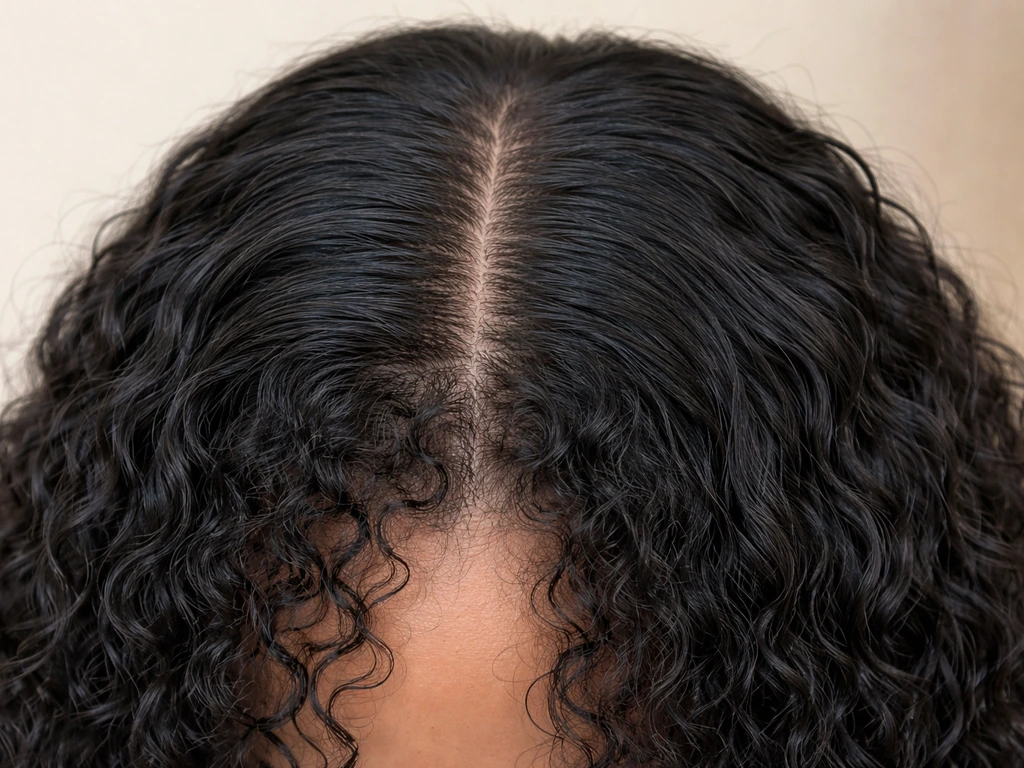
How Long This Actually Takes: A Realistic Timeline
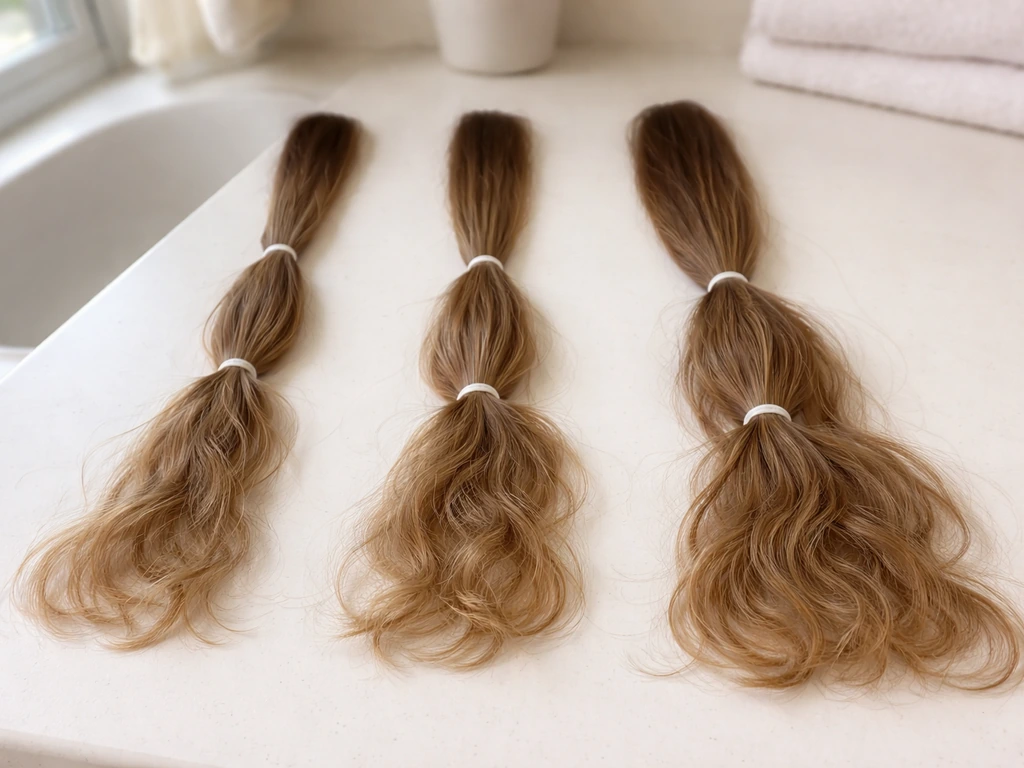
Hair grows about half an inch to just under an inch per month on average, most people land somewhere around 0.5 inches per month. That pace means if your permed ends sit 6 inches below your current roots, you're looking at roughly a year of growing before you can cut all the perm off with any meaningful length left. But you don't have to wait until the end to see improvement. Here's how it tends to unfold:
| Stage | What's Happening | What to Focus On |
|---|---|---|
| Months 1–2 | New growth appears at roots; texture line is subtle but present | Moisturize, protect scalp, avoid manipulation at root line |
| Months 3–4 | Curl or coil pattern at roots becomes clearly visible; perm pattern starts softening | Two-texture styling begins; detangling at the line gets trickier |
| Months 5–6 | Significant new growth; perm pattern on ends looks looser or 'saggy' from weight | Protective styles become very useful; consider first trim |
| Months 7–10 | Most of the perm is growing out; length is building; ends may feel drier and more fragile | Moisture and protein balance is critical; trim as needed |
| Months 12–18 | Enough new growth to cut perm ends with length remaining | Final trim or gradual dusting removes remaining permed ends |
One thing that catches people off guard: the permed section doesn't revert. It stays chemically altered until you cut it off. What changes is the perm pattern may look like it's 'falling out' because the weight of your growing natural roots pulls it downward and stretches the curl. That's not your perm disappearing, it's physics. The actual line between your natural texture and the permed section stays sharp.
Transitioning to Your Natural Texture vs. Keeping It Straight
Before anything else, get clear on where you're headed. There are two very different roads here, and your routine depends on which one you're taking.
Going natural (embracing your curl or coil pattern)
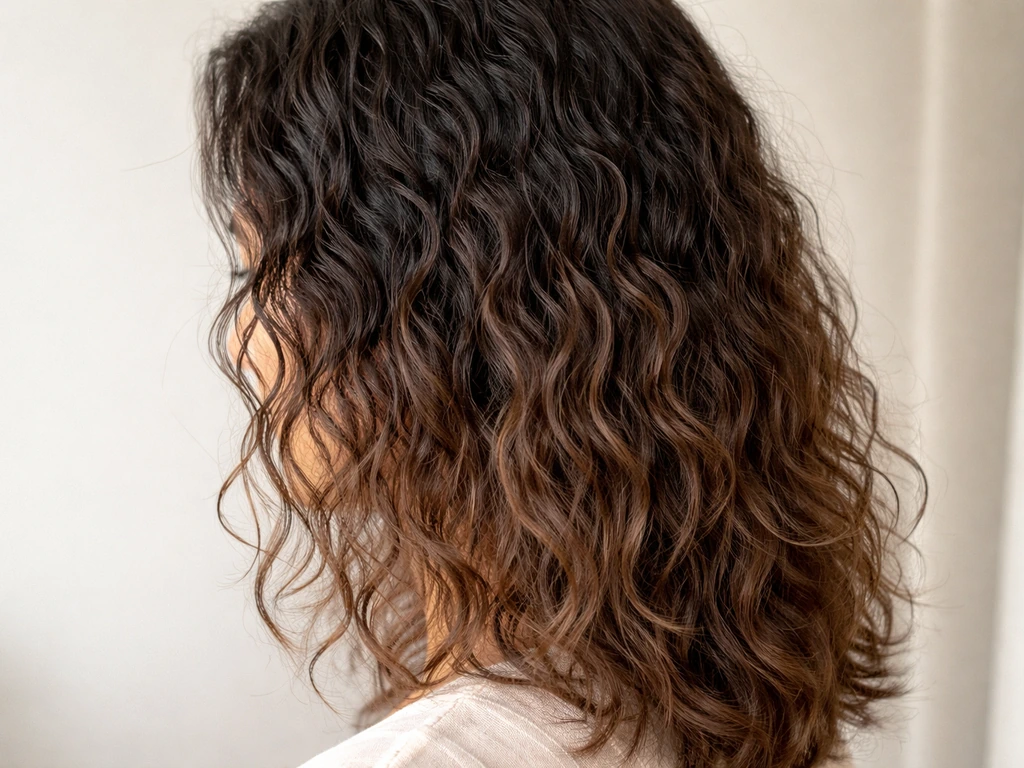
If you want to return to your natural texture, the grow-out is about protecting new growth so it thrives and cutting the perm off gradually or all at once. With a simple grow-out plan, you can transition relaxed hair to your natural texture while keeping breakage and uneven textures under control grow relaxed hair out to natural. You'll stop using chemical straighteners entirely and reduce heat significantly.
This path takes patience because your natural pattern won't look fully 'itself' until most of the permed length is gone, but styles like twist-outs, braid-outs, and rod sets can make the two-texture phase look intentional and polished. Many of the same principles apply here as in growing out a relaxer, the line of demarcation is the same kind of fragile boundary zone.
Keeping hair straight or heat-styled
If you want to keep wearing your hair straight or you're planning to get another chemical service eventually, you still need to let the perm grow out to avoid over-processing already-treated hair. During this time, low-heat blow-drying and flat ironing can be done carefully, but you have to respect the line of demarcation where your natural roots meet permed ends, that zone is structurally weaker and breaks fastest. If you are wondering how to grow out relaxer after a previous straightening service, the same line-of-demarcation rules for protecting weaker roots and permed ends apply line of demarcation. We'll cover heat safety in detail below.
Cutting vs. No-Cut: What's Actually the Right Call
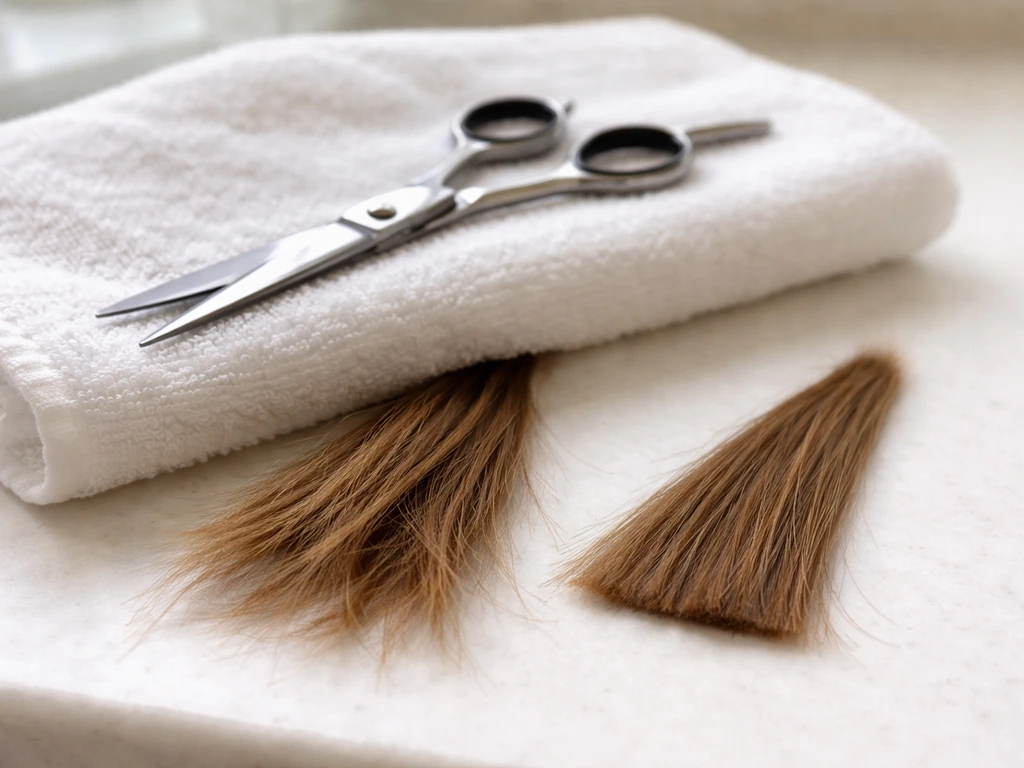
This is where most people get stuck in their own heads. You do not have to do the big chop. But you also probably shouldn't avoid scissors entirely for 18 months. The real answer sits in the middle.
When trimming genuinely helps
Permed ends are chemically processed, and over time they get drier, more brittle, and more prone to splitting. Leaving heavily split or over-processed ends on your hair means the damage creeps upward into your healthier sections. A trim every 8 to 12 weeks, just taking off what's visibly damaged, prevents that from happening without sacrificing a ton of length.
Dusting is worth knowing about here. It's a lighter approach than a full trim: you're taking off less than a quarter inch, just removing the most compromised tips. It's especially useful if your ends are dry and prone to splitting but you're not ready to lose visible length. Think of it as maintenance, not a setback.
When no-cut makes sense
If your permed ends are still in decent condition, no splits, still flexible when wet, no obvious breakage, you can absolutely skip trims for longer stretches and focus on protective styling instead. Check your ends every couple of months with a strand stretch test: wet a strand and gently stretch it. Healthy hair stretches about 50% and springs back; dry, damaged hair stretches only about 20% before snapping. If your ends are failing that test, it's trim time.
Stopping Breakage, Dryness, and Tangles Before They Start
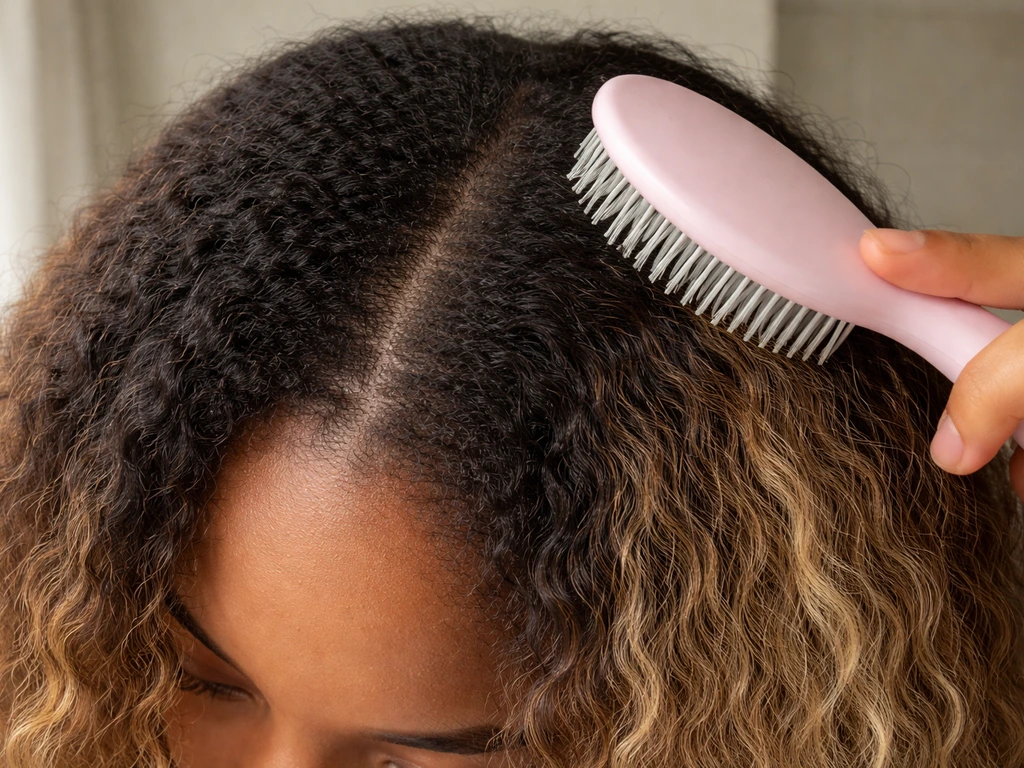
The line where your natural texture meets your permed ends is the most vulnerable spot on your head. Your natural roots have tighter curl patterns that create more friction and tension, and your permed ends are already chemically stressed. That combination means breakage happens there first if you're not careful.
Moisture vs. protein: getting the balance right
Chemically processed hair needs consistent moisture first and foremost. Deep condition every other wash at minimum, if you're washing twice a week, that means deep conditioning once a week. Your natural new growth needs moisture too, but it also has more structural integrity than the permed section, so you'll notice the ends feeling drier and more brittle faster. Add a protein treatment into your rotation about once a month, not more. Too much protein on already-processed hair makes it stiff and actually more prone to snapping.
If your hair is particularly damaged, bond-building treatments (not the same as standard protein) can help once every one to two weeks. But don't go overboard, they're for repair during a recovery phase, not an everyday product.
Detangling without wrecking your progress
Never detangle dry. Seriously, this is where the most preventable breakage happens during a grow-out. Always work on wet or damp hair with plenty of slip from a conditioner or detangling product. Start with your fingers first, working through knots section by section from ends up to roots. Then follow with a wide-tooth comb if needed. A tail comb is useful for sectioning before you start, not for working through tangles. The two-texture zone at your roots and permed ends will catch and tangle most, so move through it especially slowly.
Styling Through the Awkward Stages

The middle months, roughly months 3 through 9, are when most people want to give up and either cut everything off or get another perm. If you're figuring out how to grow out a perm, this awkward phase is exactly where your styling choices matter most. Don't. This is the stage that rewards you most if you have a styling strategy.
Two-texture styling (curly roots, looser ends)
The move here is to work with your curl pattern at the roots rather than fighting it. Styles that define curl work with both textures instead of exposing the mismatch. Try braid-outs, twist-outs, or rod sets, these work on both your natural new growth and help the permed ends look like they're part of the same style rather than obviously different. Flexi-rods are a particularly good heatless option because they let you set the ends in a shape that echoes your natural root texture.
Managing shrinkage at the roots
If your natural texture is a tight coil, your new growth will shrink significantly when dry, sometimes 50 to 75 percent of its wet length. Meanwhile your permed ends won't shrink at all. This makes the hair look uneven in a way that can feel discouraging. The fix isn't to stretch the roots with heat, it's to style in a way that accounts for the difference. Banding (using soft hair ties at intervals down a section while drying) stretches roots gently with no heat. Twist-outs set on stretched hair can also give you more length without thermal damage.
Protective styles for longer stretches
Box braids, flat twists, cornrows, and low-manipulation updos are your best friends during the longer grow-out months. They tuck away the line of demarcation, reduce daily manipulation, and let you go longer between wash days without tangling. Allure similarly emphasizes that protective styles are important during the transition from chemical to natural hair, especially as the different textures become more noticeable. Just make sure they're not installed too tightly, tension at the roots on hair that's already dealing with two textures can cause traction breakage at the exact spot you're trying to protect.
Your Protective Care Routine, Week by Week
Here's a practical baseline routine that works for most people in active grow-out mode. Adjust based on how your hair responds.
- Wash 1 to 2 times per week with a moisturizing, sulfate-free shampoo. Clarify with a sulfate shampoo once a month to remove buildup without stripping moisture every wash.
- Deep condition every other wash (or every wash if your ends feel very dry or brittle). Focus the conditioner on your permed ends and let it sit under a plastic cap for 20 to 30 minutes.
- Detangle every wash day on wet hair only. Finger-detangle first with conditioner in, then follow with a wide-tooth comb from ends to roots.
- Apply a leave-in conditioner while hair is still damp. Follow with a cream or oil to seal in moisture — this is especially important for your natural roots, which lose moisture faster along the curl pattern.
- Do a protein treatment once a month (not weekly) to strengthen the permed sections. If you notice stiffness or brittleness after protein, back off and prioritize moisture the following weeks.
- Use a bond-building treatment every one to two weeks if your permed ends are visibly damaged or snapping during detangling.
- Sleep on a satin or silk pillowcase, or use a satin bonnet or scarf. Cotton pillowcases pull moisture from your ends overnight and cause friction breakage — this is especially damaging to the line of demarcation.
Heat and Chemical Safety During the Grow-Out
This section matters a lot. Mistakes with heat and chemicals during a grow-out don't just cause damage, they can cause breakage at the line of demarcation that sets your length progress back by months.
What to avoid completely
- No chemical relaxers, texturizers, or additional perms on hair that still has perm on it. Overlapping chemical services on already-processed sections causes severe over-processing and breakage.
- No high-heat styling on your permed ends without a heat protectant. The chemical structure of permed hair is already altered, and high heat compounds that damage quickly.
- No flat ironing or curling iron use on soaking wet hair — the steam created internally damages the hair shaft.
- Avoid styles with heavy tension at the root line where your two textures meet.
What's okay to do carefully
Low-heat blow-drying on a low to medium setting with a diffuser or nozzle is manageable if you're not doing it every day. Flat ironing occasionally, meaning once every week or two at most, is possible if you keep temperatures around 350 to 375°F for your permed sections (which are finer in texture from processing) and use a quality heat protectant every single time. Make one pass, not three. The goal is single-pass styling that reduces the total amount of heat your hair absorbs. Stylist guidance generally agrees that staying under about 390 to 400°F and minimizing passes is the threshold for reducing heat damage meaningfully.
If you want to add curl definition to your natural roots while your hair is in grow-out mode, heatless methods, flexi-rods, perm rods, braid-outs, twist-outs, are always the safer choice. They work well on both textures and don't stress the line of demarcation.
Planning your next chemical service (if you want one)
If you eventually want another perm or a different chemical service, wait until you've grown out and trimmed off a meaningful amount of the old perm, ideally at least 3 to 4 inches of new natural growth, which takes roughly 6 to 8 months. Applying any chemical service to hair that still has perm on the ends creates an overlap zone that's extremely prone to breakage. Give your hair time to recover, keep it in good condition during the grow-out, and you'll start fresh with a much stronger foundation.
Your Next Steps Right Now
You don't need to overhaul everything today. Start with these three things: figure out where your line of demarcation is (the point where your new growth texture starts), do a strand stretch test on your permed ends to assess their condition, and pick one protective style you can wear for the next two to three weeks while you establish your moisture routine.
If your texture was changed by a texturizer, the same grow-out ideas apply: protect the new growth, manage the line of demarcation, and trim only what is damaged how to grow out a texturizer. From there, you build. The grow-out is a process, not a crisis, and people do it successfully all the time without cutting everything off from day one.
If you want a simple game plan for how to grow a perm for guys, start by tracking your line of demarcation and choosing protective styles that minimize breakage as the new growth comes in. If you’re wondering how to grow out a perm, start by protecting your new roots and trimming only what’s damaged as the line of demarcation moves.
FAQ
How do I know exactly where the line of demarcation is on my head?
Look for a clear texture and behavior change when your hair is wet, the roots coil up or clump, while the ends stay more uniform or behave differently. You can also measure from your scalp down to where the ends feel more brittle, tangle differently, or do not revert to your natural pattern. Mark it with a washable hair color or hair wax for repeat checks.
Can I wash and detangle more often during the grow-out, or will it increase breakage?
More washing is fine if you keep detangling low-manipulation and detangle only when hair is damp and well-coated with slip. If frequent washing makes your ends feel drier, reduce friction by using a leave-in conditioner or detangling spray during detangling, and consider fewer but longer conditioning sessions.
Should I use a leave-in conditioner or just rinse-out conditioner during grow-out?
Use both if your ends dry quickly. A rinse-out conditioner helps you detangle, and a leave-in adds ongoing slip and moisture for the two-texture zone, which reduces tangles at the demarcation. Apply leave-in mainly to mid-lengths and ends, then smooth lightly without pulling.
Is it safe to color, bleach, or highlight my hair while I’m growing out a perm?
It’s higher risk during grow-out because ends are chemically stressed and lift or dye can make them even more brittle. If you must do color, prioritize only the new growth section and avoid processing the permed ends, and plan it around trims so the overlap zone is reduced.
What if my permed ends are still flexible but I’m getting shedding, not breakage?
Shedding (hair with a normal bulb or hair that comes out from the root) is often different from breakage (short pieces). If you see shedding, focus on scalp health, gentle handling, and adequate moisture rather than constant trims. If shedding is paired with lots of short snapped strands, treat it as breakage and trim/dust sooner.
When should I dust versus do a fuller trim?
Dust (very small amounts) is best for minor fraying and split-prone tips when the rest of the permed ends still stretch and feel elastic. Choose a fuller trim when splits are migrating upward, when the ends feel rough even when wet, or when you notice consistent tangling and snagging at the tips.
Do I need protein if my ends feel hard already?
Usually no. If hair feels stiff, straw-like, or loses elasticity quickly after washing, reduce protein frequency and rely on conditioning and moisture-based treatments first. If you’re unsure, do a strand test after a wash and track how it responds, healthy hair should stretch and return without feeling brittle.
How can I reduce breakage at the demarcation when I’m wearing my hair out?
Keep the demarcation protected with consistent conditioning and minimal friction. Use a satin bonnet or scarf at night, consider braiding or twisting before bed, and avoid rubbing the roots to the ends when styling. When detangling, start at the ends and move upward slowly, don’t force comb-through at the transition point.
How often should I deep condition during grow-out if I wear styles like twists or braids most of the time?
Deep condition every other wash is a strong default, even with protective styling, because moisture still has to reach the ends. If your braids or twists are kept in longer than a couple of weeks, add targeted moisture by applying a conditioner or leave-in to the scalp and roots and focusing on the ends during your refresh routine.
Can I speed up grow-out by straightening just the roots?
You can, but be cautious because heat near the line of demarcation increases the chance of breakage. If you do straighten, keep passes to one, use heat protectant every time, and avoid repeatedly heating the same section. For faster visual blending, use heatless root stretching methods (banding or twist-outs on stretched roots) instead of frequent heat.
What should I do if the two-texture phase looks uneven even after styling?
Shift to a style strategy that matches shrinkage, not one that tries to make both textures the same length immediately. For tight coils, root-stretching methods like banding can help the roots catch up visually, then you set the whole look with flexi-rods, twist-outs, or braid-outs to make the transition look intentional.
When can I get another perm or chemical service without creating an overlap zone?
Wait until you’ve trimmed off a meaningful portion of the permed ends and you can reduce chemical overlap, ideally after several inches of natural growth and at least after you’ve confirmed the ends can tolerate processing. If you still see clearly permed ends when damp, treat that as a sign you’re not ready yet.