
Growing out a relaxer means managing two completely different textures on the same strand at the same time. Your new growth is coily or wavy, your relaxed ends are straight, and the spot where they meet is the most fragile part of your whole head of hair. That junction is where most of the breakage happens, and that's also where most grow-out attempts fall apart.
How to Grow Out a Relaxer Fast Without Damage

Marcus Vickers
19 Apr 2026
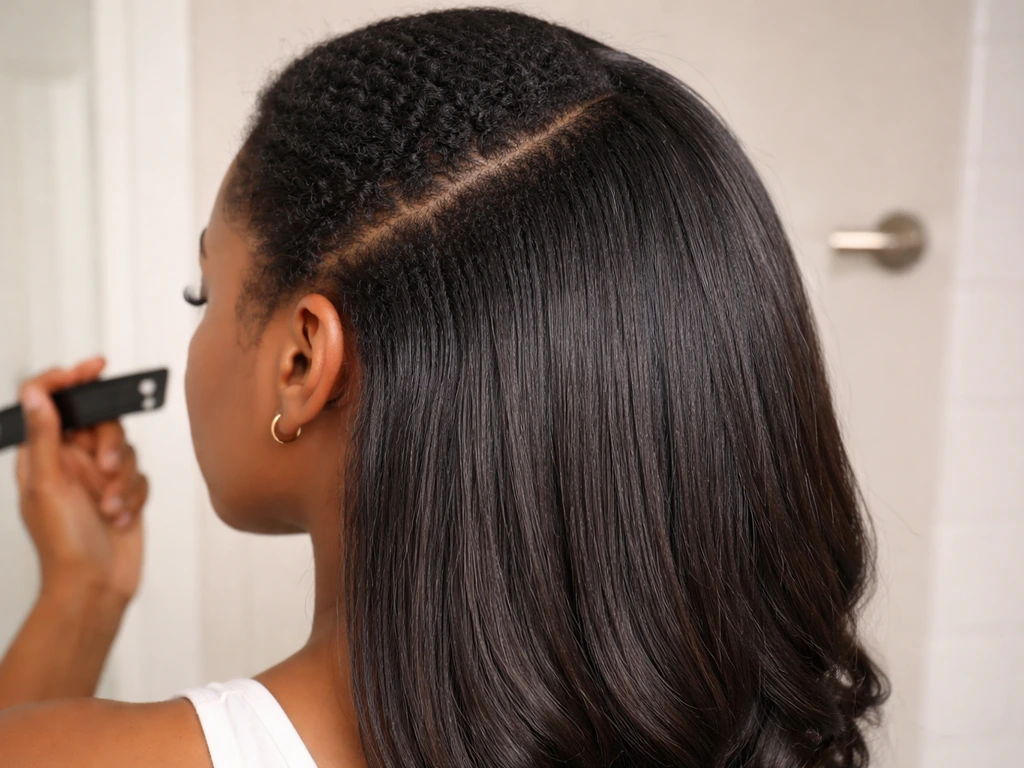
The good news: you can do this without losing significant length, without the big chop (unless you want it), and without spending hours fighting your hair every wash day. If you want a step-by-step approach, this guide on how to grow out relaxed hair without big chop walks through the long-game strategy without the big chop. You just need a realistic plan and a routine that protects that weak spot.
What's actually happening at the root: regrowth vs damage
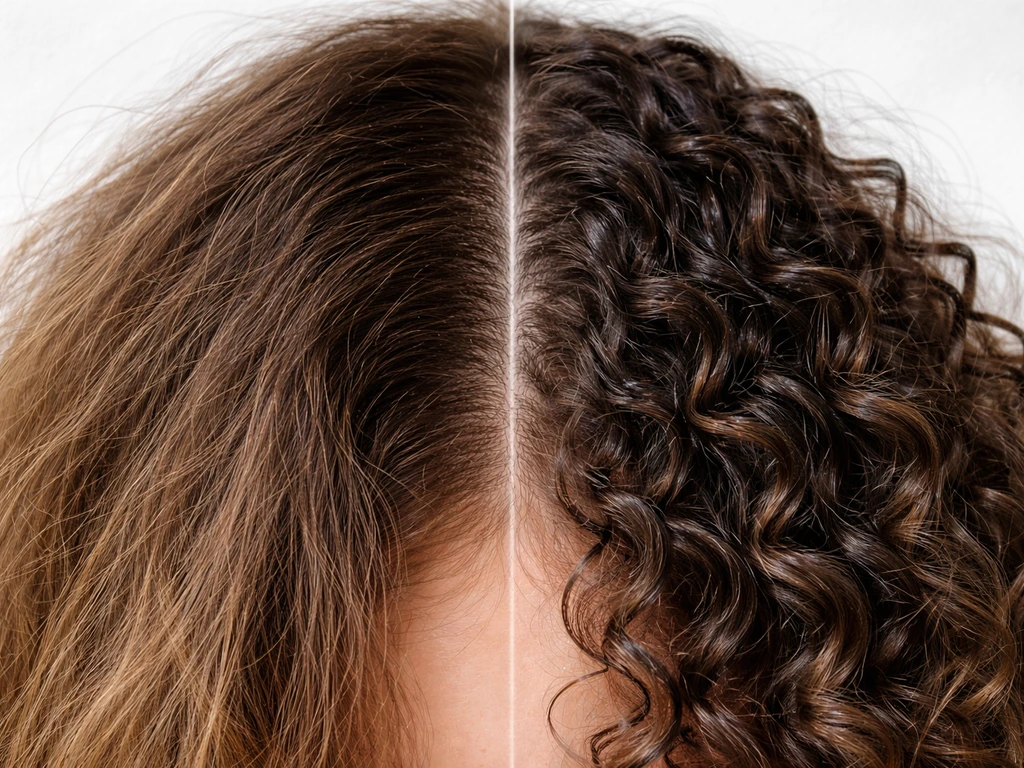
When a relaxer is applied, it permanently breaks down the protein bonds that give your hair its natural curl pattern. That change is irreversible on the strands it touched. When new hair grows in from your scalp, it has never been chemically processed, so it comes in with your natural texture intact. That means you're dealing with two structurally different sections of hair on every strand.
The standard guideline in professional relaxer application is to wait until you have at least 1.5 to 2 cm (about 3/4 to 1 inch) of new growth before retouching, and never to overlap relaxer onto already-processed hair. Overlapping breaks down bonds that are already weakened, and the hair simply snaps. If you've had repeated relaxer applications over the years, your older, more processed lengths may already be porous, brittle, or overly stretched. So when you're planning your grow-out, you're not just managing new growth versus relaxed hair. You're also assessing how much of your relaxed length is actually healthy enough to keep.
Chemical damage shows up as extreme dryness, a gummy or mushy feel when wet, or hair that snaps off with very little tension. Regrowth, by contrast, feels thicker, springier, and absorbs moisture differently. Learning to tell the difference between the two matters because it changes how you treat each section, and how aggressively you trim as you go.
Pick your grow-out plan before you do anything else
Before you change your routine or buy a single product, decide which path you're actually on. There are two realistic options and both work, they just require different commitments.
| Approach | What it means | Best for | Rough timeline |
|---|---|---|---|
| Transition gradually (no big chop) | Stop relaxing, grow in natural texture, and trim relaxed ends slowly over time | Keeping length, preferring protective styles, comfortable with texture blending | 12 to 24 months depending on how much relaxed hair you're working with |
| Big chop or progressive cut | Cut relaxed ends off in one go or in a few larger trims over a few months | Wanting a faster reset, already have enough length in new growth, or damaged ends | 3 to 6 months to a fully natural short style |
| Slow stretch and trim | Stop relaxing, stretch the gap between any chemical service, and trim every 8 to 12 weeks | People who want length retention and are willing to be patient with protective styling | 18 to 30 months for full transition at shoulder length or longer |
In terms of timeline, here's the honest math: hair grows about 1.5 cm (half an inch) per month on average. If your relaxed hair is shoulder length (roughly 30 cm), you're looking at about 20 months of new growth to fully replace it, assuming no breakage and no trims. Most people find that protective styling, consistent moisture, and strategic trims every 10 to 12 weeks make the gradual approach very manageable. If you want to understand every nuance of transitioning without cutting, there's a full breakdown available on how to grow relaxer out of hair without cutting, which goes deeper on that specific scenario.
The transition routine: wash, moisturize, seal, detangle
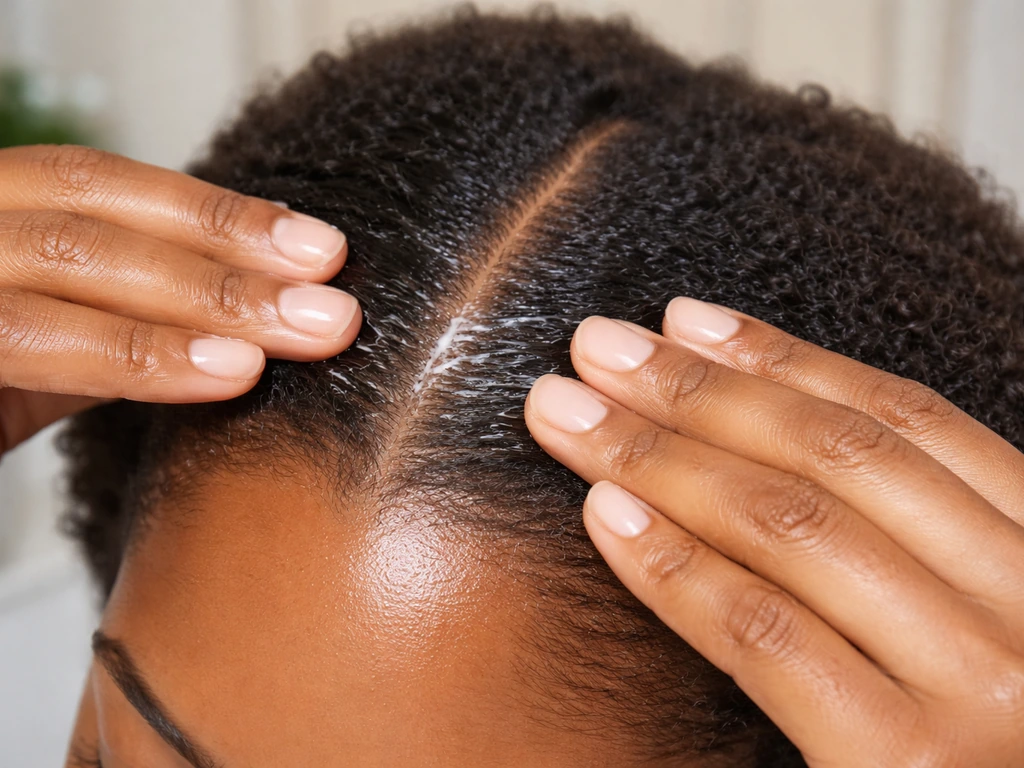
Your routine during a relaxer grow-out has one main job: keep the line of demarcation (the border between your natural and relaxed sections) as protected as possible. Tension, friction, and dryness all attack that junction. Your routine needs to minimize all three.
Washing frequency and product choices
Wash every 7 to 10 days during your transition. More frequent washing without adequate moisture replacement dries out your relaxed ends, which are already more porous and thirsty than your new growth. Use a sulfate-free or low-sulfate shampoo on your scalp, and let the suds rinse through your lengths rather than scrubbing them. Follow every wash with a moisturizing conditioner and at least one deep conditioning treatment per week. Protein treatments can help if your relaxed ends feel gummy or stretch without snapping back, but don't overdo it: too much protein without moisture causes brittleness. Alternate between moisture-focused and protein-infused deep conditioners every two to four weeks depending on what your ends feel like.
Moisturize and seal, every single day
Transitioning hair needs daily moisture, especially along the demarcation line. A light water-based leave-in conditioner applied to your lengths (not just your ends) keeps things flexible and less likely to snap under styling tension. After the leave-in, seal with a butter or oil to lock that moisture in. Good sealing options are shea butter, a lightweight natural oil like jojoba or argan, or a butter-oil blend. Apply from mid-shaft to ends, and pay attention to the line of demarcation if you can feel or see where it is. That zone needs the most love.
Detangling without breaking
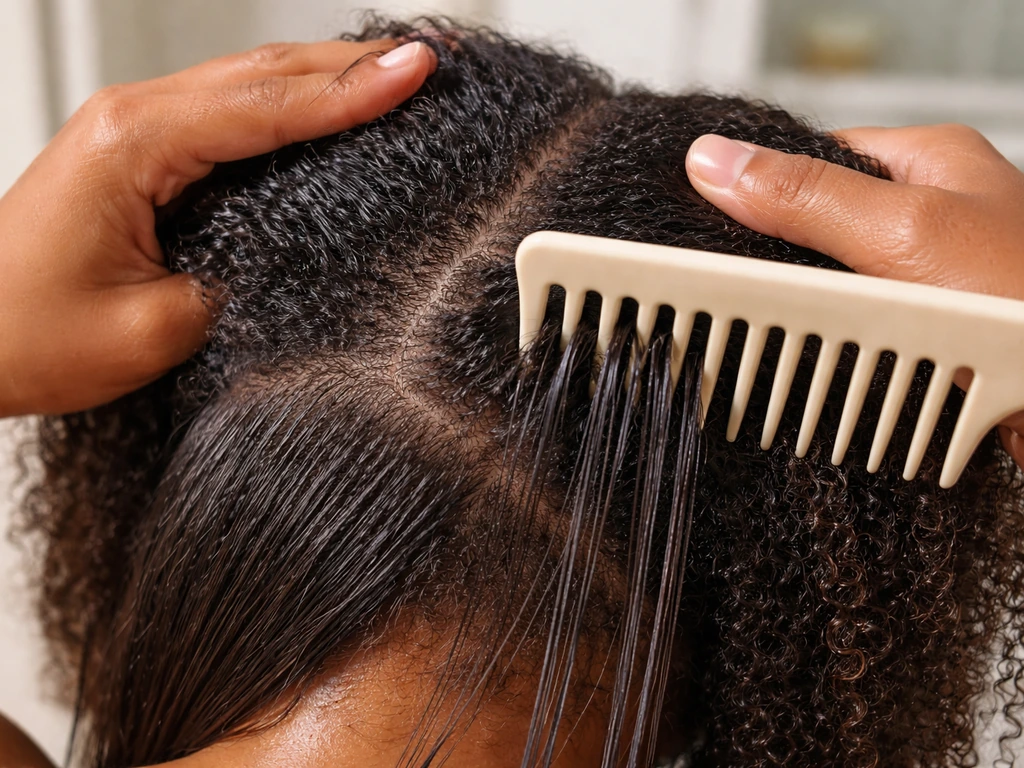
This is where most grow-out damage actually happens. The line of demarcation is structurally weak, and frequent combing through it causes unnecessary snapping at the junction. Always detangle on wet, conditioner-coated hair. Start at the ends and work upward in sections, using a wide-tooth comb or your fingers. Never drag a fine-tooth comb from root to tip during a transition. If you feel resistance, stop, add more slip (conditioner or detangling spray), and gently separate the tangle before continuing. Finger detangling is genuinely your safest tool during the transition period, especially in months one through six when the demarcation line is most vulnerable.
Scalp care
A healthy scalp grows hair faster and more consistently. Keep your scalp clean (that weekly or every-10-days wash matters), and massage it for two to three minutes per wash day to stimulate circulation. If you tend to have buildup from styling products, a scalp scrub or clarifying wash once a month helps. Avoid putting heavy butters or thick products directly on your scalp as they can clog follicles and slow growth.
Protective styles for every awkward stage
The grow-out process has predictable awkward phases, and each one has styling solutions. The goal of any protective style during a transition is to tuck away the ends, reduce daily manipulation, and keep the demarcation line from being stressed repeatedly.
Months 1 to 3: early regrowth and texture mismatch
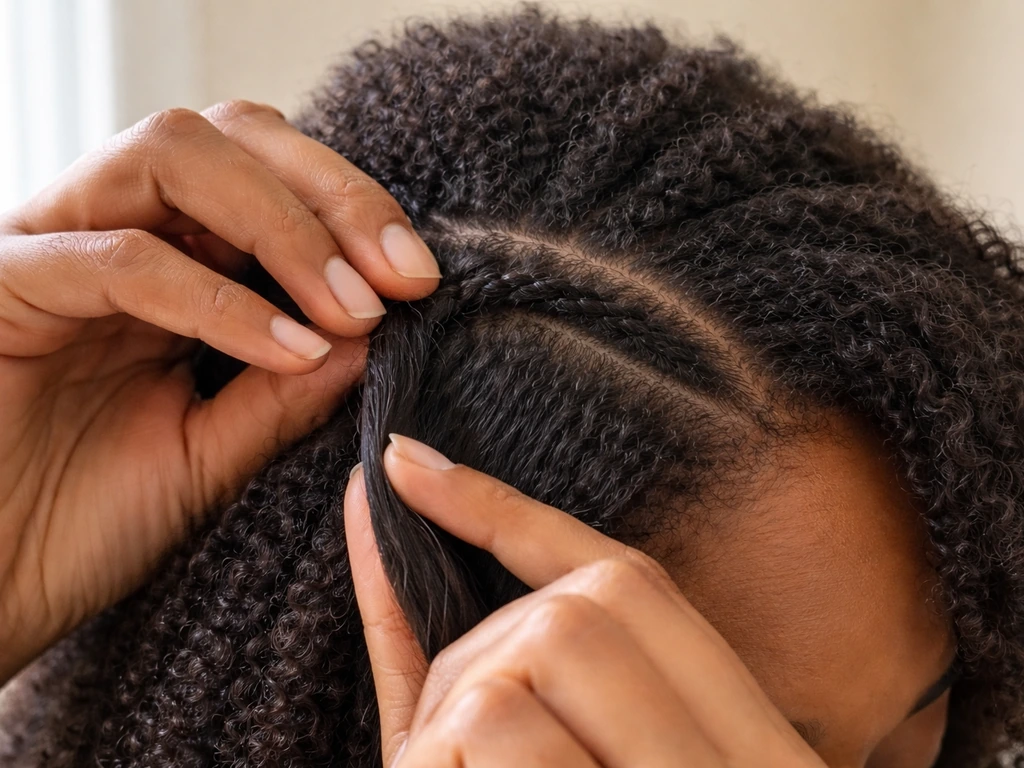
At this stage you have a small amount of natural regrowth and mostly relaxed hair. Twists, flat twists, braid-outs, and roller sets are your friends here. They blend the two textures reasonably well and keep you from straightening every day. Buns and updo styles work if your hair is long enough, and they're genuinely great for protecting ends. If you have bangs or layers, pin them back or roll them and pin them down during this phase: the texture contrast at the hairline is the first thing that becomes obvious, and minimizing that visibility helps while the regrowth catches up.
Months 3 to 6: the worst of the awkward phase
This is the stage most people give up, and it's completely understandable. You now have enough regrowth to be obviously two different textures but not enough to do much with. Braided protective styles (cornrows, box braids, knotless braids) are the most effective solution here because they give your hair a full break from daily manipulation.
Wigs over cornrowed hair are another great option, particularly if you're dealing with an undercut grow-out or a side-shave that's coming back in with a different texture than the rest of your hair. The key is not to braid or style too tightly, especially along the hairline, as tension alopecia is a real risk during this phase. Keep installation loose and give your hair at least one week out of any installed style before putting it back in.
Managing specific problem areas
- Cowlicks and stubborn root growth: These become more noticeable as natural texture comes back in at the scalp. A light gel or edge control applied to those sections and smoothed with a soft brush can flatten them for blended styles. Don't fight the direction; work with where the hair naturally wants to go.
- Bangs growing out: Pin bangs back, roll them under and pin, or incorporate them into a side-swept look using curl cream or pomade to define and hold. If your bangs are relaxed and growing back with natural texture, this contrast is very obvious: a headband or wrap scarf worn at the hairline is a practical and stylish daily solution.
- Layers growing out unevenly: Layers grow in at different rates because they start from different lengths. During this phase, wash-and-go styles or twist-outs visually blend uneven layers much better than flat-ironed styles that make the length difference stark.
- Undercut or side-shave regrowth: New growth in a shaved area comes back as your natural texture, which can feel like a completely different hair type from the longer relaxed sections above it. Braiding or twisting the longer sections down toward the growing-out undercut area blends the lengths visually until they're close enough to style together.
Handling breakage, heat, color, and trims
Breakage: why it happens and how to stop it
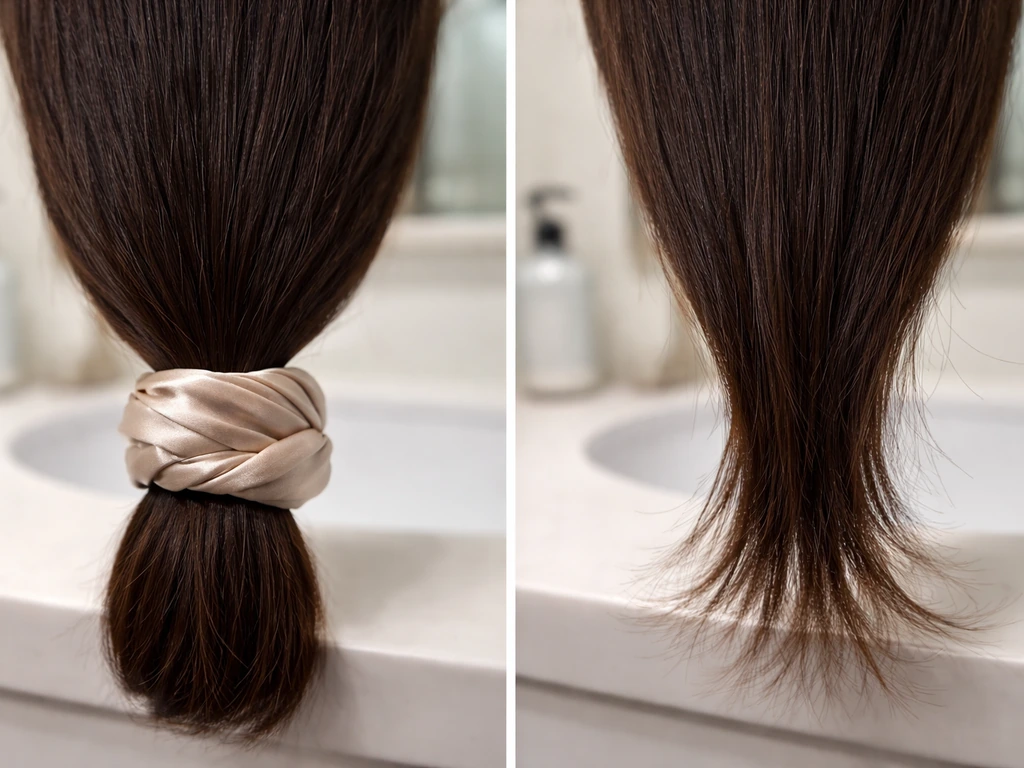
Breakage during a grow-out almost always comes from one of three things: dryness along the demarcation line, too much tension during styling or detangling, or heat damage layered onto already-compromised hair. A peer-reviewed review on hair care physicochemistry explains that hair weathering or ongoing deterioration can reduce cuticle protection and increase susceptibility to breakage and dryness [hair weathering/ongoing deterioration can reduce cuticle protection and increase susceptibility to breakage and dryness](https://pmc. ncbi. nlm.
nih. gov/articles/PMC9921463/). If you're seeing short broken pieces around the hairline or at mid-shaft, check those three things first. Usually the fix is more moisture, gentler detangling, and a styling break.
If breakage is happening at the ends rather than the demarcation line, your relaxed ends are too dry and need a trim plus more sealing.
Heat: how much is too much
Cutting heat out completely during a transition is ideal but not always realistic. If you need to use heat, use the lowest effective temperature (usually 350°F or below), always use a heat protectant, and limit flat ironing or blow-drying to once every two to three weeks at most. Heat applied frequently to the demarcation line further weakens it and accelerates breakage. For stretch blow-outs (to reduce tangling without fully straightening), use the cool or warm setting only, and stretch with a wide-tooth comb attachment rather than a brush.
Color during the transition
If your hair is already relaxed and you want to color during the grow-out, the safest approach is semi-permanent or demi-permanent color, which deposits without lifting and does far less structural damage than permanent bleach or high-lift color. Avoid bleaching transitioning hair: the relaxed sections are already compromised, and bleach increases porosity and breakage risk significantly. If you want to add color interest, glosses and toners over your existing shade are low-risk options. The main rule is: never apply two strong chemicals to the same hair on the same day. If you're growing out both a relaxer and color, work on one at a time.
Trims: when they help and when they don't
Trimming doesn't make your hair grow faster, but it absolutely prevents breakage from split ends traveling up the shaft. During a grow-out, trim every 10 to 12 weeks with a goal of removing the most damaged, oldest relaxed ends rather than following a calendar rigidly. A good working rule is to trim about 1 to 1. 5 cm at a time.
If your ends are visibly splitting, mushy when wet, or tangling constantly despite good moisture, they need to go sooner. If they feel fine, you can stretch to 12 or even 14 weeks. A trim is not a setback. Keeping brittle ends is a setback, because those ends break off unevenly and at higher points on the strand than a clean scissor cut would.
Milestones to watch for and when to change your plan
Tracking your progress by the month helps you stay motivated and make informed decisions rather than reactive ones. Here's what to look for at each stage.
| Stage | What to expect | Key action |
|---|---|---|
| Month 1 to 3 | Visible regrowth at scalp, minimal texture contrast, easy to blend | Establish moisture and seal routine, begin protective styling |
| Month 3 to 6 | Obvious two-texture situation, line of demarcation most fragile, awkward stage peaks | Protective styles full-time, reduce all heat, first trim if ends are damaged |
| Month 6 to 9 | More natural texture length, blending becoming easier, ends improving with trims | Second trim if needed, experiment with curl-defining styles, assess length retention |
| Month 9 to 12 | Significant natural growth, relaxed ends thinning out toward the tips only | Decide whether to big chop the remaining relaxed ends or continue trimming gradually |
| Month 12 and beyond | Mostly or fully natural texture depending on starting length | Final decision point: transition complete or close enough to style as natural hair |
If you're six months in and seeing constant breakage despite following a solid routine, evaluate honestly: are your relaxed ends too damaged to save? A larger trim or a reset cut might actually get you to your goal faster than continuing to protect compromised hair. On the other hand, if your length retention is good and your ends still have integrity, keep going.
Some people find they want to go fully natural by the one-year mark; others are happy with a longer gradual transition that preserves as much length as possible. Both are valid. The guide on how to grow out relaxed hair without a big chop covers the long-game strategy in more detail if you're committed to keeping every centimeter you can.
How this compares to growing out a perm or texturizer
If you're wondering whether a relaxer grow-out is different from growing out a perm or texturizer, the short answer is: the mechanics are similar but the textures involved are different. A perm adds curl or wave to straight hair; a relaxer removes curl from naturally coily or kinky hair. The line of demarcation challenge exists with both, and the moisture-and-protection routine applies equally.
Texturizers are closer to relaxers but applied for a shorter time, so the texture contrast during grow-out is usually less dramatic. If your situation involves any of those, the core strategy here transfers well, and there are dedicated guides on how to grow out a perm and how to grow out a texturizer that address the specific texture combinations you'll be working with.
If you want the specific, step-by-step routine for men’s hair, this guide on how to grow a perm for guys can help you tailor the process how to grow out a perm.
What to actually do today
You don't need to wait for anything to get started. Here's what to do in the next few days to set yourself up properly.
- Do a quick end assessment: wet a small section of your hair and gently stretch it. If it snaps immediately, it's dry and brittle. If it stretches and doesn't return, it's over-processed. If it stretches slightly and bounces back, it's in decent shape. This tells you how aggressively you need to trim.
- Commit to stopping all relaxer applications from today. Every new growth centimeter from this point forward is your natural texture, and that's the goal.
- Set up your moisture routine: buy a sulfate-free shampoo, a moisturizing deep conditioner, a water-based leave-in, and a sealing oil or butter if you don't already have them.
- Choose your protective style for the next four to six weeks. Braids, twists, a wig, or even consistent bun styling all qualify. Pick the one you'll actually maintain.
- Take a photo and measurement today. Note your length at the crown, sides, and nape. Revisit this photo every six weeks. Progress feels slow week to week but significant month to month, and the photos prove it.
- Book a light trim in 10 to 12 weeks from today, not to cut off progress but to remove the ends that won't survive the journey anyway.
The grow-out process is genuinely manageable when you stop trying to make transitioning hair behave like fully natural or fully relaxed hair. If you want the transition approach tailored specifically to perm wearers, use this related guide on how to grow out a perm in black hair as a comparison point for your routine decisions. It's its own thing, and once your routine accounts for that, the awkward phases get a lot easier to live with. Your hair is growing right now, today, whether or not you do anything. The routine just makes sure that growth actually shows up as length rather than breakage.
FAQ
Can I start the grow-out routine immediately, or do I need to wait for new growth before doing anything?
You do not have to wait for a full 1.5 to 2 cm to start the grow-out routine. Start with protection on day one, then retouch planning depends on your current chemistry. If your scalp is already showing new curl up to the roots, avoid any relaxer application near the junction and focus on keeping it moisturized and detangling gently. If you are considering a retouch to blend, measure new growth and only relax the regrowth zone, never the older relaxed length.
Is it safe to blow-dry or flat iron during a grow-out if I use heat protectant?
Yes, low heat can still create damage during a relaxer grow-out, especially when used directly on or repeatedly near the line of demarcation. If you must use heat, keep it occasional, use the lowest workable setting, and avoid styling that requires frequent passes over the junction. Also, do a strand test on a less visible section so you can see whether the hair feels stretchy or hard to bend after cooling.
How do I know whether I should use more protein or more moisture on my relaxed ends?
A good indicator is how your hair behaves right after rinsing and during detangling. If the relaxed ends revert to a gummy or mushy feel when wet, or they snap when stretched slightly, they need more conditioning and a sooner trim rather than more protein. If the relaxed ends feel dry, frizzy, and lack elasticity but stretch slightly without snapping and then return more normally, that can be a sign you need protein balance plus sealing.
What if I cannot clearly see my line of demarcation, how do I identify it?
If your demarcation line is hard to locate by sight, use a practical method: when you wash and detangle, note where the texture shifts from straight to coily or wavy and where the comb resistance changes. That tactile shift is your junction, and you should treat that zone as the most fragile. Consider marking it lightly on a section before detangling so you do not accidentally comb the same area aggressively multiple times.
What’s the safest way to blend textures without repeatedly stressing the junction?
If you flat iron to “blend,” you may feel like you are making progress, but the risk is that heat repeatedly weakens the already compromised junction. A safer alternative is to minimize blending heat and instead use styles that hide the contrast without stressing the border, like bantu knots or twists when regrowth is small, then braid-based protective styles as contrast increases. If you use stretch blow-outs, keep them infrequent and avoid brushing through the junction.
Can too much leave-in or sealing make my hair worse during the grow-out?
Not necessarily. Overlapping products can cause buildup that looks like dryness and tangling, even if you are moisturizing. If your hair feels coated but not soft, or your scalp is itchy and product accumulates quickly, switch to a once-monthly clarifying step and reduce heavy sealants on the scalp area. Focus leave-in and sealing on lengths, and keep scalp products light.
Why am I getting breakage near my hairline even though I’m moisturizing and trimming?
That often points to tension issues rather than only chemistry. Evaluate where the breakage is happening, along the hairline versus mid-shaft versus ends. Looser installation helps, but also check detangling habits, tight ponytails, and how often you manipulate the junction. If the breakage is around the hairline, prioritize gentler styles that keep the hair tucked and avoid traction across the front edges.
Can I color my hair while growing out a relaxer, and what should I avoid?
If you are tempted to do a color during the grow-out, avoid high-lift processing like bleach on any relaxed portions. For the lowest risk, choose demi- or semi-permanent options that deposit without lifting, and do the relaxer grow-out and color planning separately so you are not stacking two strong chemical processes in the same timeframe. If you notice increased porosity or gummy texture afterward, delay further chemical changes and increase conditioning for a few weeks.
Should I trim on schedule, or only when I see damage?
Yes, but approach it like a diagnostic, not a reaction. If your ends feel splitting, mushy, or constantly tangle despite your routine, trim sooner even if it is not the 10 to 12 week mark. If breakage looks like short pieces around the junction, adjust detangling and reduce friction and tension before cutting extra length. When in doubt, trim the most compromised relaxed ends rather than doing a broad cut.