
Growing relaxed hair back to natural means letting your natural texture regrow from the root while the chemically straightened ends gradually get trimmed away. The process typically takes anywhere from 12 months to 3 years depending on how long your relaxed ends are, how fast your hair grows, and whether you choose to do a big chop or a slow transition. There is no single right approach, but there is a clear path: protect what you have, minimize breakage at the line where the two textures meet, and trim the relaxed ends progressively until they are gone.
How to Grow Relaxed Hair to Natural: Step by Step

Marcus Vickers
4 Jun 2026
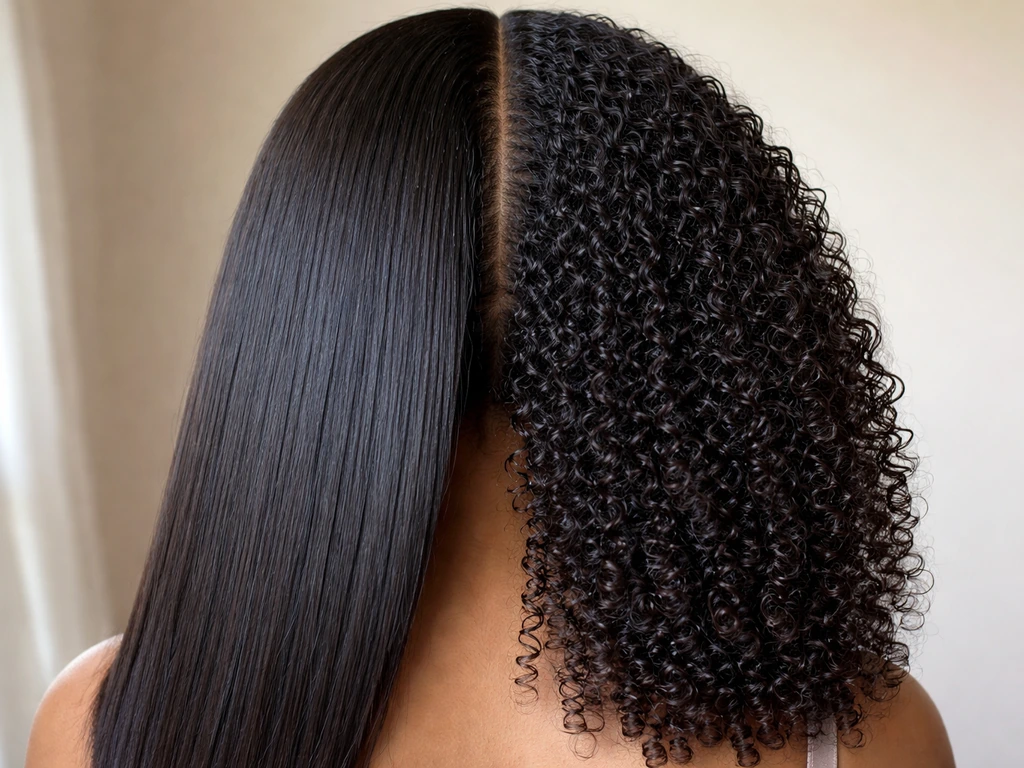
Start by assessing exactly where your hair is right now
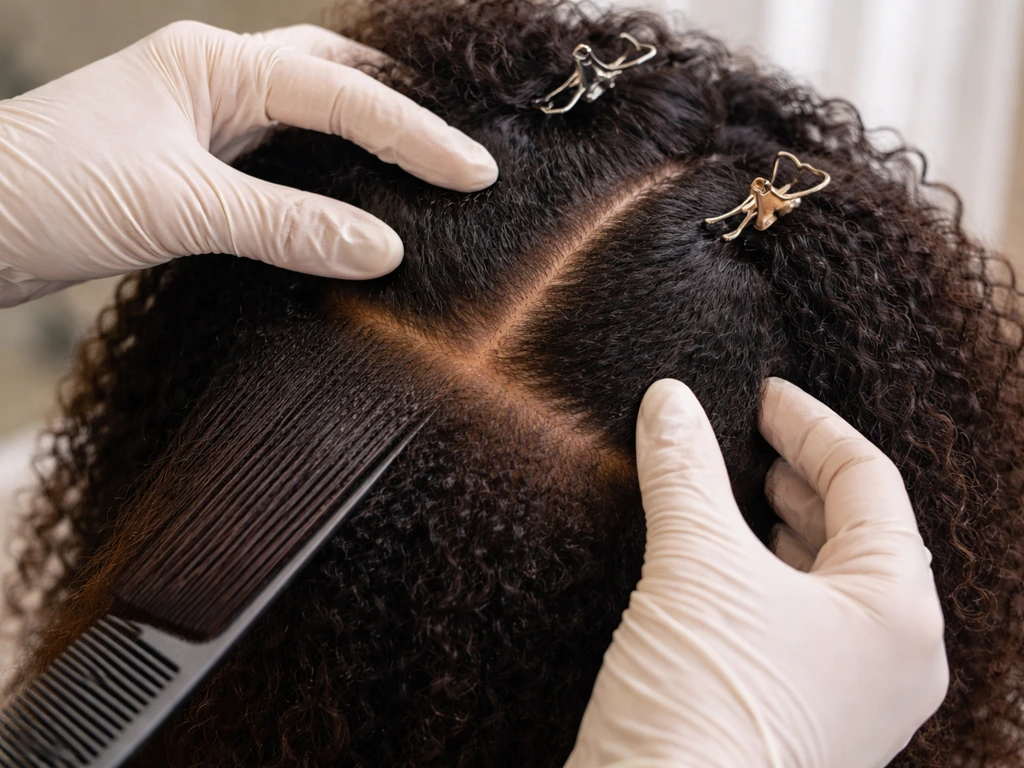
Before you do anything else, you need an honest look at your current hair. How long ago was your last relaxer? How much new growth do you already have? Is the relaxed portion still in decent condition, or is it already thin, brittle, or color-treated? The answers will shape your whole transition plan.
A simple way to assess the relaxed portion: take a small test section, wet it, and watch what happens at the root versus the ends. Your new growth will begin to curl or coil when wet. Your relaxed ends will stay relatively straight or limp. The more dramatic that difference, the further along your transition already is. If you had your last relaxer six months ago and your hair grows roughly half an inch per month, you may already have two to three inches of natural texture at the root.
Also take stock of damage. Feel along the length of the hair for thinning spots, particularly in areas that were frequently pulled tight (hairlines, nape, crown). Traction alopecia from tight styles is one of the most common complications during a relaxer-to-natural transition, and it is reversible in the early stages but can cause permanent scarring if the tension continues. If you notice thinning or shedding along the edges or temples, that is your signal to loosen things up immediately and possibly check in with a dermatologist.
Finally, note if your hair has been colored or bleached. Color-treated or bleached hair has raised porosity, which means it loses moisture faster, tangles more easily, and is significantly more fragile at the point where it meets your new growth. That line, called the line of demarcation, is your biggest breakage risk for the entire transition.
What to expect at each stage of the grow-out
A realistic timeline helps you stop second-guessing the process every few weeks. Here is what most people experience, broken down by stage.
Months 1 to 3: The first inch of new growth
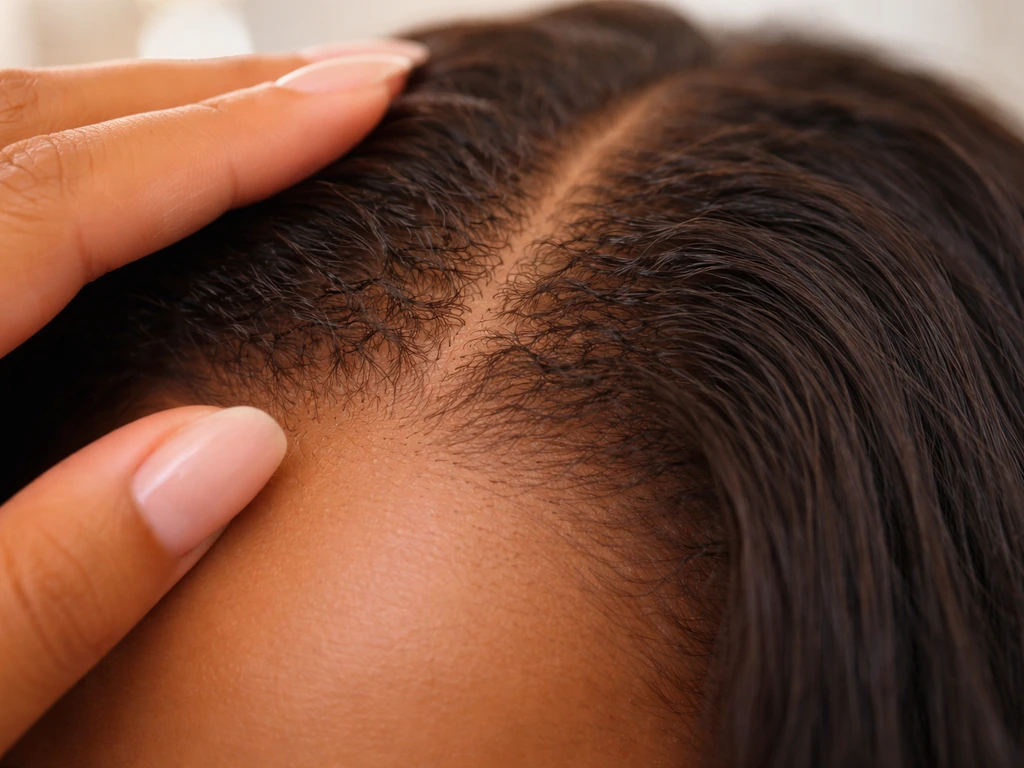
This is the earliest stage and honestly the easiest to manage because the texture contrast is not dramatic yet. You will notice your roots feel different: thicker, curlier, a little puffy at the base. Styling still works similarly to before. The main challenge is resisting the urge to relax again just because the new growth feels unfamiliar. This is the stage where most people quit. Do not make any major decisions about cutting or styling while you are still adjusting.
Months 3 to 6: The awkward middle begins
By this point you likely have one and a half to three inches of natural regrowth. The two textures are now clearly different and fighting each other, especially on wash day. Your new growth will shrink significantly when wet. Your relaxed ends will hang straight. This creates real tension at the line of demarcation every time you detangle, which is exactly how breakage happens. This is the stage where protective styles become your best friend, and where trimming a little at the ends starts to make a noticeable difference in manageability.
Months 6 to 12: Managing two very different textures
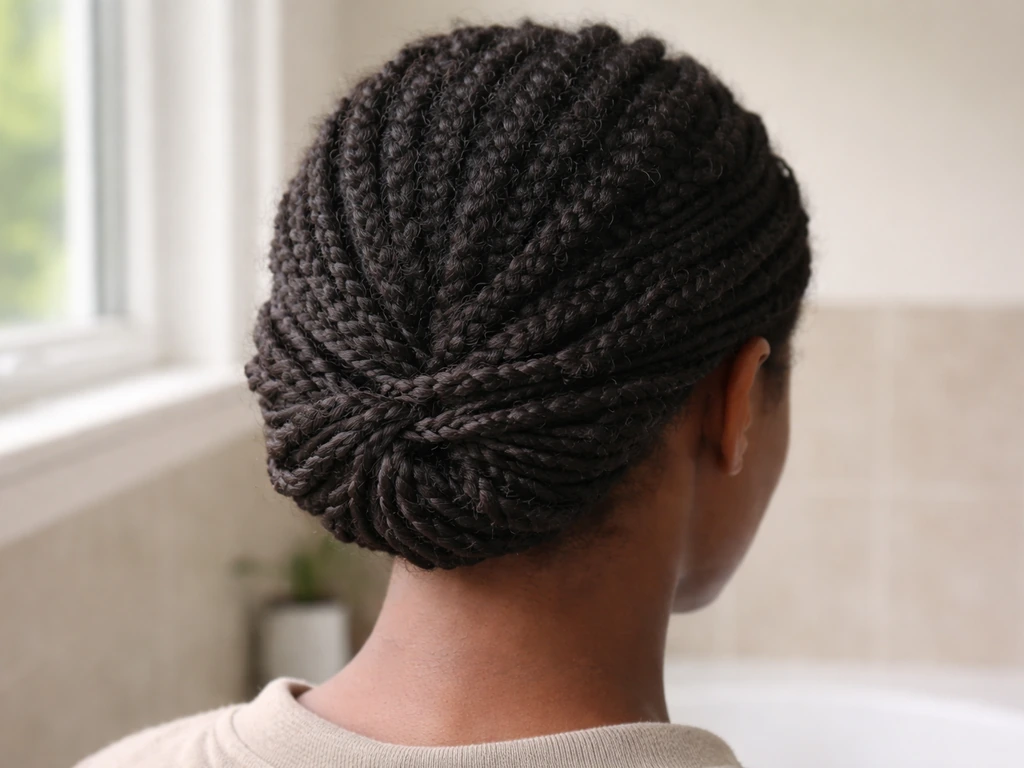
This is usually the hardest stretch. You have enough natural growth that it is coiling and clumping on its own, but you still have relaxed ends weighing things down and causing tangles. Styling takes longer. The hair can feel unpredictable. Many people doing a longer transition find that by month eight or nine, the relaxed ends feel noticeably thinner and more fragile compared to the healthy natural growth above them. That fragility is your cue to trim more aggressively.
Month 12 and beyond: Final stretch to fully natural
If you started with shoulder-length relaxed hair and have not done a big chop, you may still have some relaxed ends at month 12. That is completely normal. Keep trimming in small increments every six to eight weeks and focus your energy on keeping the natural portion healthy. Many people reach a tipping point around month 18 where the majority of the hair is natural and the last few inches of relaxed ends are easy to cut away in one final trim. That moment is genuinely satisfying.
Build a daily and weekly regimen that actually works
The most important thing you can do during a transition is keep both textures hydrated and minimize mechanical stress. Your routine does not need to be complicated, but it does need to be consistent.
Washing
Wash every one to two weeks, depending on your scalp. Use a sulfate-free or gentle clarifying shampoo when you do wash. Follow with a moisturizing conditioner and always do a thorough detangle in the shower while conditioner is still coating the hair. Finger detangle first, then use a wide-tooth comb starting from the ends and working your way up. Never detangle dry transitioning hair. That is the fastest route to snapping off your new growth at the line of demarcation.
Deep conditioning
Deep condition every single wash day. This is non-negotiable during a transition. A protein-moisture balance matters here: use a protein treatment once a month to strengthen the fragile relaxed ends and the line of demarcation, then follow the rest of the time with a moisture-heavy deep conditioner. Signs you need more protein: hair feels mushy or stretches too much before breaking. Signs you need more moisture: hair feels stiff, crunchy, or snaps quickly with no stretch.
Moisturizing and sealing
Between wash days, apply a water-based leave-in conditioner or moisturizer to the hair, then seal with a light oil (like jojoba or grapeseed) or a butter if your hair is on the drier side. This is especially important for the natural regrowth at the root, which tends to be drier and more tightly coiled than the relaxed length. Do not over-apply heavy products to the relaxed ends or they will weigh down and tangle with the natural roots more than they already do.
Protective styling through the awkward phases
Protective styles are genuinely useful during a transition, not just a trend. When your hair is put away and the ends are tucked, you reduce daily manipulation, friction, and exposure to the elements, all of which cause breakage. The key is making sure your protective styles are not themselves causing damage.
The most important rule: loose tension. Styles that pull tightly on the hairline, temples, or nape are a direct cause of traction alopecia, and the risk is higher during a transition because your hair is already under stress at the line of demarcation. Braids and cornrows done tightly, weaves installed with too much tension on relaxed or transitioning hair, and slicked-back styles held with tight elastics are all high-risk. Early-stage traction alopecia is reversible if you stop the tension, but chronic traction can lead to permanent follicle damage, so it is worth taking seriously from day one. StatPearls (NCBI Bookshelf) similarly notes that traction alopecia can be an early-stage nonscarring and reversible problem when traction is stopped, while chronic cases may progress to permanent scarring alopecia Early-stage traction alopecia is reversible if you stop the tension, but chronic traction can lead to permanent follicle damage.
Good protective style options for transitioning hair include loose two-strand twists, flat twists, low-manipulation buns secured with a soft elastic or scrunchie, and wigs or crochet styles that do not require tight braiding underneath. If you have bangs or layers from a previous cut, those shorter pieces can be tucked into twists or pinned back during the awkward stage rather than left loose to tangle with the longer sections.
Switch up your styles every few weeks and avoid wearing the same style in the same position repeatedly. Chronic tension in one spot, even if the style is not super tight, adds up over months. Give your edges and nape sections a break regularly.
Blending the two textures and making trimming decisions
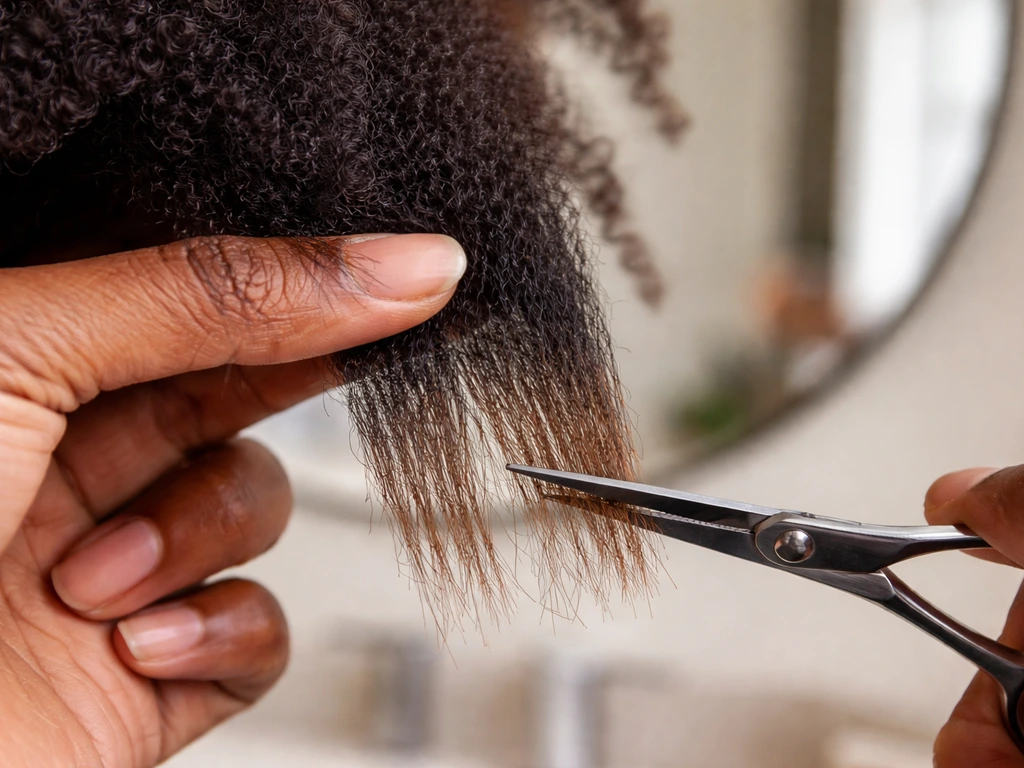
The line of demarcation is where natural coily or curly growth meets the chemically straightened ends. If you are wondering how to grow out relaxer while protecting your strands, focus on gentle handling and trimming the relaxed ends gradually line of demarcation. It is the weakest point on your hair and it gets weaker over time as the relaxed ends dry out further. The goal is to remove those ends gradually without sacrificing too much length at once, unless you are doing a big chop.
A gradual trim schedule of every six to eight weeks works well for most people. At each trim, you are removing half an inch to one inch of the most damaged relaxed ends. Over the course of a year, that adds up to three to six inches removed, which is significant, but because your natural growth is replacing it at the top, your overall retained length can still increase or at least hold steady. For more specifics, see our guide on how to grow out a perm without losing too much length.
You will know a section needs to be trimmed when the ends feel thin and translucent compared to the rest of the strand, when they tangle excessively even after conditioning, or when they snap off with minimal handling. Those ends are not helping your length retention anyway because they break off before you can grow past them.
For blending the two textures in styling, twist-outs and braid-outs are the most effective tools. When you twist or braid damp hair and let it dry before taking it down, the natural and relaxed portions blend into a similar wave or curl pattern. This works best when the natural growth is at least three to four inches long. Before that, the textures are too different to blend smoothly and you may want to just keep the hair in a protective style rather than trying to wear it loose.
If you would rather skip the slow process entirely, the big chop (cutting off all relaxed ends at once) is a completely valid option. It gives you a clean slate and eliminates the texture blending challenge immediately. It does mean starting with very short hair, which is an adjustment, but many people find it dramatically easier to manage than months of two-texture styling. If you are considering that route, looking at articles specifically about growing out relaxed hair without a big chop versus with a big chop can help you decide which path fits your lifestyle.
If your hair has been colored or bleached
Color and bleach add a significant layer of complexity to a transition. Bleached hair has higher porosity: the cuticle is more open, which means moisture escapes faster, the hair feels rougher and straw-like, and it is structurally weaker than unprocessed or lightly colored hair. If your relaxed ends are also bleached, they are doubly compromised and will deteriorate faster during the transition.
The practical advice here is to treat those ends as though they are already on their way out, because they are. Texturizer grow-out has similar goals to a relaxer-to-natural transition, so using a consistent moisturizing routine and trimming when needed helps reduce breakage as your new growth comes in. Prioritize moisture: use a deeply conditioning treatment on them weekly, apply a sealing oil or butter after every wash, and handle them with extra gentleness. Do not add any more chemical processing to hair that is already bleached and relaxed. That combination is genuinely too much for the hair structure to handle without significant breakage.
If you want to color your natural regrowth during the transition, stick to semi-permanent or demi-permanent color, which does not lift the hair and causes far less structural damage than bleach. Avoid overlapping color onto already-processed ends. And if you are tempted to bleach the new growth to match a previously lightened length, that is one of the highest-risk things you can do during a transition. The line of demarcation will become extremely fragile where bleach meets relaxed ends, and the breakage can be severe.
The safest path with colored hair is to let the natural growth come in without additional color treatment, trim the colored and relaxed ends progressively, and reassess your color goals once the hair is fully natural and in good health.
Knowing when you are fully natural and what comes next
You are fully natural when every strand on your head has returned to its unaltered texture from root to tip, meaning no chemically straightened ends remain. The clearest way to confirm this: wet your hair completely and look at the curl, coil, or wave pattern from root to end. If it is consistent all the way through with no limp or straight sections at the ends, you are there.
Once you are fully natural, your routine shifts in a few important ways. You no longer need to baby the line of demarcation, which takes a lot of stress out of wash day. Your focus moves to understanding your actual natural texture and learning what it needs. Natural hair in general needs more moisture than relaxed hair, shrinks significantly when wet (which can make length feel deceiving), and tends to respond well to the LOC or LCO method (liquid, oil, cream layered in that order to seal in hydration).
Your styling options also open up considerably. Wash-and-go styles, twist-outs, braid-outs, bantu knot-outs, and defined curl styles all become more consistent now that you are working with one texture throughout. Expect a learning curve of a few months as you figure out which products and techniques work for your specific curl pattern, because natural hair varies enormously from person to person even within the same curl type.
Keep trimming every eight to twelve weeks in the first year post-transition to remove any remaining damage and even out your ends. And continue avoiding high-tension styles, because traction alopecia does not discriminate based on whether hair is relaxed or natural. Loose, low-manipulation styles protect follicle health regardless of what stage you are at.
Quick reference: transition plan at a glance
| Stage | Timeline | Main focus | Key styling approach |
|---|---|---|---|
| Early regrowth | Months 1 to 3 | Moisture, gentle handling, no new relaxers | Low-manipulation styles, loose buns, wigs |
| Awkward middle | Months 3 to 6 | Breakage prevention at line of demarcation | Protective styles, small trims, protein treatments |
| Two-texture management | Months 6 to 12 | Blending textures, progressive trimming | Twist-outs, braid-outs, regular trims every 6 to 8 weeks |
| Final stretch | Month 12 onward | Removing last relaxed ends | Continue trimming, increase moisture, prep for fully natural routine |
| Fully natural | After all relaxed ends removed | Learning your natural texture | Wash-and-go, curl definition, LOC method, gentle trims |
The transition from relaxed to natural is not a straight line and it is rarely fast, but it is absolutely manageable with the right approach. If you are specifically looking for how to grow out a perm for guys, the same grow-out principles apply: protect the line of demarcation and stay consistent with moisture and loose styling how to grow a perm for guys. The biggest factors in your success are consistency with moisture, honesty about when to trim, and keeping tension off your hair throughout. Take it one wash day at a time and give yourself credit for every inch of healthy natural growth that comes in.
FAQ
Should I detangle my whole head the same way while growing out relaxed hair?
It is usually too risky to detangle your whole head when the relaxed and natural textures are still interlocking. Instead, detangle in sections and focus your combing only through coated, slippery hair in the shower, then treat the line of demarcation as a “no force” zone (stop if you feel snagging). If you frequently feel sudden resistance right at the boundary, increase conditioning and reduce slip loss rather than trying to “power through.”
How do I know whether I need more protein or more moisture during the transition?
If your hair feels mushy and stretches before it breaks, that points to too much protein or protein without enough moisture balance, or damage that is no longer responding well. The fix is to switch to more moisture-heavy deep conditioning for a few weeks, then reassess. Protein can still help, but only if your hair also has enough conditioning slip to detangle without pulling.
Can I use heavy oils or butters during the transition without causing tangles?
Yes, but the priority is how the product behaves at the line of demarcation. Even lightweight leave-ins can increase tangling if they build up on the relaxed portion or if the natural roots are not getting enough water-based hydration. Use a water-based layer first, then a small amount of oil, and clarify gently when buildup starts to make detangling harder or make your ends feel rough.
Is it okay to use heat tools while transitioning to natural hair?
You can, but expect a learning curve and more re-evaluation of your trim points. Heat can hide the difference between textures temporarily, but it also increases dryness and brittleness where the relaxed hair is already compromised. If you do use heat, keep it occasional, protect with a heat protectant, lower the temperature, and plan trims based on how the ends behave when wet, not when styled.
Will regular trimming prevent traction alopecia if I still wear my hair tight sometimes?
Usually no. Small, frequent trims are designed to remove only the weakest relaxed ends, but you can’t fully “trim your way out” of traction damage if tension continues. If you notice edge recession, temple thinning, or shedding that keeps returning after certain hairstyles, stop the tight styles first, then schedule trims based on length retention and end condition.
What is the safest way to transition if my relaxed ends are also bleached?
Bleach is the biggest add-on risk because it increases porosity, but you can still transition safely by reducing manipulation and treating those ends as high-risk from day one. Avoid adding more chemical processing to the relaxed and bleached areas, deep condition consistently, and trim progressively earlier than you would for uncolored hair. If your relaxed ends feel rough like straw or shed easily, consider seeking professional guidance for the safest timing.
What if my regrowth does not curl clearly, should I relax again?
If your curl pattern at the root is curling or coiling when wet, you generally do not need to relax again. But if your “natural” area is only barely changing and feels the same along the length, you may be dealing with lingering relaxer penetration or insufficient regrowth. Use a wet test on multiple spots around the head to confirm, then base your decision to trim more aggressively on where the relaxed ends snap or look translucent.
How can I tell the difference between normal texture mismatch and a section that needs trimming?
It is normal to see limpness or uneven texture because the relaxed ends are straight while the new growth shrinks differently when wet. The more useful guide is the end behavior (thin, translucent, tangly even with conditioner, or snapping with minimal handling). A section can look different temporarily, but if it performs well when hydrated and detangled, it may not be ready for trimming yet.
How often should I trim, and what is too often?
Most people should not trim more aggressively than about every six to eight weeks unless their ends are clearly failing. Over-trimming can reduce overall length retention if your new growth is healthy and your current issue is just styling difficulty. If you are trimming early, base the decision on repeatable end failure signals (snap at minimal manipulation, excessive tangling after conditioning, or visibly translucent ends).
What protective styles are best at the very beginning of the relaxer grow-out?
You can wear loose twists or protective styles even in the earliest stage, but the goal is to keep tension off the edges and to prevent dry friction. For example, if you do styles that require securing near the scalp, use soft scrunchies or loose placement rather than tight bands, and make sure the hairline and nape are not being pulled into a single tight direction daily.