
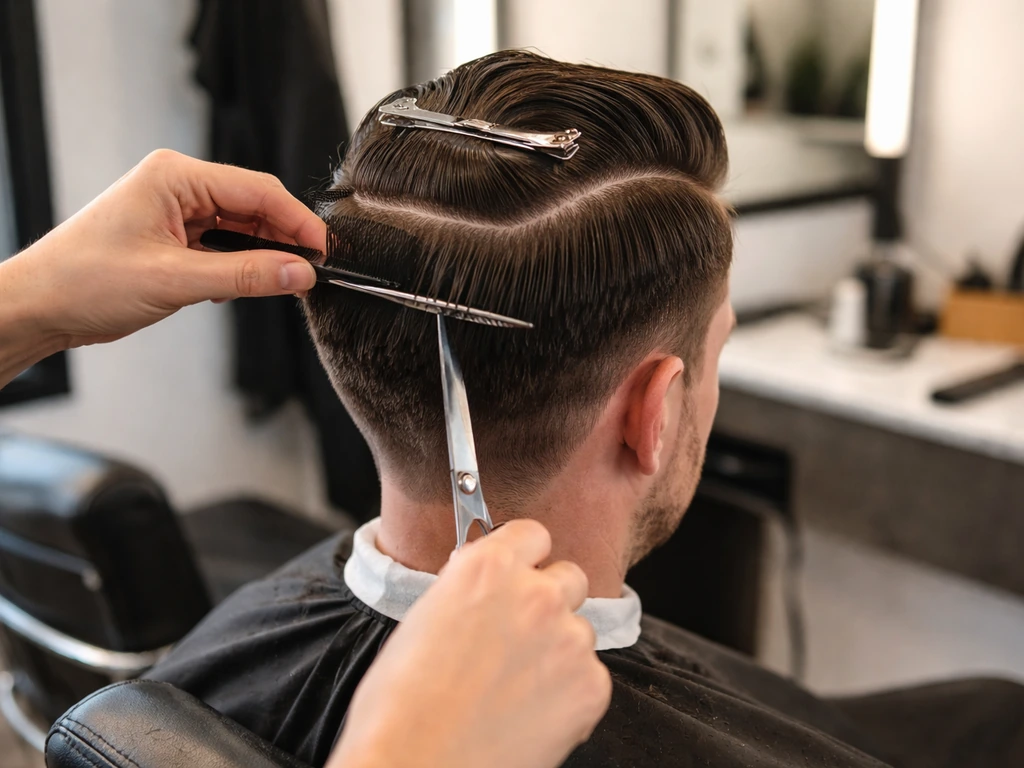
The best haircut to get when you're growing out men's hair is a shape-maintaining trim, not a style reset. That means keeping the length you've earned while cleaning up the outline, reducing bulk, and moving from a classic short cut toward a graduated shape, then eventually a layered one as the top gets longer. You're not going for a new look at each appointment. You're managing what's already there so it looks intentional instead of abandoned.
Men’s Haircut When Trying to Grow It Out: Step by Step

Marcus Vickers
5 May 2026
Why haircuts actually matter when you're growing it out
A lot of guys think 'growing it out' means avoiding the barber entirely. That's the fastest route to the mushroom head, the triangle silhouette, or just looking like you forgot to do anything with your hair. Regular, strategic trims are what separate a guy who's clearly growing his hair out on purpose from one who just stopped caring.
Hair grows about half an inch per month. That's consistent, steady progress, but it's slow enough that every appointment matters. Miss the right trim at the wrong stage and you can end up with so much bulk on the sides that the top looks flat, or so much weight on top that your hair starts puffing outward instead of falling down. Intentional cuts keep the shape moving in the right direction while you accumulate length.
The goal of every haircut during grow-out isn't 'shorter.' It's 'better balanced for where the hair is right now.' That mindset shift is what keeps you from walking out of the barber shop back at square one every few months.
Best haircut types by current length and stage
Where you are in the process determines what kind of cut actually helps. Here's how to think about each stage.
Stage 1: Very short (buzz cut to about 1–2 inches)
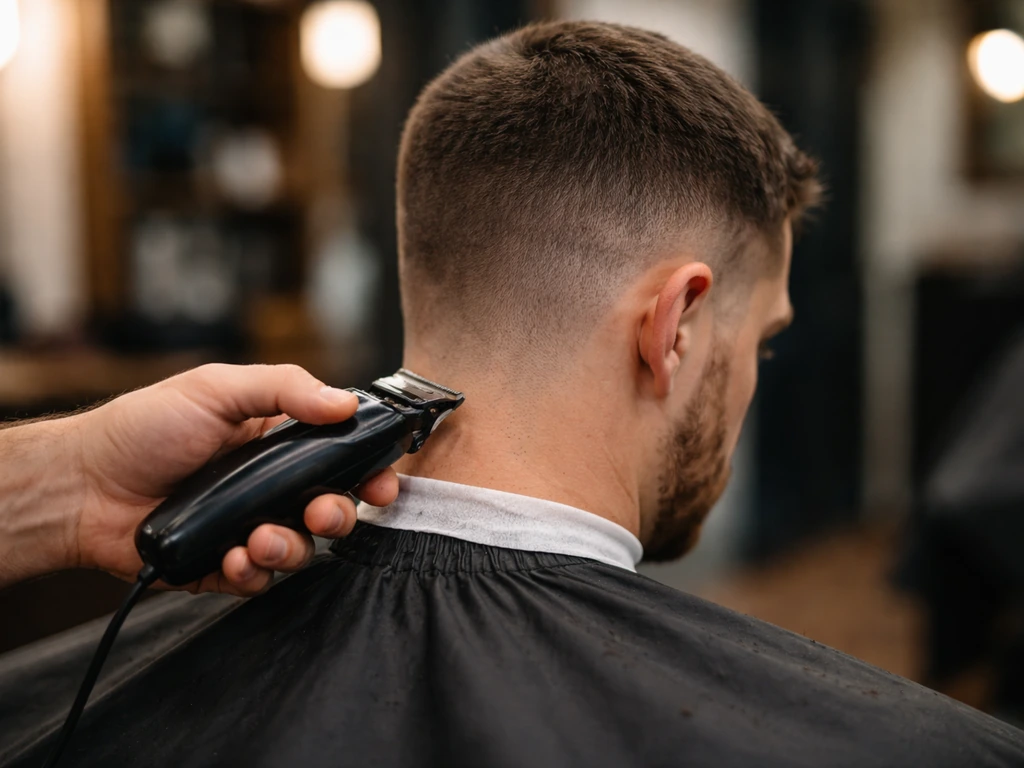
If you're coming out of a buzz cut or a very tight fade, your main job right now is patience and outline maintenance. Ask for a taper cleanup or a neck trim at most. You don't want to touch the top length at all. The sides will grow faster visually because they had less to start with, so keeping the back and sides clean with a light taper prevents the overall shape from looking too blocky too early.
Stage 2: Short to medium (roughly 2–4 inches on top)
This is the stage where most guys give up, and it's also the most important one to navigate well. The top starts to flop, the sides push outward, and nothing sits right. The right call here is a classic cut moving toward a graduated shape: the barber takes slightly more off the sides and back than the top, creating a natural graduation that keeps the silhouette clean without fighting what's growing. According to barber Brent Pankhurst, as the sides grow out it's important to cut the top down so the hair stays balanced. That doesn't mean cutting it short again. It means trimming the top just enough to match the proportions of the sides as everything fills in.
Stage 3: Medium length (4–6 inches, approaching the ears and collar)
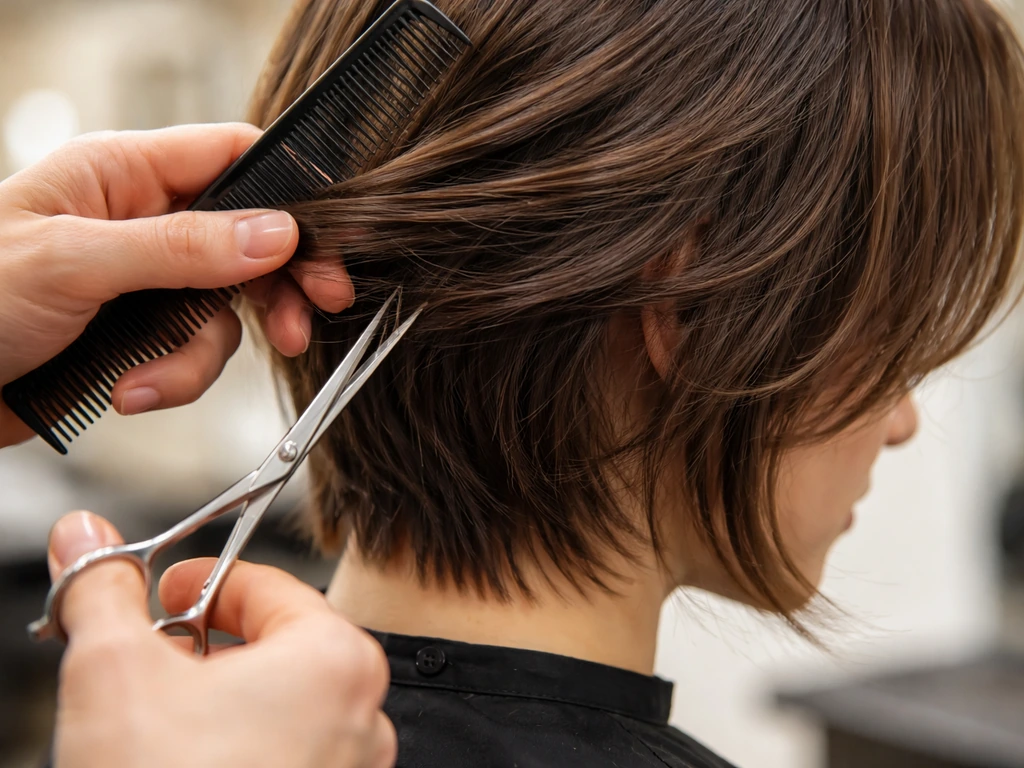
Now you're transitioning from a graduated cut to a layered cut. Layers are your best friend at this stage because they remove interior bulk without removing length. Without them, the hair sits heavy and wide. With them, it starts to fall and move naturally. This is also when you might start seeing where your hair parts, how much volume you naturally have, and whether you need texture work to manage thickness. A good barber will use point cutting or texturizing shears here rather than blunt cuts across the ends. Texturizing is described as a set of techniques, including point cutting, slicing, and channel cutting, that create natural-looking movement while reducing uniform density or bulk point cutting or texturizing shears.
Stage 4: Longer hair (6 inches and beyond)
You're through the worst of it. At this point the hair has enough weight to start falling properly, and the cuts shift to maintaining shape and managing split ends. This is also where many guys switch to a grow-out strategy that suits the best haircut to grow out hair black male, focused on maintaining shape and managing split ends as the length comes in. A dusting trim every 8 to 10 weeks (removing just the very ends) is usually enough to keep things tidy without sacrificing progress. Layers may still be worth refreshing depending on your texture.
What to actually say to your barber

Walking in and saying 'I'm growing it out, just clean it up' leaves too much to interpretation. Some barbers will give you a trim. Others will take an inch off by default because that's their instinct. Be specific. Here are some things that actually work:
- "I'm growing it out. I don't want any length taken off the top. Can you just clean up the outline and taper the neck?"
- "I want to keep all the length on top. The sides are getting bulky. Can you take them down slightly with scissors, not clippers, so it blends without looking too short?"
- "I need some interior layers to remove bulk without losing length. No more than half an inch off the ends."
- "I want a graduated shape. Can you keep the top as-is and take a little more off the sides and back so the silhouette is balanced?"
- "Can you point cut the ends rather than blunt cut? I'm trying to add texture, not remove length."
If you're unsure what the barber is about to do, ask them to show you with their fingers how much they're planning to take off before they cut. A good barber won't be offended. Showing a photo of the length and shape you're targeting also takes a lot of the guesswork out on both sides.
How often to trim during grow-out (and why it's not 'less is more')
The common advice to skip trims entirely when growing out hair sounds logical but usually backfires. Those timelines are a big part of the best days to cut hair to grow, since cutting too early or too often can disrupt your shape skip trims entirely. Here's a more honest breakdown of trim frequency by stage:
| Stage | Approximate Length | Trim Frequency | What to Trim |
|---|---|---|---|
| Buzz to short | Under 2 inches | Every 4–6 weeks | Neck and outline only |
| Short to medium | 2–4 inches | Every 6–8 weeks | Sides, back, outline — preserve top length |
| Medium | 4–6 inches | Every 8 weeks | Interior layers, minimal end dusting |
| Medium-long and longer | 6+ inches | Every 8–12 weeks | End dusting, layer refresh if needed |
Skipping trims doesn't make hair grow faster. Hair grows at about half an inch per month regardless of how often you cut it. What skipping trims does do is let the shape deteriorate, which makes it much harder to manage and often ends in a drastic cut to fix the mess. Regular shape maintenance is what keeps you going forward instead of restarting.
Styling through the awkward phases
Product needs change as your hair gets longer, and using the wrong product for your current length is one of the main reasons hair looks bad during grow-out. Here's how to match your styling approach to your stage.
Short to medium: build shape with light hold

When hair is 1 to 3 inches, it often sticks up, flops unevenly, or won't lie flat in the direction you want. A light matte clay or paste gives you enough control to push the hair in a direction without making it look stiff or greasy. Work a small amount through slightly damp hair and rough-dry it with your fingers to set the shape. Avoid heavy gels at this stage as they tend to emphasize any patchiness or unevenness.
Medium length: volume and direction are everything
This is where a blow dryer becomes genuinely useful rather than optional. Blow-dry the sides first in one direction to keep them flat, then lift the crown by directing the airflow upward and backward while using a round brush or your fingers to add volume. This technique lifts the hair off the scalp and stops it from pancaking flat on top or mushrooming wide. Finish with a small amount of pomade or a moulding cream worked through the top, back, and sides. A moulding cream works especially well at mid-length because it adds definition and hold without the shine or stiffness of a traditional pomade or gel.
Medium-long and longer: switch to lighter, flexible products
Once hair gets past the ears, heavy products weigh it down and create greasiness that's hard to work with. A defining serum or a light cream is more appropriate here, especially for men with thick or curly hair. These products add texture and movement without killing the natural fall of longer hair. If you need hold for a specific style, a flexible-hold product (like a light wax or a texture spray) is far more workable than a high-hold clay at this length.
Quick product reference by finish and hold
| Product Type | Hold Level | Finish | Best For |
|---|---|---|---|
| Clay | Medium-high | Matte | Short to medium, volume and texture |
| Paste | Medium | Low shine | Medium length, flexible style |
| Moulding cream | Light-medium | Natural | Mid-length, definition without stiffness |
| Pomade (water-based) | Medium | Shine | Medium to longer, slicked or polished looks |
| Defining serum | Low | Natural-light shine | Longer hair, frizz control and movement |
| Light wax | Light-medium | Low shine | Longer hair, texture and separation |
Special cases: undercuts, layers, bangs, and color
Growing out an undercut
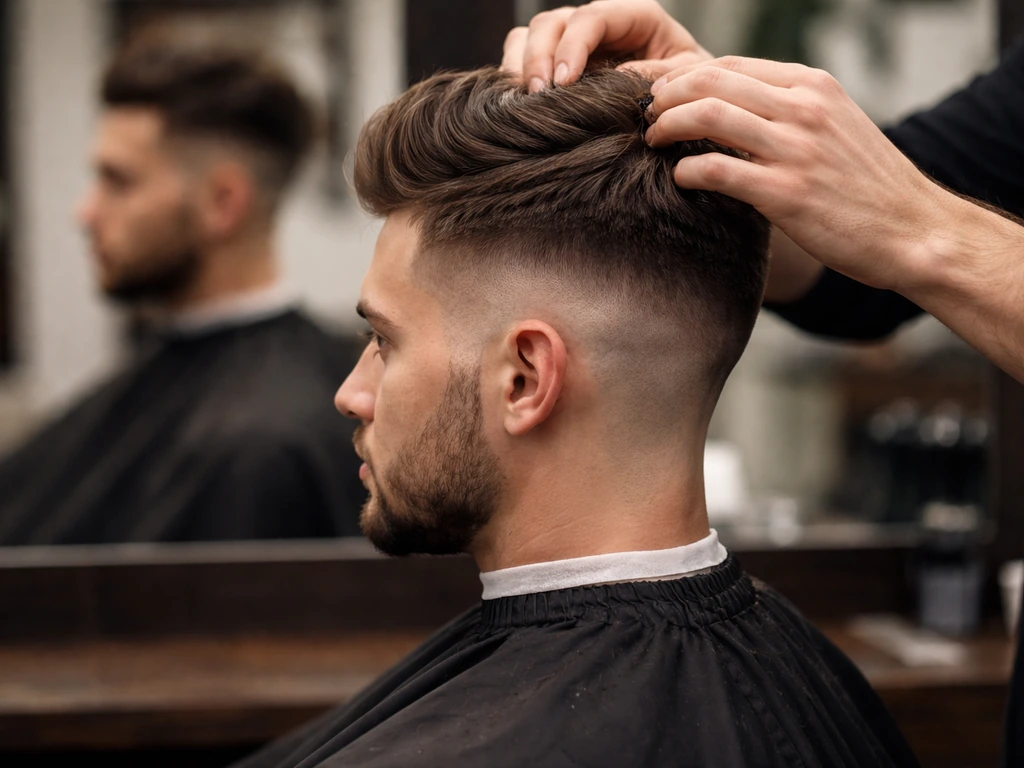
An undercut is one of the harder grows because the disconnection between the shaved or very short sides and the longer top creates a very obvious line as the sides fill in. The most effective approach is to start blending that line gradually rather than waiting for it to disappear on its own. Ask your barber to use a longer clipper guard on the sides and start working in a taper or graduation to connect the lengths. The transition from a hard line to a blend usually takes 4 to 6 months at normal growth rates. Resist the urge to cut the top shorter to 'match' the sides. You'll just reset your progress.
Growing out layers
If your hair was heavily layered before you started growing, you'll notice the ends feel thinner and more tapered while the roots grow in fuller. This can make the hair look limp or stringy at medium lengths. Refreshing the layers slightly as you grow (rather than removing them) keeps the weight more even and prevents that wispy, disconnected look at the ends. Ask your stylist to 'refresh the layers but keep all the length.'
Managing bangs as they grow
Growing out short bangs or a fringe is its own awkward phase. The hair across the forehead hits the eye-level zone and becomes hard to style in either direction. Side-sweeping with a small amount of cream or pomade is usually the cleanest bridge: push the bangs to one side and let them gradually join the rest of the top length. Avoid trimming the bangs to keep them tidy, because every trim resets your front length and makes the total grow-out take longer.
Colored or chemically treated hair
Color-treated hair has its own complication: the line of demarcation. As new growth comes in, there's a visible contrast between the colored ends and the natural root. The grow-out strategy here involves either letting the regrowth line soften with toning or lowlighting appointments, or embracing the two-tone look intentionally by adding contrast that makes it look deliberate rather than neglected. Avoid bleaching or coloring already-processed ends repeatedly during grow-out. The damage from over-processing creates breakage that costs you length, which is exactly the opposite of what you're trying to do.
Keeping momentum through the whole transition
The full journey from a short cut to genuinely longer hair typically takes 12 to 24 months depending on your target length and your starting point. At half an inch per month, that's 6 inches per year. The guys who make it through are the ones who treat each stage as its own mini-goal rather than staring at the finish line and getting frustrated. Pick a style that makes sense for your current length, maintain it with intentional trims, and build on it as the hair grows.
If you're deciding what to do at your current length specifically, the short answer is: go to your barber with a clear instruction to preserve your length on top, clean up the shape, and either taper, graduate, or layer depending on where you are in the process. That single visit, done right, is what gives you another 6 to 8 weeks of growth that actually looks good while it's happening.
FAQ
How do I tell my barber to grow it out without losing too much length on top?
Use the “top must stay” rule. Even when you ask for a clean-up, tell your barber to preserve the current top length (for example, “trim the perimeter only, do not take from the top”). If they ask for permission to even the top, confirm you want a graduation or taper, not a reset back to a shorter reference length.
Is it normal for my hair to look worse right after a trim when growing out?
Don’t judge progress by how it looks the first week after a cut. For shape-management haircuts, the hair often sits differently for 7 to 14 days because the ends are blunt and start to move again as the product and natural oils distribute. If it looks off, wait until it’s settled before deciding you need a different cut.
Can I rely on styling to fix problems, like outward sides or flopping top, instead of more trims?
Yes, but only to a point. If you’re using a blow dryer, stop at “controlling direction,” avoid daily high-heat blasting on the same sections, and always use a light setting and brush through gently. Heat styling is a helper, not a replacement for proper layers and regular shape trims.
What should I do if my sides are pushing outward and my top won’t sit the way I want?
That’s usually a sign the cut or the product is mismatched. If the sides stick out, your haircut likely needs more perimeter cleanup or improved graduation, not just more product. If the top won’t stay down, it often needs a lighter matte hold and a blow-dry direction pass rather than heavier gel.
How do I decide what kind of haircut to ask for if I’m between stages of grow-out?
For most hair types, aim for gradual improvement, not a “do it all at once.” As a practical decision aid, schedule your next appointment based on the stage you’re in, not the calendar alone. If you’re between stages (for example, moving from graduated to layered), request a micro-adjustment like refreshing layers or removing interior bulk rather than changing the entire shape.
How can I tell whether I need a dusting trim versus a more substantial trim?
You should track split ends and feel, not just length. A dusting trim keeps ends from splitting up the hair shaft, but if you see tangling, fraying, or you feel roughness near the ends, you likely need a little more than a basic dusting. Ask for “ends removal only, minimal length change,” then reassess how fast the issue returns.
My hair is growing out but getting flatter. How do I add volume without messing up the shape?
If you want more volume but your hair is growing out flat, focus on crown lift rather than adding bulk to the sides. Use a blow-dry technique that lifts at the crown upward and backward, then apply a small amount of moulding cream to the top and back only. Avoid loading product at the sides past the ear line.
What’s the best way to handle short bangs or a fringe while growing it out?
When hair is in the awkward fringe phase, try side-sweeping to blend it into the rest of the top. If one direction looks better, commit to that for several weeks and let it connect naturally, since trimming the fringe too often restarts the front grow-out. Only clean the perimeter enough to keep it from looking jagged.
What’s the right approach if I started with an undercut and I’m seeing a hard line as it grows?
A good grow-out haircut should not create a “line” that you constantly need to correct with shorter cuts. For an undercut that’s filling in, ask for a longer guard and taper work that bridges the disconnection, and confirm you want the transition to be gradual (it typically takes months). If your barber keeps shaving the sides down again, you will slow your timeline.
How should I handle color regrowth when trying to grow my hair out?
If your hair is colored, ask for a strategy that minimizes repeating processing on already-treated ends. You can request toning or lowlighting to soften the regrowth contrast, or you can intentionally lean into the two-tone look, but avoid frequent re-bleaching mid-grow-out because breakage steals your progress.