
Yes, you need to cut your hair while you're growing it out. That's the part that trips most people up. Avoiding the scissors entirely sounds logical, but it almost always backfires: split ends travel up the hair shaft, breakage increases, and you end up losing more length than you would have with a small, strategic trim every couple of months. The real question isn't whether to cut, it's what to ask for, how much to take off, and how to make sure every trim moves you closer to your length goal instead of resetting it.
How to Cut Hair to Grow It Out Without Slowing Growth

Marcus Vickers
10 Apr 2026

Why cutting actually helps you grow it out
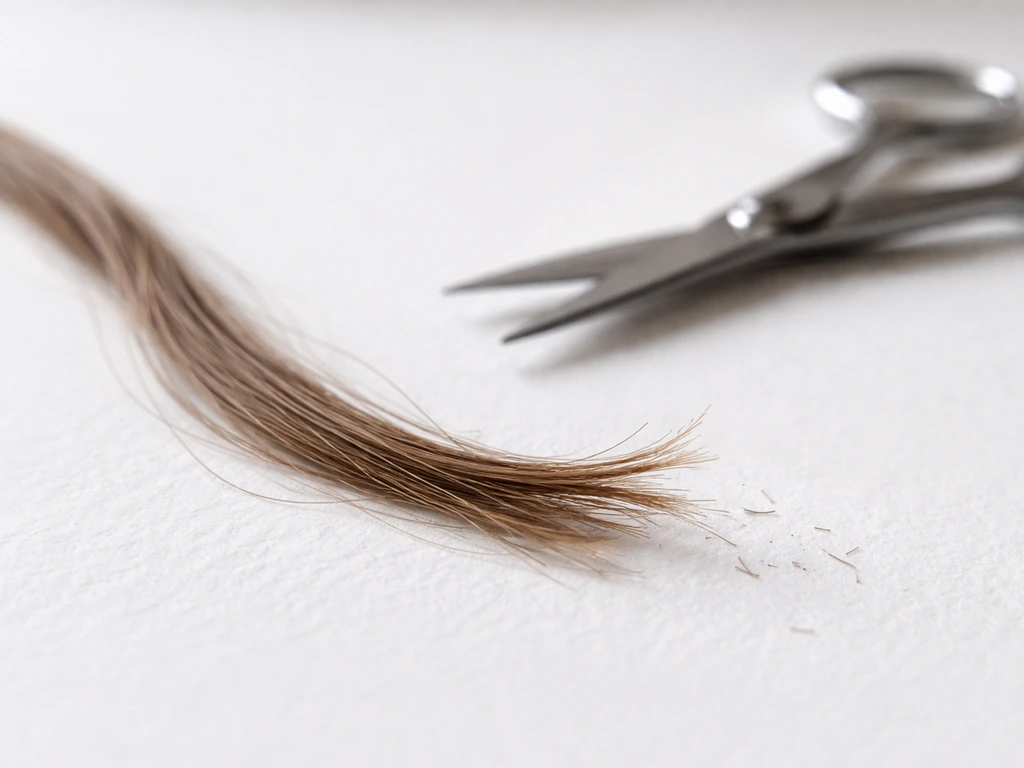
Here's what happens when you skip trims entirely: a split end doesn't just sit there. It progresses up the hair shaft from a small, early-stage split into a deeper break, and once that happens, the damage is structural. You can't repair a split end with any product, no matter what the label says. The only fix is to cut it. If you wait too long, you're cutting off more length to remove the damage than you would have if you'd caught it early with a tiny trim.
Think of trimming during a grow-out as damage control, not a setback. A trim of around ⅛ of an inch every 6 to 12 weeks removes the compromised ends before they can split further and break off mid-shaft. That mid-shaft breakage is what actually makes hair look thin, uneven, and stalled. Protective trimming keeps the length you've already earned. And if you want to go even more minimal, ask specifically about how to trim hair to grow it out in a way that takes off as little as possible while still keeping ends healthy.
Trim vs. stop cutting: a quick comparison
| Approach | What happens to ends | Net effect on length over 6 months | Best for |
|---|---|---|---|
| Stop cutting entirely | Splits travel up the shaft; breakage increases | Often less net length due to mid-shaft breaks | Nobody, honestly |
| Trim every 6–8 weeks (baby trim) | Split ends removed before they spread | More net length retained; fewer broken strands | Fine, color-treated, or damaged hair |
| Trim every 8–12 weeks (minimal trim) | Light damage management | Good net length gain if ends are healthy | Healthy hair in good condition |
| Dusting (micro-trim) | Smallest possible removal, targets visible splits only | Maximum length retention | Already-healthy ends; maintenance only |
What to actually ask your stylist or barber
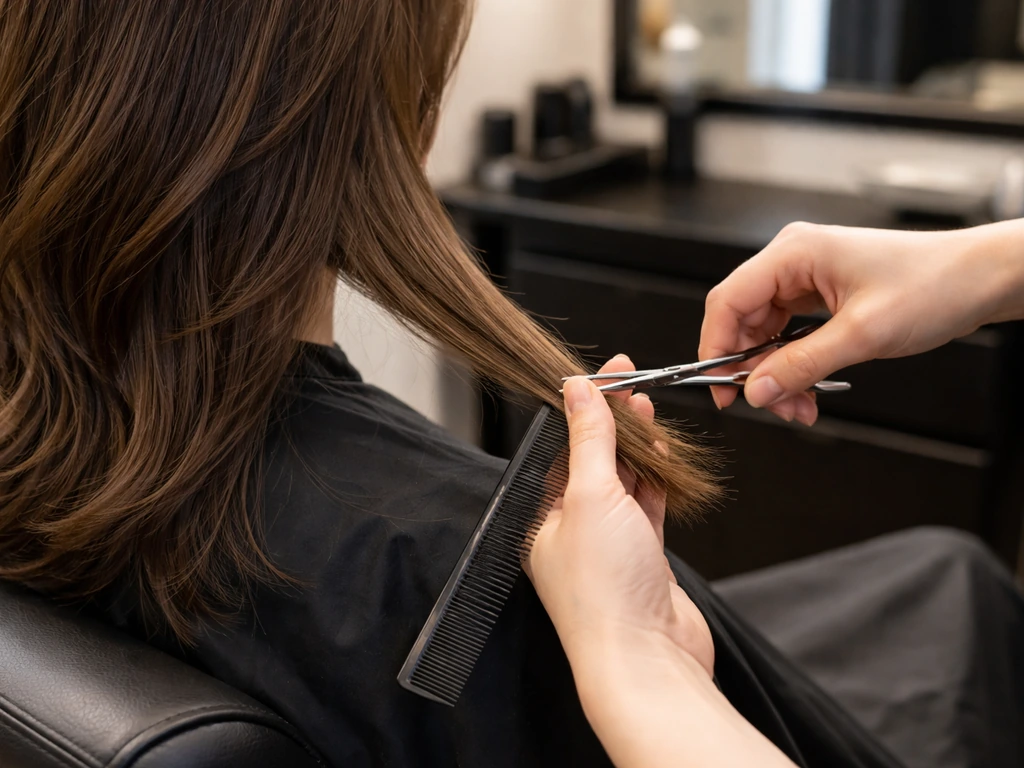
The language you use at the salon matters more than most people realize. If you just say "I'm growing it out," your stylist might still take off half an inch out of habit. Be specific and be the one running that appointment. Here are phrases that actually communicate what you want:
- "I want a dusting, not a trim. Just remove the visible split ends, no more than ⅛ of an inch off the length."
- "I'm growing this out, so I only want to take off 1 to 2 millimeters, just enough to clean up the ends."
- "Keep the length exactly where it is. I just need the shape cleaned up and the dead ends gone."
- "I don't want any layering that will need to be grown out separately. Keep everything one length or blended into the existing shape."
- "Can you shape around the sides/top without shortening the overall length?"
The goal of a growth-friendly cut is to maintain or improve the shape of what you have while protecting the ends. Your stylist should be removing damaged material, not architectural layers that'll require their own grow-out later. If someone is recommending a dramatic restyle while you're mid-grow-out, that's worth pushing back on unless it genuinely solves an awkward-phase problem (more on that in the styling section). Choosing the best haircuts to grow out hair from the start makes every one of these conversations easier because the shape already works with the growth process.
How to cut for growth based on where you're starting
The right approach depends heavily on how short you're starting. Someone growing out a pixie needs a completely different strategy than someone growing out a shoulder-length bob. Here's a stage-by-stage framework.
Growing from very short (pixie, buzz, or close crop)
This is the stage where most people panic and cut it all off again. The awkward phase hits fast: the back grows faster than the sides, the top goes fluffy, the nape gets weird. The cut strategy here is to let the top lead. Ask your stylist to keep the back and sides trimmed just enough to stop them from flaring out, while leaving the top and front completely alone. You're not trying to make it look perfect right now, you're trying to direct the growth. If you started from a buzz or a very close crop, look into short haircuts that are easy to grow out so your next intentional cut sets up a better transition shape before the real awkward phase begins.
Growing from a chin-length or short bob
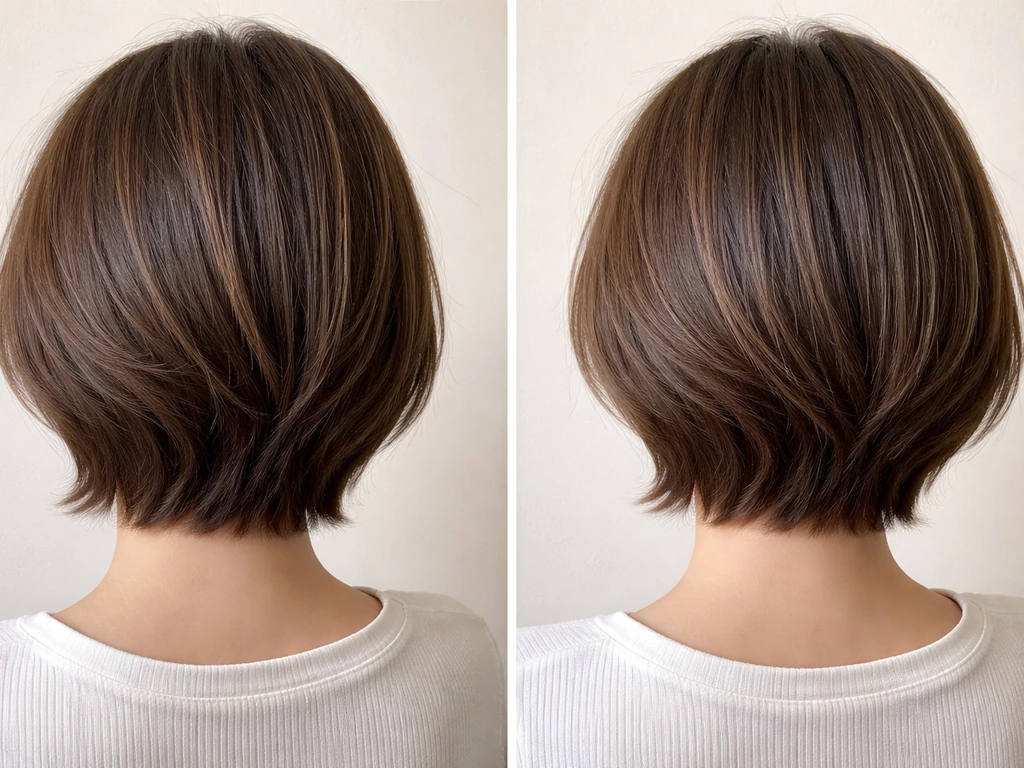
At this length, the main enemy is bulk and uneven layers from the original cut. If your bob had a lot of internal layering, some of those layers are now at mid-length while the perimeter is catching up. Ask for the layers to be softened or blended rather than refreshed. Refreshing layers means cutting them again, which defeats the point. Instead, ask for a "blended" finish: the stylist feathers or point-cuts where layers meet the perimeter so the transition isn't harsh, without shortening anything. Do not let anyone add new short layers at this stage.
Growing from medium length toward long
This is the stage where growth feels invisible. Your hair is past the shoulder or nearly there, and every trim feels like it erases a month of progress. The good news: at this length, ends tend to be healthier if you've been careful. Go to 8-to-12-week intervals instead of 6 weeks, and ask for a microdusting only when you actually see split ends forming. If your hair is in good condition, you can stretch trims even a little longer. Focus protective care on the ends: use a heat protectant every time you use hot tools, and when detangling, work from the ends upward with a wide-tooth comb to prevent mechanical breakage at the most fragile point.
The men's grow-out strategy: sides, neckline, top, and temples
Growing hair out as a man involves a specific set of decisions that are different from a typical salon grow-out. Most men's haircuts are built around contrast: short sides, longer top. When you're growing out, you have to decide whether to maintain that contrast while the top gets longer, or to start blending everything toward a more uniform length. Both approaches work, but they need different maintenance.
Keeping the sides clean while the top grows
The most common strategy is to keep sides and back tapered or faded on a regular schedule (every 3 to 4 weeks) while leaving the top completely alone. This keeps the shape looking intentional even when the top is at an awkward medium length. The neckline especially needs attention: an unclean neckline is the fastest way for a grow-out to look unkempt rather than deliberate. Ask for a neckline cleanup at every visit, but make clear that you don't want length taken off the top or sides, just the outline cleaned. For a much more detailed breakdown of this approach, the men's haircut when trying to grow it out guide covers exactly what to ask for at each stage.
Letting the sides blend in
Some men, especially those going for a longer overall style, prefer to let the sides grow in at the same time as the top. This avoids the hard-contrast look during the transition. If this is your goal, tell your barber you want the taper to start higher each visit, gradually reducing the fade until the sides are more uniform. The temples are the trickiest spot here: they often grow in patchy or cowlicky. Keeping a very light cleanup at the temples while the rest grows is a good compromise. Black men growing out natural hair have additional texture and shrinkage factors to navigate, and the best haircut to grow out hair for black men addresses those specific decisions in detail.
Temple and sideburn management
Temples and sideburns are easy to overlook, but they're visible in almost every angle. During a grow-out, resist the urge to trim them back aggressively. Light cleanup only. If you're going for longer hair, sideburns should grow with everything else. If you're keeping a cleaner look while the top grows, trim the sideburns to blend with the taper so the overall shape looks proportional.
What to avoid so you don't slow your progress
Some things people do during a grow-out genuinely slow it down or make the hair look worse than it needs to. Here's what to steer clear of:
- Over-trimming: Taking off more than ⅛ to ¼ inch at each visit erases your growth. Keep trims minimal unless you have significant damage.
- Adding new layers: Short layers need to be grown out separately. If you're already growing something out, adding new short layers creates another grow-out inside your grow-out.
- Keeping bulk at the ends: If your original cut had a lot of blunt bulk at the perimeter, this can actually weigh hair down and make the shape look worse as it grows. Point-cutting or softening the ends helps without removing length.
- Skipping heat protection: Ends are the weakest part of the hair, and hot tools without a protectant cause breakage exactly where you can least afford it. This is non-negotiable if you're using heat regularly.
- Aggressive brushing from the root down: Always detangle from the ends upward. Pulling a brush from root to tip snaps strands at weak points in the mid-shaft, which is the mid-length breakage that makes growing out so frustrating.
- Choosing a starting cut that requires constant maintenance: Some cuts make growing out much harder than others. If you haven't committed to a starting shape yet, it's worth thinking about which shapes transition most gracefully.
On that last point: the initial cut you start from has a real impact on how smoothly the grow-out goes. There are specific short haircuts that are easy to grow out worth considering if you're still deciding on your starting shape.
How often to trim and when to reassess
There's no single right answer for trim frequency during a grow-out, because it depends on your hair's condition, texture, how much heat you use, and whether your ends are color-treated. That said, here are realistic ranges to work from:
| Hair condition | Recommended trim interval | Amount to take off |
|---|---|---|
| Damaged, color-treated, or heat-styled frequently | Every 6–8 weeks | 1–2 mm (baby trim or dusting) |
| Normal, moderately healthy | Every 8–10 weeks | ⅛ inch or less |
| Healthy, minimal heat use, protective styles | Every 10–12 weeks | Dust only when splits are visible |
| Very healthy, air-dried, low manipulation | Every 12–16 weeks | Dust only as needed |
Reassess your plan every 3 months. Take a photo from the same angle at each trim so you can actually see progress, because hair growth feels invisible month to month but obvious over a quarter. If your ends are consistently getting worse between trims, move to a shorter interval. If they're holding up great, stretch it out. Some people also factor in timing around other considerations, and if you've ever been curious whether timing matters beyond just condition, the research behind best days to cut hair to grow is worth a look as a supplementary consideration.
The reassessment isn't just about trim frequency. It's about your grow-out goal itself. Is the shape you're heading toward still what you want? Are you managing the in-between stage, or does it feel unmanageable enough to warrant a strategic restyle that makes the next several months easier to handle? Those are valid questions, not failures.
Getting through the awkward in-between phase
The awkward phase is real, and pretending it isn't doesn't help anyone. Most people hit it around 2 to 5 months in, when the hair is too long to look like the original cut but too short to do much with. Here's how to handle it without running back to the salon to chop it all off.
Use styling products to buy yourself time
Styling products are not a permanent fix for damaged ends, but they serve a real function during a grow-out: they can temporarily seal or smooth rough ends so the hair looks more polished while you wait. The Cleveland Clinic compares hair sun protection measures to the way SPF for skin helps prevent additional damage protective measures similar to SPF. A small amount of a light serum, cream, or smoothing product on the ends can make the difference between hair that looks intentionally messy and hair that looks just messy. For men, a matte clay or paste through slightly damp hair gives texture and control that makes the awkward length look deliberate rather than accidental.
Styling tactics that work at every awkward length
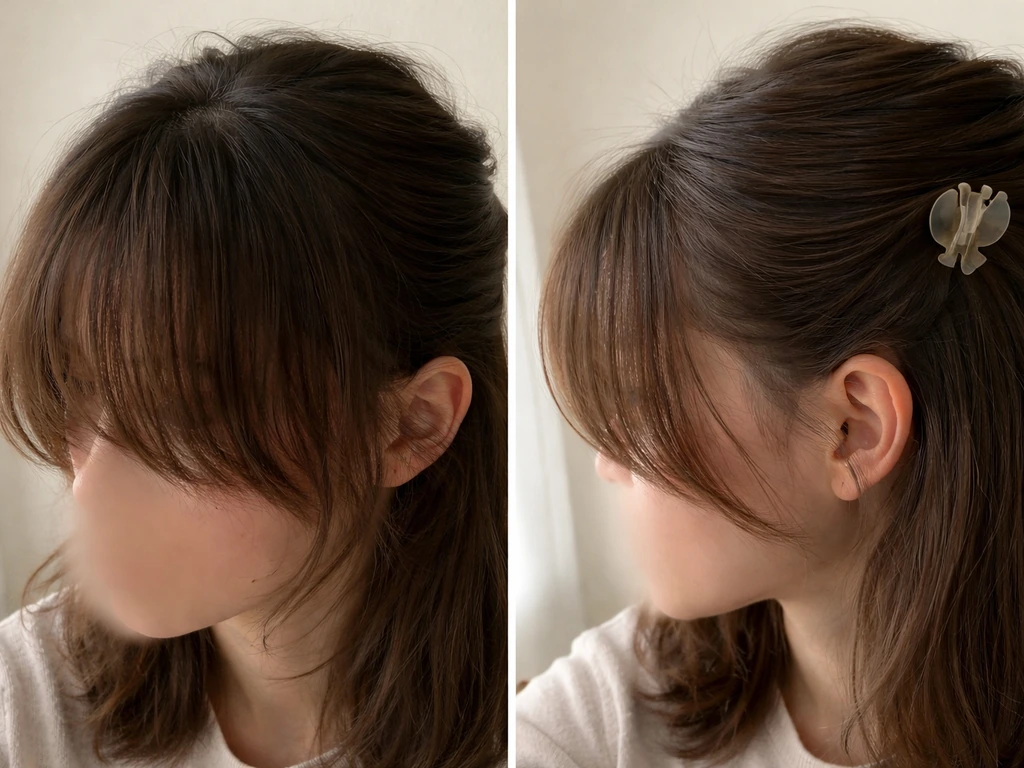
- Headbands, clips, and pins: At the jaw-to-chin phase, keeping hair off the face with a clip or headband is genuinely more stylish than fighting it. Lean into it.
- Half-up styles: As soon as there's enough length to pull back the top section, half-up styles eliminate the "too short to do anything" problem and look intentional.
- Texture spray or sea salt spray: Adds grip and definition so mid-length hair doesn't just hang limp. Works especially well on fine or straight hair that's between lengths.
- Slick-back with a light hold gel: For men especially, a slicked-back style during the grow-out reads as intentional and clean, even when the length is awkward.
- Braid or twist the top back: For longer growing stages, braiding the front or top section back keeps it out of the face and adds visual interest without cutting anything.
Strategic reshaping to survive the phase
Sometimes the best move is a small, intentional restyle that makes the grow-out easier to manage, not a full haircut. For example, if you're growing out a blunt bob, softening the perimeter with point-cutting makes the grown-out shape blend more naturally. If you're growing out a pixie and the back is the problem, a small cleanup of just the neckline makes everything look more controlled without shortening what matters. This is different from cutting for vanity because it's cut strategically to reduce the number of bad hair days you're going to have over the next 6 to 8 weeks.
The whole grow-out process is a series of small decisions, not one big commitment you make at the start. Every trim is an opportunity to reassess, protect your progress, and make the next phase more manageable. Cutting smart while you grow is how you actually get there.
FAQ
How do I handle split ends between salon trims without making the problem worse?
Only remove what you can safely control. If you spot a true split, a tiny snip is better than trying to “seal” it with product, because split ends cannot be repaired. If you cannot clearly see how far the split travels, wait for your next scheduled trim and focus on gentler detangling and fewer heat sessions to reduce new breakage.
What should I say if I want the smallest possible trim (and still keep my style)?
Ask for “microdusting or a 1 to 2 mm removal, only at the very ends, no internal layers added.” Then confirm the plan by asking them to show you where they will cut, especially if your hair already has layering you want to preserve.
Should I trim dry or wet hair when growing it out?
For most people, the safest salon approach is to cut when hair is dry or in a way that matches your usual styling routine, because wet cutting can hide unevenness that shows up once hair dries. If you have wavy or curly hair, specifically request cutting in your natural curl pattern to avoid accidentally adding length or creating unexpected bulk.
Can I use hair oil or serum instead of trimming to avoid losing length?
Products can make ends look smoother temporarily, but they do not stop a split end from progressing up the shaft. If your ends are already rough or visibly splitting, expect the length tradeoff is unavoidable, the sooner you remove the damaged portion, the less you lose overall.
How often should I wash and condition so trims stay longer?
Aim for consistent conditioning focused on mid-length to ends, and detangle when hair is conditioned to reduce mechanical breakage. If you use heat or color, you may need shorter wash intervals with lighter products to keep ends manageable, but the key is reducing friction when hair is most fragile (during detangling and drying).
If my hair grows unevenly, like back faster than sides, do I need different trims or just more patience?
Different trims can help, but only with the goal of shaping for transition. Ask for minimal cleanup to prevent flaring or wild angles, while keeping the “growth-leading” sections untouched (for example, top only during the early awkward phase). Reassess every 3 months with photos so you adjust strategy based on what actually changes.
Will microdusting ruin my hair’s thickness over time?
If it’s truly microdusting at the ends, it should not create a visible thinning effect, because you are removing damaged material rather than bulk all over. The risk increases when stylists refresh layers too aggressively, so explicitly request no new short layers and ask for blending rather than re-layering.
What if my stylist keeps taking too much length even when I explain the goal?
Use a measurement and boundary. Tell them the exact amount you will allow (for example, “no more than an eighth of an inch, only at the ends”) and ask for a mid-appointment check before finishing. If you are not comfortable with that, choose a stylist who offers a conservative “maintenance trim” approach.
How do I grow out a fringe or bangs while still keeping the rest on track?
Treat bangs as a separate growth project. Keep trimming only the perimeter to prevent them from becoming awkward and bulky, while avoiding any additional shortening to the lengths you are trying to protect. If bangs are part of a blunt cut, ask for gentle point-cutting so the transition softens without creating a choppy shelf during growth.
What are common mistakes that lead to hair looking “stalled” even when it grows?
The most common culprits are breakage (especially from heat, aggressive detangling, or tight hairstyles), layering cuts that create new short ends during the grow-out, and waiting too long to remove split ends. If your length is not increasing visually, check whether ends are worsening between trims rather than assuming your hair growth stopped.