
Growing out the sides of your hair is one of the most frustrating parts of any grow-out journey, and if you feel like the sides are lagging behind the rest of your hair, you are not imagining it. The sides and back genuinely behave differently from the top, they are more exposed to friction, often cut shorter or shaved as part of a style, and they have less weight to help them lie flat. The good news: with a realistic timeline, a light maintenance plan, and a few styling tricks, you can get from wherever you are now to a natural blend. Here is everything you need to know to make that happen.
How to Grow Sides of Hair: Step-by-Step Timeline

Marcus Vickers
12 Apr 2026
Why the sides feel slower to grow (and what's actually happening)
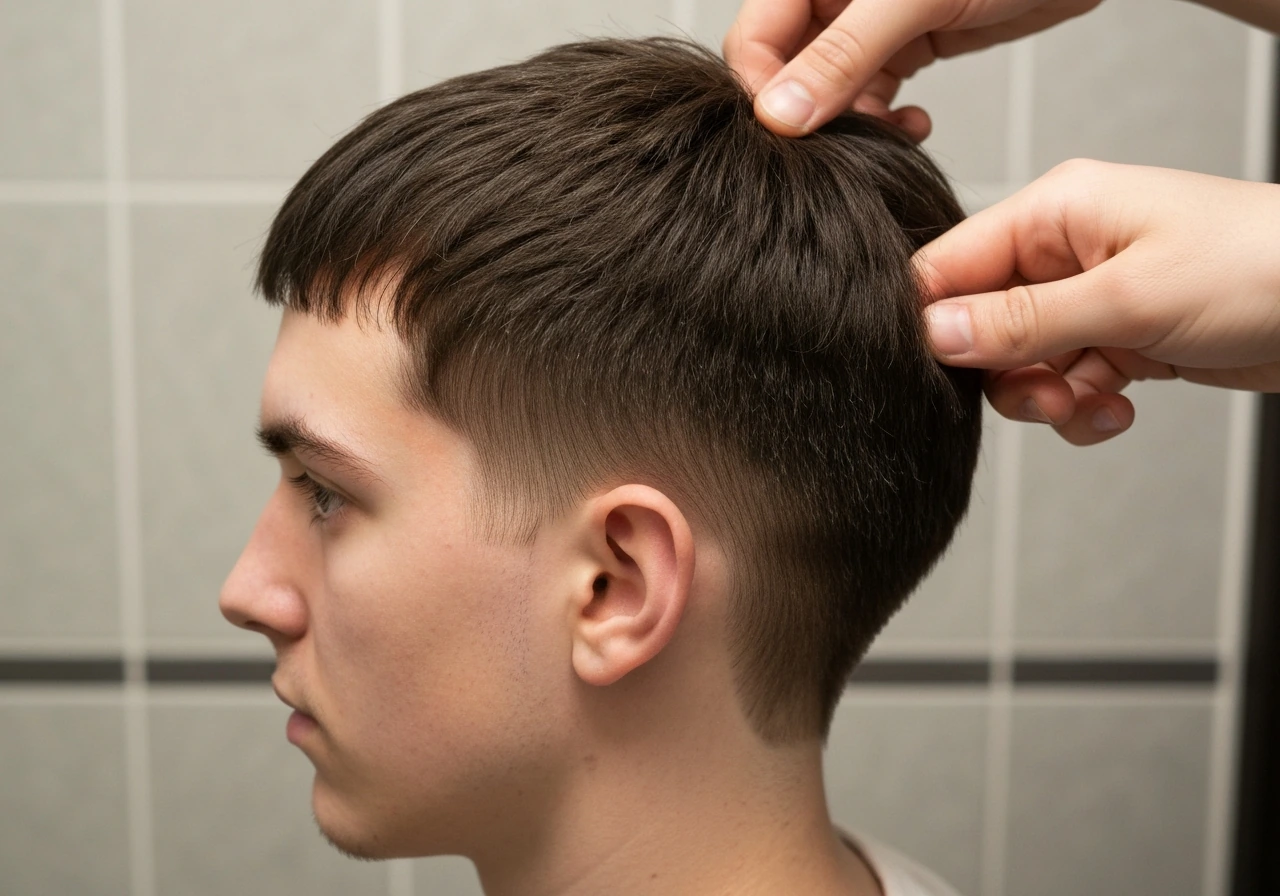
Hair grows roughly half an inch per month on average, and that rate is the same all over your scalp. So why do the sides always seem to lag? A few things are going on at once. First, shorter hair takes longer to reach a visible milestone. If the top of your hair is already four inches long and the sides are starting from half an inch, the sides need to double or triple in length before they look meaningfully longer, even though they are growing at the same pace.
Second, about 90% of your scalp follicles are in the active anagen (growth) phase at any given time, but the other 10% are resting or shedding. On the sides, where follicles may have been stressed by tight cuts, frequent clippering, or heat, a slightly higher proportion can drift into the non-growing phases temporarily, which makes the area look patchy or stalled. This is usually reversible once you stop the stressor.
Third, the hair on your sides tends to stick out rather than fall with gravity, especially in the early inches. Fine or straight hair at the sides has almost no weight to keep it down, and textured or wavy hair can spring up and out at a weird angle before it gets long enough to curl properly. Cowlicks and growth whorls around the temples and occipital area make this worse. None of that means your hair is not growing. It just means the growth is less forgiving visually until you hit a certain length threshold.
Growing out the sides and back: what to expect stage by stage
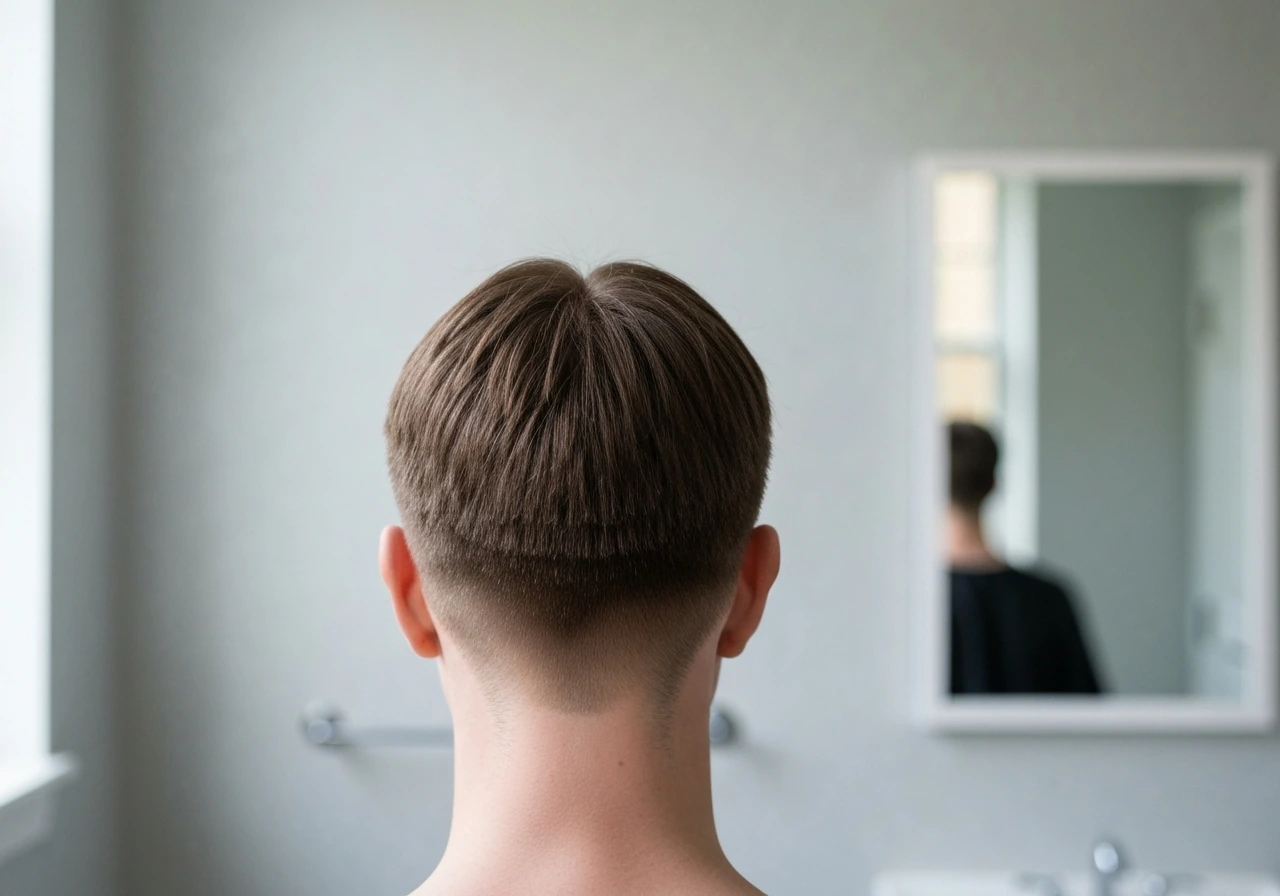
Everyone's awkward phase looks a little different depending on where they started, but here is a realistic stage-by-stage breakdown you can use as a reference. If you are growing out shaved sides, your timeline will be on the longer end of these ranges because you are starting from zero.
| Stage | Approximate Side Length | What It Looks Like | The Main Challenge |
|---|---|---|---|
| Weeks 1–4 | Under ½ inch | Stubble or very short fuzz | Prickly texture, nothing to style |
| Months 1–3 | ½ to 1½ inches | Short but visible hair, starts to show direction | Sticks out, cowlicks are obvious, no weight |
| Months 3–6 | 1½ to 3 inches | Connects with top or back but looks uneven | Classic awkward phase — bulk without length |
| Months 6–9 | 3 to 4½ inches | Starts to blend if shaped well | Layers from old cut still visible |
| Months 9–12+ | 4½ to 6 inches | Real blend with the rest of the hair | Managing bulk, maintaining shape |
The hardest window is months 3 through 6, almost universally. The sides are long enough to get in the way but not long enough to tuck, pin, or style convincingly. This is the stage where most people give up and go back to a clipper cut. Do not. This is also the stage where a small amount of shaping from a stylist makes the biggest difference in whether you feel like a mess or someone who is intentionally growing their hair out.
If you are specifically dealing with the back, that section often hits its awkward phase a few weeks later than the sides simply because hair at the nape tends to be finer and the angle makes it harder to see until it is hitting collar length. Once it gets there, the priority shifts to managing bulk between the ears and the nape. Growing out your sides and the back at the same time is a coordination challenge, but it is manageable with the right trim strategy.
Your maintenance plan: when to trim and how to manage shape
Here is the rule that saves most people: you do not have to choose between trimming and growing. Strategic trimming of the top and the perimeter keeps the overall silhouette looking intentional while the sides catch up. What you should avoid is thinning the sides or cutting them again to even them out, which just resets the clock.
Plan on seeing a stylist every 10 to 12 weeks during the grow-out. At each visit, ask them to blend any harsh lines left from the original cut, remove any bulk from the top that is making the sides look disproportionately short, and clean up the perimeter without touching the sides themselves. If your stylist keeps suggesting you cut the sides back down, find someone who has experience with grow-outs. It is a specific skill.
At home, the main job is keeping ends from splitting. Split ends on the sides do not just look rough, they travel up the shaft and cause breakage, which shortens the hair you are trying to keep. A light trim of just the tips every 8 weeks at home (using proper hair scissors, not kitchen shears) removes damage before it travels. Keep the sides slightly longer than you think you need to, since the temptation to even things up by cutting is real and usually counterproductive.
Hair growth basics that actually move the needle
Scalp health first
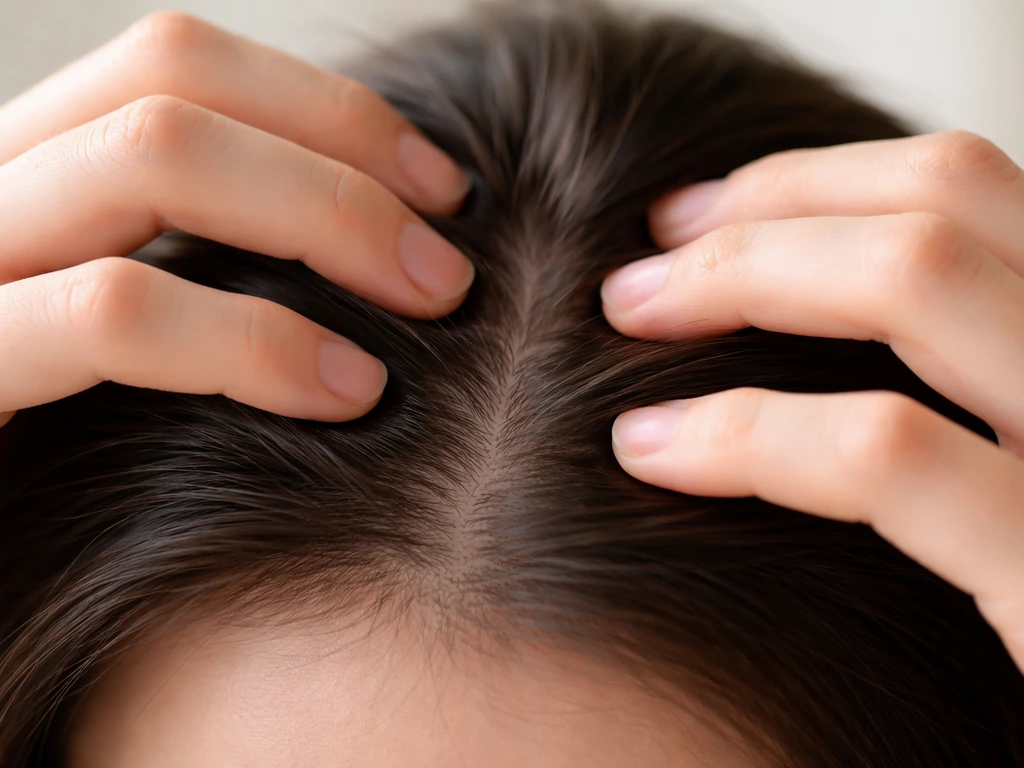
Your scalp is the foundation. Healthy follicles in a healthy scalp environment produce stronger, faster-growing hair. A few things make a measurable difference: washing frequently enough to keep the scalp clean (product and sebum buildup can clog follicles and cause inflammation), but not so often that you strip the natural oils that protect the hair shaft. For most people that means shampooing every 2 to 4 days. Use a sulfate-free shampoo if your scalp tends to be dry or if you have color-treated hair.
Scalp massage is one of the most accessible tools you have. Even 4 minutes a day of firm circular massage with your fingertips increases blood flow to the follicles, and research has linked consistent scalp massage with slightly increased hair thickness over time. Do it while your conditioner is sitting in the shower. It costs nothing and the downside is zero.
Nutrition and protein

Hair is mostly keratin, a protein, so your diet directly affects growth quality. If you are not getting enough protein (roughly 45 to 60 grams per day for most adults, more if you are very active), your body will deprioritize hair growth. Iron deficiency is the other big one, particularly for women, and it is a common reason that hair seems to stall or shed more than usual. If you have noticed increased shedding alongside slow side growth, getting your ferritin levels checked is worth discussing with a doctor.
One thing worth knowing: if you went through a stressful period, got sick, or significantly changed your diet in the past few months, any hair changes you are seeing now may actually be the result of that, not something happening at the scalp level today. Hair follicles cycle through anagen, catagen, and telogen phases, and excessive shedding (called telogen effluvium) typically begins about 3 months after the triggering event. That lag is frustrating but it also means that if you have already addressed the root cause, the recovery is already underway.
Daily habits that protect what you're growing
- Sleep on a satin or silk pillowcase: cotton creates friction that roughens the cuticle and causes breakage, especially on the sides where your head rests
- Limit heat styling on the sides to 2 times per week maximum, and always use a heat protectant spray beforehand
- Let hair air dry at least 80% of the way before using a blow dryer, and use medium heat rather than high
- Avoid tight elastic bands at the sides; if you are pulling hair back, use a snag-free hair tie or a scrunchie
- Rinse hair with cool water after conditioning to seal the cuticle and reduce frizz and breakage
Styling the sides at each stage so it looks intentional
The goal at every stage is to make the side growth look like a choice, not like you forgot to get a haircut. The tools and techniques that work best depend on how long the sides currently are.
Short sides (under 1½ inches)
At this length there is not much to style, and that is actually your friend. A light pomade or wax smoothed over the sides with your fingers will flatten stubborn growth and give it a groomed finish. If you have waves or curls starting to form, a tiny amount of curl cream smoothed flat and left to air dry can make the sides look controlled rather than chaotic. Hats and headbands are also completely valid at this stage, not a cop-out, just practical.
The awkward phase (1½ to 3 inches)
This is the stage where most styling questions come in. If the sides are long enough to tuck behind the ear, do that and hold it in place with a small amount of a light hold cream. Bobby pins or small barrettes at the temple can hold sides back while you are waiting for them to grow past the ear, and this looks intentional as a style, not like a workaround. For waves or curls at this length, scrunching in a little gel and letting it air dry will encourage the sides to curl rather than frizz-puff outward.
If you have bangs growing out alongside the sides, the temple area becomes the most chaotic zone. Pinning the side-bang transition back or using a thin headband pushed slightly back keeps everything from falling in your face while that section grows out. For more specific advice on this, growing out broken hair around the face covers the temple and fringe zone in detail.
Getting closer to a blend (3 to 5 inches)
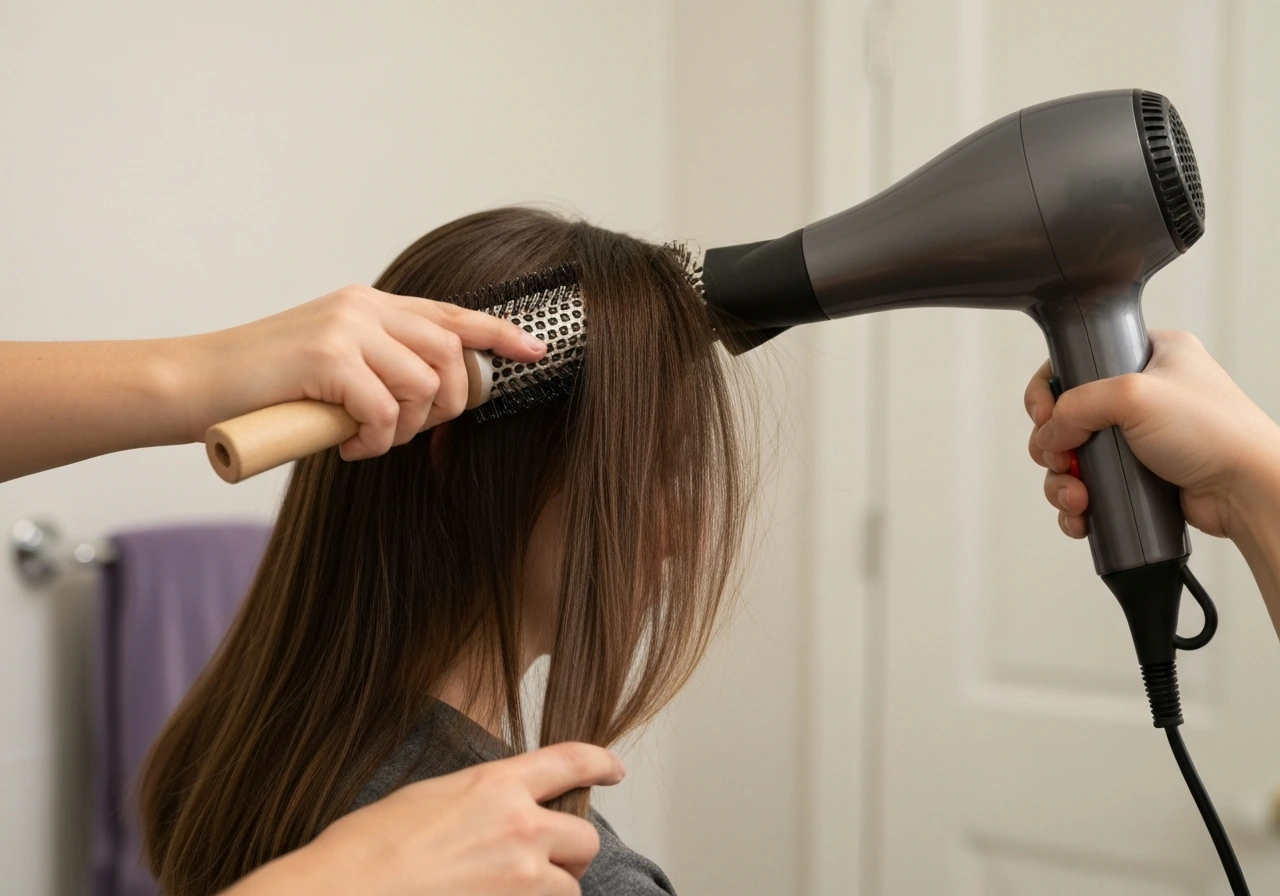
At this length the sides are starting to have real weight, which helps them lie flatter naturally. Blow drying with a round brush or a paddle brush while directing airflow downward adds smoothness and takes out the puffy, rounded silhouette that makes the sides look uneven. Anti-frizz serum applied to damp sides before blow drying controls the cuticle and reduces the halo effect around the ears. If you have naturally wavy or curly hair, this is also the length where you can start diffusing rather than brushing, and the sides will start to curl in a way that blends much more naturally with the top.
Common side-growth obstacles and how to handle them
Cowlicks and growth whorls
Cowlicks at the temples and around the ears are one of the most common complaints during side growth. The hair grows in a circular or opposing direction, so it sticks up or out no matter what. The fix is weight: once the hair gets long enough to have some weight, cowlicks calm down significantly. Until then, blow dry the cowlick section against its natural direction while it is still damp using a flat brush and a small amount of hold cream. Hold it in place with a clip for a few minutes after blow drying and let it cool in that position before releasing.
Undercut regrowth
Growing out an undercut comes with a specific problem: the shaved or very short underlayer grows in underneath longer hair on top, and the contrast in lengths creates a ledge or shelf effect. The key is resisting the urge to re-shave or buzz down the underlayer every time it starts to show, because that just perpetuates the cycle. Instead, let the underlayer grow, and use the longer top hair to cover it as much as possible.
If you are also dealing with how to grow out a shaved head, the same approach of protecting the scalp and avoiding frequent reset trims applies. Parting the top slightly differently or using a light pomade to press the top layer down can minimize how much the underlayer is visible. For a deep dive into this specific scenario, how to grow your side hair out of an undercut is worth reading alongside this guide.
Uneven layers and blending issues
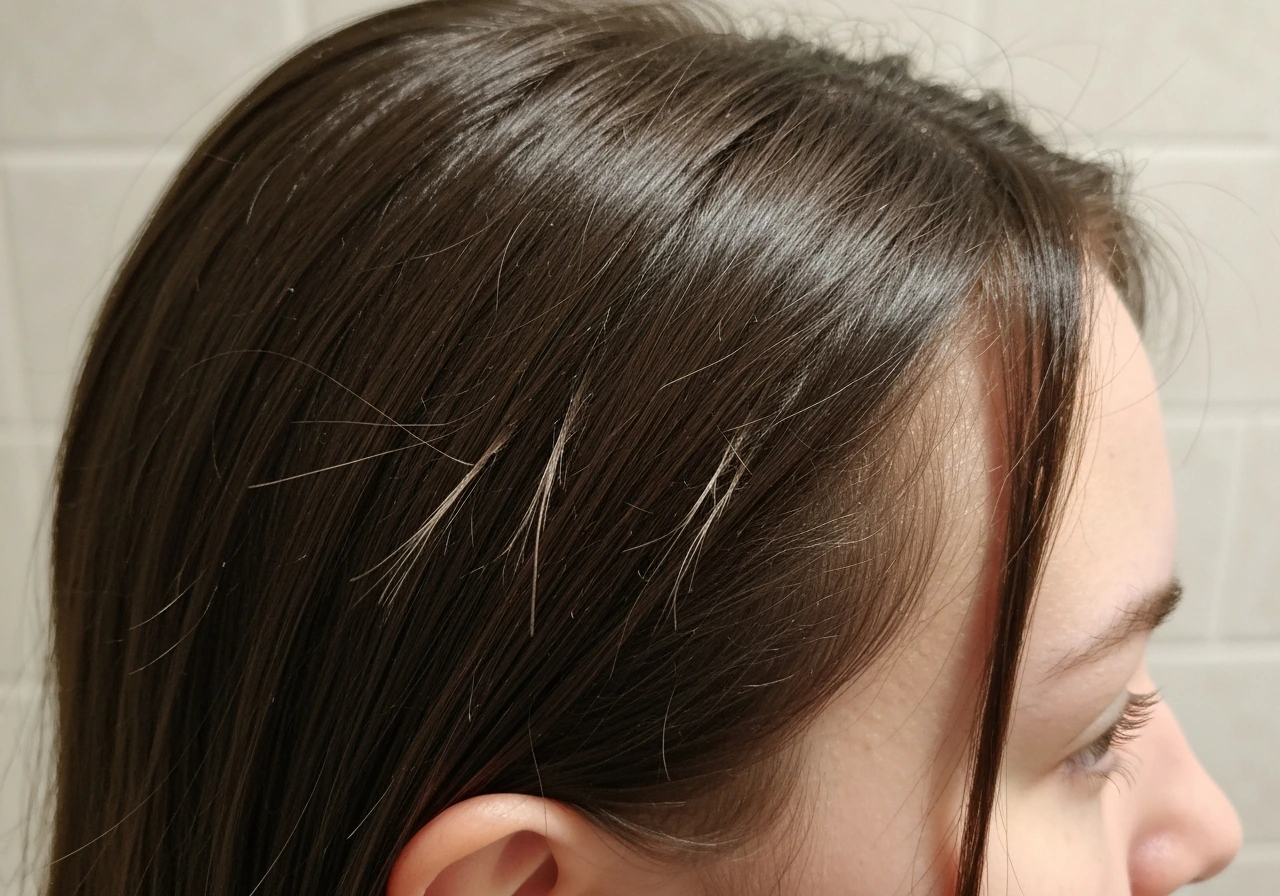
If your original cut had heavy layering on the sides, you will hit a phase where some layers are several inches long and others are barely starting. This looks choppy and uneven even when the hair is clean and styled. The best solution is a single shaping appointment with a stylist who can use point-cutting or razor techniques to soften the layer transitions without removing significant length. Do not ask for them to take length off the sides, just to soften the perimeter.
Breakage and damage
If your sides look like they are not growing but you can see short, broken hairs along the hairline or around the ears, the issue is breakage, not growth. The follicles are producing hair, but the hair is snapping off at a weak point before it gets long enough to notice as length gain. Common causes include heat damage, tight hairstyles, rough towel drying, and over-processing with color or chemicals.
Switch to a gentle microfiber towel or an old t-shirt for drying, reduce heat exposure, and add a weekly protein treatment (an egg-based or keratin mask) to rebuild strength. If your sides are also fragile and snapping around the hairline, growing out the corners of the hairline addresses the specific breakage patterns in that zone.
Product buildup making sides heavy or flat
If you are using pomade, wax, or heavy gel on the sides daily to keep them flat, buildup will accumulate at the scalp and can actually weigh down new growth and cause irritation. Use a clarifying shampoo once every 2 to 3 weeks to clear the slate, and try to alternate between heavier hold products and lighter ones (like a mist or cream) so you are not layering silicones and waxes every single day.
When the sides are not growing and you need professional input
Most slow side growth is just the math of starting from a short length, but there are real signs that something else is going on. See a dermatologist or trichologist if you notice any of the following.
- The sides are visibly thinning or you can see scalp where you could not before
- You are shedding more than 100 hairs a day consistently for more than 2 to 3 months
- There is redness, flaking, tenderness, or itching at the scalp on the sides
- New growth at the sides is coming in thinner, weaker, or a different texture than your existing hair
- There are smooth, circular patches of hair loss anywhere on the sides or back
Conditions like telogen effluvium (stress or diet-triggered shedding), alopecia areata, or scalp inflammation can all slow or halt growth on the sides specifically, because these areas are often thinner to begin with. The important thing to know is that most of these conditions are treatable if caught early. If you have recently gone through something major (illness, significant weight loss, surgery, a highly stressful period), and you are seeing unusual shedding or patchy growth now, that 3-month lag between the trigger and the visible impact is real. Getting checked out sooner rather than later gives you more options.
If your concern is specifically about growing out a shaved head where the sides are the most exposed and often the most uneven, a trichologist can also give you a baseline follicle health assessment so you know exactly what you are working with before you start the grow-out.
Your starting-today action plan
Growing out the sides is a patience game, but it is not a passive one. Here is what you can do right now to set yourself up for the best possible outcome.
- Assess where you are: measure the sides so you have a baseline, and note any breakage, uneven spots, or cowlick zones
- Book a shaping appointment (not a cut) with a grow-out-friendly stylist for within the next 6 to 8 weeks
- Switch your pillowcase to satin or silk tonight
- Start scalp massage for 4 minutes daily, ideally in the shower with conditioner in
- Identify your main styling obstacle (sticking out, cowlick, undercut ledge, breakage) and pick one technique from this guide to try this week
- If you suspect a health-related cause for slow growth, schedule a blood panel to check iron and ferritin levels
The sides will get there. The people who make it through the grow-out are usually not the ones with the fastest-growing hair, they are the ones who stopped resetting the clock. Pick your approach, protect what you have, and give the timeline a real chance.
FAQ
My sides look uneven even though they’re growing. Should I trim them to catch up?
Yes. If your sides are getting longer but the overall shape still looks “short,” the fix is usually to change the perimeter silhouette, not to trim the sides again. Ask your stylist to blend the side perimeter into the top while keeping the side length intact, or use a small amount of lightweight hold cream to guide the hair toward your natural fall direction until it gains weight.
How often can I use pomade or wax on my sides without slowing growth?
Try “single-action” days. If you apply heavy wax or pomade daily, buildup can irritate the scalp and make new growth look dull or slowed. Use a lighter product on most days, reserve the heavier hold for occasions, and clarify once every 2 to 3 weeks if you notice stickiness, flakes, or itchy scalp.
Can I blow-dry or straighten my side hair to make it look better while it grows?
Yes, but timing matters. Avoid heat styling during the earliest months when the hair is still too short to lie flat naturally, because heat can worsen breakage and cowlicks. When you do blow-dry, keep the airflow moving, aim downward, and use heat protectant, then let the hair cool while it’s held in place.
How do I tell if my sides are stalling due to slow growth or breakage?
If you see short, rough pieces that don’t grow past the same length, that suggests breakage rather than slow growth. Switch to gentle drying (microfiber or T-shirt), reduce heat and tight hairstyles, and add a weekly protein or strengthening mask for 3 to 4 weeks. If snapping continues, get a scalp and hair health assessment.
What should I do if my side growth is patchy or thinning instead of just lagging?
If the hair is patchy at the hairline or around the ear but the scalp looks irritated or inflamed, avoid aggressive traction styles and stop any new products that cause burning or itching. Take photos in the same lighting each week, and consider a dermatologist visit if patchiness and shedding persist for more than 6 to 8 weeks.
Why do my sides never seem to match my top length at the same time?
Not really. Growth can be the same from scalp to scalp, but the visual milestone differs by starting length and how the hair falls. Focus on protecting length, managing split ends, and using shaping trims to maintain the perimeter, rather than expecting the sides to “match” the top on the calendar.
My temples keep sticking out no matter what. What is the best fix?
If your sides are growing but they look “stuck out,” cowlick control should come from styling direction plus weight, not cutting more. Blow-dry the cowlick section against its natural direction while damp, then hold it for a few minutes as it cools. Once the hair reaches a longer, heavier stage, it typically settles more easily.
I have an undercut, and the ledge keeps showing. Do I need to keep buzzing the underlayer?
Yes, if you’re dealing with an undercut or very short underlayer, don’t keep shaving it down just because it shows. Let the underlayer grow, and use the longer top layer to cover it, adjust the part slightly for better coverage, and use light product to press the top layer down instead of removing side length.
Will vitamins help me grow the sides faster, especially if I feel like I’m shedding more?
You can, but start with a low-fragrance, scalp-friendly routine. If you add supplements, only do so after addressing diet and labs, because unnecessary supplements can irritate your system without fixing the cause. If shedding started after stress, illness, or weight change, focus on time plus gentle scalp care since the visible impact can lag.
What’s the safest way to handle trims at home versus waiting for a stylist?
If you’re trying to coordinate trims, a useful rule is to plan appointments based on the grow-out phase rather than on “how it looks today.” If you’re between visits, avoid DIY trimming of the sides, and instead use styling tools (tuck, pins, lightweight hold) until your planned appointment where the perimeter can be softened without resetting length.
How can I tell if I should clarify more often, or less often, for side-growth support?
Clarifying products are helpful when buildup is visible or you feel residue. Use clarifying shampoo every 2 to 3 weeks if you’re using daily hold products, but don’t overdo it if your scalp is dry. If you notice increased dryness or flaking after clarifying, extend the interval and prioritize moisturizing conditioner at the ends.