
Growing your sides out is absolutely doable without resetting your whole cut, but it helps to be clear about what you're actually trying to grow, where you are right now, and what's making it feel stuck. The short answer: your side hair grows at roughly half an inch per month, the awkward phase is real but manageable, and the right trimming and styling approach can carry you through each stage without looking like you gave up on your hair entirely. Johns Hopkins Medicine notes that blank" rel="noopener noreferrer">scalp hair grows about half an inch per month on average. If you're stuck in the awkward phase, see this guide for how to grow your side hair while keeping your shape intact.
How to Grow Out Your Sides: A Step by Step Timeline

Marcus Vickers
21 Apr 2026
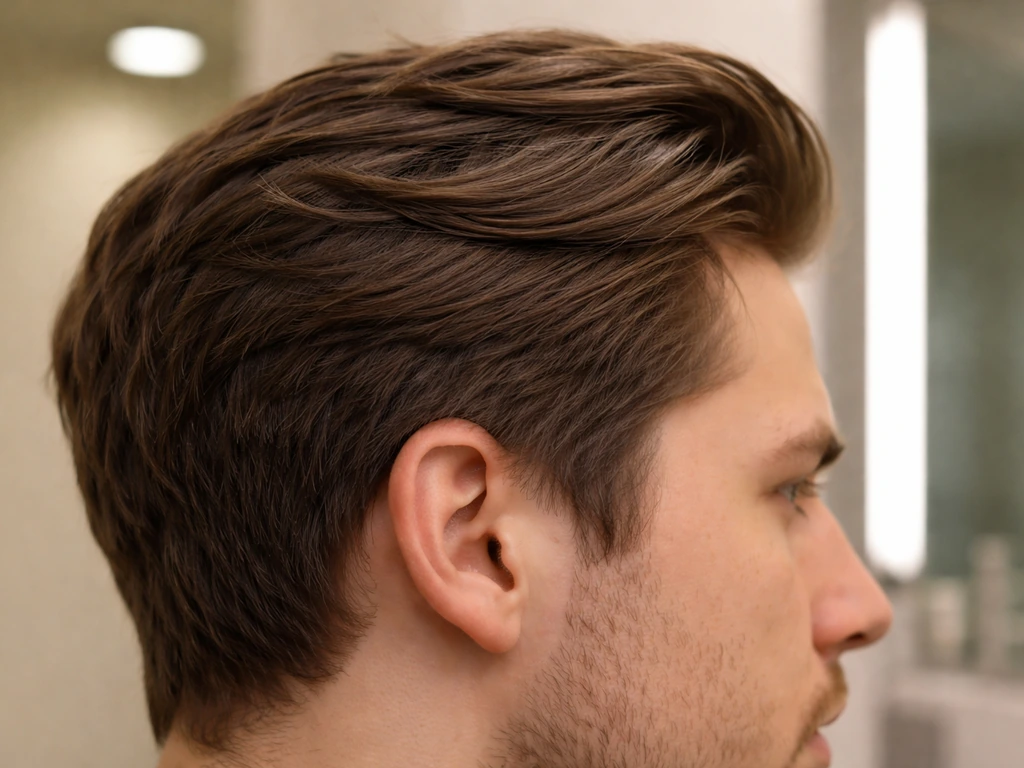
What 'growing your sides out' actually means
People use 'sides' to mean pretty different things depending on their starting cut, so it's worth being specific. For most people coming from a pixie, buzz cut, or shaved undercut, the sides they want back fall into one of two areas: the temple/sideburn zone (the strip of hair running from your hairline down in front of your ear) or the broader side section near and above the ears. Sometimes both.
If you had an undercut or fade, your 'sides' are the clipped sections that you want to blend into longer length on top. If you had a bob or a pixie, your sides are probably the sections closest to your ears and cheekbones that got tapered, layered short, or cut bluntly and now look disconnected from the length you're building on top or in the back. Temple regrowth, where hair at the corners of your hairline grows thin or was shaved, is its own situation and shares some overlap with growing out corner hairlines.
Sideburns are also part of this conversation. If your sideburns were trimmed high or shaved off entirely (common with buzz cuts and tight fades), growing them back is part of growing out your sides. This is one of the more visible early wins you'll see, because even a quarter inch of sideburn growth changes how framed your face looks.
Quick assessment: where are your sides right now?
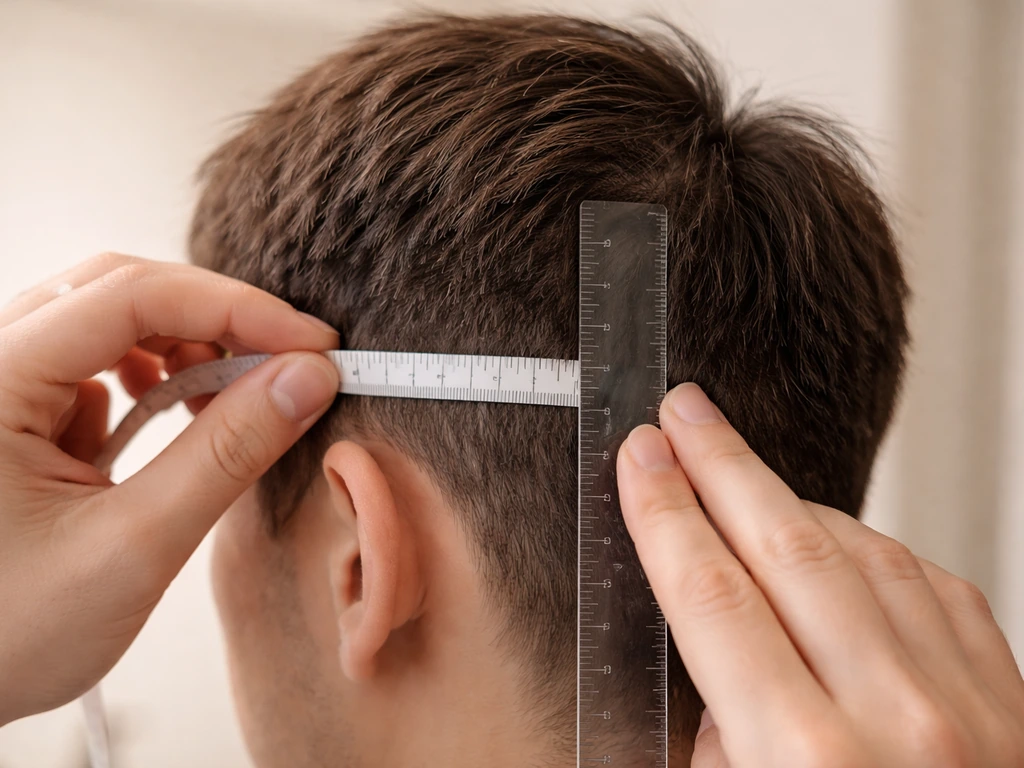
Before you can build a plan, you need an honest read of three things: your current side length, the type of cut or shaving that shaped your sides, and the real reason they look stuck or uneven. Spend two minutes on this and you'll save yourself months of frustration.
Measure your current side length
Put a ruler or tape measure flat against your scalp at the longest point of your side section. Less than half an inch means you're in very early growth, probably post-buzz or post-shave. Half an inch to an inch and a half puts you in the classic awkward phase where it's too long to look intentional and too short to style. An inch and a half to three inches means you're in the late awkward stage and within range of real blending options. Over three inches and you have enough length to work with on most hair types, you just need to manage the shape.
Identify your cut type
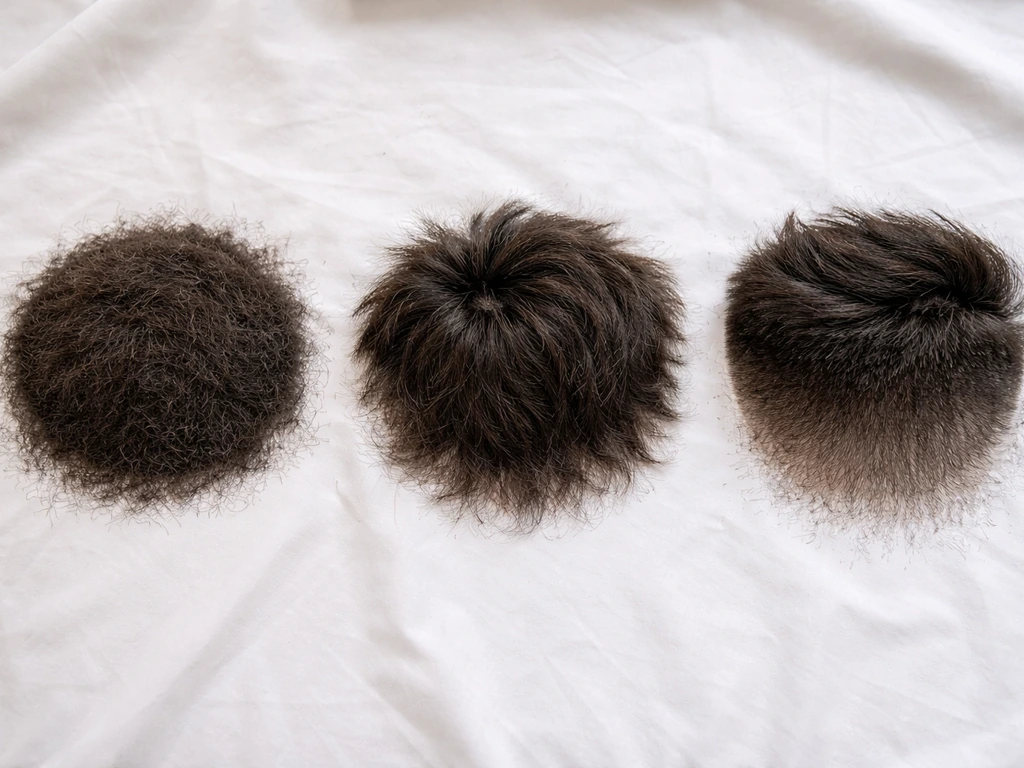
- Buzz cut or shaved head: sides are uniformly short, growth is roughly even across the whole head, but the sides may look patchy during early regrowth.
- Pixie cut: sides are usually cut very short or tapered close; the top may already have more length, making the sides look like they're lagging.
- Bob or lob: sides were likely cut blunt or layered close to the jaw; the issue is usually that the side sections near the ears are shorter than the rest.
- Undercut or fade: a defined line separates short sides from longer top hair; the goal is to blur or eliminate that line over time.
- Shaved sides (partial): if only the sides were shaved, they're in a completely different growth stage than the rest of your hair, which makes the disconnect obvious during grow-out.
Why your sides feel stuck
The most common reason sides seem to lag behind is that the top and back of your hair were already longer when you started the grow-out, so they look longer faster. The sides aren't actually growing slower, they're just starting from a shorter baseline. The second most common reason is that the sides are being trimmed during maintenance cuts while the top gets left alone, which keeps the gap permanent. The third reason is structural: cowlicks, texture shifts, or an undercut line that makes new growth look intentionally shorter than it is.
Your grow-out roadmap, stage by stage
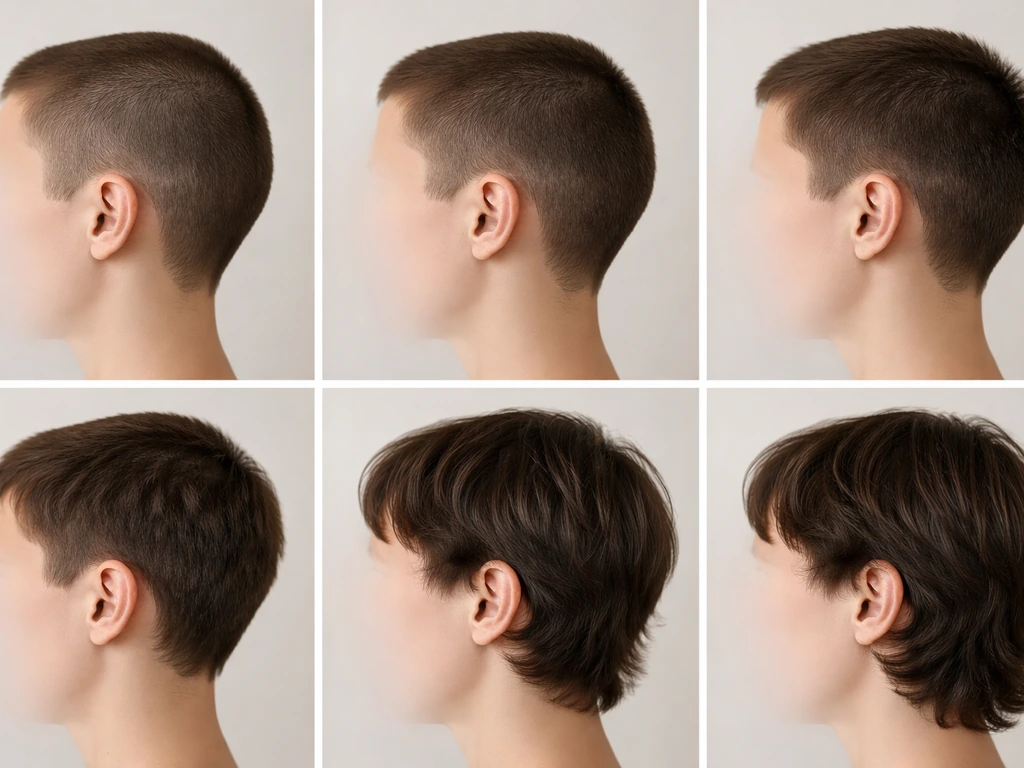
Hair grows about half an inch per month on average, and that's the number to build your expectations around. Summer growth can run slightly faster for some people, but planning around half an inch per month keeps you realistic. Here's what to expect at each stage and what to actually do during it.
| Stage | Approx. Side Length | What It Looks Like | Main Goal |
|---|---|---|---|
| Month 1 | 0–0.5 inch | Stubble or very short growth, may look patchy | Leave it alone, no trimming of sides |
| Month 2 | 0.5–1 inch | Visible growth but too short to style, starts to puff or stick out | Start shaping only the outline, not the length |
| Month 3 | 1–1.5 inches | Classic awkward phase, sides look unruly | Use styling products and clips to manage; no major cuts |
| Month 4–5 | 1.5–2.5 inches | Sides are getting there, some blending is possible | Ask for a blending trim, protect the length |
| Month 6+ | 2.5–3+ inches | Sides are workable, real styling options open up | Refine shape, commit to the look you want |
If you're growing from a shaved undercut where the sides were taken down to the skin, getting back to a full inch of side length takes roughly two to three months. Getting to three inches, where most people feel the grow-out is 'done,' takes closer to five to six months. That's the honest math. It feels long when you're in it, but it goes faster once you have a clear plan for each stage.
How to maintain shape without sabotaging your progress
This is where a lot of people accidentally reset their progress. They go to a salon, the stylist cleans up the sides, and suddenly they're back at square one. The rule during a side grow-out is: trim to shape, not to shorten. That means cleaning up the outline (the edges around your ears, the neckline, the hairline perimeter) without touching the length of the side sections themselves.
When you book your maintenance appointments, be specific. Tell your stylist you're growing out your sides and you only want the perimeter cleaned up. If they ask about the sides, say 'length only, no thinning, no tapering.' Stylists are trained to clean up growth because most clients want it, so if you don't say anything, they'll assume you want the sides tidied. Bring a photo of where you want to end up, not just where you are now.
For most people, maintenance appointments every six to eight weeks are enough to keep the rest of your hair looking intentional while the sides catch up. If your top or back grows faster and starts looking overgrown before the sides are ready, you can trim those sections lightly without touching the sides. Keeping the rest of your hair looking purposeful actually makes the side grow-out less noticeable and less awkward.
Styling tactics for the awkward phase
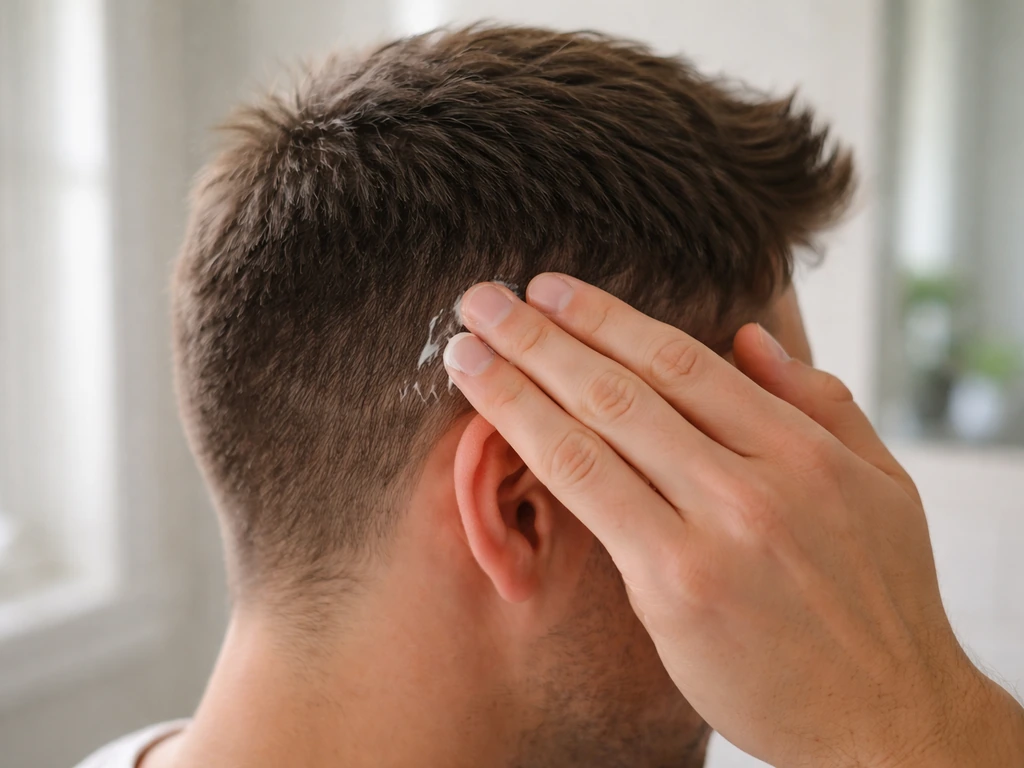
The awkward phase is the stretch between 'clearly short' and 'clearly growing it out with intention,' and the sides are usually the most obvious offenders. But there are practical ways to manage the look at every stage.
Blending and product choices
Once you have at least half an inch on the sides, a light pomade or styling cream can press the sides down and reduce the puffing-out look that makes short growth look messy rather than intentional. Work it through damp hair and smooth the sides downward and slightly back. This buys you a lot of visual cleanliness without cutting anything. For thicker or curlier hair types, a curl cream or light gel can define the texture of the sides so they look deliberate instead of chaotic.
Changing your part
A side part is one of the fastest styling tools for disguising uneven or short side growth. If one side is growing more slowly than the other, try parting your hair toward that side so the longer top hair sweeps over and covers it. Even shifting your part by an inch can dramatically change how visible the shorter side is. This is a low-commitment change you can make every morning with a comb.
Clips, pins, and tucks
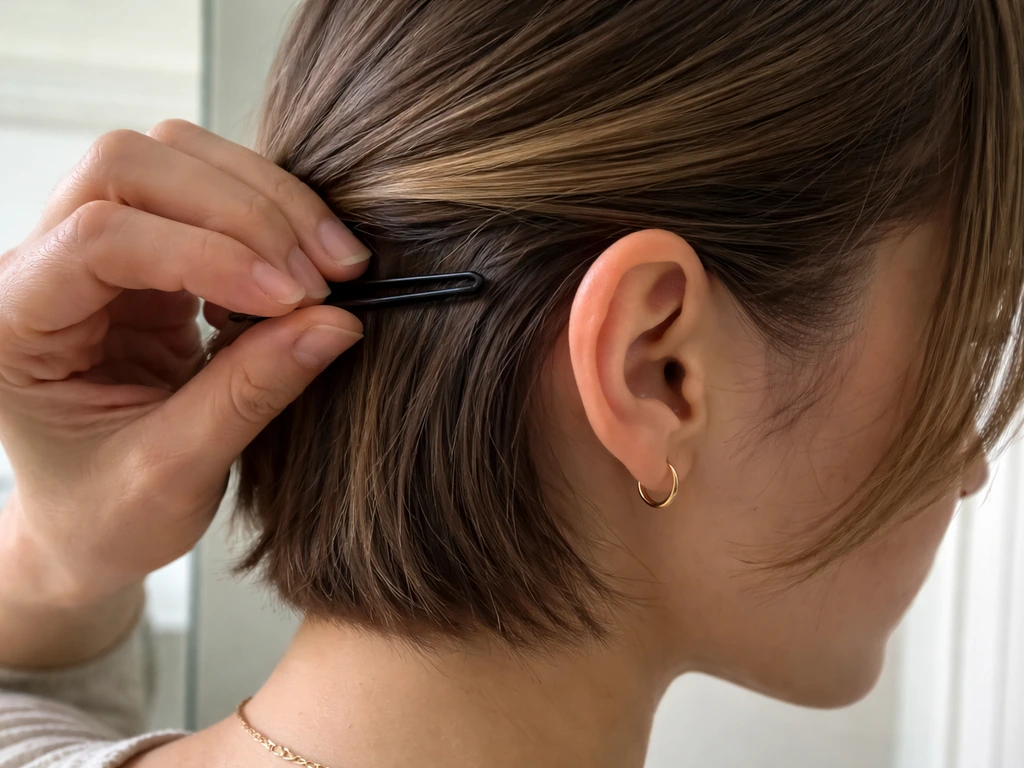
If your sides are growing past your ears but not yet long enough to stay behind your ear naturally, bobby pins and small clips can tuck them back. This works especially well for people growing out a pixie or bob where the sides near the ears are the last section to reach a wearable length. A simple tuck behind the ear with a pin looks intentional and keeps the awkward flyaways under control during the middle months.
Working with layers and undercut lines
If you have an undercut, the disconnection between the short sides and the longer top is the main visual problem. The goal is to gradually soften that line by letting the short sides grow up to meet the top layers. During this process, avoid cutting the top shorter to match the sides, which just prolongs everything.
Instead, ask your stylist to add some texture or layers to the top section so it falls closer to the sides and visually blurs the line. This is called blending or graduation, and it's the single most effective technique for managing an undercut grow-out. Growing out shaved sides specifically has its own set of strategies worth digging into if that's your situation.
If you shaved your head completely, the same patience and trimming-to-shape logic also applies when you work on how to grow out a shaved head shaved sides. Growing out shaved sides can feel slow, but the right blend and trim plan makes the awkward months much easier.
Navigating the bangs-to-sides transition
For people growing out a pixie or fringe, the side sections near the temples often connect to the bangs area. As bangs grow out, they tend to fall awkwardly to the sides. The fix is to work with the direction they naturally want to go: sweep them to the side rather than forcing them straight down or straight across. A small amount of light hold product will train them in that direction over a few weeks. Once the bang section reaches your cheekbone, it starts framing your face naturally and the awkwardness largely resolves.
Common blockers and how to deal with them
Uneven growth between sides
It's completely normal for one side to grow slightly faster than the other. This is usually due to how you sleep (the side you sleep on experiences more friction and can have slower or more damaged growth), your dominant hand side getting more heat tool exposure, or just natural variation in hair follicle density. The practical fix is to style toward the slower side using a part change, and to protect the friction side by sleeping on a silk or satin pillowcase, which reduces breakage. Don't try to even them out by trimming the faster side; let the slower side catch up.
Cowlicks on the sides
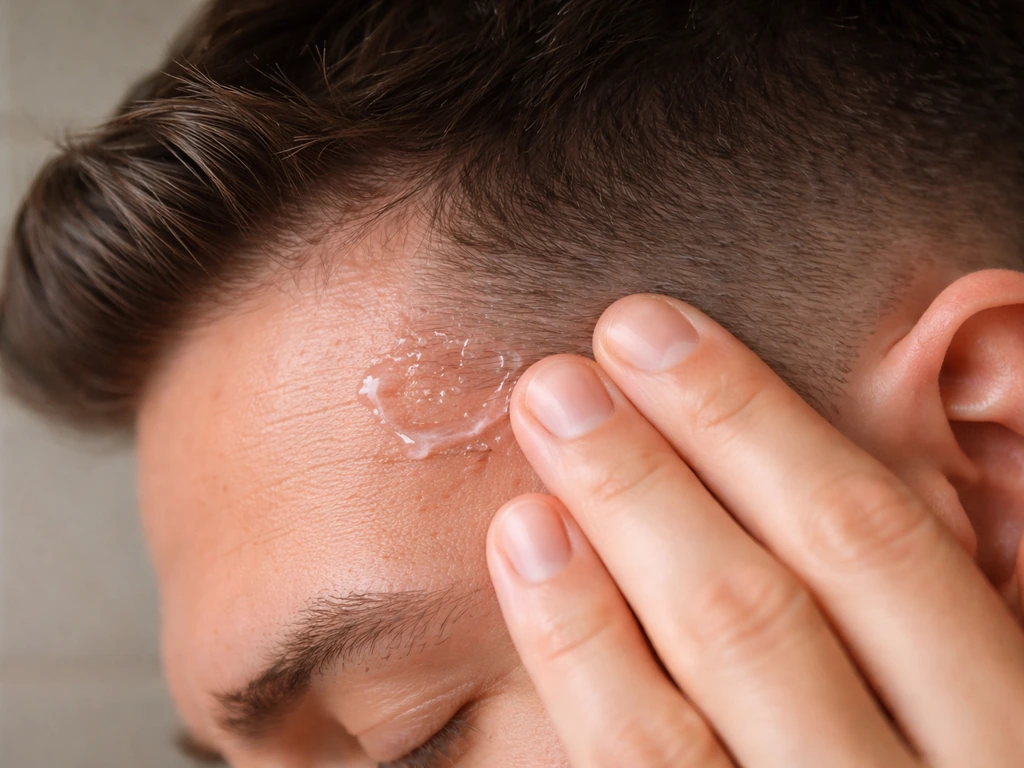
Cowlicks near the temples and along the sides are real and common. They can make growing-out side hair look stubbornly messy because the new growth is fighting its natural direction. The most effective approach is to work with the growth direction rather than against it. [When you blow-dry the sides](https://www.
lorealparisusa. com/beauty-magazine/hair-care/all-hair-types/what-is-a-cowlick), direct the airflow in the direction the cowlick wants to go, not against it. Once the hair gets long enough (usually past an inch and a half), the weight of the hair itself helps flatten most cowlicks. Before that length, a lightweight gel or pomade pressed in the growth direction is your best daily tool.
If you’re trying to hide short, broken, or frizzy hair around the face as your sides grow, focus on gentle styling and breakage prevention while you keep the rest of your grow-out on track how to grow out broken hair around face.
Undercut regrowth and razor bumps
If your sides were shaved with a razor, you may deal with razor bumps or skin irritation as the hair grows back. Keep the area clean, avoid re-shaving over the bumps, and use a gentle, fragrance-free moisturizer on the skin as the hair grows in. Razor bumps typically resolve once the hair gets past the surface of the skin. If you're also dealing with the look of a very sharp undercut line, know that it will soften noticeably once the sides reach about an inch, and by two inches the line is usually easy to blend away with a bit of product or a light texturizing trim.
Texture shifts during regrowth
Some people notice that new side growth comes in with a different texture than the rest of their hair, especially after a long period of shaving or close-cutting. This is usually temporary. As the hair grows past an inch or so, it starts to match the texture of your established hair more consistently. If you notice a permanent texture difference (often a result of chemical processing or heat damage history), layering and texturizing techniques from your stylist can help blend the two textures visually while the newer growth continues.
Color, chemicals, and keeping the sides looking intentional
If your hair is colored or chemically treated, growing out your sides adds a layer of complexity because regrowth shows differently on processed hair. The gap between your color and your natural root becomes visible fast, and on the sides it's often more exposed than anywhere else.
For colored hair, the practical approach during a side grow-out is to manage regrowth with less-damaging refresh options between full color appointments. A gloss or demi-permanent toner can blend new growth at the sides for roughly three to four weeks at a time, which buys you breathing room without committing to permanent color that could further weaken the growing hair. If you're on a longer schedule, a root shadow technique, where color is applied to soften the transition rather than match it perfectly, can last anywhere from six to ten weeks and makes the grow-out look deliberately blended rather than neglected.
For hair that's been chemically relaxed or permed, new side growth will come in with your natural texture and create a visible line of demarcation. This is one situation where working with a stylist you trust is really worth it, because managing that line while protecting the integrity of the growing sides requires careful technique. Avoid overlapping chemical treatments onto the new growth until the sides have enough length to handle processing without breaking, usually a minimum of half an inch of new growth.
In general, the rule for chemically treated hair during a side grow-out is: the less you process the new growth, the healthier and longer it will get. Lean on glosses, toners, and root-blending techniques to stay looking polished, and hold off on full-strength permanent color or relaxers on the sides until you've got enough length to work with safely.
What actually moves the needle
The grow-out process is mostly about patience and protecting your progress. The people who get stuck are usually either trimming their sides too aggressively at maintenance appointments or trying to rush the process with aggressive treatments that cause breakage. The people who come out the other side with the hair they wanted are the ones who committed to a clear stage-by-stage plan, communicated clearly with their stylist, and used styling tricks to feel confident while waiting. You don't have to look bad during the grow-out. You just have to manage each stage with the right tools instead of fighting it.
FAQ
If my sides are still under half an inch, should I cut them for shape or just wait?
At under half an inch, skip any “shape” cuts that touch the side length, because you still have almost no buffer to blend. Focus on a clean perimeter only (edges around the ear and neckline) and use light styling pressure (small amount of cream or gel) to lay the growth down until you reach about half an inch.
How do I prevent my stylist from shortening the sides during “clean up” visits?
Bring a clear target photo and ask for an outline clean up only. Use specific wording like “do not taper, do not thin, do not remove length from the side section, only clean the perimeter.” If you can, keep your hair slightly dry and ask them to show you the section they will cut before they start.
What should I do if my top grows out faster and starts looking bulky while the sides lag?
Trim or lightly shape the top without touching the side section. Ask for removal from the top length or blending at the top, not around the ears, and keep the side perimeter protected. This reduces the “helmet” effect while you let the sides catch up to the top.
Can I use heat styling to speed up the side grow-out?
You cannot speed up growth with heat. If you use heat, keep it on the lowest effective setting and prioritize blow-drying technique (direct airflow in the cowlick’s direction) over repeated hot-tool passes, because heat damage can create a permanent texture mismatch that makes the grow-out look worse.
My sides grow in different textures, will that always look obvious?
It often improves as the new growth length passes roughly an inch, because hair aligns and blends with your established pattern. If the difference seems permanent or frizzy at the root, consider stylist-applied blending like face-framing layering or texturizing, but wait until you have at least an inch of length so the stylist can shape without removing too much.
How can I tell if the “problem” is slow growth versus breakage?
If you’re not gaining length but you do see lots of short, uneven pieces or flyaways along the sides, breakage is likely. Check for heat or friction sources (sleeping on cotton, frequent towel rub, heavy product buildup), and adjust protection (satin pillowcase, gentle drying, lighter product) before you assume your hair grows slowly.
What’s the safest way to handle razor bumps or irritation while growing out shaved sides?
Stop re-shaving over the bumps, keep the area clean, and use a gentle fragrance-free moisturizer to support the skin barrier. Once the hair is past the skin surface (often after enough regrowth), irritation usually calms, and you can return to normal styling without scrubbing.
Should I keep styling every day during the awkward phase?
You should style enough to keep the sides controlled, but avoid aggressive daily manipulation that causes snagging. Use a small amount of product, detangle gently, and consider “low-move” options like tucking behind the ear with a bobby pin or switching to a side part that relies on natural sweep rather than constant re-combing.
How long should I wait before trying to blend an undercut line?
Don’t try to fully erase the line when the sides are very short. In most cases, you’ll see meaningful softening around the one-inch mark, and by about two inches the line becomes much easier to blur with product and a light texturizing trim.
Can I use a fade blend guide if my sides are uneven on left versus right?
Yes, but avoid fixing by cutting only the longer side. Use a part shift to cover the shorter side, style toward the slower side, and protect the friction-prone side during sleep. Only consider trimming when both sides are in the same overall length range, so you don’t create a new imbalance.
What should I ask for if my sideburns were shaved very high?
Ask your stylist to treat sideburns as part of the face-framing perimeter and to keep a clean outline while you regrow. Once sideburn hair reaches a wearable length, request gradual blending into the adjacent side section so it doesn’t look like a separate patch.
My hair is colored, how often can I refresh without damaging the sides?
Between full color appointments, prefer lower-strength options like gloss or demi-toner to soften the regrowth at the sides for a few weeks. If you notice the root line popping more on the sides than the rest of your hair, ask about a root-shadow approach to make the transition look intentional without fully matching every regrowth detail.