
You can grow back the corners of your hairline, but how fast and how completely depends almost entirely on what's causing them to recede in the first place. Traction damage from tight styles can recover quickly once you stop the pulling. Androgenetic alopecia (male pattern hair loss) responds well to treatment but needs the right products started soon. Scalp inflammation or breakage is very fixable. The first job is figuring out which situation you're actually in, because the action plan is different for each one.
How to Grow Corners of Hairline in Men Step by Step

Marcus Vickers
21 Apr 2026
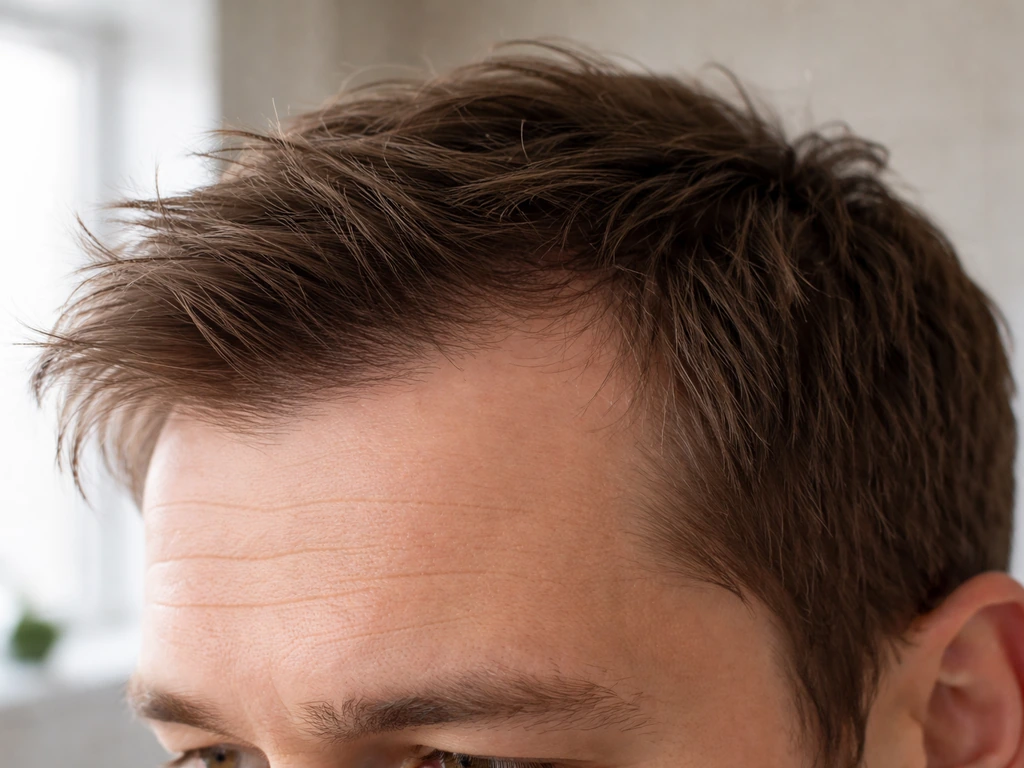
Figure out why the corners are receding
The frontotemporal corners are where several different causes tend to show up first, which makes them easy to misread. Take ten minutes to honestly assess what's going on before you buy anything or change your routine.
Male pattern hair loss (androgenetic alopecia)
This is the most common cause of corner recession in men. It's driven by androgen sensitivity, which causes hair follicles to gradually miniaturize over time, producing thinner, shorter hairs until they eventually stop producing visible hair at all. The corners and temples are usually the first places this shows up, sometimes starting in your early 20s. Key signs: the recession is symmetrical on both sides, the hairs at the corners look thin and wispy (not broken off), there's no scalp irritation or flaking, and you may notice the same pattern in a father or grandfather. If you look closely at the hairline edge with good lighting, you might see very fine, almost transparent hairs rather than a sharp, clean edge, which is the follicle miniaturization process in action.
Traction alopecia
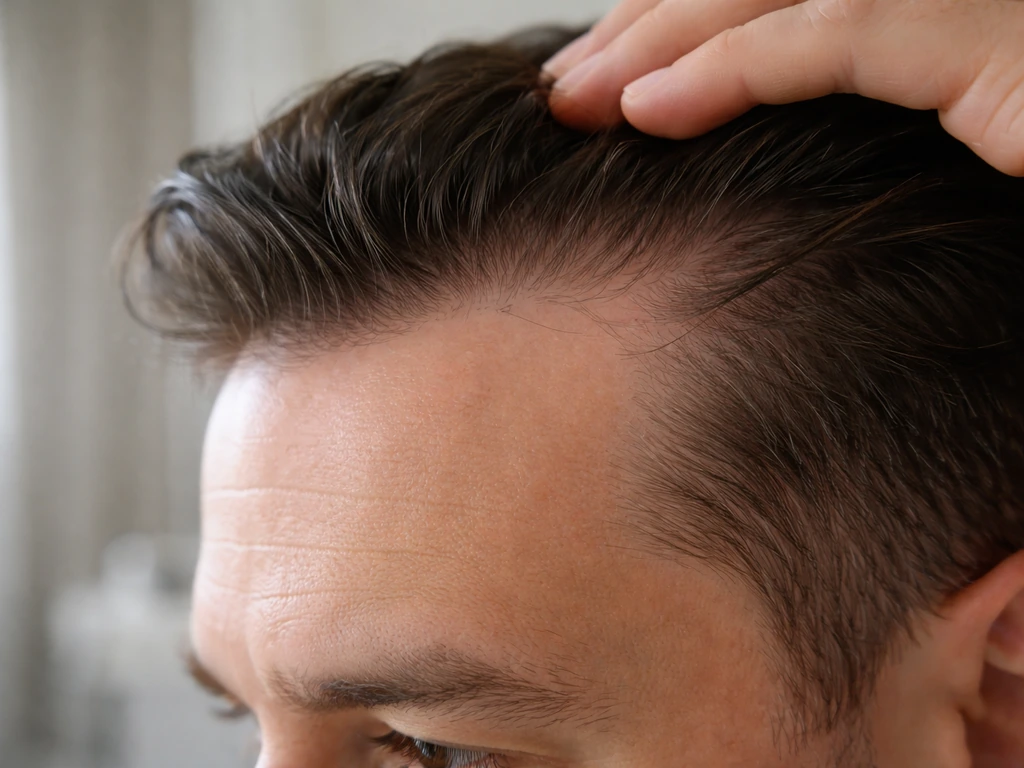
If you wear tight hairstyles, braids, cornrows, high ponytails, dreadlocks, or even use a lot of gel/pomade that pulls the hairline taut, traction is a real possibility. Traction alopecia presents along the marginal hairline, meaning the very edge, particularly at the temples and front corners. Look for small pimples or bumps near the hairline (folliculitis), broken hairs that look snapped rather than thinned, and sometimes a 'fringe sign', which is a narrow strip of fine retained hairs right along the outermost hairline edge where tension is highest. The good news: if it's caught early, this type of hair loss can regrow once you stop the traction.
Breakage and mechanical damage
This one often gets confused with recession. If you're using a lot of heat, over-processing with color or bleach, or aggressively brushing or styling around the hairline, you can break hairs at or near the root. If you are growing out broken hair around the face, the key is to stop heat and harsh processing so the damaged ends can be replaced by healthier growth break hairs at or near the root. The difference from true recession: broken hairs look short and choppy rather than fine and tapered, and you'll often see uneven lengths around the corners rather than a smooth recession arc. Fixing this is mostly about stopping the damage.
Scalp health issues (seborrheic dermatitis, inflammation)
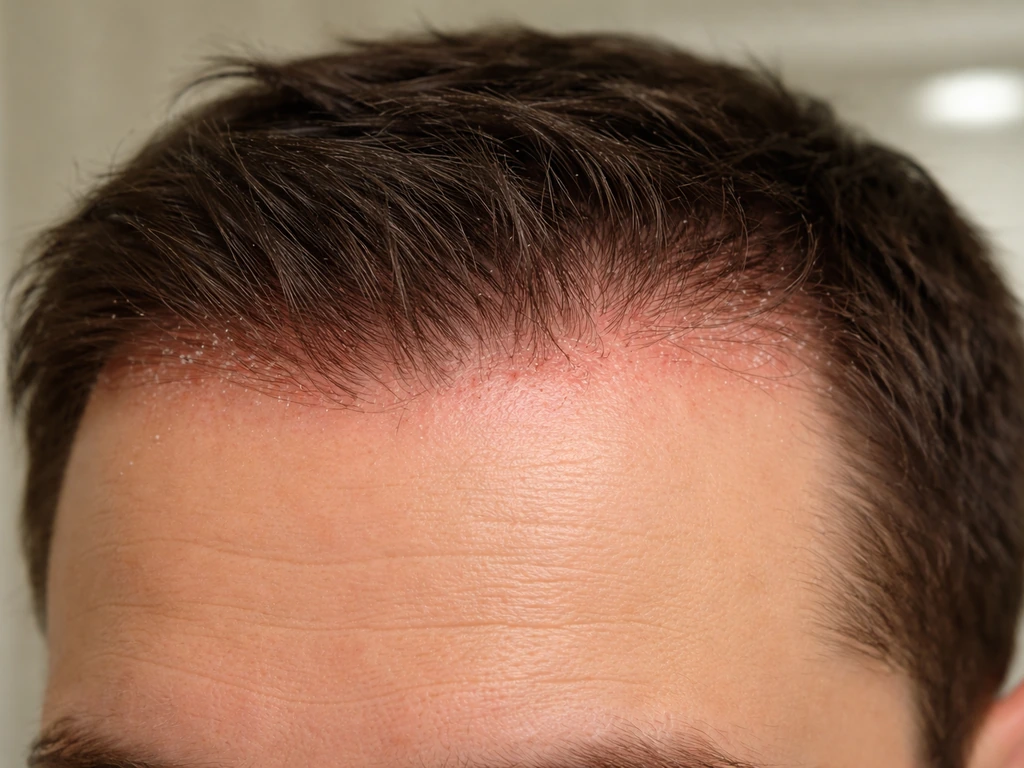
Chronic scalp inflammation, dandruff-level seborrheic dermatitis, or fungal issues can contribute to hairline thinning by creating an environment where follicles are stressed. Signs include visible flaking, itching, redness around the hairline, or an oily-but-itchy feeling that never quite clears up. This is treatable directly and often speeds up regrowth when resolved.
A quick self-check to narrow it down
- Is the recession symmetrical on both corners? More likely pattern loss.
- Do you wear tight styles or use heavy product that pulls at the hairline? Consider traction.
- Are the hairs at the edge broken-looking, not just thin? Think breakage or traction.
- Is there itching, flaking, or redness at the hairline? Scalp health is a factor.
- Do you have a family history of receding hairlines? Pattern loss is more likely.
- Did the recession happen gradually over years or quickly over months? Sudden change warrants a doctor visit.
Stop damage right now: habits, haircuts, and styling changes
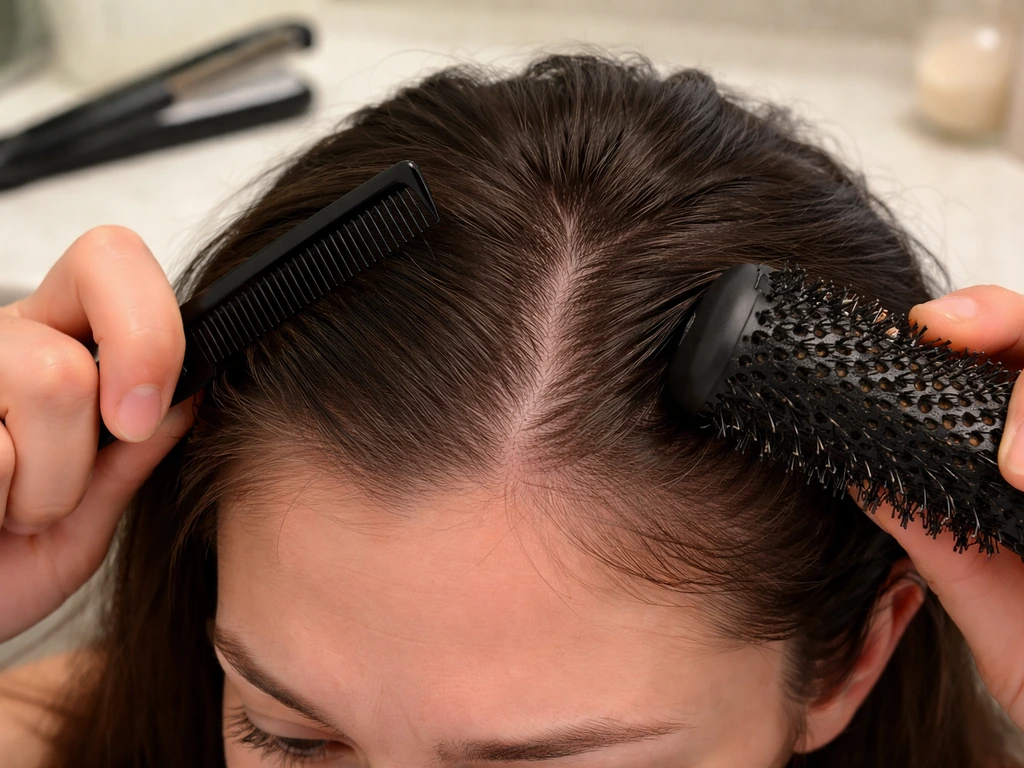
Whatever the root cause, stopping any behavior that's worsening the corners is step one, and it costs nothing. The follicles you still have at the corners are more fragile than the ones in the center of your scalp, so they need gentler treatment while you work on regrowth.
Reduce traction immediately
If you're wearing anything that pulls at the hairline, stop today. Swap tight styles for looser ones. If you use a brush that catches and tugs at the corner hairs, switch to a wide-tooth comb used gently. Sleep on a satin or silk pillowcase if your corners are dry or fragile, since cotton creates more friction. For growing out shaved or undercut sides, be especially careful about the transition zone at the temples where new growth is delicate. If you want to know the best approach for how to grow sides of hair, start by identifying whether your issue is traction, breakage, or pattern hair loss growing out shaved or undercut sides. If you want to know the best approach for how to grow your side hair, start by identifying whether your issue is traction, breakage, or pattern hair loss.
Rethink the haircut
This sounds counterintuitive, but a slightly longer cut at the corners actually protects them while you regrow. Ask your barber to avoid hard-lining the corners and temples with a razor or trimmer, since that sharp edge removes the very hairs you're trying to nurture. Instead, ask for a natural, soft taper that blends the corners without cutting into the hairline. Keeping some length on top also gives you styling options to work with later.
Handle the hairline gently
- Pat dry with a towel, don't rub, especially around the hairline.
- Avoid rubber bands or elastic bands anywhere near the front of your hair.
- If you use heat tools, keep them away from the corners entirely during regrowth.
- Limit heavy waxes and pomades that require scrubbing to remove, which stresses the hairline.
- Don't pick or scratch at the hairline even if it itches. Address the itch with the right product instead.
A regrowth routine for corner hairline: scalp care and proven options
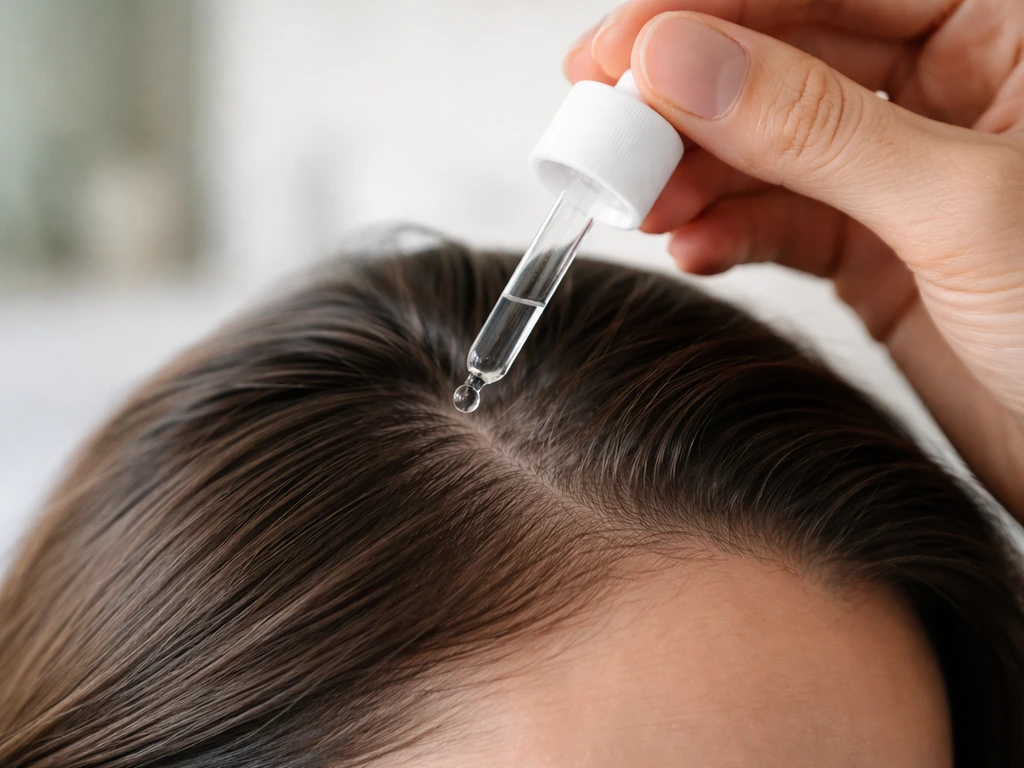
Once you've stopped making things worse, you can start actively supporting regrowth. The right approach depends on your cause, but most men doing this seriously will combine topical treatment with good scalp hygiene.
Minoxidil: the most accessible starting point
Topical minoxidil 5% is the FDA-approved first-line treatment for male pattern hair loss and is the most evidence-based over-the-counter option you can start today. It works by extending the growth phase of hair follicles and improving blood flow to the scalp. Apply it directly to the corner and temple areas specifically, not just the crown. The standard recommendation is twice daily, though many men find a consistent once-daily habit easier to maintain long-term. Expect visible results around three to six months of consistent use. There will likely be a shedding phase around two to six weeks in, which feels alarming but is normal and a sign the product is working. DailyMed’s FDA labeling for topical minoxidil 5% notes that results may be seen as early as 2 months with twice-daily use, and that a temporary increase in hair loss can occur at initiation for up to about 2 weeks shedding phase around two to six weeks in. The catch: minoxidil works only as long as you use it. Stopping it usually means losing the regrown hair within a few months.
Finasteride: the prescription option worth knowing about
For androgenetic alopecia specifically, oral finasteride at 1 mg daily is FDA-approved and has solid clinical backing, including large trials in over 1,500 men showing it promotes hair growth and slows loss. It works by reducing DHT, the androgen that drives follicle miniaturization. The research is honest that finasteride is generally more effective at the vertex than the frontal/corner area, but a specific study in men with frontal thinning showed meaningful benefit there too. Large observational studies suggest the risk of sexual side effects is lower than older reports suggested, but it's still worth discussing with a doctor. Finasteride requires a prescription and isn't the right first step for everyone, but if you've identified pattern loss as your cause, it's absolutely worth asking about.
Dutasteride: a stronger alternative
Dutasteride is similar to finasteride but reduces scalp DHT more aggressively (roughly 51% versus 41% in head-to-head comparisons). It's used off-label for hair loss in many countries. If finasteride hasn't worked well after 12 months, it's a reasonable conversation to have with a dermatologist.
Scalp care for inflammation and dandruff
If seborrheic dermatitis or scalp inflammation is part of your picture, addressing it directly helps. Ketoconazole 2% shampoo used two to three times per week is a well-supported option for seborrheic dermatitis and has some evidence for supporting hair health at the same time. Zinc pyrithione and selenium sulfide shampoos are also reasonable options. If you suspect a fungal infection (tinea capitis) rather than just dandruff, you need a doctor, because topical shampoos alone won't cure it and systemic antifungals are required.
Microneedling as a complement
A derma roller (0.5 to 1.5 mm) used on the scalp once a week, combined with topical minoxidil, has shown better total hair count results than minoxidil alone in systematic reviews. Apply minoxidil after rolling on the same day. This isn't essential, but if you're already doing minoxidil and want to add something backed by evidence, microneedling is the most accessible next step.
Low-level laser therapy (LLLT)
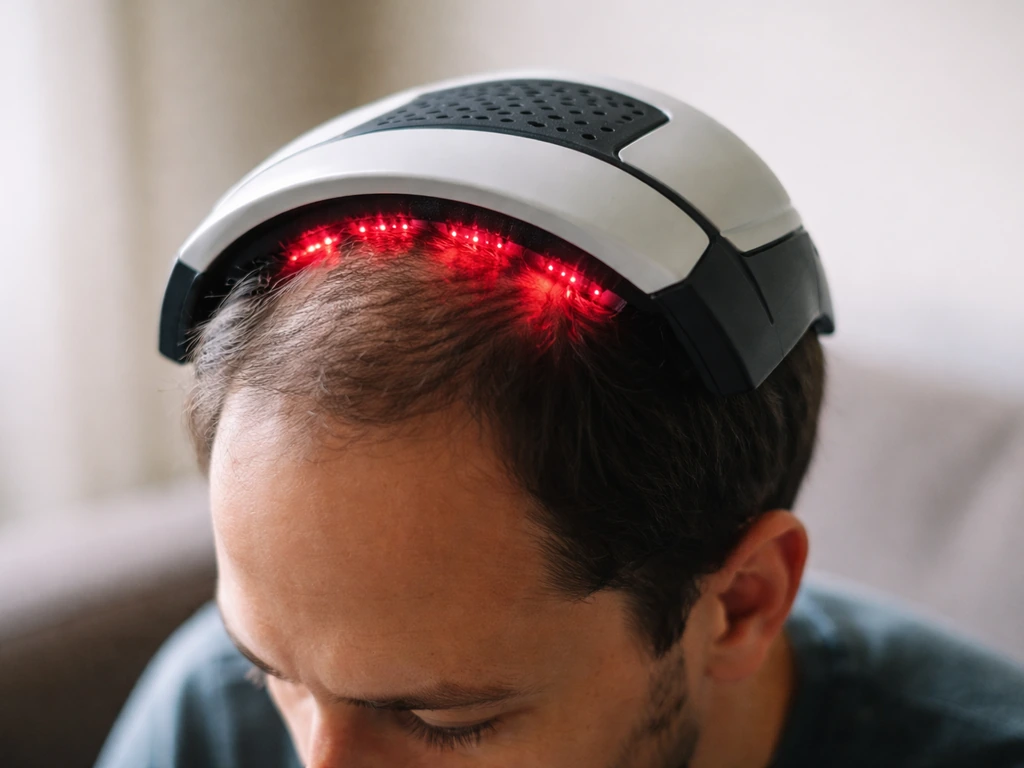
FDA-cleared laser combs and caps have shown improvements in hair parameters versus sham devices in randomized controlled trials. The FDA’s 510(k) summary for a laser hair growth cap states it is indicated to promote hair growth in males with androgenic alopecia meeting specific classification criteria (Norwood-Hamilton IIa-V) and provides supporting regulatory labeling language blank" rel="noopener noreferrer">FDA-cleared laser combs and caps. They're an add-on option, not a standalone solution, and cost varies widely. If budget allows and you want a device-based complement to minoxidil and/or finasteride, it's legitimately supported by evidence.
Lifestyle and nutrition support that actually helps growth
Diet and lifestyle won't regrow a truly miniaturized follicle on their own, but deficiencies can slow or block regrowth even when you're doing everything else right. Worth fixing these before spending money on advanced treatments.
The nutrients that matter most
Iron (specifically serum ferritin), vitamin D, and zinc are the three most consistently associated with hair loss risk when deficient. A systematic review of micronutrients and androgenetic alopecia found deficiencies in these three specifically tied to increased hair loss risk. Getting these checked via a simple blood test is worth it, especially if you've been eating restrictively, are vegetarian/vegan, or live in a low-sunlight climate. Correcting a deficiency makes a real difference. Taking supplements when you're not deficient? Less so. Biotin specifically: the evidence does not support biotin supplements for hair growth unless you have a documented biotin deficiency, which is actually quite rare.
Protein intake
Hair is made of keratin, which is protein. If you're consistently undereating protein, your body will deprioritize hair growth. Aim for at least 0.7 grams of protein per pound of body weight daily, more if you're very active. This isn't about supplements, just consistent food.
Sleep and stress
Chronic stress and sleep deprivation are real contributors to diffuse hair shedding (telogen effluvium), which can accelerate corner thinning that might otherwise have been gradual. This isn't an excuse to blame stress for everything, but if you're sleeping less than six hours and running high stress, addressing that is part of the plan, not optional.
What results look like: timeline, shedding, and progress checks
Managing expectations here is genuinely important. The corners are slower to respond than the crown or mid-scalp in most cases, so don't judge your results at six weeks. The corners are slower to respond than the crown or mid-scalp in most cases, so don't judge your results at six weeks, especially if you're also asking how to grow out a shaved head and managing awkward regrowth phases.
| Timeframe | What's normal | What to watch for |
|---|---|---|
| Weeks 1-4 | No visible change; scalp adjusting to new routine | Increased shedding is normal if starting minoxidil |
| Weeks 2-6 | Possible initial shed (telogen effluvium) from minoxidil; looks worse before better | Shedding more than a few weeks suggests checking in with a doctor |
| Months 2-3 | Faint new growth may appear; hairs are very fine and easily missed | No change at all by month 3 with consistent use: reassess cause |
| Months 3-6 | Visible improvement in density expected with minoxidil; corners start filling in | Benchmark progress with monthly photos taken in identical lighting |
| Months 6-12 | More substantial regrowth; hairline edge becomes less sharp or sparse | If no improvement after 6 months consistent use, see a dermatologist |
| 12+ months | Maximum results usually reached; ongoing maintenance needed | Stopping treatment typically reverses gains within 3-6 months |
The best way to track progress is to take a consistent photo every four weeks from the same angle, in the same lighting (natural light by a window works well). Don't rely on daily observation in the mirror because day-to-day variation in hair styling, lighting, and how your hair falls makes it impossible to judge accurately. Monthly photos are genuinely the way to see what's actually happening.
Camouflage and style while you regrow (awkward phases)

The corners of the hairline go through some genuinely awkward-looking stages during regrowth, where new growth is fine and patchy and nothing sits quite right. Here's how to work with that rather than against it.
Haircuts that help
A textured crop or a short fringe that falls slightly forward over the forehead softens the visual gap at the corners without requiring long hair. A side-swept style where the top hair falls diagonally across the forehead is a classic corner-gap minimizer. Ask your barber specifically to leave the hairline soft, meaning no hard line at the temples, so any sparse areas blend into the cut rather than being highlighted by a sharp edge. If you're also growing out shaved sides or an undercut, you're navigating a similar coordination challenge with the sides, which is its own process to plan around.
Products that make corners look fuller
Matte clay or paste adds volume and texture to fine corner hairs without the wet look that makes thinning areas more visible. Avoid heavy, glossy pomades which emphasize gaps. Hairline fibers (like Toppik or similar keratin fiber products) bond to existing hairs and can genuinely fill the appearance of sparse corners for the day. They wash out cleanly and aren't a long-term solution, but they're a confidence tool for days that matter.
Styling stage by stage
- Months 1-2: Keep it short and textured on top. Don't try to cover corners with a comb-over, it tends to make things more obvious. A short, even cut looks more intentional.
- Months 3-4: As new corner growth comes in fine and wispy, matte texture products can give it grip and make it look more substantial than it is.
- Months 5-6: Side-swept styles or a loose forward-swept fringe become more viable as corner growth has more length to work with.
- Months 6-12: You have real styling options now. Let the corners grow with the rest of the top and blend them into your preferred length.
The awkward phase is real and it's okay to acknowledge it. The goal during this time isn't perfection, it's keeping your hair in a state that looks deliberate even if it's not quite where you want it yet. Confidence matters more than the haircut at this stage.
When to see a dermatologist and what to ask about
Some situations genuinely need professional evaluation, and pushing through them with over-the-counter products wastes time and money.
Red flags that mean: see a doctor now
- Rapid corner or hairline recession over weeks rather than months
- Patchy, circular, or asymmetrical loss that doesn't match a typical hairline pattern
- Significant scalp pain, burning, or tenderness at the hairline
- Visible scarring, smooth scalp skin where hair once was (may indicate scarring alopecia)
- Hair loss accompanied by unusual fatigue, weight change, or other body symptoms (could signal thyroid issues or other systemic causes)
- No response at all after six months of consistent, correct minoxidil use
What to ask the dermatologist or trichologist
Ask directly whether trichoscopy (dermoscopy of the scalp) can help distinguish pattern loss from traction or another cause. Trichoscopy can identify miniaturization patterns, broken hairs, empty follicles, and scalp signs that make diagnosis much more precise than a visual check alone. Ask whether your ferritin, vitamin D, zinc, and thyroid levels (TSH) should be tested, since these are commonly checked in a thorough hair loss workup and deficiencies in any of these can stall regrowth. If pattern loss is confirmed, ask specifically about finasteride 1 mg daily, dutasteride, PRP injections, or LLLT as options beyond topical minoxidil. PRP (platelet-rich plasma) injections have solid evidence for increasing hair density in androgenetic alopecia and are worth discussing if you're looking for more aggressive treatment.
About finasteride side effects
If you're hesitant about finasteride because of reported sexual side effects, it's a fair thing to raise with your doctor. Large population-based studies have found that the incidence of erectile dysfunction in finasteride 1 mg users was similar to unexposed men in the main analysis. The risk is real but appears lower than earlier reports suggested. Having that conversation with a doctor who knows your full health picture is the right approach, not avoiding the medication based on internet horror stories alone.
Your starting action plan
Here's what to do right now, in order. Don't wait to have everything perfect before starting, because follicles that are still alive but struggling respond much better to early intervention than to waiting.
- Assess your cause honestly using the self-check above. Is this pattern loss, traction, breakage, or scalp health? Your plan branches from here.
- Stop any traction, heat, or mechanical damage to the hairline today.
- Tell your barber to leave the corners soft and avoid hard-lining the temples at your next cut.
- Start topical minoxidil 5% applied to the corners specifically, twice daily if possible, once daily if that's what you'll actually maintain. Commit to at least six months.
- If you have scalp flaking or itch, add a ketoconazole 2% shampoo two to three times per week.
- Get your ferritin, vitamin D, zinc, and TSH checked, especially if you've never had them tested. Fix any deficiencies before assuming supplements aren't working.
- Take your first progress photo today in natural light. Set a monthly reminder to repeat it.
- If pattern loss is your diagnosis, make an appointment to discuss finasteride with a GP or dermatologist.
- If you see no meaningful change after six months of consistent treatment, see a dermatologist and specifically ask about trichoscopy, PRP, or prescription options.
Growing back corner hairline takes time and patience, but starting with the right cause and the right tools makes the difference between real progress and months of spinning wheels. If you want to grow out your sides, treat the corners and temples like a specific zone and follow the plan for your cause corner hairline. Pick the next step you can do today and build from there.
FAQ
How long should I wait to know whether my corner hairline is actually improving?
If the corners look thinner because the hairs are being pulled out or broken, you should see the edge stabilize within weeks once traction or heat is stopped. True regrowth, especially for pattern loss or inflammation, typically takes months, so the key early win is “less worsening” before you expect obvious new coverage.
Can I just use minoxidil on my crown, or does it need to be applied to the corners too?
Yes, applying minoxidil only to the crown can miss the affected follicles at the front corners and temples. For corner-specific thinning, use it directly on those areas in the same routine you would use for the top, and be consistent with the schedule you choose (once or twice daily).
What’s the best way to track whether shedding or regrowth is happening at the corners?
You should not compare progress by how the hair looks on different days. Use the same camera distance, lighting, and parting, and take photos every four weeks. Also track “shedding versus thinning,” if you see increased shedding around weeks 2 to 6 after starting minoxidil, that can be expected and not a sign you should quit immediately.
If I start eating better, will my corner hairline regrow without minoxidil or other treatments?
No, changing diet or supplements alone rarely recreates hair from a miniaturized follicle. That said, correcting a documented deficiency (commonly ferritin, vitamin D, zinc) can remove a barrier to regrowth, so the highest-value step is getting labs if you suspect low intake or restricted eating.
If I start minoxidil and then need to stop, what should I expect for my corners?
If you stop minoxidil, the regrown hairs usually fade within a few months. If you are planning to discontinue, discuss tapering or alternative maintenance plans with your clinician, because most corner regrowth gains are not “permanent” without ongoing treatment.
Should I take biotin to grow the corners of my hairline?
Biotin is unlikely to help hair growth unless you are truly deficient, which is uncommon. Instead of adding biotin blindly, consider a targeted hair-loss blood panel if you have thinning plus fatigue, brittle nails, heavy shedding, or dietary restriction.
Can I microneedle if I have dandruff or scalp irritation around my hairline?
Microneedling can be a useful add-on, but you should not do it on actively irritated, inflamed, infected, or very flaky scalp. If you have itching, redness, or oozing near the hairline, treat the scalp first and get medical guidance before rolling.
How can I tell the difference between traction, breakage, and pattern loss without overthinking it?
For most people, the earliest “actionable” sign is whether the hair at the outer edge is thin and wispy versus broken and choppy, and whether there is flaking or bumps. If you are unsure, get trichoscopy, because visual guessing often delays the correct treatment by months.
Are laser combs or caps worth it for corner hairline regrowth, or should I prioritize medications first?
Laser devices (combs or caps) are add-ons, so think of them as complementary, not a replacement for minoxidil or DHT-focused treatment when pattern loss is involved. If you use them, plan to stay consistent over months because the effect is incremental compared to first-line meds.
Can hairline fibers replace treatments for growing the corners back?
Hairline fibers can be helpful for appearance on sparse days, but they only mask existing hair. They can be a short-term confidence tool while your treatments take effect, and you still need to address the underlying cause for real density return.
What haircut or styling changes matter most if I’m also growing out shaved sides or an undercut?
You can safely adjust styles without waiting, but be careful about the “transition zone” at the temples if you are growing out an undercut or shaved sides. Avoid techniques that create constant tension across that edge, and ask for a soft blend instead of a hard razor line that removes fragile corner hairs.
When should I stop DIY and see a dermatologist for my receding corner hairline?
Yes, consider medical evaluation if the corners are advancing quickly, you have patchy loss that looks more like scarring, significant burning or pain, or symptoms that suggest fungal infection (like persistent itching with visible flaking). In those cases, OTC products alone may waste time and delay the right treatment.