
Growing 360 waves is a process of training your hair's natural curl pattern into a full-circle ripple that wraps around your entire head. If you want more detail on consistency and timing, review how to grow waves using the routine and compression steps that build the pattern over weeks. You do that through consistent brushing, compression with a durag, and a moisture-first routine. It takes real time (most people see a recognizable pattern between 4 and 12 weeks depending on their hair type and starting length), and the awkward in-between phase is completely normal. You don't need to cut and restart. You just need the right steps, the right tools, and some patience.
How to Grow 360 Waves Through Every Awkward Stage

Marcus Vickers
12 Jun 2026
What 360 waves actually are and what you need to start
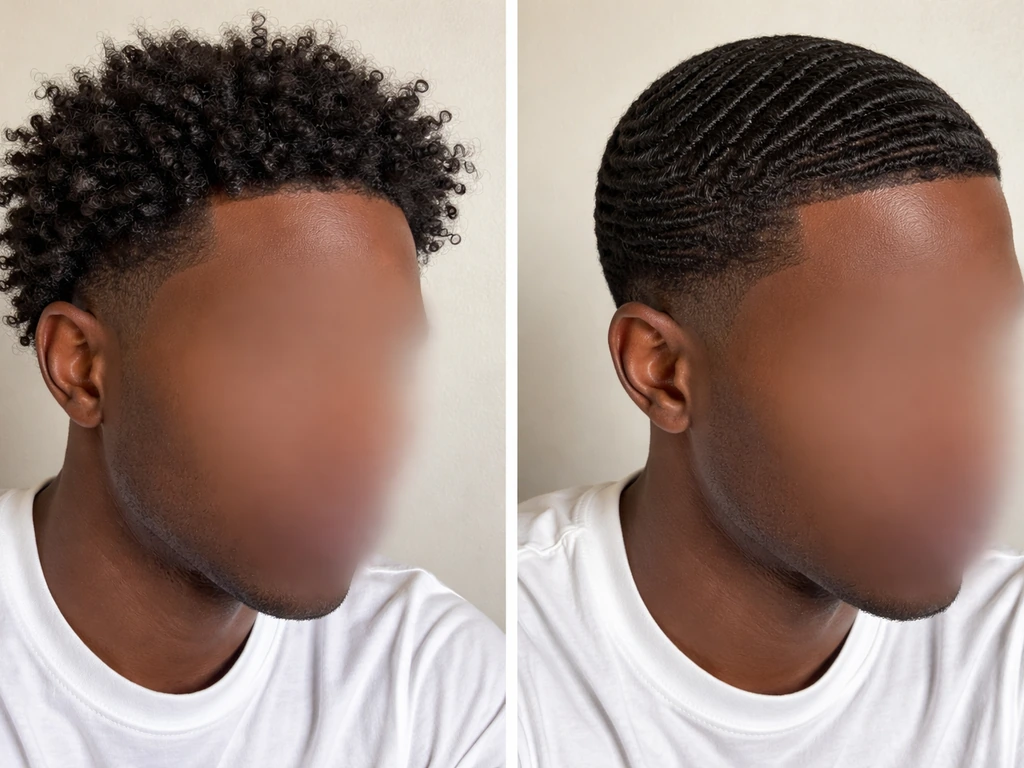
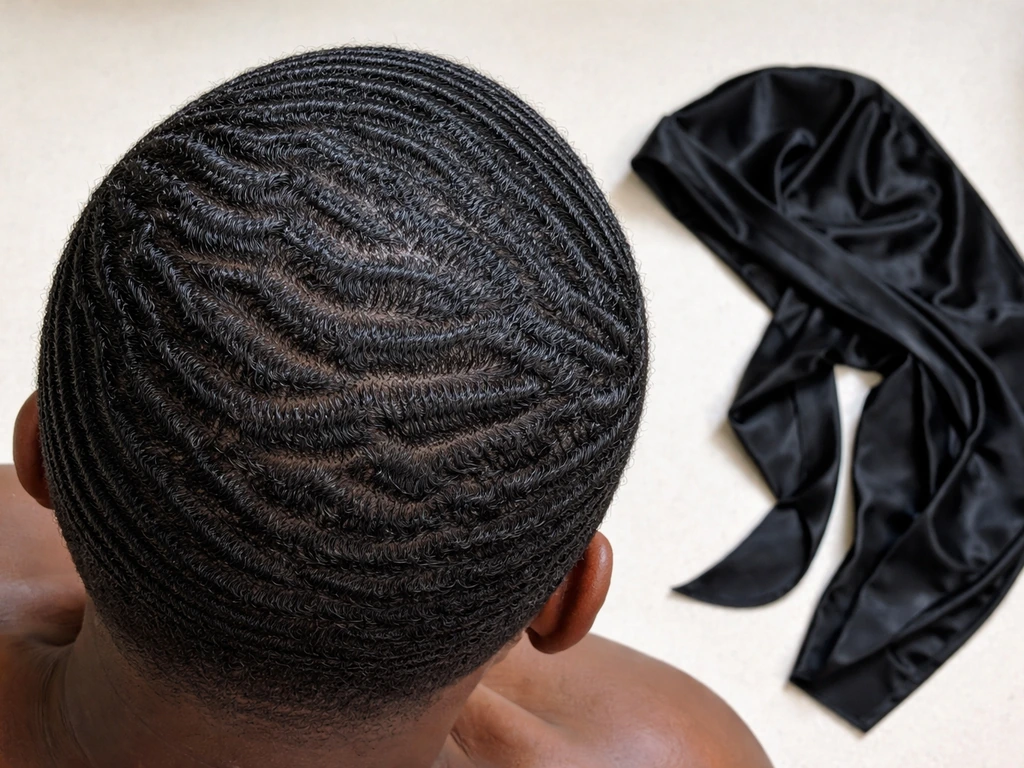
360 waves are a hairstyle where your natural curl or coil pattern gets trained to lie flat against your scalp in a rippling, wave-like shape that circles all the way around your head, hence the "360." The waves aren't chemically created or texturized. They're your actual curl pattern being consistently pushed down in a uniform direction until it memorizes that shape. What makes the 360 pattern special is that continuity: the waves connect from your crown, over your temples, around the back, and meet up again without gaps or flat spots breaking the circle.
To start building the pattern, you need a few baseline things in place. First, hair length: you generally need at least a 1. 5 guard (roughly 3/16 of an inch) or more to see waves form. If you just had a tight fade or buzz cut, give it one to two weeks of growth before you begin the routine.
If you're growing out from a longer style like a bob, undercut, or tapered cut, you may actually be closer to ready than you think. Second, you need to know your hair texture. Waves form most easily on type 3 and type 4 hair (wavy, curly, coily), but looser curl patterns can also develop waves with consistent work. The tighter your curl pattern, the more defined your waves tend to look once they form.
Third, you need a basic routine in place before the waves show up. Hair that's dry, overly damaged, or inconsistently treated will resist the pattern, so getting your moisture balance right is step one.
Building a wave-friendly hair routine
Your routine is the foundation everything else builds on. Waves need hair that's moisturized, clean, and not overly stripped, so the way you wash, condition, and detangle matters a lot.
Washing without drying out
Wash your hair two to three times per week maximum during the wave-building phase. Washing too frequently strips the natural oils your scalp produces, which you actually need to help the wave pattern hold. Use a sulfate-free moisturizing shampoo, or switch to co-washing (conditioner-only washing) on the days between full washes. When you do shampoo, focus on the scalp, not the length of the hair, and rinse thoroughly. Follow immediately with a moisturizing conditioner and leave it on for at least two to three minutes before rinsing.
Moisturizing every single day
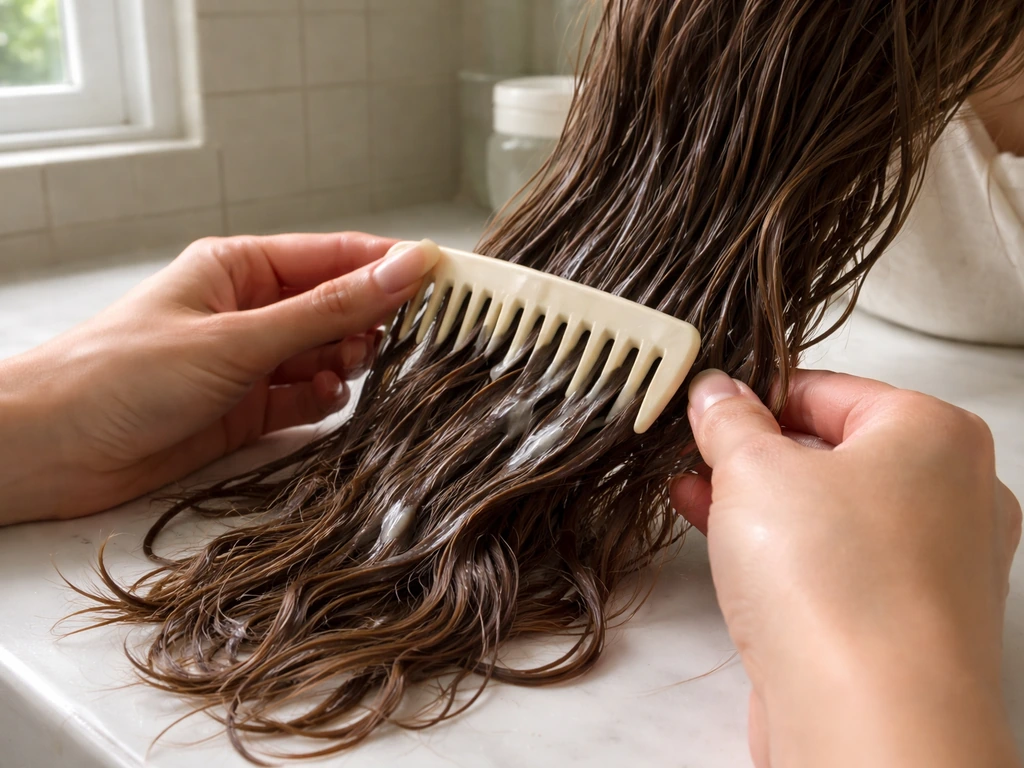
Dry hair fights wave formation. After washing, apply a lightweight leave-in conditioner or a wave cream while your hair is still slightly damp. On non-wash days, a small amount of water spritzed onto the hair followed by a light moisturizer or wave grease keeps the hair pliable enough to respond to brushing. Avoid heavy petroleum-based products that clog the scalp. Look for water-based moisturizers or pomades designed specifically for waves, since these give hold without buildup.
Detangling safely
Use a wide-tooth comb or a detangling brush on damp, conditioned hair before you begin brushing for waves. Work from the ends up toward the roots to avoid ripping through knots. Once the hair is detangled, you switch to your wave brush and begin training. Never detangle with a wave brush on dry, tangled hair. That breaks strands, irritates the scalp, and disrupts whatever pattern is already forming.
The step-by-step process for building your wave pattern
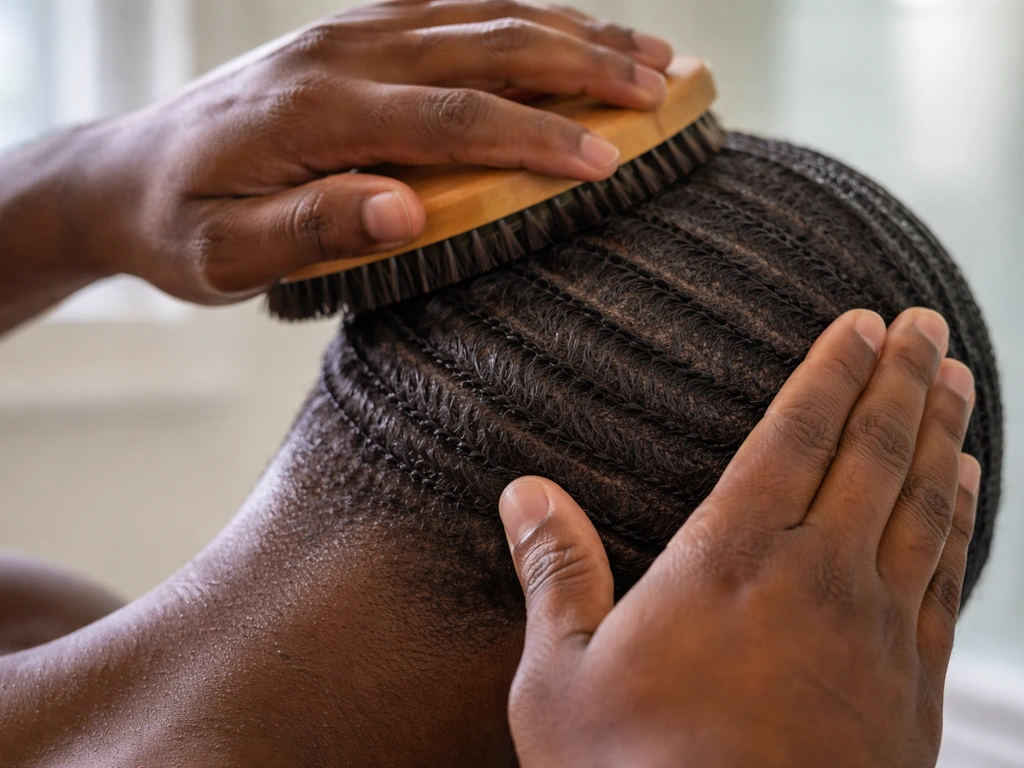
This is where most people either succeed or stall. The wave pattern forms through repetition: you brush consistently, in the right direction, with the right pressure, and then you compress the hair so it holds while you sleep or go about your day. Miss enough sessions and the hair "forgets" the direction it was being trained in, which breaks the continuity of the pattern.
The brushing routine
Brush at least two times per day: once in the morning after moisturizing, and once at night before putting on your durag. If you can add a third session midday, your pattern will develop faster. Each brushing session should last five to ten minutes. The direction matters: from the crown, brush forward and outward toward your hairline in every direction, following the natural growth pattern of each section. The crown is the center of the 360, so that's where you establish direction first, then work outward toward the temples, sides, and nape. Keep your brushing angles consistent every session. Switching angles randomly is one of the main reasons patterns stall.
Compression: the durag's actual job
After every brushing session, tie down your hair with a durag or wave cap. The compression holds the hair in the direction you just trained it into. Wearing a durag while you sleep is non-negotiable if you want results, because those are the hours when your hair would otherwise rub against a pillowcase and lose its direction.
blank" rel="noopener noreferrer">360 waves) are formed by brushing or combing coily or curly hair and flattening the curls into a ripple-like pattern, typically helped by frequent brushing and wearing a silky durag or wave cap for extra strength in flattening longer hair Wearing a durag while you sleep is non-negotiable if you want results). Silk or satin durags provide smoother compression than polyester and cause less friction and frizz.
During the day, wearing a durag for even 30 to 60 minutes after a brushing session reinforces the pattern significantly. If you're going out and don't want to wear a durag, tie down for as long as you can before leaving the house.
Timeline by starting point
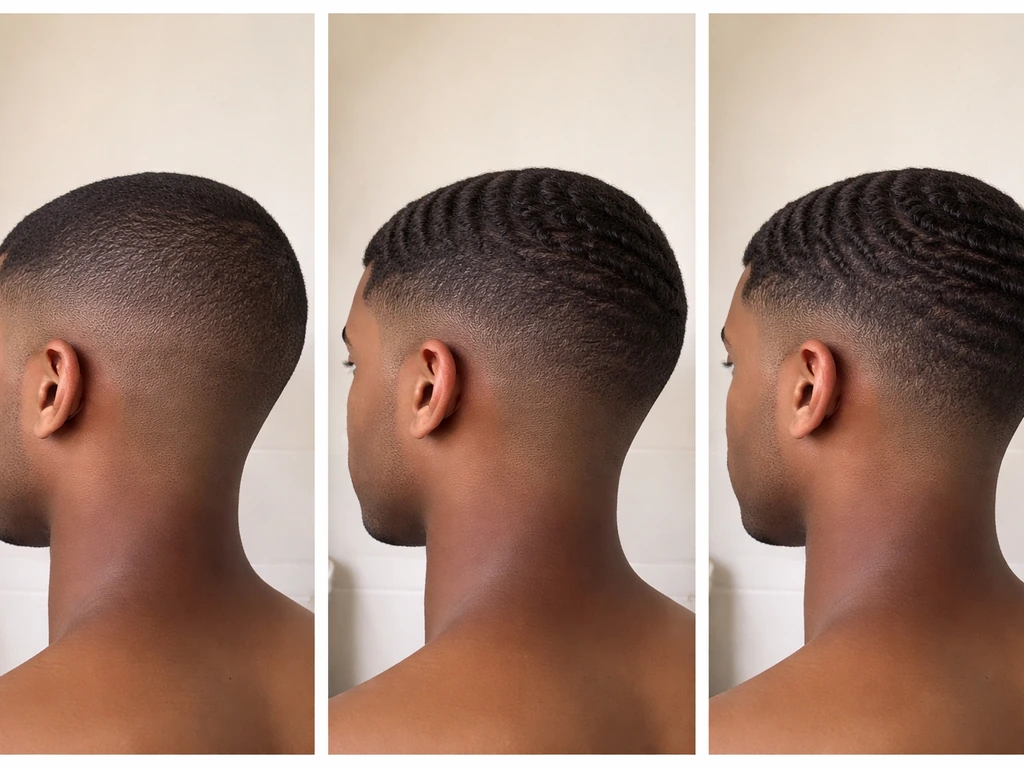
Your timeline depends heavily on where you're starting from. If you're growing out from a very short buzz cut or tight fade, expect to spend the first two to three weeks just getting enough length for the pattern to be visible at all. During that time, your main job is establishing the routine: wash, moisturize, brush, compress. From weeks four through eight, you'll start seeing ripples forming, especially around the crown.
This is not the finished wave, it's the beginning of one. By weeks eight through twelve, a clear 360 pattern typically becomes visible on type 4 hair, and sometimes earlier on type 3. If you're starting from a longer style (grown-out bob, tapered undercut, layers), you may already have enough length but need to redirect the hair that's been falling in multiple directions.
Give that hair two to four weeks of consistent directional brushing before you expect to see pattern coherence.
Tools and products worth actually using
You don't need a massive product collection. You need a small, reliable kit that does the job.
| Tool/Product | What It Does | What to Look For |
|---|---|---|
| Wave brush (soft) | Trains pattern early in the growth process, gentle on shorter hair | Boar bristle or mixed bristle; use on hair under about half an inch |
| Wave brush (medium) | Builds the pattern once hair has some length | Firm enough to lay hair down but not scrape the scalp |
| Wave brush (hard) | Deepens waves on longer, thicker hair | Use only when hair is moisturized; skip if it causes scalp irritation |
| Durag (silk or satin) | Compresses the pattern and reduces friction overnight | Silk over polyester; tie snug but not tight enough to leave marks |
| Satin bonnet | Alternative to durag for overnight compression, especially useful for longer grow-outs | Works well if you find durags uncomfortable; same compression benefit |
| Wave pomade or cream | Holds the pattern and adds moisture while brushing | Water-based formula; avoid heavy petroleum greases that cause buildup |
| Leave-in conditioner | Keeps hair pliable for brushing | Lightweight, absorbed quickly; not heavy oils that sit on top of hair |
| Wide-tooth comb | Detangling before brushing sessions | Use only on damp, conditioned hair |
When it comes to brushes specifically, most people start with a soft brush, move to medium as hair grows, and add a hard brush for deeper wave definition once hair is long enough. Using a hard brush on very short or dry hair irritates the scalp and breaks the pattern rather than builds it. If you're in the early growth phase (under three weeks from a close cut), stick to soft or medium only.
Getting through the awkward grow-out phase without quitting
The awkward phase is real, and it happens to everyone. Usually around weeks two through five, your hair looks puffy, undefined, and kind of unkempt. This is not the moment to cut it. It's the moment your hair is actually doing the work of learning the pattern. The worst thing you can do is restart with a fresh cut every time this phase hits, because you'll never get past it.
Managing this phase comes down to compression and moisture. Wear your durag more, not less. If you're growing out layers, an undercut, or bangs, different sections of your hair will be at different lengths, and the shorter sections will look messier before they conform. Focus on brushing every section consistently, even the uneven ones, and let compression do the work of keeping everything tidy between sessions. A satin bonnet works well here if you have longer growth that's harder to cover with a standard durag.
This is also where people with wavy hair growing it out longer will notice their natural wave pattern either helping or competing with the 360 pattern they're trying to build. If you are wondering how to grow wavy caps specifically, keep your routine consistent and focus on moisture and compression so the wave shape can train evenly wavy hair.
If you want your natural waves to help instead of fight your 360 pattern, you will want to learn how to grow out wavy hair the right way as your routine evolves. If you are growing wavy hair long while building waves, the same moisture, brushing, and compression fundamentals can help your hair cooperate instead of fighting the process wavy hair growing it out longer.
If you're in that situation, check out how growing out wavy hair long and the process of growing hair out from waves intersect with what you're doing here, because the grow-out dynamic is similar and the same routine principles apply. If you're specifically aiming for messy long hair, the same moisture-first routine and gentle handling will help you grow it out without creating tangles or breakage how growing out wavy hair long.
If you’re specifically learning how to grow hair out from waves, the same routine basics apply while you redirect the hair into a new direction how growing out wavy hair long.
Keep your edges clean with regular shape-ups at the barber if possible, every two to three weeks. A clean hairline makes the wave pattern look intentional even when the middle of your head is still in-between. Don't fade down the sides so short that you lose the length you've been growing, just clean up the outline.
Troubleshooting: flat spots, uneven patterns, and slow progress
Flat spots (some areas show waves, others don't)
Flat spots almost always come from uneven brushing. The areas that aren't waving are getting fewer brush strokes or being brushed in inconsistent directions. Identify which section is flat (usually the crown or the nape), and give it two extra minutes of focused brushing every session for one to two weeks. Make sure you're also applying moisturizer to that section specifically, since dry patches resist the wave pattern more than oily or well-moisturized ones.
Uneven pattern across the head
If the waves look choppy, the ripples are going in different directions, or one side is more defined than the other, the most common cause is inconsistent brushing angles. Go back to basics: brush each section from the crown outward in the same direction every single session. Don't mix up the direction mid-session. If you brush the right side forward on Monday, brush it forward on Tuesday, Wednesday, and every day after. The hair needs repetition to learn. Switching angles, even slightly, resets the section's progress.
Waves are stuck at ripples and not deepening
Ripples are the beginning of waves, and when they won't deepen into actual wave peaks and troughs, the most common blocker is missed brushing sessions. Even skipping two or three days in a row during the early training phase is enough to stall progress. The hair starts losing the direction it's been learning. Commit to the two-sessions-per-day minimum for at least four straight weeks and track whether you're actually doing it consistently. Most people discover they're brushing three or four times a week and calling it daily.
Dryness, itching, and breakage
If your scalp is itchy and your hair feels brittle, you're either washing too often, using a shampoo that's too stripping, or not moisturizing enough between sessions. Cut back to two washes per week, introduce a co-wash in between, and apply a light leave-in conditioner every morning before you brush. Hard brushes used on dry hair also cause significant breakage and scalp irritation, so switch to soft or medium and only brush on moisturized hair.
No visible progress after six or more weeks
If you've been consistent for six weeks and genuinely see nothing forming, run through this checklist before giving up or cutting back down.
- Is your hair long enough? Less than 1.5 guard (3/16 inch) makes waves nearly invisible even when forming. Give it more length.
- Are you brushing twice daily, every day, not just a few times a week?
- Are you moisturizing before every brush session?
- Are you sleeping in a durag every night, not just sometimes?
- Is your shampoo sulfate-free or are you stripping moisture with every wash?
- Are you using a brush with enough firmness for your hair texture? Very coily hair often needs a medium or hard brush to create visible definition.
If you can honestly check every one of those boxes and still don't see progress at week eight, try adding a deeper conditioning treatment once a week (like a hot oil treatment or deep conditioner under a shower cap for 20 to 30 minutes) to soften the hair and make it more responsive. Most people who troubleshoot this honestly find one of those six boxes wasn't fully checked.
Growing 360 waves through the awkward in-between stage is genuinely one of the more patience-testing hair processes out there, but it's also one of the most rewarding when the pattern clicks. If your goal is truly messy long hair while still keeping it healthy, focus on regular moisturising, gentle detangling, and consistent protective styles between brushing awkward in-between stage. The framework is simple: moisturize, brush consistently in the right direction, compress with a durag, and don't skip sessions. Start today with whatever length you have, build the routine, and let the pattern come to you rather than forcing it faster than your hair can physically form it.
FAQ
Can I grow 360 waves if my hair is straighter than type 3 or type 4?
Yes, but expect a longer timeline and looser definition. Prioritize moisture and consistent directional brushing, use a softer brush longer, and consider aiming for partial wave formation first (crown and sides) before pushing for full continuity around the back.
How do I know if my hair is long enough to start, without measuring a guard?
If your hair stands away from your scalp even after you apply light product and compress it, you likely need more length. A practical test is to see whether brushing plus durag compression for a few hours creates temporary ripples. If it never lays down at all, wait.
Do I have to wash and condition the same way every week?
Consistency matters, but you can adjust frequency. If you notice dryness or itch, reduce wash days, switch to co-washing between shampoos, and keep leave-in and moisturizer application on non-wash days so the hair stays pliable for brushing.
What if I can only brush once per day because of work or school?
One per day can work, but you need to make that session count. Brush the full routine for 10 minutes, keep angles consistent from crown outward, then compress immediately. If possible, add a short midday touch-up (5 minutes) to prevent direction loss.
Is it okay to use gel, edge control, or heavy pomades while training waves?
Light, water-based products are safer for wave training. Heavy or oily buildup can stiffen the hair and create patchy results, so if you use gel, keep it minimal, watch for scalp flakes, and wash more thoroughly during your next shampoo.
How should I handle wave training if I sleep on my back, side, or with my head upside down sometimes?
Random pressure can cause flat spots or break continuity. Aim to keep compression on overnight every time, and if you must move positions, use the durag correctly tied to reduce shifting and keep the hair laid in the direction you trained.
What’s the best way to prevent shedding or breakage while I’m learning?
Never detangle with a wave brush on dry tangles. Detangle on damp, conditioned hair, detangle gently from ends to roots, and if you see increasing shedding after switching brushes, step back to soft or medium and add more slip from conditioner or leave-in.
How often should I replace my wave brush?
Replace it when bristles start bending unevenly or when you notice scratching irritation. Worn bristles can brush less uniformly, which can lead to choppy ripples, especially on the crown and nape where pattern continuity is critical.
What should I do if only one side connects into a 360 but the other side looks choppy?
Treat that side like its own project. Add two focused minutes of brushing to the weaker side each session for 1 to 2 weeks, keep the same crown-to-outward direction daily, and make sure it gets targeted moisture because dry sections resist pattern settling.
Do I need a hard brush at all during the process?
Not necessarily. Many people get good wave formation with soft or medium first, then move to hard only after you have enough length to handle firmer pressure. Hard brushing too early often causes irritation and setbacks.
Can I still get waves if I have a fade, uneven growth, or cowlicks?
Yes. Uneven sections are common, and layers or cowlicks just need steadier compression and consistent brushing angles. Follow through every section during each session, and expect longer to normalize compared with even growth.
Should I cut my hairline when I’m growing waves?
Keep the outline clean if possible, but avoid removing too much length on the sides. A barber shape-up every 2 to 3 weeks is usually enough, just avoid dropping the sides so short that you lose the directional training area you are trying to build.
What if my scalp gets itchy every time I start the routine?
Itch usually signals stripping, product buildup, or overly harsh brushing on dry hair. First, reduce shampoos to around two times per week, use a moisturizing sulfate-free option, apply leave-in before brushing, and switch to soft or medium if you’re using hard bristles.
I missed brushing for a few days, how do I restart without losing everything?
Start back at your normal two-times-per-day schedule immediately, keep the same crown-to-outward direction, and compress right after each brush. The hair may feel reset temporarily, but consistent days will rebuild the direction faster than restarting with a cut.
How long should I try before changing my products or technique?
If you’ve truly brushed twice daily, moisturized regularly, and compressed consistently, give it at least 8 weeks before making big changes. If you see no improvement by week 8, adjust one variable at a time, such as increasing leave-in slip or switching to a lighter water-based moisturizer, rather than changing everything at once.