
Yes, you can absolutely grow wavy hair long, and no, you don't have to sacrifice your wave pattern to do it. The main thing standing between most guys and longer wavy hair isn't genetics or some biological ceiling, it's the grow-out process itself. The awkward phases, the frizz, the weird shape that happens around ear-length, the moment you almost book a trim just to feel normal again. This guide is about getting through all of that with a clear plan and your waves intact.
How to Grow Wavy Hair Long: Step-by-Step for Guys

Marcus Vickers
5 Apr 2026
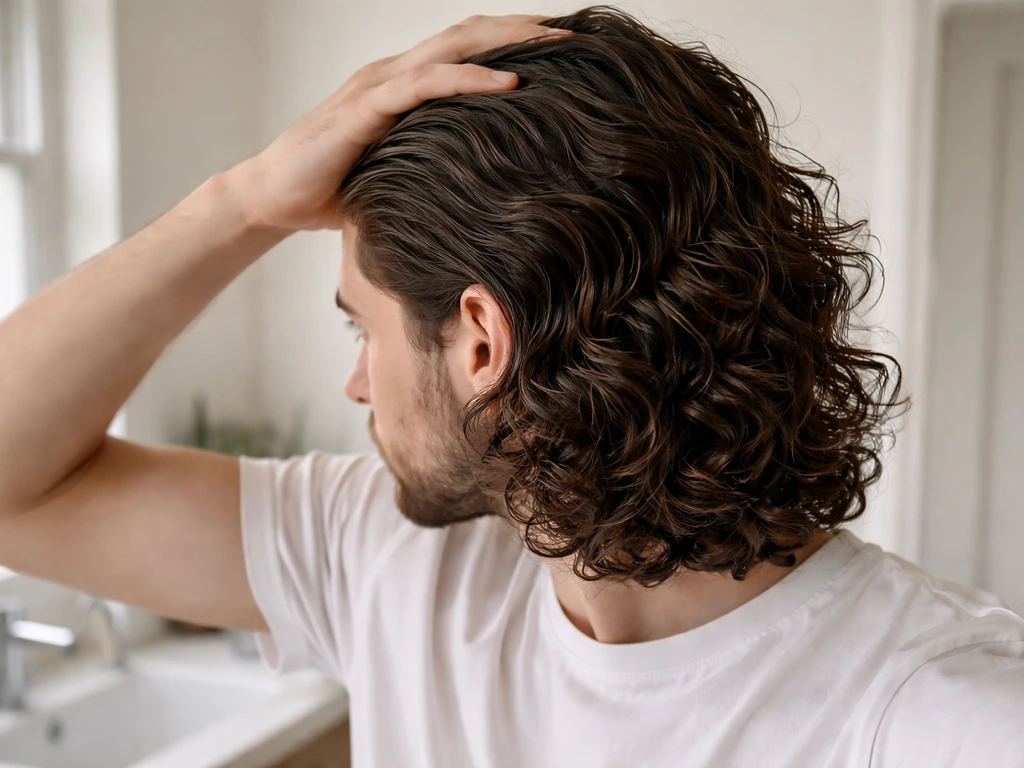
Can wavy hair actually grow long? Setting real expectations
Wavy hair grows at the same rate as any other hair type: roughly 0.35 mm per day, or about 1 cm (half an inch) per month. That works out to around 15 cm (6 inches) per year under healthy conditions. The reason wavy hair can feel like it's not growing is that the wave pattern creates a visual shrinkage effect. A 4-inch wavy strand looks shorter than a 4-inch straight strand because of the bends and curves in it. So your hair is growing, it just isn't hanging as long as the raw measurement would suggest.
The wave itself is determined by your follicle shape. Round follicles produce straight hair; oval or flattened follicles produce wavy to curly hair. That shape is largely genetic, which means your wave pattern is real, consistent, and not going anywhere just because you're growing it out. What can temporarily mess with the appearance of your waves is damage, dryness, humidity, and product buildup, all things you can actually control.
The honest timeline for genuinely long wavy hair, think shoulder length or beyond, is 18 to 30 months from a short cut, depending on where you're starting from. Chest length is closer to 3 years for most people. That sounds like a long time, but if you start building good habits now, those months go by with a lot less frustration than if you're just white-knuckling it between cuts.
Building a routine that actually holds onto length

The biggest enemy of length retention for wavy hair isn't slow growth, it's breakage. Hair naturally sheds somewhere in the range of 100 to 200 strands per day, and that's normal. What isn't normal is mechanical breakage from rough handling, heat damage, and over-washing. A solid routine addresses all three.
Washing: less is genuinely more
Washing wavy hair every day strips the natural oils that keep the cuticle smooth and the wave pattern defined. For most guys with wavy hair, washing every 2 to 3 days is a good target. If your scalp runs oily, dry shampoo between washes buys you time without the damage. If you're dealing with sweat from workouts, rinsing with water and a conditioner-only 'co-wash' is far gentler than shampooing daily. When you do shampoo, use a sulfate-free formula. Sulfates are effective cleansers but they're also aggressive, and over time they increase porosity and frizz by roughing up the hair cuticle.
Conditioning: this step is non-negotiable
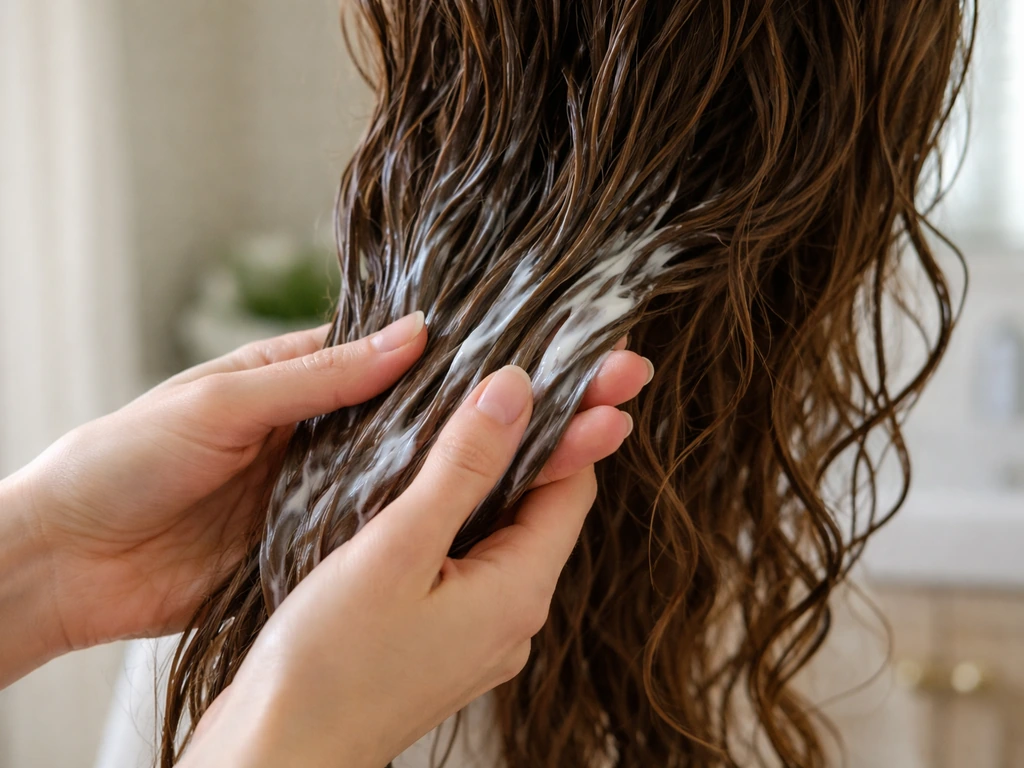
Every single wash should be followed by conditioner, applied from mid-shaft to ends. Wavy hair is more prone to dryness than straight hair because the natural oils from your scalp have more bends to travel down. A leave-in conditioner a few times a week adds an extra layer of protection, especially if you're in a dry climate or spend time in air conditioning. Once a week, swap your regular conditioner for a deep conditioning mask and leave it on for 10 to 20 minutes. This makes a noticeable difference in how pliable and unbroken your ends stay.
Detangling without causing damage
Always detangle wet hair, never dry. Use a wide-tooth comb or your fingers, and work from the ends upward toward the roots rather than dragging from root to tip. This prevents you from forcing knots through the length and snapping strands. Raking through dry wavy hair with a brush is one of the fastest ways to cause breakage and ruin your wave pattern at the same time.
Drying: gentle matters more than fast

A regular terrycloth towel is surprisingly rough on hair. The looping texture creates friction that roughs up the cuticle, causes frizz, and contributes to breakage. Switching to a microfiber towel makes a real difference, and research backs this up: microfiber drying is associated with better preservation of hair structure compared to other drying conditions. Gently scrunch the water out, don't rub. If you want to take it a step further, try hair plopping: flip your wet hair onto a microfiber towel or a clean cotton T-shirt laid flat, wrap it up loosely around your head, and leave it for 15 to 20 minutes before air drying or diffusing. It's a bit of an odd-looking process but it helps wavy hair dry with more definition and less frizz.
When you do use a blow dryer, use a diffuser attachment and keep the heat on medium or low. High heat degrades the proteins in hair over time and lifts the cuticle permanently, both of which make frizz and breakage worse. Air drying is always the gentlest option if you have the time.
What to do about haircuts while you're growing it out
This is the part most guides get wrong: they either say 'never cut it' or 'trim every 6 weeks,' and neither extreme is quite right for a grow-out. The real answer depends on your hair's condition.
If your ends are healthy, you can stretch your trims to every 3 to 4 months. This is especially true in the early stages when every centimeter counts. If your ends are visibly dry, splitting, or fraying, trim them sooner, because split ends travel up the strand and cause more breakage than a small trim would have. For most guys in the active grow-out phase, every 2 to 3 months is a practical rhythm that keeps ends tidy without sacrificing real length.
When you do get a trim, be explicit with your barber or stylist. Say: 'I'm growing this out, I want to keep as much length as possible, just clean up the ends and any obvious damage.' Bring a reference photo of the shape you're aiming for. A good stylist will take off no more than 1/4 inch unless there's a specific reason to take more. If you're growing out an undercut or have heavily layered hair from a previous cut, ask your stylist to start blending the shorter sections into the longer sections rather than cutting length from the top. This speeds up the transition and reduces the weird helmet-head effect you get when the layers grow out unevenly.
The undercut situation deserves its own mention: growing out an undercut with wavy hair is genuinely one of the trickier transitions because the sides and back come in at a noticeably different rate than the top. You may have a solid 3 to 4 inches on top while the sides are still barely an inch. Be patient with this and rely on styling (more on that below) to manage the bulk until the sides catch up.
Stage-by-stage plan: from short to shoulder length
Every grow-out goes through the same general phases. Knowing what's coming makes the awkward stages a lot less likely to derail you.
| Stage | Approx. Length | What to Expect | Key Strategy |
|---|---|---|---|
| Month 1–3 | 1–3 cm | Still looks intentionally short; waves may not be visible yet | Establish your wash/condition routine; resist trimming |
| Month 3–6 | 3–6 cm | Ear-length awkwardness; waves start forming but poof outward | Start using a curl cream or light gel; explore side parts |
| Month 6–9 | 6–9 cm | Over-ear length; the classic 'helmet head' phase | Tuck behind ears, use a headband, add wave-enhancing products |
| Month 9–12 | 9–12 cm | Collar-length; waves start working with you, not against you | Diffuse or plop regularly; first meaningful shape trim if needed |
| Month 12–18 | 12–18 cm | Approaching shoulder; waves fully visible and defined | Deep condition weekly; experiment with styling and hold products |
| Month 18–30+ | 18–30+ cm | Shoulder to chest length; the payoff stage | Focus on moisture, protective styles, and maintenance trims |
The 3-to-9 month window is where most people give up. The hair is long enough to be annoying but not long enough to look intentional. This is where a clear daily styling habit matters most. Having a go-to product and a consistent drying method turns this stage from miserable to manageable. If you find yourself second-guessing the whole process, go look at photos from when you started and compare to where you are now. Progress is real even when it doesn't feel like it.
Products and styling that work with wavy hair
The goal with products for wavy hair is to define the wave, control frizz, and protect against breakage without weighing the hair down or leaving it crunchy. Here's a practical breakdown by product type:
- Leave-in conditioner: your daily foundation. Apply to damp hair, scrunch upward, and let it start defining your waves before you add anything else.
- Curl cream or wave cream: adds definition and moisture without stiffness. Best for guys with looser waves who want soft hold and shape.
- Light-hold gel: gives more definition and frizz control. Apply to soaking-wet hair and scrunch in. Once it dries and forms a 'cast,' scrunch it out gently to get soft, defined waves.
- Mousse: a good middle ground between cream and gel, works well for finer wavy hair that gets weighed down easily.
- Argan or jojoba oil: apply a small amount to dry hair as a finisher to smooth frizz and add shine without greasiness.
- Anti-humidity spray or serum: locks in your style in humid weather, which is when frizz is at its worst. Frizz happens because porous or damaged cuticles absorb moisture from the air, swell, and lose their smooth shape, so a barrier product makes a real difference on high-humidity days.
Avoid products with high alcohol content (alcohols listed early in the ingredients), heavy silicones that build up without sulfate cleansing, and any styling tool that requires high heat without heat protectant. If you're using a flat iron to smooth wavy hair during the grow-out, use a heat protectant every single time and keep the temperature under 375°F (190°C).
For guys getting into the wavier side of styling, the process of how to grow out wavy hair properly is really about learning which products suit your specific wave type, since a type 2A wave responds very differently to gel than a type 2C or 3A pattern. Experiment during the grow-out, not after.
Tracking growth and staying motivated through the timeline
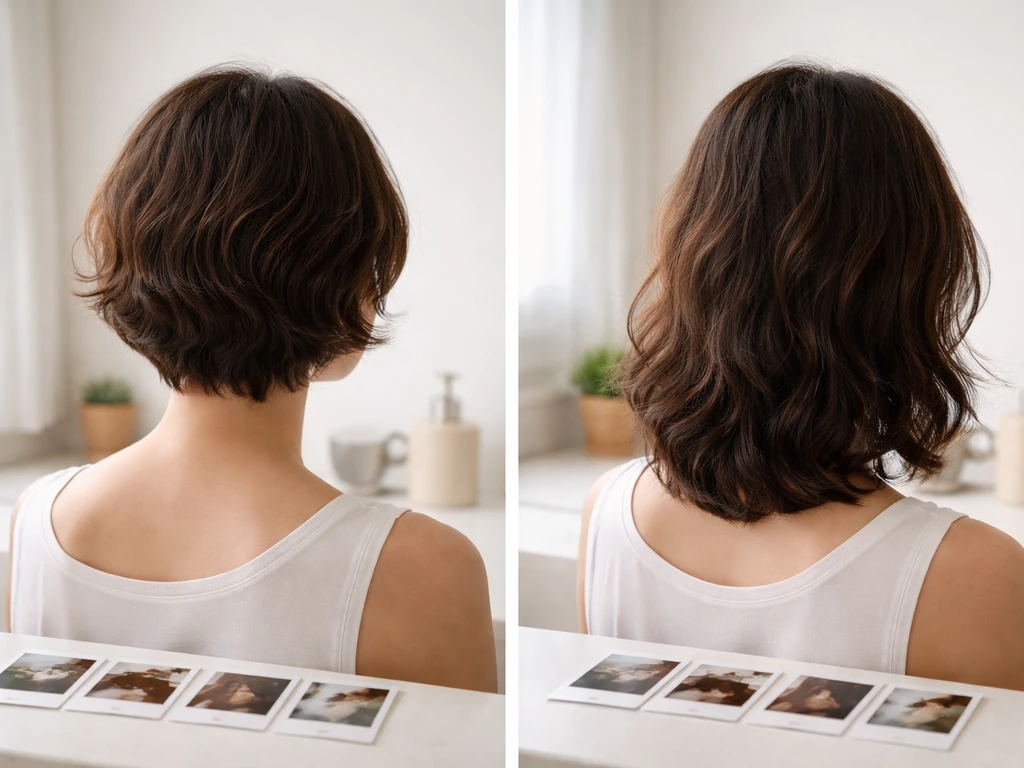
At roughly 1 cm of growth per month, you can set realistic checkpoints for yourself. From a close-cropped short cut, you're looking at about 6 months to get past the ears, 12 months to hit collar length, and 18 to 24 months to reach the shoulders. Chest length for most guys is around the 28 to 36 month mark. These are averages, not guarantees. Growth can slow during periods of stress, illness, or nutritional gaps.
The best way to track progress is to take a photo from the same angle on the first of each month. Don't rely on daily observation because hair growth is too gradual to see day-to-day. Monthly photos are genuinely motivating because you can clearly see the difference over 3 to 4 months side by side.
To measure accurately, stretch a strand gently from root to tip and use a soft measuring tape. For wavy hair, this stretched measurement matters because the visual length (how far the hair hangs) will always look shorter than the actual strand length due to the wave pattern. Track both if you want a full picture. If you're curious about more intensive wave-building techniques during the early phases, understanding how to grow 360 waves gives useful context for how consistent brushing and moisture habits can shape your pattern as it develops.
Support your growth from the inside too. Hair grows best when you're eating enough protein (hair is made of keratin, which is a protein), getting adequate iron and zinc, staying hydrated, and sleeping enough. This isn't about supplements or magic pills, it's about not being deficient. If your growth feels significantly slower than the average, a check-in with a dermatologist is worth it to rule out deficiencies or scalp conditions.
Common problems guys run into when growing wavy hair out
Cowlicks fighting against your wave pattern
Cowlicks are hair follicles that grow in a different direction from the surrounding hair, and they become more visible and annoying during the grow-out when hair is heavy enough to flop but not heavy enough to be weighed down. The most effective tactic is to train the hair while it's damp by combing or smoothing it in the direction you want it to go, then letting it dry that way. Sometimes simply switching your part to the other side neutralizes a cowlick's effect almost entirely. A lightweight pomade or styling cream applied to the problem area while damp also helps. As hair gets longer and heavier, most cowlicks become much less of an issue.
Uneven growth and patchy waves
It's completely normal for different sections of your head to grow at slightly different rates or to express different wave patterns. The crown might be wavier than the sides, or the back might grow faster than the front. This typically evens out as hair gets longer and has more weight to it. In the meantime, product application and diffusing can help blend the texture across sections so it looks more cohesive.
Waves that seem to disappear or revert
Some guys notice that their waves seem weaker during the grow-out than they expected, especially in the early phases when the hair is short and doesn't have the length to form a full wave pattern. This is normal. Shorter wavy hair often looks poofy rather than wavy because there isn't enough length for the wave to complete its curve. As length increases, the waves become more visible and defined. If you're coming from a very short cut and you're curious about building and reinforcing your wave pattern in the meantime, looking into how to grow waves gives a framework for training your hair texture during those early months.
Frizz and poof getting out of control
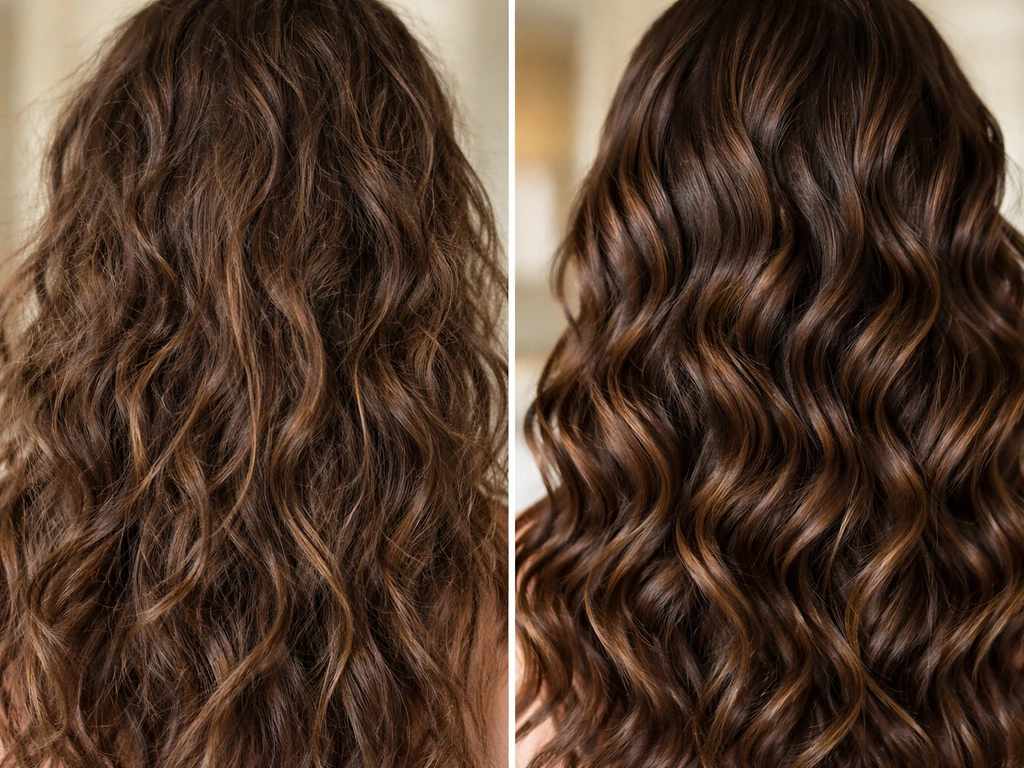
Frizz is fundamentally a moisture problem. When the hair cuticle is damaged or porous, it absorbs atmospheric humidity, causing the hair fiber to swell and expand unevenly. This is why frizz is always worse on humid days. The fix is a two-part approach: reduce cuticle damage (gentle washing, less heat, no rough towel drying) and use barrier products (leave-in conditioner, anti-humidity sprays, light oils) to prevent excess moisture from getting in. Sleeping on a satin or silk pillowcase also helps by reducing the overnight friction that roughens up the cuticle.
Scalp issues that slow things down
A healthy scalp is the foundation of healthy growth. Dandruff, scalp buildup from heavy products, and seborrheic dermatitis can all interfere with the environment your hair grows from. If you're using a lot of styling products, clarify your scalp with a clarifying shampoo once or twice a month to remove buildup. If you're dealing with persistent flaking or irritation, see a dermatologist, not a YouTube comment section. Scalp health is genuinely worth addressing early because it affects the quality of every strand that grows from that point forward. The American Academy of Dermatology reports typical shedding of about 50, 100 hairs each day, according to Mayo Clinic Press typical shedding of about 50–100 hairs each day.
Managing the transition from structured styles
If you're coming from a very deliberate wave style, like a maintained wave cap setup, transitioning into longer free-flowing wavy hair involves a different kind of upkeep. The brushing-focused maintenance routine shifts toward moisture-focused care, and that adjustment can feel jarring at first. Understanding how to grow hair out from waves gives a more detailed breakdown of that specific transition, including how to maintain pattern definition as the hair gains length and starts moving differently.
A few style comparisons worth knowing
Not all approaches to growing out wavy hair are the same, and what works well depends on your starting point and target style. Here's a quick comparison of the most common grow-out strategies:
| Approach | Best For | Pros | Cons |
|---|---|---|---|
| Full grow-out, minimal trims | Guys chasing maximum length fast | Keeps every centimeter of growth | Ends can get damaged and scraggly without careful routine |
| Regular shape trims every 10–12 weeks | Most guys growing from short to medium/long | Maintains tidy appearance through awkward phases | Slightly slower net length gain |
| Layered grow-out (blending undercut/layers) | Guys with undercuts or disconnected fades | Looks more intentional during the transition | Requires a skilled stylist who understands grow-outs |
| Wave-training with brushing (early phase) | Guys in the first 1–4 inches of growth | Reinforces wave pattern from the start | More daily effort; transitions out of this method as hair lengthens |
For most guys, the shape-trim approach every 10 to 12 weeks is the best balance of looking decent during the process and still making real length progress. If you're aiming for something more specific like a longer, lived-in messy wave style, the guide on how to grow messy long hair covers the styling strategy for that aesthetic in more depth.
One more thing: use tools that fit your stage
If you've been rocking a wave cap style and are now transitioning into longer growth, your tool kit needs to change too. The brushing and compression approach that defines shorter wave patterns doesn't translate directly to longer wavy hair. Understanding how to grow wavy caps is useful context for where you're coming from, but your new toolkit should center on wide-tooth combs, microfiber towels, a good diffuser, and moisture-first products rather than compression-first tools.
Growing wavy hair long is a commitment of time, not complexity. The actual routine is simple once it's built. The hard part is consistency through the phases where the hair doesn't look like what you're aiming for yet. Keep your ends healthy, keep your scalp clean, handle your hair gently, and let the growth happen. The waves will come with it.
FAQ
My wavy hair looks poofy instead of wavy during the grow-out. What should I change?
If you want length but your waves are getting poofy, don’t switch to heavy gels or daily shampoo. Try a two-step routine: conditioner every wash plus a leave-in or curl cream on damp hair, then use a medium-hold styling product only on the ends and mid-shaft. The goal is wave definition without adding enough buildup to make the hair clump and look stringy.
Can I blow-dry wavy hair to speed up the grow-out without ruining the waves?
Yes, but only if you treat it like a heat-protect and low-manipulation step. Use a diffuser on low or medium, don’t rough-dry with a brush, and stop once hair is about 80 percent dry. Over-drying on heat can lift the cuticle and make frizz worse, even if the blowout looks smooth at first.
How often should I wash wavy hair if I work out and sweat a lot?
If you do sports regularly, rinse with water after sweating if you can, then use conditioner-only (co-wash) when you would normally have skipped shampoo. For scalp odor or heavy sweat buildup, use sulfate-free shampoo but keep it to your 2 to 3 day target, not more frequently. This balances cleanliness with preserving oils that support wave shape.
Why does my hair get crunchy or greasy after styling products, even when I’m following the routine?
Use a hard-hold product sparingly. In the early months, the most common mistake is applying too much product, which weighs short waves down or creates crunch that breaks when you touch it. Start with a pea-size for short-to-mid lengths, scrunch upward, then let it set without touching until fully dry.
How do I know when I should clarify versus when buildup is not the real problem?
Clarify once or twice a month if you notice stiffness, flaking, or dullness that doesn’t improve with normal washing. Don’t clarify weekly, especially if your hair feels dry, because it can increase porosity and frizz. After clarifying, follow with a deep conditioning mask and keep the next two washes gentle.
Can I avoid trims longer by using at-home fixes for split ends?
If ends feel rough but you are trying to stretch trims, you can do a “maintenance snip” between appointments. Ask for a minimal cleanup of only visibly damaged tips (not a reshape), then focus on moisturizing and detangling carefully. Split ends can creep upward, so if you see fraying, delaying too long usually costs more length later.
How do I adjust washing frequency if my waves get flat or oily too quickly?
Wash frequency is a starting point, then adjust based on how your hair behaves. If your waves collapse the day after washing, your scalp might be getting too dry or the product load is too light, try moisturizing more and reducing manipulation. If your hair looks oily by day two, tighten the routine or use dry shampoo strategically between washes.
My scalp flakes keep coming back during the grow-out. What should I do first?
On wavy hair, dandruff flakes are often worsened by residue. If you clarify sometimes and still have persistent flaking or itch, switch from gentle scalp care to a dermatologist-guided treatment plan. Also avoid piling on conditioners near the scalp, keep conditioner mid-shaft to ends to prevent buildup in the roots.
Should I brush my hair again after applying product, or is that harming my wave pattern?
A wiggle test helps. After you detangle wet hair, gently shake it once and watch where the wave forms. If it immediately clumps or separates unevenly, you likely need better distribution of product and a more consistent drying method, not more brushing. Avoid repeated combing once product is applied.
I’m growing out an undercut and my sides are far behind the top. How do I handle the awkward months?
If your sides are lagging for an undercut, don’t force the top to match them with heavy smoothing. Instead, train the top to sit the way you want (light styling on damp hair), and manage bulk with occasional targeted trims to the sides only if they start to look uneven. Let blending happen gradually, rely on weight and product placement rather than constant cutting.
How can I tell if I’m actually losing hair or just experiencing normal shed during the grow-out?
If you rarely lose length, your shed-to-breakage ratio is probably fine. But if you see short, flyaway hairs at the crown and noticeable thinning at the ends, that points to breakage from friction, heat, or rough detangling. Switch to microfiber drying, detangle only wet with a wide-tooth comb, and reduce heat. If shedding becomes sudden or patchy, get checked by a dermatologist.
What’s the best way to track progress so I’m not misled by wave shrinkage?
Don’t measure only the hanging length. Use both the stretched strand length and the “style length” after drying the way you normally style it. That second measurement matters because wave shrink changes how long it looks, and you will make better trim decisions when you can compare consistent styling results month to month.