
Growing out wavy hair is absolutely doable, but it takes a little more strategy than just putting down the scissors and waiting. The main challenges are the triangle shape that sneaks up on you around chin-to-shoulder length, the way your wave pattern seems to disappear at some stages and come roaring back at others, and the frizz and tangle situation that gets progressively more intense as your hair gets thicker and longer. The good news: with the right trims, a solid wash routine, and a few styling tricks for the awkward phases, you can keep your waves looking intentional at every single stage of the grow-out.
How to Grow Out Wavy Hair: Timeline, Trims, and Styling

Marcus Vickers
25 Apr 2026
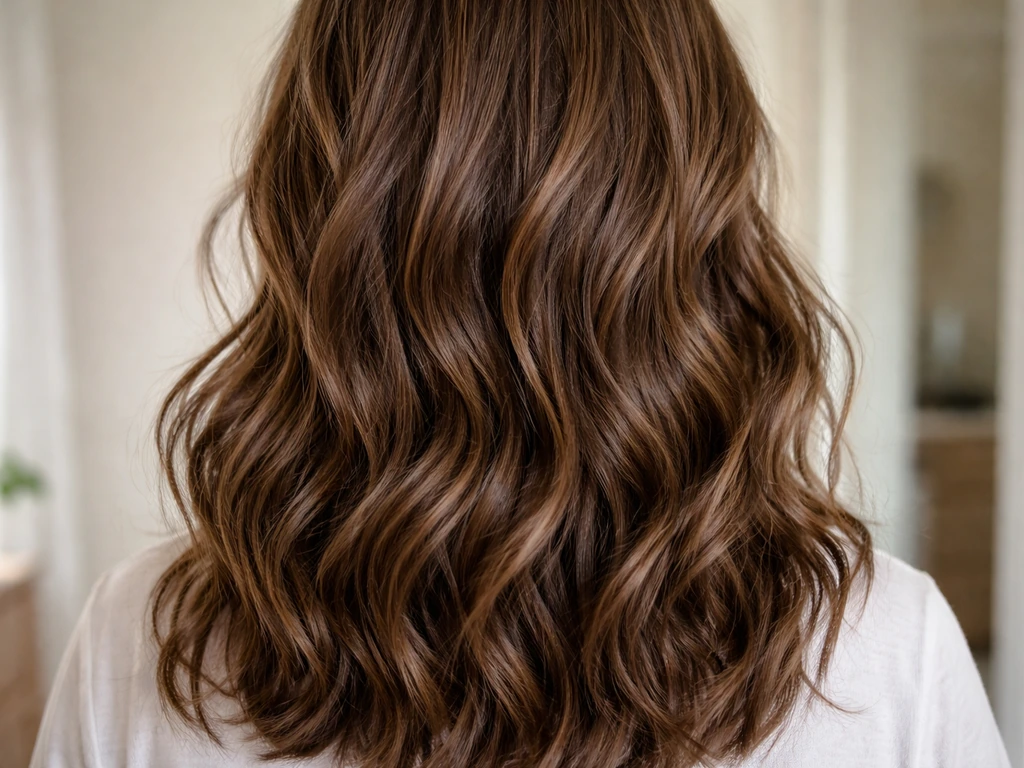
What to actually expect when growing out wavy hair
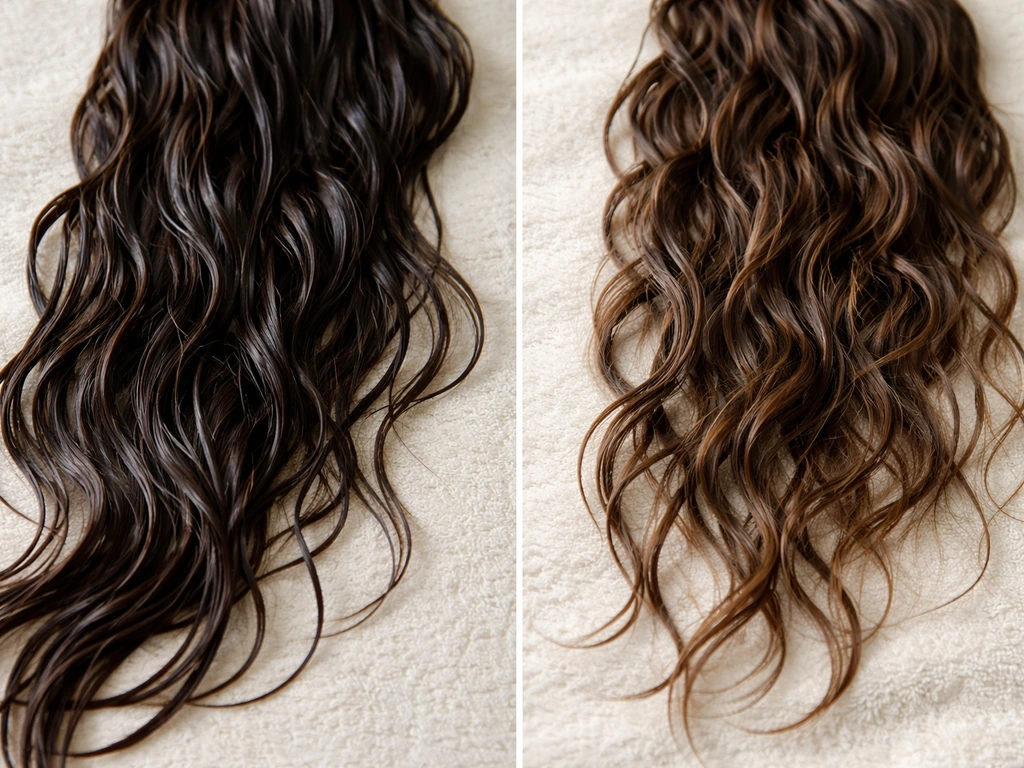
Here's the honest version: growing out wavy hair is not a smooth, linear process. Your wave pattern will look different depending on the current length, how much weight is pulling the hair down, and even how humid the day is. Short hair often sits too close to the scalp to form a proper wave. At mid-lengths, weight from the ends can flatten the roots while the mid-shaft puffs out sideways instead of curving into a wave. And then at longer lengths, the weight of the hair finally helps pull everything into shape, and your waves look better than they ever did.
One thing that trips people up is shrinkage. When wavy hair gets wet, the strands absorb water, swell, and contract, which means your hair can look noticeably shorter wet than dry, and the apparent wave pattern shifts depending on whether you're looking at it soaking wet, freshly dried, or second-day. This is completely normal. Your "true length" and your wet length are two different things, and understanding that helps you stay patient and make better decisions about when to trim.
You should also know that wavy hair responds differently to layers and interior texturizing than straight hair does. Removing too much weight from the interior can cause the wave pattern to collapse or become inconsistent, and a blunt or under-layered cut can cause the dreaded pyramid shape, where the crown sits flat and the ends fan out into a wide bush. Neither of those outcomes is "bad hair," they're both fixable shape problems. Knowing they're coming helps you work with a stylist proactively rather than reacting after the fact.
The grow-out timeline: what's happening at each stage
Hair grows roughly half an inch per month on average, which means the stages below represent approximate timeframes. Your personal rate, the thickness of your strands, and how diligently you're protecting your ends will all affect how quickly you move through each phase.
| Stage | Approximate Length | What Wavy Hair Does Here | Main Challenge |
|---|---|---|---|
| Pixie/buzz grow-out | Under 2 inches | Waves can't fully form yet; hair may look flat or fluffy | Patience, no styling leverage yet |
| Awkward short stage | 2–4 inches | Waves start appearing but growth is uneven; crown may stick up | Crown control, neckline bulk |
| Chin-length / bob zone | 4–6 inches | Waves form but weight causes puffing at the sides; triangle risk high | Pyramid head, weight distribution |
| Shoulder length | 6–9 inches | Hair has enough length for half-up styles; wave pattern improving | Tangles, frizz, managing layers |
| Collarbone to mid-back | 9–14 inches | Weight starts to pull waves into proper shape; best definition yet | Dryness, breakage at ends, thickness management |
The chin-to-shoulder window is the stage most people give up during, because the triangle problem peaks here. Your hair isn't long enough to pull down with its own weight, but it's long enough to expand sideways. This is when trim strategy matters most, and it's worth knowing you're in the hardest part so you don't bail on the grow-out unnecessarily.
Trim and shaping strategy: keeping waves without the triangle
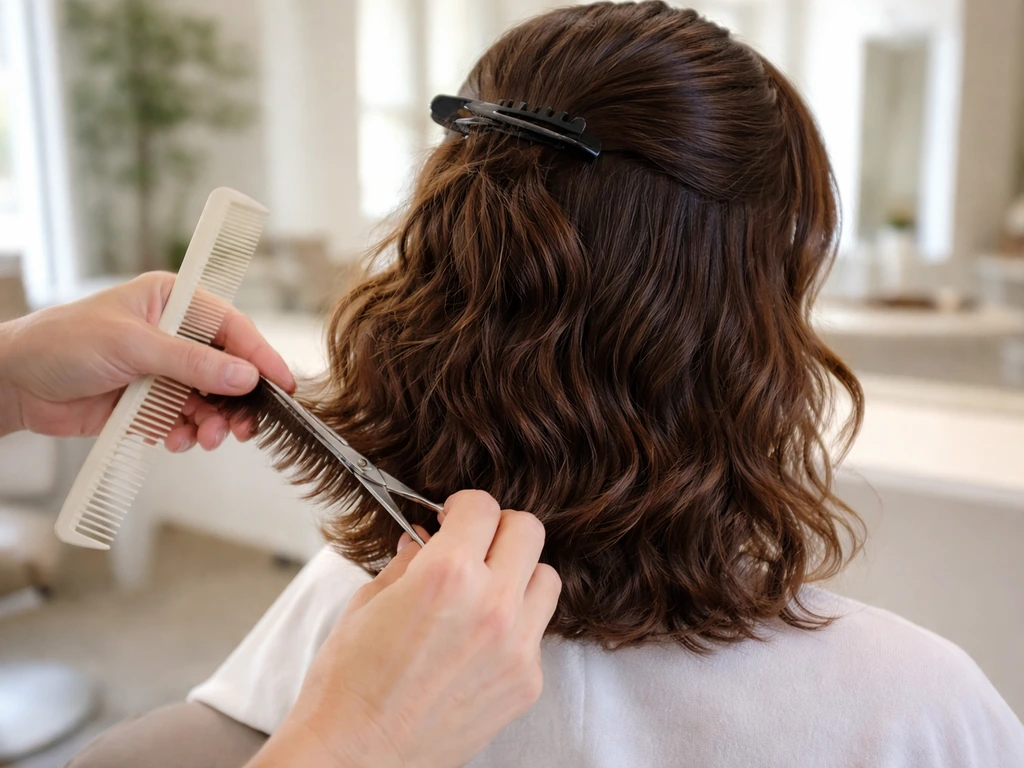
Trims every 8 to 12 weeks are the sweet spot for most people growing out wavy hair. If your ends are healthy and you're minimizing heat and friction, you can stretch to 10 or 12 weeks. If you're seeing split ends or significant breakage, stick to 8. The goal here isn't to cut for length, it's to cut for shape and health, meaning you might only remove a quarter inch while asking your stylist to reshape the silhouette.
For wavy hair specifically, always try to get your hair cut dry if possible, or at least have the stylist evaluate it dry before cutting. Wavy hair behaves very differently wet versus dry, and cutting while wet can lead to an unintentional shorter result once the waves spring back. Cutting dry also helps the stylist actually see the shape problem they're solving, whether that's removing bulk from the sides or dealing with an uneven growth pattern.
The pyramid head fix is a layering conversation. Strategic layers help distribute volume away from the sides and add movement to the mid-lengths and ends. But the warning here is real: too many layers, or overly aggressive interior texturizing, can strip out the weight that wavy hair needs to form its pattern. For lower-density wavy hair especially, over-layering can leave ends looking thin and straggly, which makes the triangle look worse, not better. Ask your stylist for face-framing layers and some internal movement without going too heavy on point-cutting through the interior. Undercutting, where weight is removed from underneath the hair rather than throughout, is a useful technique for managing bulk in thicker wavy hair at this stage.
The wash, condition, and product routine that actually supports your waves
How often and how to wash
Most wavy hair does well washed 2 to 3 times per week. Washing every day strips the natural oils that help the wave pattern hold together, and wavy hair is already prone to dryness compared to straight hair because the bends in the strand make it harder for scalp oil to travel down the length. The CDC notes that scalp sebum, the skin's natural oil, helps moisturize and protect the skin, and it recommends washing hair regularly as part of general hygiene natural oils that help the wave pattern hold together. Between shampoo washes, co-washing (using a cleansing conditioner or just conditioner instead of shampoo) can be a good option to add hydration and refresh the scalp without stripping. The key caveat: co-washing works best on dry or normal scalps. If your scalp tends toward oiliness, you may find that co-washing leads to buildup, which flattens waves and causes frizz. A mixed routine, where you alternate one sulfate-free shampoo wash with one co-wash, gives you the hydration benefit without the buildup risk.
Speaking of buildup: use a clarifying shampoo roughly once a month, or any time your hair starts behaving oddly, feeling weighed down, losing definition, or going limp and dull. Product residue accumulates on wavy hair faster than you might expect, and a clarifying wash resets everything to baseline so you can evaluate what your hair actually needs. After clarifying, follow immediately with a deep conditioning treatment because clarifying shampoos strip moisture along with the buildup.
Conditioning and detangling
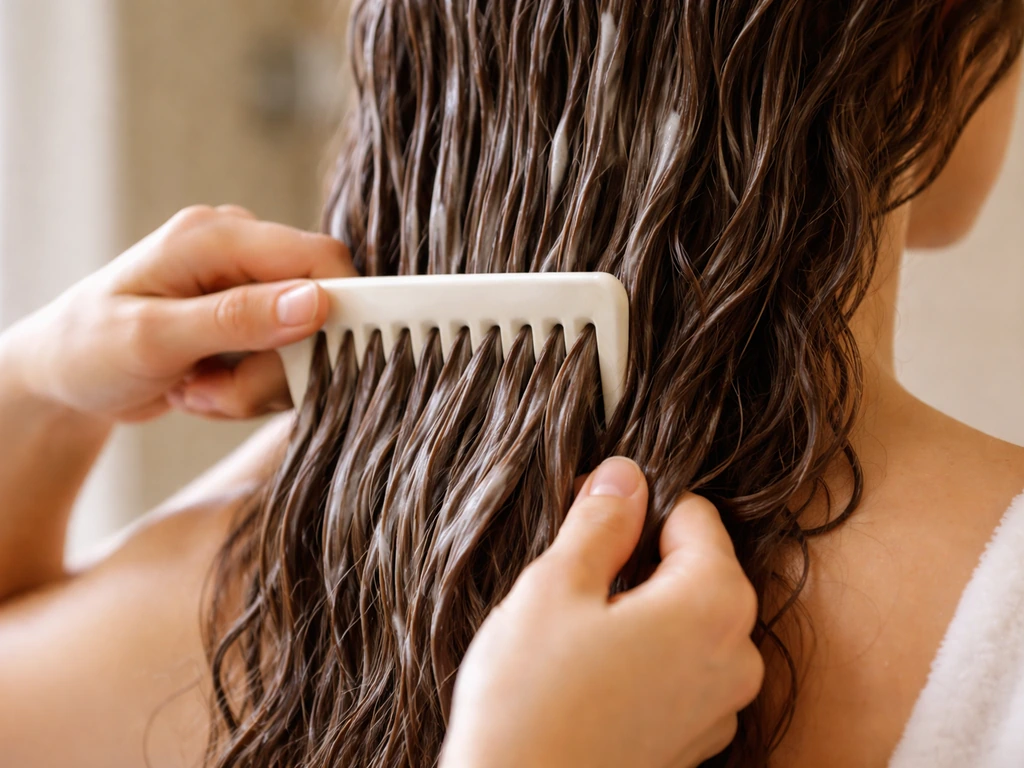
Condition on every wash, focusing on the mid-lengths and ends rather than the roots. Leave the conditioner in for at least two to three minutes before rinsing. While it's still in, detangle with a wide-tooth comb or a detangling brush starting from the ends and working your way up. This is also the stage where you can finger-coil sections or scrunch upward to encourage the wave to sit correctly as it dries. Detangling while conditioner is in the hair dramatically reduces breakage compared to detangling on dry hair, and it's especially important during grow-out because your ends are older and more fragile.
Choosing your products
Leave-in conditioner is non-negotiable for thick wavy hair during a grow-out. Apply it to soaking-wet hair after you get out of the shower, working it through with a gentle scrunch. From there, your choice between gel and mousse depends on what your hair needs: gel gives more hold and definition, dries into a cast you later scrunch out for softer waves, and works well for people whose waves tend to loosen and separate throughout the day. Mousse is lighter, adds frizz control without the crunch, and is better suited for looser wave patterns or anyone whose hair gets weighed down easily. Many people with thick wavy hair do well using both, mousse first for volume and frizz control, and then a small amount of gel scrunched in at the ends for definition.
One product pitfall to watch for: humectant-heavy styling products (like those containing glycerin high on the ingredients list) can pull moisture from the air in humid conditions and contribute to frizz when humidity is above roughly 60 percent. If you live somewhere humid or you're styling in the summer, look for anti-humectant products or gels specifically formulated for frizz control in humidity.
Drying your waves
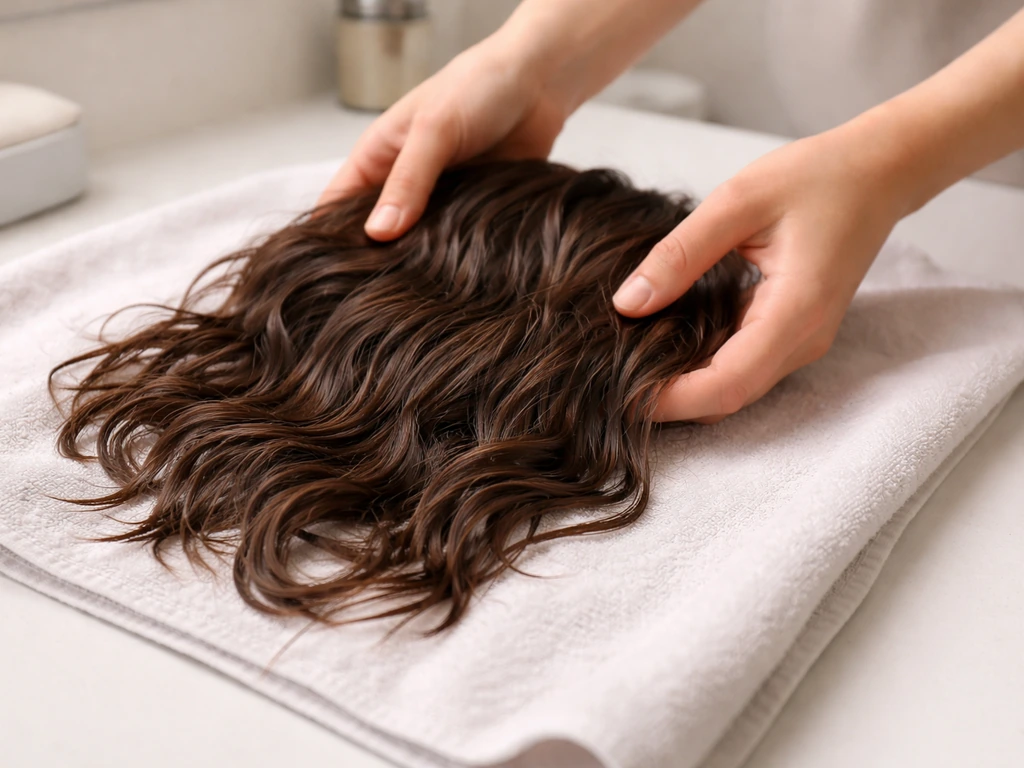
Plopping is the easiest way to set waves while reducing frizz, especially if you're avoiding heat. After applying your leave-in and styling products, lower your hair onto a microfiber towel or cotton T-shirt laid flat, wrap the fabric up around your hair, and let it sit for 10 to 30 minutes. Plopping gently compresses the waves into their natural shape and absorbs excess water without roughing up the cuticle the way rubbing with a towel does. From there, you can air dry or diffuse. Diffusing with a hair dryer on low-to-medium heat is faster and gives more definition, especially at the roots, while air drying produces a softer, less structured result. Neither is wrong; it depends on the look you want and how much time you have.
Styling through the awkward stages
The grow-out phases between pixie and shoulder length are genuinely awkward, and no amount of positive thinking changes that. What helps is having a handful of styles in your back pocket that work specifically because of the shorter length, not in spite of it.
- Half-up styles: pulling the top section back with a clip or elastic keeps the crown from puffing while letting the rest of the waves sit loose. This is particularly useful during the chin-to-shoulder stage when the pyramid problem peaks.
- Claw clips and jaw clips: these are genuinely the most forgiving tool for awkward-length wavy hair. You can twist and clip loosely at the crown for a casual updo that works even with mismatched lengths.
- Braids: a loose braid worn to sleep or for a few hours on dry hair creates a soft wave pattern and is a good way to manage tangling. A loose French braid or two plaits work well for this.
- Buns: a messy bun with face-framing pieces pulled out looks intentional at nearly every grow-out length from chin to collarbone. Secure with a soft elastic or a scrunchie to reduce tension on the length.
- Headbands and scarves: during the truly awkward short-to-medium phase, fabric headbands push the sides back and remove the "growing out" look from your silhouette immediately.
- Embracing textured second-day hair: wavy hair often looks better on day two or three than on wash day. A quick mist with water plus a tiny amount of leave-in or curl refresher scrunched in can revive waves without a full restyle.
If you're growing out an undercut or a heavily layered cut, the mismatched lengths can feel especially frustrating because the shorter underneath sections create a shelf or lump under your outer layer. Half-up styles and buns help disguise this during the grow-out, and your stylist can blend the lengths slightly at each trim appointment without taking significant length off the top.
Managing thickness, tangles, and frizz
Thick wavy hair has a specific set of challenges that get more intense as length increases. Tangles are the first problem. The more length you have, the more friction builds between strands, especially at night and in windy conditions. A few things that genuinely help: sleeping on a satin or silk pillowcase (or wearing a silk bonnet) reduces friction dramatically compared to cotton. Loosely braiding or twisting hair into a soft bun before bed prevents knots from forming overnight. In the morning, mist with a water-and-leave-in mix, scrunch gently, and let it air dry rather than brushing dry waves, which will only create frizz.
For frizz specifically, the usual cause is moisture imbalance. Hair that's dry needs more hydration (more conditioning, more leave-in, less sulfate shampoo). But frizzy hair that also feels stiff, brittle, or snaps when you handle it gently might be dealing with protein overload, where too much protein in your products is making the hair rigid and prone to breakage rather than soft and pliable. Signs of protein overload include stiffness even after conditioning, waves that look limp and puffy rather than defined, and more breakage than usual. If that sounds familiar, cut back on protein-heavy products and do a few moisture-focused deep conditioning treatments before reassessing.
For detangling, use a wide-tooth comb or a detangling brush (not a paddle brush or fine-tooth comb) on wet or damp hair with conditioner or leave-in worked through it. Start at the ends and work upward in sections. Rushing this process is where most breakage actually happens during grow-out, so give it the time it needs.
Color and chemical history during the grow-out
If you have any color, bleach, relaxer, or perm in your hair from previous treatments, those chemically processed sections will behave differently from your natural regrowth as the hair gets longer. The processed portions are more porous, which means they absorb and lose moisture faster, frizz more easily, and are more prone to breakage, especially at the point where treated and untreated hair meets. That line of demarcation is where snapping is most likely to happen.
The practical response to this is to prioritize moisture aggressively in your routine (deep condition weekly rather than bi-weekly), avoid additional heat and chemical processing while you're growing out, and ask your stylist to trim from the most damaged ends with each visit rather than just doing a flat cut across the bottom. If you want to continue coloring during the grow-out, focus on toning or glossing over the existing color rather than new bleaching or lifting, which keeps damage manageable while maintaining a polished look.
For anyone growing out a balayage or highlights, the grow-out line is usually subtle enough that you can let it develop naturally for a few months before deciding whether to blend it further. For a solid single-process color growing out to natural roots, root tinting or root blurring every 6 to 10 weeks keeps the line less obvious if you find it distracting.
When something isn't working: troubleshooting the grow-out
Most grow-out frustration is just a timing problem: the hair is in an awkward phase and you're in the middle of it. But a few situations are worth actually addressing rather than waiting out.
- Wave pattern seems to have disappeared: Check whether you've had a recent clarifying wash. Buildup is the most common reason waves go flat. Also check your conditioner and styling products for silicones, which can coat the strand and suppress pattern over time with regular use.
- Pattern is wildly inconsistent from section to section: This is often a layering issue from your last haircut. A shape correction trim with a wave-aware stylist can help. Cutting dry and asking for minimal interior texturizing usually resolves this within one to two grow-out cycles.
- Hair is snapping or breaking noticeably: First rule out mechanical causes (tight elastics, rough handling, sleeping on cotton). Then evaluate your protein-moisture balance. If hair feels stiff and dry, reduce protein and increase moisture. If hair is mushy and limp with no elasticity, it may need more protein.
- Frizz that won't quit regardless of product: Try stripping back to a clarifying wash plus deep condition and restyling with minimal product to see your actual baseline. Then add products back one at a time. Often the problem is layering too many products that interact badly rather than needing more product.
- Growth feels stalled: Hair growth that genuinely slows or stops is worth a conversation with your doctor or dermatologist. Nutritional deficiencies (especially iron, zinc, and protein in the diet), hormonal shifts, and scalp health issues can all affect growth rate. A stylist can evaluate the external picture, but if the issue seems systemic, that's a medical question.
If you're genuinely stuck and your waves aren't behaving the way you'd expect, booking a consultation with a curl-specialized stylist (look specifically for someone trained in curly or wavy cutting techniques) is worth doing. They can evaluate your wave pattern, your current shape, and your product routine in person and give you personalized guidance that a general guide can't fully provide. Sometimes one appointment is enough to reframe the whole grow-out and make the next six months feel completely manageable.
Growing out wavy hair specifically, especially thick wavy hair, has its own set of challenges that are different from simply growing out straight hair or even tighter curl patterns. If you're also navigating questions about how to grow wavy hair long-term, or making the transition from a wave-trained style back to your natural texture, many of the same principles apply, though the styling strategies shift as your goals and lengths change. If your goal is messy long hair, keep the same grow-out foundation and adjust trims, conditioning, and hold so you can maintain texture without weighing your waves down. If you want a consistent wave pattern as you keep growing past the early stages, use the same long-term approach and adjust your products and trim schedule as your length changes How to grow wavy hair long-term. If you also want a wave pattern that stays consistent day to day, a focused routine can help you get there step by step, including how to grow 360 waves how to grow wavy hair long-term. If you’re also wondering how to grow wavy hair long-term, remember that the same principles apply, but your styling needs to shift as your length changes. If you’re also wondering how to grow wavy caps, remember that the same principles apply, but your styling needs to shift as your length changes. The core stays the same: protect your ends, support your wave pattern at every stage, and give each phase the patience it deserves.
FAQ
How long should I wait after a trim before deciding it didn’t work?
If your waves look worse after a trim, wait about 2 to 3 weeks before judging. Wavy hair often needs time to “re-set” after you remove bulk, and humidity, wash day timing, and product layering can make the short-term results look uneven. If you’re still seeing a strong pyramid shape after a couple of cycles, ask for a reassessment focused on internal weight removal (or restoring weight) rather than taking more off the ends right away.
What’s the best way to refresh wavy hair during the grow-out without making it frizzier?
Use a blend of fingertip control and gentle re-wetting instead of brushing. When your hair starts to lose definition mid-day, mist with water plus a small amount of leave-in (or a leave-in refresher), then scrunch from mid-shaft to ends. Avoid fully re-brushing dry waves, because that typically increases frizz and can break up the wave pattern you’re trying to grow out.
Can I ask for a trim and a style at the same appointment, or should I keep it simple?
Yes, but only if you match the cut to your current shape problem and your density. For example, at the chin-to-shoulder stage, many people do better with face-framing and controlled internal shaping rather than heavy point-cutting through the interior. If you have thick waves, also confirm whether your stylist plans to manage bulk with undercutting (weight removed from below) to avoid collapsing the wave. Bring photos of your best “wave day” so the stylist can target your pattern.
What if I’m going longer between washes, but my roots get greasy and my waves fall out?
You can wash less frequently and still keep waves from going flat, especially if your scalp is normal to dry. Try a co-wash on the off day, but if you notice limp roots, switch to a lighter refresh (conditioner at ends only, then a small amount of gel or mousse at the roots). Also, keep product off the scalp as much as possible, because buildup at the base is one of the fastest ways to make mid-length waves look like they disappeared.
How do I tell whether I need more protein or more moisture during a grow-out?
Not always. Start by checking for breakage and dryness, because excessive protein products can make hair feel stiff and also look “bigger” but not more defined. If your hair is snapping, splitting, or feels rough even after conditioning, pause protein-heavy items and do moisture-focused deep conditioning for a few weeks before adjusting anything else. If your hair feels soft but lacks hold, you may need more gel or better styling technique rather than more protein.
What should I do at night so my wavy hair does not tangle and frizz as it grows?
Consider a “no brush” night routine. After your styling has set, lightly scrunch in a tiny amount of leave-in on dampened ends if they feel dry, then loosely twist or braid, and protect with satin or a bonnet. If you must detangle, do it only when damp with conditioner or leave-in, and start at the ends in sections so you don’t create new frizz and tangles the next day.
How should my routine change if my hair has bleach or highlights while I’m growing it out?
If you’re growing out color, treat the blend line like a weak spot. The safest approach is to keep your regular conditioning schedule, deep condition more often than you would for untreated hair, and ask for trims that prioritize the most damaged ends at each visit. For toning or glossing, request options that refresh without lifting new pigment, because extra chemical processing increases the chance of a noticeable texture difference at the demarcation.
Can I grow out wavy hair while using little to no heat, and still get defined waves?
If you want to avoid heat, you can still get definition by using a longer plop and a gel cast. Plop 10 to 30 minutes, then let it air dry fully before touching. For extra root definition without heat, scrunch upward gently while it dries, and avoid touching until it’s completely dry, because early movement is a common reason waves loosen.
What should I do if my hair looks too triangular or puffy even after following the routine?
If your hair is not reaching the “stable wave” stage yet, you may be in a temporary shape window. Before you book another trim, try a wash-day adjustment: use conditioner and detangle thoroughly, apply leave-in on soaking-wet hair, and make sure you’re not using too much heavy product that flattens the root. If it still looks severely triangular or puffy after 2 or 3 wash cycles, then see your stylist and ask specifically about adjusting internal weight distribution.