
Growing out Japanese hair straightening is a long game, but it's very manageable once you know what to expect at each stage. The treated hair stays permanently straight, so as your natural texture grows in from the roots, you'll have two distinct textures on the same strand until you either cut off the straight ends or let time do the work. Most people reach a comfortable blend point somewhere between 12 and 24 months of growth, depending on how fast their hair grows and how much length they want to keep. The key is protecting your hair's health from day one, making smart trim decisions, and learning a few styling tricks that make the in-between phases actually look intentional.
How to Grow Out Japanese Hair Straightening: A Timeline

Marcus Vickers
2 Jun 2026
What growing out Japanese hair straightening actually means
Japanese hair straightening, also called thermal reconditioning, works by breaking down the protein bonds inside the hair shaft, rearranging them into a straight structure, and then permanently locking them in place with heat. The result is a structural change at the molecular level, which is why the treated hair stays straight even after hundreds of washes. Unlike keratin treatments that gradually fade, the straight sections of your hair will remain straight indefinitely. The only thing that changes is what grows out of your scalp.
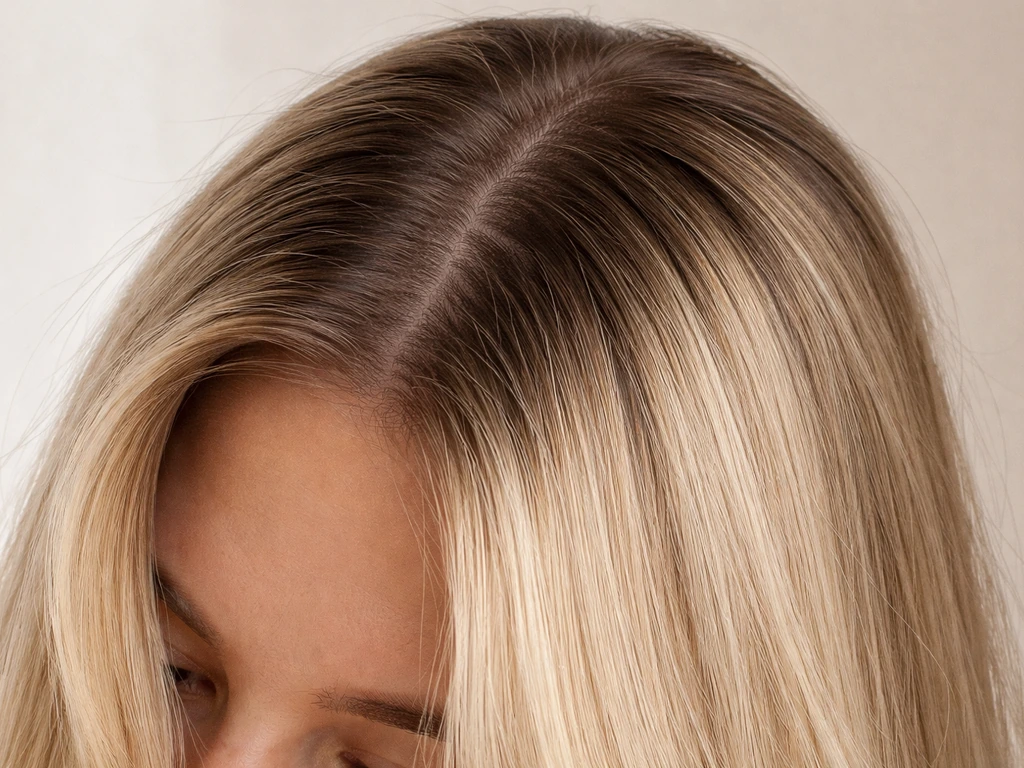
As new hair emerges from your roots, it carries your natural texture because it has never been chemically altered. If you had wavy hair before, those roots will be wavy. If you had tightly coiled curls, the new growth will curl. This creates the signature two-texture situation: natural texture at the roots blending, or more accurately clashing, with pin-straight ends. The structural damage that chemical straightening can cause, including cuticle lifting and some protein loss in the hair shaft, also means the previously treated lengths can be more fragile than your new growth, especially if you've had multiple sessions over the years. That's worth keeping in mind as you plan.
Immediate next steps right now
The most important thing you can do today, whatever stage of grow-out you're at, is shift your entire routine toward protecting the hair you have. Treated hair that has experienced protein restructuring is more vulnerable to breakage at the line of demarcation, which is where your natural texture meets the straightened section. That transition point is physically weak because the two textures behave differently and create mechanical stress every time the hair moves, dries, or is manipulated.
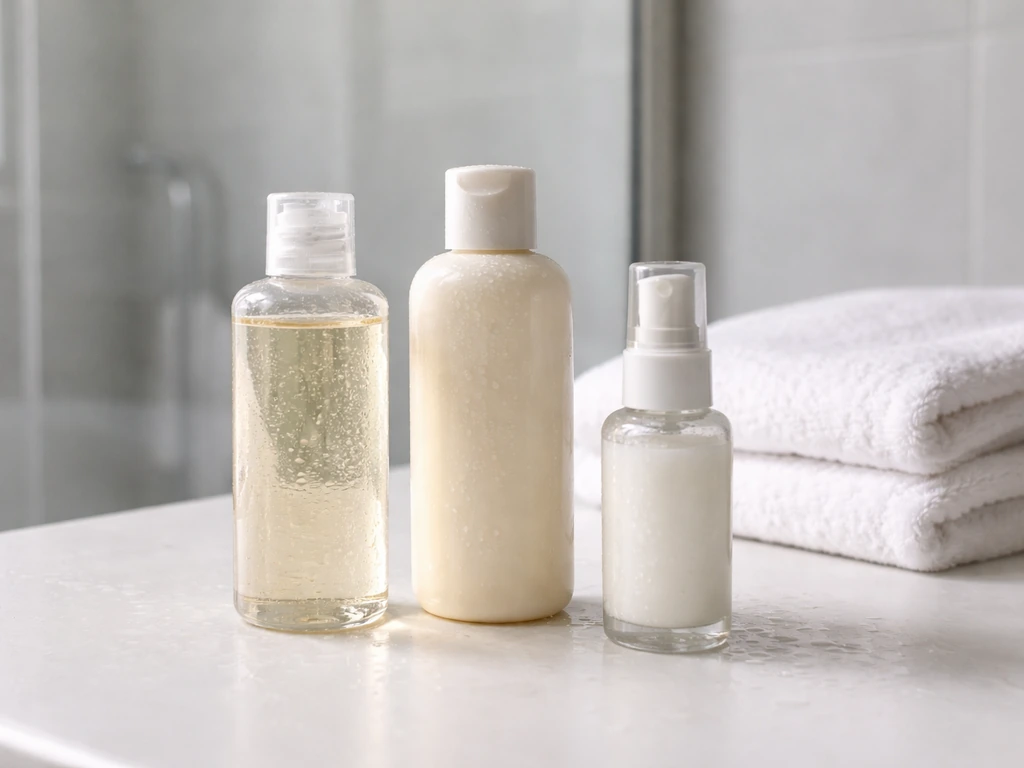
Start using a moisturizing, sulfate-free shampoo and a rich conditioner every wash. Add a deep conditioning mask at least once a week, focusing on the mid-lengths and ends where the treated hair lives. If your hair feels brittle or has been through multiple straightening sessions, a protein treatment once a month can help reinforce the cuticle, but don't overdo it because too much protein on already-stressed hair makes it stiff and snap-prone.
Use a wide-tooth comb or your fingers to detangle, always starting from the ends and working up. And genuinely minimize heat styling right now, even if the ends look fine. Every pass with a flat iron over already-processed hair increases the risk of breakage at exactly the point where your two textures meet.
- Switch to a sulfate-free shampoo immediately to avoid stripping already-fragile hair
- Deep condition weekly with a moisturizing mask, not just a rinse-out conditioner
- Use a protein treatment monthly if your hair has had multiple straightening sessions
- Detangle gently with a wide-tooth comb starting at the ends
- Minimize flat iron use, especially at and near the line of demarcation
- Sleep on a silk or satin pillowcase to reduce friction breakage overnight
- Avoid tight hairstyles that put tension on the line of demarcation
Stage-by-stage grow-out timeline
Hair grows roughly half an inch per month on average, so the timeline below is built around that pace. Your individual rate may be faster or slower, but the stages and what they feel like stay pretty consistent regardless.
Months 1 to 3: Early regrowth (up to 1.5 inches of new growth)
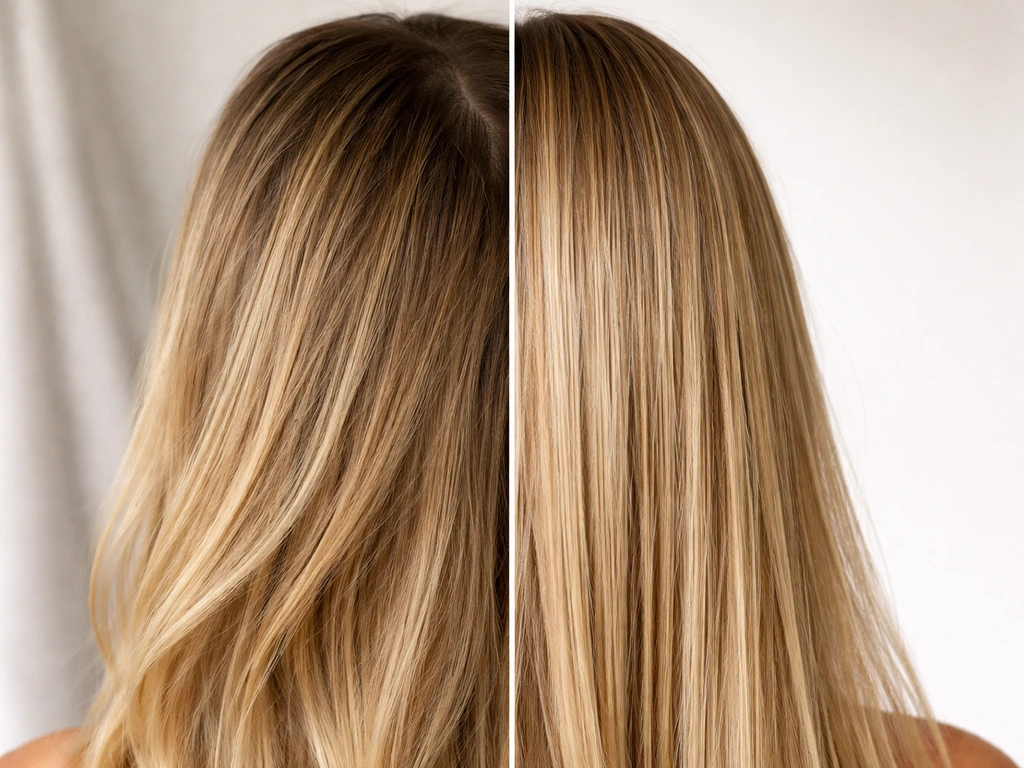
This is actually the easiest phase because there's not enough new growth to create serious texture conflict. Your roots may look slightly fuller or have a different sheen than the straight ends, but the two textures aren't long enough to fight each other yet. Use this window to build good habits: hydration, gentle handling, and avoiding heat. If you have bangs, this is also when you'll first notice them growing out and starting to change texture at the roots.
Months 3 to 6: The first awkward phase (1.5 to 3 inches of new growth)
This is where most people feel the urge to retreat to the salon for a touch-up. Your natural texture is long enough to do something, but not long enough to look polished. Wavy roots will start to kink, curly roots will spring up, and the contrast with the flat, straight ends below becomes more obvious. The line of demarcation is most noticeable at this stage.
If you want a step-by-step plan, focus on protecting your hair, choosing the right trims, and using styling that blends the two textures styling techniques start to matter most. The good news is that this is also when styling techniques start to matter most, and there are real options for blending the two textures without heat.
Months 6 to 12: Mid-grow-out (3 to 6 inches of new growth)
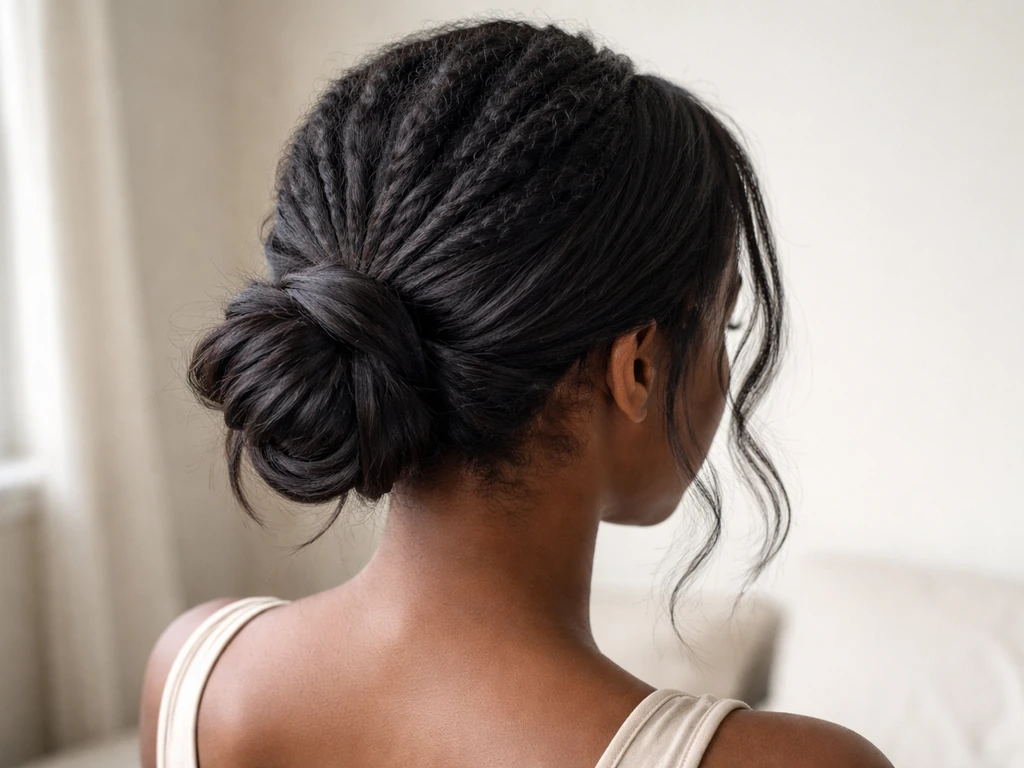
By now, if your hair was short or medium at the start, you may be approaching a length where strategic trims can start removing some of the straightened ends. This is also when protective styles and braid-outs or twist-outs become your best friends, because your natural texture is long enough to actually hold a style. The root-to-end texture mismatch is still very real, but with the right products and techniques, many people find they can style their way through this phase with confidence.
Months 12 to 24: Approaching a full transition
If you started with shoulder-length or longer hair, you're likely still carrying significant straightened length at this point. Depending on your original length and how much you've trimmed, the straight ends may still make up a large portion of your hair. Some people at the 12-month mark choose to do a bigger cut to speed up the final transition. Others prefer to keep the length and continue the slow grow-out. Both are completely valid choices. By month 18 to 24, most people with medium-length starting points have successfully grown through enough natural texture to feel like themselves again.
| Stage | Growth Amount | What to Expect | Priority Focus |
|---|---|---|---|
| Months 1–3 | Up to 1.5 inches | Subtle root difference, minimal texture conflict | Build healthy routine, avoid heat |
| Months 3–6 | 1.5–3 inches | Noticeable two-texture clash, first awkward phase | Blending techniques, hydration |
| Months 6–12 | 3–6 inches | Protective styles viable, strategic trims possible | Trim straightened ends, style natural texture |
| Months 12–24 | 6–12 inches | Real transition underway, optional bigger cut | Decide trim pace, embrace natural texture fully |
Managing the awkward in-between phases
The root-versus-ends mismatch is the defining challenge of this grow-out, and there's no magic fix that eliminates it entirely. What you can do is minimize the visual contrast and reduce the mechanical stress at the line of demarcation. The most effective approach is keeping the hair moisturized at all times, because dry hair exaggerates the frizz and texture difference dramatically. Applying a leave-in conditioner or a light curl cream to your roots while using a smoothing serum on the ends can help both sections behave in a way that looks more cohesive.
If you have layers or an undercut, the grow-out gets more complicated. Layered haircuts mean the straightened ends will reach different lengths at different parts of your head, so the texture transition won't happen all at once. Undercuts grow in from short and often very curly or wavy, which can create a dramatic contrast with longer, straight top layers. In both cases, working with a stylist who understands curl patterns and chemical grow-outs is genuinely worth it every few months, even if you're trying to keep costs down. The goal isn't a dramatic restyle, it's just strategic shaping that keeps the overall look intentional rather than chaotic.
One thing that helps enormously is removing bulk from the straightened ends over time. When straight, chemically processed ends sit below curly or wavy roots, the weight of the straight hair can actually drag down your natural texture and make it look limp or frizzy rather than defined. A skilled stylist can do invisible bulk removal, thinning the ends without dramatically changing your visible length, which helps both sections of hair behave better independently.
When and how much to trim
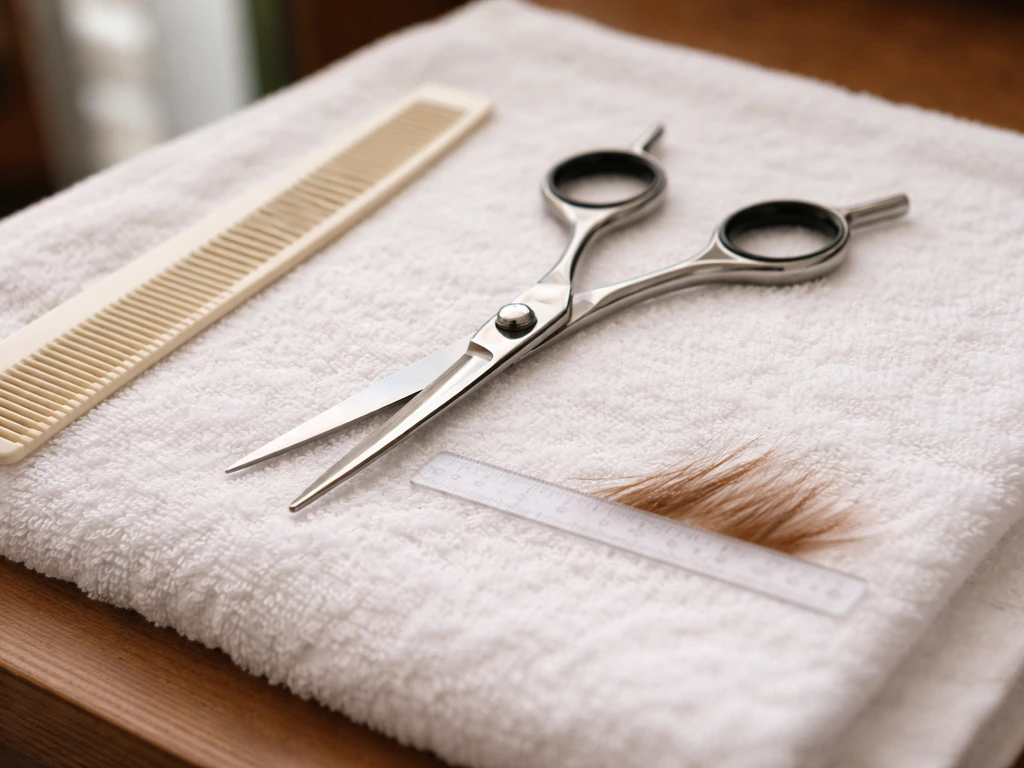
This is the question everyone asks, and the honest answer is: it depends on how much length you want to keep. If keeping length is your priority, trim just enough to remove split ends and the most damaged portions of the straightened section, roughly a quarter to half an inch every 8 to 10 weeks. This keeps the ends healthy without dramatically shortening your timeline. If you're ready to speed up the transition and are comfortable losing some length, more aggressive trims every 6 to 8 weeks can help you reach your natural texture faster.
What to ask your stylist at each stage matters. In the early months, ask for a dusting (micro-trim) to remove just the most fragile ends without touching your length. Around months 6 to 9, ask for a shape-up that removes the most obvious straightened portion while keeping as much length as possible. By month 12 and beyond, if you're ready for a bigger change, ask for a cut that removes the bulk of the treated hair and shapes around your emerging natural texture. Bring photos of the texture you're working toward, not just length references, so your stylist understands what you're growing into.
One thing to avoid: asking for a full blunt cut at the line of demarcation. That sounds logical but it creates a dramatic shelf of curl above and straight below that's actually harder to manage than a gradual grow-out. Soft layers that blend through the transition zone look far more natural and are much easier to style day to day.
Styling strategies that actually work at each stage
Early regrowth: low manipulation is your best friend
In the first three months, the best styling strategy is almost no styling. Wash, condition, apply a leave-in, and let your hair air dry as much as possible. If you need to use heat, use a diffuser on low rather than a flat iron, and always use a heat protectant. Buns, low ponytails, and braids are your workhorses here. They keep the hair contained, reduce mechanical damage at the line of demarcation, and look polished without requiring much daily effort.
Mid-grow-out: blending and embracing texture
Once you have 3 or more inches of natural growth, you have real styling options. If your natural texture is wavy, try scrunching in a curl-enhancing cream while the hair is wet and letting it air dry. This encourages your natural roots to form defined waves while making the straighter ends look intentionally relaxed rather than mismatched. If you have curly roots, twist-outs or braid-outs work beautifully: apply a moisturizing cream to slightly damp hair, twist or braid in sections, let it dry fully, then release. The resulting waves travel down through even the straighter ends and create a unified look.
Protective styles like loose twists, flat twists, and low buns are excellent for this phase because they tuck away the line of demarcation and give your hair a break from daily manipulation. If you want a sleek look, focusing the smoothing products on the roots (to calm frizz) and a lightweight oil on the ends (to add sheen without flatness) tends to work better than trying to make everything behave the same way.
When to use heat and when to skip it
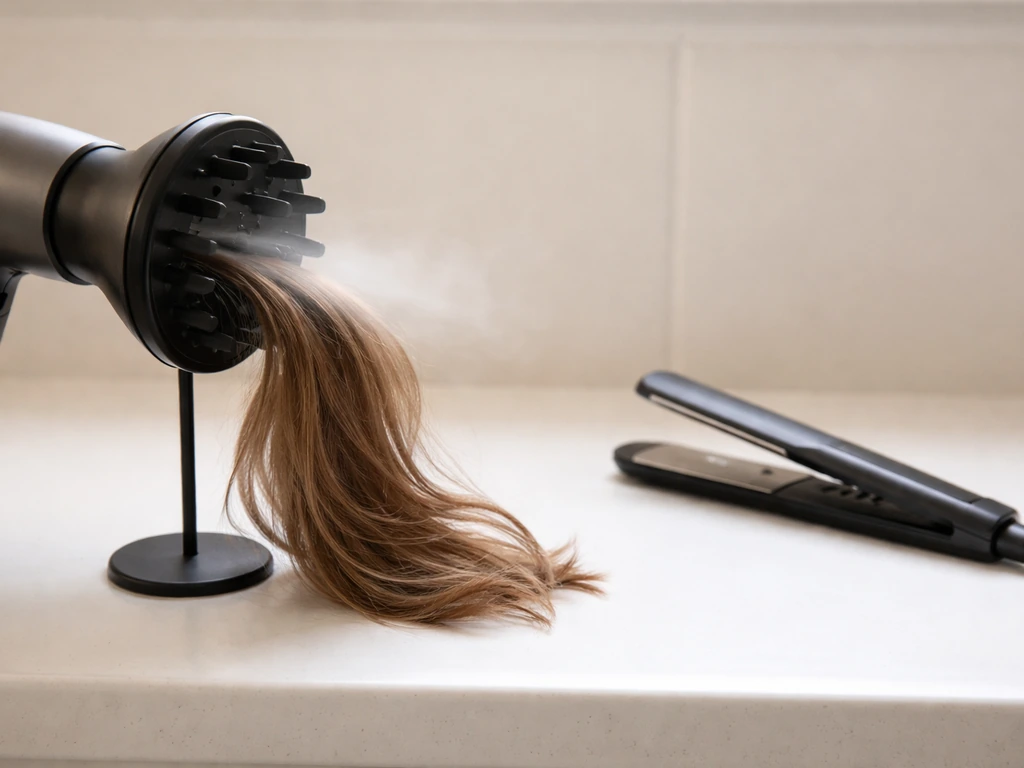
Heat is not forbidden during a grow-out, but it's worth being strategic about it. Diffusing is almost always preferable to flat-ironing during this process because it enhances rather than fights your natural texture. If you do use a flat iron, keep the temperature below 380°F, use a quality heat protectant, and try to limit it to once a week or less.
Straightening over the line of demarcation repeatedly is one of the fastest ways to cause breakage at exactly the spot you most need to protect. If you're dealing with frizzy hair more broadly, the guide on how to grow out frizzy hair covers some complementary techniques that translate well here too.
If frizz is a big part of your poofy hair problem during the transition, the tips in how to grow out frizzy hair can help you manage it the same way. If you want more guidance for keeping frizz under control while your natural texture grows in, that same approach works well during a Japanese straightening grow-out how to grow out frizzy hair.
If you are dealing with frizz along with the texture mismatch, use the guidance in how to grow out frizzy hair to keep things smoother during the transition.
Color, bangs, and uneven regrowth
If your hair is also colored
Color and chemical straightening together mean your hair has been through a lot, and the grow-out gets more visually complex. As your natural texture grows in, it may also be a different color at the roots (whether from gray, faded dye, or natural depth) while the straightened ends hold a different color or tone. The most manageable approach is moving toward a balayage or lived-in color that doesn't require precise root touch-ups every 4 to 6 weeks.
A colorist can blend the demarcation line with a shadow root technique that makes new growth look intentional rather than neglected. Avoid aggressive bleaching on hair that's already been chemically straightened; the protein loss that straightening can cause makes bleached hair significantly more prone to breakage.
Growing out bangs during the process
Bangs that were straightened will show texture change faster than the rest of your hair because they're shorter and the natural growth is proportionally more visible. By month 2 or 3, straightened bangs often start to show root wave or curl that doesn't match the still-straight tips. The easiest solution in early growth is pinning them back or to the side. As they get longer (roughly 3 to 4 inches), they can be incorporated into the overall style as face-framing layers. Avoid trimming them back to a blunt bang during the grow-out unless you're committed to keeping them, since that restarts the grow-out clock on your shortest hair.
Dealing with uneven or patchy regrowth
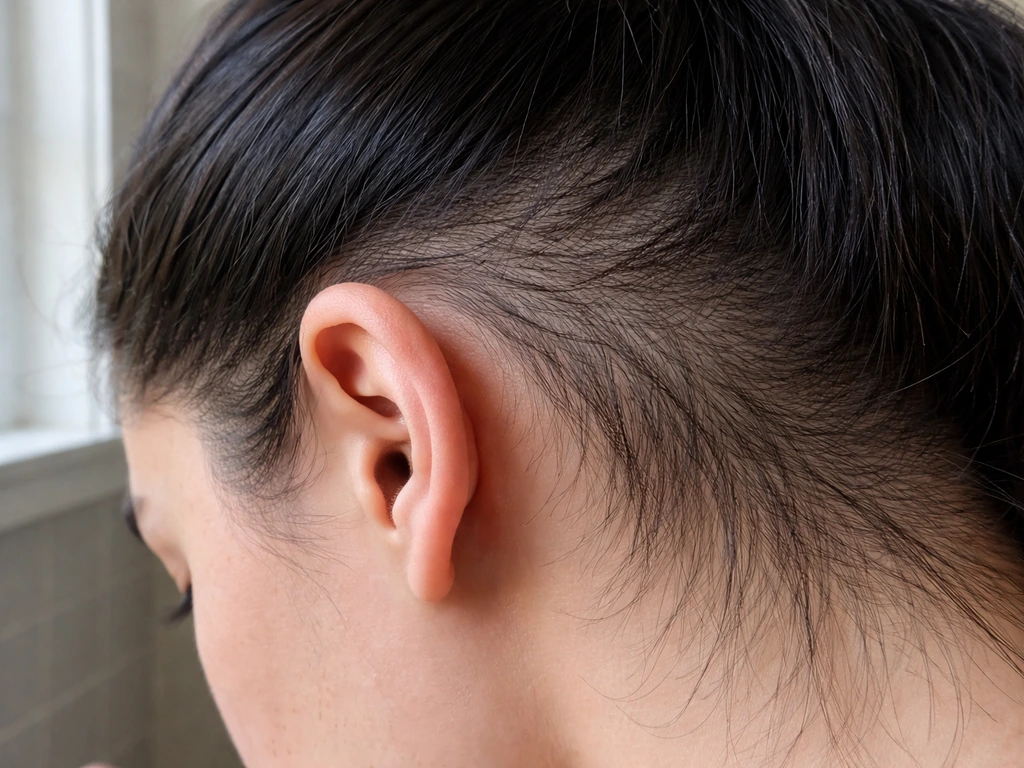
Not everyone's hair grows at the same rate all over their head. It's very common for the hair at the nape of the neck or the temples to grow faster or have a tighter texture than the crown, which creates uneven regrowth patterns. If this is you, resist the urge to try to make everything match by applying more heat to the faster-growing sections. Instead, embrace the variation and use styles that work with the different sections, like half-up styles or loose updos, that keep the unevenness from being the first thing someone notices.
Should you wait it out or do something more?
This is the decision most people face somewhere between months 4 and 9. The grow-out is real, it's noticeable, and the thought of another treatment starts to sound tempting. Here's how to think through it honestly.
Getting another Japanese straightening treatment to cover the new growth is an option, but it comes with a real cost to your hair's structural integrity. Getting another Japanese straightening treatment to cover the new growth is an option, but it comes with a real cost to your hair's structural integrity how to grow out asian hair. [Each treatment causes some degree of protein loss and cuticle disruption](https://pmc. ncbi.
nlm. nih. gov/articles/PMC10075350/) in the treated hair, and repeated applications over years increase the cumulative damage. If you're committed to eventually having your natural texture back, re-treating only postpones the grow-out and adds more fragile treated hair that will eventually need to be cut off anyway.
The line of demarcation also becomes harder to manage with each cycle.
A middle-ground option is a keratin smoothing treatment applied only to the new growth. Unlike Japanese straightening, keratin treatments are not permanent and will wash out over 3 to 5 months. They can reduce frizz and make the two textures feel more cohesive without locking in a permanent straight structure. This buys you some comfort during the grow-out without adding another permanent layer to eventually cut off. It's a reasonable choice if the texture contrast is genuinely affecting your daily life, but go in with clear eyes: it's a temporary bridge, not a solution.
The most straightforward path, and the one that protects your hair the most, is simply waiting. It doesn't feel fast, but with the right trim schedule and styling approach, most people find the grow-out far more manageable than they expected once they have a real plan. If you're also navigating fine hair during this process, many of the techniques in growing out fine hair apply here too, particularly around keeping volume without adding stress to fragile lengths. If you are working with fine hair too, the strategies for how to grow out fine hair can help you keep volume and prevent breakage during the transition.
Whatever pace you choose, the goal is the same: get your hair back to a state where you feel like yourself again. That might mean a slow, length-preserving grow-out over two years, or a more decisive cut at the 12-month mark. Both work. The important thing is that you're making the choice based on what actually fits your hair, your lifestyle, and your patience, not out of frustration during the hardest week of the awkward phase.
FAQ
Should I stop moisturizing right after my hair starts growing out new texture at the roots?
No. Keep hydration consistent, because the weakest point is where the natural and straightened sections meet. Dryness makes the demarcation look sharper (more frizz and volume difference) and increases snapping risk during detangling. If your ends feel fine but your roots look rough, focus leave-in and conditioner on mid-lengths to ends, then use a lighter product on the scalp area to avoid buildup.
How often should I detangle when growing out Japanese hair straightening?
Detangle only when hair is properly conditioned and slippery, typically during or right after washing. Use a wide-tooth comb or fingers, start at the ends, and do section-by-section to reduce tugging at the transition line. If you notice extra shedding or short broken hairs near the demarcation, slow down, reduce friction (pat hair with a towel or microfiber), and consider shorter detangling sessions rather than forcing one long one.
Is it safe to use rollers, curlers, or hair dryers to “blend” the transition zone?
Generally prefer non-heat or low-heat methods. Rollers and curl formers can help encourage the new growth to match the roots, but avoid wrapping techniques that pull on the treated ends or repeatedly rub the transition area. If you use a blow dryer, keep it on a cool or low setting, diffuse when possible, and stop if the hair feels gummy or overly stretchy, which can signal over-processing or breakage risk.
Can I color my hair while growing it out?
Yes, but plan around the risk profile. If you have bleached or heavily processed ends, avoid additional aggressive lightening, because straightening can leave the hair more prone to breakage under chemical stress. If you need maintenance, choose deposit-only toners or gradual color changes, and ask for a shadow root approach so you do not need frequent precise root processing every few weeks.
What if my roots grow in, but my ends feel softer or more limp than usual?
That often means the treated ends are being weighed down, or they are more porous than the new growth. Adjust by adding more structure to the ends (for example, a lightweight conditioner rinse-out followed by a small amount of leave-in) and using a serum sparingly to reduce “flat” heaviness. If limpness comes with rough texture or tangling, you may need a trim or a deeper conditioning cycle rather than more styling products.
How do I know I’m trimming the right amount, and where exactly should I cut?
Aim to remove visibly damaged or splitting ends, not to “chase” the line of demarcation with a blunt cutoff. A safe starting target is small trims on a schedule (often every 8 to 10 weeks for length preservation), focusing on micro-fragile ends and the most compromised straightened portions. If your stylist shows you the cut you need, ask for a plan that blends layers through the transition zone rather than creating a hard shelf.
Will protective styles damage the transition line?
Protective styles usually help, but the details matter. Avoid styles that tug, especially tight tight ponytails, slicked-down edges with constant tension, or styles that require daily re-tightening. Choose loose twists, loose braids, low buns, and change them before they become too tight. When removing the style, do it gently and detangle only with conditioner in the hair to limit stress at the demarcation.
Is it okay to use a flat iron occasionally during grow-out?
Occasional low-impact use is possible, but keep it rare and controlled because repeated passes at the transition are where breakage starts. If you do use one, use a quality heat protectant, keep temperature conservative (the article suggests below 380°F), and avoid repeatedly going over the same section. A better blend strategy is diffusing, scrunching, and using styling creams on wet hair to let the roots set naturally.
I have uneven regrowth (temples or nape look different). Should I treat those areas more aggressively?
No, resist adding more heat or more product just to force uniformity. Uneven growth is common, and over-correcting usually creates extra stress at already fragile junctions. Use styling tricks that hide or harmonize the variation, such as half-up styles, loose updos, or strategically layered shapes, so different growth patterns look intentional instead of accidental.
Should I re-treat with Japanese straightening, or is there a better middle option?
If you re-treat Japanese straightening, you are adding more permanent restructuring and cumulative damage, so it often delays your final transition and makes the demarcation harder over time. A middle-ground option is keratin smoothing applied only to the new growth, since it fades after a few months and can reduce texture contrast without permanently locking in another section. The right choice depends on how severe the daily contrast is, and it is worth discussing with a stylist who understands grow-out chemistry.
When do bangs become a problem, and what is the safest way to handle them?
Bangs can look “mixed” early because they are shorter, so the roots show texture change faster than the rest of your hair. Start by pinning them back or to the side to reduce day-to-day friction and styling demands. Once they are longer, incorporate them as face-framing layers rather than cutting them blunt in a way that forces frequent restarts on the shortest hair.
What should I do if my hair feels stretchy when wet or breaks easily near the transition zone?
That is a warning sign to reduce manipulation immediately. Skip flat ironing, minimize heat to near zero, and temporarily prioritize conditioning and detangling during wash days only. If stretchiness persists after conditioning cycles, it often indicates the hair is compromised and needs a trim to remove the most fragile treated sections. For ongoing sensitivity, consider asking a professional for a damage assessment before adding protein-heavy treatments.