
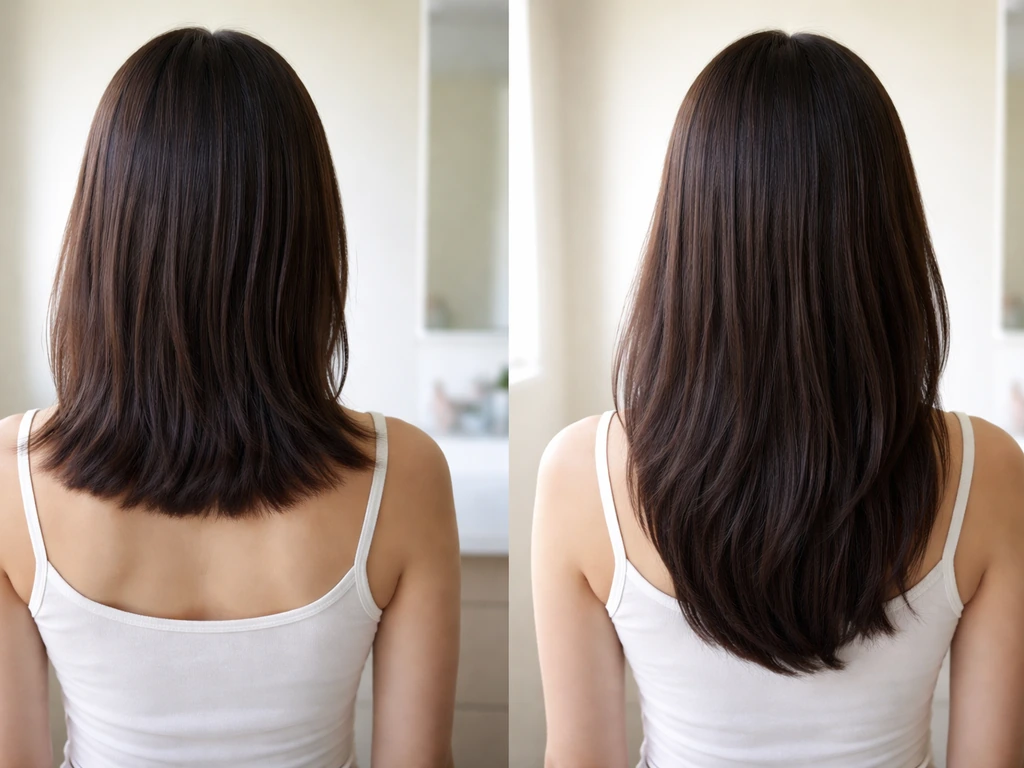
Asian hair grows at roughly the same rate as any other hair type, about half an inch (1.25 cm) per month, so getting from a short cut to shoulder length takes around 12 to 18 months depending on where you're starting. What makes growing out Asian hair feel different is the texture: it tends to be thick, cylindrical, and straight, which means every awkward in-between length is highly visible and harder to disguise than wavier or finer hair. The good news is that the same structural traits that make the grow-out phase annoying also make Asian hair quite resilient once you protect it from mechanical damage and keep a light hand with heat.
How to Grow Out Asian Hair: A Step-by-Step Timeline

Marcus Vickers
27 Apr 2026
Know where you're starting and where you want to land
Before you do anything else, take a photo today and decide on a real target length. Not a vague "longer," but something concrete: chin length, collarbone, shoulder, or mid-back. This matters because your trimming strategy, styling choices, and patience level all scale with how far you need to go. If you're starting from a buzz cut or a tight fade, you're looking at a very different first six months than someone growing out a layered bob or a blunt short crop.
Also take stock of any chemical history. If your hair has been bleached, color-treated, or chemically straightened recently, the regrowth phase involves managing two different textures at once, and that changes the plan. We'll cover that in the special cases section below. For now, the most useful thing you can do is be honest with yourself about your starting point so you can set milestones that actually make sense.
What makes Asian hair tick during a grow-out
Asian hair has the largest diameter of any hair type and a round, cylindrical cross-section. That thickness is why it tends to stick out rather than lie flat during awkward phases, and why a single split end or broken strand is so noticeable. It also means combing forces are real: when you drag a brush through tangled Asian hair, especially wet hair, you're putting significant mechanical stress on strands that are already at their weakest. Wet hair is more fragile because the hydrogen bonds in the keratin temporarily weaken, so rough handling at that moment causes more breakage than at any other time.
The round fiber shape also means Asian hair reflects light very directly, which is a double-edged sword. Healthy Asian hair looks glossy and intentional. Damaged or uneven Asian hair looks ragged and patchy. This is one reason why keeping the ends in good condition during grow-out is so important: even half an inch of split, frayed ends can make a style look messy when the hair is straight and thick enough to show every imperfection.
The other thing worth knowing: Asian hair's growth rate is consistent, not faster or slower than average. You're not going to hack the rate with supplements alone. What you can control is how much of what grows gets preserved rather than broken off, which is where the daily routine matters.
The daily routine that actually supports growth
Washing and conditioning
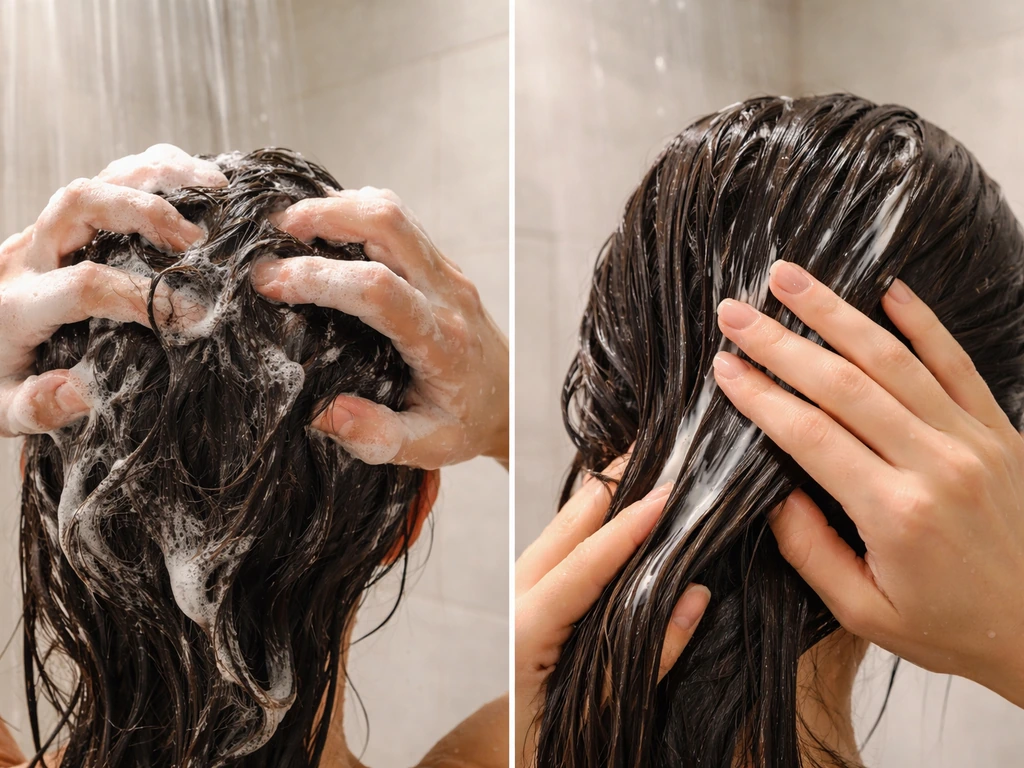
Use conditioner every single time you shampoo, no exceptions. This is NHS-level basic advice, but it's worth repeating because a lot of people skip it when hair is short, thinking it's unnecessary. Conditioner reduces friction between hair fibers by roughly 50%, which directly lowers the combing forces you put on strands when detangling. Apply it from mid-length to ends only, not the scalp, and leave it on for a minute or two before rinsing. For thick Asian hair that tends to run dry at the ends, a weekly deep conditioning mask (10 to 20 minutes) helps a lot, especially if you're also using any heat tools.
How often you wash depends on your scalp. If you wash daily, use a gentle, sulfate-free shampoo so you're not stripping the natural oils that protect your strands. Every other day is fine for most people. The goal is a clean, healthy scalp because that's where growth starts, but you don't want to create a cycle of dryness and breakage at the shaft.
Detangling without breaking
Never brush Asian hair when it's soaking wet. This is probably the single most common cause of preventable breakage during a grow-out. The right approach: after washing, squeeze out excess water with your hands, then blot gently with a microfiber towel instead of rubbing with a regular terry cloth towel. Terry cloth roughs up the cuticle and creates friction; microfiber wicks moisture while preserving the fiber's keratin structure. Then apply a leave-in conditioner or detangling spray for slip, and work through tangles with a wide-tooth comb starting from the ends and working upward toward the roots. Never yank from root to tip.
Heat and friction control
Asian hair can handle heat reasonably well compared to more porous hair types, but repeated high heat without protection still damages the cuticle and causes the kind of dryness that leads to breakage. Use a heat protectant spray every time you use a blow dryer, flat iron, or curling tool. If you're air-drying, that's ideal, but blow drying on medium heat with a round brush is totally fine as long as you're not doing it on hair that's still dripping wet. Give hair a few minutes to partially air-dry first, then use the blow dryer to finish.
Habits that quietly help (and ones that don't)
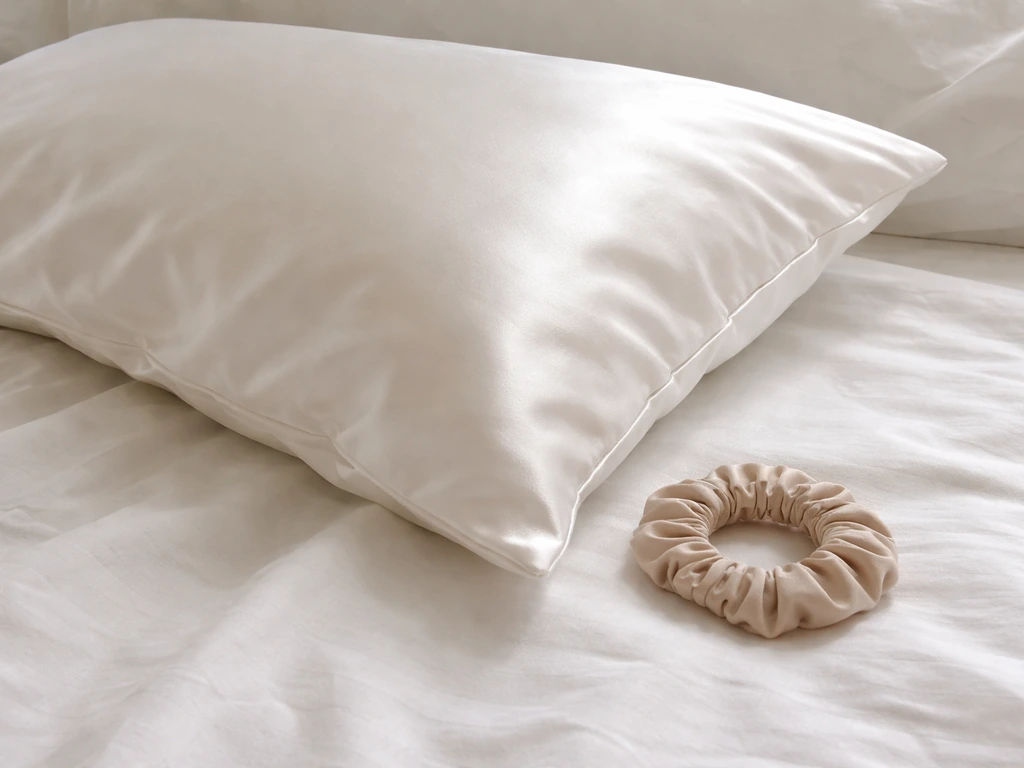
- Sleep on a satin or silk pillowcase to reduce overnight friction, especially once hair is long enough to tangle
- Eat enough protein and iron since hair is made of keratin and deficiencies show up in growth rate and strand strength over time
- Avoid elastic hair ties with metal clasps on mid-length hair; use snag-free ties or spiral hair coils instead
- Don't over-do protein treatments: if your hair already feels dry and brittle, adding more protein without deep conditioning will make it worse, not better
- Scalp massage for 5 minutes a few times a week can support circulation, and it costs nothing
Stage-by-stage grow-out timeline
Here's a realistic breakdown of what to expect month by month. These assume you start from a very short cut (buzz, fade, tight crop, or pixie-equivalent). If you're starting from something longer, like a short bob, jump to the stage that matches your current length.
| Stage | Approximate Length | What's Happening | Key Action |
|---|---|---|---|
| Months 1–2 | 0.5–1 inch / 1.5–2.5 cm | Hair starts lying flat on top; sides and back begin to lose their sharp definition; fades and line-ups look fuzzy | Decide: are you maintaining the shape with light trims, or going cold turkey? Either works, but pick one. |
| Months 3–4 | 1.5–2 inches / 4–5 cm | The awkward helmet stage: top grows faster, sides puff out, no length to style with yet | Shape the sides/back to reduce bulk; start using a small amount of matte clay or pomade to push hair forward or to the side |
| Months 5–6 | 2.5–3 inches / 6–8 cm | Enough length to start attempting a side part, curtain fringe, or short textured style; still poofy at the crown | Get a shaping trim if needed; this is when a good stylist can save months of frustration by removing bulk without sacrificing length |
| Months 7–9 | 3.5–4.5 inches / 9–11 cm | Hair starts to drape rather than spike; neck and ear coverage becomes real; most people hit their most "done" awkward phase here | Layers can help; side-swept styling or a headband keeps things intentional; resist the urge to cut it all off |
| Months 10–12 | 5–6 inches / 12–15 cm | Approaching or passing the ear on top; chin length starts to become visible as a near-term goal | Consider a proper reshape that sets you up for the next 6 months; communicate the grow-out goal clearly to your stylist |
| Months 13–18 | 6–9 inches / 15–22 cm | Shoulder-length territory; Asian hair's weight helps it lie smooth and straight at this length | Focus on end health: regular baby trims every 6–8 weeks to remove split ends without losing real length |
For guys growing out from a short fade or undercut specifically, the first three months are the roughest because the contrast between the clipper-tight sides and the growing top looks intentionally disconnected. Many people manage this by asking the barber to start blending the fade higher on the head, softening the line so the contrast is less stark as the sides fill in. The goal is to slowly move from a hard disconnected look to something more blended, without cutting off the top length you've been working for.
Styling through the awkward phases
Managing bangs and fringe
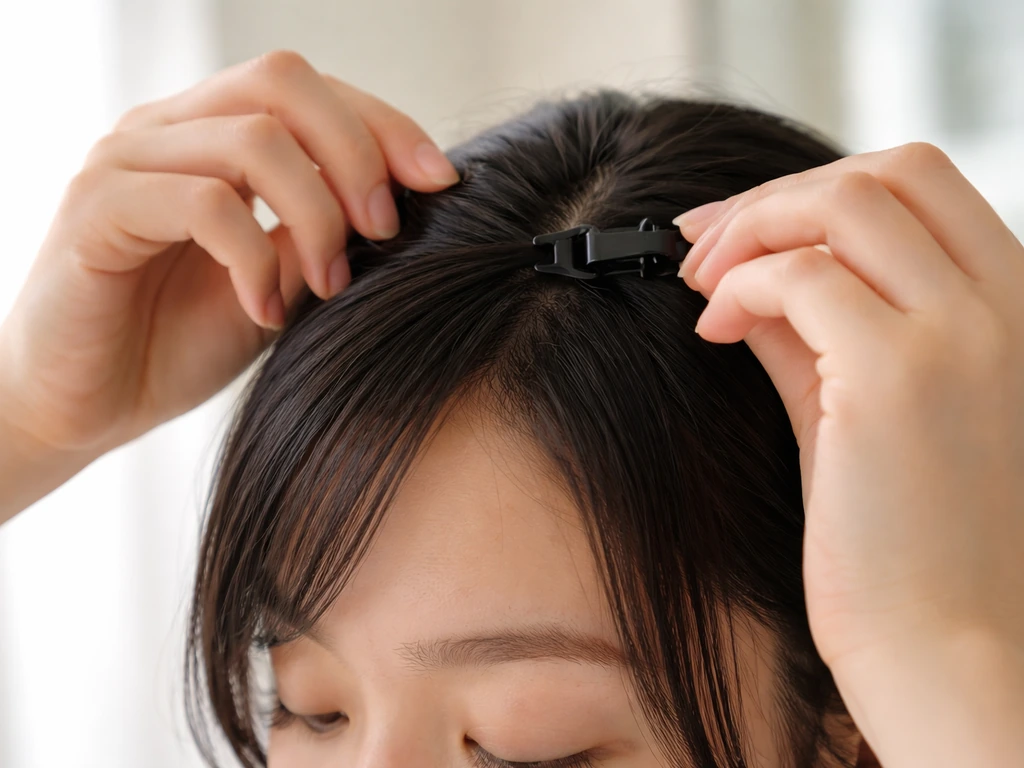
Growing out bangs on Asian hair can feel painfully slow because the hair is straight and heavy, which means fringe sits right on the forehead with nowhere to go. The best strategy at the mid-growth point (when bangs hit the bridge of the nose) is to either pin them to the side with a clip while they're damp and let them dry that way, training them into a side-sweep, or use a very small amount of pomade to push them across. Avoid trimming them unless they're genuinely getting into your eyes; every millimeter matters.
Dealing with sides and puffiness
The sides of Asian hair are where most people get frustrated during a grow-out, especially men growing from a short cut. As the sides grow in, they can puff outward rather than down because the hair isn't long enough yet to have weight pull it flat. A light hold product applied to slightly damp sides and combed downward or slightly backward can help enormously here. A blow dryer with a nozzle attachment aimed downward while running a comb through the sides also trains the hair to lie flatter. You can't rush this phase, but you can make it look more deliberate.
Layers and face-framing
Once you have enough length to work with (roughly the 5- to 7-month range), asking for light face-framing layers can be the difference between a style that looks intentional and one that looks like you just forgot to cut your hair. Layers in Asian hair need to be approached carefully: because the hair is thick and straight, over-layering creates a jagged, feathered look that's hard to manage. Ask for minimal, blended layers that remove bulk from the interior rather than sharp layers that cut into the perimeter.
Everyday styling products for each stage
| Hair Length | Best Product Type | How to Apply |
|---|---|---|
| Under 2 inches (buzz to very short) | Matte clay or light wax | Work a pea-size amount through dry hair to add texture and control direction |
| 2–4 inches (short to short-medium) | Pomade (light hold) or styling cream | Apply to slightly damp hair, comb or finger-style into place, let dry |
| 4–6 inches (medium) | Leave-in conditioner + light mousse or texture spray | Apply leave-in to damp hair, scrunch or smooth depending on desired finish |
| 6+ inches (approaching shoulder) | Smoothing serum or hair oil on ends | Apply to dry or damp ends to control frizz and add gloss; avoid the roots |
Trimming strategy while you're growing
The biggest myth in hair growing is that you should never cut it. Split ends travel up the shaft, and once they're there, they can't be repaired because hair is dead tissue. The only fix is trimming them off. The solution isn't to skip trims; it's to get small, strategic ones. A "baby trim" of 1 to 2 millimeters every 6 to 8 weeks removes damaged tips before they split further, while losing almost no real length. This is especially important for Asian hair because the thickness makes split or frayed ends very visible.
For guys with fades or undercuts who are growing out: the first mistake people make is asking the barber to keep the tight fade while the top grows, which actually slows the process of blending the two together. A better approach is to gradually raise the fade level every visit so the contrast decreases over time and the sides start to look like they belong to the top. Fades look sharp for about two to three weeks after a cut, which means you have a roughly three-week window to enjoy a clean look before it starts looking fuzzy. Use that window to decide whether you're maintaining or letting it grow.
Another rule worth following: avoid letting barbers trim too far up the sides or back just to "clean things up." This is one of the most common grow-out setbacks, where you arrive asking for a shape-up and leave with shorter sides that reset weeks of progress. Be explicit: say "I'm growing this out, please only clean up the very outer edge" and point to exactly where you want any lines to sit.
Special cases: colored, chemically treated, or previously processed hair
Growing out color or bleach
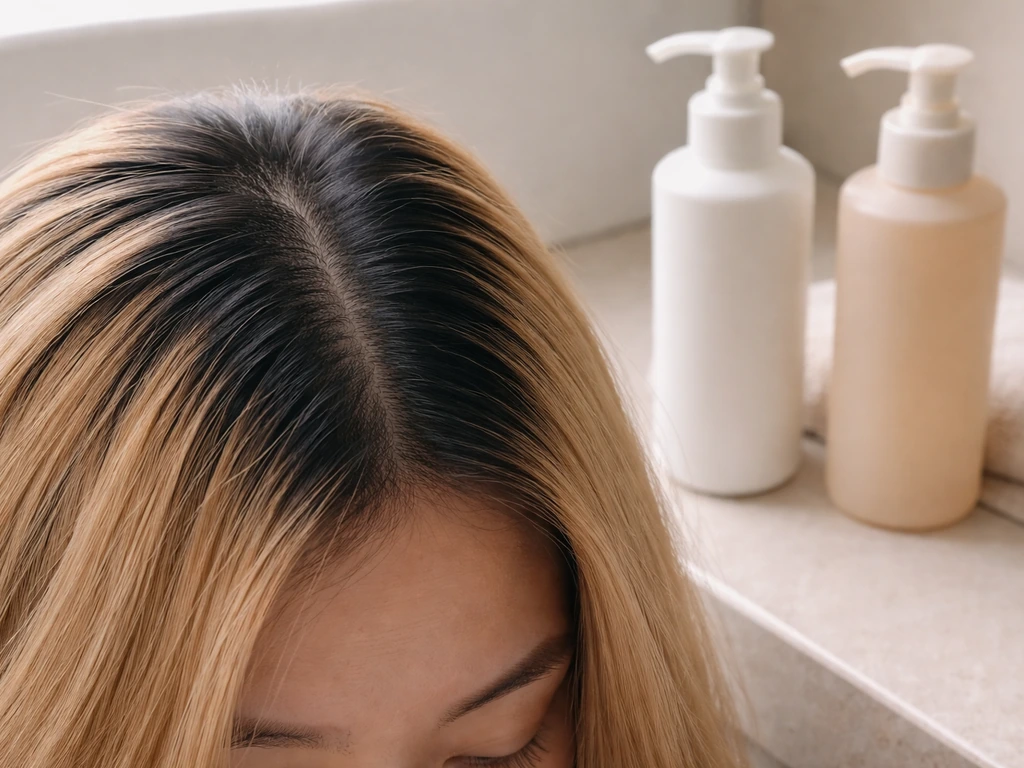
If your hair has been bleached or colored, you're dealing with a regrowth line once the roots start coming in. For Asian hair, this line is especially stark because the natural color is typically very dark and the contrast with lightened ends is high. There are a few strategies: you can embrace the two-tone look intentionally (it works well with curtain-bang styles that hide the line), you can use a root touch-up or toner every four to six weeks to keep the contrast subtle, or you can work with a colorist to transition the color with a balayage or shadow root so the grow-out line blends gradually. The last option is the most low-maintenance long-term.
For color-treated Asian hair specifically, use a color-safe shampoo with gentle foaming agents. Harsh sulfates strip color faster and dry out already-processed strands, which increases breakage right when you need length to stay intact. Deep condition weekly without fail.
Growing out Japanese straightening or chemical relaxing
If you've had a Japanese hair straightening treatment (also called thermal reconditioning), your natural texture will start to reappear at the roots while the treated length remains straight. Asian hair that's been chemically straightened often has a slightly different texture than the natural growth, and the transition zone can feel wiry or behave unexpectedly. The grow-out plan here is about protecting the treated ends from mechanical damage while the natural growth builds up enough length to trim away the treated portion. Avoid heat on the transition zone, and use a smoothing serum to manage the texture difference at the line of demarcation. This is covered in more depth in the guide specifically on growing out Japanese hair straightening. For step-by-step guidance on that specific process, see our full article on how to grow out Japanese hair straightening.
Natural regrowth after years of chemical processing
If you're fully transitioning away from chemical treatments and going back to your natural texture, the timeline is longer but the process is actually simpler: protect what's growing, trim away processed ends gradually, and be patient. The natural Asian hair that grows in will be thicker and have more integrity than the processed length. Don't compare the two; just focus on keeping the new growth healthy. If your natural texture is finer or straighter than you expected after years of processing, that's normal as the hair adjusts to growing without chemical interference. For people whose natural texture has any wave or frizz component, the guides on growing out frizzy hair or poofy hair offer strategies that pair well with this transition. If you have any wave or frizz component, the guide on how to grow out frizzy hair can help you fine-tune the routine during the transition guides on growing out frizzy hair or poofy hair.
Your grow-out plan at a glance
Here's a simple checklist to come back to at each stage of your grow-out. This isn't a rigid prescription; adjust it based on your hair's actual behavior.
- Take a photo today and set a specific length goal with a realistic end date based on 0.5 inches per month
- Switch to a microfiber towel and start detangling end-to-root with slip every wash
- Condition every single wash, no exceptions; add a deep mask once a week if you use any heat
- Book a baby trim (1–2 mm) every 6–8 weeks rather than avoiding the salon altogether
- If you have a fade or undercut, tell your barber explicitly that you're growing it out and ask to soften the fade rather than maintain it
- At months 3–4, use a light product to train the sides downward while the top catches up
- At months 5–7, ask a stylist about interior layering to remove bulk without losing length at the perimeter
- If you have color or chemical treatment, switch to a gentle color-safe shampoo and address the regrowth line with a colorist before it becomes a stark contrast
- Reassess your goal and timeline every three months; adjust your trim schedule if growth feels slower than expected
Growing out Asian hair is genuinely a patience game, but it's not a mystery. If your goal is classic-length hair, the same patience-based approach works, but you need to tailor trimming, detangling, and styling to the exact lengths you are aiming for how to grow out classic length hair. If you have fine hair specifically, you may want extra strategies to reduce breakage and add softness while you grow it out how to grow out fine hair. The texture is predictable, the rate is consistent, and the awkward phases are finite. The people who make it through without chopping it all off again are almost always the ones who had a plan for what to do at each stage rather than just waiting and hoping. Take it three months at a time, protect your ends, and don't let a frustrated barber or a bad hair week convince you to start over.
FAQ
How long will it take to grow Asian hair from shoulder length to mid-back (or waist)?
At about 0.5 inch (1.25 cm) per month, shoulder to mid-back is usually around 7 to 12 inches total depending on how tall you are, which can mean roughly 14 to 24 months. Waist takes longer, often 24 to 36+ months, so plan for trims every 6 to 8 weeks to keep those extra months from being lost to split ends.
Can I speed up growth if I cut less and stop trimming entirely?
No, trimming does not change the growth rate. It only prevents damaged ends from splitting upward, which is what makes you lose actual length. If you want maximum length retention, do the smallest possible baby trims (1 to 2 mm) on a schedule, then stop trimming between those visits even if the ends look slightly uneven.
What should I do if my hair tangles massively during the grow-out stage?
Use more slip at detangling time, not more force. Condition every wash, then add leave-in or detangling spray and detangle in very small sections with a wide-tooth comb, starting at the ends. If your hair forms knots near the crown or nape, consider a satin/silk bonnet at night and detangle before bed while hair is fully conditioned, not when it is dry.
Is it okay to brush my Asian hair dry if it feels manageable?
Usually, yes, but only if you are gentle and using the right tool. For thick, straight Asian hair, dry brushing can still cause breakage at the ends, so use a detangling brush or wide-tooth comb and brush lightly, then pause if you feel snagging. The safest rule is, detangle when hair is conditioned and has slip.
How often should I trim while growing out Asian hair if I’m trying to look decent between haircuts?
A practical cadence is 6 to 8 weeks for a micro-trim of 1 to 2 mm to remove frayed tips. If you are transitioning through very visible awkward lengths (like from a short fade), you can ask for only perimeter clean-up and no thinning, then rely on styling to manage the shape instead of taking off interior length.
What’s the best way to handle the “puffy sides” during grow-out?
Train weight and direction rather than cutting. Use a lightweight hold product on slightly damp sides, comb downward or slightly back, then blow-dry with a nozzle aimed downward while guiding with a comb. If you are seeing flare near the temples, pinning those areas temporarily while damp can also reduce the outward shape without removing length.
Should I ask for layers, or will they make Asian hair look worse while growing out?
Layers can help, but the goal is controlled bulk removal, not a choppy perimeter. Ask for minimal blended layers focused on the interior so the outer edge stays clean. If you do notice feathering or a “stringy” look, stop requesting layers and switch to blunt or lightly graduated trims until the length stabilizes.
How do I protect my hair at night so I don’t lose length from friction?
Friction is a major breakage driver in thick Asian hair. Sleep on a satin or silk pillowcase, or wear a bonnet, and loosely secure hair into a low, gentle style (loose bun or braid) so ends are not rubbing. If you wake up with tangles, refresh with water and a small amount of conditioner or leave-in before detangling.
My bangs keep falling into my eyes, what’s a low-maintenance fix?
Avoid trimming unless they truly get into your eyes. Instead, create a temporary “shape” while they dry by pinning them to the side, or push them across with a small amount of pomade (more is not better, use a pea-sized amount). For longer-term ease, ask for a fringe that blends into a face-framing line rather than cutting it straight across.
How do I prevent breakage if I heat style even occasionally?
Heat protection is non-negotiable, and timing matters. Don’t use high heat on dripping wet hair, and aim to finish after your hair is mostly dry to reduce heat exposure time. If your hair feels rougher to the touch or looks dull, scale back heat and increase deep conditioning for a couple of cycles before you resume.
What’s the easiest way to manage a visible regrowth line from dye or bleaching?
Choose a strategy that matches how much maintenance you can handle. If you want low effort, ask for a gradual transition (shadow root or balayage-style blending) so the line becomes a blend rather than a hard stop. If you prefer quicker touch-ups, plan for root touch-up or toner every 4 to 6 weeks and use color-safe shampoo to slow fading.