
Poofy hair during a grow-out is almost always caused by one of three things: uneven layers or short pieces that stick out at awkward lengths, a disrupted curl or wave pattern that doesn't have enough weight yet to lie flat, or a moisture-frizz cycle that your current routine isn't controlling. The good news is that all three are fixable without cutting your hair shorter. You need a combination of the right wash frequency, smoothing products, a proper blow-dry technique, and a strategic trim plan that removes bulk without sacrificing length.
How to Grow Out Poofy Hair: Fix Frizz and Shape While It Grows

Marcus Vickers
19 May 2026
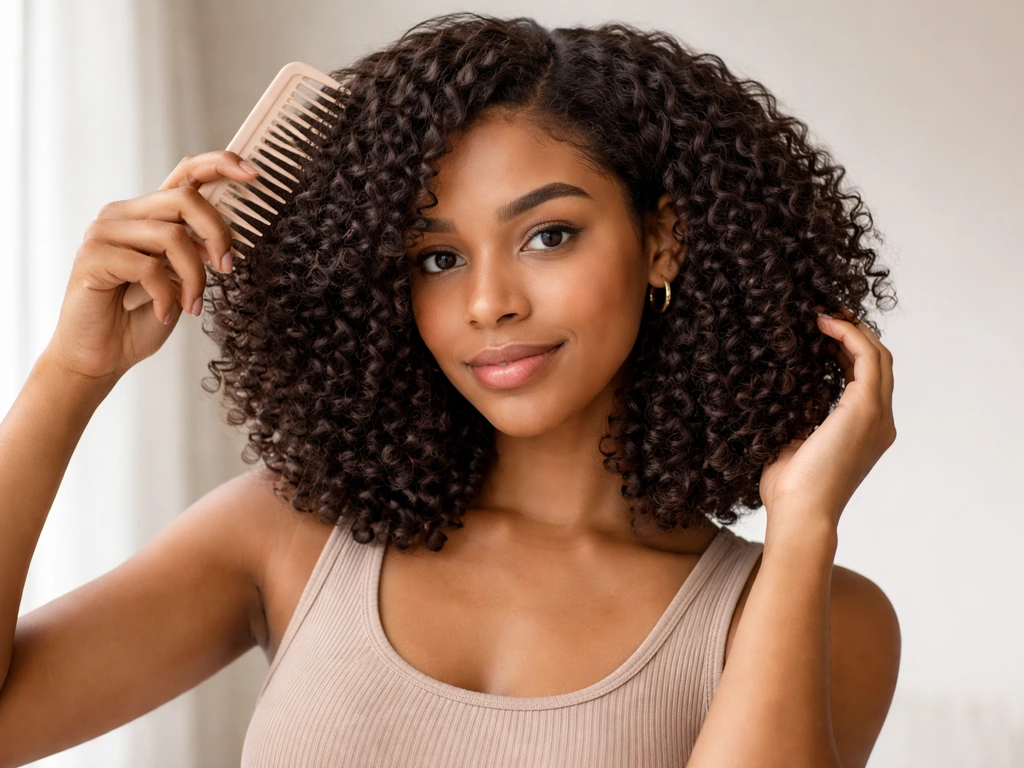
Why your hair gets poofy when you're growing it out
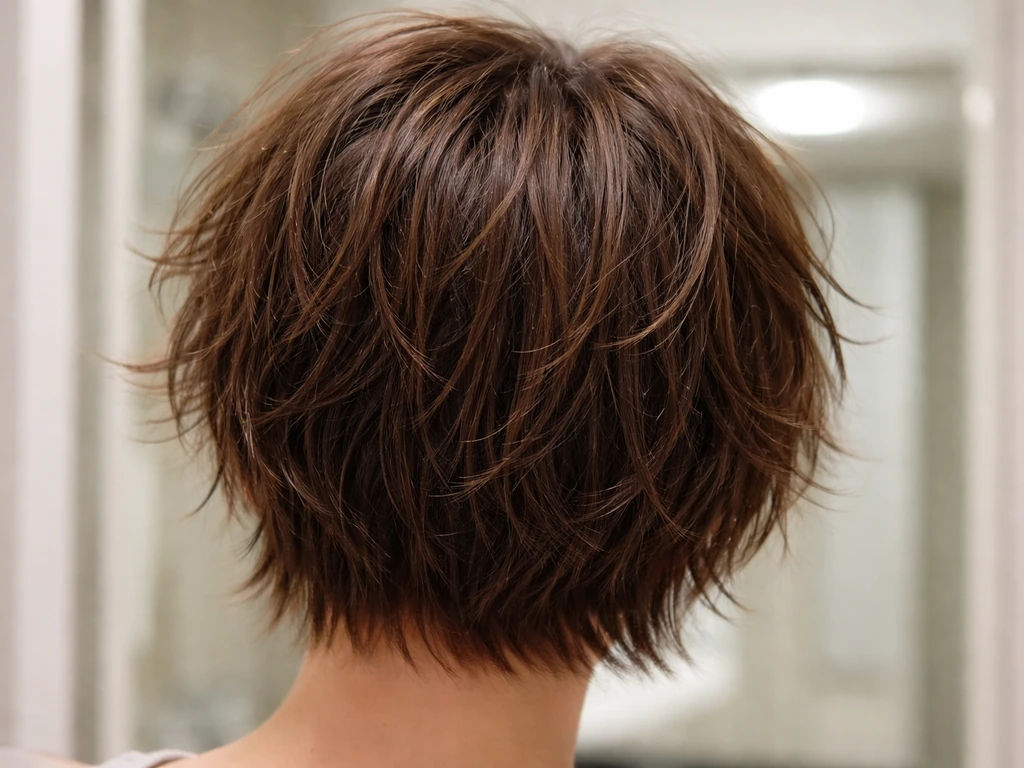
Short hair that's growing out doesn't have enough length or weight to keep itself flat. Every millimeter of new growth is a different length than what's already there, so the hair mass has uneven density all the way through. That creates gaps where shorter pieces poke outward and longer pieces fall separately, giving you the classic "triangle head" or "puffed-out sides" look.
Humidity makes it significantly worse. When moisture enters the hair shaft through gaps in the cuticle, it breaks hydrogen bonds that normally hold the hair's shape, and the strands swell and buckle. That's why your hair can look totally fine indoors and completely out of control the second you walk outside. This is especially noticeable around the part line and the top layer, where shorter pieces don't have neighboring hair to keep them anchored.
Curl and wave patterns add another layer of complexity. The Connecticut DCF Skin and Hair Care Manual includes specific haircut and service definitions such as an blank" rel="noopener noreferrer">Afro Haircut, which can be useful when distinguishing haircut service contexts during comparisons of grow-out outcomes. Curly and wavy hair types coil tighter when wet, meaning the hair can appear much shorter than it actually is once dry. Some curl types recoil to roughly half their actual length, so what feels like a grow-out plateau is often just shrinkage. L’Oréal notes that some curl types can recoil up to about 50% of their original length as shrinkage occurs blank" rel="noopener noreferrer">recoil to roughly half their actual length. Growing out a pixie, buzz cut, or undercut through this phase is particularly frustrating because the sides and nape tend to curl outward before they're long enough to fall down.
Damage and product buildup also contribute. Over-washed hair loses its natural oils and becomes dry and frizzy at the ends, while under-washed or product-heavy hair gets weighed down unevenly, causing some sections to puff while others go flat. If you want a fuller guide on how to grow out frizzy hair successfully, focus on anti-frizz washing, the right product layering, and blow-dry direction dry and frizzy. If you've had color treatments, chemical straightening, or bleach, your cuticle is more open and absorbs humidity faster, amplifying frizz at exactly the wrong time.
Quick fixes you can do today
Before you commit to a full new routine, do a wash-and-reset today. This will immediately reduce some of the poofiness and give you a cleaner starting point.
- Clarify first if it's been more than two weeks: Use a clarifying or sulfate-based shampoo once to strip out any silicone or product buildup sitting on the hair shaft. Buildup creates uneven texture and makes frizz worse.
- Deep condition for 10 to 15 minutes: Apply a thick conditioner or a hair mask from mid-shaft to ends. This closes the cuticle temporarily and adds enough slip that your hair dries smoother.
- Rinse with cool water: A cold rinse at the end tightens the cuticle before you step out of the shower, which is your first line of defense against humidity.
- Blot, don't rub: Use a microfiber towel or an old cotton T-shirt to squeeze water out gently. Rubbing with a regular towel roughens the cuticle and is a direct cause of frizz.
- Apply a leave-in immediately on damp hair: This is non-negotiable. More on which products to use below, but anything is better than nothing right now.
If you genuinely don't have time to wash today and your hair is poofy right now, lightly mist with water, work a small amount of smoothing cream between your palms, and then press your hair flat rather than scrunching or rubbing it. A medium-hold gel over a light oil can also slick down the puffiest sections at the sides and nape while you're in a rush.
Products and routine for anti-frizz and controlled volume
The goal with products during a grow-out is to seal the cuticle, add just enough moisture to prevent dryness-frizz, and not weigh the hair down unevenly. Most people over-product or under-product and then blame their hair type. Here's what actually works.
Wash frequency
For most hair types during a grow-out, washing every 2 to 3 days is the sweet spot. Daily washing strips natural oils, leaving the cuticle dry and porous, which is a recipe for humidity-frizz. Going too long between washes causes buildup that causes uneven texture. If your scalp gets oily fast, use a dry shampoo at the roots only on off days, and avoid brushing it through to the ends where it will add bulk.
The product stack that actually works
| Product type | When to apply | What it does | Best for |
|---|---|---|---|
| Leave-in conditioner (lightweight) | On soaking-wet hair, pre-styling | Adds moisture barrier, reduces frizz as hair dries | All hair types, especially fine or color-treated |
| Anti-frizz serum or smoothing oil (argan, marula, or jojoba) | On damp hair before heat or after drying | Seals cuticle, blocks humidity | Wavy, curly, coarse, or damage-prone hair |
| Medium-hold cream or pomade | On damp or dry hair to flatten sides/nape | Controls short pieces that stick out | Pixie/buzz grow-outs, undercuts, side sections |
| Gel (medium hold, non-crunchy) | On damp hair before diffusing or air drying | Defines shape and reduces puff during drying | Wavy and curly textures |
| Dry shampoo | On dry hair at roots only, between washes | Absorbs oil without disrupting the length | Oily scalp types on off-wash days |
A common mistake is applying oil or serum to wet hair before a leave-in. Oil sits on top of water and blocks moisture from penetrating, so always layer: leave-in conditioner first, then a cream or serum on top to seal it. If you're aiming for smoother, more Japanese hair straightening style results, the same layering approach helps keep the cuticle sealed and your finish more controlled layer: leave-in conditioner first. Keep the amount small, especially on fine hair. Start with a dime-sized amount and add more if needed. You can always add but you can't take away.
Blow-dry and detangle techniques for less puff
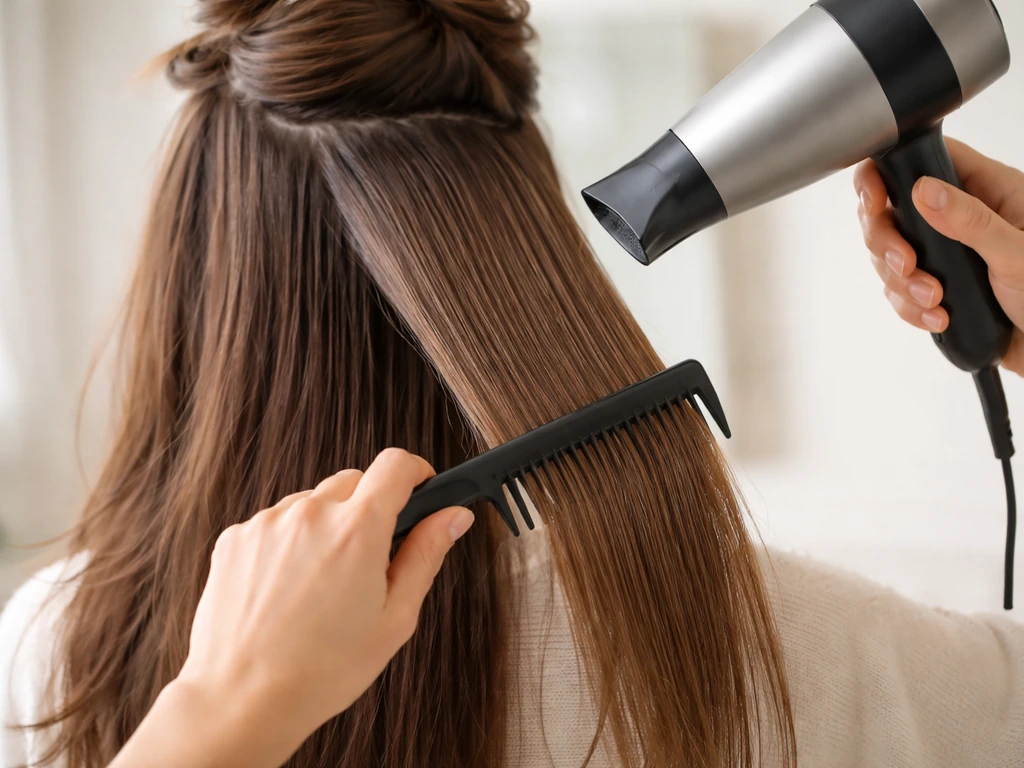
How you dry your hair has a bigger impact on poofiness than most people realize. The direction you apply heat, the temperature, and the order in which you dry sections all determine whether your hair dries smooth or puffed out.
Detangling first
Always detangle before applying heat. Use a wide-tooth comb or a wet brush on damp (not soaking wet) hair, starting at the ends and working upward. Never start at the root on tangled hair. For curly or wavy textures, finger-detangle first so you don't break the curl pattern before it's had a chance to form. For straight or wavy hair that you're going to blow-dry smooth, a paddle brush works well on damp hair once you've removed the major knots.
Sectioning for a smoother result
Working in sections is the single most effective thing you can do to stop poofy blow-drys. Even if your hair is short, clip it into at least three sections: two sides and a back. Dry the back first from underneath, directing heat downward from root to tip. Then do the sides, pulling each section taut with a round brush and following with the dryer nozzle pointing down the hair shaft. This direction matters because the cuticle scales lie flat when heat moves down the shaft and lift up when you blast from underneath or at random angles.
Heat settings and tool choices
- Use medium heat (around 300 to 350°F) rather than max heat. High heat dries the cuticle out, making it more porous and reactive to humidity right after styling.
- Always use the nozzle attachment on your dryer. It concentrates airflow and lets you direct heat precisely instead of blasting all directions at once.
- For curly or wavy hair you want to preserve (rather than straighten), use a diffuser on low heat and scrunch upward rather than disturbing the curl pattern.
- Finish each section with a cool shot. The cool air sets the cuticle closed, which is exactly what reduces humidity frizz throughout the day.
- A round brush or boar bristle brush gives smoother results than a plastic paddle brush for smoothing. For short grow-out lengths, use a smaller barrel round brush so you can actually get grip on the hair.
Style hacks for awkward grow-out lengths
The awkward phase is real and there's no skipping it, but there are ways to make each stage look intentional rather than neglected. The specific problem area depends on where you're starting from.
Growing out a pixie or buzz cut (0 to 4 inches)
The sides and top grow at different rates, and the sides tend to curl outward before they're long enough to fall down. A medium-hold pomade or wax pressed flat against the sides controls this immediately. Side-swept styling with a small amount of cream can push everything in one direction and eliminate the puffed-out look. Headbands work well here too, not just as an accessory but as a functional tool to hold the top layer down while it grows. If you have an undercut growing in, the line between the short and long sections creates a ledge that can stick out, and pressing product into that section daily helps flatten it.
Growing out a bob or lob (3 to 6 inches)
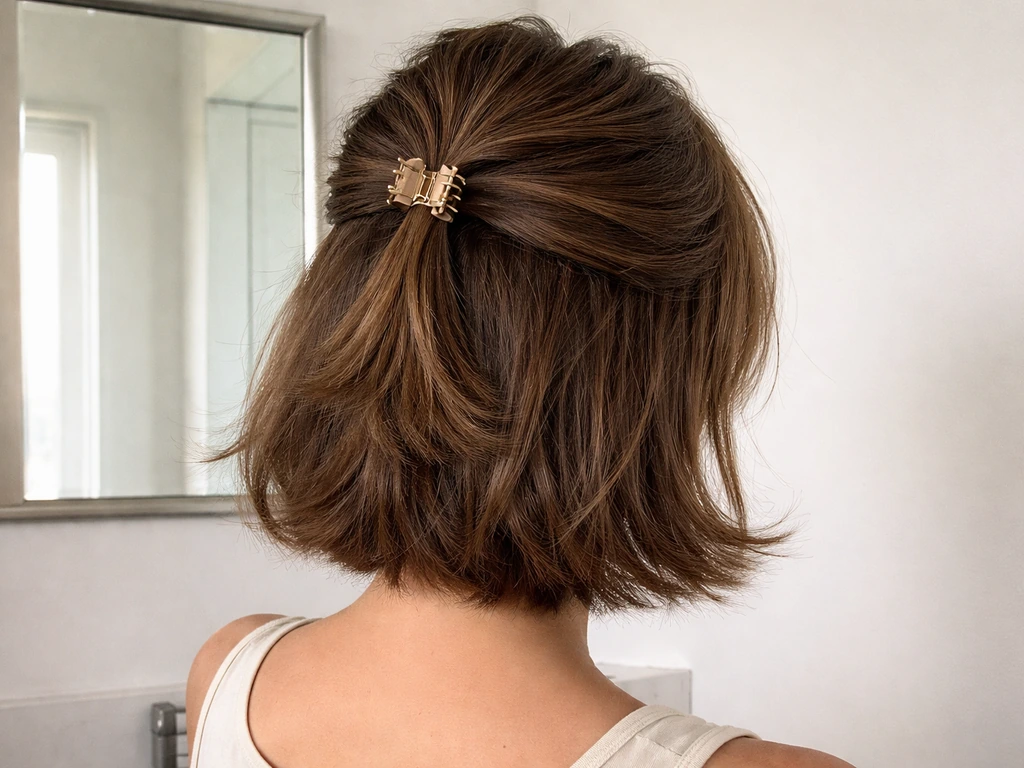
This is the stage where the hair is too short to tie up but too long to stay smooth on its own. A half-up style using a small clip or elastic at the crown is your best friend here because it removes the top layer from the equation and keeps it from puffing outward. Braids, twists, and pin-back styles give the mid-length sections somewhere to go. For nights or off days, a loose braid or two-strand twist keeps the hair flat and elongated while it dries, so it air-dries with less puff.
Managing bangs as they grow out
Growing out bangs is its own specific battle. The stage where they've grown past the eyebrow but aren't chin-length yet is when they poof the most, because there's no weight to pull them down. Part them to one side with a little pomade or serum and use a clip or bobby pins to train them to lie flat for the first few months. A light-hold hairspray on the bang section after styling will keep them from reacting to humidity. Avoid trimming bangs straight across while you're growing them out, as this resets the length and keeps you in the awkward phase longer.
The neckline and sideburns
Short hairs at the nape and around the ears are often the main source of visible puffiness when the rest of the hair is under control. A light gel or pomade applied with your fingertips can smooth these sections daily. If the sideburn area is growing out from a fade or undercut, it's going to look a bit wispy and uneven until it reaches a length that blends with the top. A clean line-up at the edges (without cutting any length) makes the transition look cleaner without resetting your progress.
How to trim while still growing
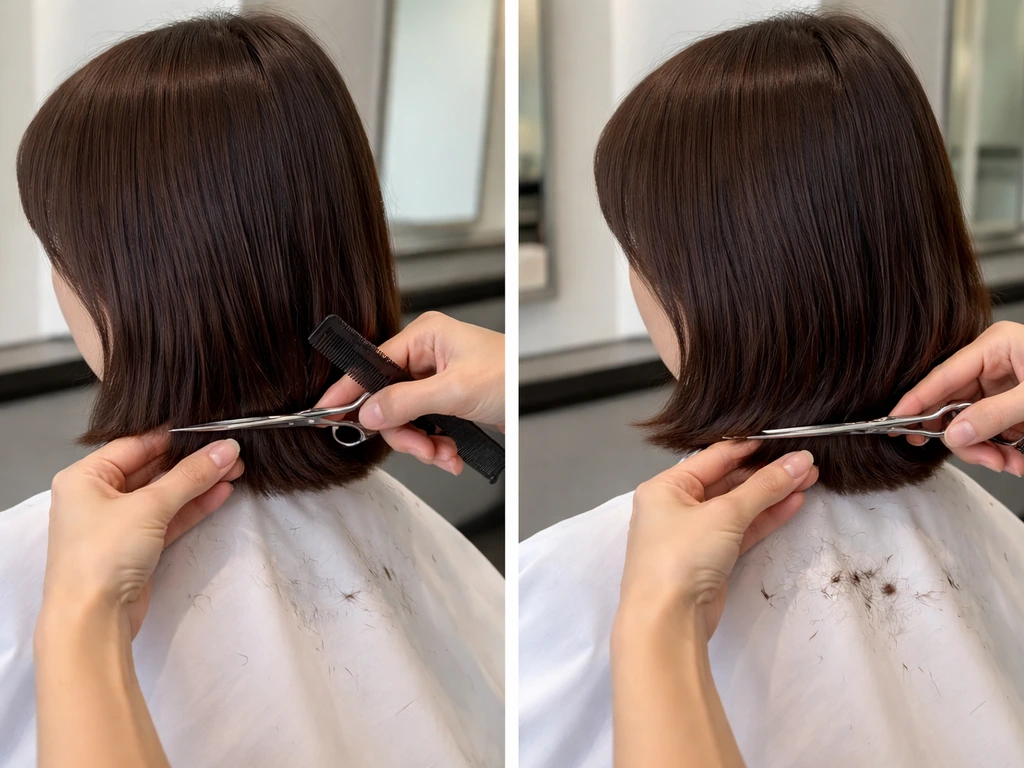
The biggest fear when growing out is that any trim will set you back. But strategic trimming actually helps with poofiness and speeds up the appearance of progress, because hair that's healthy and shaped looks longer and cleaner than hair that's scraggly and bulky. If you want your grow-out to look smooth and intentional, focus on a routine that controls frizz, balances moisture, and supports healthy growth.
The key distinction is between a length trim and a shape trim. A length trim removes actual growth and should be avoided except to remove severe damage. A shape trim thins out bulk, removes split ends, blends layers, and cleans up the outline without touching the length. For poofy grow-outs, shape trims every 8 to 12 weeks are genuinely helpful. Ask your stylist specifically to: remove weight from the interior (not the perimeter), blend any harsh layer lines that are causing puff, and taper rather than blunt-cut any sections that are sticking out.
For the neckline and around the ears, a clean-up every 4 to 6 weeks keeps the grow-out looking intentional. This is not a haircut, it's maintenance. Even doing this at home with a trimmer on a guard one size up from your shortest length helps enormously. If you're growing out an undercut specifically, you can clean the hard line out gradually each visit so the blend softens over time instead of leaving a harsh ledge.
The one situation where you should trim length is if you have significant heat damage, bleach damage, or split ends that are traveling up the shaft. Damaged ends are porous, they frizz more, they tangle more, and they make the whole head look more poofy even if the root area is behaving. A half-inch off damaged ends can make the remaining hair look and behave noticeably better.
What to expect month by month (and how to troubleshoot)
Hair grows roughly half an inch per month on average, though this varies by genetics, health, and hair care. Here's a realistic stage-by-stage picture of what happens with poofiness and what to focus on at each phase.
| Stage | Approximate length | Main poof problem | What helps most |
|---|---|---|---|
| Month 1 to 2 | 0.5 to 1 inch | Sides curl out, top grows unevenly, nape fluffs | Pomade/wax daily, cool-shot blow-dry, headbands |
| Month 3 to 4 | 1.5 to 2 inches | Top layer puffs, crown volume hard to control | Leave-in + gel, diffuser for curly types, clips at crown |
| Month 5 to 6 | 2.5 to 3 inches | Triangle effect, sides wider than top | Shape trim to remove bulk, half-up styles, smoothing serum |
| Month 7 to 9 | 3.5 to 4.5 inches | Layers split and stick out at awkward angles | Sectioned blow-dry, round brush, braid/twist overnight |
| Month 10 to 12 | 5 to 6 inches | Enough length for ties but still some poof at roots | Consistent deep conditioning, weight from length begins to help |
| Beyond 12 months | 6+ inches | Poofiness reduces as weight takes over | Maintain with masks, protect ends, enjoy the progress |
When your routine isn't working
If you've been consistent for three or four weeks and your hair is still persistently poofy, run through this checklist. First, check if you have buildup: if your hair looks dull and feels coated even right after washing, do a clarifying wash. Second, check your conditioner weight: if you have fine hair and are using a thick, creamy mask every wash, it could be over-conditioning and making the roots limp while the mid-shaft puffs out. If you are learning how to grow out fine hair, paying attention to conditioner weight and how your roots react can make a big difference. Third, check your drying method: if you're air drying without product or heat, humid air during the drying window is the likely culprit. Add product to damp hair before it dries or commit to a blow-dry routine. Fourth, consider whether a scalp issue (excess oil production, flakiness, or irritation) is affecting how the root area behaves, as these can cause the roots to sit at a lifted angle instead of flat.
If you're also dealing with frizz from a specific texture or hair type background, like tightly coiled natural hair, Asian hair with strong directional memory, or hair that's been chemically processed, the poof causes can overlap with those specific texture challenges. The general routine above applies, but the product weights and techniques may need to be adjusted to match your specific texture.
Your starting routine, right now
- Do a clarifying wash today if you haven't in the past two weeks.
- Apply a leave-in conditioner on wet hair immediately after every wash from here on.
- Add a smoothing serum or oil on top of the leave-in, focusing on the mid-shaft to ends.
- Blow-dry in sections using a nozzle attachment, directing heat downward, and finish with a cool shot.
- Use a medium-hold cream or pomade on your problem sections (sides, nape, bangs) daily.
- Book a shape trim (not a length trim) within the next 6 to 8 weeks to remove bulk and blend layers.
- Reassess in 4 weeks: if frizz is still a problem, troubleshoot product weight and drying method first before changing anything else.
Growing out poofy hair is a process, not a problem to permanently solve in one go. What works at month two won't be exactly what you need at month six, because your hair's length, weight, and layer structure are constantly changing. Check in with your routine every few weeks and adjust as you go. The awkward phase is temporary, and the fact that your hair is behaving wildly right now mostly means it's growing exactly as it should. If you are trying to grow out Asian hair, you may need to fine-tune your wash frequency, moisture balance, and styling direction to control poofiness at each stage growing exactly as it should.
FAQ
My hair is poofy right after washing, what should I check first?
If your hair looks poofy immediately after washing, the issue is usually product and technique, not “not enough length.” Start with a clarifying wash first (to remove coating or hard-water buildup), then re-style only on damp hair using leave-in first, then a small amount of sealing cream or gel. Also make sure you’re detangling and drying in downward direction, because random angles lock in lift while the cuticle is still changing.
Can I blow-dry my hair to speed up growing out poofiness?
Yes, but only for controlling shrinkage and flyaways while you’re in the short phase. If you blow-dry, do it in sections and keep the dryer nozzle pointing down the hair shaft, finish with a cool shot to set, and avoid adding more styling layers after it’s fully dry. If you air-dry, use a light amount of product on damp hair and press it into place, so the hair dries in a flatter shape.
Should I wash more often or less often to grow out poofy hair?
Switching wash frequency helps, but change only one variable at a time. If you currently wash daily, move to every 2 to 3 days and watch how your roots and mids respond. If you wash every 5 to 7 days and get buildup, shorten the gap instead. The goal is to avoid dryness-frizz at the ends and avoid coated, uneven texture from buildup.
What if I use a leave-in and my hair is still puffing at the crown?
If you’re using a leave-in and still getting puff at the crown or sides, it’s often because the product amount is uneven, or because you’re applying it to dry hair. Apply on damp hair, use a smaller quantity, and focus on mid-length to ends, then use a touch of smoothing gel on the puffiest perimeter pieces. For fine hair, skip heavy masks during the grow-out and use lighter conditioner or leave-in only.
How do I handle puff that comes back during the day?
Don’t brush through dry, frizzy areas to “fix” them, that usually creates more lift and creates a halo effect. Instead, re-wet just the puffy sections with a light mist, then press with your palms and add a tiny dab of smoothing cream or gel. If you need detangling, detangle on damp hair first, then avoid repeated combing while it’s drying.
What should I do at night to prevent poofy hair in the morning?
Sleeping routines matter because friction and stretched curl patterns can worsen poofiness in the morning. Use a satin or silk pillowcase, or wear a loose bonnet and loosely secure the hair (half-up or braid) so the top layer doesn’t get crushed. If your hair is wavy or curly, avoid sleeping with it completely loose if it tangles, because tangles dry as extra bulk.
How do I ask for the correct trim so I don’t lose length?
A shape trim helps, but only if you ask for the right goal. Ask your stylist to remove bulk from the interior, blend harsh layer lines, and taper sticking-out sections, not to shorten your perimeter. If you’ve had recent chemical damage, mention it and ask whether your splits are actually traveling upward, since that is the main scenario where a length reduction is worth it.
When should I trim length instead of only doing shape trims?
If split ends are traveling up, they will keep creating tangles, frizz, and visible puff even when the roots behave well. Look for frequent tangles at the same spots, roughness that doesn’t improve with moisture, and split ends closer to the mid-shaft than before. In that case, a small length removal (like a half-inch) can make the rest of the hair look smoother immediately.
Where does oil fit in, can I use it on wet hair while growing out poofy hair?
For most people, don’t add oil on top of water-based layers on damp hair. The useful approach is leave-in on damp hair first, then a cream for smoothing, and if needed a small gel for hold. If you want shine or extra slip, use a tiny amount of oil only on fully dry ends or as a last step in small quantity, because heavy oil can make hair look weighed down in patches.
How can I tell if my grow-out plateau is shrinkage instead of real breakage?
If you’re stuck at a grow-out plateau, shrinkage might be the reason, especially with curls or waves. Check your hair length in its wet state, then observe after drying with your intended technique. If the “new growth” only looks longer while wet and snaps back when dry, you likely need better weight and curl formation on damp hair, not more time alone.
My nape and ears stay poofy, what can I do specifically?
If the puff is mostly at the nape and around ears, focus on daily perimeter control rather than changing your whole routine. Use a light gel or pomade on fingertips, press the hair flat, and avoid heavy application on the rest of the head so you don’t create a stiff mask look. Keeping those edges cleaned up every 4 to 6 weeks also helps the transition look intentional.
How do I stop humidity from undoing my grow-out?
If humidity ruins your style, the fix is to seal the cuticle right when your hair is damp but forming its set. Use a leave-in, then a light sealing product (cream or gel depending on your hair’s needs), and dry with direction down the shaft. If you need extra protection, use a light-hold hairspray only on the perimeter and bang area after styling, not as a thick overall coating.
My hair feels coated even after washing, could buildup be causing the poof?
If your hair feels coated right after washing, don’t just add more conditioner. Do a clarifying wash, then scale back on mask heaviness and reduce layering during the grow-out. Also avoid brushing dry with product residue, because it can spread buildup and create uneven texture that reads as poofiness.