
Growing an afro from a fade takes roughly 12 to 18 months to reach a full, rounded shape, but the process looks intentional and decent much sooner than that if you manage it right. If you're aiming for a jewfro, the same patience and moisture routine help you build the rounded look without losing length to breakage how to grow a jewfro. The first 6 to 8 weeks are the awkward part where the sides and back are catching up to the top, and everything feels uneven. After that, you enter a phase where styling tools, the right moisture routine, and a blank" rel="noopener noreferrer">light trim every 10 to 12 weeks keep the shape progressing without sacrificing the length you've worked for.
How to Grow an Afro From a Fade: Step-by-Step Timeline

Marcus Vickers
24 Jun 2026
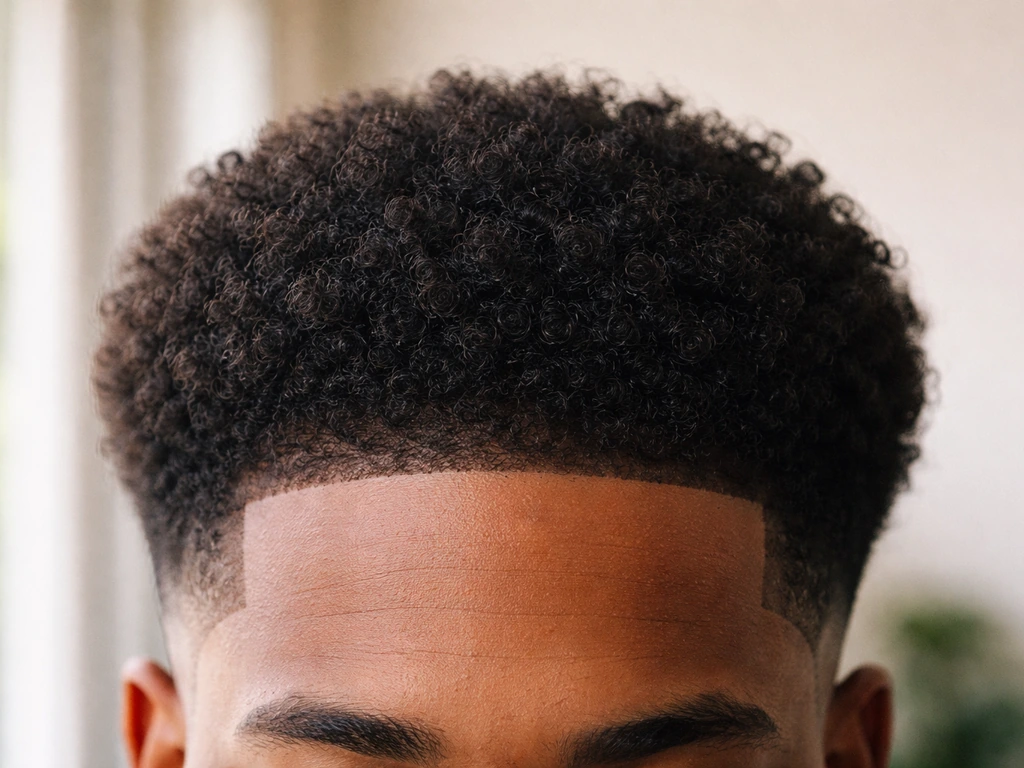
What changes when you're growing from a fade
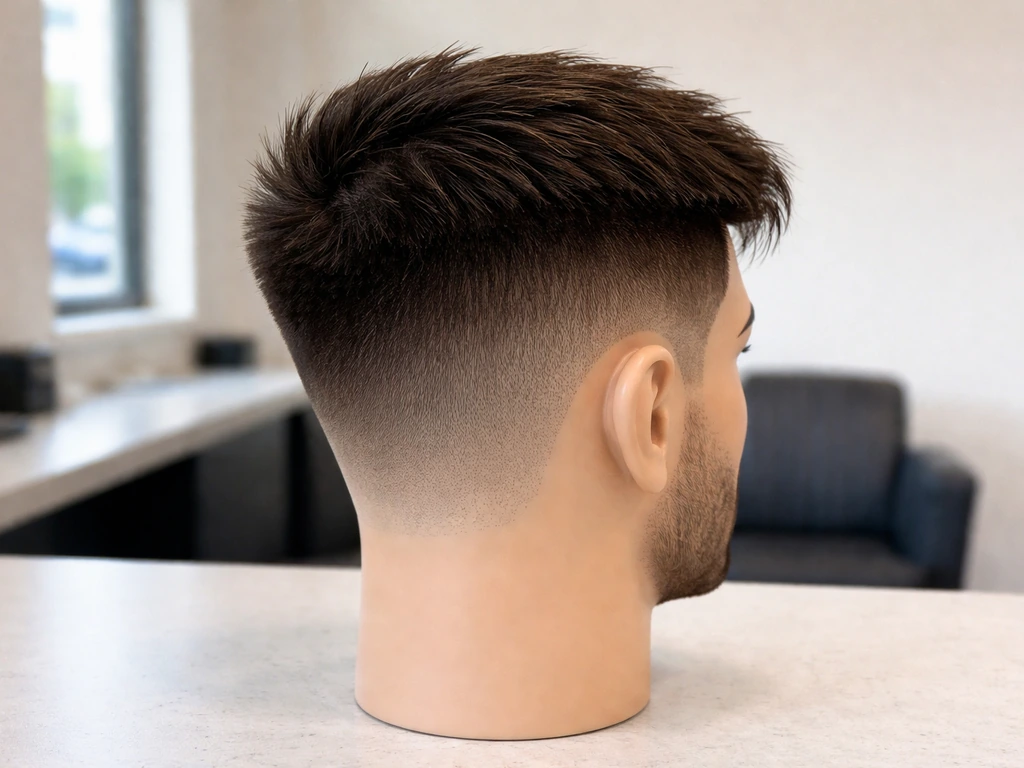
A fade isn't a uniform cut. The sides and back are tapered short, often down to near-skin level at the neckline, while the top is left longer. That length gap is the defining challenge of this grow-out. When you're growing a standard short cut into a longer style, everything is starting from roughly the same length. With a fade, you're dealing with a gradient, and the lower sections of the sides have significantly more catching up to do than the crown.
Black hair grows at roughly 0.33 inches per month on average, which adds up to just under 4 inches per year. That number is useful as a planning tool, but it doesn't tell the whole story because coily and kinky textures (especially 4B and 4C) can shrink 70 to 80 percent when dry. Hair that's actually 2 inches long can look and feel like barely half an inch. This means the grow-out will always feel slower than it is. The length is there, it's just coiling back on itself. Understanding shrinkage upfront keeps you from getting discouraged and reaching for the clippers again.
Another thing that changes is your relationship with the neckline and sides. A fade keeps those areas sharp and blended. During grow-out, that crisp gradient softens and then becomes a visible line of demarcation where the shorter regrowth meets the longer top. This is normal, it's temporary, and there are ways to style through it. The silhouette will look uneven before it looks round. Expect that.
Your first 2 to 4 weeks after the fade
This is the easiest phase mentally because the change is barely visible and there's nothing to manage yet. A skin fade starts at 0mm, and you're gaining roughly 1.5mm per week, so by week 2 you might have around 3mm of growth at the neckline. That's not enough to style, but it's enough to start building the habits that will protect your growth for the next several months.
Start your moisture routine now, not later. The mistake most people make is waiting until hair is long enough to "need" it. Getting your scalp and early regrowth conditioned from the start means less breakage, less dryness, and healthier follicle output as the hair gets longer. Wash once a week or every week and a half using a sulfate-free shampoo, which cleans the scalp without stripping the natural oils your coils depend on.
In weeks 1 through 4, your main jobs are: keep the scalp clean, keep it moisturized with a light oil (jojoba, grapeseed, or a light hair grease work well), and resist the urge to pick or comb aggressively. At this stage there's minimal detangling to do, but getting rough with a pick on short, fragile new growth can cause breakage right at the scalp where you can least afford it.
How to manage the awkward stages (neckline, sides, and crown)
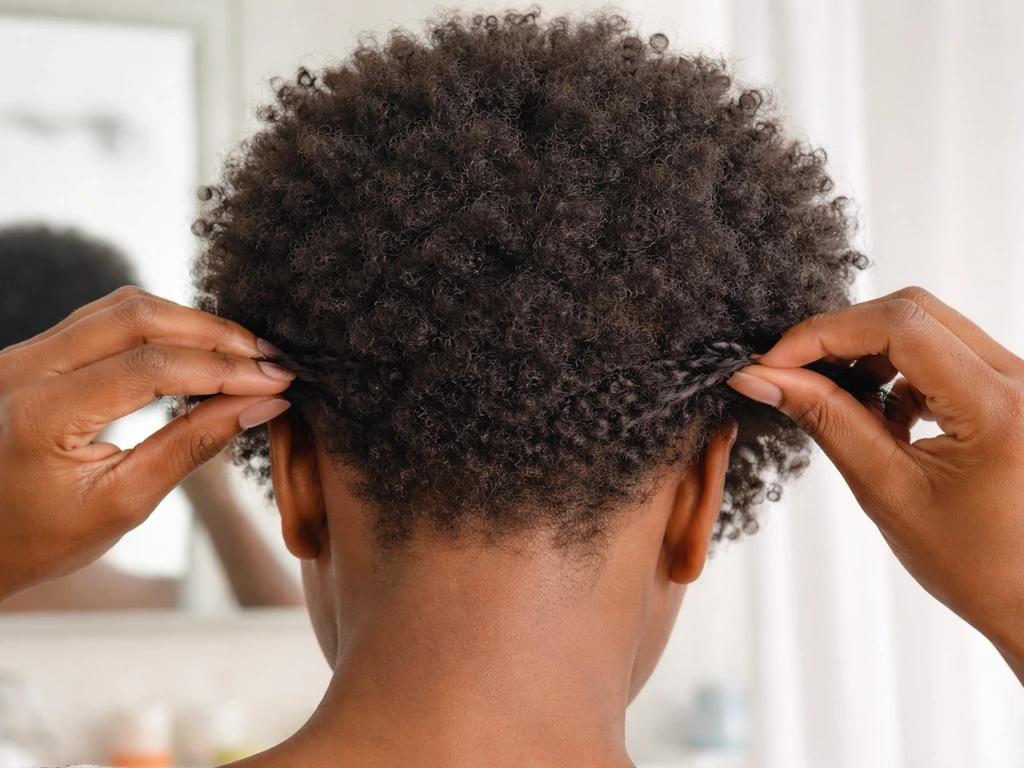
The awkward stages break down into three overlapping phases, and knowing which one you're in helps you dress it rather than fight it.
Weeks 4 to 6: the fluffy sides phase
By now the sides have softened from sharp faded lines into a slightly puffier, less defined perimeter. The top is noticeably longer. This is the phase where a light twist-out or defined curl pattern on the top starts to bridge the gap visually. The sides don't have enough length to style yet, so the goal is to make the top look intentional while the sides continue growing. If you want to grow a fringe male-style during your grow-out, keep the same moisture and detangling habits and trim only to remove damaged tips growing a fringe. A wave brush or soft pick used gently can help unify the texture on the sides without creating breakage.
Weeks 7 to 10: the mushroom phase
This is the stage almost everyone complains about. The top is visibly bigger, the sides are catching up but still shorter, and the overall shape is more mushroom or box-like than rounded. The silhouette looks uneven even if the actual growth is completely even, because the proportions are off. This is the hardest mental phase.
The best approach here is to start incorporating styles that add height to the top (like a stretched twist-out or loose afro puff) while encouraging the sides to lie flatter with moisture and a durag or wave cap worn overnight. A flat top often looks best when you keep the crown lifted with consistent moisture and use small, regular trims to maintain the shape as it grows out.
This pulls the sides slightly rather than letting them puff out before they're long enough to blend.
Weeks 8 to 14: the ear battle
The perimeter around the ears becomes a problem zone. Hair grows at slightly different rates in different follicle zones, so the area behind the ears and at the neckline can look stubbly and uneven compared to everywhere else. You're not going crazy and your hair isn't broken. This is a documented quirk of the grow-out that barbers see constantly. The fix is patience plus a small shape-up at the neckline every 3 to 4 weeks, which cleans up the perimeter without touching the length on top or the sides. This is not the same as a full fade touch-up. Just a neckline cleanup keeps the whole grow-out looking intentional.
Crown and texture differences
If your texture at the crown is tighter or coarser than the sides, it will shrink more and appear shorter even when it's actually the longest section. This is a shrinkage issue, not a growth issue. Stretching techniques like banding (wrapping hair ties down sections of hair) or twist-outs help reveal the true length and also make the crown blend better with the sides during the grow-out.
Products and routine to support faster, healthier growth
You can't make hair grow faster than its biological rate, but you can absolutely slow it down through damage. Breakage, dryness, and poor scalp health are the reasons most grow-outs stall or seem to plateau. A solid routine removes those obstacles.
Washing and scalp care
Wash once a week or once every week and a half. More frequent washing with shampoo strips the scalp's natural oils, which are essential for coily textures. Use a sulfate-free shampoo and focus the cleansing on your scalp, using your fingerpads in gentle circular motions rather than scrubbing. Never pile hair on top of your head and scrub, that causes tangling and breakage. Work from the scalp outward.
The LOC method for moisture retention
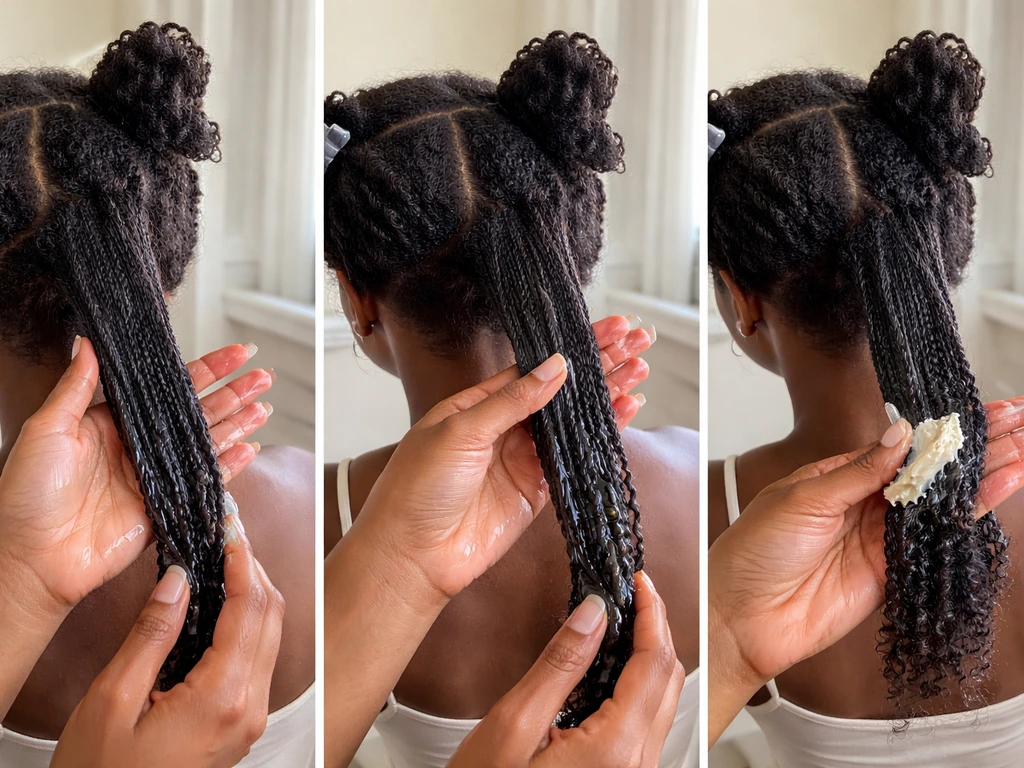
The LOC method (Liquid, Oil, Cream) is the most effective moisture-layering system for coily and kinky hair. You apply products in that exact order: start with a leave-in conditioner (the liquid layer) which deposits moisture directly into the hair shaft, then seal it with an oil (jojoba, castor, or argan oil all work) to lock that moisture in, then finish with a cream to create a barrier that slows moisture loss throughout the day.
Hair. com by L’Oréal also describes the LOC order as leave-in or liquid first, then oil, then cream, as a moisture-retention approach for dry, frizzy, and coily hair [LOC order as leave-in, then oil, then cream](https://www. hair. com/lco-vs-loc-method.
html). Skipping the oil layer or changing the order significantly reduces how long the moisture lasts. Apply this after every wash while hair is still damp.
Detangling without breaking
Always detangle on wet or damp hair with slip, never dry. Dry detangling on coily hair snaps strands at their weakest points. Apply your leave-in conditioner or a detangling conditioner first, then start with your fingers. Work in sections, starting from the ends and moving toward the roots.
Once you've worked through the section with your fingers, follow with a wide-tooth comb if needed. Some commenters on a curly hair Reddit thread say wide-tooth combs do not work well for all curl patterns, and they rely more on finger detangling with conditioner instead wide-tooth comb if needed.
A pick can work too, but use it gently and only once hair is fully moisturized and detangled. Forcing a pick through dry, tangled coils is one of the fastest ways to cause breakage during a grow-out.
Daily scalp moisture
Between wash days, keep the scalp lightly oiled with a light hair oil or grease. This reduces the dryness and itchiness that comes with longer regrowth, especially in drier climates or seasons. A spray bottle with water mixed with a little leave-in conditioner is also useful for refreshing moisture on the hair itself between wash days without fully rewashing.
Styles that make the grow-out look intentional
The goal during each phase is to wear a style that makes people think you chose this, not that you're between haircuts. Once you’re in the awkward grow-out stages, use these weekly styles and maintenance tips to help the quiff shape stay consistent. Here's how to approach styling week by week through the main growth stages.
| Growth Stage | Approx. Timeline | Best Styles | What to Avoid |
|---|---|---|---|
| Early regrowth | Weeks 1–4 | Keep it clean, durag overnight, light scalp oil | Aggressive combing, picking at dry hair |
| Fluffy sides | Weeks 4–6 | Twist-out on top, defined curls, soft pick on sides only | Trying to force a round shape too early |
| Mushroom phase | Weeks 7–10 | Stretched twist-out for height, afro puff, durag/wave cap nights | Leaving it unstyled and unmoistured |
| Ear battle | Weeks 8–14 | Bantu knots, two-strand twists, headbands, head wraps | Cutting the sides back down out of frustration |
| Rounding out | Months 4–6 | Natural afro shaping with a pick, twist-outs, wash-and-go | Heavy products that weigh down new length |
| Full afro territory | Months 6–12+ | Rounded afro, twist-outs, afro puffs, sculptural styles | Skipping moisture routine now that it's longer |
Two-strand twists are probably the most useful style during the entire grow-out. They work at almost any length past the mushroom phase, they stretch the hair slightly to combat shrinkage, they protect the ends, and they look deliberate. Doing a twist-out (twisting overnight, unraveling in the morning) gives you volume and definition without heat. Bantu knots serve a similar purpose and add even more definition when unraveled. Head wraps and headbands are your best friends during the ear battle phase, when nothing quite looks right and you just need to get through the week.
For a weekly maintenance rhythm, aim to refresh your style every 2 to 3 days. On wash day, do your full LOC routine and set a protective style. On day 2 or 3, re-moisturize with your spray bottle and re-define if needed. Wear a durag, wave cap, or satin bonnet at night throughout all phases to reduce friction, prevent frizz, and protect any styling work you've done.
Trimming strategy: when and how much to cut
The fear of trimming during a grow-out is understandable but misplaced. Not trimming actually slows visible progress because split ends travel up the hair shaft and cause breakage higher up, making hair look thinner and shorter over time. The goal is to trim strategically, not avoid it entirely.
For natural coily hair, trim every 10 to 12 weeks. This is a micro-trim, roughly 0.25 inches or just enough to remove the damaged tip of each strand. At 0.33 inches of growth per month, you're gaining about 1 inch of length per trimming cycle. A quarter-inch trim keeps you on net-positive growth every single cycle. Do not let a stylist or barber convince you that you need to take more off unless there is visible damage higher up the shaft.
Separately from those growth trims, get a neckline shape-up every 3 to 4 weeks. This is just the perimeter, no clippers on the sides or top. It keeps the grow-out looking intentional through the awkward stages without resetting any of your length. Around months 4 to 6, when the sides and top are closer to the same length, you can also ask your barber for a light perimeter shaping to start training the rounded afro silhouette. If you want a clean, combed look while you’re growing it out, use a gentle comb-over technique that won’t stress your fragile new growth comb over. This is the first point where you're shaping the afro rather than just cleaning up a grow-out.
If you had highlights, bleach, or any chemical processing at the time of the fade, the grown-out ends may be more fragile than fresh growth. Those ends need to come off earlier, around the 8-week mark, rather than waiting for 12. Chemically processed ends sitting on tight new coily regrowth is a breakage setup. Be honest with yourself (and your stylist) about your color history.
Common problems and how to fix them
It looks uneven even though I haven't cut one side shorter
Different follicle zones grow at slightly different rates and your hair's shrinkage pattern isn't perfectly symmetrical. What looks like uneven growth is usually uneven shrinkage or a perimeter that needs a small cleanup. Do not try to self-correct by cutting the longer side down. Get a barber to look at it and confirm whether it's actual unevenness or just the visual effect of the grow-out silhouette changing shape.
Scalp itchiness and dryness
This is extremely common as hair gets longer and scalp air circulation decreases. It's usually dryness, not a scalp condition. Make sure you're oiling the scalp lightly between wash days and that your shampoo isn't sulfate-heavy (which strips moisture). If itching is intense, flaky, or concentrated in patches, that's worth checking with a dermatologist in case it's seborrheic dermatitis, which needs a medicated shampoo rather than more oil.
My hair seems to stop growing
In almost every case, hair is still growing but breaking off at the same rate it's gaining length. This is a breakage problem, not a growth problem. The causes are almost always: too much dry manipulation (picking through dry hair, sleeping without a bonnet or durag), insufficient moisture, or tension from styles that pull too tightly. Go back to basics: LOC method after every wash, finger detangle only on wet hair, sleep with a satin bonnet, and switch to looser protective styles for a few weeks.
The sides still look way shorter than the top
If you're past month 3 and the sides still look dramatically shorter, you're either dealing with a very deep fade that started near 0mm (which needs more time to close the gap) or you're inadvertently cutting the sides back with neckline touch-ups that are going too high. Make sure any shape-up is strictly at the hairline, not blending upward. Show your barber exactly where to stop and check the result in the mirror before you leave the chair.
Shrinkage making it feel like nothing is happening
This is the most psychologically difficult part of growing 4B and 4C hair. Your hair might be 3 inches long but looking like 1 inch because the coil pattern is compressing it by up to 80 percent. To check your real progress, gently stretch a section of hair (don't pull hard) and measure it against a ruler. Do this every 4 weeks. Seeing the stretched length grow is genuinely motivating and confirms the routine is working even when the dry silhouette doesn't feel like it yet.
If you're also growing out other features alongside this process, such as a fringe, a defined shape at the front, or a longer style that came from a cut like a flat top or quiff-inspired shape, many of the same moisture, detangling, and trimming principles apply. The fade-to-afro grow-out is one of the more demanding transitions purely because of the length gradient, but the core care approach works across most natural texture grow-outs. Stay consistent with your routine, give the process a real 6-month run before reassessing, and resist the urge to reset with the clippers every time an awkward week hits.
FAQ
How can I tell if my afro grow-out is stalling or just looking smaller because of shrinkage?
Use the same stretch-check method every 4 weeks (gently stretch one small section, don’t tug). If stretched length increases but dry length looks the same, it is shrinkage and styling that is compressing the look, not true breakage.
Should I switch shampoos if my scalp feels dry or tight while my sides are growing in?
If you already use a sulfate-free shampoo but still feel tightness, reduce the cleanser time on the hair and focus scrubbing on the scalp only, with fingerpads. Let water run through the top, then rinse thoroughly, and rely on LOC after washing so moisture is replaced immediately.
Is it okay to detangle with a comb, or will it cause more breakage during a fade-to-afro transition?
Combs are fine when hair is fully moisturized and has slip from leave-in or detangling conditioner. The key is sectioning and starting at the ends, then moving upward, instead of forcing the comb through a tangle on dry or lightly conditioned coils.
How do I prevent my neckline shape-up from turning into a “mini-fade” that sets me back?
Give your barber explicit boundaries: only the perimeter at the hairline, no blending upward onto the sides. After the cut, check in good lighting and ask for a mirror pause before you leave, because even a small blend upward can undo weeks of side growth.
What should I do if my crown looks shorter than the rest even though the sides and top are close to the same length?
Treat it as a texture and shrinkage mismatch. Use stretching styles that expose the true length (like banding or twist-outs) and prioritize consistent moisture on the crown so the pattern shrinks less when dry.
Can I use heat, like a blow-dryer or flat iron, to speed up blending from the fade?
For this specific transition, avoid heat. If you must use heat, keep it minimal and always use a heat protectant and low settings, but expect more dryness and breakage risk on the newly regrown sides where blending is hardest.
How often should I re-do protective styles during the grow-out, especially around the ear area?
Re-do them on a consistent schedule, typically every 2 to 3 days for refresh, because dry manipulation and friction build up quickly once the perimeter starts to look uneven. If you feel bumps or increased tangling at the ear area, loosen the style and add more moisture before re-wrapping or re-styling.
Do I need to trim more often if my hair is chemically processed or I had highlights/bleach during the fade?
Yes, plan for earlier end care. Chemically processed ends are more prone to breakage, so a shorter interval is safer, around the 8-week point, focusing only on damaged tips and not removing healthy regrowth.
What if one side grows in faster than the other, should I cut the longer side down to match?
Don’t self-correct by cutting. Unevenness during fade grow-out is often shrinkage or perimeter perception. Get your barber to evaluate whether the difference is true length, positioning, or just the silhouette changing, then do the smallest possible perimeter cleanup if needed.
If my hair feels itchy and flakes during grow-out, is it a sign my routine is wrong?
It can be routine-related dryness, but if itching is intense, flaky, or patchy, it can be seborrheic dermatitis. In that case, you likely need a medicated shampoo plan and should involve a dermatologist rather than increasing oil alone.
How much trimming should I actually ask for, and what does “micro-trim” mean in practice?
Ask for a micro-trim roughly 0.25 inches (or just enough to remove the damaged tip of each strand). The goal is removing splits high on the strand before they travel upward, not taking a bulk haircut that slows visible progress.
What’s the safest way to keep the top looking full while the sides are still behind?
Use top-forward styles that add height without pulling the sides, like stretched twist-outs or a loose afro puff, and keep moisture consistent. If you use a durag or wave cap, wear it overnight to encourage alignment and reduce side puffing before the sides have enough length to blend naturally.