
To grow a comb over, you need roughly 3 to 4 inches of length on top, a clean consistent part, and enough density to sweep hair across from one side to the other. If you're starting from a buzz cut or a short fade, that's about 4 to 6 months of growth before you have real styling options, though you can start shaping the look around month 2 or 3. Once your afro is long enough, you can keep it healthy and transition it from a fade into a fuller afro shape using consistent training and moisture how to grow an afro from a fade. The awkward stages are real but totally manageable with the right daily routine and a little patience.
How to Grow a Comb Over: Step-by-Step Grow-Out Guide

Marcus Vickers
14 Jun 2026
What a comb over actually is (and which version you're going for)
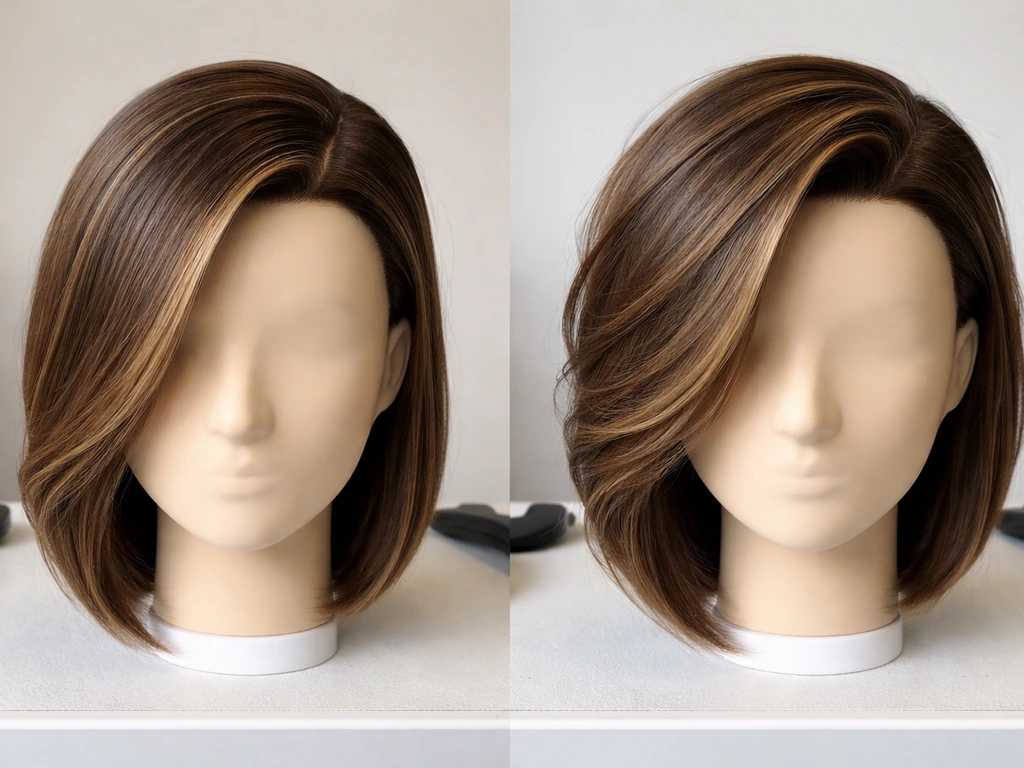
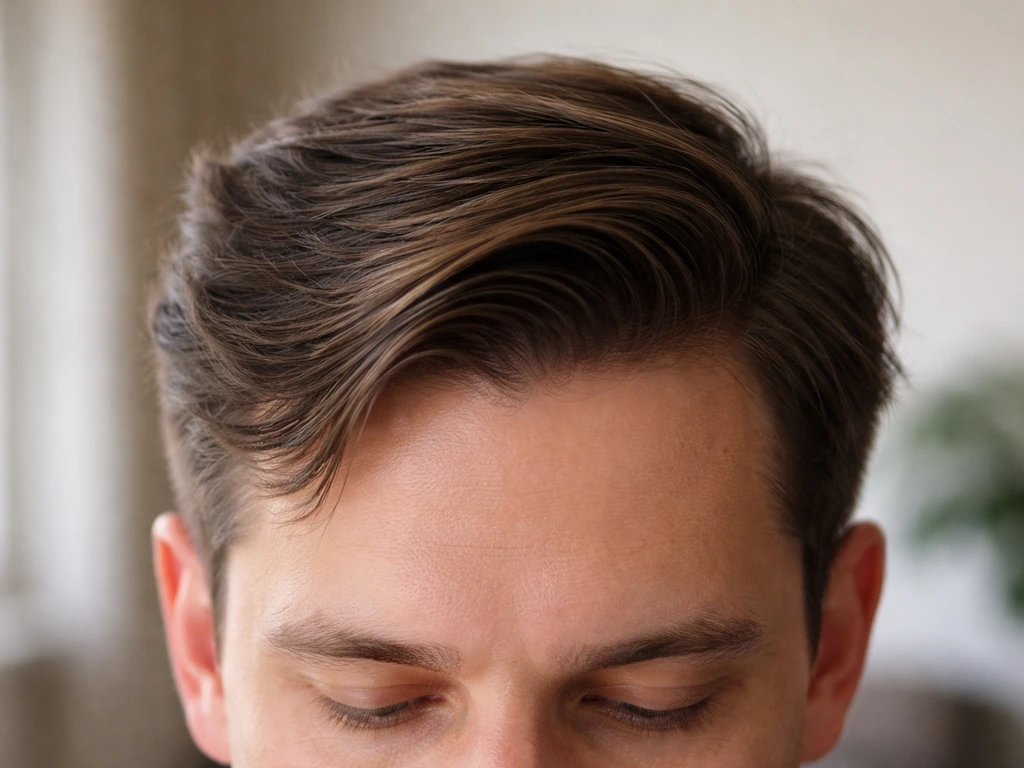
The term comb over covers a wide range of looks, and getting clear on which one you want changes everything about your grow-out plan. At one end, there's the classic modern comb over: a sharp undercut or fade on the sides with 3 to 5 inches swept across the top from a defined side part. At the other end, there's the traditional coverage comb over, where longer hair from one side is swept across to cover thinning or balding areas on the top or crown. Both use the same fundamental mechanic, but the growth targets, styling approach, and maintenance strategies differ.
Most people searching right now are after the modern comb over, which has been a dominant men's and gender-neutral style for years and pairs well with fades, tapers, and undercuts. If you're growing out a side-shaved undercut, a short fade, or even a pixie cut, this is likely your target. If thinning or scalp coverage is your primary goal, the traditional coverage version applies, and that section on accelerators and seeing a pro further down is especially relevant for you.
What length you actually need, and what to expect from density
The minimum workable length for a modern comb over on top is about 2.5 to 3 inches, measured from the scalp. At this length you can create a part and lay the hair to one side, but it won't have much weight or movement yet. For a clean, polished sweep with good coverage and the ability to hold a style through the day, you're targeting 3.5 to 5 inches on top. The sides can stay shorter throughout, since the contrast is part of the look.
Scalp hair grows about 1 cm per month on average, which works out to roughly 0.3 to 0.35 mm per day. That's not fast, but it's consistent. If you're starting from a number 2 or 3 buzz (about 6 to 10 mm), you're looking at 2 to 3 months to get to the minimum working length, and 4 to 6 months to hit a comfortable styling range. Starting from a longer cut, say a short crop or textured fringe situation, cuts that timeline down noticeably.
Density matters just as much as length. Fine hair can still pull off a great comb over with the right product, but it needs a bit more length to create visual weight. Thick or coarse hair has the volume to work at shorter lengths but can resist lying flat, which means more styling effort in the early phases. Wavy or curly hair tends to fall to the side naturally once it gets length, which can actually help the comb over direction, but it also adds unpredictability during grow-out. If you're wondering how to grow a Jewfro, the same patience with length and consistent shaping matters, just with added focus on keeping your curls hydrated and defined.
The step-by-step grow-out plan, from short to comb-over ready
Here's how to think about each stage of the grow-out, what to do with your hair, and what's actually happening on your head during each window.
Month 1: too short to style, but not too short to start
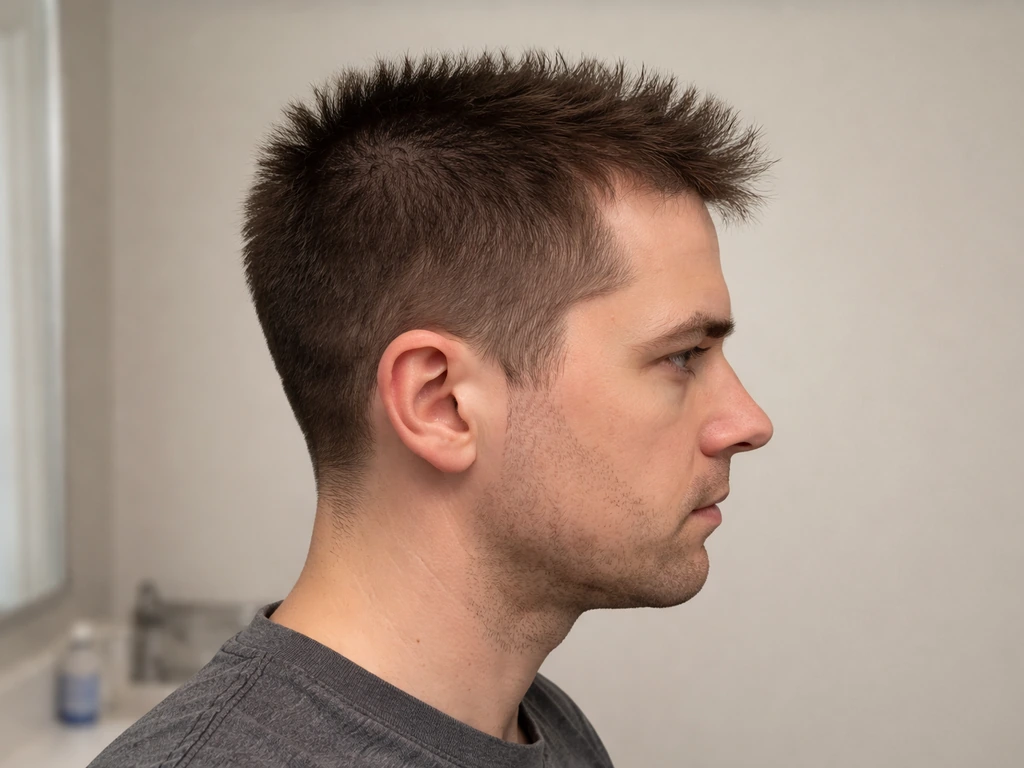
In the first month, your top hair is probably between 1 and 2.5 cm, which is too short to sweep in any meaningful way. Your job right now is simply to stop cutting the top and let it grow undisturbed. If you have shaved sides or a fade, you may want a light taper cleanup at the sides every 3 to 4 weeks to keep the shape looking intentional rather than neglected, but do not let anyone touch the top. Use a light pomade or styling cream to smooth any stray hairs down flat and start training the hair in the direction you want the part to fall.
Month 2 to 3: the purgatory phase
This is the phase most people want to cut their hair off again. The top is long enough to move around but not long enough to control, and it starts sticking up, flipping outward, or just looking messy. This is completely normal and doesn't mean anything is going wrong. If you have a fringe already, the same training tricks like blow-drying in the direction you want and reinforcing your part can make how to grow a fringe out easier to manage.
At this stage, around 2 to 3 cm of top length, start using a blow dryer on low heat with a soft brush or flat brush to push the hair in the comb-over direction while it dries. The more consistently you do this, the faster the hair trains itself to lie that way. Use a medium-hold pomade, matte clay, or styling cream to tamp down the surface and keep it from going wild.
Month 3 to 4: the sweep becomes possible
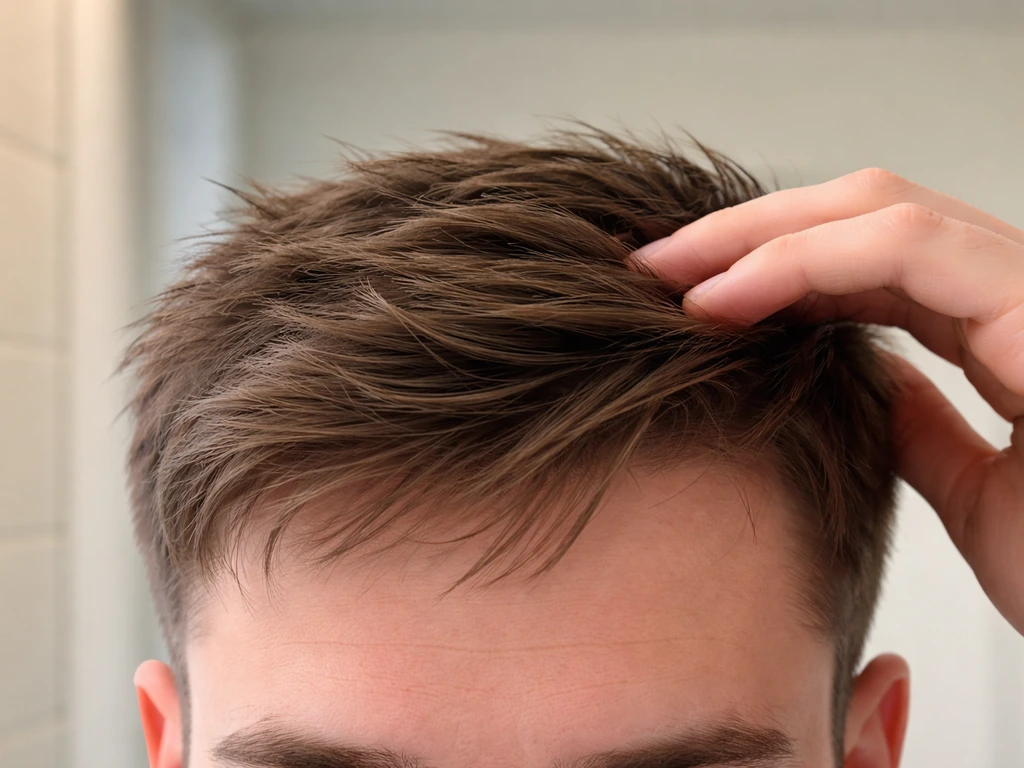
Around 3 to 3.5 cm on top, you can start making an actual part and sweeping the hair across. It won't be clean or dramatic yet, but it's readable as a comb over. This is the time to start being deliberate about your part placement. Decide where you want it (usually aligned with the outer corner of your eye is a natural-looking spot) and use a fine-tooth comb or rat-tail comb to carve it out every single morning. Consistency now builds the habit the hair eventually follows on its own.
Month 4 to 6: it starts working
By month 4 to 6, most people have 3.5 to 5 cm on top, which is where the comb over really starts to look like a comb over. The hair has enough weight to stay swept, the part holds better, and product can do its job properly. If your sides are faded or undercut, this is a great moment to get a shape-up and sharpen the contrast. The top should be left alone unless there are genuinely uneven patches or split ends causing damage.
Your daily styling tools and routine
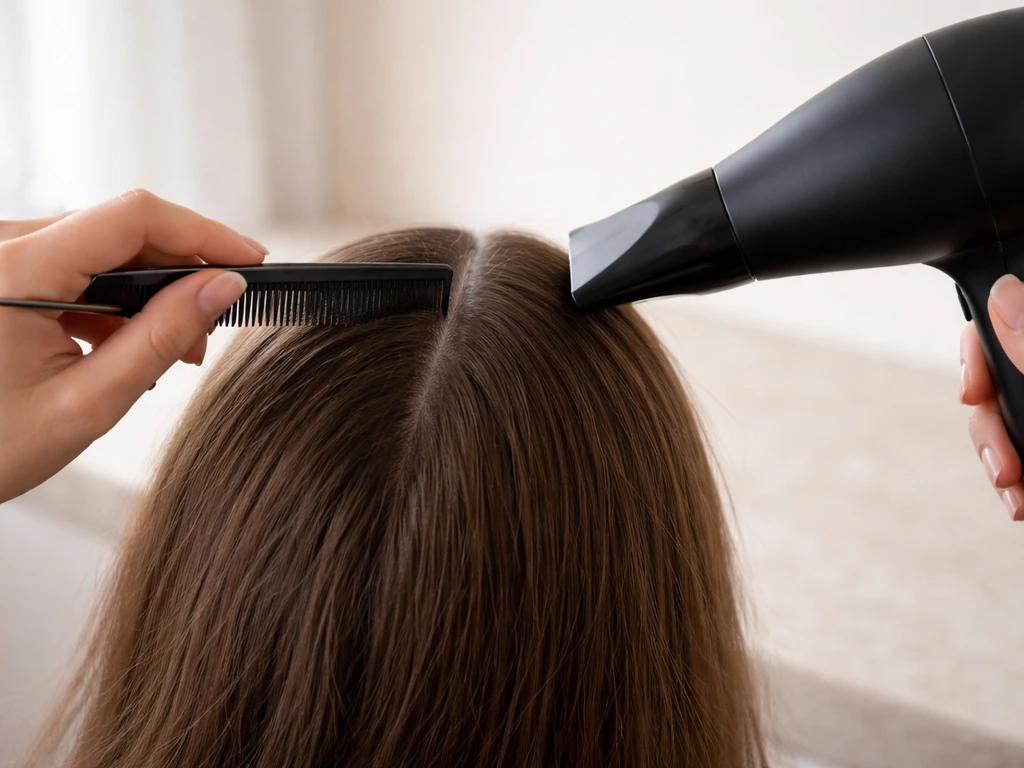
A clean comb over needs a small, consistent toolkit. You don't need much, but what you use matters.
- Fine-tooth or rat-tail comb: essential for creating a clean, sharp part. A wide-tooth comb won't give you precision.
- Blow dryer with a concentrator nozzle: low to medium heat, used to push the hair in the sweep direction while damp. This is the single biggest factor in training hair to lie flat.
- Flat or paddle brush: use alongside the blow dryer to smooth the surface and reduce volume before applying product.
- Hold product: medium-hold pomade, wax, or styling cream for most hair types. Fine hair benefits from a volumizing mousse applied before blow-drying, then a light pomade on top to finish. Thick or coarse hair often needs a stronger clay or balm.
- Optional: a light hairspray to lock the part in place on windy days or when you need the style to last longer.
The daily routine itself doesn't need to be complicated. Wash or dampen hair, apply a small amount of product through damp hair (not soaking wet), blow-dry in the direction of the sweep using the brush to smooth, then use the comb to define the part. Finish with a tiny amount of product on your fingertips to press down any surface frizz. The whole process takes 5 minutes once you've practiced it a few times. The key is doing it consistently, especially during months 2 and 3, when the hair is most likely to revert overnight.
Getting through the awkward stages: cowlicks, flyaways, and volume control
Cowlicks are probably the most common complaint during a comb-over grow-out. They grow in a circular or opposing direction to the rest of your hair, and they push back against whatever direction you're trying to train. If your cowlick is at the crown or near the part line, it can make the comb over look choppy or force the hair upward. The fix is to blow-dry directly into the cowlick with medium heat, pushing it against its natural direction while keeping gentle pressure with the brush. Do this every day, and the hair softens into the direction over time, especially once it has enough length and weight to hold down.
Flyaways are mostly a product and moisture issue. Static, dry ends, or fine hair texture can all cause individual hairs to lift off the surface of the comb over. A tiny amount of pomade or hair serum smoothed across the palm and lightly dragged over the surface (not raked through) tames these without making the whole style look greasy. Avoid over-brushing dry hair, which creates more static rather than less.
Volume control is the flip side: some people have hair so thick or coarse that it sits up rather than sweeping down. The blow dryer, used on medium heat with a flat brush pressing down firmly, is your best tool here. Product choice also matters: a high-hold, low-shine clay applied to damp hair and blow-dried in will significantly reduce bulk compared to applying it to dry hair after styling. If the volume is extreme, try applying a small amount of leave-in conditioner before your hold product to soften and weight the hair down before you even get to the comb.
Parting is something people underestimate. If you switch your part location every day or let it fall naturally without reinforcing it, the hair grows in without any trained direction and the comb over looks messy at every stage. Pick your part, use the rat-tail comb every morning to define it, and stick with it. It typically takes about 4 to 6 weeks of consistent parting before the hair starts defaulting to that position on its own.
Trims, damage, and keeping the grow-out on track
The question of whether to trim during a grow-out always causes anxiety, and the honest answer is: trim the sides and nape regularly, leave the top alone unless something is actually damaged. If you have an undercut or fade, those shapes need maintenance every 3 to 4 weeks or the blend disappears and the style looks unintentional. Cleaning up the sides does not stall your growth on top. What does stall your progress is getting scissor-happy with the top out of impatience, which resets weeks of growth.
For anyone growing out dyed or chemically treated hair, heat protection is non-negotiable. Blow-drying damaged hair without a heat protectant spray causes breakage and split ends that creep up the shaft, which means you end up cutting off length you've already grown. Apply heat protectant to damp hair before your blow-dry session, keep the dryer on medium rather than high heat, and use a bond-strengthening conditioner once a week. This applies equally to bleached, highlighted, or color-treated hair.
If the comb over still won't lay correctly after month 5 or 6, consider these common culprits: the part isn't being reinforced consistently, the product is too light for your hair type, or the blow-dry direction is inconsistent. Review your routine before concluding the style isn't working. In most cases, it's a technique issue rather than a hair issue.
Growth accelerators and when to see a pro
If your main goal is simply growing out a normal, healthy haircut into a comb over, there's no magic supplement that's going to dramatically speed up your 1 cm per month growth rate. According to The Diagnosis and Treatment of Hair and Scalp Diseases (PMC), human scalp hair grows at an average rate of about 0. 3 mm per day, which is roughly [1 cm per month](https://pmc. ncbi.
nlm. nih. gov/articles/PMC4908932/). Keeping hair healthy (minimal heat damage, a balanced diet, good sleep, low physical stress) is what supports consistent growth.
Biotin supplements are widely marketed for hair growth, but [according to the NIH, there's limited scientific evidence they actually help unless you have a genuine biotin deficiency, which is rare. ](https://ods. od. nih.
gov/pdf/factsheets/Biotin-Consumer. pdf) You're likely better off putting that money toward good conditioner.
The situation changes if thinning, shedding, patchiness, or slow regrowth is actually your underlying problem. If you're growing a comb over partly or mainly to cover thinning areas and the hair isn't cooperating, that's a signal to get professional input. Minoxidil (topical) is the most evidence-backed OTC option for androgenetic alopecia, particularly for the crown and vertex areas. It requires consistent daily use, and noticeable regrowth typically takes 4 months or more, with some cases taking 8 to 12 months to show meaningful change. If you've been using it for 4 months with no result, that's a signal to stop and talk to a dermatologist or trichologist rather than continuing indefinitely.
Sudden patchy hair loss, especially smooth, round, or oval bald patches that appeared quickly, may be alopecia areata rather than standard pattern thinning. This looks and behaves differently from typical grow-out challenges and requires a dermatologist's assessment before you try any styling solution around it. Similarly, if you've been wearing tight styles, buns, or constant clips during your grow-out, repeated tension on the hairline and part area can contribute to traction alopecia. The fix is removing the tension source and giving the follicles time to recover, but a trichologist can confirm what you're dealing with.
For most people, though, growing a comb over is a straightforward patience game with a clear endpoint. Know your length target (3. 5 to 5 inches on top), stick to a daily styling routine, reinforce the part consistently, protect your hair from damage, and manage the awkward phases with the right product rather than scissors.
If your goal is specifically how to grow a fringe male, focus on length, direction, and consistent training so the front lays the way you want. It's a similar discipline to growing out a fringe or transitioning from a fade to a longer style: the principles are the same even if the target shape is different. Give yourself a realistic timeline, take a photo every 4 weeks to track progress, and you'll be there before the year is out.
FAQ
How long should I wait before I can stop using a blow dryer every day?
Most people still need daily direction-setting through months 2 and 3. Once you hit roughly 3.5 to 5 inches on top and the hair is heavy enough to stay swept, you can usually taper down to every other day, then finish with a quick dampen-and-style session. If you notice the part snapping back overnight, keep the blow-dry routine a bit longer.
Should I wash my hair less often during the grow-out to help it lie flatter?
Not necessarily. Very frequent washing can dry the scalp and increase flyaways, but skipping washes too long can make hair feel waxy and less cooperative. A practical approach is to wash as needed for your scalp, then do the same damp styling routine every time (product on damp hair, brush smoothing, part defined).
What’s the best way to handle a part that keeps “creeping” to a new spot?
If your part location changes, the hair is re-growing without a consistent direction. Use a rat-tail comb to define the part immediately after blow-drying, then lightly press the part with fingertips for 20 to 30 seconds. Also avoid rubbing the area while it’s drying, because that can distort the new groove before it sets.
Can I use hair wax instead of matte clay or pomade?
You can, but wax often creates too much shine or too much hold too early, making the top look pasted and stiff during the awkward stages. If you choose wax, use a very small amount on damp hair (not fully dry), then blow-dry to set direction. For many hair types, matte clay on damp hair is easier to manage.
My comb over shows scalp at the part. How do I improve coverage without making it greasy?
Try increasing thickness at the surface instead of adding more product everywhere. Use a small amount of matte paste or clay to the top layer only, then press down from the side of the part toward the sweep with fingertips. If contrast is the issue, a scalp color-matching hair fiber can temporarily fill in gaps while you wait for additional length and density to show.
What should I do if my hair won’t stay swept on humid or rainy days?
Humidity usually boosts frizz and lifts individual hairs. Use a stronger hold product on damp hair, and consider finishing with a tiny amount of serum or anti-frizz cream lightly smoothed over the surface. Avoid applying product after hair is fully dry, since that often increases tackiness and doesn’t control moisture-driven movement.
Is it okay to trim the top during the grow-out if it looks uneven?
Trimming can be okay only for damage, like split ends or obviously uneven breakage. Avoid shortening the top “to fix the look,” because it resets the length you need for weight and a clean part. If you must trim, ask for a minimal take-off and keep the overall length on target.
How do I pick the correct part line if my hair has a natural side where it falls?
Start by observing your hair when it’s freshly washed and air-dried (no product). Then pick the part that either matches the natural fall or slightly redirects it with the smallest amount of force. If you choose a part that fights your natural growth, you’ll usually spend longer blow-drying and it will be more likely to revert.
Should I be worried about heat damage from regular blow-drying?
Heat can be manageable if you use protection and medium heat. Keep the dryer on medium, work with shorter sessions, and always use heat protectant on damp hair, especially if you color or bleach. If you notice increased breakage, reduce styling frequency and focus more on moisturizing and gentle detangling.
What are the signs my issue is thinning rather than just grow-out technique?
If you see persistent scalp visibility at the crown or vertex even when hair is long enough to style, it may be more than technique. Also consider professional input if shedding is increasing, growth is slow in patches, or the part area looks visibly thinner day-to-day. A dermatologist can help distinguish pattern hair loss from other causes.
Can I grow a comb over from a receding hairline without making it worse?
Yes, styling itself won’t worsen recession, but traction matters. If you’re using tight pulls, constant clips, or strong tension around the hairline to force coverage, that can contribute to traction alopecia. Aim for direction-setting with blow-dry and proper product, and keep tension low while you grow.
Do supplements help if my hair growth is already normal?
If you’re otherwise healthy and not deficient, supplements usually won’t accelerate the average growth pace. Instead, prioritize consistent sleep, nutrition, and conditioning to protect the length you already have. If you suspect a deficiency (for example, symptoms of anemia or thyroid issues), get medical guidance before spending on supplements.