
Growing a flat top takes roughly 3 to 6 months from a short cut, depending on where you're starting. The goal is to get the top hair long enough to stand upright and be cut into a level horizontal plane, usually around 3/4 to 1-1/4 inches at the front and closer to 1/4 inch at the crown, while keeping the sides and back clipped short and tight.
How to Grow a Flat Top: Step-by-Step Grow-Out Guide

Marcus Vickers
23 Jun 2026
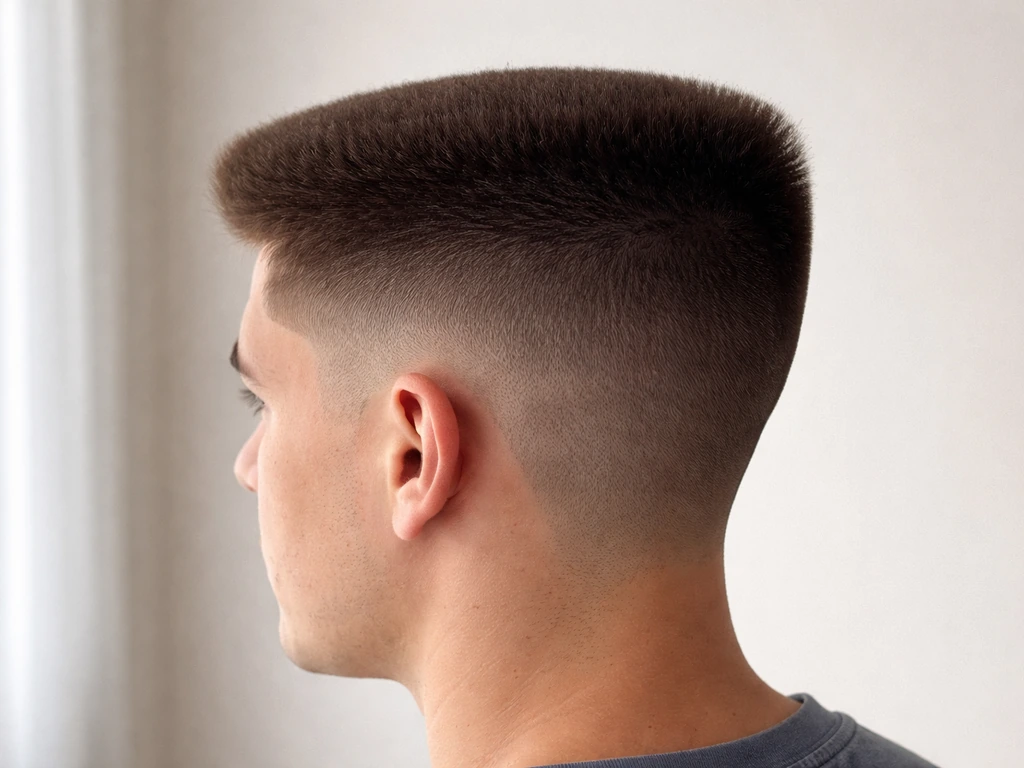
blank" rel="noopener noreferrer">Wikipedia’s description of a crew cut notes that the flat plane can be level or slightly sloped depending on preference and head shape. The tricky part isn't the length, it's training the top hair to grow straight up and staying on top of the sides so the whole thing doesn't look shapeless while you wait.
This daily training is the core of how to grow a quiff as well, since both styles rely on consistent direction and control while your hair grows out train the top hair to grow straight up.
What a flat top actually requires
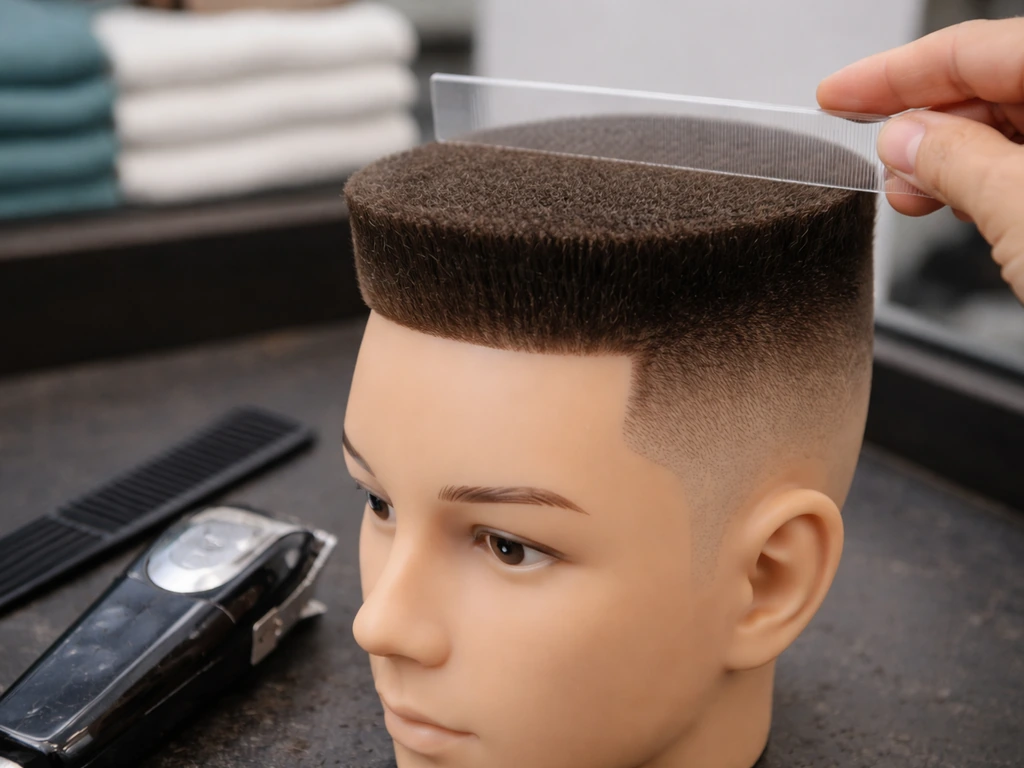
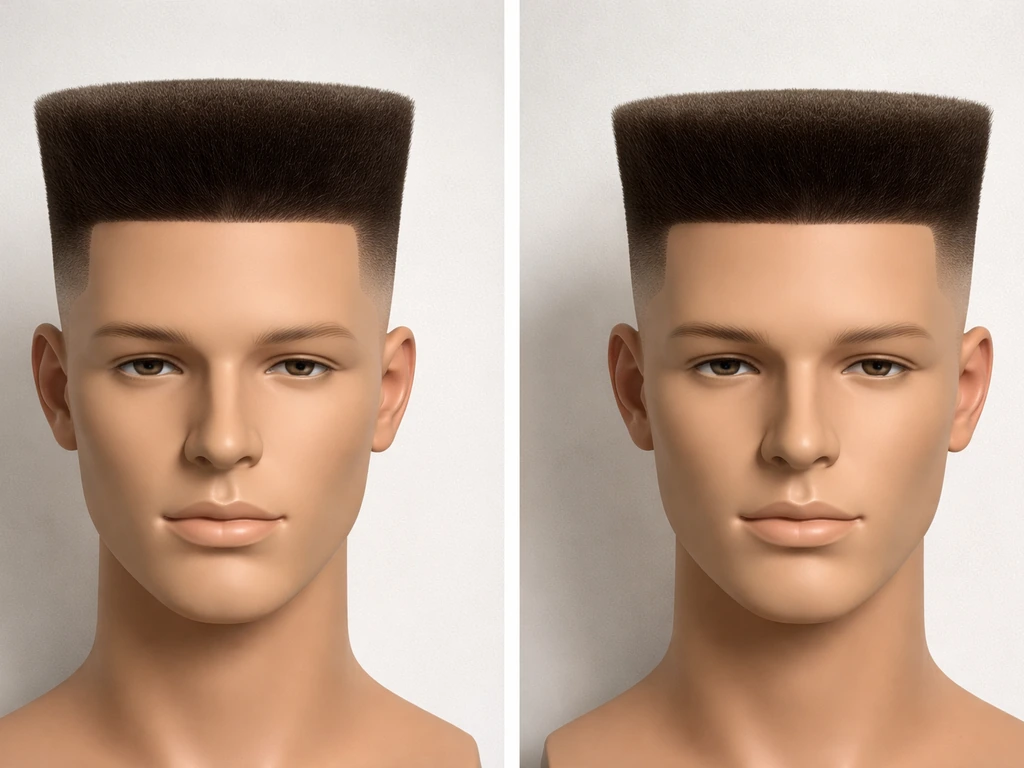
A flat top is built on one idea: the hair on top is cut to form a perfectly level horizontal plane when you look at it from the front or the side. It's not a rounded top, not a tapered top, it's a flat one. The crown area sits the shortest (around 1/4 inch), and the front sits the tallest (typically 3/4 to 1-1/4 inches), which compensates for the natural curve of the head and makes the surface look flat rather than domed. The sides are cut much shorter, usually tapered or faded, and the transition from the flat top plane down to the sides is sharp and defined.
Hair type matters here. Coarse, thick, or naturally upright hair holds a flat top almost effortlessly once it's long enough. Fine, straight, or soft hair can still pull it off but needs more product and a consistent routine to keep the hair standing upright rather than flopping over. Wavy and curly hair adds natural volume and can work beautifully, but you'll need to factor in shrinkage and possibly blow-dry the top straighter to get that clean, level plane.
A jewfro is all about growing your natural texture out into a full, rounded afro, and the same consistency matters for shape and routine curly hair. If your hair is chemically treated or color-damaged, it may be softer and less cooperative, so lean heavier on styling products during the grow-out phase.
Start from where you are: assess your cut before you plan
Before you map out a timeline, figure out what you're actually working with. Stand in front of a mirror and look at your top hair from the side. Is it less than 1/2 inch? You're in early growth territory and the flat plane isn't achievable yet. Is the top already close to 3/4 inch but lying flat against your head? That's actually a great starting point because the length is nearly there, you just need to train direction and get a proper cut. Are you coming from a buzz cut, a short crop, or a fade that's grown out unevenly? Then your main job right now is growing top length without touching it while maintaining the sides.
If you're transitioning from a longer style, like a medium-length cut, a comb over, or even a quiff, you might actually be closer than you think. The flat top isn't necessarily about having the most hair, it's about having the right shape. A quiff grow-out, for example, shares some of the same top-length territory with a flat top and the main adjustment is redirecting the styling from backward-swept to straight up. If you're growing out from layers or bangs, those layers will need to catch up with the rest of the top before a flat plane is achievable.
Realistic timeline: what to expect month by month
Hair grows roughly 1/2 inch per month on average. That gives you a solid framework to plan against, even if your personal rate is a little faster or slower.
| Stage | Approximate Top Length | What's Happening | Main Focus |
|---|---|---|---|
| Month 1 | Up to 1/2 inch | Hair is too short for a flat plane; sides need regular trims | Maintain sides, start training top direction |
| Month 2 | Around 1 inch | Flat top shape is becoming possible; first shaping cut can happen | Get a rough flat top cut, start daily styling routine |
| Month 3 | 1 to 1-1/2 inches | Shape is holding better; more definition in the plane | Refine the cut, dial in product routine |
| Month 4–6 | 1-1/2 to 2+ inches | Full flat top shape achievable; sides and top well-defined | Maintenance every 2–3 weeks, consistent styling |
If you're starting from a buzz cut or a very short clipper cut (under 1/4 inch), budget for the full 3 to 6 months. If you're starting from a short crop or a style that already has 1/2 inch or more of top length, you could see a workable flat top shape in as little as 6 to 8 weeks. The first real shaping cut, where a barber actually cuts a flat plane into the top, is usually possible around the 1-inch mark.
Keeping the top flat while it grows
This is where most people lose the plot. The top hair needs to be trained to grow and sit upright, and that training happens every single day. It's not complicated, but it has to be consistent.
The daily drying and combing routine
Wet hair is your window of opportunity. After washing or wetting your hair, apply your styling product while the hair is still damp, then comb the top straight up, not forward, not back, straight up. Use a fine-tooth or medium-tooth comb for this. Then blow-dry the top section pointing the nozzle upward and slightly forward to set the hair in the upright position. Keep moving the dryer and the comb together until the hair is fully dry. This is the single most important habit for training a flat top during the grow-out phase.
If your hair is naturally wavy or curly, blow-dry with a firm brush (a paddle brush or a Denman-style brush works well) to straighten the hair slightly as you lift it. You don't need perfectly straight hair for a flat top, but you do need to minimize the horizontal spread of curls that would disrupt the flat plane. Once the shape is set and dry, go back over the top with the comb to get the surface looking level.
The flat top pick
A flat top pick (also called an afro pick or styling pick) is genuinely useful here, especially for coarser or curlier textures. After blow-drying, use the pick to lift the hair upward from the roots and evenly distribute it before smoothing the top surface with your palm. This gives you that clean, level-looking surface that defines the style. Even for straighter hair types, the pick helps at the roots to encourage upright growth direction over time.
Managing the sides and back
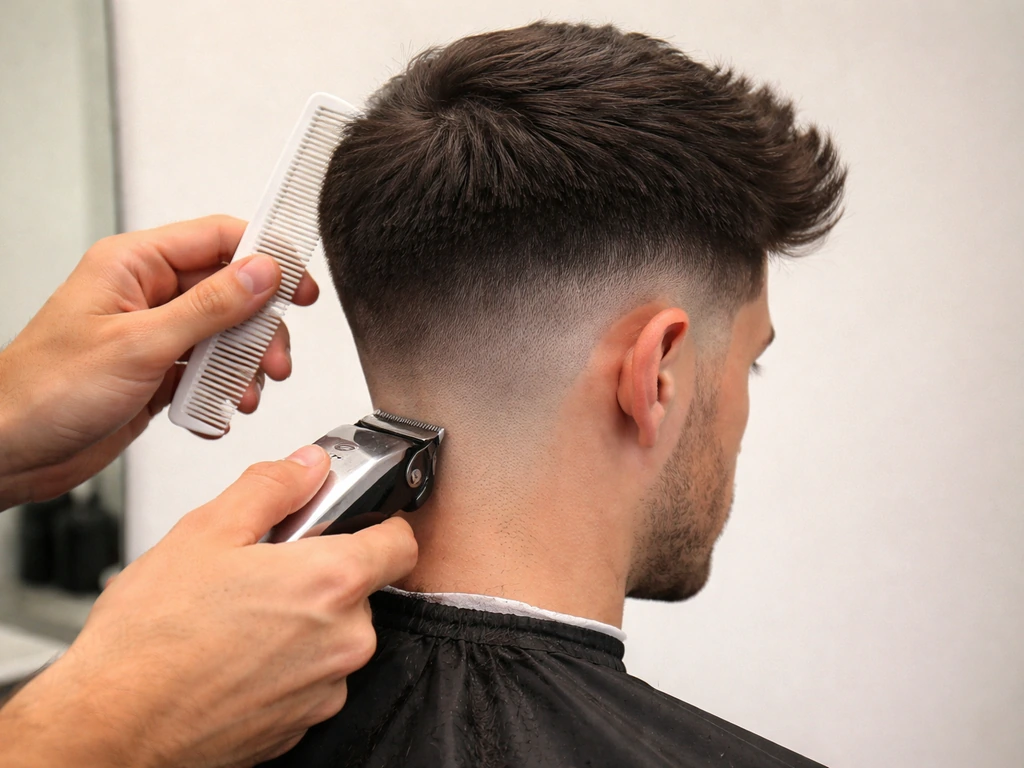
The sides are what keep a flat top looking intentional rather than just overgrown. If the sides get too long, the whole silhouette turns shapeless and the flat top plane loses its visual impact. The contrast between the short sides and the upright top is the whole point of the style.
Taper vs undercut: which works better
A taper blends gradually from shorter at the bottom to slightly longer higher up on the sides. It works well with a flat top because it gives the cut a cleaner, more modern feel and is more forgiving of uneven growth. An undercut (where the sides are disconnected abruptly from the top) gives a harder, more dramatic look and suits people who want a sharper, more defined contrast. For grow-outs, a taper is generally easier to maintain because it doesn't show the line of demarcation as obviously when growth comes in.
How often to trim the sides
The sides on a flat top need attention every 2 to 3 weeks. Some people with faster hair growth or a very precise taper find that weekly touch-ups keep the look tightest. If you're going to a barber, 2 to 3 weeks is a realistic and sustainable schedule. If you're doing home maintenance with clippers between visits, running a guard over the sides every 10 days or so keeps things from getting shaggy while the top grows out. Don't let the sides go more than 4 weeks without some kind of clean-up, or the whole shape starts to look like you've abandoned the style.
Products and how to layer them
Getting the top to stand up and stay flat requires the right products applied in the right order. The goal is strong hold with a matte or low-shine finish for most flat tops, because a glossy pomade can make the hair look heavy and droopy rather than crisp and upright.
- Start with a light volumizing mousse or foam on damp hair before blow-drying. This gives the hair body and makes it easier to get the roots to stand upright.
- After blow-drying, apply a strong-hold matte clay or wax by warming a small amount between your palms and working it through the top section from roots to tips, pushing upward the whole time.
- Finish with a light-hold hairspray over the top surface to lock the flat plane in place without making it stiff or sticky.
- For very fine hair, a volumizing spray at the roots before blow-drying adds extra lift and makes the hold products work better.
- For coarse or thick hair, a stronger wax or pomade alone (applied to dry hair after styling) is often enough without the mousse base.
Avoid heavy conditioners or smoothing serums on the top section on days you're styling your flat top. These soften the hair shaft and reduce hold, which is the opposite of what you need. If your hair needs moisture (especially for curly or coily textures), condition the ends and sides but skip heavy products on the crown and top.
Dealing with the awkward phases
There will be a stretch of weeks where the top is long enough to look messy but not quite long enough to hold a proper flat plane. This is normal and it's temporary. Here's how to handle the most common problems.
Cowlicks and uneven growth
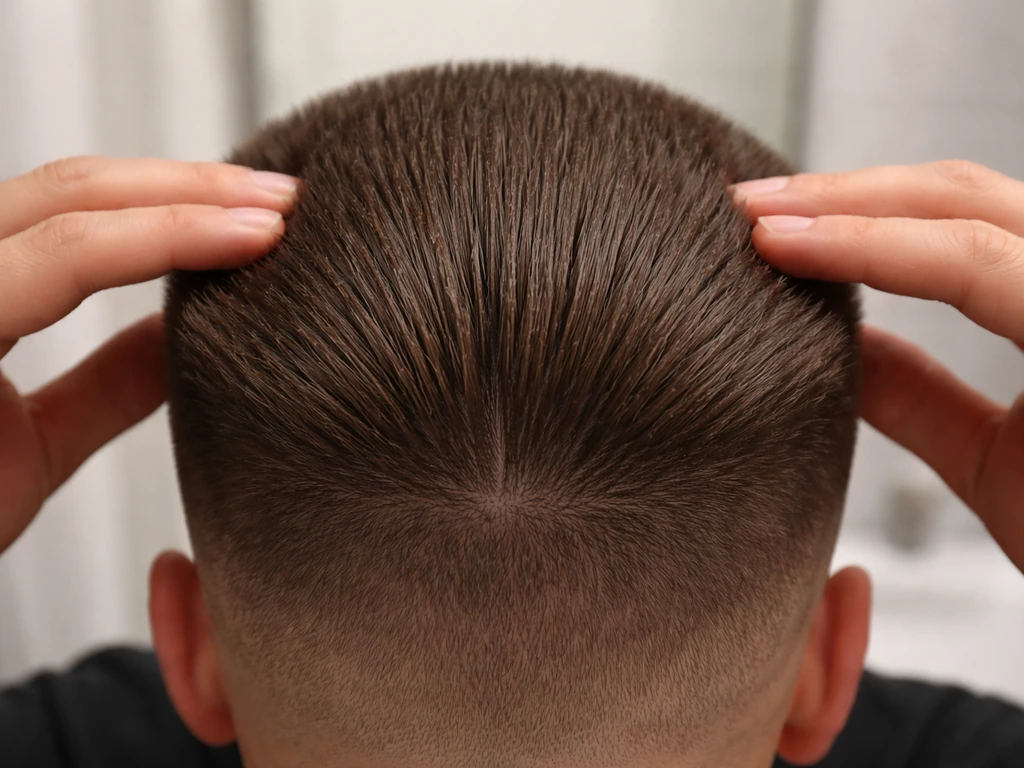
A cowlick at the crown is one of the most frustrating obstacles for a flat top because that's exactly where the hair needs to sit shortest and flattest. The good news is that consistent blow-drying in the correct direction, every day, does actually train hair direction over weeks. Work against the cowlick by combing and drying the affected hair in the opposite direction of the swirl, then palm it flat and finish with a firm-hold product. It won't be perfect at first, but it gets better. If the cowlick is severe, talk to your barber about adjusting the cut slightly so the flat plane accounts for the natural growth pattern rather than fighting it completely.
Uneven texture and patchiness
If some patches of the top are growing in faster, coarser, or with different texture than the rest (common in people with natural regrowth after color or chemical treatments), resist the urge to cut the shorter areas shorter to match. Instead, let the slower patches catch up. A skilled barber can blend the texture differences with scissor work, but only once there's enough length to work with. In the meantime, a firm-hold matte product smoothed over the top surface can disguise patchiness pretty effectively.
Hair that flops instead of stands
If your top hair is at good length but keeps flopping sideways or forward instead of standing up, there are a few things to try. A fringe male often has to manage the tricky in-between length too, so the right daily blow-dry and product can make the difference as it grows out how to grow a fringe male. First, check your blow-drying technique: are you fully drying the roots, or just the surface?
The roots need to be set upright while hot and held until cool. Second, try swapping your styling product for something with a stronger hold or a higher wax content. Third, consider a light texturizing spray or sea salt spray on damp hair before blow-drying to add grip and make the hair stand more easily.
Barber visits: what to say and when to go
Your barber is the most important partner in this process. The challenge with a flat top is that it's one of the most technically demanding cuts to execute well, and the wrong cut at the wrong stage of growth can set you back weeks. Here's how to navigate it.
When to go
During the early growth phase (first 4 to 6 weeks), go every 2 to 3 weeks for sides-only trims. Tell your barber explicitly that you're growing the top out for a flat top and you don't want anything taken off the top yet. Once the top reaches about 3/4 to 1 inch, you can request the first flat top shaping cut. After that, maintenance visits every 2 to 3 weeks are ideal to keep the flat plane crisp and the sides clean.
What to ask for
Be specific. Don't just say 'flat top' and hope for the best. Tell your barber your current phase, what length you want at the front (e. g.
, 1 inch), whether you want a level flat plane or a very slight slope front-to-back, and how short you want the sides (a number 1 or 2 guard is common for tighter tapers). Ask them to use the clipper-over-comb technique on the upper sides to box in the shape rather than letting it contour to your head. If you're unsure about any of this, show a reference photo.
A clear photo of the flat top shape you're going for removes all the ambiguity and helps a barber match your vision exactly. If you want to grow a fringe out too, the same patience and routine apply for training the direction and keeping it looking intentional while it lengthens how to grow a fringe out.
Protect your progress
The most common mistake in this grow-out process is letting a barber take too much off the top at a maintenance visit. Always confirm before the cut that you're only maintaining the flat shape, not reducing the overall height. If you feel uncertain, say 'please take as little off the top as possible to keep it clean, I'm still building length.' Most barbers will respect that. If yours doesn't, it might be time to find one who specializes in fade and flat top work.
FAQ
How do I keep the flat-top training from resetting between wash days?
If you are using water-based styling product, aim to reapply only to dampened sections rather than restyling from scratch. Re-wet the top lightly, comb straight up, then blow-dry until dry (roots first). This preserves the upright direction you trained, and prevents the hair from resetting back to its natural lay.
Why does my flat top look uneven after styling, even when I do the routine?
For a clean flat plane, you need the top to be fully dry before you judge shape. If you check it while it is still damp, it will look lumpy, domed, or inconsistent because the hair is still settling. Let it dry completely with the comb in place, then do a quick final surface pass with your palm.
Can I ask for the first shaping cut earlier if my top looks long enough?
A hair length that is “close” is not always enough if the roots are not set upright. If the top is about 3/4 inch but still flops, keep training and blow-dry with an upward lift for another few weeks before the first full shaping cut, so the barber has enough material to cut a true level plane.
What should I do if I want to maintain the sides at home but I am afraid of ruining the flat-top height?
If your top is short and you want to avoid shaving the sides, use a shorter clipper guard on the sides at home between barber visits, but stay conservative. One common approach is to only clean the perimeter and sides (not the upper boxed area), then let the top grow uninterrupted so you do not reduce the height you need.
What is the correct product order, drying first or product first?
Matte or low-shine hold is the goal, but the order matters. After blow-drying and once the top is dry, apply a small amount of hold product, then press and smooth the surface. Avoid loading product before blow-drying, since it can reduce lift and make roots harder to set upright.
My hair dries in the right direction but falls over later. What am I missing?
Try a “root-first” routine: when you blow-dry, focus the nozzle on the roots and lift until they cool while upright. If the roots cool while lying down, the hair will fall over quickly later, even if the rest of the strand is dry.
How does growing a flat top work with shrinkage on curly or wavy hair?
Yes, but choose your compromise cuts carefully. Ask your barber to keep the top length target for the flat plane, then use scissor work or a subtle texture approach to manage shrinkage. If you cut too aggressively into the top while it is still curly, you may end up with a flat surface that cannot support the intended height.
Should I cut faster-growing patches down to match the rest of my top?
If patches come in thicker, do not even them out with a cut too early. Let the slower areas catch up, then have the barber blend with scissor work once there is enough length to shape both zones. Until then, use a firm matte product to smooth the surface so the outline reads as one plane.
Taper or undercut, which is better during a flat-top grow-out?
A taper is easier for most grow-outs because it hides the line as the sides grow. If you already have an undercut grown out unevenly, switch planning to “sides control” rather than waiting for the full disconnect line to disappear. Regular, shorter side maintenance will keep the contrast intentional without needing to restart the cut.
Should I ask for a level flat top or a slight slope?
If you want the flat top to read level from the front and side, ask for a slight front-to-back slope only if your barber recommends it for your head curve. Otherwise, request a truly level plane and confirm the front and crown target lengths in inches so the cut matches what you trained.
What happens if I skip daily training for a few days?
If you miss a few training days, do not force it with extra product. First, return to combing straight up and blow-drying until the roots are fully dry and cool. After that, use a firm hold matte product in a thin layer to lock the direction back in.
How do I know it is time for a sides-only trim versus waiting?
A “flat top” typically still needs periodic shape checks, even if you are not ready for another full cut. If the sides start to round out, schedule sides-only maintenance sooner, because longer sides break the silhouette and make the top look like an overgrown quiff instead of a boxy plane.