
Yes, you can absolutely let your white hair grow out, and for most people it is worth it. The honest answer is that there is an awkward phase, it lasts roughly 6 to 18 months depending on how long your hair is now and how fast it grows, and it is completely manageable with the right styling and a realistic plan. If you are wondering how your hair will look as it grows out, plan for the awkward transition first, then focus on styling choices that help the look become intentional how your hair will look as you grow it out. If you are tired of maintaining dye, curious about your natural color, or just want to stop the cycle, growing it out is a legitimate choice and this guide will walk you through exactly what to expect.
Should I Let My White Hair Grow Out? Timeline and Tips

Marcus Vickers
7 Jun 2026
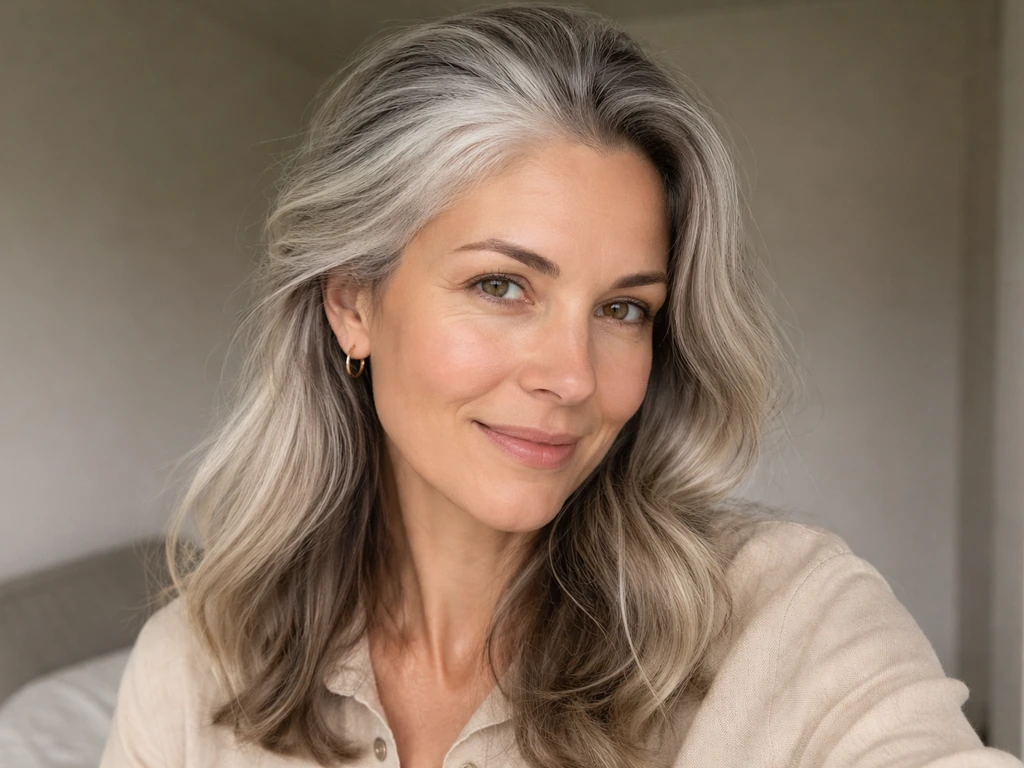
Grow it out or keep trimming? A quick decision framework
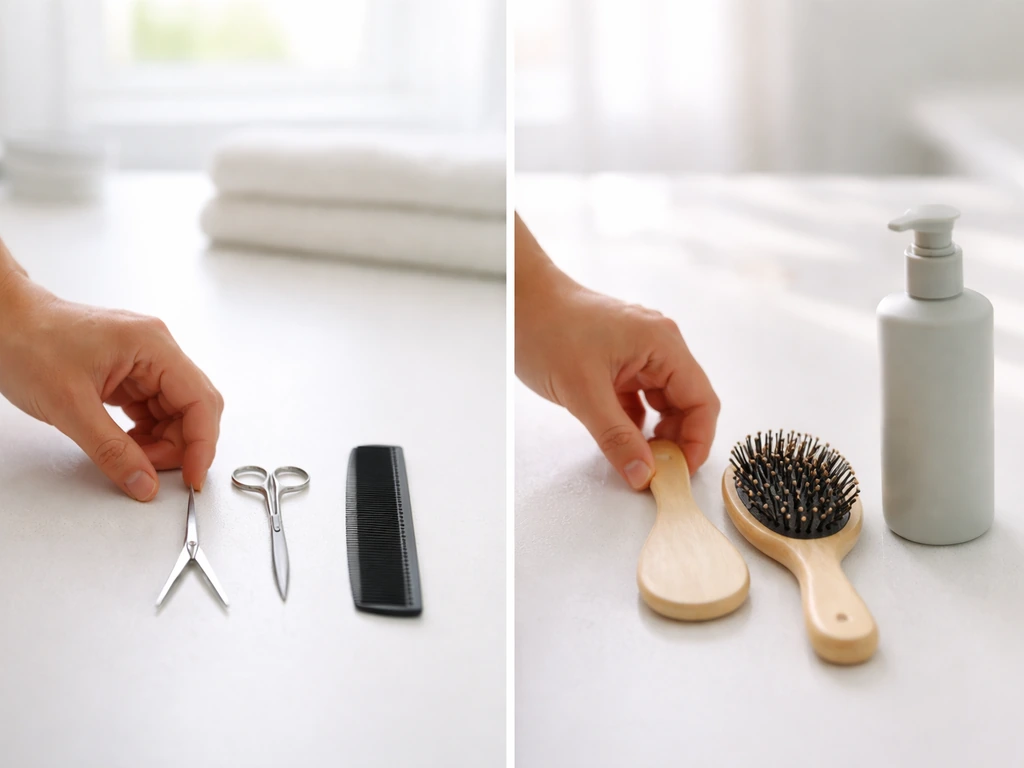
Before committing to the grow-out, it helps to be honest about what is actually driving your question. The decision usually comes down to a few key factors: how much of your hair is already white, how your lifestyle fits the maintenance schedule dyeing requires, and how comfortable you are with a visible line of demarcation for several months. Here is a quick way to think through it.
| Your situation | Likely best move |
|---|---|
| More than 50% of your hair is already white/grey | Grow it out — the transition line will be less dramatic and the end result closer than you think |
| Under 30% white with dark or heavily pigmented lengths | Consider a blending strategy (highlights, balayage) to soften the contrast as you grow |
| You color every 4–6 weeks and find it exhausting | Growing out is a realistic long-term time and money saver |
| You love your color but just want a break | A hybrid approach — toning, glossing, or highlights — lets you slow down without fully committing |
| You have a short cut (pixie, buzz, or short bob) | Growing out is actually fastest from a short cut; less length to wait out before the old color is gone |
| You have longer hair with significant color history | Expect 12–24 months for full transition; blending techniques help avoid the stark two-tone look |
The core question many people wrestle with is whether they will like how their white hair actually looks on them. That is worth sitting with separately from the practical side. But if your main hesitation is the awkward phase itself, know that it is temporary and very workable.
How white hair actually grows in differently
White hair grows from follicles that have largely stopped producing melanin. The follicles are not broken, they are just producing unpigmented keratin fibers. Because melanin also contributes to the structural properties of a hair strand, white and grey hairs are measurably different from pigmented ones in ways you will notice right away: they tend to be coarser in texture, slightly more porous, and can feel wiry or stiffer than your formerly colored strands. Some people find their white hair is finer and more fragile than expected, especially if chemical coloring has been part of the picture for years. Either way, you are likely dealing with a different hair texture than you had at 25.
The visual "white" effect is partly an optical one. Hair is made of keratin, which has a slight yellow tone on its own, and the way light bounces off unpigmented strands creates the bright white or silver appearance you see. This also explains why white hair can shift toward a yellowish or dull cast over time, UV exposure, hard water minerals, and product buildup all interfere with that light reflection. Managing that is a real and ongoing part of caring for white hair, and it is easier than most people think.
Regrowth patterns matter too. White does not grow in perfectly evenly across the scalp for most people. You may have dense silver at the temples, a strong white streak at the part, and still-pigmented sections at the back or nape. This patchiness is completely normal and biological, not a sign that something is wrong. Knowing this in advance means you will not be caught off guard when the grow-out looks uneven in the early months.
What the awkward stages actually look like (and how long they last)
Hair grows roughly 1 to 1.25 centimeters per month on average, though the range is wider than most people realize (anywhere from 0.6 to over 3 centimeters per month depending on the person). That growth rate is your planning baseline. Here is a realistic, stage-by-stage breakdown of what to expect.
Months 1 to 3: The root reveal
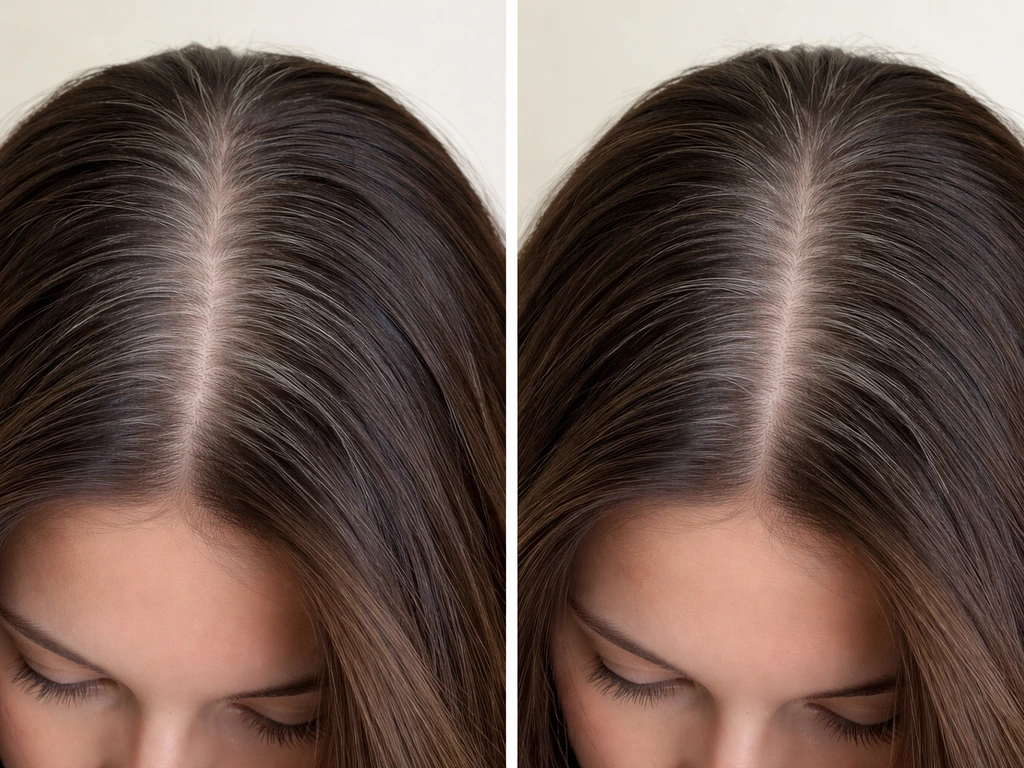
This is when the grow-out becomes visible. You have roughly 1 to 4 centimeters of white or grey root showing against whatever color is on your lengths. If your lengths are heavily pigmented or dyed dark, the contrast here is at its starkest. Many people find this the hardest phase psychologically, not because it looks bad, but because it feels unfinished. Short-cut growers (pixie, buzz, or very short bob) may actually pass through this phase faster because there is less pigmented length left to grow out.
Months 3 to 6: The line of demarcation deepens
You now have a visible band of white roots against pigmented mid-lengths, and depending on your hair length the transition line may sit somewhere around your ears or chin. This is the stage where blending strategies (highlights, balayage, or strategic trims) make the biggest difference. If you are growing out from a longer style, this phase can feel relentless. If you are growing from a short cut, you may already be getting compliments on your silver.
Months 6 to 12: The halfway point
For most people, this is where the grow-out starts to look intentional rather than neglected, especially if you have kept up with trims that remove some of the older colored ends. By month 12, someone starting from shoulder-length hair may be close to a majority of white showing through. For shorter starting lengths, you might already be fully grey or white by this point.
Months 12 to 24+: Full transition
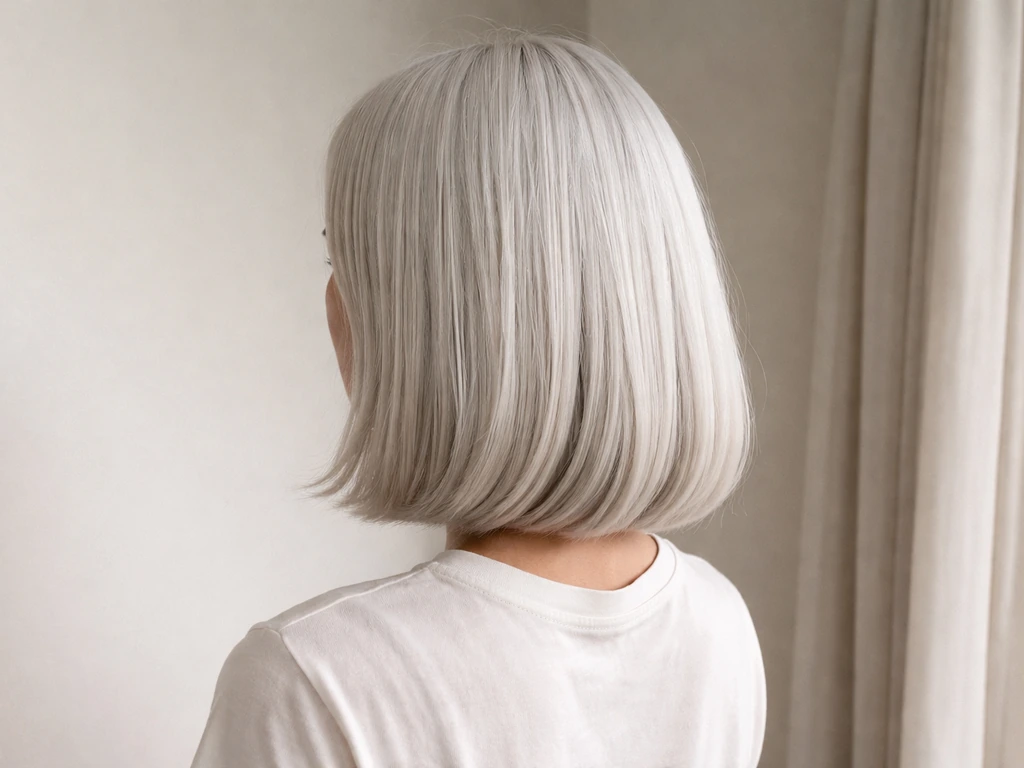
A chin-length bob takes roughly 16 months to grow to shoulder length at average growth rates. All About Salon estimates similar grow-out timelines, noting a chin-length bob can take about 16 months based on typical growth A chin-length bob takes roughly 16 months. Full shoulder-length or longer hair from a short starting point can take 18 to 24-plus months. By this stage most of the previously colored hair is gone (either grown out or trimmed away) and you are mostly working with your natural white or silver. Most people who reach this point feel the wait was worth it.
Styling through every phase without looking like you gave up
This is the part that actually makes the difference between a grow-out that looks intentional and one that looks like you just stopped trying. The key is working with your current length and stage, not fighting it.
Short cuts: pixie, buzz, and short bobs
If you are starting from a pixie or buzz, you are actually in the best position for a white grow-out. The contrast between roots and lengths is minimal because there is so little pigmented hair left. Keep the cut clean and intentional, ask your stylist for subtle texture or layering rather than length-focused trims so you are still moving forward with growth. As the top grows in, a slightly longer top with shorter sides is a classic and flattering shape that works with natural silver beautifully.
The short-to-medium transition (managing the in-between)
This is often the trickiest phase for styling. Hair is long enough to get in your way but short enough that you cannot tie it back properly. Headbands, texture spray, and soft waves are your best tools here. If you have an undercut growing in, expect the shorter sections to become visible as they grow out, that contrast can be managed with strategic layering that blends the nape and side lengths into the top. Ask specifically for this if you visit a salon.
Bob and medium-length stages
At medium length, soft layers do a lot of work. They break up the visible transition line and add movement that makes growing-out hair look styled rather than stuck. If you have bangs, this is also the phase where you decide whether to grow them out (expect 6 to 9 months to move them past your chin) or keep them as a framing tool while the rest catches up. Bangs that are predominantly white or silver can actually be a striking feature during the transition, lean into it rather than hiding it.
Longer lengths
Once you hit shoulder length or beyond, the white is doing most of the visual work and styling becomes more about maintenance and health than hiding anything. Loose waves, braids, and half-up styles all show off silver and white exceptionally well. The key at this length is keeping the ends healthy so the hair does not look frizzy or yellow at the tips.
Dye, blend, or fully embrace? Color choices during the transition
You do not have to make an all-or-nothing choice the moment you decide to stop dyeing. There is a whole spectrum of approaches, and most people find a middle path works best in the first year.
Full cold turkey
Stop dyeing entirely and let the roots grow. The contrast is most visible with this approach, but it is also the fastest route to fully natural hair. Works best if you have a short cut, a high percentage of white already, or are comfortable with a bold transition look. Salon appointments every 6 to 12 weeks for trims (not color) can keep this approach looking sharp.
Blending with highlights or balayage
A colorist can use highlights or balayage to break up the hard line between your white roots and your pigmented lengths. This dramatically softens the grow-out line and gives you more time between appointments. This is probably the most popular approach for people with longer hair who want to transition gradually. You may still need appointments every 4 to 6 weeks at first, tapering as the white takes over.
Glossing and toning to manage yellowing
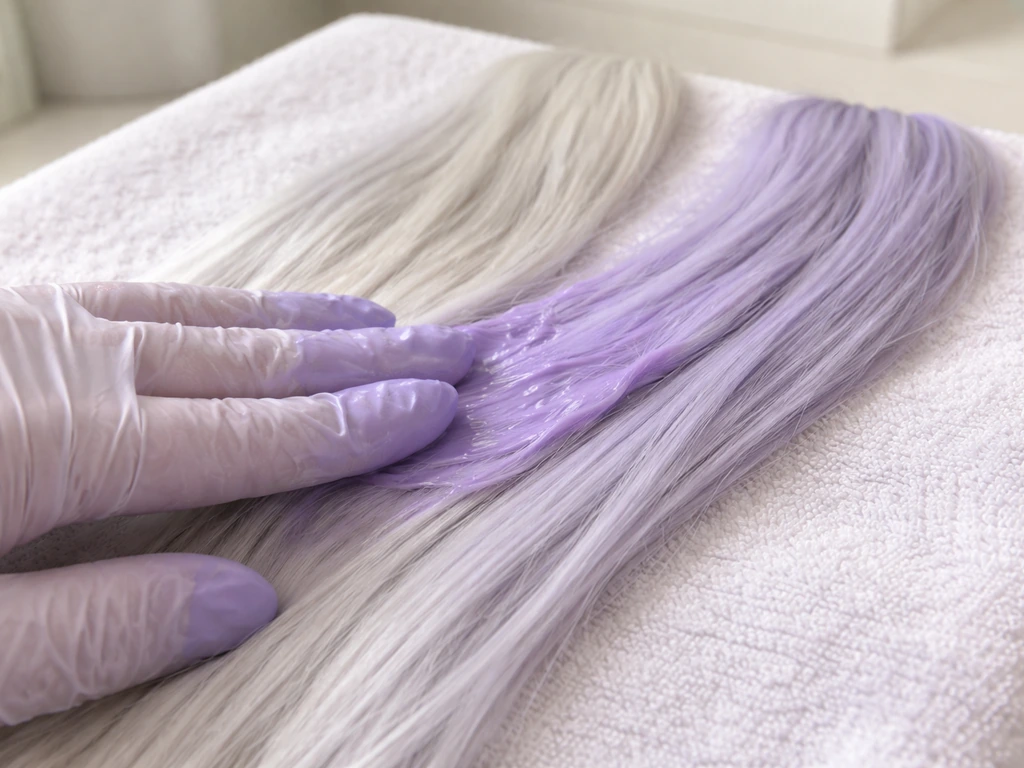
White hair picks up yellow and brassy tones from UV exposure, minerals in tap water, and product buildup. A purple or blue-toned shampoo corrects this by depositing a small amount of violet pigment that counteracts yellow. Use it for 2 to 5 minutes, then rinse, leaving it longer than that can tip your hair toward a purple cast. Follow with a good conditioner because toning shampoos can leave hair drier if used without one. Glossing treatments done at a salon take this further: they deposit a translucent tone over your white hair that adds shine and reduces brassiness for several weeks at a time.
A note on skin tone and silver shades
White and silver hair can look stunning across a wide range of skin tones, but the way it reads does depend on contrast and undertone. A washed-out look usually comes from too little contrast between skin, hair, and features, not from an inherently bad combination. If your silver feels flat, adding contrast through makeup, clothing color, or even eyebrow definition can completely change how striking your natural color looks. This is worth experimenting with before deciding the grow-out is not working for you.
Keeping white hair healthy through the grow-out
White hair needs more moisture and gentler handling than pigmented hair. It is more porous, can be more prone to frizz and breakage, and its optical brightness means damage and yellowing are immediately visible. Here is what actually helps.
- Use a sulfate-free shampoo: scalps tend to be drier as we age, and sulfate-heavy formulas strip the natural oils you need. A gentle, sulfate-free cleanser designed for grey or silver hair keeps moisture where it belongs.
- Condition every single wash: conditioner coats the hair shaft, reduces friction, smooths the cuticle, and dramatically improves how white hair feels and moves. Do not skip this step.
- Deep condition weekly: a hydrating mask once a week adds back moisture that daily environmental exposure takes away. Leave it on for 5 to 10 minutes before rinsing.
- Use a leave-in with UV protection: UV exposure is one of the main causes of yellowing in white hair. A leave-in conditioner with UV filters or antioxidants helps protect that brightness between washes.
- Clarify occasionally: product buildup and hard water minerals make white hair look dull and dingy. A clarifying shampoo used once every 2 to 4 weeks removes that buildup. Do not overdo it — it is more stripping than your regular shampoo.
- Lower your heat styling temperature: white hair is more fragile, especially if it has any chemical history. Keep heat tools below 180°C (350°F) and always use a heat protectant.
- Handle wet hair gently: white hair is most vulnerable when wet. Use a wide-tooth comb or a wet brush, work from ends to roots, and avoid aggressive towel rubbing.
Common worries and how to actually deal with them
"My white is growing in patchy and uneven"
This is completely normal. White and grey hair does not arrive in a uniform wave across your scalp, it comes in according to the melanocyte activity (or lack thereof) in individual follicles. Temples and parts usually go first, nape and back often lag behind. The patchiness that looks concerning in months 2 to 4 almost always blends together naturally as more white grows in. If it really bothers you, a single balayage appointment can soften the patchwork look without committing you back to regular coloring.
"The line between my dye and my roots looks so obvious"
The line of demarcation is the most cited reason people abandon the grow-out early, and it is solvable. Highlights or balayage that lighten the dyed sections close to your natural white are the most effective fix. Alternatively, trimming away the dyed ends progressively (a few centimeters at each appointment) speeds up how quickly the contrast disappears. Most people find the line bothers them more than it bothers anyone else looking at them.
"I do not know how to style it at this awkward length"
This is a styling problem, not a reason to go back to dye. The awkward-length phase is temporary and the same strategies that apply to growing out any style apply here: texture products, soft waves, accessories, and headbands all extend what you can do with hair that is between cuts. The styling challenge is not unique to white hair, it applies to any grow-out. Understanding what happens at each stage helps, and you can apply the same stage-by-stage thinking regardless of whether you are growing from a pixie, a bob, or something with heavy color history.
"My scalp feels drier and more sensitive than before"
Scalp changes are real and normal as hair follicles age. The scalp can produce less sebum, which leads to a drier, sometimes more sensitive feeling. Sulfate-free shampoos help here, as does adjusting wash frequency to what your scalp actually needs rather than a rigid schedule. If you have specific scalp concerns, a gentle medicated or sensitive-formula shampoo used when needed is fine alongside your regular routine.
"What if I commit and I end up hating it?"
You can always go back. Hair dye exists and it works. The grow-out is not a permanent one-way door. That said, most people who push past the 6-month mark find they are genuinely happy they kept going. Deciding to grow out your natural white is a question many people find themselves revisiting more than once, you are not alone in going back and forth, and there is no wrong timeline for making the call. If you are also dealing with parents who are unsure about the change, focus on a simple plan, realistic timelines, and how you will keep it looking neat while it grows out Deciding to grow out your natural white. If you are still unsure what “grow your hair out” means for your routine, this guide breaks down the common stages and what to expect grow your hair out meaning.
Your next steps depending on where you are right now
If you are ready to commit to growing it out, stop dyeing now and book a trim (not a color appointment) in about 6 to 8 weeks. At that appointment, talk to your stylist about whether a blending technique makes sense for your percentage of white and your current length. Start using a sulfate-free shampoo and a toning shampoo once or twice a week to manage yellowing from day one.
If you want to transition more slowly, ask a colorist about a balayage or highlight approach specifically designed to grow out gracefully. This is sometimes called a "grey blending" service and it is different from a standard highlight. It is designed to make the grow-out line disappear rather than adding contrast. You might still need appointments every 6 to 8 weeks at first, but they get further apart as more of your natural white takes over.
If you are genuinely unsure whether you will like your white, try going 3 months without dyeing before deciding. Three months of growth gives you a real preview of your natural color and texture without locking you into anything. Most people find that once they can actually see and feel their natural white hair again, they have a much clearer sense of what they want to do, and that is a better starting point than trying to decide in theory.
FAQ
What’s the quickest way to reduce the awkward demarcation line if I decide to stop dyeing?
If you stop dye all at once, the line of demarcation will be most noticeable during the first few months, especially if your dyed ends are darker. A practical option is a “delayed commitment” plan, stop dyeing now but book your first trim (not color) in 6 to 8 weeks, then decide about highlights or blending after you see how your roots and length textures look in real light.
Can I transition slowly without going back to dye every few weeks?
Yes, many people do a gradual transition, and it can be easier than full stop or full re-dye. Ask for a service focused on softening the boundary between dyed and natural hair (often done as a targeted blend), and keep the rest of the maintenance appointment schedule trim-only. This prevents you from repeatedly reintroducing dark pigment while you grow out the silver.
How often should I tone white hair, and how do I prevent it from turning dull or dry?
To avoid a dull or yellow cast, start toning early but be consistent about timing. Toning products generally work best for short contact, about 2 to 5 minutes, and using them 1 to 2 times weekly rather than daily. If your hair is already very porous or dry, prioritize conditioning after toning because toning can make hair feel rough if you do not moisturize.
My white hair feels wiry and stiff, what routine changes help most?
If your white hair feels wiry or stiff, it is often related to dryness and porosity, not “damage” from growing it out. Switch to a gentle, sulfate-free shampoo, use a moisturizing conditioner every wash, and consider adding a leave-in conditioner or light oil to the mid-lengths and ends only. Avoid heavy protein loads if your hair already feels coarse and tangled.
Is patchiness normal when growing out white hair, and should I do anything about it?
A single patchy area (like the part or temples) usually improves as more follicles switch to white over time. If you hate the look before it naturally blends, a focused blending service can soften the contrast without committing you to ongoing full-color maintenance. The key is to request targeted, near-root blending close to your natural pattern rather than large changes in overall shade.
If I’ve been dyeing for a long time, does the grow-out plan need to be different?
It can be, especially if you have been coloring for years. Instead of switching straight to full-length highlights, ask for a near-root approach (or a blend that targets only the area where dyed hair meets natural). That way you reduce the stark line while you still let the bulk of the hair grow out.
What hairstyles work best for each awkward length stage?
Before a new style, think in “stage lengths.” If your hair is long enough, half-up styles, braids, and loose waves hide transition lines well, but at awkward lengths headbands and texture spray usually work better than trying to tie it back. If you wear bangs, decide early whether you are growing them out or treating them as a feature, because that choice affects how you’ll style for 6 to 9 months.
What if my white hair makes me look washed out or flat, should I change my hair plan?
Yes, and it depends on your baseline hair color and undertone. If your hair looks washed out, it is often a contrast issue, not a white-hair problem. Increasing eyebrow definition, choosing clothing that creates contrast (like deeper tones against warm skin), and using a touch more bronzer or blush can make silver look brighter without changing your hair color.
How do I handle scalp dryness or sensitivity while my hair transitions to white and grey?
If your scalp feels drier or more sensitive, you may need fewer harsh cleansers and a modified wash schedule based on how quickly your scalp actually feels tight or itchy. Sulfate-free shampoos and spacing washes slightly farther apart often help. If you notice persistent redness, flaking, or itching, consider a dermatologist or a medicated gentle shampoo temporarily.
If I hate the grow-out, when is it okay to go back to dye or blending?
In many cases you can, and the “right” time is usually based on what you’ve learned from 3 to 6 months of growth. Most people who stop dye and commit past the early awkward window feel it improves. If you do want to change course, you do not need to start from scratch, you can resume a targeted approach such as blending or a controlled re-color that matches what your roots have become.
How can I tell if I’m over-toning or using purple shampoo incorrectly?
Don’t over-correct with too much purple or blue pigment. Signs you are over-toning include a muted or grayish cast (not bright silver) and hair that feels rough or coated. If that happens, pause toning for a couple of washes, then restart with a shorter contact time and a lower frequency.