
Yes, you should probably grow it out, but only if you go in with realistic expectations about the timeline and the awkward middle stages. Most guys who give up do so around months 3 to 6, right when the hair is too long to look intentionally short but too short to style meaningfully. That phase is real, it lasts a few months, and it's completely survivable with the right cuts, products, and a loose plan. If you've been going back and forth on Reddit threads about this, here's the honest breakdown you're actually looking for. If you are still deciding, the full guide to whether a man should grow his hair out can help you weigh the timeline and styling effort should i grow out my hair male.
Should I Grow My Hair Out Male Reddit: A Practical Plan

Marcus Vickers
11 Jun 2026

How to decide if growing it out is actually right for you
The Reddit debate about growing hair out usually isn't really about hair, it's about whether the payoff is worth the awkward stretch. Here's a simple way to think about it. Growing your hair out makes strong sense if you've genuinely wanted longer hair for a while (not just because you're bored this week), if you have at least 6 to 12 months of patience, and if you're in a job or lifestyle situation where a few months of slightly messy hair won't cost you anything serious.
Growing it out is probably not worth the frustration right now if your job requires a very strict appearance standard with no flexibility, if you have very fine or thinning hair that gets stringy quickly at medium length (more on that below), or if you're someone who genuinely hates product in your hair, because the middle stages almost always require some styling effort. None of these are permanent reasons to never grow it out, but they're honest reasons to wait for better timing.
One more honest factor: your hair's natural texture matters a lot. Wavy or curly hair often looks more intentional at awkward mid-lengths than straight hair does, simply because texture creates shape. If you have very straight, fine hair, the transition stages will look less polished and you'll need to lean harder on styling. That doesn't mean don't do it, it just means set your expectations accordingly. If you're also weighing whether to grow out an undercut specifically, or just the sides, those are slightly different decisions with their own timelines worth thinking through separately.
What the awkward phases actually look and feel like
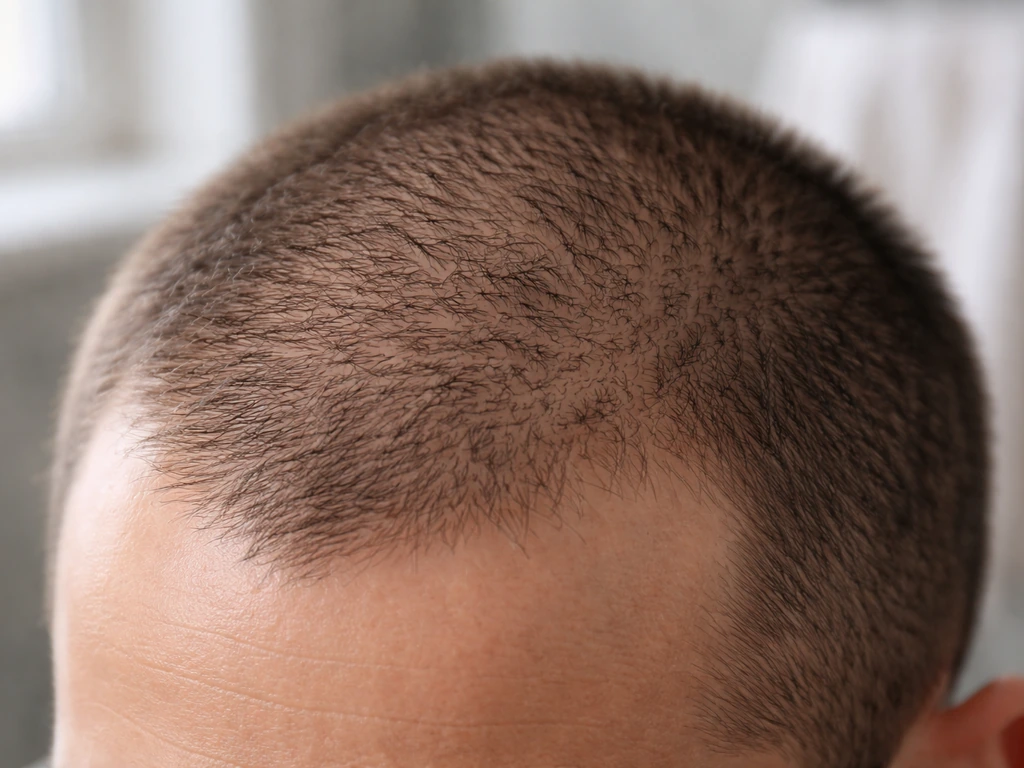
Hair grows roughly half an inch per month on average, though it varies by person and slows with damage or poor scalp health. From a short cut, think a number 2 or 3 buzz, a crop, or a short taper, here's what you're looking at across the major growth stages:
| Stage | Approximate length | What's happening | Main challenge |
|---|---|---|---|
| Months 1–2 | 0.5–1 inch | Growing out of the cut shape; starts looking uneven | Nothing to style; looks untidy if you had a clean taper |
| Months 3–4 | 1.5–2 inches | Poking-out phase; sides get fluffy, top lifts oddly | This is the peak awkward stage — most guys quit here |
| Months 5–6 | 2.5–3 inches | Enough length to start laying flat or styling forward/back | Cowlicks and growth patterns become very visible |
| Months 7–9 | 3.5–4.5 inches | Approaching medium length; can tuck behind ears | Bulk and shape need management with cuts and product |
| Months 10–14 | 5–7 inches | Genuine medium-to-long length; ponytail or bun possible at the longer end | Ends may be dry or uneven; needs consistent conditioning |
The phase that catches most guys off guard is months 3 to 5. The sides grow out and start to push outward, the neckline gets shaggy, and the top doesn't have enough weight to lie flat yet. This is the stage where you look in the mirror and seriously consider booking a cut. Don't. You're almost through it. A headband, some texture paste to push things back, or a simple hat for the worst days gets you through this window. After month 6, you start having real styling options.
The care routine that actually supports healthy growth
You don't need a 12-step routine. You need to get a few things consistently right, because damaged hair grows just as fast as healthy hair, it just breaks off at the ends and appears to stall. Here's what actually matters.
Washing: less is usually more, but it depends on you
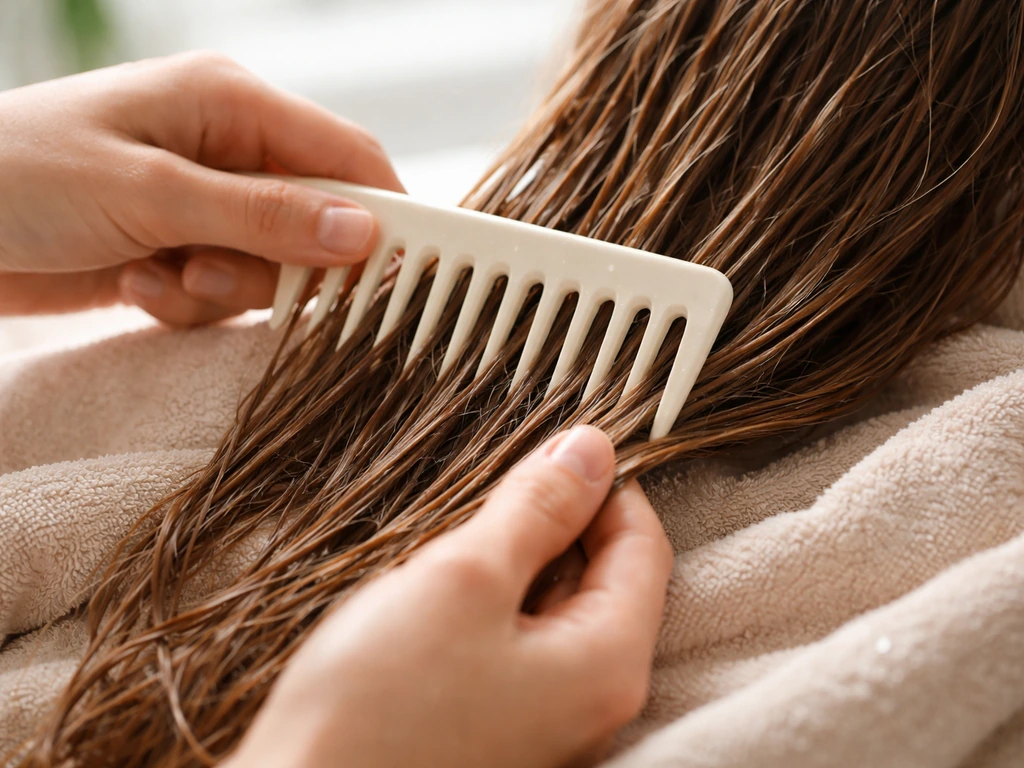
There's no universal washing frequency that works for everyone, it depends on your scalp type, activity level, and hair texture. What is clear is that blank" rel="noopener noreferrer">shampoo belongs on your scalp, not lathered through your ends. Washing the scalp removes oil and buildup; running shampoo through longer ends strips moisture and increases breakage. Conditioner works the other way, apply it to the mid-lengths and ends, not the scalp. Get into this habit early, even when your hair is still short enough that it barely matters, because it becomes important fast. As for frequency, most guys with normal scalps do well washing two to four times a week. Daily washing mainly increases dryness and breakage risk rather than affecting hair loss, shedding 50 to 100 hairs a day is completely normal regardless of how often you wash.
Detangling and drying without breaking things
Once your hair gets past a couple of inches, how you handle it wet matters a lot. Wet hair is more fragile. Use your fingers or a wide-tooth comb to detangle, not a stiff brush, which pulls and snaps strands. After washing, wrap your hair in a towel rather than rubbing it dry. Rubbing rough-dries the cuticle and creates frizz and breakage. Just press and wrap, then let it finish air-drying or hit it with a diffuser on low-medium heat. High heat every single day, especially from a regular blow dryer without a heat protectant, will fray your ends over time and make that awkward phase look even worse.
Scalp care and what actually supports growth
Your hair grows from your scalp, so that's where your attention should go. Keep it clean and reasonably well-moisturized. If you're getting dry, flaky scalp as your hair gets longer (often from infrequent washing or product buildup), address it with a clarifying wash once every few weeks. Scalp massage during washing, even just a minute of working your fingertips in circles, increases circulation to the follicles and makes washing more thorough. Beyond that, diet and sleep genuinely affect hair growth speed, but that's a longer-term factor, not something that shows up in a month.
How to style each stage without looking like you gave up
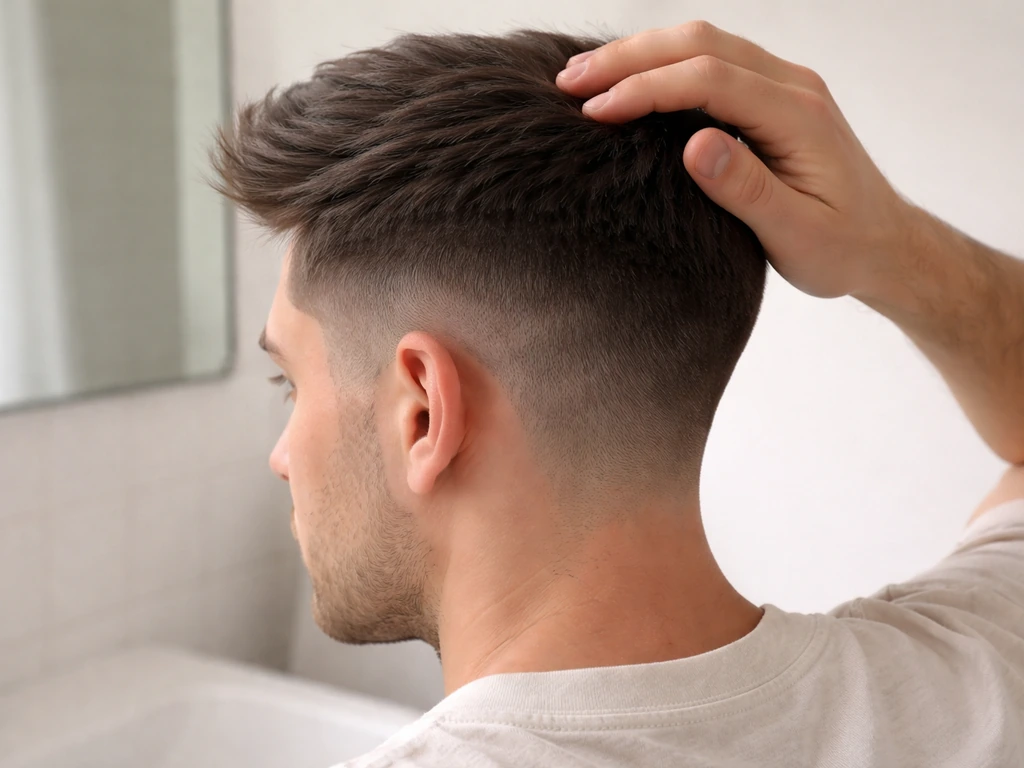
Short stage (months 1–3)
At this stage you don't have many options, and that's okay. Keep the neckline and around the ears tidy with a lineup or cleanup every 3 to 4 weeks, this makes short hair look intentional rather than neglected. A small amount of matte clay or paste worked through damp hair adds texture and control without making thin, short hair look greasy. If your hair grows in multiple directions at this length, pushing everything slightly forward tends to look more natural than trying to force a part.
Awkward medium-short stage (months 3–6)
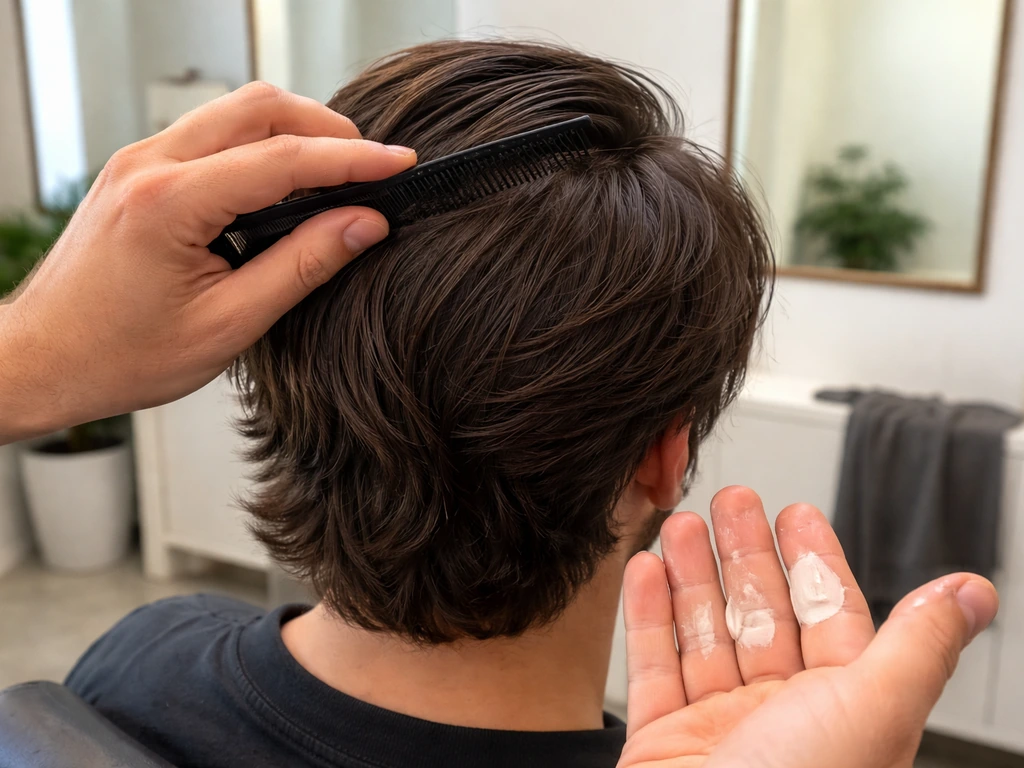
This is where most styling effort happens. The goal is to make the hair look like it has direction and intention. Push the top back or to one side using a medium-hold paste or pomade on damp hair, then let it dry in place. Avoid heavy gels that make the hair stiff and crunchy, they draw attention to uneven lengths. If the sides are getting puffy, a small amount of product and air-drying pushed downward helps flatten them. A headband or bandana is a genuinely useful tool here, not a cop-out, it holds things in place while the hair dries and gets you through the worst weeks. Ball caps work too, but wearing one every day while the hair dries can train growth patterns you don't want.
Medium length (months 6–10)
Now things get more interesting. At 3 to 5 inches, you have enough length to slick back, create a loose side part, wear a half-up style, or start doing a low bun on your best days. Curtain bangs, the middle-parted, face-framing look that became very popular, are achievable around this stage if you've been guiding your part in that direction. Sea salt spray adds texture and hold for wavy hair types without weight. For straight hair, a lightweight cream gives control without the stiff finish. Tuck-behind-ears also becomes available around month 7 to 8, which buys you a clean, purposeful look while the length continues.
Longer lengths (months 10+)
Once you're past 5 inches, the main style concerns shift from 'how do I not look messy' to 'how do I manage volume and shape.' This is where regular conditioning becomes critical, because dry ends at this length look straggly. A loose bun, a low ponytail, or a half-up style becomes your daily default on lower-effort days. If you've been thinking about a man bun specifically, this is the range where that becomes realistic, though it takes a bit more length (6 to 7 inches or more) to do one that doesn't look like a tiny knot. The styling possibilities open up significantly here, which is exactly why the awkward earlier stages are worth pushing through.
Handling undercuts, bangs, layers, and cowlicks
Growing out an undercut
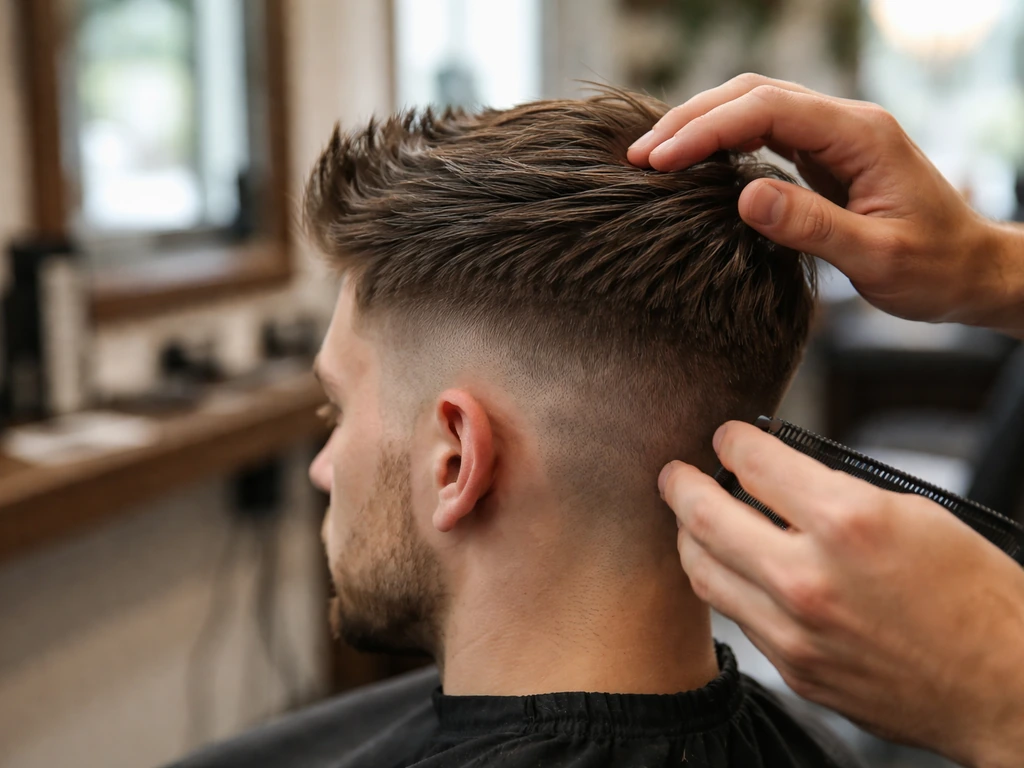
This is one of the most common and frustrating scenarios. If you have a disconnected undercut, shaved or very short sides with longer hair on top, growing out the sides takes a long time and goes through a visually weird phase where the sides are clearly a different length than the top. The fastest path through it is asking your barber to blend the sides gradually as you go, rather than letting them grow in a sharp line. This means getting the sides and back cleaned up every 6 to 8 weeks, slightly less aggressively each time, until the length difference between top and sides is small enough to style into a cohesive look. Growing out an undercut is its own process worth thinking through carefully before you start.
Growing out bangs or a fringe
If you have bangs or a fringe you're growing out, the annoying in-between length, where they're too long to sit right but too short to tuck, usually lasts about 2 to 3 months. Pushing them to the side with a small amount of paste or a clip while they grow is the easiest fix. The alternative is pinning them back and training them to lie away from your face, which actually speeds up the transition by flattening the growth pattern in the direction you want. Whether to grow out your fringe at the same time as the rest of your hair or handle it separately depends on what your overall target style looks like. If you want a quick answer to should i grow out my fringe, plan for the awkward in-between stage and only do it if you can stick to the timeline whether to grow out your fringe.
Cowlicks and stubborn growth patterns
Cowlicks are groups of hair follicles pointing in a different direction from the surrounding hair. They're permanent, you can't train them away entirely, but you can work with them. The trick is usually growing the hair around the cowlick long enough that the weight of the hair above it pushes it down. At very short lengths, cowlicks are almost impossible to hide. At medium and longer lengths, they become much more manageable. While you're in the short-to-medium transition, apply product in the direction you want the cowlick to lie and use a blow dryer on medium heat to set it in place. It won't be perfect, but it'll be dramatically better than doing nothing.
Layers and thinning ends
If your previous cut had layers, they'll grow out unevenly and create some shapelessness in the transition period. The easiest fix is to ask for a 'dusting' or light trim that removes just the longest, wispiest ends while keeping the overall length, this keeps things looking intentional without taking off the progress you've made. For thinning hair, growing long isn't impossible but it does require accepting that very fine, straight hair at medium length can look stringy without consistent product use. Thickening creams, volumizing mousses applied at the roots before drying, and avoiding heavy oils or pomades on the scalp all help. If thinning is a significant concern, it's worth talking to a dermatologist separate from your grow-out plan.
How to trim strategically without ruining your progress
The biggest fear guys have when growing their hair out is that a trim will set them back. It won't, if it's done right. The goal of trimming during a grow-out isn't to take length, it's to remove damage and improve shape so the hair looks like it has a direction. Here's how to approach it:
- Every 8 to 12 weeks, ask for a 'dusting' — literally just the split or frayed ends removed, usually a quarter inch or less. This prevents breakage from traveling up the shaft and making ends look progressively worse.
- Keep the neckline and ears cleaned up every 3 to 4 weeks, especially in the early stages. This single thing makes growing-out hair look intentional instead of neglected.
- If the sides are getting too wide and puffy, ask for a slight trim to reduce bulk without removing length from the top — this shapes without setting back your progress.
- Tell your barber or stylist explicitly: 'I'm growing it out, I want to keep as much length as possible — just clean up the shape and remove any damaged ends.' Most barbers will respect this if you say it directly.
- Avoid going in for a trim when you're frustrated with the grow-out — that's when impulsive decisions happen. Schedule trims proactively, not reactively.
The hardest part of growing your hair out isn't the biology, it's the mental game of sitting with imperfect hair for several months while trusting the process. The guys who make it through to longer hair are almost always the ones who had a loose plan and stuck to it through the ugly middle stage, rather than those who had perfect genetics or the ideal hair type. Pick your target length, get a basic care routine going, and give yourself at least 9 to 12 months before making any final judgments. The other side of the awkward phase looks much better than you're imagining right now.
FAQ
How often should I get trims while growing my hair out, without setting myself back?
If you hate the awkward stage, do a “maintenance trim” instead of a full haircut. Ask for only removal of damaged, wispy ends (a dusting) and a gentle reshaping of the neckline and around the ears, keep the overall length. This prevents breakage from spreading the look, without resetting your timeline.
What’s the simplest routine to start with when I’m only a month or two in?
Start with the smallest version of a routine, shampoo on the scalp and conditioner on the mid-lengths and ends. If dandruff or oil buildup shows up, add a clarifying wash about once every few weeks. Most guys overcomplicate by adding multiple products too early, which can make the transition stage look worse.
I have straight, fine hair, should I still grow it out, and how do I avoid the stringy look?
If you have very straight, fine hair, the goal is control and weight placement, not volume. Use a lightweight cream or a small amount of paste on damp hair, then let it dry in the direction you want. Avoid heavy oils and greasy pomades on the scalp, they can flatten roots and make mid-lengths look stringy.
If my scalp gets oily quickly, how do I handle longer hair without breaking the grow-out plan?
For most people, the issue is less about washing frequency and more about how your hair dries and how product is used. If you feel “oily fast,” try washing the scalp consistently (often two to four times weekly) and keep conditioner off the scalp. Switch to towel pressing and low heat, daily high heat tends to make the awkward stage look even scruffier.
Can I use a blow dryer during the transition stages, and how often is too much?
In general, you can use styling without committing to daily heat. Let hair dry mostly in place, use a blow dryer on medium heat only to set direction if you need it, and consider a diffuser on low-medium later. Heat every day can fray ends, which makes you look like you are “stuck” even when you are growing.
Is it okay to wear a hat every day to manage the awkward stage?
If you can keep hair out of your eyes and off your face while it dries, that’s usually enough. Don’t wear hats or head coverings all day for weeks, since repeated friction and tension can push growth patterns. A hat for the worst days is fine, try to keep it as a short-term tool rather than your default.
My hair has cowlicks, will they ever fully go away when I grow it out?
If it’s really only one spot, first try direction-based styling (product and setting it to lie correctly). If cowlicks are broader or your hair is very short, they may never look perfectly flat. Once you’re at medium length, weight and consistent drying direction usually reduce the “sticking up” effect a lot.
What should I do if my hair looks frizzy during months 3 to 6?
If your hair is getting frizzy during growth, the most common fix is changing drying method, not changing haircut length. Press and wrap with a towel, detangle with a wide-tooth comb, then set shape as it dries. If frizz is paired with a dry, flaky scalp, add a clarifying wash occasionally and adjust product placement to keep ends conditioned.
I hate using product, should I still grow it out, or is there a way to make it low-maintenance?
If you hate product or you want minimal effort, choose a growth target that naturally works with your texture. For example, wavier hair often tolerates “less styling” better than straight hair at mid-length. Also consider timing with low-accountability weeks (vacation or a more flexible job period) so you can survive the awkward window.
What’s the best strategy if I have a disconnected undercut and I want the sides to catch up faster?
If you got a disconnected undercut, the fast fix is gradual blending, ask your barber to reduce the difference each visit rather than waiting for a full grow-out. Keep sides and back cleaned up every 6 to 8 weeks, slightly less aggressively each time. This reduces the “two different hairstyles” look and gives you faster cohesive styling options.
Should I grow out fringe with the rest of my hair, or handle it separately for faster results?
If bangs or fringe are in the in-between stage, decide whether you want them to blend into the general style or live separately. Pushing them to the side with paste plus occasional clips can make them look intentional, while pinning and training them to lie away from your face can shorten the awkward period for many people.