
Growing out straight hair as a guy is genuinely manageable once you have a plan. The core challenge is that straight hair shows every awkward phase with zero mercy, there's nowhere to hide when it starts poking out at the sides or flopping over your ears. But that doesn't mean you have to white-knuckle it for a year hoping for the best. With the right haircut strategy, a simple daily routine, and a few styling tricks, you can look intentional at every single stage from buzz cut to ponytail.
How to Grow Out Straight Hair for Men: Step Guide

Marcus Vickers
24 Mar 2026
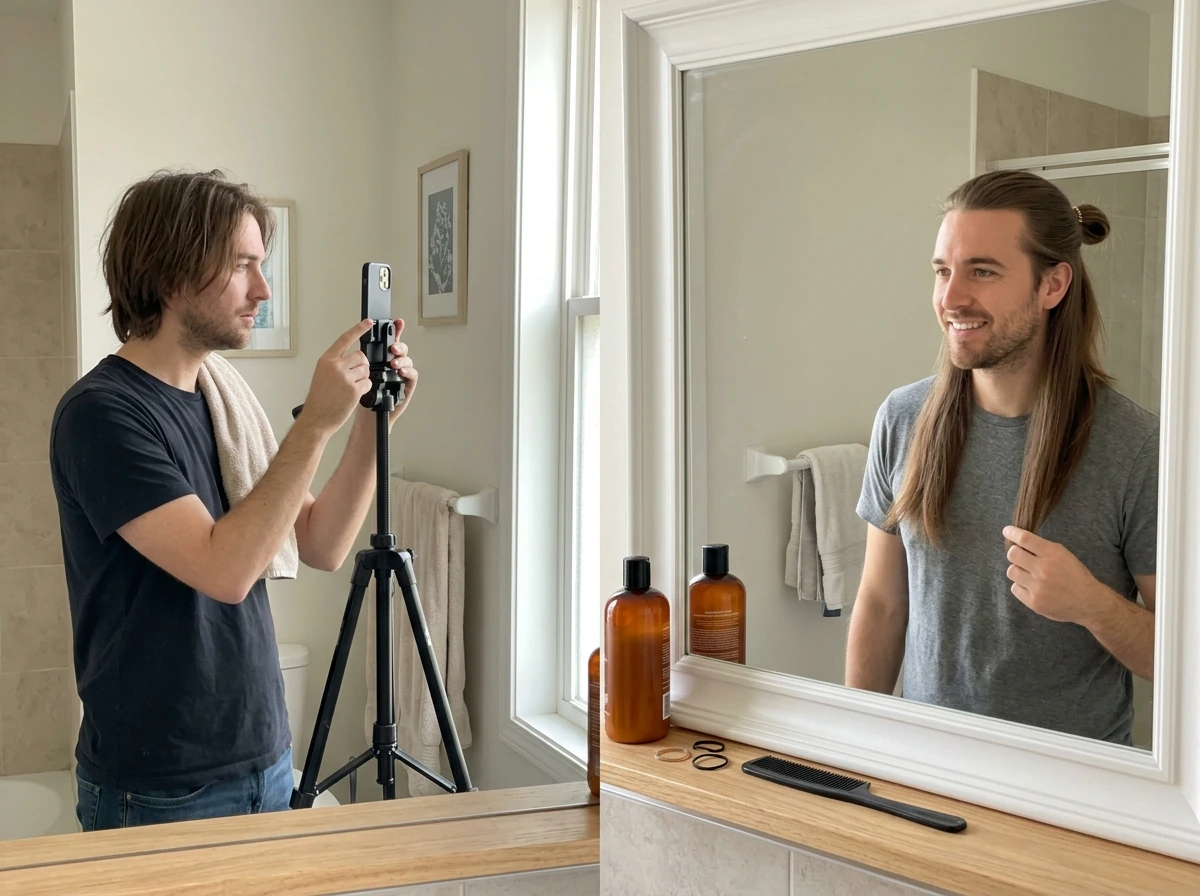
Start with a plan: know your current length and your end goal
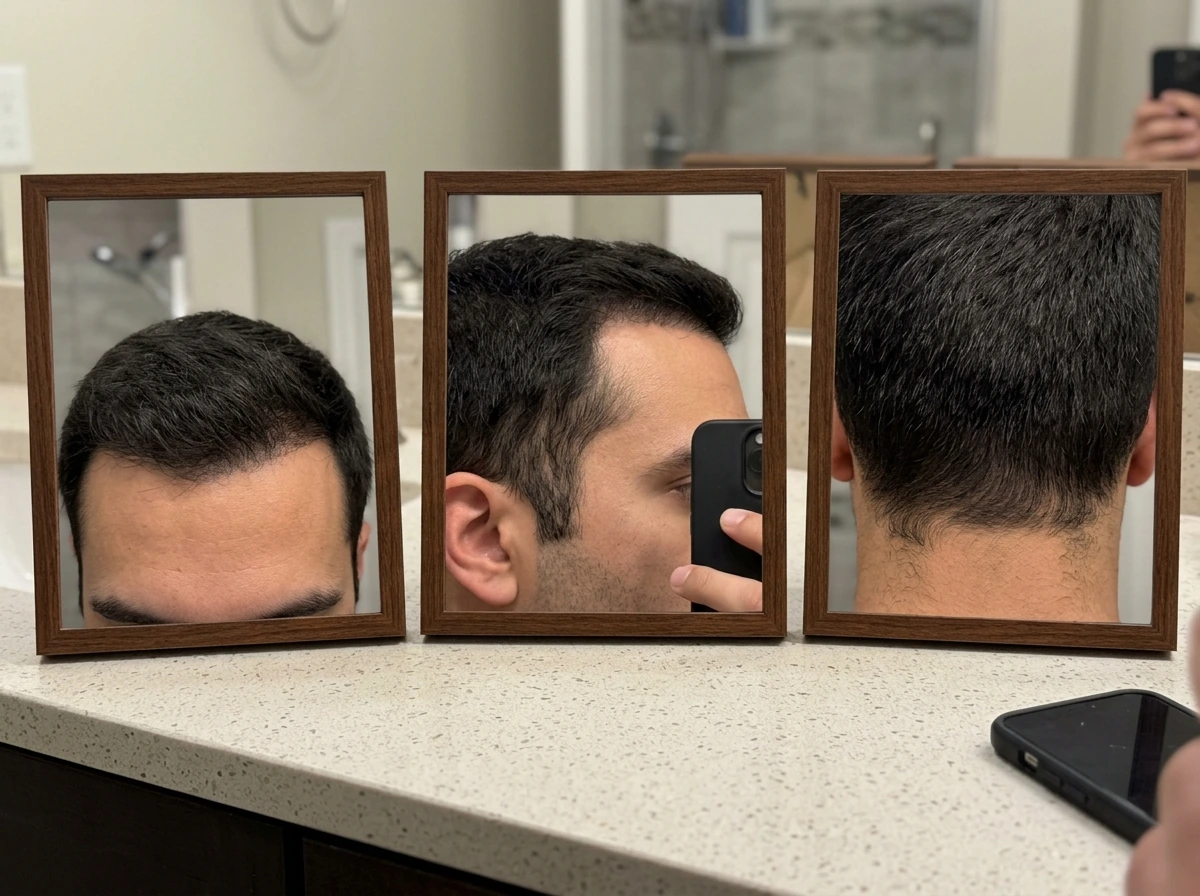
Before you do anything else, take a photo of your hair right now from the front, side, and back. This is your baseline. Then decide, roughly, where you want to end up. Are you aiming for a medium length you can push back off your face? A longer style you can tie up? A curtains look? The goal matters because it determines how long you actually need to commit, and it changes which styles are worth learning along the way.
Here's a simple way to think about your starting point. Measure from your scalp at the top of your head to the end of your hair strands. Anything under about an inch puts you in buzz/close-crop territory. One to three inches is the classic awkward zone. Three to five inches is the medium transition where styling gets much easier. Anything past six inches is genuinely long and opens up tie-back options. Once you know where you are and where you're going, you can map a realistic timeline and stop second-guessing every week.
Hair growth timeline for straight-haired men: what actually changes when
Hair grows at roughly 0.5 inches (about 1.25 cm) per month on average, though the real range is wider than most people think, anywhere from about 0. Medical News Today reports that hair growth is typically about 0.5 to 1.7 cm per month on average, though it varies between people 0.5 inches (about 1.25 cm) per month on average. 5 cm to 1.7 cm per month depending on your genetics, age, health, and even season. That means the timeline below is a realistic middle estimate, not a promise. Your hair might move faster or slower, and that's completely normal.
| Month | Approximate Length Added | What You'll Notice | Key Challenge |
|---|---|---|---|
| Month 1 | ~0.5 inch | Close cut starts softening; fuzz on top | Nothing to style yet — just patience |
| Month 2 | ~1 inch total | Hair lays flat on top, ears start to get covered | Looks unintentional; hardest mental phase |
| Month 3 | ~1.5 inches total | Fringe starts reaching eyebrows, sides get bushy | Poking out at sides, needs first shaping trim |
| Month 4–5 | ~2–2.5 inches total | Can sweep to side or push back; some length to work with | Cowlicks and flat spots become obvious |
| Month 6 | ~3 inches total | Real styling options open up; can use product effectively | Hair may separate or lie unevenly |
| Month 9 | ~4–4.5 inches total | Can slick back, side part clearly; fringe hits mid-nose | Keeping it looking groomed without cutting too much |
| Month 12 | ~6 inches total | Approaching a full tie-back for thicker hair; flow look achievable | Maintaining healthy ends; blending top and sides |
The first three months are the ones most guys quit during. Straight hair at 1 to 2 inches has a way of looking neither short nor long, just untended. That's the illusion. The hair is growing fine. The issue is that you haven't got enough length yet to direct it anywhere. Push through this window and things genuinely shift around the three-to-four-month mark.
Your daily wash, condition, and detangling routine
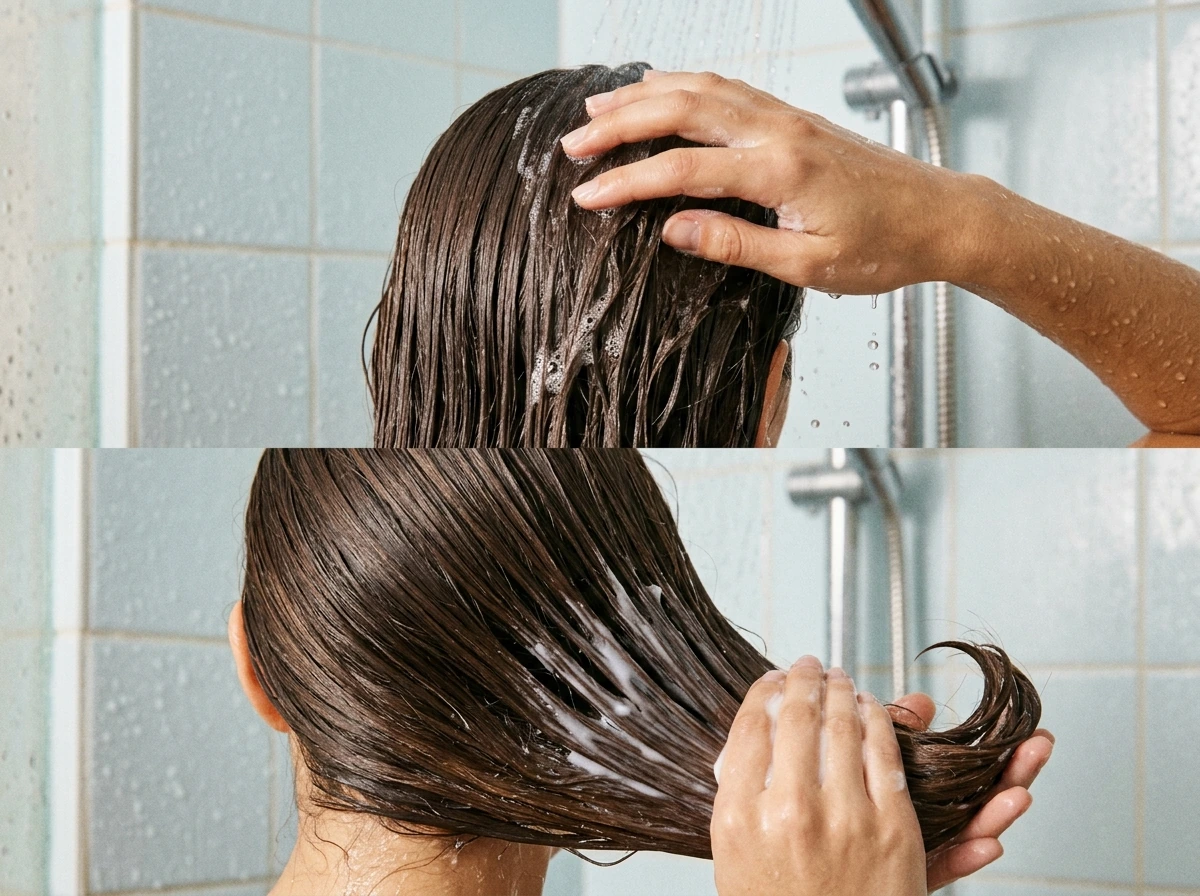
Straight hair doesn't need to be washed every single day. Daily washing strips natural oils that actually help straight hair lie flat and look healthy. A good rhythm for most guys is washing every two to three days, with a quick rinse on off days if needed. If your scalp runs oily, you might wash every other day, but resist the urge to shampoo daily just because it feels like the right thing to do.
When you do wash, use a sulfate-free or gentle shampoo. Harsh sulfates are fine for a buzz cut but start causing dryness and frizz as your hair gains length. Follow with a lightweight conditioner focused from the mid-lengths to the ends, not the roots. Let it sit for a minute or two, then rinse with cool water. The cool rinse closes the cuticle and gives straight hair that smooth, flat appearance you want.
Once you're past about two inches of length, detangling becomes relevant. Use a wide-tooth comb, not a brush, on damp hair. Start at the ends and work upward toward the roots. This prevents breakage and reduces the split ends that make growing straight hair look ratty over time. A light leave-in conditioner or detangling spray makes this much easier and is worth adding to your routine around month three.
The smart haircut strategy: trim without resetting your progress
The biggest mistake guys make when growing hair out is either avoiding all haircuts entirely (which leads to scraggly ends and a mullet effect) or asking for too much off and resetting weeks of progress. The answer is strategic micro-trims every eight to ten weeks. Tell your barber or stylist exactly what you're doing. Say: 'I'm growing this out, I want to keep the length on top and just clean up the shape.' A good stylist will hear that and work with you.
For the sides and back, the goal during the grow-out is gradual blending rather than dramatic fades. If you've been wearing a tight fade, ask for the fade to be brought up less aggressively each visit, so the contrast between top and sides softens as the top length increases. This avoids the mushroom-head look and keeps the overall shape intentional. Once your top is past three inches, you can start transitioning to a scissor-cut on the sides rather than clippers, which gives a softer edge that blends naturally.
Layers are underused by guys growing out straight hair. A small amount of internal layering in the top section, just a half inch or so removed from underneath, reduces bulk and weight, which helps straight hair move better and sit more intentionally rather than falling flat or tent-poling at the crown. Ask for this specifically around months four to six.
Styling through the awkward phases: what to do at each stage
Very short (under 1.5 inches): just keep it clean
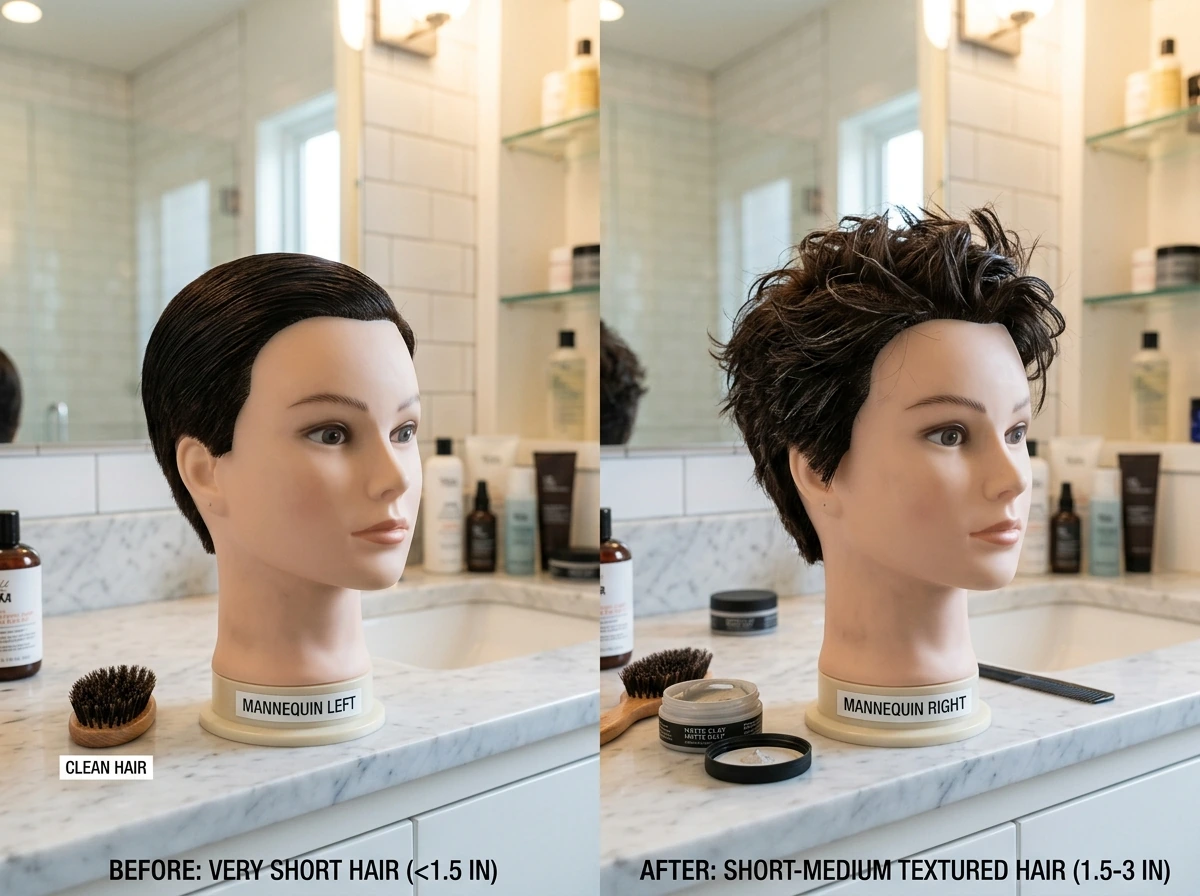
At this length, you can't do much besides keep it clean and tidy. A tiny amount of matte clay or pomade worked through with your fingers can add slight texture and make it look chosen rather than accidental. Keep the neck and sides clean-lined. This is the phase where your grooming elsewhere (beard, skin, clothing) does the heavy lifting while you wait.
Short-medium (1.5 to 3 inches): the hardest stretch
This is the window most people describe as 'I can't do anything with it.' That's not quite true, it just requires slightly more effort. A medium-hold matte clay gives you enough grip to push the hair in a direction and keep it there. Try pushing everything back off your face with your hands while the hair is slightly damp from your wash, then apply product. The slick-back isn't polished at this length, but it reads as intentional. Alternatively, a side part with a bit of product creates a clean, classic look that works even at 2 inches on top.
Medium (3 to 5 inches): options open up fast
This is where growing straight hair out starts to feel worth it, hair grow tips really kick in at this point. If you want more hair grow tips for the whole process, keep reading the next section on styling through the stages. You can do a proper slick-back with a medium-hold product, a defined side part, a textured push-forward for a more modern look, or even a loose curtains style if your hair falls naturally to the sides.
If you want step-by-step guidance, focus on trims, washing habits, and styling tools that help your length transition smoothly proper slick-back. Straight hair at this length responds very well to a blow dryer with a low heat setting, just two minutes directing the hair where you want it while it dries adds a huge amount of control and shape. A small boar-bristle brush helps here. how to grow more pubes
Long-medium and beyond (5+ inches): tie it back, style it forward
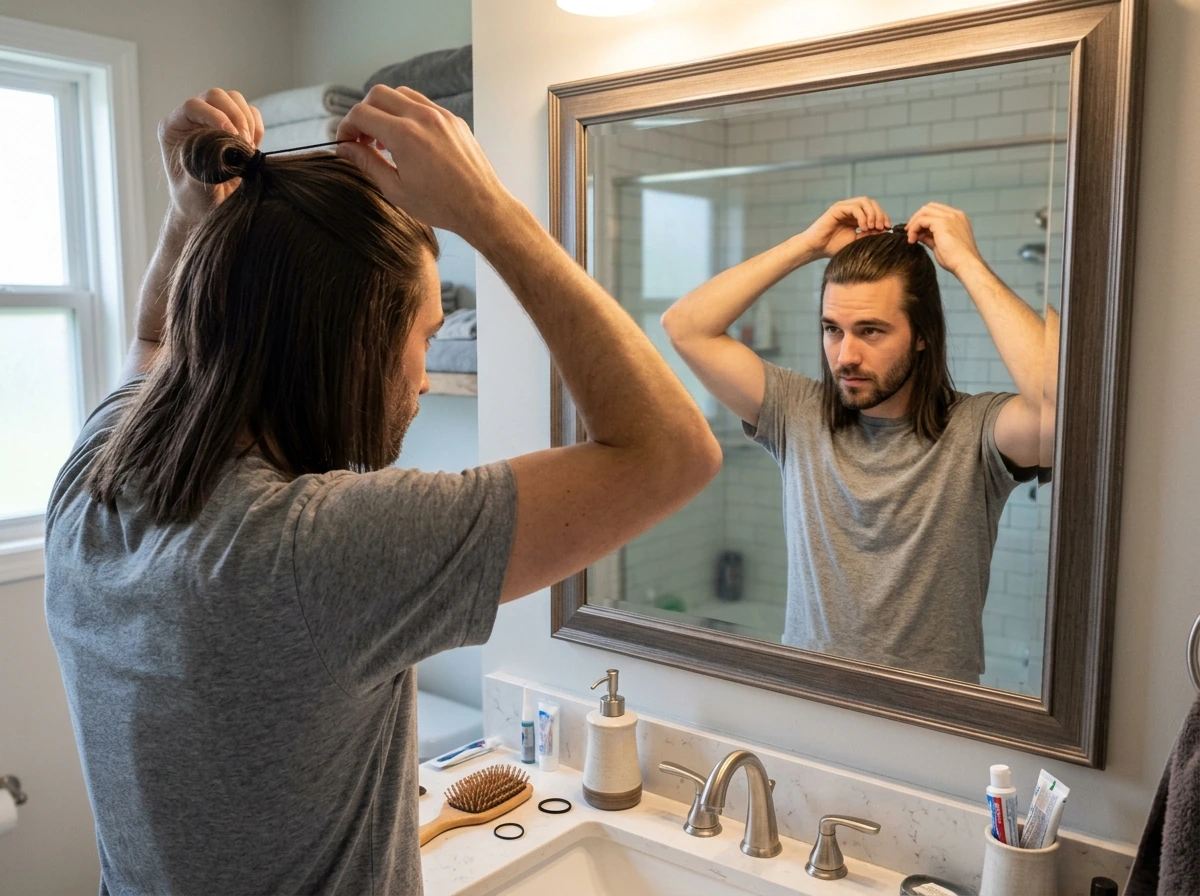
Once you're past five inches, you've got real options. The half-up tie becomes your best friend for bad hair days, gather just the top section and secure it with a small elastic or clip. It's a quick, clean look that keeps hair out of your face without committing to a full ponytail. A low ponytail or bun works once you have enough length across the whole head.
A low ponytail or bun works once you have enough length across the whole head. If you're aiming for a man bun, that's a separate goal in its own right and takes longer on the sides and back than most guys expect. At this stage, your focus shifts from 'how do I survive this phase' to 'how do I maintain what I've built. '
Products, heat, and habits that keep straight hair healthy while it lengthens
Straight hair is more vulnerable to damage as it gets longer because the same strand has been through more mechanical stress, brushing, product buildup, and friction from sleeping. The longer your hair gets, the more the ends need protection. A few practical habits go a long way.
- Use a lightweight hair oil or serum on the ends every two to three days. Argan oil, jojoba, or a purpose-made hair serum all work. A pea-sized amount is plenty — straight hair shows greasiness quickly.
- If you use a blow dryer, always apply a heat protectant spray first. At 3 inches and beyond, heat damage becomes a real factor for straight hair and shows up as dullness and split ends.
- Keep your blow dryer on a medium heat setting, not the hottest. Straight hair responds well to lower heat with more airflow. Hold the dryer at least six inches from your scalp.
- Sleep on a satin or silk pillowcase if you can. Cotton creates friction that causes breakage and frizz, especially as your hair grows past two to three inches.
- Avoid layering multiple heavy products. A single medium-hold clay or cream is almost always enough. Stacking multiple styling products causes buildup that makes straight hair look flat and dull.
- Eat enough protein and stay hydrated. Hair is made of keratin (a protein), and growth genuinely slows when your diet is lacking. This isn't a gimmick — it's basic biology.
On the product side, a medium-hold matte clay (like those from brands such as Baxter of California, American Crew, or similar) is the most versatile tool for growing-out straight hair. It gives grip without stiffness, doesn't make straight hair look shiny or greasy, and works at every length from 1.5 inches upward. Avoid gel for everyday styling, it can make straight hair look crunchy and heavy, and it emphasizes flatness rather than disguising it.
Troubleshooting the most common straight-hair grow-out problems
Hair is flat and lifeless
Flat hair during the grow-out is almost always one of two things: too much product weighing it down, or hair that needs internal layers to remove bulk. First, strip back your product use and try a volumizing mousse worked through damp hair before blow-drying. Direct the dryer upward at the roots to build lift. If that doesn't help, ask your stylist for light internal layers at the crown on your next trim, this is a game changer for flat straight hair.
Cowlicks and crown chaos
Cowlicks are the bane of the straight-hair grow-out because straight hair follows its growth pattern exactly, there's no curl or texture to disguise a stubborn whorl. The most effective approach is training the hair with a blow dryer. While the hair is damp, use medium heat to direct the cowlick section in the opposite direction of its natural lean, then switch and blow it the right way. Doing this consistently takes a few weeks to show results. A strong-hold wax or pomade applied directly to the cowlick also helps pin it down on difficult days.
Frizz at the hairline or mid-lengths
Straight hair shouldn't frizz much, but it can when it's dry or damaged. If you're seeing frizz, your hair needs more moisture. Add a leave-in conditioner to your post-wash routine, and use a lightweight serum on the mid-lengths and ends. Don't over-brush. A wide-tooth comb on damp hair is much gentler than a brush on dry hair. If your hairline has a halo of flyaways, a tiny amount of pomade or even a light holding spray smoothed over the surface will tame them without stiffening the whole style.
Uneven growth: one side longer, or sides catching up to top
Uneven growth is real and it's frustrating. The sides of your head often grow at a slightly different rate than the top, and many guys find one side consistently outpaces the other. The fix is not to start cutting, it's to use styling to your advantage. Part your hair on the side that appears shorter; this visually balances the overall shape. At your next trim, flag the unevenness to your stylist and ask them to even the perimeter without touching the top. Over a few months, the difference becomes much less noticeable as overall length increases.
Your next 30 days: a concrete action plan
Here's exactly what to do starting today. Don't overthink it, this is a simple, repeatable routine that sets you up for a clean grow-out from day one.
- Take a baseline photo today (front, side, back) and note your current length in inches or centimeters. Write down your target style.
- Book a shaping appointment in the next two weeks if your hair currently has uneven ends, a hard fade that's grown out awkwardly, or obvious bulk on the sides. Tell your barber you're growing it out and want a shape-up only — no length removed from the top.
- Buy a gentle or sulfate-free shampoo, a lightweight conditioner, and a medium-hold matte clay if you don't already have them. Add a hair oil or serum if your hair is past two inches.
- Set a wash schedule: every two to three days. On off days, rinse and condition only if needed.
- Practice one styling method this week. If you're at 1.5 to 3 inches, try the product-and-push-back method on damp hair. If you're at 3 inches or more, try blow-drying with direction for two minutes before applying product.
- Schedule your next shaping trim eight to ten weeks from today and put it in your calendar. Growth doesn't wait and neither should your trim schedule.
- Take a progress photo every four weeks, same lighting, same angle. You will not notice day-to-day change. Monthly photos show you the truth and keep you motivated.
The grow-out is a slow process by nature, roughly half an inch a month means you're playing a long game. But straight hair, managed well, can look clean and intentional at every single stage if you're working with it rather than against it. If you want the quickest results, use hair grow tips for men that match your current length and routine. The guys who make it to their goal length are the ones who stopped waiting to feel like their hair looked 'right' and started working with what they had each month. That's really all it takes.
FAQ
How often should I trim if I want to keep growing straight hair out but avoid split ends and a mullet shape?
Stick with micro-trims every 8 to 10 weeks, and ask for a “clean-up only” perimeter. If you see more fraying at the ends, shorten the interval slightly, but avoid removing bulk from the top, that is what usually resets progress and keeps the awkward stage going longer.
Should I stop all haircuts once my sides start poking out, or can I still get them blended?
You should not stop, but you also should not fade them aggressively. The goal is gradual blending that matches the top growth, so ask the barber to bring the sides up conservatively and rely on scissor work once the top is around the 3 inch mark.
Can I use the same products throughout the whole grow-out, or do I need to switch as my hair gets longer?
Matte clay or a similar medium-hold matte product can work across most stages, but you may need to reduce the amount as you gain length. If your hair looks flat, you are likely using too much weight, switch to a lighter application or mousse before blow-drying for lift.
Will mousse or blow-drying damage my straight hair if I do it regularly?
Blow-drying low heat is generally fine, but consistency matters more than blasting heat. Keep the dryer moving and focus on directing the hair rather than overheating it, over time that prevents dryness at the ends, which is what most often causes frizz during the later stages.
What should I do when my hair is at 1 to 2 inches and it keeps flopping to the same side every day?
Try a side part or pushed-back placement with a small amount of medium-hold matte clay after washing. The key is to apply when the hair is slightly damp so you can “set” the direction, then let it dry in that position.
How do I manage flyaways along the hairline without making the whole style look greasy?
Use a tiny amount of pomade or a light holding spray on your fingertips, then smooth only the surface. Avoid working it through the crown, that usually adds weight and turns a controlled style into a flat look.
My cowlick won’t cooperate. Should I keep trying to train it with a blow dryer or just cut it out?
Train it first. Use medium heat to push in the opposite direction while damp, then switch and dry the right way, doing this consistently for a few weeks usually beats random cutting. If it is still stubborn after you have some length, ask for targeted pinning with styling or light product placement rather than removing the area’s length.
How can I tell if my hair is flat because of product or because it needs layers?
Do a “rinse and reset” day: wash, use minimal conditioner, apply only a light mousse, and blow-dry with lift. If it still sits lifeless, ask your stylist for light internal layers around the crown to remove bulk and improve movement.
Should I condition my scalp as my hair grows out?
Focus conditioner from mid-lengths to the ends, not the roots. If you put conditioner on the scalp while your hair is longer, it can make straight hair appear weighed down and can increase how oily your roots feel, which can lead to more frequent washing.
If one side of my head grows faster, should I adjust my routine or change where I part it?
Adjust parting first. Part your hair on the side that looks shorter to visually balance the overall shape, then flag the uneven perimeter at your next trim and request blending without taking length from the top.
At what point should I consider tying it up, and what’s the safest first style?
Around 5 inches you can usually use a half-up tie for quick face control, it keeps styling simpler than a full ponytail or bun. If the length is not consistent across the head, start with a small clip or elastic on the top section, not a full pull that can tug and break hairs.