
Growing a man bun takes time, but if you know what to expect at each stage, the whole process gets a lot less frustrating. The short answer: you need roughly 6 inches (about 15 cm) of hair to pull off a small man bun, and around 8 inches (20 cm) for a fuller bun at crown level.
How to Grow a Man Bun: Timelines, Steps, and Styles

Marcus Vickers
24 Mar 2026
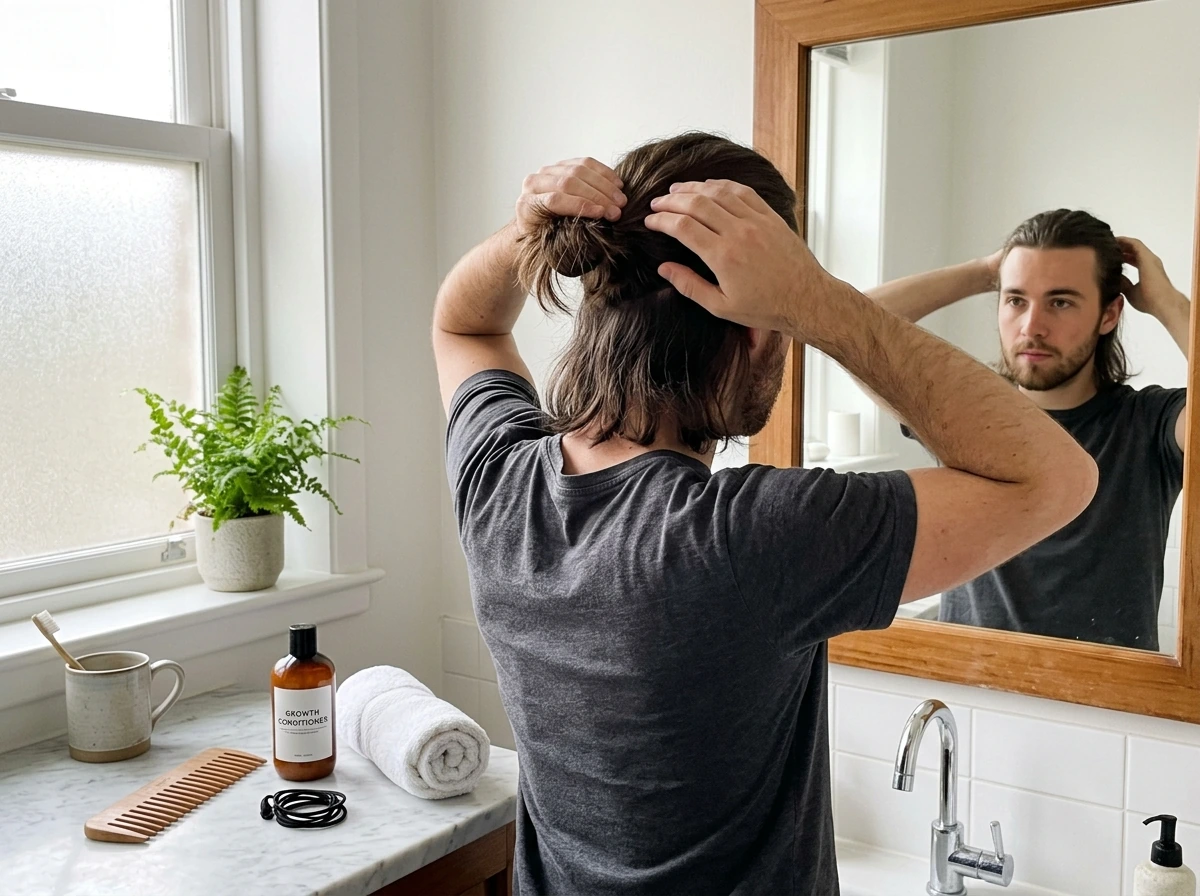
Starting from a buzz cut or short crop, that means somewhere between 10 and 18 months of growth depending on your hair type, health, and how much trimming you do along the way. Starting from a longer short cut like a two- or three-inch crop, you can cut that down to 6 to 12 months. It's not fast, but it's absolutely doable if you have a plan.
Length targets and realistic timelines
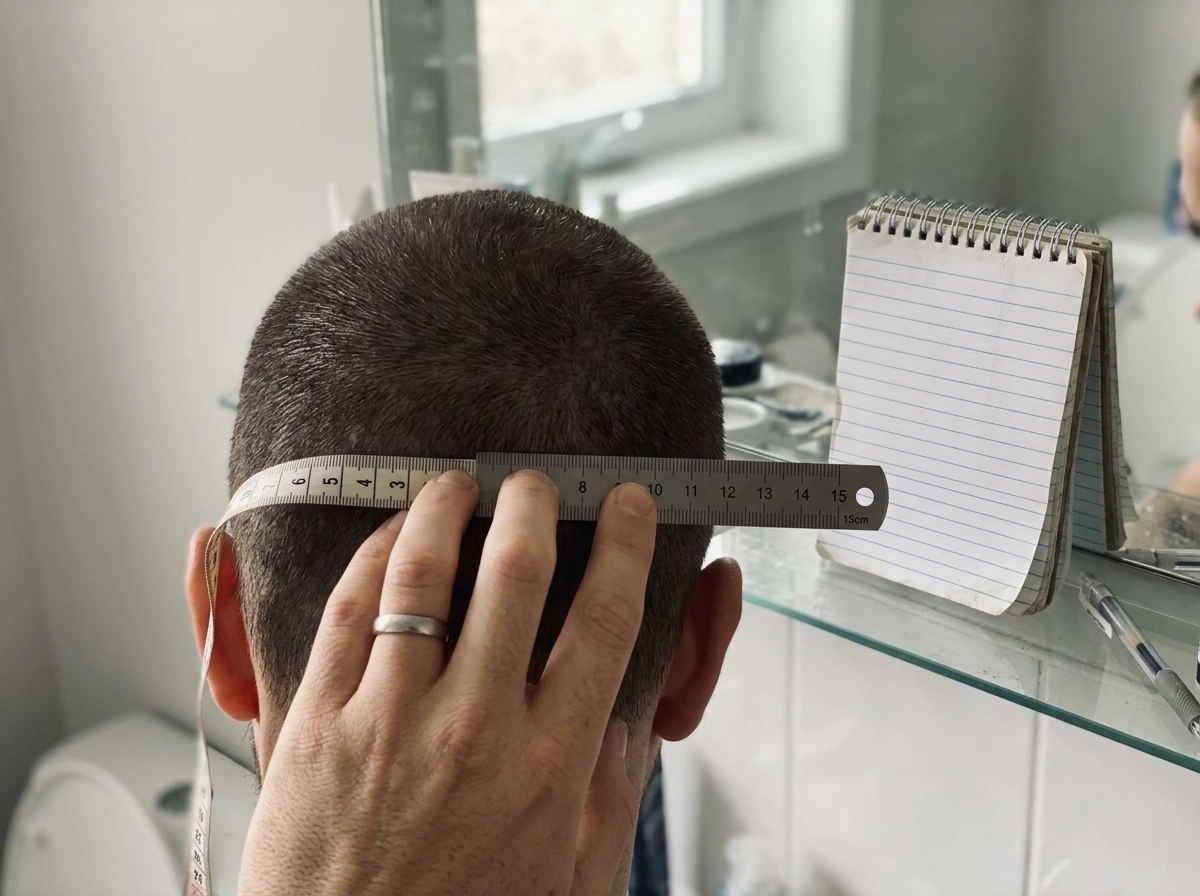
Scalp hair grows about half an inch, or roughly 1.25 cm, per month on average. That's the number most dermatology sources agree on, and it's a useful baseline for planning. Some people grow a little faster, some slower, but it's rare to consistently hit more than three-quarters of an inch per month without a significant genetic advantage.
Here's how the math plays out for a man bun, depending on where you're starting from:
| Starting Length | Hair You Need to Grow | Estimated Time (Small Bun) | Estimated Time (Full Bun) |
|---|---|---|---|
| Buzz cut / shaved head (~0–0.5 in) | 5.5–8 inches | 12–16 months | 16–20 months |
| Short crop (~1–2 inches) | 4–7 inches | 8–14 months | 12–18 months |
| Medium short (~3–4 inches) | 2–5 inches | 4–10 months | 8–12 months |
| Longer short (~5 inches) | 1–3 inches | 2–6 months | 4–8 months |
A small man bun, the kind that looks intentional and sits neatly at the back or crown of the head, needs at least 6 inches of actual hair length. A higher, fuller top knot that won't fall apart during the day needs closer to 8 inches. These are minimums, not ideals. The more hair you have beyond that, the easier the bun is to manage and keep secure.
One thing worth understanding early: the awkward phase is real and it lasts a while. Roughly months 3 through 8 from a short cut, your hair is too long to look intentionally short and too short to bun up properly. This is the phase most people bail out during. Planning your styling around each stage (more on that below) is what gets you through it.
The hair-care routine that actually supports growth
Growing a man bun isn't just about waiting. [How you treat your hair while it grows] determines how much length you actually keep. Hair that breaks off at the ends grows no faster than anyone else's hair, it just looks like it does because the length disappears as fast as it arrives. Protecting what you have is as important as stimulating new growth.
Washing and conditioning
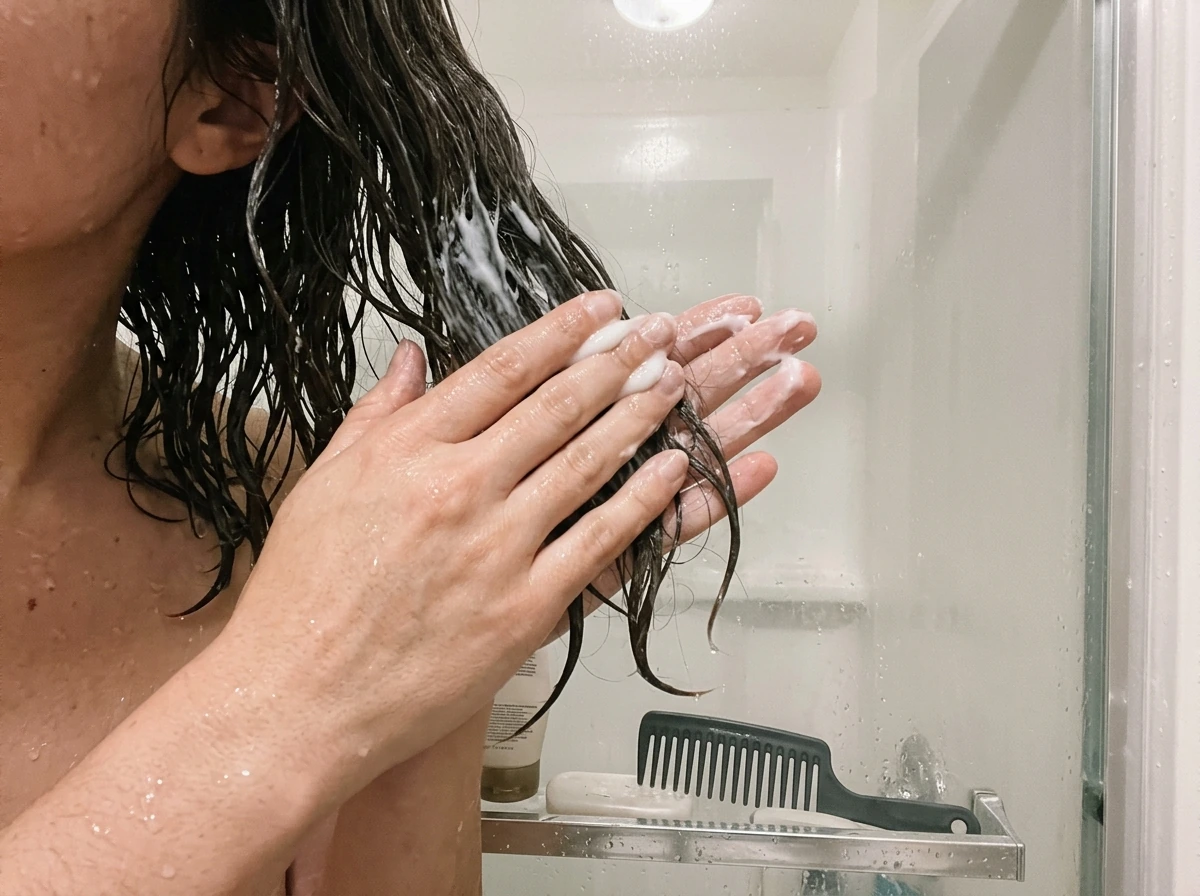
Wash your hair two to three times a week at most. Daily washing strips the scalp of natural oils that protect the hair shaft, and the more you wash, the more you need heat or styling products to compensate. Use a sulfate-free shampoo and always follow with conditioner from the mid-lengths to the ends. The ends are the oldest, driest part of your hair and they need the most moisture.
Once or twice a month, add a deep conditioning mask or treatment. Even a five-minute drugstore hair mask makes a measurable difference in how your hair handles the manipulation of being tied up and let down every day.
Drying and detangling
Wet hair is significantly more fragile than dry hair, so how you handle it after washing matters. When hair is wet, it is more fragile, so use a wide-tooth comb for detangling and avoid aggressive rubbing with a towel, since that can cause damage blank" rel="noopener noreferrer">wet hair is significantly more fragile than dry hair. The blank" rel="noopener noreferrer">American Academy of Dermatology specifically recommends against rubbing wet hair with a towel. Instead, gently squeeze or blot with a soft towel or a microfiber hair wrap. Vigorous towel-rubbing causes friction that roughens the hair cuticle and leads to breakage.
Detangle with a wide-tooth comb, always starting from the ends and working your way up to the roots. Never yank a comb from root to tip through tangled hair. If you use a brush, use it only on dry or nearly dry hair, not soaking wet strands. This one habit change alone will noticeably reduce the amount of breakage you see in your comb over time.
Reducing everyday breakage
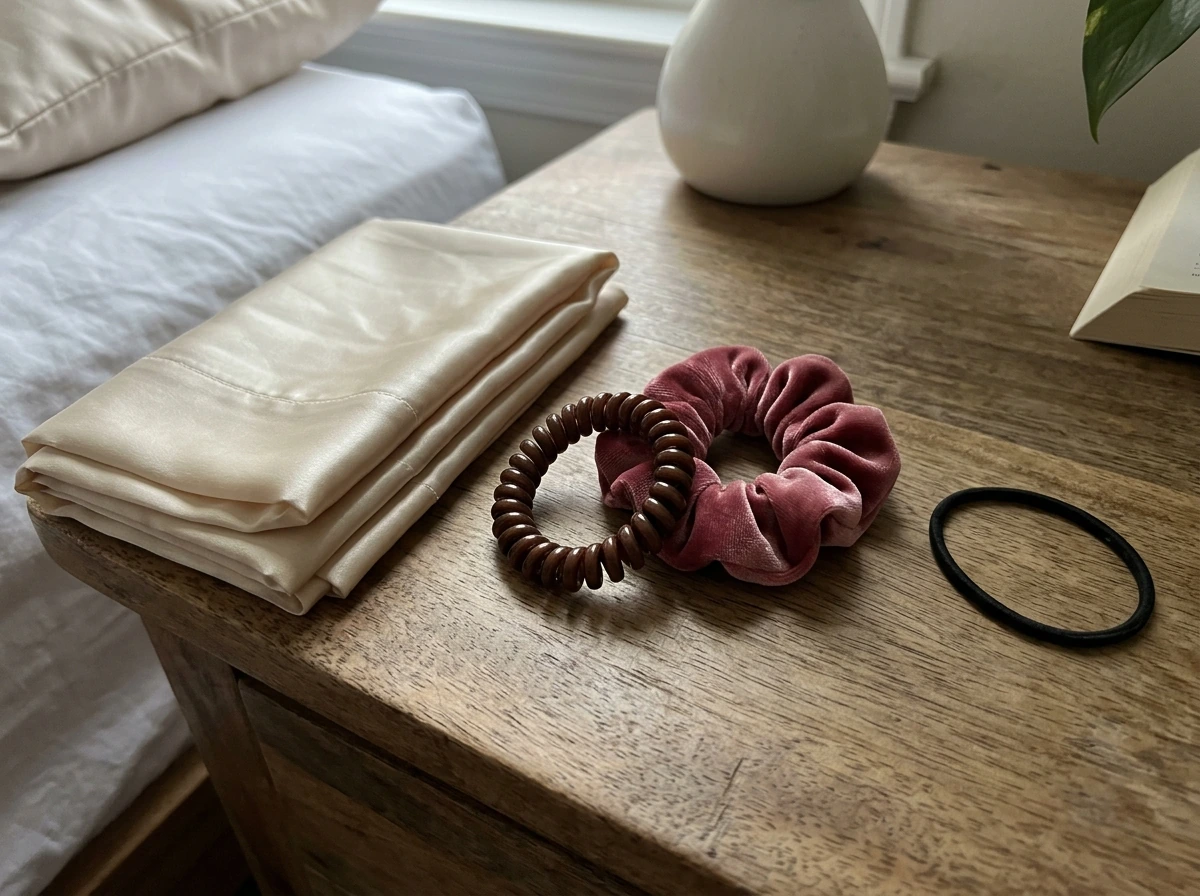
The hair ties you use matter more than most people expect. Standard elastic bands with a metal crimp are the worst offenders for breakage and denting. Spiral hair ties, fabric-covered elastics, or soft scrunchies all cause significantly less damage at the tie point. Some spiral ties are marketed with claims of reducing breakage by up to 31 percent compared to conventional elastics, and that tracks with what you'd expect from the reduced friction.
Sleeping on a satin or silk pillowcase also helps. The smoother surface creates less friction against your hair than a cotton pillowcase, which means less frizz, fewer tangles, and less breakage overnight. This is especially useful once your hair is long enough to move around during sleep.
Nutrition and supplements
The honest take on supplements: biotin pills are one of the most popular hair growth products sold, and the clinical evidence for taking them if you don't have a deficiency is weak. Biotin deficiency is actually rare in most people because it's found in a wide variety of foods and also produced by gut bacteria. Taking extra biotin beyond what your body needs doesn't appear to speed up hair growth in otherwise healthy people. The same goes for most hair growth supplements on the market.
What does matter is your overall diet. Protein, iron, zinc, and vitamins D and B12 all play roles in healthy hair growth. If you're eating poorly or have a known deficiency, fixing that will make a difference. Iron deficiency in particular can slow hair growth noticeably, and a simple blood test can confirm whether that's a factor for you. Focus on a balanced diet with adequate protein first, and only consider supplements if a doctor identifies a specific deficiency.
Growing a man bun faster: what actually helps
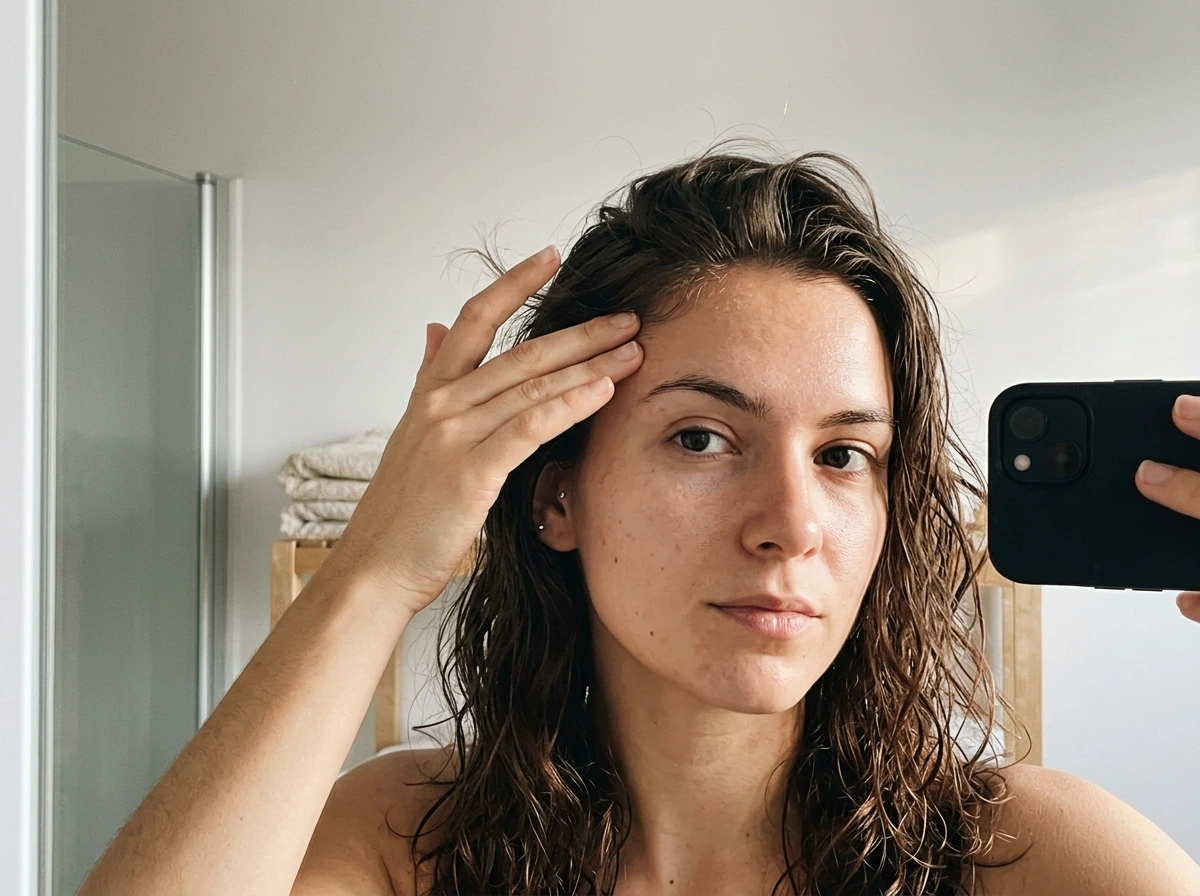
The uncomfortable truth is that there's no proven way to dramatically speed up hair growth beyond your genetic baseline. What you can do is stop doing things that slow it down and create conditions where your follicles are working as efficiently as possible.
- Scalp massage: A few minutes of gentle fingertip massage daily increases blood circulation to the scalp. The evidence is modest but consistent, and it costs nothing. It also helps with scalp health, which matters for follicle function.
- Minimize heat styling: Heat from blow dryers, straighteners, and curling tools damages the hair shaft and accelerates breakage. If you're using heat, apply a heat protectant first and use the lowest effective temperature.
- Trim strategically, not aggressively: Trims don't make hair grow faster (growth happens at the follicle, not the ends), but they remove splits before they travel up the shaft and cause you to lose more length later. A very light dusting every 10 to 12 weeks is enough.
- Manage stress: Sustained high stress can push hair follicles into a resting phase, which reduces growth. Exercise, sleep, and stress management aren't just wellness advice—they have a real effect on hair growth cycles.
- Protect your hair at night: Use a loose braid or bun secured with a soft scrunchie to prevent tangling and friction during sleep. This is especially important as your hair reaches awkward lengths.
Scalp health also comes into this. A clean, healthy scalp free of product buildup or chronic dryness gives follicles the best environment to produce hair. Don't skip conditioner and don't over-wash. If you have dandruff or scalp inflammation, address it with a targeted shampoo, because chronic scalp irritation can affect the growth cycle.
Styling at every stage of the grow-out
The hardest part of growing a man bun isn't the long haul, it's the middle. Here's how to navigate each phase without looking like you've given up or randomly forgotten to get a haircut.
Months 1 to 3: just starting out
At this stage your hair is still pretty short. If you're starting from a buzz cut, you're dealing with half an inch to an inch and a half. The best approach here is to commit to a style that works with short hair and just let it grow. A tapered or faded cut on the sides can actually look intentional and clean during this period, even as the top gets longer. Resist the urge to even everything out, since you want the top to outpace the sides.
Months 3 to 6: the awkward phase begins
This is where most people struggle. Hair is somewhere between 1.5 and 3 inches, it's too long to lie flat, too short to style into anything definitive, and it has opinions of its own. A few things that help: a light pomade or clay product to control shape and prevent puffing out at odd angles, a headband to push it back off your face, and a slightly tapered side to keep the overall shape looking considered rather than neglected.
Months 6 to 10: getting closer
At 3 to 5 inches of hair, you're in a genuinely challenging but manageable zone. A half-up style (pulling just the top section back into a small bun or knot) works once you have about 3 to 4 inches on top. This is also a great time to start using a small clip or claw clip to gather and hold sections back, since it gets you used to having your hair up without needing full bun length. Products matter here: a light hold cream or gel helps keep the shape controlled while the hair is still finding its natural fall direction.
Month 10 onward: bun territory
Once you're at 6 inches or beyond, you can pull together a real man bun. It might be small and need a few extra pins to stay put at first, but it's there. At this stage, shift your focus to learning how to tie and position the bun properly (more on that next) and keeping the hair healthy so you're not fighting split ends and frizz every time you put it up.
Training your hair to actually stay in a bun
Getting your hair long enough is one thing. Getting it to cooperate in a bun without falling apart in two hours is another. Hair has memory, and you can work with that.
- Start tying it up before it's technically long enough: Even if you can only pull up a small section at the crown, do it. Half-up styles, messy top knots, and small clips all help your hair get used to being gathered and held in that direction. By the time you have full bun length, the hair is already familiar with the movement.
- Use a two-elastic method when starting out: Gather your hair, secure it with one tie to form a short ponytail, then fold the tail back through a second loop of the elastic so it forms a small bun shape. This prevents the loose ends from flying out and makes a shorter bun look more intentional.
- Choose the right position: A man bun sits best at the back of the crown, not at the very top of the head (which reads more as a topknot on shorter hair) and not at the nape (which needs more length). Find the natural gathering point where your hair falls when you tilt your head back slightly.
- Secure the perimeter: Once the bun is in, use a few bobby pins or small hair grips around the base to anchor any shorter pieces or layers that don't reach the tie. This is especially important in the first few months of bun-length hair.
- Apply a light gel or pomade to the flyaways before tying: Smooth a small amount of product along the hairline and over the surface of the gathered hair before tying it up. This dramatically reduces the frizzy halo effect that makes a bun look messy rather than styled.
Over time, your hair will start to understand that it lives in a bun. The natural texture and weight of the hair begins to fall more cooperatively into the style, and you'll need less product and fewer pins to keep it there.
Growing a man bun with curly hair
Curly hair comes with its own set of rules, and growing it out to a man bun is a genuinely different experience from doing the same with straight or wavy hair. The biggest difference is that curly hair appears shorter than it actually is because of the curl pattern. A curl that hangs at 3 inches when wet might only sit at 1.5 to 2 inches when dry. This means you actually need more total hair length to achieve the same bun than someone with straight hair. Plan on needing 8 to 9 inches of stretched length (or 6 inches of curl-shrunken length) for a workable bun.
Detangling curly hair without destroying it
Curly hair should never be detangled dry. Dry detangling on curly hair causes breakage and disrupts the curl clumps that define the texture. Always detangle in the shower with conditioner still in, or immediately after washing while hair is still saturated with a leave-in conditioner. Use a wide-tooth comb or your fingers, working section by section from the ends upward. Clinical dermatology guidance specifically supports wet detangling for curly hair as the standard approach to minimize damage.
Moisture is non-negotiable
Curly hair tends to be drier than straight hair because the natural oils from the scalp have a harder time traveling down the spiral shape of the strand. This means more conditioning, not less. Use a leave-in conditioner every wash day, add a curl cream or gel to define and protect the curl pattern, and consider a deep treatment mask weekly if your hair is on the coarser or tighter curl end of the spectrum.
Styling curly hair through the grow-out
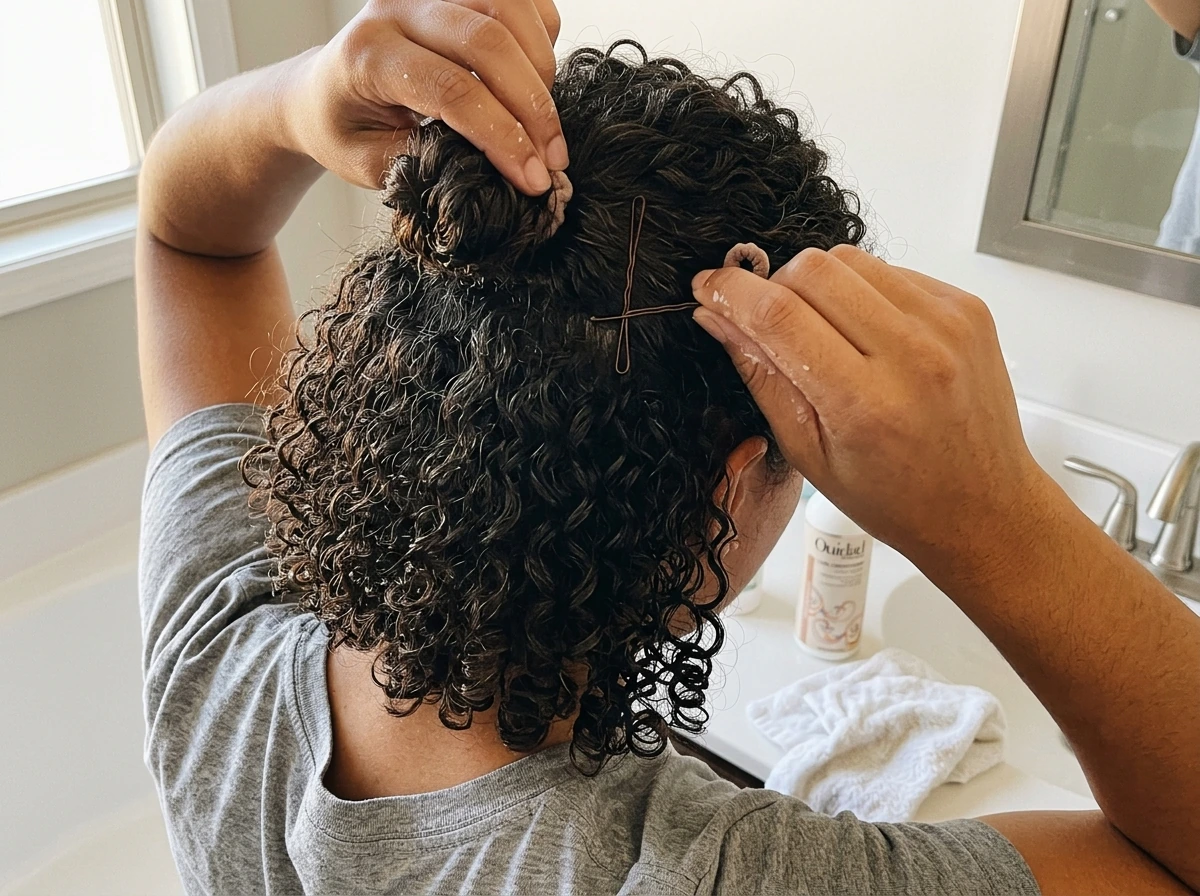
One advantage of curly hair in the awkward phase: the texture disguises the in-between length much better than straight hair does. A wash-and-go with defined curls at 3 inches looks intentional in a way that 3 inches of straight hair does not. Use this to your advantage. A curl sponge, twist-out, or bantu knot-out can give you a pulled-together look even during the stages where a bun isn't possible yet. Once you do have bun length, a pineapple method at night (a loose, high gather on top of the head secured with a satin scrunchie) protects your curls overnight and doubles as a rough bun style.
Growing a man bun with thick hair
Thick hair has plenty of advantages for a man bun, including a lush, full look once you get there, but it also creates specific challenges during the grow-out and once you're styling it daily.
Managing bulk during the grow-out
Thick hair grows outward as much as downward in the early stages, especially if it's also coarse. This can create a mushroom or pyramid shape in months 3 through 7 that looks unwieldy. A light taper or undercut on the sides keeps the overall silhouette controlled and makes the top growth look more deliberate. If you're not doing a skin fade or sharp taper, at minimum keep the sides and back trimmed tight so the focus stays on the top. An undercut is actually one of the most practical choices for thick-haired growers because it dramatically reduces overall volume while you build length on top.
Keeping a thick-hair bun secure
Thick hair is heavy, and a heavy bun needs real support. A single standard elastic often isn't enough. Use a thicker, stronger elastic or two spiral ties looped together, and position the bun a little lower at the back of the crown rather than high on the head so the weight is better supported. Bobby pins placed in an X-pattern at the base of the bun add stability. Some people with very thick hair find a small claw clip over the elastic helps hold everything in place through the day.
Thinning shears: yes or no?
This is a common question for thick-haired growers. Thinning shears remove internal bulk without changing the visible length of the hair. Used carefully by a good barber or stylist, they can make a huge difference in how manageable a thick bun feels and how much it holds its position. Used aggressively, they create a lot of layering that can make the bun look sparse or frizzy at the surface. If you go this route, ask for conservative thinning through the mid-lengths only, not near the ends, and see how it feels before going further.
Your next steps, starting today
The most important thing you can do right now is figure out where you are in the timeline and set a realistic expectation for when you'll hit bun length. Measure your current hair length (stretched, if it's curly), subtract from your target length (6 inches minimum, 8 inches for a full bun), and divide by half an inch per month. That's your baseline estimate. Add a couple of months as a buffer, because growth isn't perfectly linear and you'll likely do at least one or two small trims.
Then set up the habits that protect your progress: gentle detangling, low-heat styling, soft hair ties, a conditioner you actually use, and a satin pillowcase if you don't already have one. None of these are dramatic changes, but they compound significantly over a year-long grow-out.
Find styling options for the stage you're in right now, not the stage you want to be in. The grow-out works when you have a plan for today's length, not just for the end goal. Find styling options for the stage you're in right now, not the stage you want to be in. The grow-out works when you have a plan for today's length, not just for the end goal. If you're navigating the full process of growing guys' hair out more broadly, the stage-by-stage approach applies across all lengths, and building good habits early makes every future stage easier.
Growing a man bun is a commitment of months, not weeks. But if you stay consistent with your care routine, protect your length, and style through the awkward phases rather than cutting your way out of them, you'll get there. how to grow out straight hair men
FAQ
What should I do if I’m close to bun length but it still won’t stay in a bun?
If you can only reach a “ponytail” height, use a half-up claw clip or a loose top knot with 1 to 2 bobby pins first. Avoid tightly tying a small bun that feels stretched, because tension at this stage increases breakage and makes you lose the very length you’re trying to gain.
Should I trim my hair while growing a man bun, or will it slow me down?
Don’t trim for length right now. Instead, aim for micro-edits only, like clearing frayed ends every 6 to 10 weeks (or after you notice lots of split hairs), and keep side and neckline shaping separate from the top grow-out. This preserves enough length for the bun while preventing your ends from deteriorating.
How tight should I tie a man bun so I don’t damage my hairline or scalp?
The goal is low tension and controlled styling. Use hair ties that don’t snag, tie at the back of the crown if you have heavier hair, and switch to a looser tie once you’re not actively styling (for example after work). If you wake up with dents or headaches from tension, your tie is probably too tight.
How can I tell whether my hair is shedding normally or breaking during the grow-out?
It depends on how you define “loss.” Shedding is normal, but breakage shows up as shorter, frizzier strands that don’t grow the same way as the rest. If you see lots of flyaway short pieces right after washing or detangling, focus on wet handling (blotting, detangling with conditioner) before changing anything else.
What’s the best way to stop my bun from falling apart during the awkward phase?
At the earliest awkward stages, avoid frequent hot tools and heavy product. Try a small amount of lightweight cream or gel on damp hair, then let it dry fully before attempting to gather. If you need pins at all times, that’s a signal you are likely still short for a stable bun and should lean on half-up styles until you gain more length.
Can I cut the sides and back while growing the top, and still keep my bun timeline?
For most people, one or two small trims to maintain shape is fine, but don’t “catch up” by cutting the sides shorter than your plan every month. If the bun is your priority, keep the top growing while the sides are tapered steadily, not repeatedly shaved back, so your timeline doesn’t reset visually.
How do I know where to place the bun on my head for the most stable look?
If your bun disappears into the back of your head, you may need either more top length or a different position. Try gathering slightly higher to test the fit, then go lower if it pulls. For thick hair, lowering the bun usually reduces stress on the elastic and helps it sit better.
What if I have dandruff or an itchy scalp while growing a man bun?
If dandruff or scalp irritation flares, treat that first because it can affect the overall growth environment. Use a targeted anti-dandruff shampoo as directed, and protect length by conditioning mid-lengths to ends after you cleanse. Reduce aggressive scrubbing, especially during detangling.
Will man buns work for fine hair, and what’s different for thin strands?
If your hair is very fine, the easiest win is controlling slip. Use less product, then apply it only where you need grip (at the tie point and outer layer), and consider a softer hold cream rather than heavy pomade. Also choose ties that don’t require tight wrapping, because fine hair can tangle and snap when pulled.
How should I measure bun readiness if my hair is curly or shrinks a lot?
If your hair is curly, your “bunch length” is usually better measured when hair is stretched or after it fully dries, since shrinkage changes daily. Use the stretched target (or the curl-shrunken equivalent) consistently, and plan bun training when the curl clumps hold their shape after drying.