
Growing a guy's hair out is mostly a patience game, but patience alone won't get you there without looking like a mess for six months. The good news: with the right cuts, a simple daily routine, and a few styling tricks for the rough patches, you can grow your hair out intentionally instead of just waiting and hoping. Whether you're starting from a buzz cut, an undercut, or just a short trim that got out of hand, this guide walks you through every stage from day one to the length you actually want.
How to Grow a Guy’s Hair Out: Step-by-Step Timeline & Routine

Marcus Vickers
24 Mar 2026
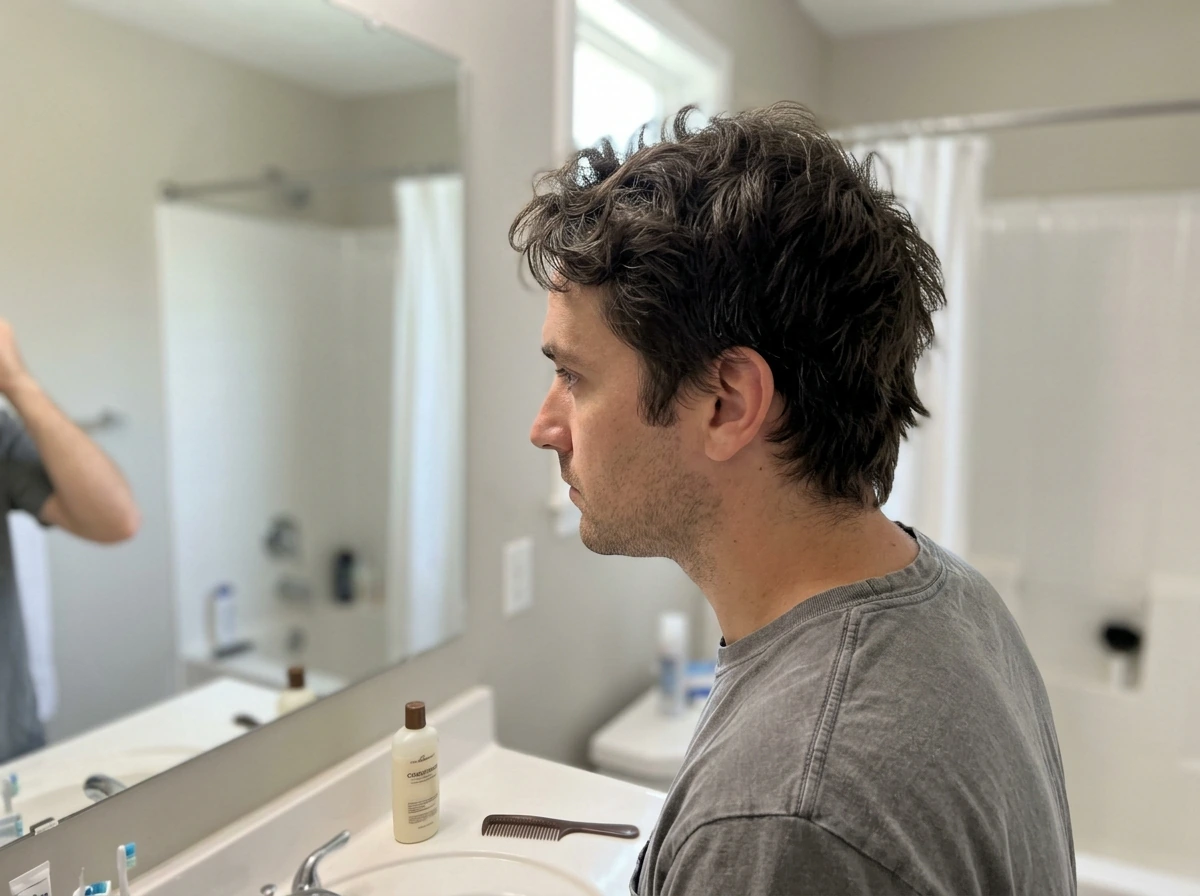
How fast does hair actually grow? Realistic timelines to set right now
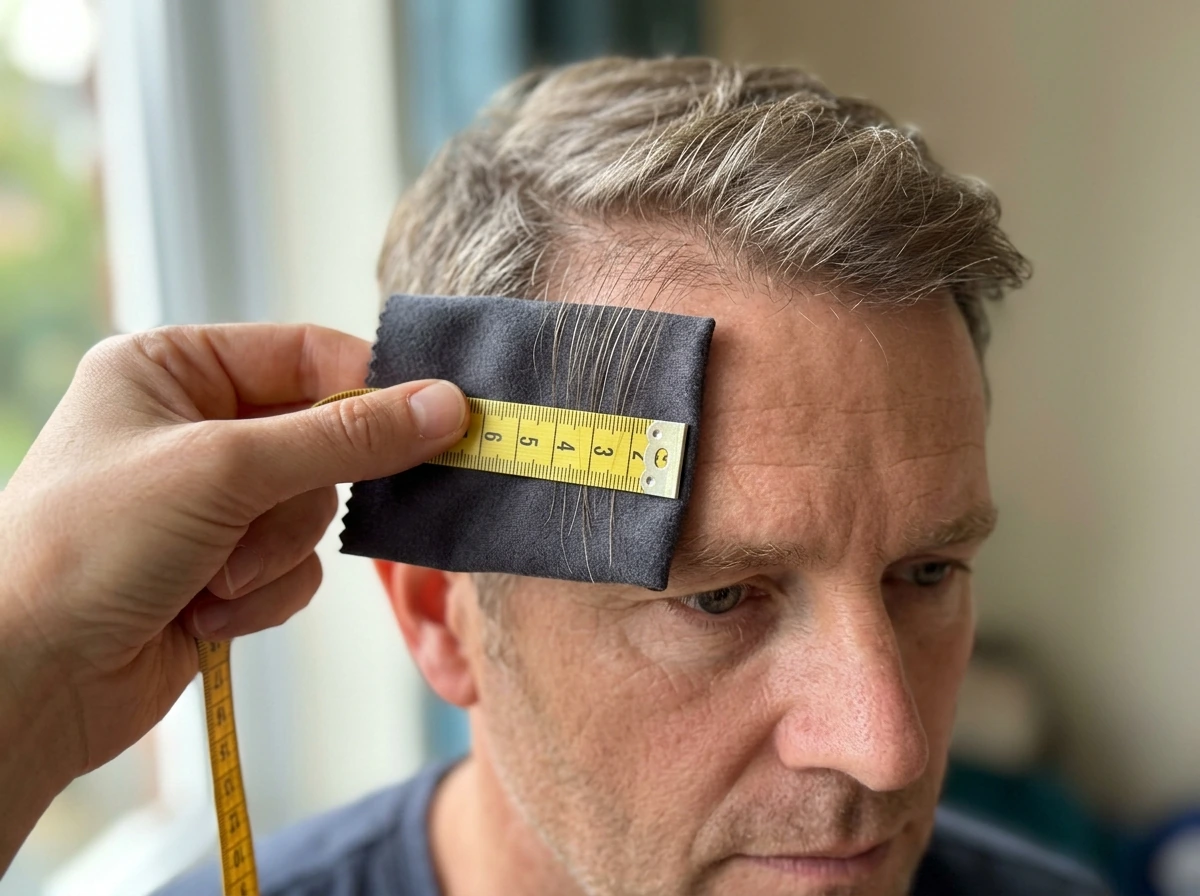
Hair grows at roughly 0.3 to 0.5 mm per day, which works out to about 1 cm (just under half an inch) per month, or around 6 inches per year. That's not a huge range, but it does vary by genetics, age, and overall health. The hard truth is that nothing you put on your head will dramatically change that rate. What you can control is making sure your hair isn't breaking off at the same speed it's growing.
Here's a rough milestone map so you know what to expect from a short start (like a buzz cut or a number 2 clipper cut):
| Time from buzz cut | Approximate length | What it looks like |
|---|---|---|
| 1 month | ~1 cm | Stubble growing into soft fuzz; still very uniform |
| 2–3 months | ~2–3 cm | The 'awkward short' phase; parts starting to show |
| 4–6 months | ~4–6 cm | Ears covered; layers and cowlicks become obvious |
| 8–10 months | ~8–10 cm | Nearing collar; man-bun territory still a few months out |
| 12 months | ~12–15 cm | Shoulder-adjacent for most guys; styling options open up |
One thing nobody tells you upfront: the first three months feel the slowest because the change is hardest to see at very short lengths. Around month four or five, you'll suddenly feel like things are actually moving. That shift in perception is real, and it's worth sticking it out to get there.
Getting your haircut right so you're not sabotaging growth
This is where most guys go wrong. They stop going to the barber entirely because they're afraid of losing length, and then the shape gets so ragged they end up cutting it all off in frustration. The better move is to go in strategically, not avoid the chair altogether.
What to tell your barber
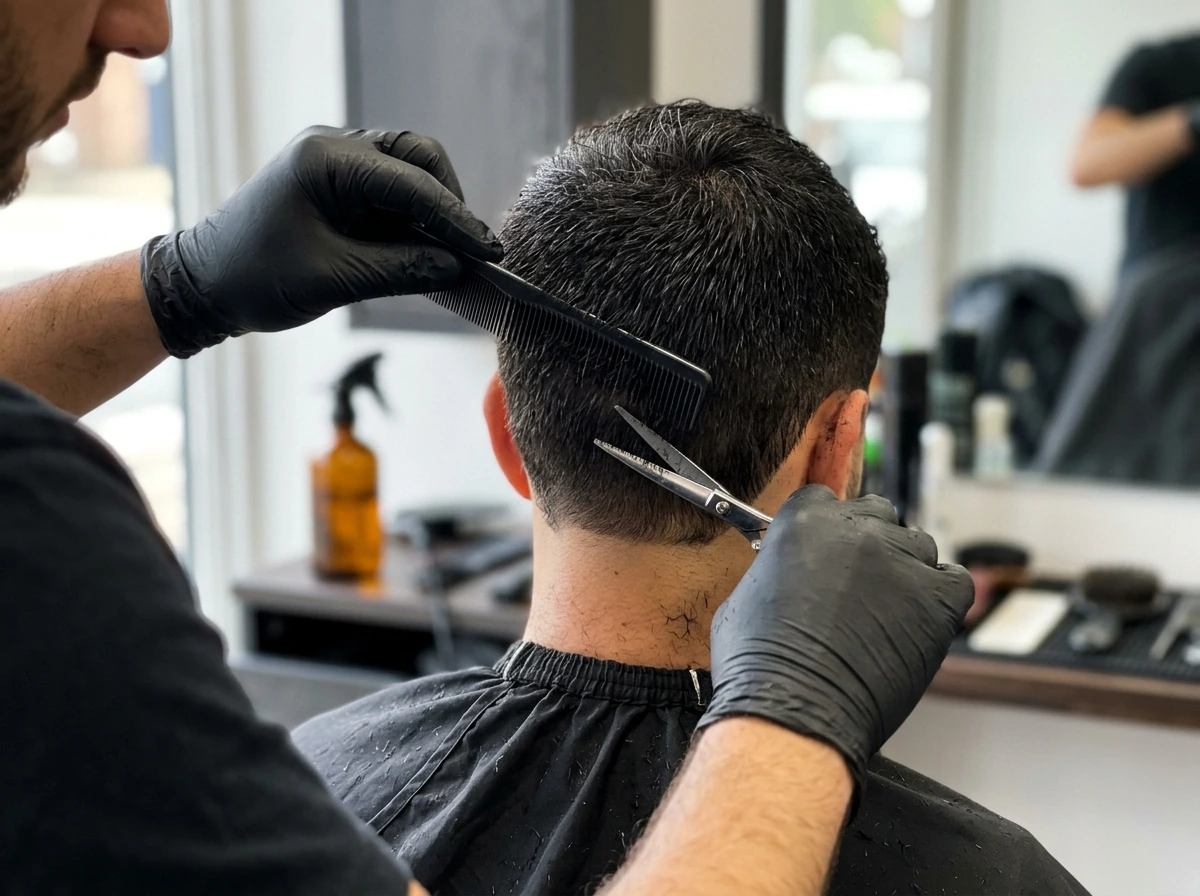
Be specific. 'I'm growing it out' is not enough. Tell them: 'I want to keep as much length as possible on top. Only trim the back and sides to keep it even, and clean up the ends but don't take more than a quarter inch off.' If you have an undercut or fade that's growing out, ask them to blend the sides rather than re-establish the fade line, which would reset your hard work.
A trim every 8 to 12 weeks during the grow-out phase is reasonable. You're not removing length, you're removing split ends and maintaining a shape that looks intentional. Skipping trims entirely leads to stringy, uneven ends that actually make shorter hair look longer because you can't see the progress past the damage.
Undercut and fade grow-outs need a specific plan
If you're growing out a high fade or undercut, the disconnection between the short sides and longer top is the main visual problem. Ask your barber to bring the fade line down gradually over 2 to 3 visits rather than letting it go cold turkey. A low taper that gets slightly longer each visit keeps everything looking cleaner while the sides catch up to the top.
The daily routine that actually supports healthy growth
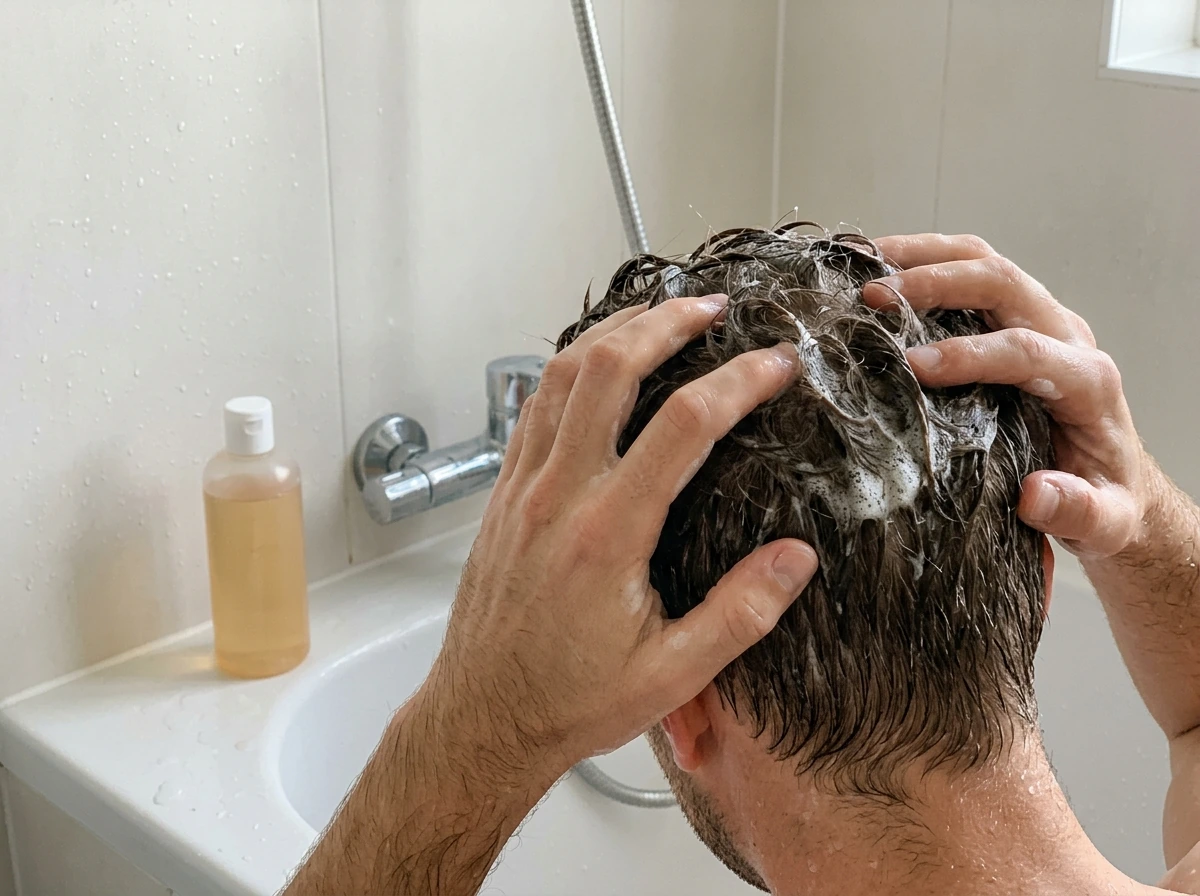
Growing hair out isn't just about what you do at the barber. hair grow tips for men. how to grow more pubes. how to grow out straight hair men
Washing: how often is right?
For most guys, washing every 2 to 3 days is the sweet spot. Daily shampooing strips natural oils that keep your scalp healthy and your hair from getting brittle, especially once it gets past a couple of inches. If you work out or have a naturally oily scalp, rinsing with water on off days is fine. Use a gentle, sulfate-free shampoo and always follow with conditioner from the mid-lengths to the ends, not the scalp.
Scalp care is more important than most guys think
Your scalp is where the growth actually happens, so ignoring it is like neglecting the soil and expecting a great garden. Massaging your scalp for a few minutes a few times a week stimulates blood flow to the follicles. You don't need a special tool, just your fingertips. If you have a dry or flaky scalp, a scalp serum or a weekly treatment with a few drops of rosemary or peppermint oil diluted in a carrier oil can help without weighing your hair down.
Nutrition and lifestyle basics
Hair is made of keratin, and your body builds it from what you eat. Protein is non-negotiable: if you're not eating enough of it, your body deprioritizes hair growth. Iron, zinc, biotin, and vitamins D and B12 are also directly tied to follicle health. You don't need to overhaul your entire diet, but if you're eating mostly processed food or you've been under significant stress, those things show up in your hair within a few months. Chronic stress and poor sleep are real growth blockers.
- Eat enough protein daily (eggs, meat, legumes, fish)
- Get iron and zinc from food or a basic multivitamin if you're deficient
- Stay hydrated, your scalp notices dehydration
- Manage stress where you can: it directly impacts the growth cycle
- Aim for consistent sleep, since growth hormone peaks at night
- Minimize heat tool use, especially at very short lengths where hair is more fragile
Surviving the awkward stages without cutting it all off
The awkward phase is real and unavoidable, but it's also manageable if you know what to expect at each length and have a plan for each one.
Month 1 to 3: the 'in-between stubble' phase
This is the least fun stretch. Hair isn't long enough to style but it's too long to look intentionally short. The best move here is to keep your hairline clean (a quick neck tidy-up at the barber), use a light pomade or wax to push the top in one direction, and lean into a slightly messy textured look rather than fighting it.
Month 3 to 6: the ear-covering, piecey phase
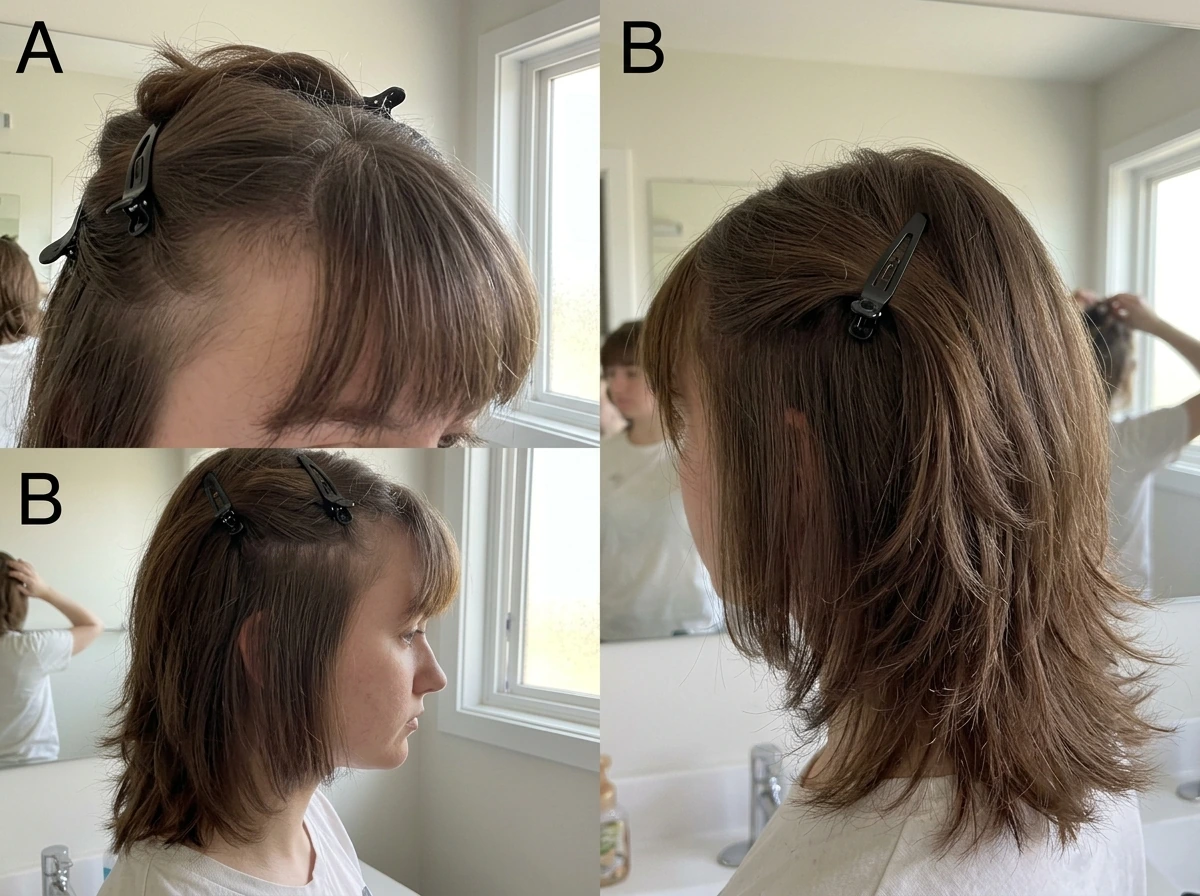
This is where cowlicks, natural partings, and old layers start doing their own thing. Don't force a part that isn't natural to your hair. Instead, work with the growth pattern by using a medium-hold cream or paste to define pieces. A headband, snapback, or beanie is genuinely useful here and looks intentional rather than desperate. Bangs that are growing out can be swept to the side with a lightweight pomade or clipped back while you're home.
Month 6 to 12: managing layers and length
By now the main problem is usually unevenness, especially if you had layers or a disconnected cut before. This is when a single visit to a good stylist (not just a barber) can transform the experience. Ask for a dusting or a 'long layers' trim that removes bulk at the ends without sacrificing length. This is also the stage where you can start exploring tied-back styles, half-up looks, and learning how to use a blow dryer and round brush to control the shape.
Styling options while you're growing it out
You don't have to look like you gave up on your hair just because you're growing it. The key is using the right products for your current length and working with your hair's texture rather than fighting it.
Products by stage
| Growth stage | Best product type | Why it works |
|---|---|---|
| Very short (under 2 cm) | Light pomade or matte paste | Gives definition without weighing down thin layers |
| Short-medium (2–5 cm) | Texture cream or clay | Adds grip and structure as layers become uneven |
| Medium (5–10 cm) | Sea salt spray + light hold cream | Enhances natural texture and controls frizz |
| Longer (10 cm+) | Leave-in conditioner + lightweight oil | Prevents breakage and keeps ends moisturized |
Heat tools: use them carefully

A blow dryer with a diffuser or a round brush can actually help you control the awkward phase by adding volume and directing growth away from your face. But keep the heat on medium, use a heat protectant spray every single time, and don't go over the same section more than twice. Over-drying is one of the main reasons guys growing out their hair end up with dry, snapping ends that never seem to get longer.
Protective habits that matter
- Switch to a silk or satin pillowcase to reduce friction breakage while you sleep
- Use a wide-tooth comb on wet hair, never a fine-tooth brush
- Detangle from the ends upward, not root to tip
- Avoid tight elastic bands, especially at shorter lengths where they snap hair
- Let hair air dry at least 70% before using any heat if possible
Growing hair back after thinning or loss: a different situation
If you're not growing hair out from a cut but trying to regrow hair that's thinning, falling out, or not coming back the way you expected, the approach is different. First, it's worth knowing that not all hair loss looks the same, and treating them the same way is a mistake.
Normal regrowth after a stressful event
Telogen effluvium is a condition where significant stress (physical illness, surgery, extreme diet, emotional trauma, or even a high fever) pushes a large number of follicles into their resting phase at once. You typically notice heavy shedding about 2 to 3 months after the trigger event, and the shedding can continue for 3 to 6 months. New growth usually begins after that, but it can take another 3 to 6 months before you visibly notice it. This is genuinely distressing because you're watching hair fall out and it feels like it won't come back, but in most cases of acute telogen effluvium, it does. Addressing the root cause (getting enough sleep, eating well, recovering from illness) is the most effective treatment.
Pattern hair loss vs. temporary shedding
Androgenetic alopecia (male pattern baldness) follows a different pattern: it's gradual, follows a predictable recession at the temples and crown, and doesn't resolve on its own. If your hair loss is spreading in a typical pattern and runs in your family, that's a different conversation that involves blank" rel="noopener noreferrer">FDA-approved treatments like minoxidil (applied topically) or finasteride (taken orally under a doctor's supervision). AAFP notes that minoxidil is available over the counter, including a 2% solution for both men and women and a 5% solution for men only, and it discusses the FDA-approval context for hair-loss treatments blank" rel="noopener noreferrer">FDA-approved treatments like minoxidil (applied topically). These treatments work best when started early and are not a substitute for seeing a doctor if you're unsure what type of loss you're dealing with.
Regrowth timeline: what to realistically expect
Whether you're recovering from telogen effluvium or using a topical treatment for pattern thinning, new growth is very fine, often lighter in color, and appears first at the hairline and temples. It can take 6 to 12 months of consistent treatment or recovery before you see meaningful density improvements. Taking monthly photos in the same lighting is the best way to track this, since the daily mirror will make you feel like nothing is changing even when it is.
Your grow-out plan: a checklist and when to get help
Here's everything pulled into one action plan you can start today, whether you're growing from a buzz cut or regrowing after loss.
The grow-out checklist
- Set a realistic target: know your goal length and calculate a rough timeline at 1 cm per month
- Book a shaping trim now, even if you're growing out, and tell your barber exactly what you want to preserve
- Switch to a gentle, sulfate-free shampoo and condition every wash from mid-lengths to ends
- Wash every 2 to 3 days unless your scalp demands otherwise
- Add 3 to 5 minutes of scalp massage a few times per week
- Check your diet for protein, iron, and zinc, and address any obvious gaps
- Choose the right product for your current length (see the table above) and stop using products that are too heavy for your stage
- Use heat protectant every single time before any heat tool
- Switch to a wide-tooth comb and a silk pillowcase
- Take a photo every 4 weeks from the same angle to track progress
- If you're regrowing after loss, identify the likely cause and address it before expecting growth to resume
When you should see a dermatologist
Most grow-out frustration is just impatience, but some situations genuinely need a doctor. See a dermatologist if: your hair is coming out in patches rather than diffusely, your scalp is itchy, red, scaly, or inflamed, you're shedding heavily for more than 6 months with no clear trigger, you've lost more than a third of your overall density, or over-the-counter treatments like minoxidil haven't shown any improvement after 6 months of consistent use. These signs can point to conditions like alopecia areata, scalp psoriasis, or nutritional deficiencies that need proper diagnosis rather than guesswork.
The most important thing to remember throughout all of this is that growing hair out is a process, not an event. Every guy who has shoulder-length hair now had a month three. They just didn't quit. Stick to the routine, work with your hair at each stage instead of against it, and the length will come.
FAQ
How do I ask my barber for trims without losing the length I’m trying to grow?
If you’re aiming to grow “as long as possible,” skip barber talk like “just a little off,” and instead request an end-only approach, a dusting, or “remove splits but keep the length.” Most guys underestimate split ends, so clarifying that you want minimal cutting (for example, a quarter inch or less) helps prevent accidental reset of your timeline.
What should I do when my hair grows unevenly during the grow-out phase?
If your hair gets into the awkward stage and grows unevenly, use a flexible styling strategy instead of more cutting. Try defining the top with a medium-hold cream or paste, then keep the sides tidy with light products only (too much product on short hair can look greasy). When one side keeps sticking out, use a quick blow-dryer direction change rather than trimming it sooner than planned.
Can I blow dry my hair while growing it out, or will heat stop my progress?
Heat styling can help, but the limit matters. Use a heat protectant every time, keep the setting on medium, and avoid repeatedly reworking the same section. If you notice dryness or tangling after styling, reduce frequency first, then switch to lower-heat or air-dry plus a light product to reduce breakage.
How often can I tie it back during the grow-out, and will it cause breakage?
Yes, but do it in a way that reduces tangles and breakage. Detangle gently from ends upward using conditioner in the shower or a detangling product, then dry with a microfiber towel or T-shirt. Tight elastics and frequent ponytails can create traction and cause breakage, so alternate styles and avoid very tight pulling.
How do I wash while growing it out if I work out or have an oily scalp?
For most guys, daily shampooing is not necessary and can make hair feel drier once it reaches a couple inches. If your scalp gets oily from workouts, try washing every 2 to 3 days and using water-only rinses or a quick rinse on off days, then condition mid-lengths to ends every wash.
My hair doesn’t seem to be getting longer, how can I tell if it’s breakage instead of slow growth?
If you suspect your hair is breaking (lots of short, frizzy pieces) rather than just slow growing, focus on damage control: conditioner consistently, gentle detangling, and trimming splits on schedule. Also check for harsh styling (over-brushing when dry, too much heat, or rough towel drying), since breakage can make it look like your hair is not growing at all.
Does scalp massage or oiling actually speed growth, and what’s the safest way to do it?
Scalp massage can support healthy follicles, but it should be gentle and consistent, not aggressive. A few minutes a few times per week with fingertips is enough, and if you have itching, redness, or flaking that’s more than mild dryness, skip DIY oils and consider getting assessed because irritation can worsen shedding.
Should I take biotin or supplements to grow my hair faster?
Some supplements can help if you’re deficient, but they are not a guarantee. Protein is the most actionable baseline, and iron, zinc, vitamin D, and B12 matter if levels are low. If you’re considering vitamins because of hair shedding, ask a clinician about labs rather than starting high-dose biotin, which can interfere with certain lab tests.
What if I’m trying to grow my hair out but I’m also thinning, is the same routine still right?
For male pattern thinning or other hair loss types, the timelines and success criteria differ. If you’re using minoxidil or finasteride, you generally need consistent use for months before deciding if it’s working, and you should coordinate with a clinician for the right regimen and side-effect monitoring. If you are unsure whether your issue is shedding versus thinning, a dermatologist visit is the fastest way to avoid wasting time.
When should I stop guessing and see a dermatologist about hair regrowth?
If you have patchy loss, significant itching or inflammation, prolonged heavy shedding without a clear trigger, or no improvement after consistent over-the-counter treatment for around 6 months, it’s time to see a dermatologist. Also seek help sooner if you notice scalp pain or crusting, because those signs point to conditions that need targeted treatment.