
Hair grows roughly 1 centimeter per month on average, though the real range runs anywhere from about 0.6 cm to just over 3 cm depending on genetics, age, health, and a handful of lifestyle factors you actually can control. That's the honest starting point. There's no product or routine that doubles your growth rate overnight, but there is a solid, evidence-based plan that keeps your follicles working at their best, protects the length you already have, and makes the awkward stages between a short cut and longer hair far more manageable. If you want more hair grow tips for what to do day to day, follow the routine steps below. That's what this guide covers.
Hair Grow Tips for Men: Faster Thicker Growth Guide

Marcus Vickers
24 Mar 2026
What to actually expect (and why your hair might feel stuck)
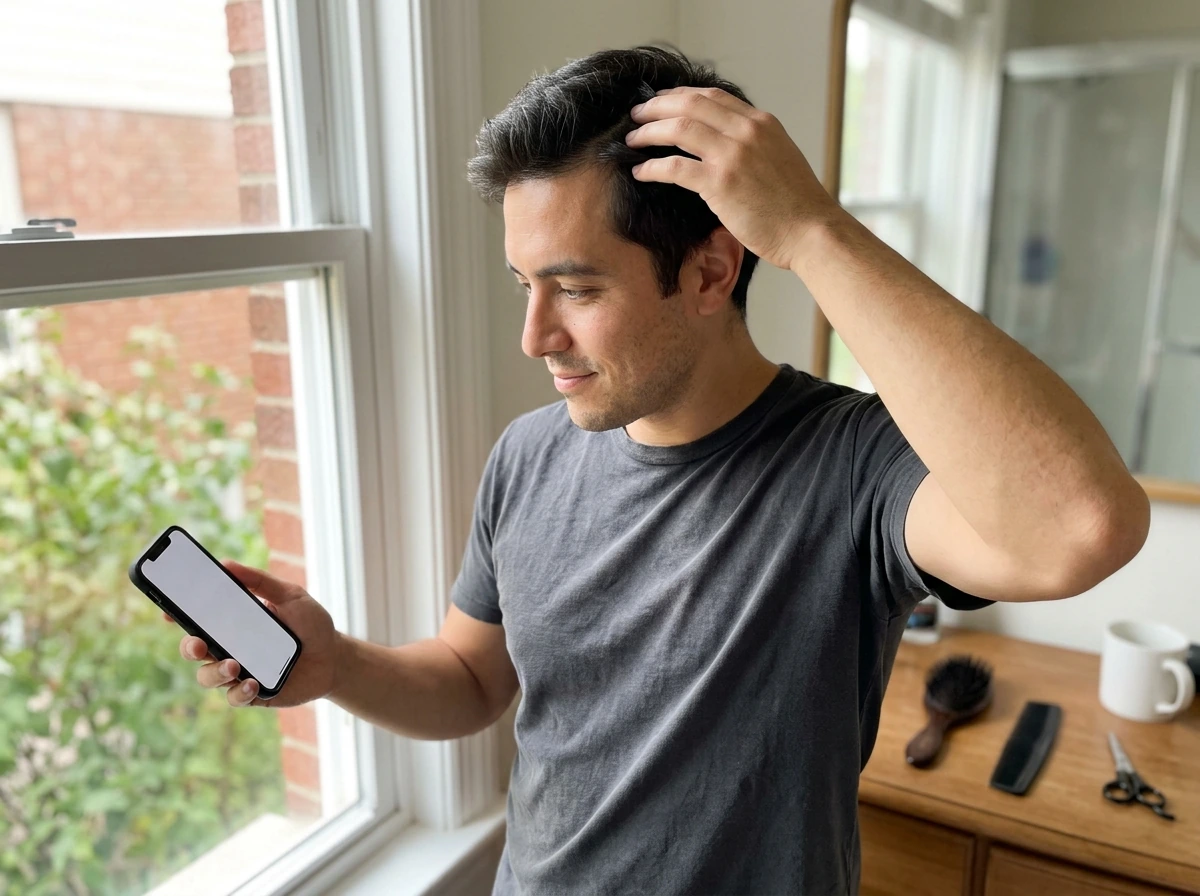
At 1 cm per month, growing from a buzz cut to shoulder length takes roughly two to three years. Growing from a short crop to a man bun takes at least 18 months for most people. Those numbers feel brutal when you're staring in the mirror during the ear-level purgatory stage, but knowing them upfront saves you from chasing miracle products or giving up and cutting it all off again.
The reason some men feel like their hair simply won't grow is usually one of three things: the hair is growing but breaking off at roughly the same rate it's being produced, an underlying health or hormonal issue is shortening the active growth (anagen) phase, or the timeline expectations were just unrealistic to begin with. Breakage is by far the most common culprit and the most fixable.
For men with androgenetic alopecia (male-pattern hair loss), the problem is more structural. Male androgenetic alopecia is the most common hair loss in men, reported as 30, 50% by age 50 in this source. Androgen receptor activity shortens the anagen phase with each successive hair cycle, while the resting (telogen) phase gets prolonged. That means follicles spend less time actively producing hair and more time doing nothing, and newly formed hairs may not even reach the skin surface before the cycle resets. The healthy anagen-to-telogen ratio in a normal scalp is roughly 12:1. In androgenetic alopecia, that ratio drops significantly, which is why affected areas thin over time regardless of how good your diet is. If that's your situation, lifestyle tips alone won't fully reverse it, and that's not a failure on your part.
Other common growth blockers include telogen effluvium (a stress- or illness-triggered shed where large numbers of hairs shift into the resting phase simultaneously), nutritional deficiencies, thyroid dysfunction, and scalp conditions like seborrheic dermatitis that create a hostile environment for follicles. The good news is most of these are treatable once identified.
Build a solid hair-growth routine
The foundation isn't a supplement stack. It's what you do to your scalp every week. A routine that combines proper cleansing, conditioning, and scalp stimulation is the single highest-leverage thing you can do before adding anything else.
Scalp care and cleansing
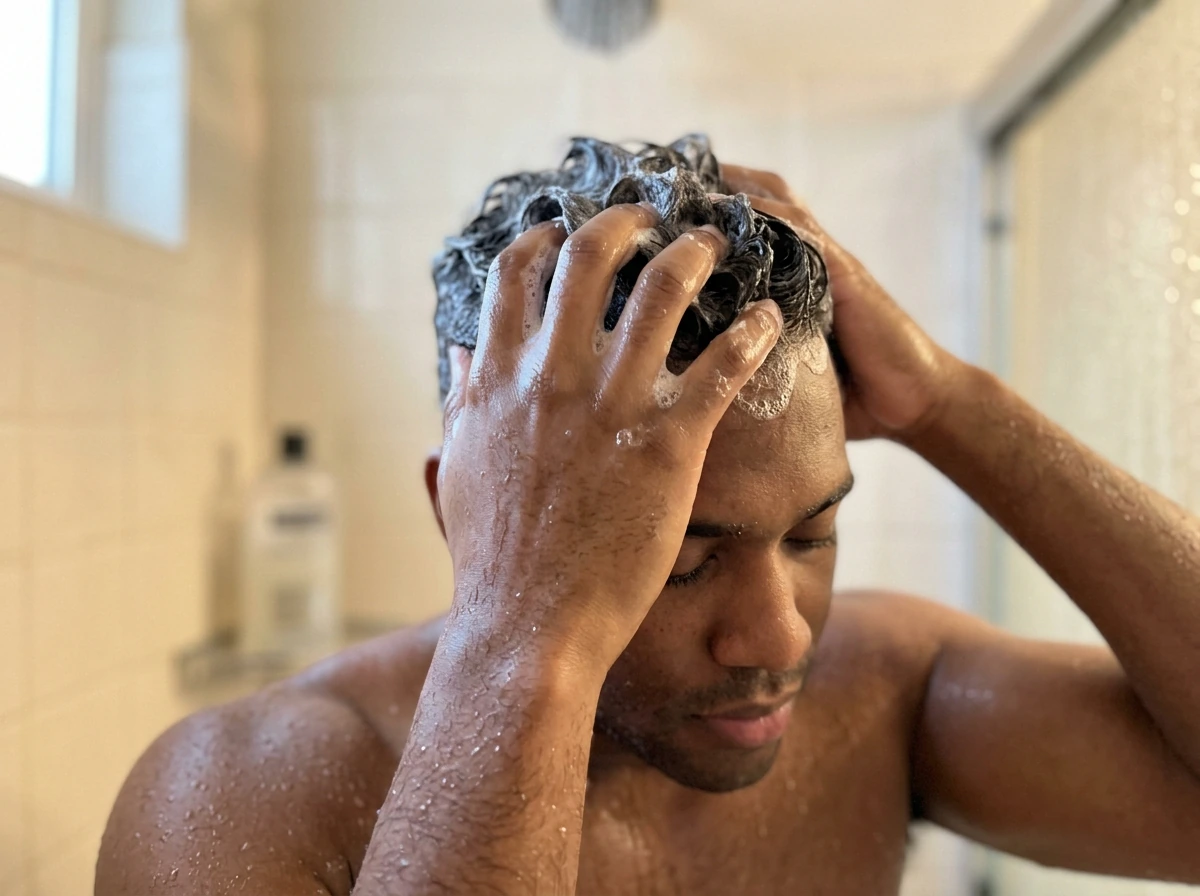
Wash your hair two to four times a week with a gentle, sulfate-free shampoo. Washing daily strips the scalp of sebum, which signals it to overproduce oil and can lead to irritation. Washing too infrequently lets product buildup and sebum accumulate around the follicle opening, which can impair healthy growth over time. The sweet spot for most men is every two to three days. If you exercise heavily, rinse with water on off days rather than shampooing again.
If you're dealing with dandruff or seborrheic dermatitis, use a medicated shampoo containing zinc pyrithione, ketoconazole, or selenium sulfide two to three times a week. Flaking and inflammation at the scalp level do interfere with follicle function, so treating it isn't just cosmetic.
Conditioning and detangling
Conditioner is non-negotiable once your hair is past the very early buzz-cut stage. It seals the cuticle, reduces breakage during combing, and makes length retention actually possible. Apply from mid-shaft to ends and leave it in for two to three minutes before rinsing. Deep condition once a week if your hair is curly, coarse, color-treated, or regularly heat-styled.
Detangle gently, always starting from the ends and working upward toward the roots. Never yank a wide-tooth comb or brush through wet hair from root to tip. That single habit destroys more growth progress than almost anything else, and it's completely avoidable.
Scalp massage
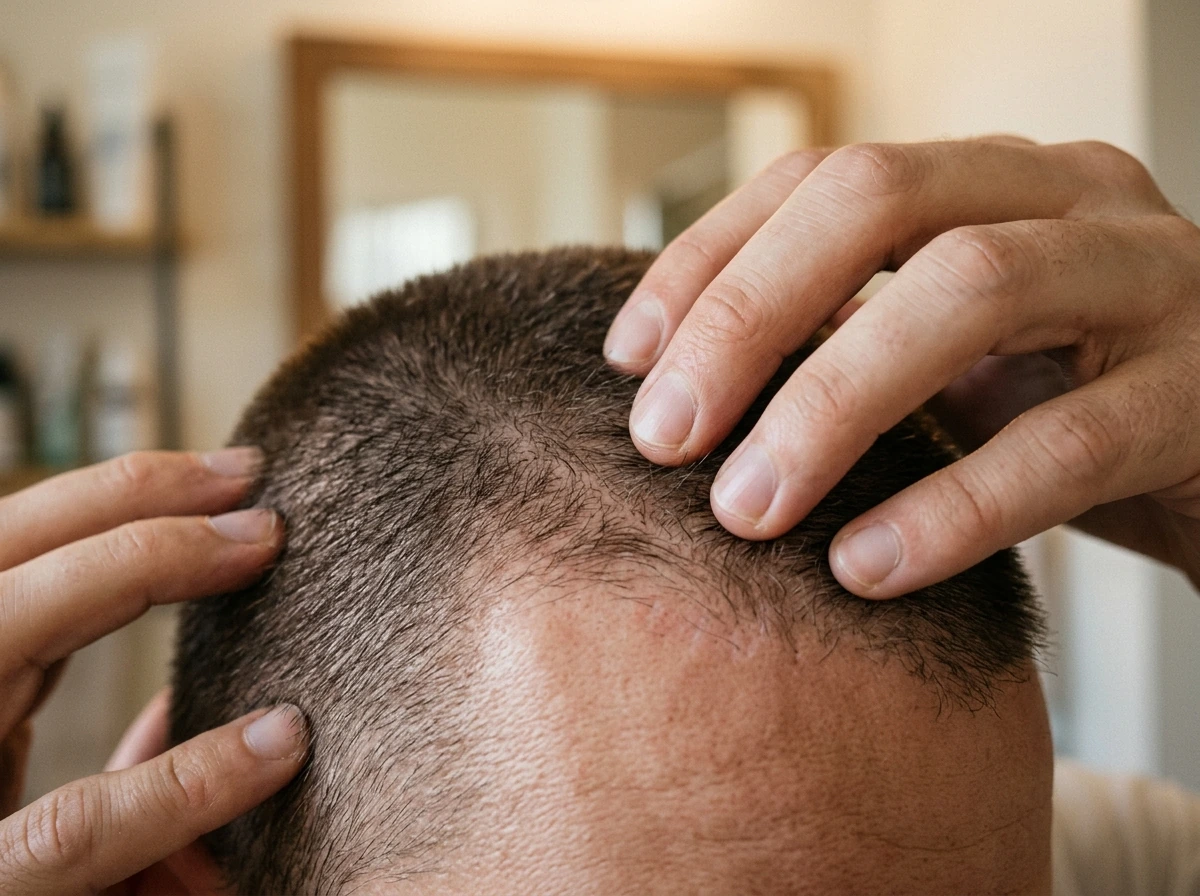
This is one of the few low-effort habits with actual research behind it. Daily scalp massage of four to five minutes, using your fingertips in small circular motions, has been shown to increase dermal papilla cell activity and may contribute to thicker hair over time. Do it dry, in the shower, or with a few drops of carrier oil like jojoba or castor oil. Consistency matters more than technique. Think of it as a five-minute investment every night before bed, not a complicated ritual.
What you eat and how you live actually matters
Hair is made of keratin, a protein. If your diet is chronically low in protein, your body deprioritizes hair production in favor of more critical functions. Aim for at least 0.8 grams of protein per kilogram of body weight daily, and ideally closer to 1.2 to 1.6 grams if you're active. Eggs, chicken, fish, legumes, and Greek yogurt are all solid sources.
Beyond protein, the micronutrients most commonly linked to hair loss are iron, zinc, vitamin D, and biotin. Iron deficiency, especially in people who menstruate or follow plant-based diets, is one of the most overlooked causes of diffuse shedding. Zinc deficiency impairs follicle repair. Low vitamin D has been associated with alopecia areata and general hair thinning. Biotin deficiency is genuinely rare in people eating a normal diet, but biotin supplements are heavily marketed, so it's worth knowing that if your levels are already normal, more biotin won't speed up your growth.
Sleep is where repair happens. Chronic sleep deprivation elevates cortisol, and elevated cortisol is a documented driver of telogen effluvium. Seven to nine hours a night isn't just feel-good advice. Stress management falls in the same category: extended periods of high psychological stress can trigger a shed that shows up as noticeable hair loss two to three months after the stressful event. The delay makes it hard to connect the dots, but the mechanism is real.
Smoking constricts blood vessels, including the tiny ones feeding your follicles, and is associated with accelerated androgenetic alopecia. Heavy alcohol intake depletes zinc and B vitamins and disrupts sleep architecture. Neither needs to be a zero-tolerance situation, but if you're serious about growing your hair out, these are genuinely worth dialing back.
Which supplements are actually worth it
The honest answer is: only supplement for a confirmed or likely deficiency. A blood panel checking ferritin (stored iron), vitamin D, zinc, and thyroid function costs very little and tells you exactly where to focus. If ferritin is low, supplementing iron makes a real difference. If vitamin D is deficient (below 30 ng/mL is a common threshold), supplementing it is worthwhile. Biotin at high doses is largely wasted money unless you have a rare metabolic condition. General hair-growth supplement blends are mostly marketing.
Men-specific factors: hormones, hair loss patterns, and when to call a doctor
Male-pattern hair loss follows a predictable progression, typically starting at the temples and crown, driven by dihydrotestosterone (DHT) binding to androgen-sensitive follicles. This is a different mechanism from the diffuse thinning more commonly seen from nutritional deficiencies or telogen effluvium. The two can occur simultaneously, which is why a proper evaluation matters. Women also experience androgenetic alopecia, but the pattern tends to be more diffuse thinning at the crown rather than a receding hairline, and the hormonal picture often involves different contributing factors including post-pregnancy estrogen shifts, PCOS, or menopause.
For men specifically, the combination of higher androgen activity and genetic sensitivity to DHT means that some follicles are fighting a biological battle that lifestyle changes alone won't win. That doesn't mean giving up on growing your hair out. It means pairing your growth routine with the right medical support if thinning is already happening.
See a dermatologist or trichologist if you notice any of the following:
- Sudden or rapidly worsening shedding over a period of weeks
- Visible bald patches or circular areas of loss (possible alopecia areata)
- Scalp symptoms like persistent itching, scaling, or soreness
- Shedding that started after a major illness, surgery, or crash diet
- Thinning that concerns you and you haven't had bloodwork done in over a year
- No improvement after six months of consistent routine changes
Early intervention genuinely matters with androgenetic alopecia. Follicles that are miniaturizing are often still salvageable. Follicles that have been dormant for years may not be. The sooner you get a clear picture, the more options you have.
Evidence-based treatments for thinning: what works
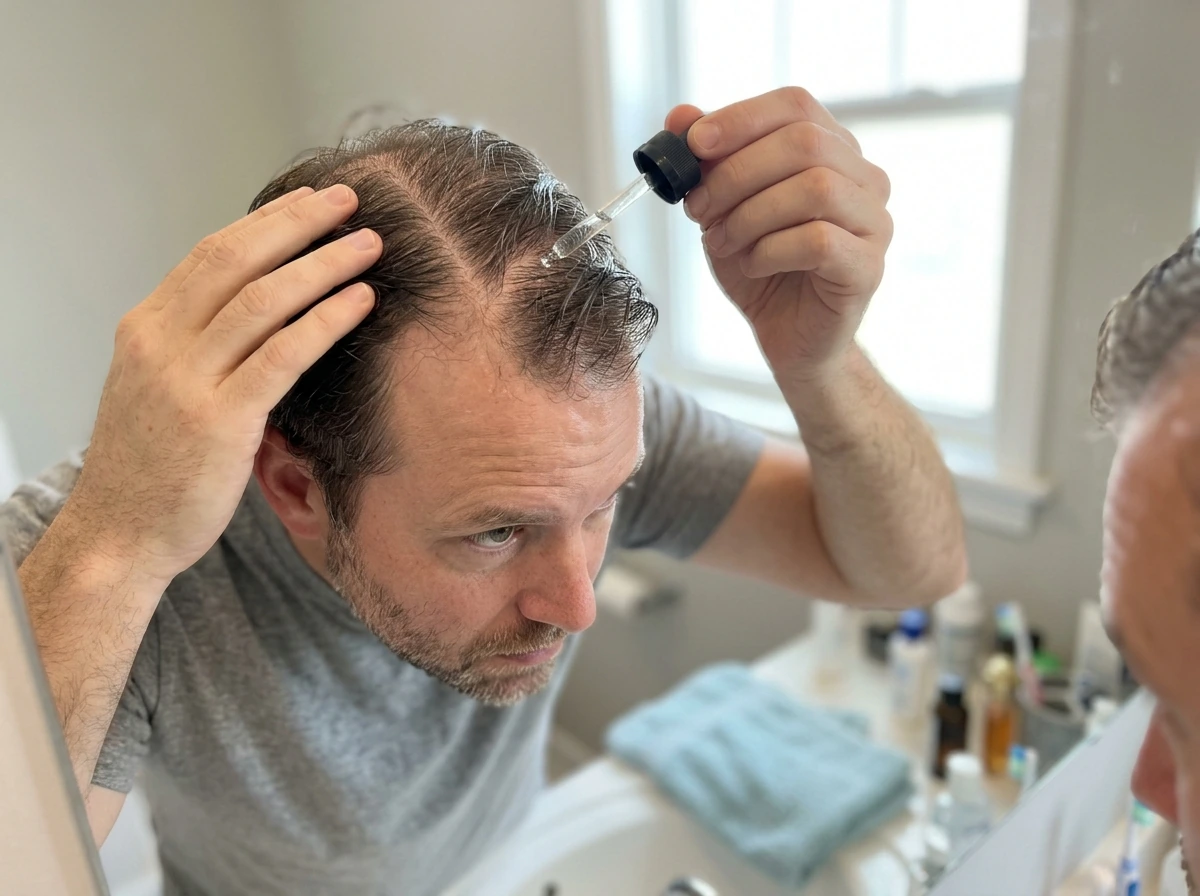
If androgenetic alopecia or significant thinning is part of your situation, there are evidence-backed options that can work alongside your grow-out plan rather than replacing it.
| Treatment | What it does | Timeline to see results | Availability |
|---|---|---|---|
| Minoxidil (topical) | Extends anagen phase, increases blood flow to follicles | 3 to 6 months minimum | Over the counter |
| Minoxidil (oral, low-dose) | Systemic version; may be more effective for some | 3 to 6 months | Prescription in most countries |
| Finasteride (oral) | Blocks DHT conversion; slows and often reverses androgenetic alopecia in men | 6 to 12 months | Prescription |
| Dutasteride (oral) | Stronger DHT blocker than finasteride | 6 to 12 months | Prescription (off-label in some markets) |
| Ketoconazole shampoo | Anti-inflammatory, mild anti-androgenic effect at scalp | Ongoing maintenance | OTC or prescription depending on strength |
| PRP (Platelet-Rich Plasma) | Injections stimulate follicle activity; emerging evidence | 3 to 6 months per course | Clinic/dermatologist |
Minoxidil is the most accessible starting point and has decades of clinical evidence behind it. Apply it to a dry scalp twice daily (or once daily with a higher-concentration formula). It works best when started early, before significant miniaturization has occurred. If you're actively growing your hair out and also dealing with thinning at the crown or temples, there's no reason you can't use minoxidil while doing everything else in this guide. They're complementary, not competing strategies.
Finasteride is the other pillar of evidence-based treatment for men. It works by inhibiting the enzyme that converts testosterone to DHT, directly addressing the hormonal driver of androgenetic alopecia. It's effective for most men who take it consistently, but it does carry potential side effects (including sexual side effects in a minority of users) and should be discussed with a doctor before starting. This is not a supplement you casually order online.
Surviving and styling the awkward growth stages
This is the part most hair-growth guides skip, and it's where most men actually give up and get the scissors out. The awkward phase is real and it's uncomfortable, but every person who successfully grew their hair out sat in exactly that same uncomfortable place for several months. The difference between people who made it through and people who didn't is almost entirely strategy and patience. A similar “give it more time” message shows up in user discussions, where people report that minoxidil can take around 4 to 6 months before visible, positive results.
Months 1 to 3: from buzz or short crop
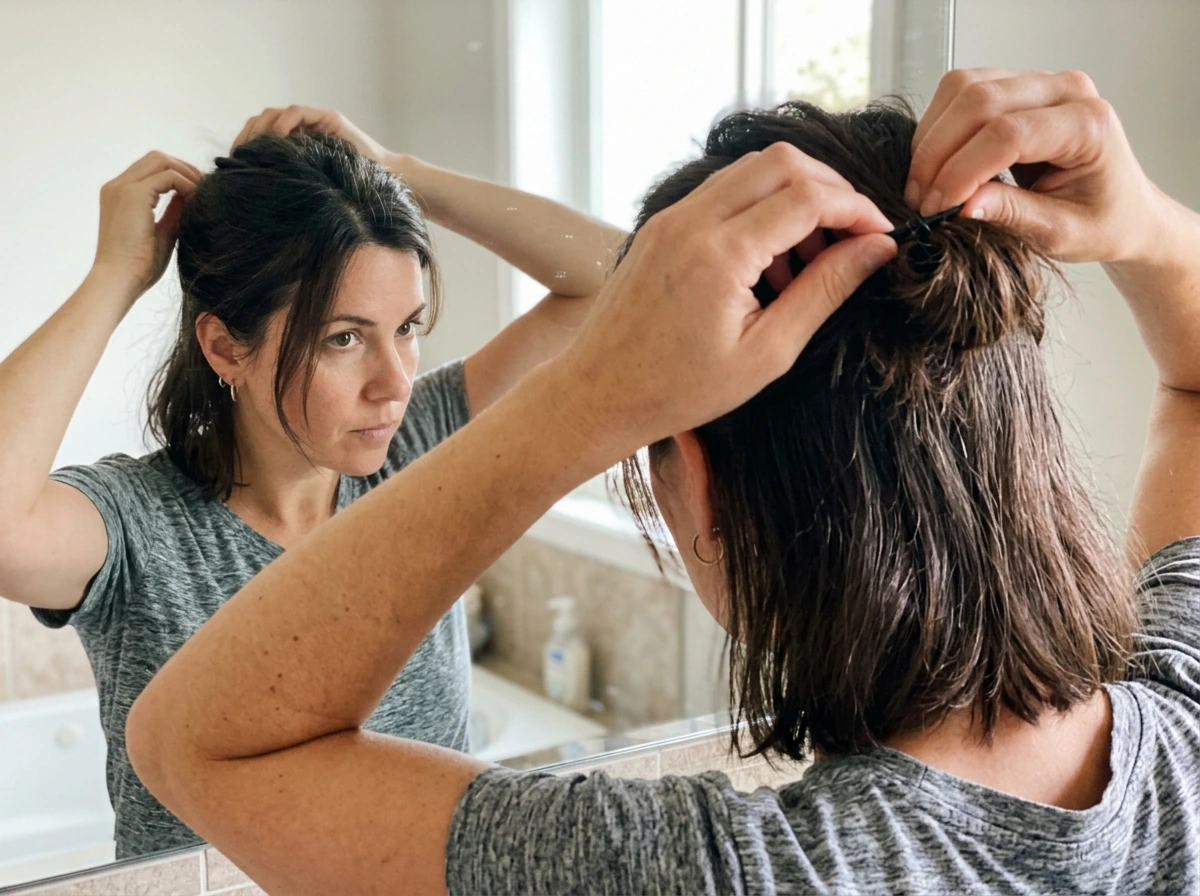
This is the least visually interesting phase. Hair is growing but not long enough to style deliberately. The goal here is simple: keep the back and sides clean without cutting too much off the top. Ask your barber for a shape-up that cleans your neckline and ears without reducing the overall length. A low skin fade or taper on the sides can make the top look intentionally longer rather than just untidy. Avoid the temptation of an even trim all over, which just resets your clock.
Months 3 to 6: the ear-coverage and collar phase
Hair starts reaching the ears and collar, which is where most men feel the strongest urge to cut. The back gets fluffy and the sides start curling outward in ways that feel messy. A few things that genuinely help: a light styling product (paste or cream, not gel) can give you enough control to push hair in a direction. A headband or soft elastic band keeps it back during workouts or low-key days. If the sides are the main problem, an undercut, where the under-layers are trimmed shorter while the top length is preserved, can give you a clean look while protecting your progress. More on the growing-out-with-an-undercut process is covered in detail in the guide on how to grow a guy's hair out. how to grow more pubes
Months 6 to 12: finding wearable styles
By month six you typically have enough length for a half-up style, a bun at the very back, or a low ponytail if your hair is on the finer side. Layers start to matter here. Ask for minimal long layers that remove bulk and weight without sacrificing length. Layers make the in-between stage look intentional rather than neglected. Bangs, if you have them growing in, usually hit an annoying eye-level phase around months four to six. A simple side-sweep with a little product or a brow-skimming trim, not a full cut, buys you time without starting over.
Month 12 and beyond: maintaining while growing
Once you're past the one-year mark, the goal shifts to protecting length rather than just surviving. Trim half an inch every three to four months to remove split ends, which travel up the shaft and cause breakage if ignored. This does not slow your growth. It protects the length you've already earned. This is also when the man-bun goal starts becoming genuinely achievable for many hair types, and there's a dedicated guide on growing a man bun that covers what to expect in those later stages.
Color-treated hair, natural regrowth lines, and texture changes
If you're growing out color-treated hair, you have a visible line of demarcation where natural regrowth meets the colored length. How you handle that line determines how the whole grow-out looks. A few options that actually work:
- Ask your colorist for a balayage or root smudge technique that softens the line gradually rather than creating a hard contrast
- Let the natural regrowth grow 2 to 3 inches before attempting any blending, since blending too early just damages newly grown hair
- Use a toning shampoo if your natural color is significantly lighter or more warm-toned than the dyed length to reduce the visual contrast
- Commit to deep conditioning weekly, because the demarcation zone is where two different levels of porosity meet and breakage is most likely to happen there
Texture changes during the grow-out are surprisingly common and under-discussed. If you've been coloring, relaxing, or heat-styling for years, the newly growing hair may look and behave quite differently from what you're used to. Natural regrowth can be curlier, coarser, or a slightly different color, especially at the hairline and crown. This is normal. Treat the regrowth gently, avoid high heat directly on new growth, and give it a few months before deciding the texture isn't working for you.
For men growing out straight hair specifically, the main texture challenge tends to be the flip-out phase where hair is long enough to bend but not long enough to lie flat or be pulled back. A lightweight leave-in conditioner or anti-frizz serum applied to damp hair gives enough weight to keep things from flipping outward without making the hair look greasy. The guide on growing out straight hair for men goes deeper on managing each stage of that specific texture transition.
Put it all together: your starting point for today
You don't need to overhaul everything at once. Start with the highest-impact habits first, then layer in the rest over the following weeks.
- Get bloodwork done if you haven't recently (ferritin, vitamin D, thyroid panel at minimum). Know your baseline before buying supplements.
- Switch to a gentle, sulfate-free shampoo and start washing every two to three days rather than daily.
- Add conditioner every wash and a deep conditioner once a week if your hair is longer than a few inches.
- Start a daily five-minute scalp massage. Do it consistently for at least eight to twelve weeks before judging whether it's helping.
- Increase protein intake if it's been low. Aim for 1 to 1.2 grams per kilogram of body weight daily.
- If thinning or hairline recession is a concern, book a dermatology appointment and ask about minoxidil and whether finasteride is appropriate for your situation.
- Talk to your barber or stylist about a growth-friendly trim strategy: cleaning up the shape without cutting overall length, or using an undercut or layers to manage the awkward phase.
- Commit to the timeline. Mark a date six months from today and evaluate then, not next week.
Growing your hair out as a man involves biology you can work with, habits that genuinely help, medical options when needed, and a lot of patience during stages that look messy before they look good. The mess is part of the process. The readers who get through it are the ones who go in with realistic expectations, a workable routine, and a style strategy for each stage. You now have all three.
FAQ
Why does my hair fall out but still feels like it is not growing?
Not really. If your hair is growing at a normal rate but you see more shedding, the main possibilities are breakage (usually from brushing wet hair or detangling aggressively) or a temporary shed like telogen effluvium. Aim to track progress by length retention and thickness at the hairline/crown over months, not by day-to-day strand counts.
How long after improving my diet should I expect to see growth changes?
Protein needs are individual, but if you repeatedly miss targets or your calories drop suddenly, hair can shift into a weaker growth cycle. If you are aiming for 0.8 to 1.2+ grams per kilogram and you still see diffuse shedding after 2 to 3 months, consider getting labs (ferritin, vitamin D, zinc, thyroid) rather than adding more random supplements.
Will washing more often or less often help male-pattern hair loss?
If you have androgenetic alopecia, washing frequency alone will not stop miniaturization, but it can reduce scalp inflammation that worsens shedding and irritation. Stick with a routine that keeps the scalp calm, especially if you use medicated shampoo. If you have active scaling or itch, treat the scalp first, then layer in growth treatments.
Is biotin worth taking for hair growth in men?
Biotin rarely helps if your levels are already normal. A better decision rule is, do not start high-dose biotin unless a blood test suggests deficiency (or you have a rare metabolic condition). High-dose biotin can also interfere with some lab tests, so tell your clinician if you take it.
Can I skip conditioner if I want my hair to grow faster?
Use conditioner for detangling and friction control, but start with a leave-on approach only after you have passed the very early buzz-cut stage. If you skip conditioning when hair is longer, the combing force increases breakage and you lose more length than you gain. Apply it from mid-shaft to ends, and avoid heavy buildup on the scalp.
How do minoxidil and medicated shampoos fit together without irritating my scalp?
Yes, but timing and type matter. For minoxidil, the usual approach is to apply to a completely dry scalp, let it absorb, then proceed with styling. If you use a medicated shampoo, do not apply minoxidil on a scalp that is still heavily coated with treatment residue, and consider alternating days to prevent irritation.
How long should I use minoxidil before judging results?
Consistency is the biggest factor. With male-pattern hair loss treatments, you typically see meaningful changes only after months, and early shedding or texture changes can happen. Track the same lighting and angle every month, and do not stop a routine after a few weeks unless you have side effects.
What are the key questions to ask a doctor before starting finasteride?
If you are considering finasteride, talk through your risk profile and side effect monitoring before starting, especially if you have plans for fatherhood. Also know that effectiveness depends on consistent use, not intermittent use, and some men benefit more when paired with other measures like minoxidil and scalp care.
I had a stressful event, then my hair thinned. Is that likely telogen effluvium?
A normal shed after a stressor can start 2 to 3 months later, so the timing feels disconnected. If shedding is diffuse across the whole scalp, sudden diet changes, illness, major stress, or sleep disruption are common triggers. The practical move is to avoid panic, improve sleep and protein, and consider labs if it persists beyond a few months.
What is the safest way to detangle when my hair is wet?
Yes, but do it in a way that prevents breakage. Use a light touch, start detangling at the ends, and avoid tugging when hair is fully wet. If your hair is very prone to tangling, a quick rinse plus conditioner, then combing gently in sections, usually prevents the root-to-tip yanking that kills length.
Do frequent trims slow hair growth?
Many men accidentally counteract their growth routine by trimming too aggressively or evenly every time. After about the one-year mark, small trims every 3 to 4 months help keep split ends from traveling upward. If you are in the awkward phase, focus trims on clean lines for sides and neckline, not a full reset all over.
My hair texture changed after coloring. Should I stop growing it out?
Color regrowth lines are normal, and harsh correction can increase dryness and breakage. If you use heat, reduce direct high heat on the new growth and consider gentler styling while the transition happens. If texture changes, wait several months before concluding it will not work, since regrowth often settles.
How do I know if my hair loss needs medical treatment instead of just growth tips?
If you see progressive thinning at the temples or crown, lifestyle fixes can help scalp health, but they usually cannot fully reverse the underlying pattern. The practical decision aid is to book an evaluation early, especially if miniaturization seems to be happening. Combining a grow-out plan with appropriate medical treatment often gives the best outcome.
What haircut strategy works best for growing a man bun without looking awkward?
If you want to grow a man bun, the main practical issue is not growth speed, it is managing sides and weight while the top catches up. Use a strategy like a taper or undercut to keep the look intentional, then transition to half-up styles around the 6-month mark depending on your hair thickness and curl pattern.