
Hair grows about 1 centimeter per month. That's the honest starting point for every hair grow tip you'll ever read. If someone promises you faster growth from a serum or supplement, they're either talking about reducing breakage (which is real and worth doing) or overstating their case. What you can actually control is the health of your scalp, how much hair you're losing to damage and shedding, and how well you navigate the awkward stages while you wait. This guide covers all of it, from your current starting point to your goal length, plus how to grow hair back if thinning or shedding is part of your situation
Hair Grow Tips: Step-by-Step Guide to Grow Out Hair

Marcus Vickers
24 Mar 2026

What hair growth actually looks like, realistically
Scalp hair grows roughly 0.3 to 0.4 mm per day, which adds up to about 1 cm (just under half an inch) per month, or around 6 inches per year. That range isn't even, though. Some people's hair grows closer to 0.6 cm per month, others closer to 1.5 cm. Genetics, hormones, age, and overall health all influence where you land on that spectrum. Androgens, for example, affect how follicles behave at a cellular level, which is why hair growth patterns differ so much between people and change over time.
What also matters is the anagen phase, which is the active growing portion of your hair cycle. It typically lasts 2 to 6 years. The longer your anagen phase, the longer your hair can potentially get before it falls out and regrows. This is why some people can grow hair to their waist and others plateau at shoulder length no matter what they do. That ceiling is set by your follicles, not your shampoo. What you can do is make sure you're keeping every centimeter that grows, which means minimizing breakage. That's where the practical work lives.
After the anagen phase, hair enters a resting phase (telogen) for about 2 to 3 months before shedding and starting the cycle again. Shedding 50 to 100 hairs a day is normal. More than that, or shedding in patches, is worth paying attention to, and we'll get to that.
Your grow-out plan by starting point
Where you're starting from completely changes your timeline, the awkward phases you'll hit, and the styling strategies that make sense. Here's a practical breakdown by starting point.
Growing out a pixie or buzz cut
This is the longest road, and also the most predictable. At 1 cm per month, a buzz cut takes roughly 3 to 4 months to reach a short pixie, 6 to 9 months to reach ear length, and 18 to 24 months to hit shoulder length. The hardest stretch is months 2 through 5, when hair is long enough to stick out awkwardly but not long enough to style. This is where most people give up and cut it back short. Don't. Headbands, bobby pins, and texturizing spray become your best tools during this stage. A small shape-up trim at the nape and around the ears every 6 to 8 weeks keeps things tidy without losing length on top.
Growing out a bob
Going from a chin-length bob to shoulder length takes roughly 6 to 8 months. The main frustration here is the in-between stage where hair hits jaw-to-neck length and looks shapeless. Layers added strategically can remove bulk and give the grow-out more shape. Ask your stylist specifically for a "long bob to lob" transition trim, where they take a tiny amount off the bottom and add soft layers through the mid-length to remove that boxy appearance. Half-up styles and loose twists also carry you gracefully through this phase.
Growing out bangs
Bangs are their own challenge because the grow-out is happening in the most visible place on your head. Blunt bangs take about 9 to 12 months to blend fully into the rest of your hair. Side-sweeping is the most universally flattering way to manage them from months 1 through 6. By months 3 to 5, they're usually long enough to pin back in a half-up or tuck into a braid. The hardest length is when they hit the bridge of your nose. That's when curtain-bang styling (parting in the center and sweeping outward) buys you the most time and the best look while you wait.
Growing out an undercut or disconnected layers
Undercuts create a visible line where shaved or very short sides meet longer top hair, and that line takes anywhere from 12 to 18 months to blend out completely depending on how short the undercut was. The grow-out strategy here is almost entirely about disguise: longer hairstyles on top (worn down), side-part styling to cover the line of demarcation, and eventually letting a stylist blend the lengths gradually with clipper fades rather than one dramatic cut. If you have a disconnected undercut and want to see specific staging, the guidance in our grow-out guide for guys covers the month-by-month transitions in more detail, specifically how to grow a guys hair out, including straight-hair tips for men.
Rough grow-out timelines by goal
| Starting Point | Goal Length | Estimated Time |
|---|---|---|
| Buzz cut / very short | Ear length | 6–9 months |
| Buzz cut / very short | Shoulder length | 18–24 months |
| Pixie cut | Chin / lob length | 9–12 months |
| Bob (chin length) | Shoulder length | 6–8 months |
| Blunt bangs | Fully blended | 9–12 months |
| Undercut (disconnected) | Blended sides | 12–18 months |
| Shoulder length | Mid-back / bra strap | 12–18 months |
Daily habits that actually support growth
You can't make your follicles work faster, but you can make sure they're working in the best possible environment. These are the habits that genuinely matter.
Scalp care
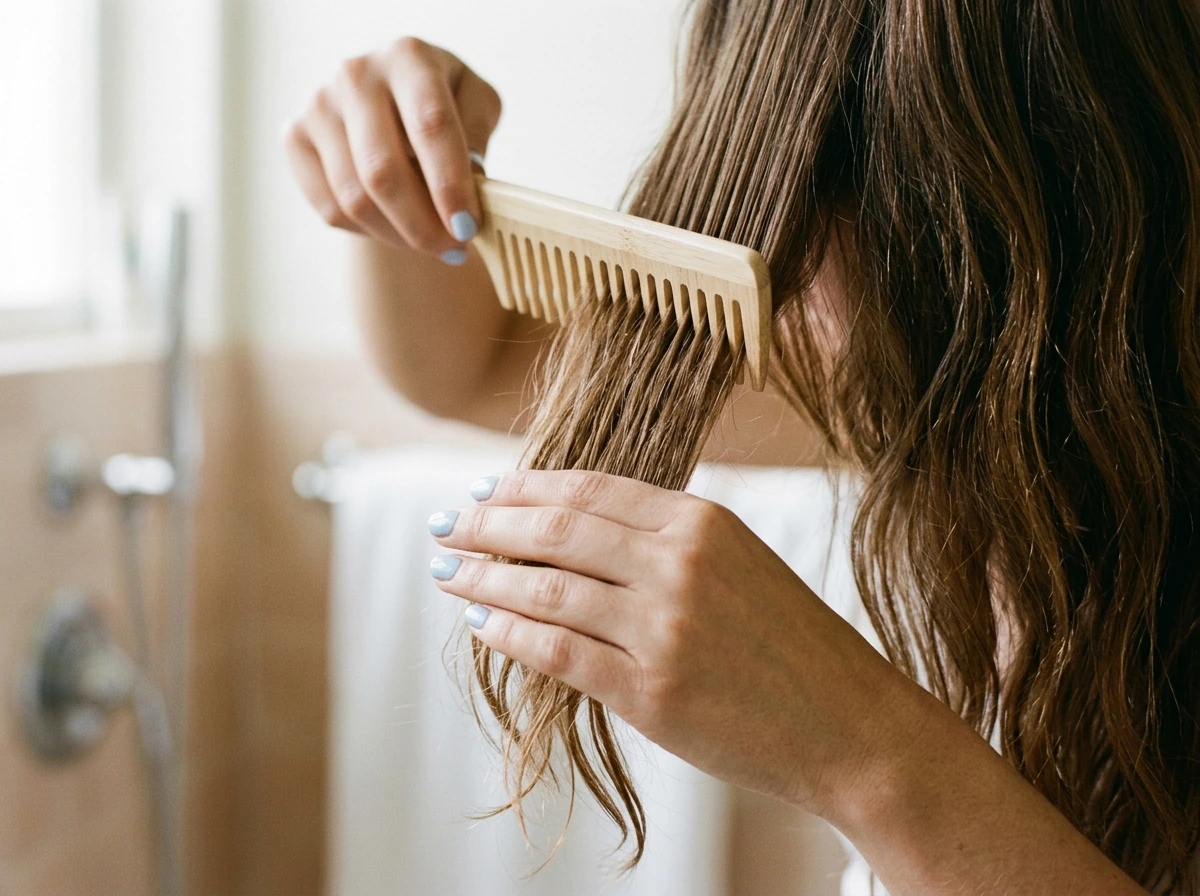
A clean, healthy scalp is the foundation. Buildup from dry shampoo, styling products, and sebum can clog follicles and create an environment where hair struggles. Washing 2 to 3 times per week (or as often as your hair type needs) with a gentle, sulfate-free shampoo is a good baseline. Once or twice a week, spend 3 to 5 minutes massaging your scalp with your fingertips while shampooing, or use a silicone scalp massager.
There's solid evidence that consistent scalp massage can improve thickness over time by stimulating blood flow to follicles. In a small clinical study using a standardized scalp-massage protocol, participants massaging their scalp for about 4 minutes per day over 24 weeks showed increased hair shaft thickness [consistent scalp massage can improve thickness over time](https://pmc. ncbi. nlm.
nih. gov/articles/PMC4740347/). It's also one of the few growth-supporting habits that costs nothing.
Gentle detangling
Detangling is where a lot of breakage happens, especially for people with curly, coily, or fine hair. Always detangle from the ends up, not from the root down. Use a wide-tooth comb or a detangling brush on wet hair with conditioner still in it, or on dry hair with a light oil or detangling spray. The goal is zero force. If you're tugging, you're snapping hairs that could have become inches.
Nutrition
Hair is made of keratin, a protein, so protein intake actually matters. If you're regularly under-eating protein, your body deprioritizes hair growth. Aim for adequate protein from whole foods: eggs, fish, legumes, lean meat, or dairy. Iron deficiency is one of the most common nutritional reasons for slowed growth or increased shedding, especially for people who menstruate. Zinc and biotin deficiencies can also affect hair, though most people eating a reasonably varied diet are not deficient in biotin. If your diet is restrictive or you've had recent major dietary changes, that's worth flagging with a doctor before loading up on supplements.
Sleep and stress
Chronic stress is a genuine trigger for increased shedding. The mechanism is real: significant physical or emotional stress can push a larger percentage of follicles into the resting (telogen) phase at once, which leads to noticeable shedding 2 to 3 months later. That's called telogen effluvium, and it's more common than most people realize. Getting enough sleep (7 to 9 hours) supports the hormonal balance that regulates hair cycling. Stress reduction isn't just a wellness cliche here. It's a direct variable in how much hair you keep.
Keeping the hair you grow: reducing breakage
Growing hair that then breaks off at the mid-shaft is one of the most frustrating experiences in a grow-out. Your ends are the oldest, most fragile part of your hair, and they need specific attention.
Conditioning and moisture

Conditioner after every wash is non-negotiable for most hair types. For curly, coily, or color-treated hair, a deep conditioning treatment once a week makes a real difference in elasticity and breakage. Look for ingredients like shea butter, glycerin, hydrolyzed protein, and panthenol. Leave-in conditioner on damp hair before styling adds another layer of protection, especially if you use heat tools.
Heat and chemical damage
Heat is the single biggest day-to-day source of breakage for most people. Flat irons and curling wands above 375°F (190°C) compromise the hair's protein structure with repeated use. If you use heat daily, drop the temperature, use a heat protectant every single time, and consider giving your hair 2 to 3 heat-free days per week. Chemical services like bleaching, perming, and relaxing are even more impactful. If you're growing out bleached or chemically treated hair, the line of demarcation where treated hair meets new growth is a fragile point that needs extra conditioning and gentle handling.
Protective styling
Protective styles reduce the amount of manipulation your hair goes through daily, which directly reduces breakage. Loose braids, twists, buns, and silk-wrapped styles all qualify.
Micro-trims: the counter-intuitive grow-out tool
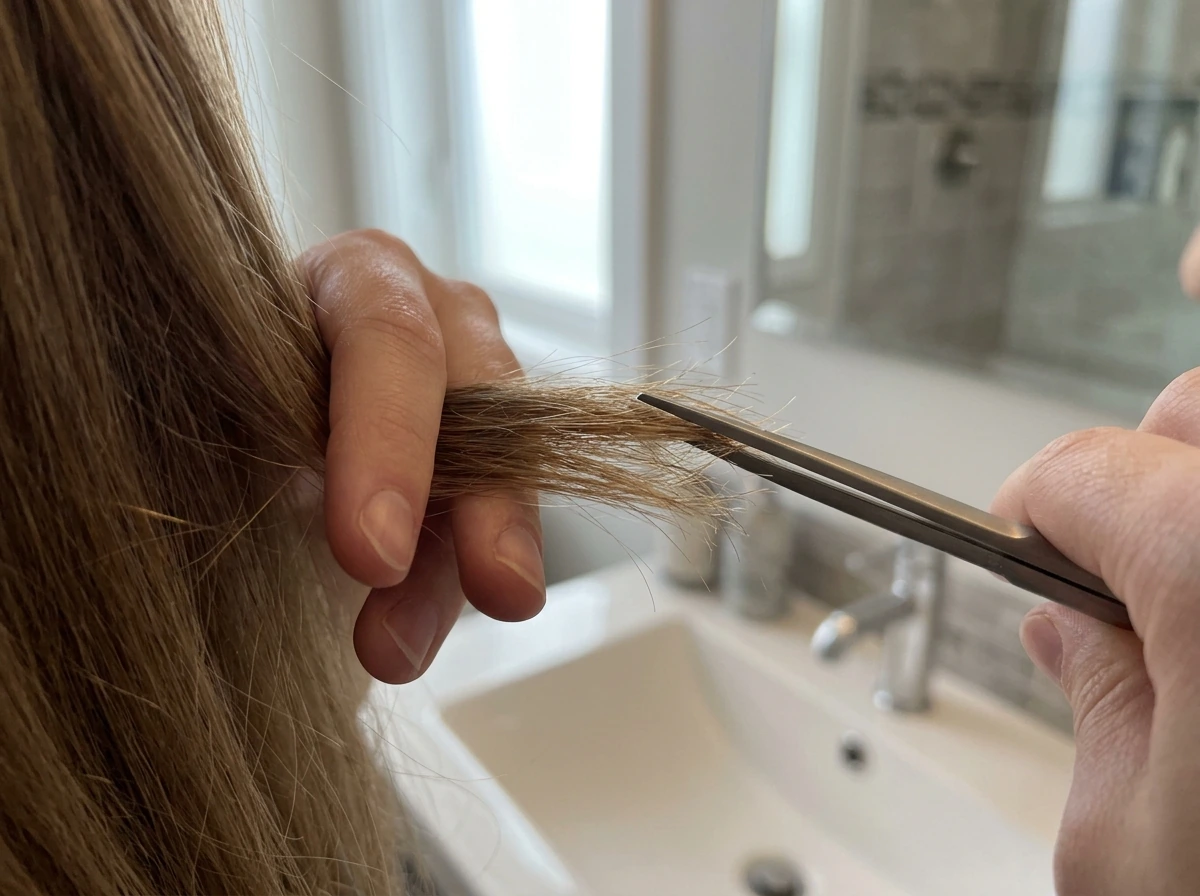
This one confuses people: if you're trying to grow your hair, why would you trim it? Trimming doesn't make hair grow faster. But it removes split ends before they travel up the shaft and cause breakage higher up. A micro-trim of 0.5 to 1 cm every 10 to 12 weeks is enough to keep your ends healthy without losing meaningful length. If you're at a stylist who keeps taking off more than you asked for, be specific: 'half a centimeter off the ends, that's it.' You're in charge of your grow-out pace.
Supplements and treatments: what's worth it
The supplement market for hair growth is enormous and unevenly supported by evidence. Here's an honest breakdown.
| Supplement / Treatment | What the Evidence Says | Worth Trying? |
|---|---|---|
| Biotin | Only helps if you're deficient; most people aren't; megadoses don't speed up growth beyond baseline | Only if deficient |
| Iron | Genuinely important if you're iron-deficient or anemic; can improve shedding significantly | Yes, if bloodwork confirms deficiency |
| Vitamin D | Low levels linked to hair loss in some studies; widespread deficiency in general population | Yes, worth testing |
| Zinc | Deficiency linked to hair loss; supplementing when deficient helps; excess zinc can cause problems | Only if deficient |
| Omega-3 fatty acids | Some evidence for improved hair density and reduced shedding; low risk profile | Reasonable to try |
| Collagen peptides | Some small studies suggest benefit for hair thickness; not conclusive | Low risk, moderate evidence |
| Minoxidil (topical) | Well-evidenced for androgenetic hair loss; stimulates anagen phase; available OTC | Yes, for appropriate hair loss types |
| Finasteride / Dutasteride | Prescription only; effective for androgenetic alopecia in men; requires medical supervision | See a doctor |
| Caffeine shampoos | Some laboratory evidence for follicle stimulation; real-world results modest | Low risk, modest benefit |
| Platelet-rich plasma (PRP) | Growing evidence base for certain hair loss types; done by doctors, not DIY | Yes, in clinical setting |
The safest approach is to get bloodwork done before spending money on supplements. If your iron, vitamin D, zinc, or ferritin levels are low, fixing those deficiencies can make a noticeable difference. If your levels are normal, adding more via supplements won't speed things up. Minoxidil is the most evidence-backed OTC option for people dealing with pattern hair loss or thinning, and it works best when started early and used consistently.
Growing hair back after thinning or shedding
If you're searching for how to grow hair back specifically, the starting point is figuring out what caused the loss, because that determines both the timeline and the strategy.
Common causes of shedding and thinning
- Telogen effluvium: diffuse shedding triggered by stress, illness (including COVID-19), surgery, crash dieting, or hormonal shifts (postpartum, stopping birth control). Usually temporary.
- Androgenetic alopecia: genetic pattern thinning driven by androgen sensitivity in follicles. Gradual and progressive without treatment.
- Thyroid dysfunction: both hypothyroidism and hyperthyroidism can cause noticeable shedding. Treatable once the thyroid condition is managed.
- Nutritional deficiencies: most commonly iron, vitamin D, zinc, and protein. Correctable.
- Alopecia areata: autoimmune condition causing patchy loss. Requires medical treatment.
- Traction alopecia: hairline damage from consistently tight styles. Preventable and often reversible if caught early.
- Medication side effects: certain medications including blood thinners, antidepressants, and acne medications list hair loss as a side effect.
What regrowth looks like and how long it takes
For telogen effluvium, which is the most common type of stress or illness-triggered shedding, the shedding phase itself typically lasts 3 to 6 months. Acute telogen effluvium is defined as shedding lasting less than six months, as summarized in a review of the literature. After that, new hairs start emerging, though they often appear first as fine baby hairs at the hairline and temples. You can expect to see visible improvement in density 6 to 12 months after the trigger resolves. It can feel discouraging to watch shedding continue for months, but the shedding and the regrowth are often happening simultaneously. Full recovery for telogen effluvium is typical in most cases, assuming the underlying trigger is addressed.
For androgenetic alopecia, the follicles don't recover without intervention because the cause is ongoing. Minoxidil and (for men) finasteride can slow or halt progression and, in some cases, partially reverse thinning, but they need to be maintained consistently to hold results. Stopping them means the loss resumes.
When to see a professional
See a dermatologist or trichologist if: shedding has continued beyond 6 months without a clear cause, you're losing hair in patches, you notice scalp symptoms like itching, burning, or flaking alongside the loss, your hairline is visibly receding, or you're a woman experiencing significant diffuse thinning. These patterns suggest causes that need diagnosis, not just better haircare habits. A dermatologist can run bloodwork, examine your scalp, and if needed, do a scalp biopsy to determine the type of hair loss and the best treatment path. Early intervention matters a lot more with most hair loss conditions than waiting to see if it resolves on its own.
Styling strategies for the awkward stages
Every grow-out has awkward phases. The goal isn't to eliminate them but to have a styling plan ready so they don't drive you back to the salon chair for a chop.
Styling by phase
- Months 1–3 from short: Embrace texture. Sea salt spray and light wax work well on very short hair to give it direction and movement. For buzz cuts and very short pixies, this is your 'tousled is intentional' phase.
- Months 3–6: This is the hardest phase for most people. Hair is long enough to lay flat and look unruly but short enough that styling options are limited. Headbands, hats, and textured styling products that create definition are your main tools. For men growing out, this is where a structured side part or pushing hair forward with a light pomade buys the most time.
- Months 6–9: You've hit enough length for half-up styles, small buns, and pinned looks. This is when styling versatility opens up considerably. Invest in some good bobby pins and a soft-hold styling gel.
- Months 9–12 and beyond: At this point, most grow-outs have cleared the worst of the awkward stage and you're managing length rather than surviving it. Layers, braids, and more complex styles become possible.
Managing color during a grow-out
Growing out bleached, dyed, or highlighted hair creates a visible line of demarcation between your natural color and treated color. There are a few ways to manage this. Toning treatments can blend the line temporarily. Asking for a 'shadow root' at the salon creates a softer, more intentional gradient that looks styled rather than grown-out. If you're going fully natural, glossing treatments can make the transition look more cohesive while you wait for natural color to grow in. The one thing to avoid is repeated full-head bleaching just to mask the grow-out. The cumulative damage makes the final stretch harder and slower because breakage increases.
Maintenance cuts that don't slow you down
Maintenance during a grow-out is about shaping, not shortening. Tell your stylist explicitly that you're growing your hair out and ask them to remove only split ends and shape what's there. For layered grows-outs, ask for the layers to be 'grown out' gradually, meaning they extend the shortest layer slightly each visit rather than starting over with a fresh layer cut. This keeps your style looking intentional without resetting your progress.
Tracking progress and knowing when something's wrong
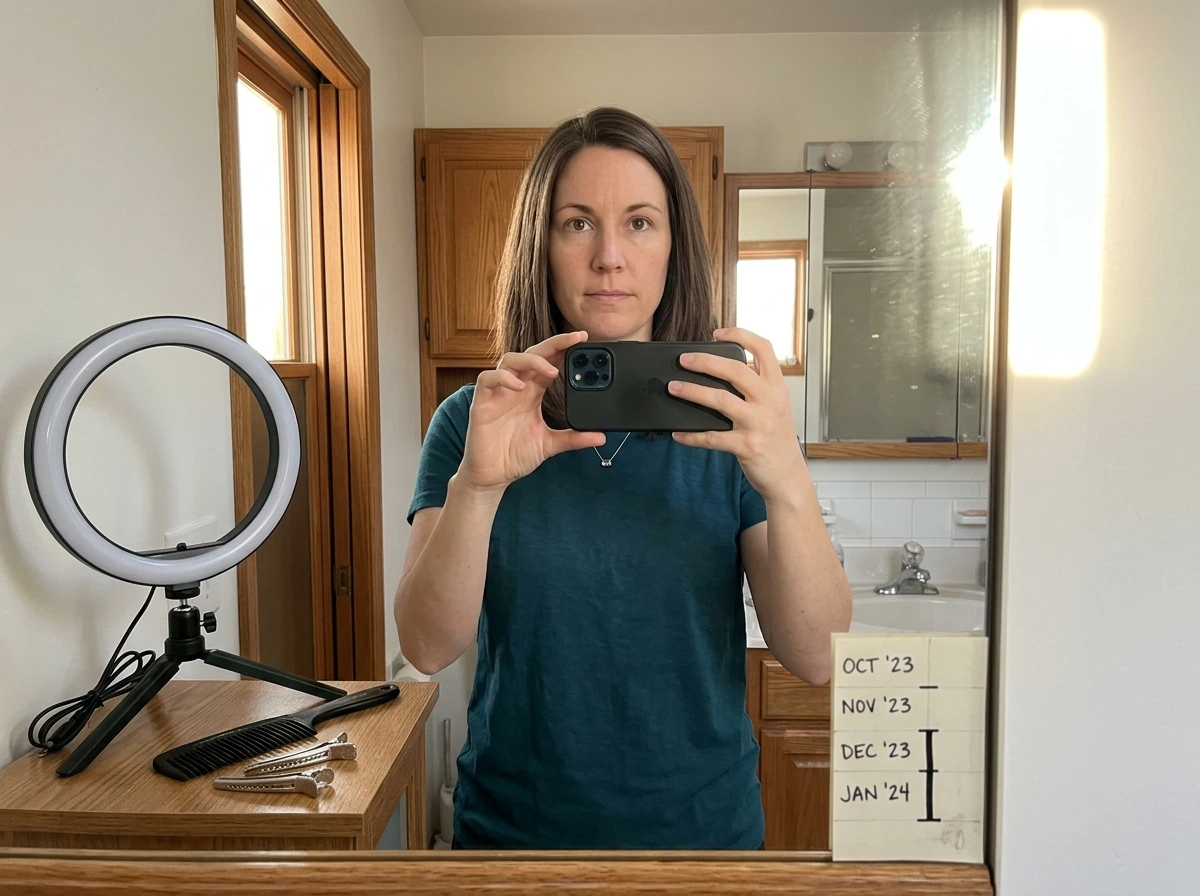
Hair growth is slow enough that it can be hard to see progress week to week. Taking a photo from the same angle in similar lighting once a month is the most reliable way to track what's actually happening. Compare month 1 to month 3, not day to day. It also helps to measure a specific piece of hair (same strand, same measurement point) once a month to get a concrete number.
After 2 to 3 months of following a solid routine, you should see your ends looking healthier and your overall length increasing noticeably. If you're not seeing any progress, the most likely culprits are breakage (your hair is growing but snapping off), unaddressed nutritional deficiency, or an underlying medical issue.
Red flags that warrant a medical appointment
- Shedding significantly more than 100 hairs per day for longer than 6 weeks
- Patchy or circular bald spots appearing anywhere on the scalp
- Hairline receding noticeably over a few months
- Scalp itching, burning, tenderness, or visible scaling alongside shedding
- Hair loss accompanied by fatigue, unexplained weight changes, or other systemic symptoms (possible thyroid involvement)
- No regrowth visible after 6 months of shedding
- Hair breaking off at the scalp level rather than shedding from the root
These aren't reasons to panic, but they are reasons to get a professional set of eyes and bloodwork done. Most hair loss conditions are treatable when caught early, and the diagnostic process is usually straightforward. Don't spend six months trying different supplements before seeing a doctor if these signs are present. Getting the right information quickly puts you on a faster track to real recovery, which is the whole point.
Your grow-out is a long game no matter where you're starting from. The practical work is unglamorous: protect what's growing, don't damage it, feed your body what it needs, and manage the awkward stages with styling strategies that buy you confidence while you wait. Every centimeter adds up. The readers who make it to their goal length are almost always the ones who made peace with the timeline early, built a simple daily routine, and stopped expecting shortcuts that don't exist.
FAQ
Do hair growth tips work if my hair is growing but looks like it isn’t?
Yes, often the issue is breakage or uneven shedding, not true growth. Use a simple check: measure the same section of hair (same strand if possible) monthly, and compare length at the ends only after trimming split ends. If length stays the same or gets shorter, prioritize detangling, conditioner use, and heat reduction over “growth” products.
Is washing less often better for hair growth tips?
Not necessarily. For growth, you want a clean scalp environment without buildup. Many people do well washing 2 to 3 times per week, but if your scalp gets oily fast or you rely heavily on dry shampoo, adjust based on buildup rather than a fixed schedule. If you skip washing for long stretches, you may increase shedding from inflammation or clogged follicles.
What should I do if I shed more than 100 hairs a day during a grow-out?
First, watch the pattern and timing. Normal shedding is frequent and dispersed, while patchy loss or shedding that ramps up suddenly can signal a problem. If shedding exceeds your usual baseline for more than 4 to 6 weeks, or it started after illness, surgery, medication changes, or major stress, consider checking in with a dermatologist. If it continues past 6 months without a clear cause, get evaluated.
Can I use oils to speed up hair growth tips?
Oils can reduce friction and make detangling easier, which helps prevent breakage, but they do not reliably increase the growth rate of follicles. If you use oil, focus on end protection and scalp comfort (avoid heavy buildup on the scalp). If you notice itching or flaking after oiling, stop and switch to lighter conditioning.
Are biotin and “hair growth” supplements worth it for hair grow tips?
They can be wasteful if you are not deficient. A key decision aid is to get bloodwork before spending money, especially for iron/ferritin, vitamin D, zinc, and thyroid-related markers if relevant. If levels are normal, adding supplements usually does not speed growth, and high doses of certain supplements can create new issues.
How do I know if my hair growth issue is telogen effluvium versus androgenetic alopecia?
A practical clue is timing and pattern. Telogen effluvium often follows a trigger (stress, illness, weight change) and shows diffuse shedding, with regrowth usually appearing as finer “baby” hairs within months. Androgenetic alopecia often shows a gradual pattern (widening part, hairline changes, crown thinning) and tends to persist unless treated consistently. If you are unsure, a dermatologist can distinguish the cause by exam, and sometimes scalp testing.
Should I keep trimming while growing out hair, or will it slow progress?
Trimming does not make hair grow slower, it prevents split ends from traveling up and causing higher breakage. The best approach is a micro-trim (about 0.5 to 1 cm) on a predictable schedule like every 10 to 12 weeks, and communicate clearly that you want split ends removed only. If you leave the appointment with much shorter ends than expected, your progress will be harder to track.
What’s the safest way to detangle during a grow-out?
Aim for zero force. Detangle from the ends upward, use a wide-tooth comb or detangling brush with conditioner in (or a slip product if hair is dry), and pause if you feel resistance. If your hair tangles heavily, consider protective styling between washes to reduce daily manipulation, because frequent tugging is a major driver of mid-shaft breakage.
How should I protect hair at the “awkward length” months when styling options are limited?
Use tools that add shape without adding heat or heavy pulling. Examples include headbands, bobby pin placement, textured sprays used lightly, and updos that keep hair from sticking out or rubbing. The goal is to reduce friction at the back of the head and around the ears, because constant movement and snagging can quietly erase length.
When is it worth seeing a dermatologist or trichologist for hair grow tips problems?
Do it sooner if shedding is patchy, continues beyond 6 months, comes with scalp symptoms like burning or itching, or you notice a visibly receding hairline or significant diffuse thinning (especially if you are female). Getting evaluated early can prevent months of trial-and-error with products when the real fix is diagnosis and targeted treatment.