
You can grow your hair out without a mullet by getting the back and sides trimmed regularly while the top catches up. That one move, done every 6 to 8 weeks, blank" rel="noopener noreferrer">prevents the classic mullet shape from forming. The back grows at the same rate as the rest of your hair (about half an inch per month), so if you never touch it, it will always be longer and wilder than the front. Strategic micro-trims keep everything proportional while the whole head keeps moving toward your goal length.
How to Grow Out Hair Without a Mullet: Step by Step

Marcus Vickers
24 May 2026
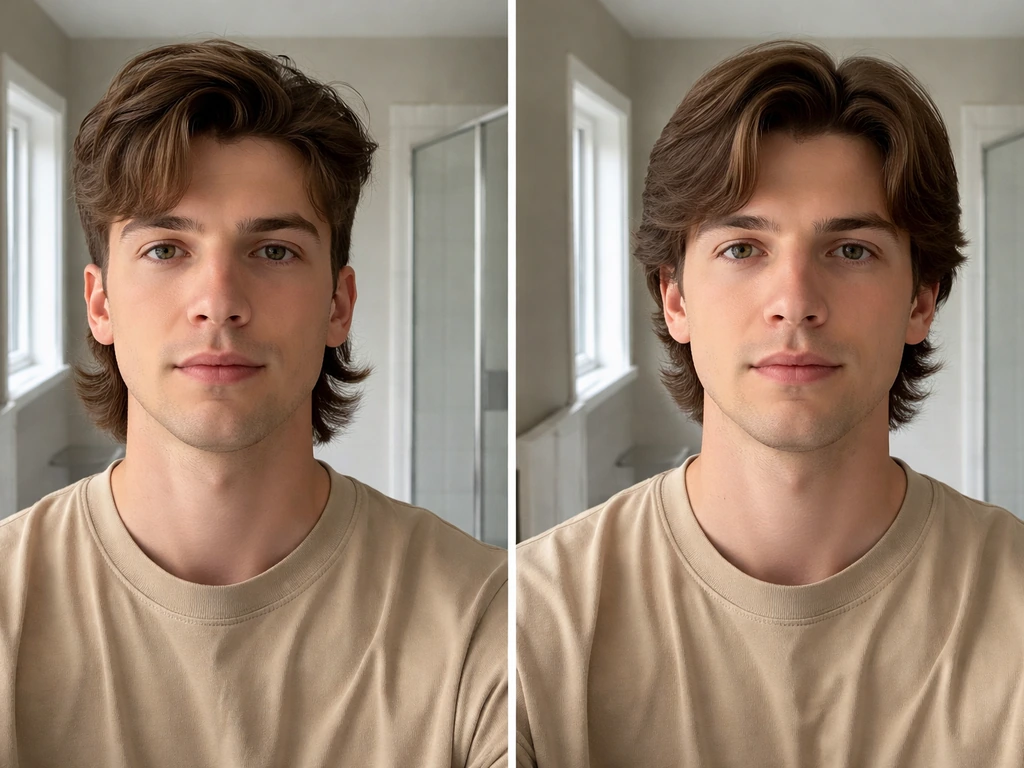
Why your hair turns into a mullet in the first place

The mullet shape is not random bad luck. It happens because of how your previous haircut was shaped and how hair behaves at different lengths. Most short cuts, from pixies to buzz cuts to undercuts, are shorter at the back and sides and slightly longer or textured on top. When you stop cutting, every section grows at roughly the same rate (half an inch a month), but the back and sides start from a shorter baseline and they tend to hang differently than the top. They can poke out sideways, curl under, or flip at the ends in ways the top does not because the neckline and sides have less weight pulling them down.
Layers make this worse. If your previous cut had lots of layers, the shortest pieces are scattered all over your head and they all grow at different apparent rates visually. Cowlicks at the crown or nape can force the back to grow outward instead of down, which exaggerates the mullet silhouette. And if you had an undercut, that disconnected section at the bottom of your head grows in as a noticeable block that does not blend with the rest. The good news is that once you understand why the shape happens, the fix is pretty straightforward.
The baseline plan for even growth
The core strategy is simple: let the top and front grow freely while you manage the back and sides. This feels counterintuitive because you might worry that trimming anything slows the whole process down. It does not. Removing half an inch from the back does not stop it from growing. It just keeps it from getting ahead of everything else.
Here is the framework to follow from the moment you decide to grow it out:
- Stop trimming the top and front entirely. These are the sections you want to gain length.
- Trim the back and sides lightly every 6 to 8 weeks. You are not cutting it back, just keeping it in proportion with the top.
- Ask for blending at every visit, not a shape-up or a fresh clean line. Blending keeps the transition gradual instead of creating a shelf.
- Once the top reaches a length that starts to drape or lay over the sides (usually around 3 to 4 inches), you can start letting the sides grow too, since the top will have enough weight to unify the look.
- Do not skip appointments hoping to rush the length. The back grows faster in appearance than it looks because it has less hair weight pulling it down.
If you started from a buzz cut or very short crop, the mullet risk is highest between months 2 and 6. If you are growing from a bob or lob, the sides and nape are your main concern and the risk window is usually months 1 through 4. Either way, the plan is the same.
What to actually ask for at the salon while you grow
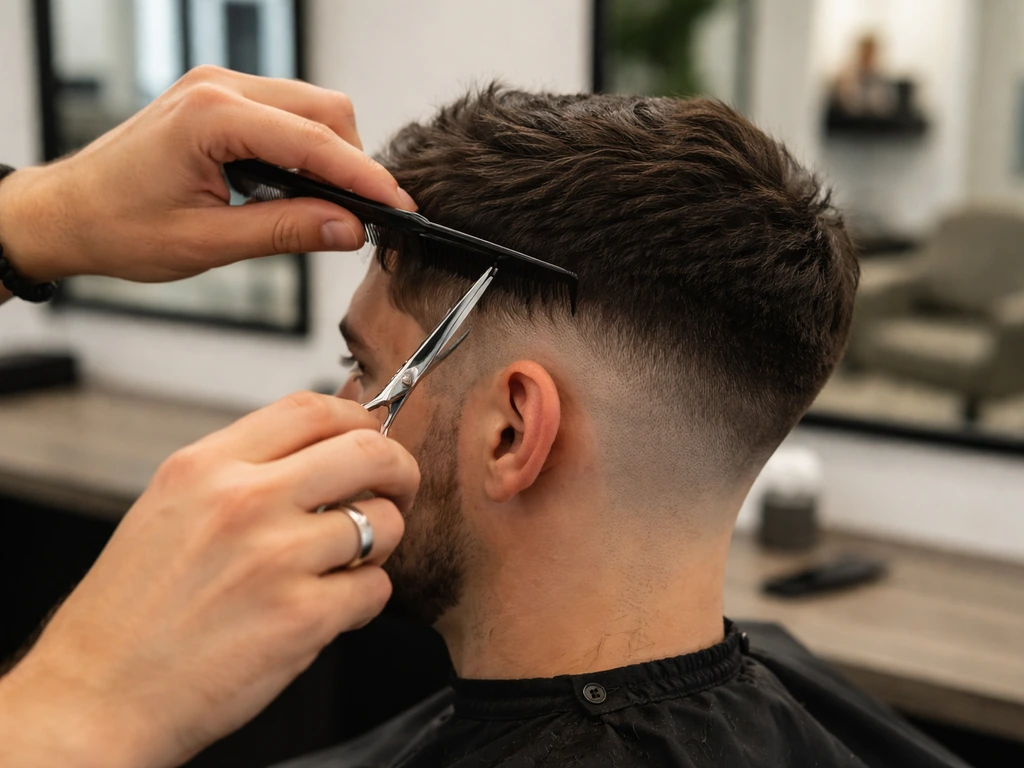
The words you use at the salon matter a lot here. If you just say "I want to grow it out," a stylist might leave everything alone, which leads to the mullet. If you say "clean up the back," they might take off too much. Here is exactly what to ask for at each stage.
Months 1 to 3: Shape maintenance
Say: "I am growing everything out but I do not want a mullet. Can you dust the back and sides by half an inch maximum, blend the layers so there are no shelves or hard lines, and leave the top and front completely alone? If you want the full how-to for growing out your hair while avoiding that awkward mullet phase, follow the month-by-month guidance in this article mtf how to grow out hair. " The word "blend" is important. You want soft, graduated transitions, not crisp lines. Ask them to use scissors over a comb rather than clippers if possible, so the blending stays soft.
Months 3 to 6: Proportion check
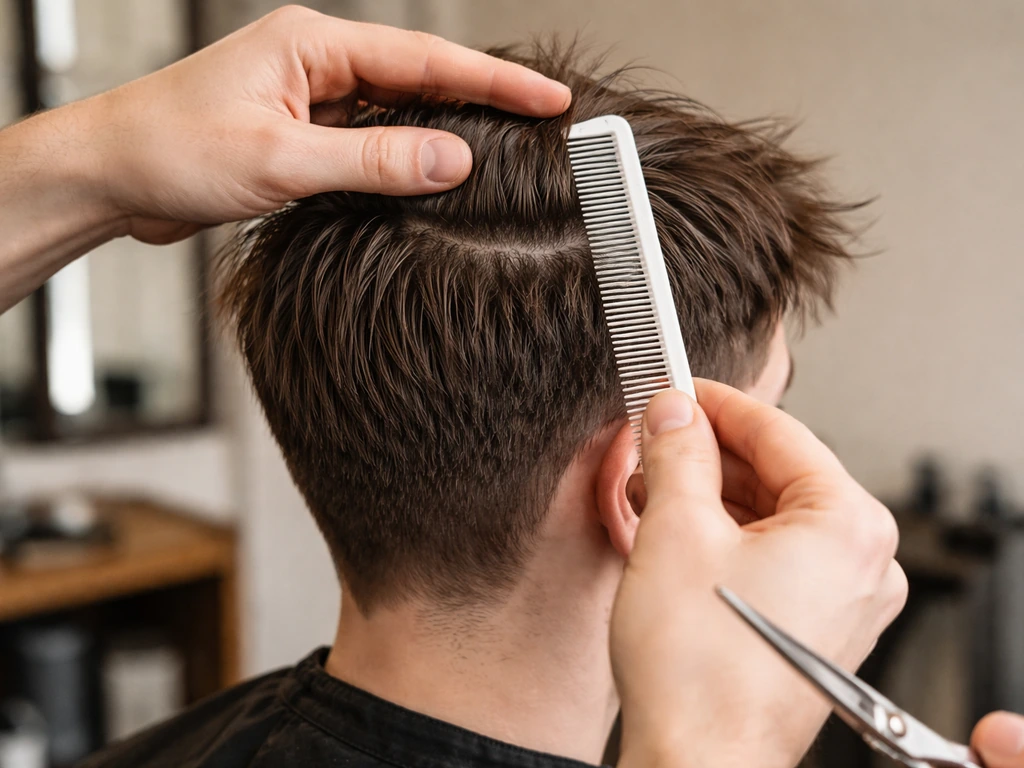
At this stage the top is getting some length and may start to look uneven or shaggy while the back is still shorter. Ask for: "A light trim to even the top shape without losing length, and a soft blend on the sides where they meet the back. Keep the neckline soft, not a hard line." A soft or rounded neckline at the back grows out much more gracefully than a squared-off or tapered one.
Months 6 and beyond: Unified shaping
Once everything is approaching a similar length and laying more uniformly, you can ask for an actual shape cut. At this point a one-length bob, a shag, curtain bangs, or a wolf cut all work well because they create style while maintaining overall length. Avoid heavy layers until you have enough total length to spare.
Styling through the awkward phases
Even with the best trimming strategy, there will be weeks where your hair looks stubbornly mullet-y between appointments. A mullet is defined as a hairstyle with short hair on the sides and top but longer hair at the back, so those in-between stages can temporarily show that shape between appointments. Styling is how you buy yourself time and confidence through those stretches.
Flattening and directing the back
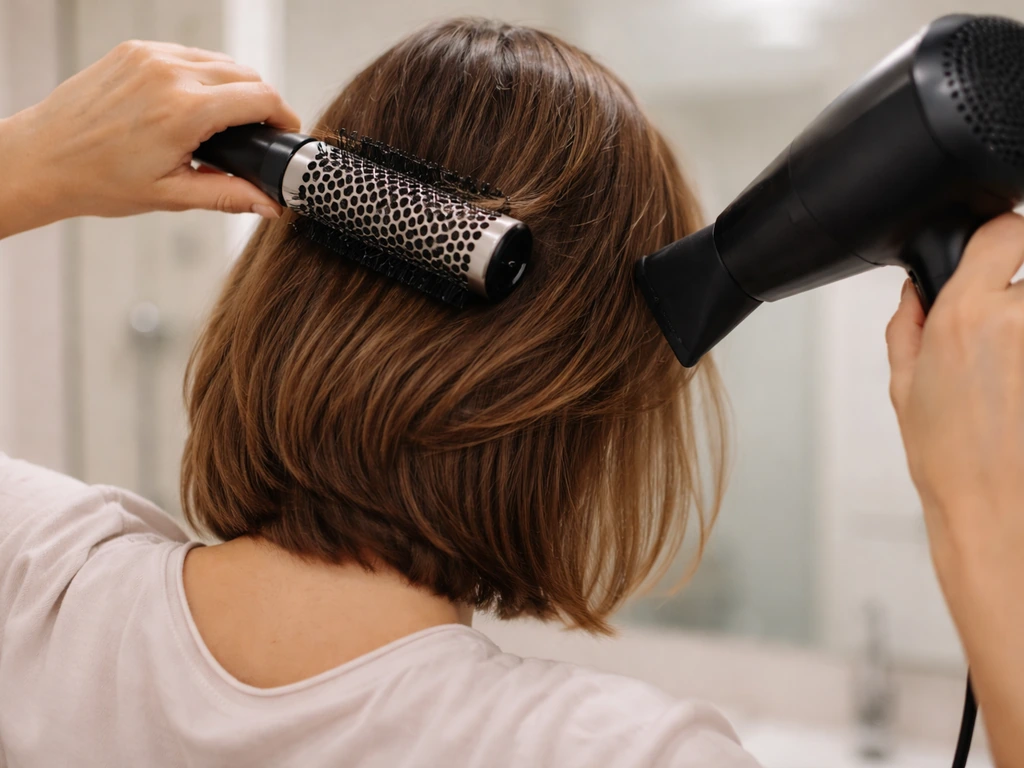
The nape and back sections tend to flip out or curl away from your head when they hit that 1 to 2 inch length. A blow-dryer with a round brush aimed downward is the most effective tool for this. After washing, use a medium heat setting and pull the back sections downward while drying. Even 2 minutes on the back is usually enough to eliminate the flip. A flat iron run underneath the back pieces (not on top) can also push them flat against your neck instead of outward.
Products that actually help
- Pomade or wax (light to medium hold): Best for taming the sides and back without stiffness. Apply a small amount to damp hair and smooth downward.
- Smoothing cream: Great for wavy or frizzy textures. Works on damp hair before blow-drying to prevent the back from expanding.
- Gel (light hold): Useful for controlling cowlicks at the nape. Apply just to the problem area and press flat while drying.
- Dry shampoo: Adds grip and control on day 2 hair when the back tends to do its own thing.
- Anti-humidity spray: If your hair is straight and the back flips in humidity, a light anti-frizz or anti-humidity product after styling locks the direction in.
Part changes and covering strategies
Changing your part is an underrated trick. A deeper side part can pull attention to one side of the face and create a sweeping silhouette that disguises uneven back length. A middle part works well once the front is long enough to frame the face. During the truly awkward mid-growth stage, tucking the sides behind your ears flattens the silhouette considerably. Hair clips, small pins, or a low half-up style at the back can keep everything contained when it is too long to lay flat but too short to pull back fully.
Handling cowlicks, curls, bangs, and undercuts
Cowlicks at the crown and nape
A cowlick at the nape is one of the biggest drivers of the mullet shape because it pushes hair outward and upward instead of down. The only reliable fix is length and weight. Once the back hair is long enough to have some weight (usually 2 to 3 inches), it starts to pull the cowlick down on its own. Until then, blow-dry directly against the cowlick's direction and use a gel or firm pomade just on that section to hold it flat. Do not ask your stylist to cut the cowlick area short to deal with it. Shorter hair in a cowlick zone just makes it stick up more.
Curly and wavy hair
Curly and wavy hair grows at the same rate as straight hair, but the curl pattern makes it appear shorter than it is and also means it puffs outward rather than hanging down. This makes the mullet shape look more dramatic on curly hair because the sides and back expand rather than drape. The strategy here is to keep the back moisturized and well-defined so the curls clump together and appear heavier rather than frizzy and wide.
A curl cream or leave-in conditioner applied to the back and sides while wet, followed by scrunching rather than rubbing, helps the curls stay defined. Avoid trimming curly back hair dry since curls spring up significantly when dry, and a stylist can easily take off more than intended.
Growing out bangs and face-framing pieces
Bangs and face-framing layers are their own sub-problem during a grow-out. Blunt bangs that hit the forehead are awkward until they reach chin length, which takes about 6 months. During that time, sweeping them to one side with a small amount of pomade or tucking them back with a clip is the most practical move. Face-framing layers that are shorter than the rest of your hair can be trained toward your face with a round brush while blow-drying, which makes them look intentional rather than half-grown. Avoid getting these pieces trimmed unless they are extremely uneven, since every trim resets the clock.
Undercuts and disconnected layers
Growing out an undercut is one of the harder transitions because there is a hard length disconnect at the nape or sides where the shaved or very short section meets the longer top. The only real fix is time and blending. Ask your stylist to gradually blend the undercut line every 6 to 8 weeks by using a higher guard and fading the line upward as the shorter section grows. Do not try to grow the undercut section unmanaged while keeping the top long. You will end up with exactly the kind of shelf or blocked section that creates a mullet silhouette.
Timeline and milestones: what to expect month by month

At roughly 0.5 inches of growth per month, here is a realistic picture of what happens and when the mullet risk is highest.
| Stage | Approximate Length Gained | What Happens | Mullet Risk | Main Move |
|---|---|---|---|---|
| Month 1 to 2 | 0.5 to 1 inch | Back and sides start to soften from the previous cut shape; nape may start to flip | Low to moderate | No trimming yet; start using blow-dryer on back |
| Month 2 to 4 | 1 to 2 inches | Back and sides reach the awkward flip zone; top still looks close-cropped | Highest | First micro-trim on back/sides; daily styling needed |
| Month 4 to 6 | 2 to 3 inches | Top starts gaining visible length; back may be noticeably longer | High | Second blend trim; experiment with part changes and styling |
| Month 6 to 9 | 3 to 4.5 inches | Top begins to drape; sides start to unify; back still ahead | Moderate | Shape cut on top; let sides catch up now |
| Month 9 to 12 | 4.5 to 6 inches | Most textures start to look unified; styling becomes easier | Low | Full shape cut if desired; all sections growing together |
| Month 12 and beyond | 6 inches or more | Approaching longer style territory; proportion stabilizes | Very low | Maintain desired shape; trim all sections equally |
The months 2 through 4 window is where most people get frustrated and cut it all off again. If you can get through that stage with a trim and some daily styling, the rest of the grow-out is significantly easier. It is worth noting that if you are growing toward something specific like a mullet itself, the pathway is almost the reverse of this.
If you are instead aiming for how to grow a mohawk out, the haircut timeline and styling focus will be different, but the patience strategy still applies. If you are specifically searching for how to grow a mullet on Reddit, it helps to follow a simple trim and styling schedule through the awkward months grow toward something specific like a mullet itself.
If you decide you actually want a mullet, you can tailor these same trims and styling steps to reach the shape on purpose mullet itself. If you are aiming for a mullet on purpose, plan your trims and blending around keeping the top length while the back catches up mullets. For those curious about intentionally growing into that shape, that is a different process with its own strategy.
When to stop DIYing it and get a professional involved
Most of what is covered here you can manage yourself or with quick salon visits. But there are specific situations where you need a real conversation with a stylist rather than just a maintenance trim.
- If the back is more than an inch longer than the sides and top and no amount of styling hides it, you need a corrective blend, not a trim. Tell your stylist you want the back brought into proportion without losing top length.
- If you had color, highlights, or a balayage in the previous cut and new growth is creating a stark two-tone look at the roots, a toner or root blend will make the grow-out look intentional rather than neglected.
- If you have a strong cowlick at the crown that is creating a ridge or a part that will not cooperate, a texturizing or point-cutting technique can reduce bulk and help the hair lay flatter. This is not something to attempt at home.
- If you are considering a keratin treatment or a light perm to help control the back section's direction during the awkward phase, talk to a stylist about timing. These treatments work best once the hair has some length and can be damaged if applied too early.
- If you are more than 6 months into the grow-out and still feel like the shape is chaotic, a professional can assess whether your layers need a reset cut, which removes the shortest pieces so the remaining length grows as a more unified block.
The most important thing to remember when you go in is to be specific. Show a photo of where you are now and a photo of where you want to be. Tell them you are growing it out and you do not want to lose length on top. A good stylist will hear that and only work the back and sides. If they immediately reach for the scissors on your top, speak up. This is your grow-out and you get to set the terms.
Growing hair out without a mullet is genuinely manageable if you stay consistent with two things: light trims on the back and sides every 6 to 8 weeks, and a few minutes of deliberate styling each morning during the awkward middle months. The shape that feels like a mullet at month 3 looks like a perfectly normal growing-out style at month 6, and like a real haircut at month 9. Stick with it.
FAQ
How do I know how much to trim without accidentally resetting the grow-out?
Ask for “dusting” sized to your baseline, half an inch maximum on the back and sides, and confirm the top stays untouched. At the chair, ask them to show you the blend line in the mirror before they cut, so you can spot any shelf or hard transition early.
Can I use clippers instead of scissors for the back and sides?
It’s usually riskier. Clippers can create sharper edges, especially around the neckline and behind the ears, which can look mullet-y while you’re mid-growth. If clippers are the only option, request a higher guard and a soft fade, then follow up with scissor blending.
What if my hair grows unevenly or one side flips out more than the other?
Treat it as an asymmetric styling problem first. Try changing your part, drying the stubborn side directly against its cowlick direction, and use a small amount of gel or pomade only on that section. Only after it stays uneven for multiple appointments should you ask for extra blending on the specific area.
Should I trim my neckline sooner if it starts to look bulky?
Don’t cut it short to “fix” the bulk, that can create the shelf effect. Instead, ask for a rounded, soft neckline that removes minimal length while blending into the sides. If you’re only seeing bulk, styling and drying technique often solve it faster than more trimming.
What’s the best way to style when I don’t have time to blow-dry the back?
Use a combination of directional drying and containment. Dry the back for 60 to 90 seconds with the airflow downward using a round brush if you can, then clip or pin the sides low so the ends have less chance to flip out before they fully set.
Can I avoid trimming at all by only styling?
Usually not if you’re trying to prevent the silhouette from forming. Styling helps day to day, but hair shape changes over weeks, and without periodic micro-trims the shorter back and side baseline can stay too far behind visually, especially around the nape.
How should I handle the grow-out if I had lots of layers before?
Layers can make the “apparent growth” uneven because the shorter pieces expand outward. Tell your stylist you want layers blended so the shortest pieces are removed only by dusting, and consider avoiding additional dry trimming of the back while it’s curly or wavy so you don’t accidentally take off too much spring.
Is wet styling the same for curly or wavy hair, or do I need a different product routine?
Curly and wavy hair usually needs more definition at the back and sides so curls clump instead of frizzing outward. Apply leave-in or curl cream while the hair is wet, scrunch instead of rubbing, and avoid trimming dry because curls can spring up and trick you into cutting too short.
When can I start asking for a real haircut shape (bob, shag, curtain bangs, wolf cut)?
Wait until the top, sides, and back are close enough in length to lay more uniformly, so the “style cut” doesn’t reintroduce a hard disconnected line. If the back still flips or won’t blend, continue with micro-trims and styling until the lengths are within the same general range.
What if my bangs are forcing me to keep coming in for trims?
If your bangs are awkward but not extremely uneven, use tucking or one-side sweeping with a little pomade to bridge the phase. Avoid frequent trimming every few weeks, since each reset keeps your bangs in the most noticeable awkward length longer than necessary.
I have an undercut line. How do I prevent a shelf while it grows out?
Don’t let the undercut grow unmanaged. Ask for gradual blending every 6 to 8 weeks, with the goal of fading the line upward as the shorter section increases, and confirm there’s no blunt transition at the nape or sides before you leave.
What should I say if my stylist tries to cut my top “to help it blend”?
Reiterate your boundary: you’re growing everything out, you don’t want length removed from the top/front, and the session should focus only on dusting the back and sides with soft scissor blending. If they can’t follow that, ask for adjustments or reschedule with someone who specializes in grow-out work.